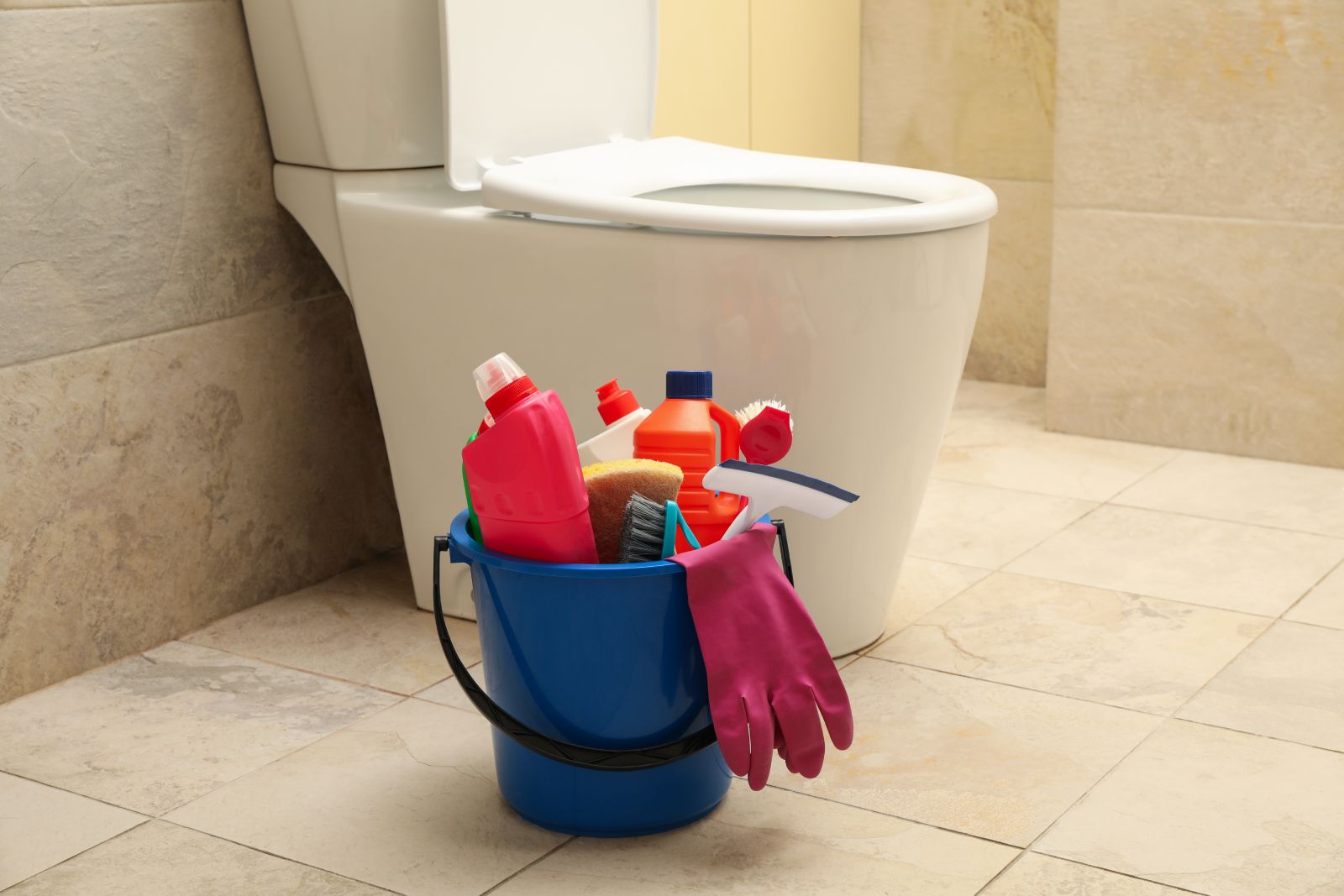
After years of providing cleaning services across NYC, we’ve formed pretty strong opinions about which cleaning supplies actually work and which ones just take up space under the sink. Most people either buy whatever’s on sale or default to whatever their parents used. Neither approach is wrong exactly, but both tend to leave you with a cabinet full of half-used bottles that don’t quite do the job.
This is the list we’d give to someone setting up a new home from scratch. Every product here is something we’ve used in real homes on real messes. For each one, we’re including a conventional pick and an eco-friendly alternative, because the eco options have gotten genuinely good in the last few years. In some categories the eco pick is actually better than the conventional one, and we’ll call that out when it’s the case.
We’re not covering every possible cleaning product. We’re covering the ones that matter. If you have these sixteen things, you can clean any room in your home properly.
The cleaning products that handle most of the actual work
The thing most people get wrong about home cleaning products is that they try to use one product for everything, or they buy too many specialized products and never use half of them. There’s a middle ground. These eleven products cover every surface and every room, and each one does something the others can’t.
All-Purpose Cleaner
This is the product you’ll reach for most often. Countertops, tables, cabinet fronts, appliance exteriors, light switches, door handles. An all-purpose cleaner handles probably 60% of all cleaning tasks in a typical home. The key is finding one that cuts through everyday grime without leaving residue or requiring a rinse.
Our regular pick is Lysol Clean and Fresh Multi-Surface, which runs about $3-5 and works well on basically everything. It’s effective, widely available, and the price is hard to argue with.
For an eco-friendly option, Seventh Generation Free and Clear ($4-6) carries an EPA Safer Choice certification and works just as well on daily messes. It’s fragrance-free, which a lot of people actually prefer once they try it.
Disinfectant
A disinfectant is different from an all-purpose cleaner. The all-purpose cleaner removes dirt and grime. A disinfectant kills pathogens. You don’t need to disinfect every surface every time you clean, but bathrooms, kitchen counters after handling raw meat, and sick-room surfaces genuinely benefit from it.
Lysol Disinfectant Spray ($5-8, EPA registration #777-99) is the standard for a reason. It works on a wide range of bacteria and viruses and it’s easy to use.
The eco-friendly option here is more interesting. Force of Nature ($30-50 for the starter kit) uses electrolyzed water technology to create an EPA-registered disinfectant (EPA #93040-1) from salt, water, and vinegar. The per-use cost comes out to about $0.30, which is competitive over time. One thing to know is that the solution has about a two-week shelf life, so you make it as you need it rather than storing bottles for months.
Glass and Mirror Cleaner
This is one of the categories where the eco-friendly option is genuinely better than the conventional one. Many conventional glass cleaners leave a thin residue that attracts dust, which means the glass looks great for a day and then starts collecting particles faster than it would have otherwise. We see this pattern constantly in homes we clean.
Invisible Glass ($5-8) is the best conventional option we’ve used. It’s a clean formulation that leaves less residue than most competitors.
Mrs. Meyer’s Glass Cleaner ($4-5) is 98% naturally derived and actually outperforms a lot of conventional glass cleaners on streak prevention. If you’ve ever switched to a plant-based glass cleaner and noticed your mirrors stay cleaner longer, that’s why.
Bathroom Tub and Tile Cleaner
Bathrooms are the room where product choice matters most. Soap scum, hard water deposits, and mildew are all pH-specific problems, and a general all-purpose cleaner won’t cut it. You need something acidic that’s formulated for bathroom surfaces.
Zep Shower Tub and Tile ($6-9) is very effective. It’s acidic and it dissolves soap scum and mineral deposits quickly. You should wear gloves when using it and make sure the bathroom is ventilated. Open a window or turn on the exhaust fan. In a small NYC bathroom with no window, this matters a lot.
Better Life Tub and Tile in Tea Tree and Eucalyptus ($5-8) is the eco alternative, and the biggest advantage here is practical, not philosophical. There are no fumes, which in a small bathroom where ventilation is limited means a product that works without making the air hard to breathe is a real upgrade. It handles regular soap scum and hard water well.
Toilet Bowl Cleaner
The toilet needs its own product because the bowl is a different surface with different problems. You need something that clings to the sides of the bowl long enough to work, and you need it to handle mineral stains and bacteria.
Clorox Clinging Bleach Gel ($3-5) is effective and inexpensive. The gel formula sticks to the bowl surface, which gives it time to work. One note though. It’s not ideal for homes with septic systems. The bleach can disrupt the bacterial balance that septic systems depend on.
Seventh Generation Toilet Bowl Cleaner in Emerald Cypress and Fir ($4-6) uses citric acid instead of bleach. It’s septic-safe and it handles regular maintenance cleaning well. For a toilet that hasn’t been deep cleaned in a while, you might need to let it sit longer, but for regular upkeep it does the job.
Kitchen Degreaser
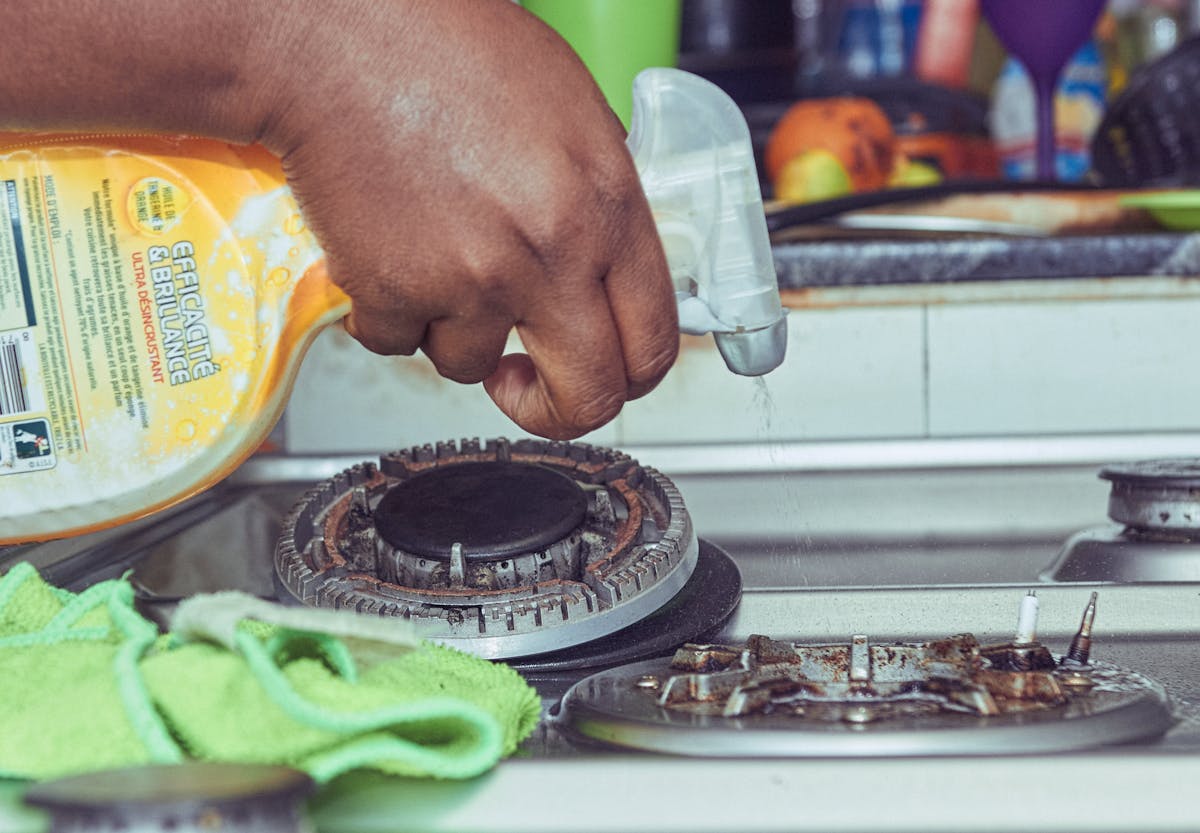
Grease is a specific problem that requires a specific solution. The area around a stove, the range hood, the backsplash behind the burners, and the outside of the oven all accumulate cooking grease that an all-purpose cleaner will just spread around. You need something that actually breaks the grease down.
Easy-Off Heavy Duty Degreaser ($4-5) works fast and handles serious buildup. Like the Zep bathroom cleaner, it requires gloves and ventilation. These are strong products and they work because they’re strong.
Method Heavy Duty Degreaser in Lemongrass ($5-6) is actually formulated specifically for tough kitchen grease, which sets it apart from most eco degreasers that are really just repackaged all-purpose cleaners. It takes a little more time than the heavy-duty conventional option but it handles real cooking grease without the fumes.
Wood Floor Cleaner
Wood floors are the surface where using the wrong product causes the most long-term damage. A lot of general floor cleaners leave residue that builds up over months and eventually gives the wood a cloudy, dull film. By the time you notice it, removing it is a real project. You want something that cleans without leaving anything behind.
Bona Hardwood Floor Cleaner ($8-10) is the standard for a reason. It’s pH-balanced specifically for wood, dries fast, and leaves no residue. Most hardwood floor manufacturers recommend it or something like it. If you have engineered hardwood or solid hardwood, this is the safe pick.
Better Life Simply Floored ($10-11) is the eco option, and for wood floors it’s genuinely the better long-term choice. It’s plant-derived with no VOCs, and it cleans without leaving any buildup at all. Hardwood floors that get cleaned with the wrong product for years develop that cloudy film we mentioned. Simply Floored avoids that problem entirely.
Tile and Hard Floor Cleaner
Tile, laminate, vinyl, and linoleum are all more forgiving than wood, but they still benefit from the right product. The main thing you’re looking for is something that cuts through grime without leaving a sticky or filmy residue on the surface.
Quick Shine makes a Multi-Surface Floor Cleaner ($6-10) that works well on all hard floor types. One important note though. Quick Shine also makes a Multi-Surface Floor Finish, which is a completely different product. The Floor Finish is a polish that leaves a coating, and it has a long history of complaints about buildup and clouding over time. You want the Floor Cleaner, not the Floor Finish. Read the label carefully.
Method Squirt and Mop ($5-7) is the eco alternative and it’s a good one. It’s non-toxic, works on tile and sealed hard floors, and the application is about as easy as it gets. You squirt it on the floor and mop. No mixing, no bucket, no rinsing. For a small NYC apartment where you’re mopping the kitchen and bathroom tile once a week, it’s the right amount of product for the job.
Oven Cleaner
Most people avoid cleaning their oven because the products are unpleasant to use. That’s a fair reaction. Standard oven cleaners are lye-based, which means strong fumes, chemical burns if it hits your skin, and a process that involves spraying caustic chemicals inside an enclosed box and then scrubbing it out. It works, but nobody looks forward to it.
Easy-Off Heavy Duty ($5-8) is the conventional standard. It’s lye-based, it takes about 20 minutes, and it works. You absolutely need gloves and ventilation for this one. The fumes are strong.
Everneat Oven Scrub ($15-25) is a genuinely different approach. It’s a pumice and citric acid scrub, made by a company based here in NYC, that’s completely fume-free. Epicurious named it a top pick. The trade-off is that it requires more physical scrubbing than a spray-on chemical cleaner. But you can use it without opening every window in the apartment, which in a New York kitchen is a real consideration. If you book a deep cleaning with us, the oven is one of the areas where the professional approach really shows.
Wood Polish
This is another category where the eco option is actually the better product. Most conventional wood polishes contain silicone, which creates a nice initial shine but builds up over time and eventually makes the surface look dull and plasticky. Removing silicone buildup from wood furniture is a real project.
Howard Feed-N-Wax ($10) is the best conventional option. It uses beeswax, carnauba wax, and orange oil, so it’s already a step above the silicone-heavy mainstream products. It feeds and protects the wood without the worst of the buildup problems. It’s not food-safe though, so keep it off cutting boards and kitchen tables where food touches the surface.
Daddy Van’s Beeswax Polish ($12-15) is USDA 100% Biobased with just three ingredients. It’s food-safe, so you can use it on everything from antique dressers to butcher block countertops. No silicone means no buildup, ever. The wood just gets better-looking over time. This is one of those products where paying a few dollars more for the eco version gets you a genuinely superior result.
Stainless Steel Cleaner
Stainless steel appliances look great when they’re clean and terrible when they’re not. Fingerprints, water spots, and streaks are all visible from across the room. A dedicated stainless steel product makes a noticeable difference over trying to use an all-purpose cleaner.
Weiman Stainless Steel Cleaner ($8-15) won a Good Housekeeping Award and it deserves it. It cleans, polishes, and protects in one pass. Wipe with the grain of the steel for the best result.
Therapy Clean Stainless Steel Cleaner ($12-18) is USDA Biobased and uses coconut oil as its base. It gives a clean, streak-free finish and leaves a light protective layer without the petroleum-based ingredients.
The cleaning tools that matter just as much as the products
Products get all the attention, but the tools you use with them matter just as much. A good product applied with a bad tool gives you a bad result. These five tools cover everything you need, and they’re the same ones our teams use when they show up for a house cleaning in NYC.
Microfiber Cloths
Buy a multi-pack and color-code them. One color for the kitchen, one for bathrooms, one for glass and mirrors. This prevents cross-contamination, which is the kind of thing you don’t think about until someone points out that the same cloth that wiped down the toilet is now on the kitchen counter.
Look for cloths rated at 300 GSM density or higher. The density determines how much the cloth actually picks up versus just pushing things around. Cheap microfiber is barely better than a paper towel. Good microfiber grabs and holds dust, grime, and moisture.
Scrub Sponges and Brushes
You need three types: a non-scratch sponge for countertops and dishes, a stiffer brush for grout lines, and a small detail brush for corners and tight spots around fixtures. The non-scratch sponge handles daily tasks. The grout brush is for bathroom tile and kitchen backsplash maintenance. The detail brush gets into the places around faucet bases and behind handles where grime collects.
Replace your sponges every one to two weeks. A used sponge that smells fine can still harbor bacteria. If you’re not sure when you last replaced it, it’s time.
Flat Mop with Washable Pads
Get a flat or spray mop with washable microfiber pads and a refillable tank. The refillable tank part matters because it means you can fill it with whatever floor cleaner you want instead of being locked into a proprietary cartridge system that costs three times as much. Washable pads mean you’re not constantly buying disposable ones, which adds up fast and creates a lot of waste.
Silicone Toilet Brush
If you still have a traditional bristle toilet brush, a silicone one is a genuine upgrade. Silicone dries faster, harbors less bacteria, and lasts longer than nylon bristles. Traditional bristle brushes tend to stay damp and get discolored quickly, and they’re basically impossible to fully clean. Silicone brushes rinse clean and dry out between uses.
Vacuum with HEPA Filter
For apartments, a cordless stick vacuum with a hard-floor setting is usually the best fit. It’s light, easy to store in a closet, and quick enough to use that you’ll actually use it regularly instead of letting it collect dust in the corner.
If anyone in your household has allergies, a HEPA filter is worth prioritizing. HEPA captures fine particles that standard filters blow right back into the air. Dust mites, pet dander, and pollen all fall within the particle size that HEPA handles. We’ve written about allergens in older NYC homes and the difference that proper filtration makes, and it applies to vacuums just as much as it applies to air purifiers.
You can build a full home cleaning supplies kit in one shopping trip
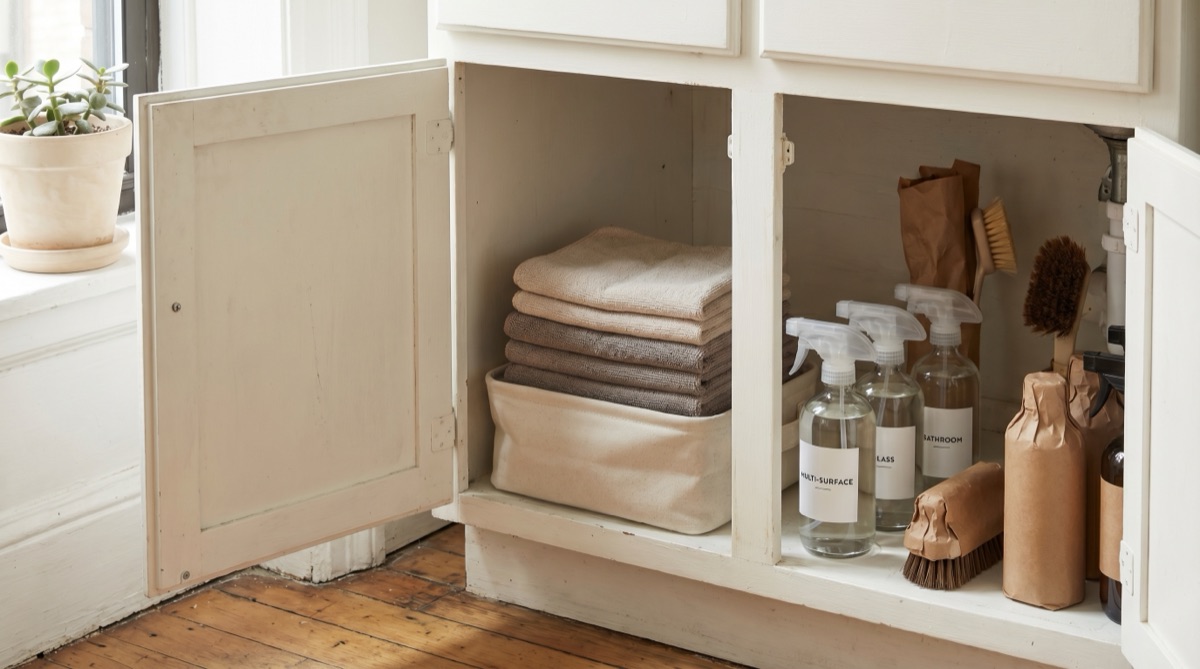
You don’t need all sixteen items on day one. If you’re starting fresh, get the all-purpose cleaner, bathroom cleaner, microfiber cloths, and a mop. Those four things let you clean every room in a basic way. Add the specialized products as you need them: the degreaser when the stove gets ahead of you, the wood polish when you notice the dining table looking dull, the oven cleaner when you finally open the oven door and decide it’s time.
The eco-friendly options in this list are worth trying even if you’ve been skeptical. The category has improved dramatically. In several cases, the plant-based and naturally derived products we recommended are actually the better product regardless of environmental preference. The glass cleaner we recommended keeps mirrors cleaner longer because it skips the residue that attracts dust. The wood polish avoids silicone buildup entirely. Your hardwood floors also benefit from the right floor cleaner, which won’t cloud the finish over time. These are practical advantages, not just marketing.
If you’d rather skip the supply shopping entirely and have a professional team show up with everything needed to clean your home properly, you can always book a cleaning. We bring our own supplies and equipment to every apartment cleaning and house cleaning appointment, and we’ve already done the product testing so you don’t have to.
Common Questions
- Do professional cleaners use different supplies than what's available in stores?
- Mostly no. Professional cleaning teams use many of the same products available at any grocery or hardware store. The difference is usually in technique, tool quality, and knowing which product to use on which surface. When you book a <a href='/maid-service-nyc'>maid service in NYC</a>, we bring our own supplies and the active ingredients are the same ones you'd find at the store. We just know exactly which product goes on which surface.
- How often should I replace cleaning supplies and tools?
- Sponges should be replaced every one to two weeks. Microfiber cloths last hundreds of washes if you avoid fabric softener and high heat in the dryer. Cleaning products have shelf lives printed on the label, usually one to two years, though some eco products like Force of Nature have shorter active periods. Mop pads and toilet brushes should be replaced when they show visible wear or discoloration.
- Are eco-friendly cleaning products as effective as conventional ones?
- In most everyday cleaning situations, yes. For regular maintenance cleaning, the eco-friendly products in this list perform comparably to their conventional counterparts. For heavy-duty situations like serious oven buildup or deep grease removal, the conventional heavy-duty products still tend to work faster, though the eco alternatives get the same result with more time or more scrubbing.
- What cleaning supplies should I avoid mixing together?
- Never mix bleach with ammonia or with acidic cleaners like vinegar or bathroom tile cleaners. The chemical reactions produce toxic fumes. This is the most common and most dangerous mixing mistake. As a general rule, don't combine any two cleaning products unless the label specifically says it's safe to do so. Rinse surfaces between products if you're switching from one to another.
- Can I use the same cleaning products on all floor types?
- No. Hardwood, tile, laminate, and stone floors all have different requirements. Acidic cleaners can damage natural stone. Excessive water damages hardwood. The floor cleaners we recommended in this guide are multi-surface formulas that work on most common floor types, but if you have marble, granite, or other natural stone, use a pH-neutral cleaner specifically designed for stone.