New development apartments and prewar apartments are both New York apartments, but that’s about where the similarity ends. The surfaces are different, the challenges are different, and the pace is different. If you approach one the way you approach the other, you’ll probably miss something important.
New development apartments are built for a particular kind of impression. Quartz countertops, high-gloss cabinetry, frameless glass shower enclosures, large-format porcelain tile, stainless steel appliances. Everything is clean-lined and intentional, and because of that, everything shows. A fingerprint on gloss cabinetry from across the room. A water spot on glass tile in direct afternoon light. A streak on a stainless refrigerator panel that catches at the wrong angle. The challenge in a new development isn’t getting things clean in any deep sense. It’s achieving a consistent, visible perfection on surfaces specifically designed to be noticed. The open layouts make this harder, actually, because there’s no corner of the kitchen hidden from the living room. Everything is in the frame.
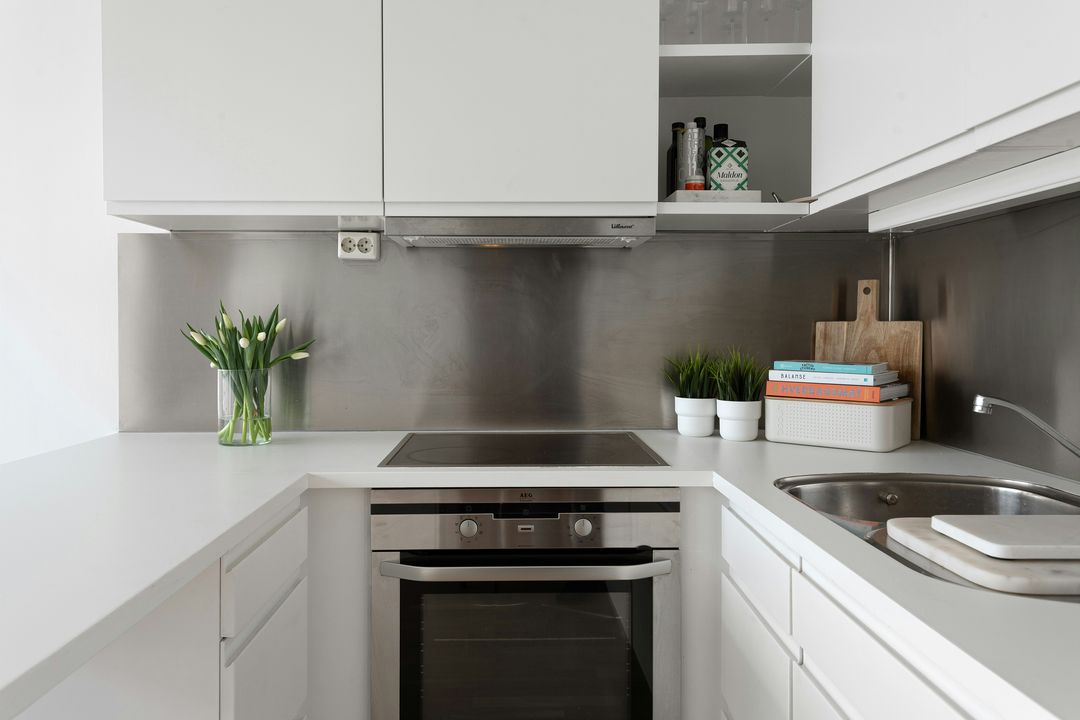
In my experience, new development cleans move quickly in terms of square footage but are unforgiving on quality. You can move through the space efficiently, but you have to finish every surface properly or the whole thing reads as half-done. Streak-free technique on glass matters more here than almost anywhere else. Quartz is relatively easy to maintain but needs to be dried completely after wiping, otherwise you get a cloudy film. Stainless steel needs to be wiped with the grain and finished consistently, otherwise the variation in direction shows as a sheen difference. The kitchen in a new development is often galley-style or open-plan with built-in appliances, which gives you better access than older kitchens, but the trade-off is that every smudge on every surface is visible from multiple angles.
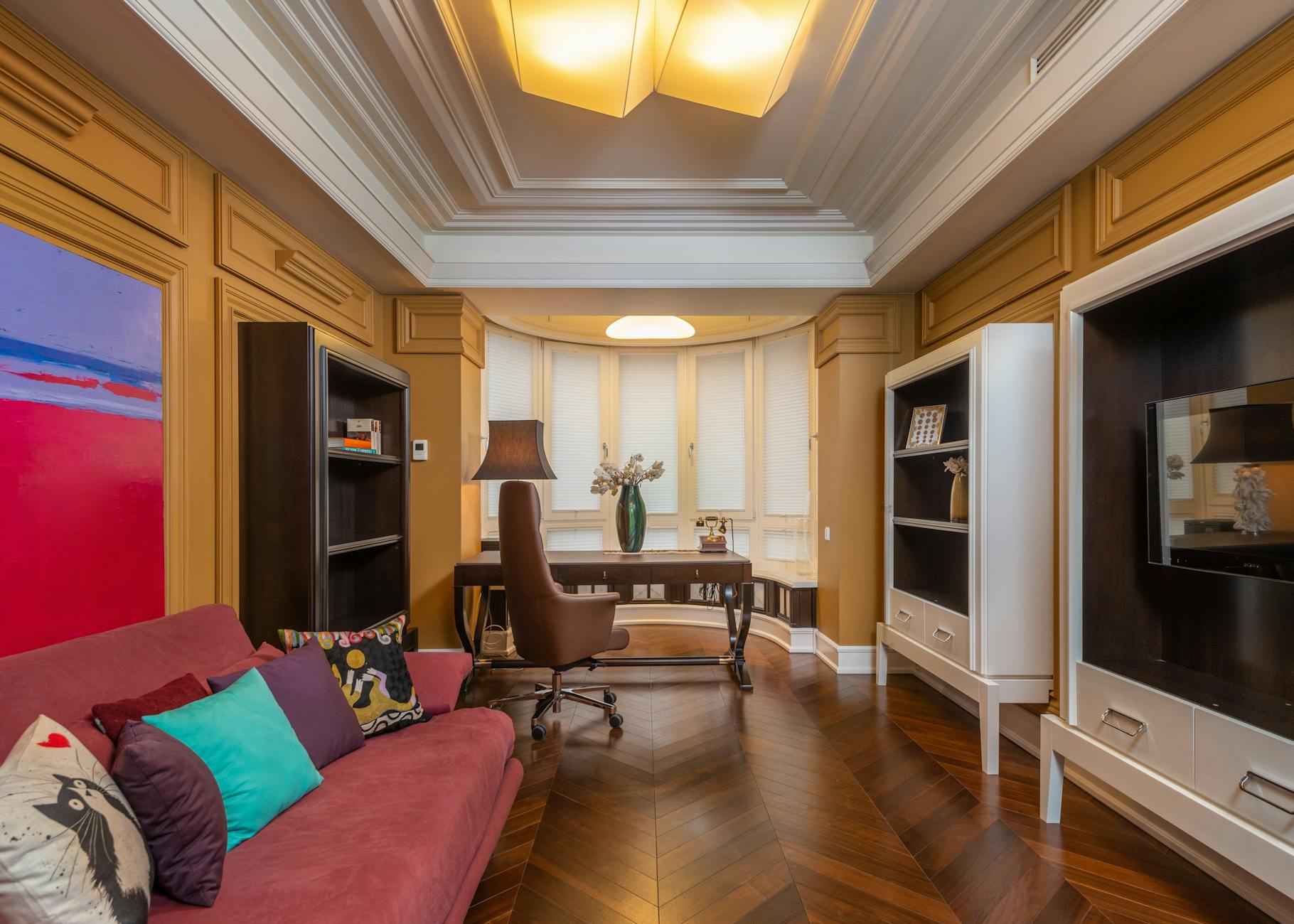
Prewar apartments work differently. The challenge isn’t perfection on prominent surfaces. It’s thoroughness in places most people don’t think to look, or can’t easily reach, or have stopped seeing because the apartment has always looked that way. Plaster walls accumulate grime in texture over years. Crown moldings and deep baseboards develop layers of built-up paint and dust that ordinary cleaning never quite touches. Cast iron radiators collect dust deep in the fins where a standard cloth can’t reach. Original hardwood floors are often beautiful but can’t be over-wetted, so mopping requires more restraint and care than you’d use on tile or modern engineered hardwood. These aren’t insurmountable problems. They just take longer and require more attention to detail than most people budget for.
Prewar bathrooms are a good example of the difference. A lot of them have deep soaking tubs with feet, pedestal sinks with hard-to-reach undersides, and original hexagonal mosaic tile on the floor with porous grout that’s absorbed years of soap residue. The grout lines are fine and irregular, and surface-level wiping doesn’t do much. Older fixtures develop real mineral buildup because the pipes are old and the water pressure is sometimes uneven. Cleaning a prewar bathroom well means spending time in places that don’t look dirty until you get close to them. By contrast, a new development bathroom usually has a walk-in glass shower, frameless mirrors, and large-format porcelain tile. The tile itself is easy. The glass is not. Water spots on frameless shower glass are basically enemy number one in those spaces, and they come back fast.
Prewar kitchens are compact, often with appliances that aren’t new, and tile backsplashes laid decades ago with grout lines that are uneven and porous. The grime in those grout lines is real. It’s also easy to overlook if you’re moving quickly. New development kitchens give you cleaner access to appliances and surfaces, but the open layout means you’re essentially cleaning a display kitchen, where the standard is showroom-level rather than just lived-in clean.
Ceilings are worth mentioning for both types. New developments often have recessed lighting, and the trim rings around those fixtures are reliable dust collectors that most cleaners skip. Prewar apartments sometimes have ornate plaster ceiling medallions around light fixtures, with relief detail that collects dust in the crevices. Both are easy to miss and both are the kind of thing a resident notices even if they can’t immediately identify what’s different.
The order of operations also shifts a little. In a new development, I tend to spend more time at the end doing a final pass on glass and high-gloss surfaces, because those are the things that will visually undercut everything else if they’re not right. In a prewar, I front-load more of the detail work, because the things most likely to be missed are in corners, behind radiators, under furniture, and in grout lines, and it’s easier to catch them early than to backtrack.
Neither type is harder in an absolute sense. They’re harder in different ways. A new development rewards efficiency and finish quality. A prewar rewards patience and knowing where to look. If you want a deep clean that accounts for which type of apartment you actually have, or if you’re moving into or out of either one and need a thorough move-in or move-out clean, the approach matters as much as the effort. You can book directly here or take a look at our apartment cleaning services if you want a sense of what we cover.