Shoes on or off at home seems like a small question until two people who grew up with different rules move in together. In the NYC apartments I’ve seen, almost nobody has a pure rule. Most homes land on some combination, and it usually makes sense once you know who lives there and where their shoes have been.
The NYC sidewalk is the real case for shoes off in the house
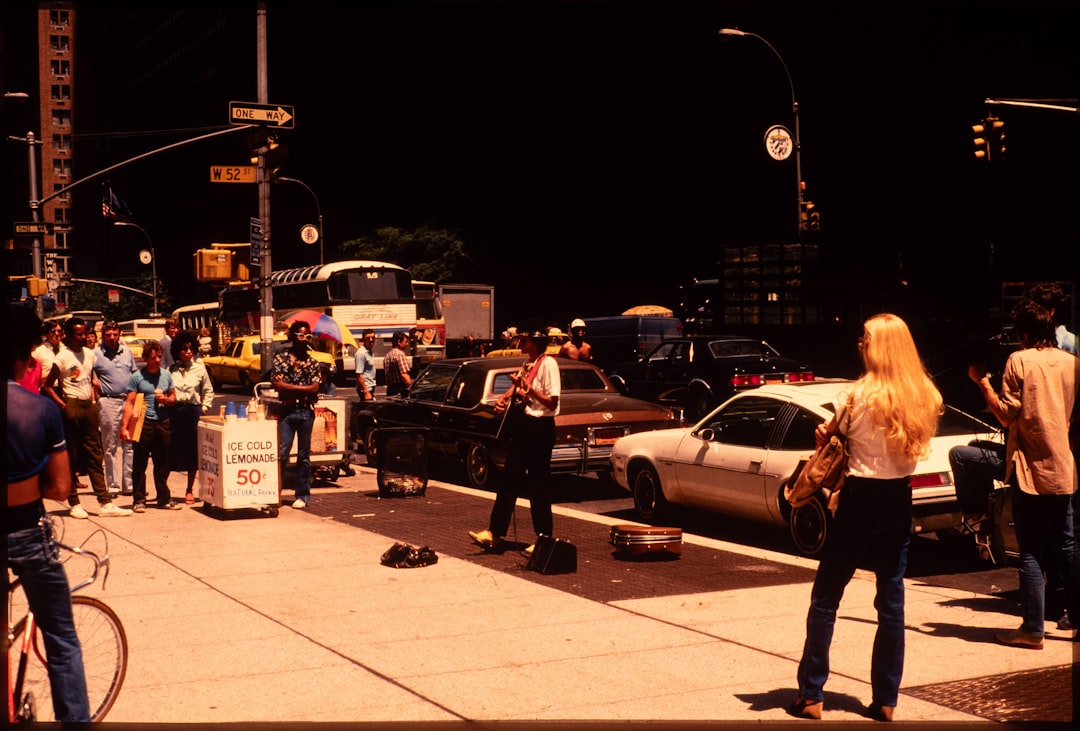
I think most people underestimate what a normal day on an NYC sidewalk involves. Every tree pit and lamppost on the block doubles as a dog’s bathroom, and not every dog walk ends with a bag. Then there’s spit, gum that has been pressed into the concrete for years, and the leak that runs out from under the trash bags piled at the curb on pickup night. There are pigeon droppings under every ledge the pigeons like, and rat droppings near the cans.
Then a shoe goes down the subway stairs and across the platform, which have their own layer. It steps around, or through, the puddle of liquid nobody wants to identify, and on a Sunday morning it meets the spilled drinks and leftovers of somebody’s Saturday night. Construction dust from the building going up on the corner settles on top. In winter the gray salt slush collects at every crosswalk, deep enough that you stop trying to step around it.
That’s an ordinary day, and none of it stays outside. The same shoe crosses the lobby, rides the elevator and walks onto the floor where people sit, kids play and babies crawl. For most of the parents I know, that’s the whole reason for the rule. A baby spends the day with their hands and face about an inch from the floor, and the floor is where the sidewalk ends up.
Rain makes it worse, because a wet sole picks up more and leaves it all behind in a print. Salt season has its own cost, since salt dries into white streaks on hardwood and slowly dulls the finish. Those streaks are usually still there in spring, around the time a lot of people put a deep cleaning on the calendar anyway.
Socks get less attention than they probably deserve, too. A sock that walked the hallway to the trash chute and back goes straight onto the couch and then into bed. Plenty of shoes-on homes draw the line at shoes on the couch or the bed, which tells me everyone knows where shoes have been.
Where to put shoes in a small apartment is mostly decided by the door
In a lot of NYC apartments the entry is about two square feet, so the shoe pile happens whether anyone planned it or not. What I see most is shoes going up instead of out, on a tall slim rack, an over-the-door holder or a narrow bench with a shelf underneath. In winter a boot tray shows up so the slush dries in the tray instead of on the wood.
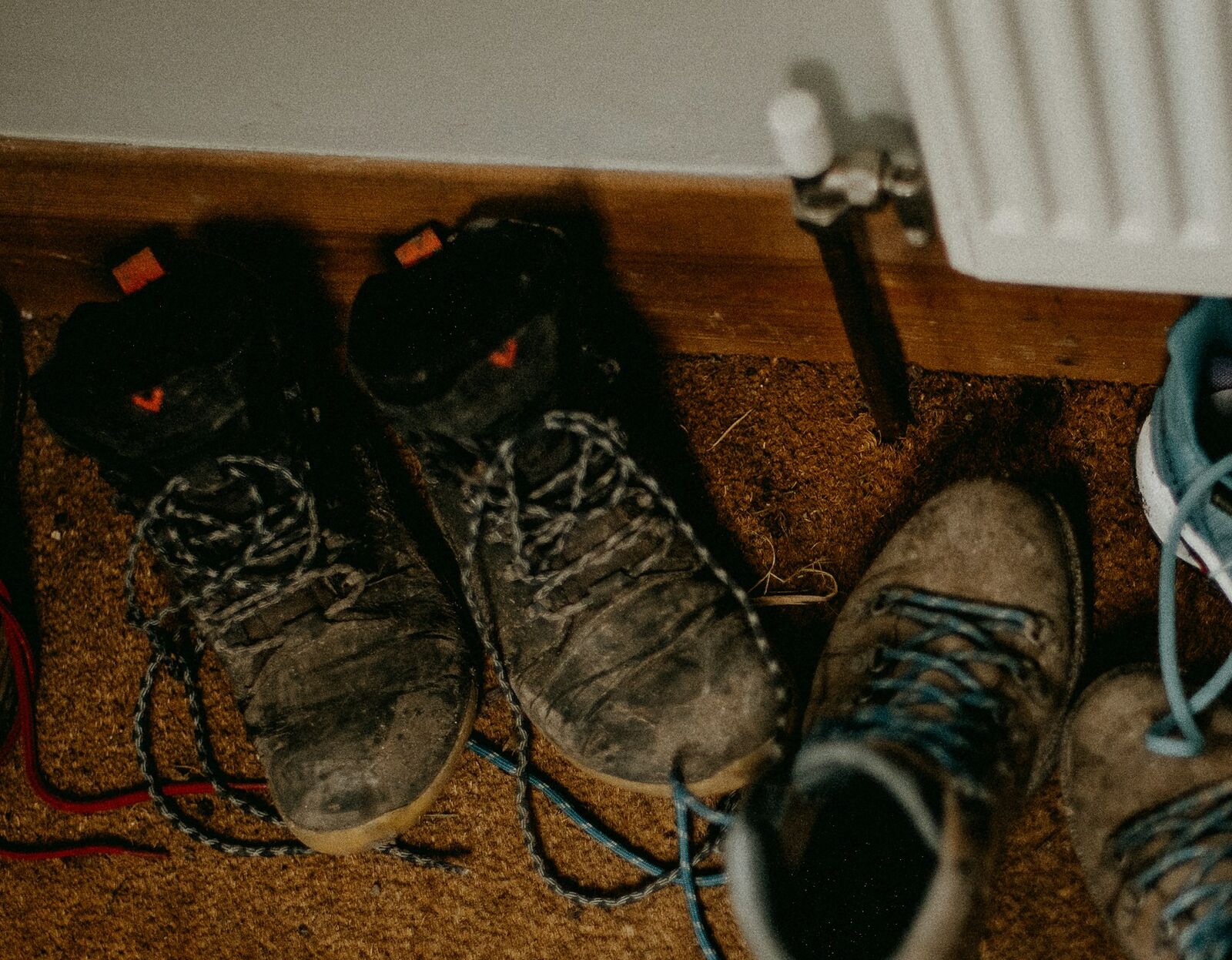
Photo by Annie Spratt on Unsplash
The doormat ends up the dirtiest thing in the apartment, which makes sense given its job. Some people leave shoes outside the door in the hall, and whether that works depends on the building.
Work boots, house shoes and shoe covers each get their own rule
Not every pair of shoes is coming home from the same day. Someone who works on a job site, in a restaurant kitchen, in a hospital or on a delivery route brings the day home on their boots. People who work like that often have the strictest routine of anyone I know. The boots come off right at the door and go onto a tray of their own, sometimes before anyone says hello.
Everyday sneakers are the middle case, and most of the arguments are about them. House shoes and slippers never go outside, so in a lot of homes they’re the point of the whole rule. Some people prefer socks, and some go barefoot all year.
Shoe covers are the in-between for people who come in to work. Plumbers, contractors and movers often bring booties that slip over their shoes, since unlacing boots for every trip to the truck isn’t realistic. Our cleaners bring shoe covers too, and they follow the home’s rule. Some people make it a point to mention theirs when they book.
A shoes-off policy usually bends a little when people are hosting
A lot of people who keep a strict shoes-off policy relax it when they have people over. They’d rather have a few footprints than a guest feeling awkward in the doorway, and the floor can be cleaned the next morning. Other hosts keep the rule and soften it, with a basket of house slippers or clean socks by the door, so it feels more like hospitality than a rule.
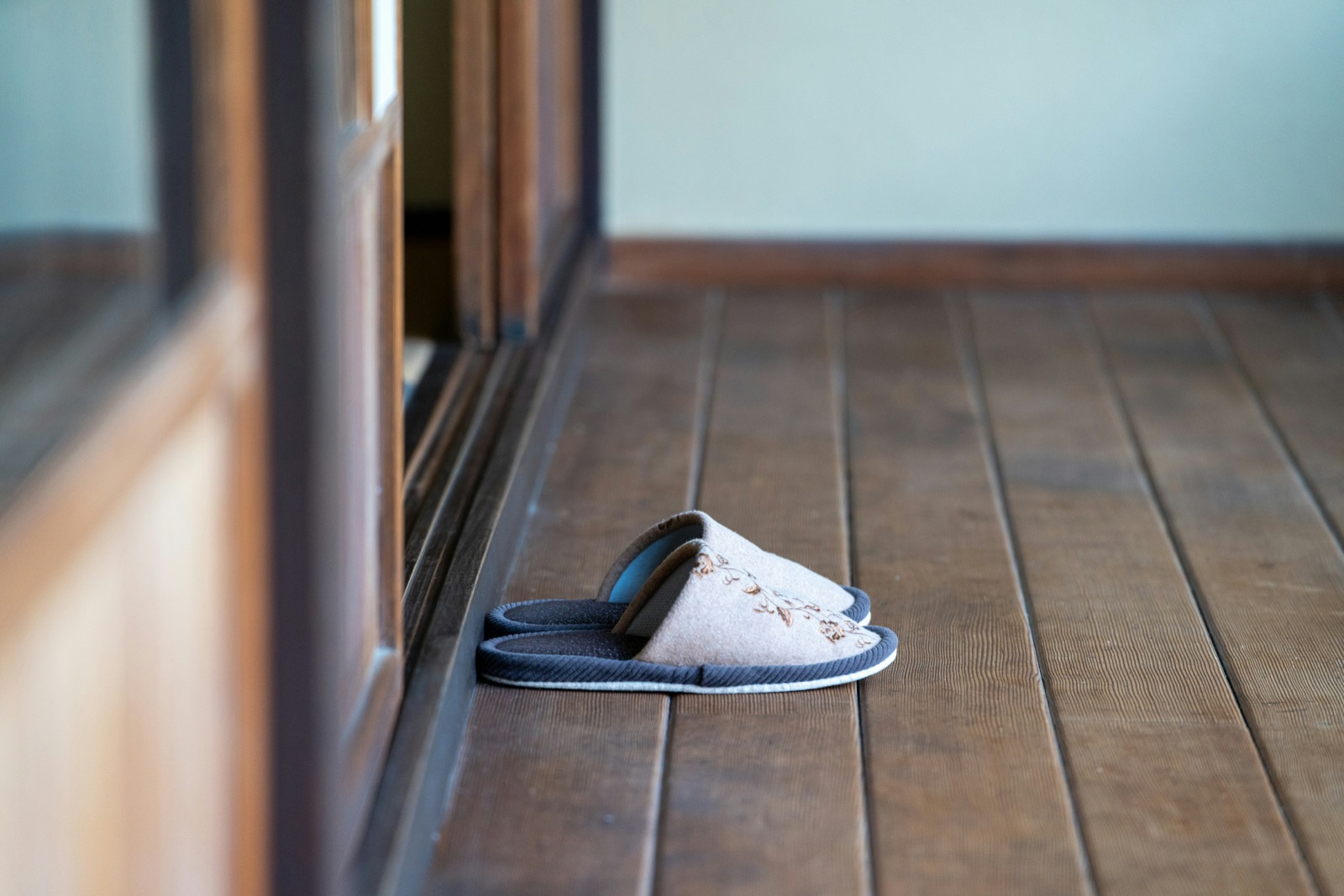
Photo by Jong Hyuk Lee on Unsplash
Some guests don’t like shoes-off parties, and their reasons are fair. They planned the outfit around the shoes, or their feet get cold on a bare floor, or they weren’t sure their socks were ready for an audience. I don’t think asking is rude, and the hosts I know who keep the rule usually put a line in the invite. The awkward version is finding out at the door.
Most homes land on a shoes-off rule with a few exceptions
The combinations are where most people actually live. I know households that are shoes off for family and shoes on for guests. Others are shoes off for everyone, with a standing exception for whoever already has their coat on and just remembered their phone is on the charger. Some homes are strict in salt season and loosen up in summer.
Plenty of people keep shoes on, and their reasons hold up too. Bending over to unlace a boot is hard on a bad back. Someone running out the door for the third time isn’t untying anything. In a lot of robot vacuum households, people stop worrying about shoes because the grit and crumbs are gone before anyone notices. The robot doesn’t always get what’s smeared into the floor or what’s still on the bottom of the shoe, and plenty of those households stay shoes-on anyway. They might be onto something, since a little dirt won’t hurt. Homes with a regular apartment cleaning on the calendar tend to relax a little for the same reason.
Wheels are the exception nobody talks about. Strollers, scooters, bikes, rolling suitcases and grocery carts roll down the same sidewalk and straight into the living room. Even the strictest shoes-off homes I know let the stroller in with all four of its shoes on. The dog is in the same spot, walking the same tree pits as everyone else with no shoe option at all. Some people wipe paws at the door, and others accept the dog as the exception to every rule in the house.
Kids follow the rule about half the time. The most common negotiation I hear about is two people moving in together, one who grew up shoes off because that’s how their family always did it, and one who grew up taking shoes off at bedtime. Most couples land in the middle, usually a rack by the door that slowly becomes the rule.
The sidewalk is dirtier than most people think, so I think the shoes-off people have the facts on their side. What each home does with those facts depends on who lives there, who’s visiting and how often someone runs back in for their keys, and almost every rule I’ve seen has an exception that works anyway.
Common Questions
- Do your cleaners take their shoes off?
- Our cleaners bring shoe covers, and they follow your home's rule. Some people make it a point to mention theirs when they book a cleaning, whether that's shoes off, covers on or no preference at all.
- Is it rude to ask guests to take their shoes off?
- I don't think so. Most guests I know would rather be told than guess. The hosts who do it smoothly usually mention it in the invite, and some keep a basket of house slippers or clean socks by the door. What feels awkward is a guest finding out at the door.
- Do robot vacuums replace a shoes-off rule?
- In a lot of homes they do. People with a robot running every day often stop worrying about shoes, because the grit and crumbs are gone before anyone sees them. What the robot doesn't always pick up is anything smeared into the floor or still on the bottom of the shoe, so some of those homes keep the rule anyway and some don't. Both seem to work for the people living there.