
The 1890 census documented Park Slope as the wealthiest community in the United States. That distinction lasted only a generation before the mansions were subdivided and the families left for the suburbs, but the buildings they built between 1870 and 1900 remain standing on nearly every block from Grand Army Plaza to Ninth Street. Walking these streets today, past the brownstone stoops and carved lintels and cast-iron railings, you are walking through the physical evidence of what happens when money, ambition, and one of the finest urban parks in the country converge on a single hillside.
The neighborhood takes its name from the thing you feel underfoot. Park Slope is the long, gradual western descent of a glacial moraine running from the ridge of Prospect Park toward the lowlands of the Gowanus Creek. The slope is gentle enough that you barely notice it walking, but steep enough that every cross street offers a different elevation and a different angle on the brownstone rows ahead. The park sits at the top. The commercial life of Fifth Avenue runs through the middle. Fourth Avenue marks the eastern edge where the terrain flattens out. Between these boundaries lives one of the most architecturally coherent residential neighborhoods in the country.
Before the brownstones there was a battlefield and a railroad baron
The Lenape people hunted the forested uplands and fished the tidal streams at the base of this slope for thousands of years before European arrival. Dutch colonists farmed the land beginning in the mid-17th century, establishing scattered homesteads on the incline. The critical event in the area’s early history came on August 27, 1776, during the Battle of Brooklyn. This was the first major engagement between the British Army and the Continental Army after the Declaration of Independence. British and Hessian forces, numbering roughly 10,000, swept through what is now Park Slope and Gowanus in a pincer movement that routed Washington’s troops.
The fighting was not abstract. At the Old Stone House, a Dutch farmhouse built by Hendrick Claessen Vechte in 1699, approximately 400 Maryland soldiers launched repeated counterattacks against 2,000 British regulars to buy time for Washington’s army to retreat across the East River to Manhattan. More than two-thirds of those Maryland soldiers died on that ground. The sacrifice of the Maryland 400, as they became known, prevented the destruction of the Continental Army in its first weeks. The Old Stone House still stands, reconstructed in 1933 using some of the original stones, in Washington Park between Third and Fourth Streets. It operates as a museum with free exhibits on the battle and on Brooklyn’s cultural history.
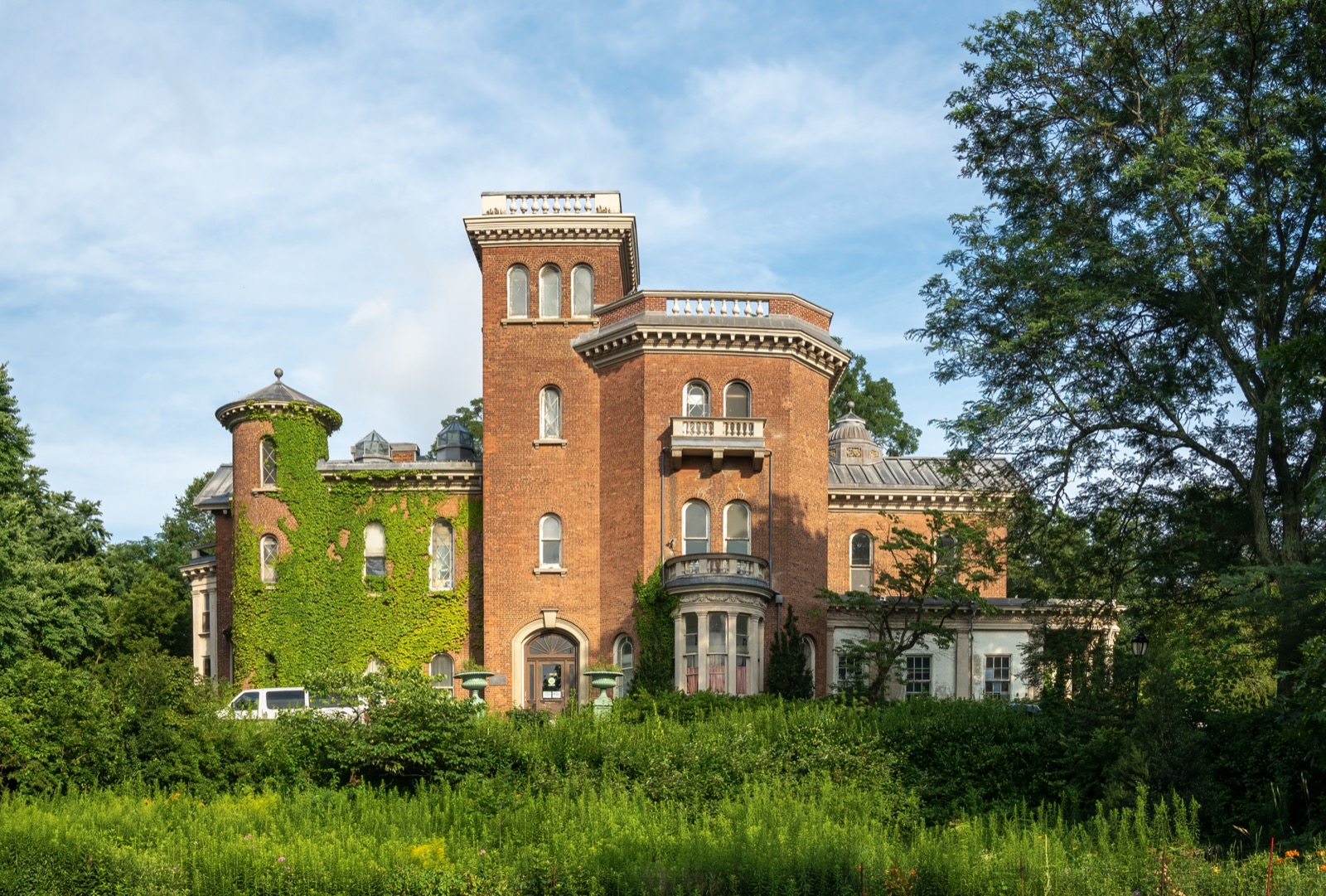
For the first half of the 19th century the slope remained countryside. The most significant figure in its transformation was Edwin Clark Litchfield, a railroad developer who purchased large tracts of the hillside in the 1850s and built an Italianate villa on its crest. That villa, completed around 1857 and designed with columned porticos and carved stone brackets overlooking the meadows below, still stands inside Prospect Park. It serves today as NYC Parks offices. Litchfield envisioned a planned residential community on his land. He got it, eventually, though it took the completion of Prospect Park in 1867 to make the vision real.
Frederick Law Olmsted and Calvert Vaux gave the slope its reason to exist
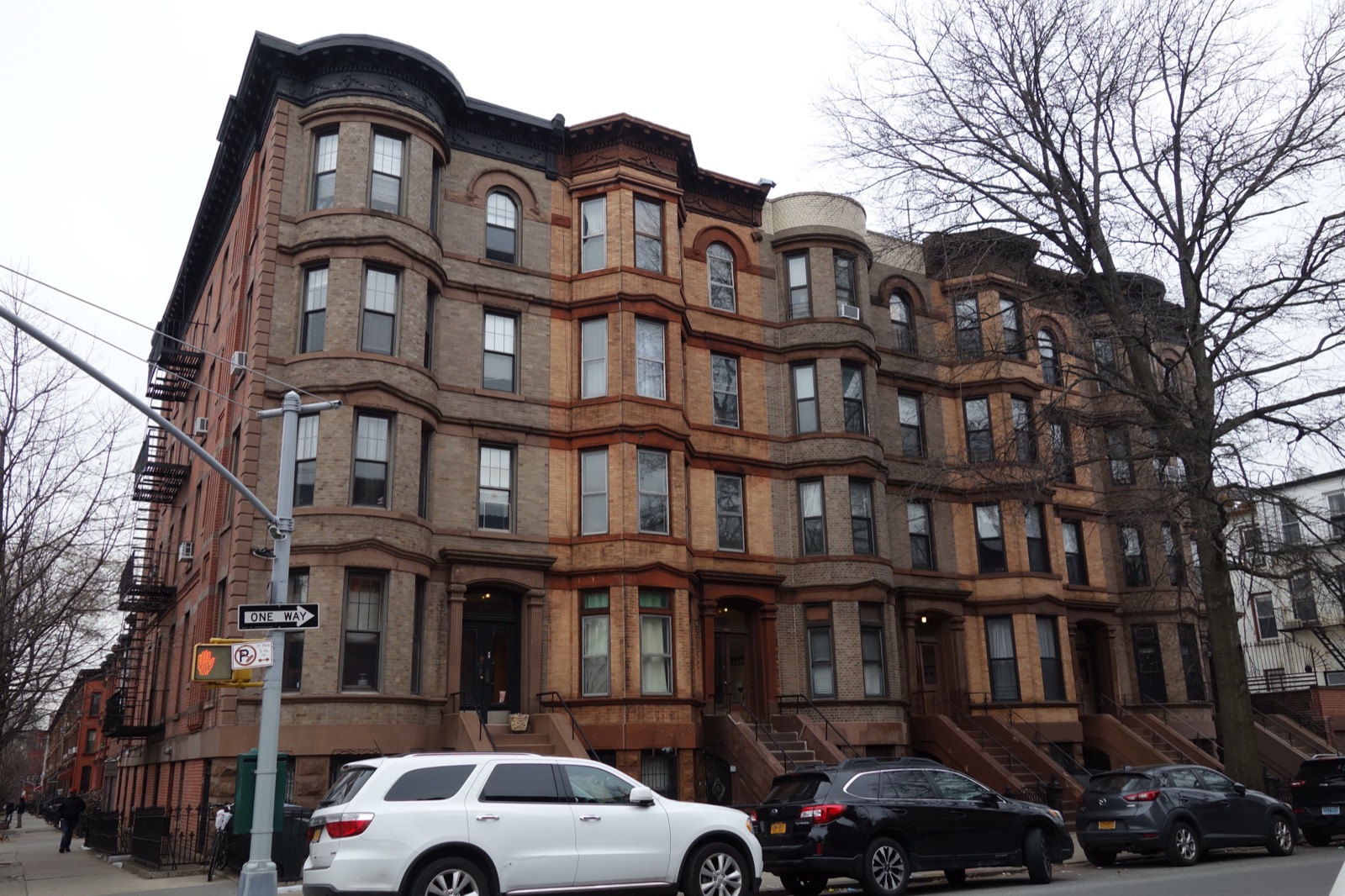
Prospect Park was designed by the same team that created Central Park, and many who know both consider the Brooklyn park the finer achievement. The park gave the hillside its defining amenity. Within twenty years of its completion, developers erected hundreds of brownstone and limestone rowhouses on the terraced blocks descending westward from Prospect Park West. The construction boom peaked between 1870 and 1890, producing an extraordinary coherent urban fabric of Italianate, French Second Empire, Queen Anne, Romanesque Revival, and Neo-Grec rowhouses that survives substantially intact today.
The Long Meadow running through the center of the park is the longest uninterrupted open meadow in any American city park, roughly 90 acres of grass bordered by mature trees. The Ravine contains what the NYC Parks Department describes as the only remaining forest in Brooklyn, a small but genuinely wild glacially carved valley with a stream and old-growth trees. The 3.3-mile perimeter drive, closed to cars on weekdays, functions as both a recreational loop and a transportation corridor for runners, cyclists, and families with strollers. The proximity of this 585-acre landscape to the residential blocks of the Slope is the fundamental fact of the neighborhood. It is why the richest people in late-19th-century America chose to build here, and it is why the neighborhood remains one of the most expensive in Brooklyn today.
The Gold Coast of Prospect Park West drew industrialists and inventors
The blocks of Prospect Park West between Grand Army Plaza and Fifteenth Street became known as the Gold Coast. This was not a casual nickname. By the 1890 census, Park Slope was documented as the wealthiest community in the nation by household income. The mansions that face the park from Prospect Park West were built for people like George Tangeman, who produced Royal and Cleveland Baking Powder, Thomas Adams Jr., who devised Chiclets chewing gum, and William Childs, inventor of Bon Ami Cleanser. The scale and quality of these buildings put them in a category with the finest townhouse rows on the Upper East Side of Manhattan.
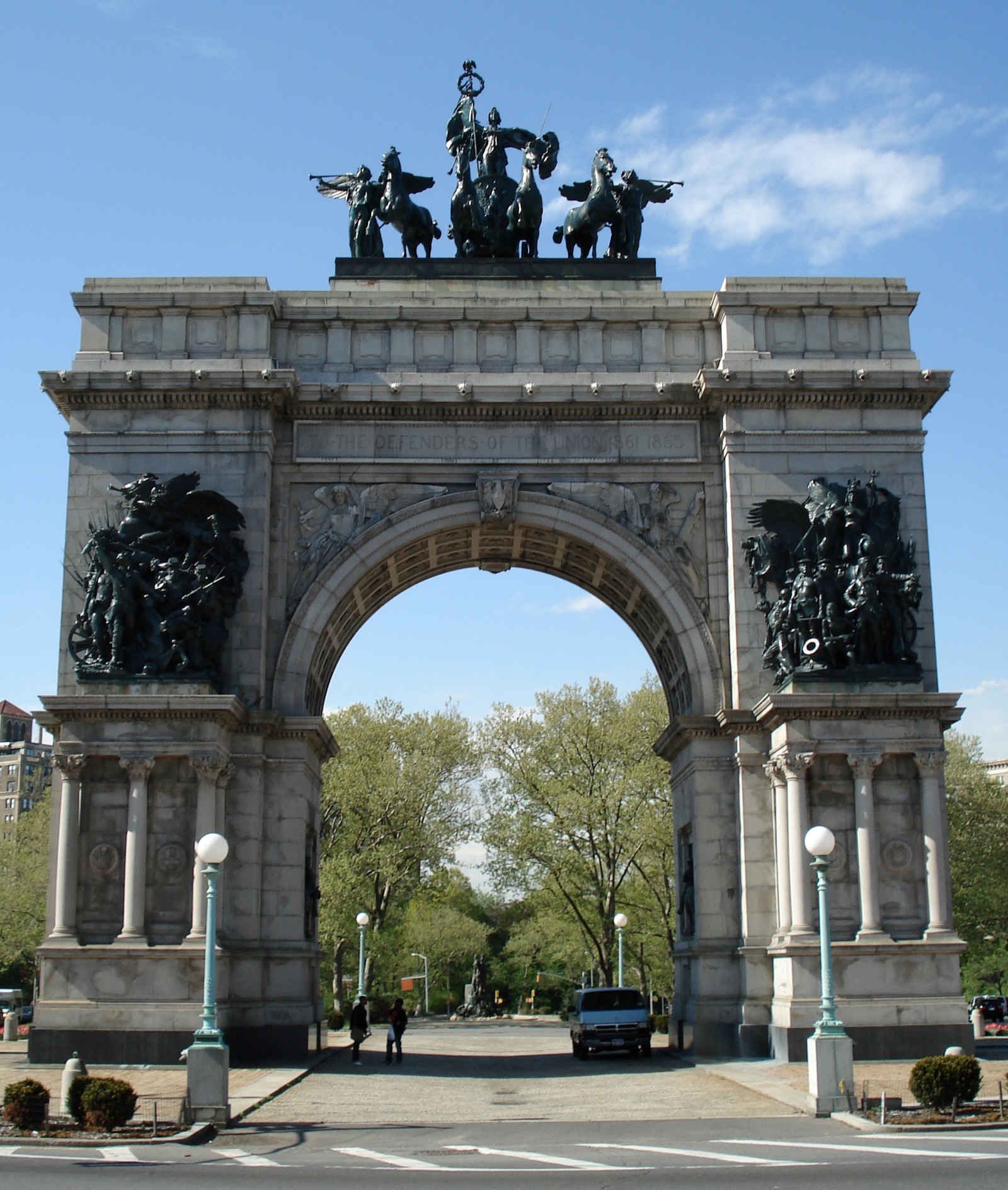
Grand Army Plaza, at the northern terminus of Prospect Park West, anchors the neighborhood with one of Brooklyn’s most monumental civic spaces. The Soldiers’ and Sailors’ Memorial Arch, designed by John Hemenway Duncan and dedicated in 1892, rises 80 feet above the plaza. Frederick MacMonnies’ bronze quadriga sits atop it. The arch commemorates Union Army veterans and is open for occasional guided tours that allow visitors to ascend into the crown. Most New Yorkers have never climbed it. The Bailey Fountain, added in 1932, gives the central plaza a second major piece of civic sculpture. On Saturday mornings the Grand Army Plaza Greenmarket fills the space with thousands of shoppers buying produce, bread, and flowers. Your Saturday morning belongs here, not inside scrubbing baseboards.
Al Capone grew up on Garfield Place and attended school three blocks away
Park Slope’s most notorious former resident was a child here before he was anything else. Al Capone’s family moved from Navy Street to the Slope when he was young, settling at 38 Garfield Place and later 21 Garfield Place. He attended PS 133 and PS 7. He was expelled at fourteen for hitting a teacher. He worked at a candy store and a bowling alley in the neighborhood. He got his start in small local gangs, the Junior Forty Thieves and the Bowery Boys, running errands and learning the mechanics of organized crime on blocks that today sell for millions. He married Mary Coughlin in a Park Slope Catholic church in December 1918 and left for Chicago the following year. His childhood home at 21 Garfield Place was listed for sale in 2025 at $2.9 million. The block is otherwise a quiet, tree-lined stretch of Italianate and Renaissance Revival rowhouses where nothing suggests the history beneath the stoops.
A literary neighborhood that has produced and attracted writers for decades
Paul Auster lived on Prospect Park West from 1980 until his death in 2024. He settled in Brooklyn when the oak-lined streets of brownstones could still be had affordably, and he stayed as the neighborhood transformed around him. His novels, including The New York Trilogy, Moon Palace, and The Brooklyn Follies, draw repeatedly on Prospect Park and its surrounding streets. His wife, the novelist and essayist Siri Hustvedt, wrote from the same brownstone. Together they became the most visible literary couple in a neighborhood dense with writers.
Jonathan Lethem’s The Fortress of Solitude draws on growing up at the Gowanus-Park Slope border in the 1970s, when the neighborhood was still rough-edged and economically mixed. The novel captures a Park Slope that no longer exists, the one before gentrification scrubbed it clean, and it functions as an accidental elegy for the diversity the neighborhood sacrificed on its way to $5 million brownstones.
Steve Buscemi has lived in the same Park Slope brownstone for decades. He was a volunteer firefighter in his younger days and returned to his old firehouse to help after September 11. John Turturro lives in Brooklyn and remains deeply identified with the borough. Maggie Gyllenhaal and Peter Sarsgaard raise their family here. Patrick Stewart has maintained a Park Slope home for years. These are not people who bought for investment. They stayed because the neighborhood delivers what it promises.
The architecture tells you everything about who lived here and when they arrived
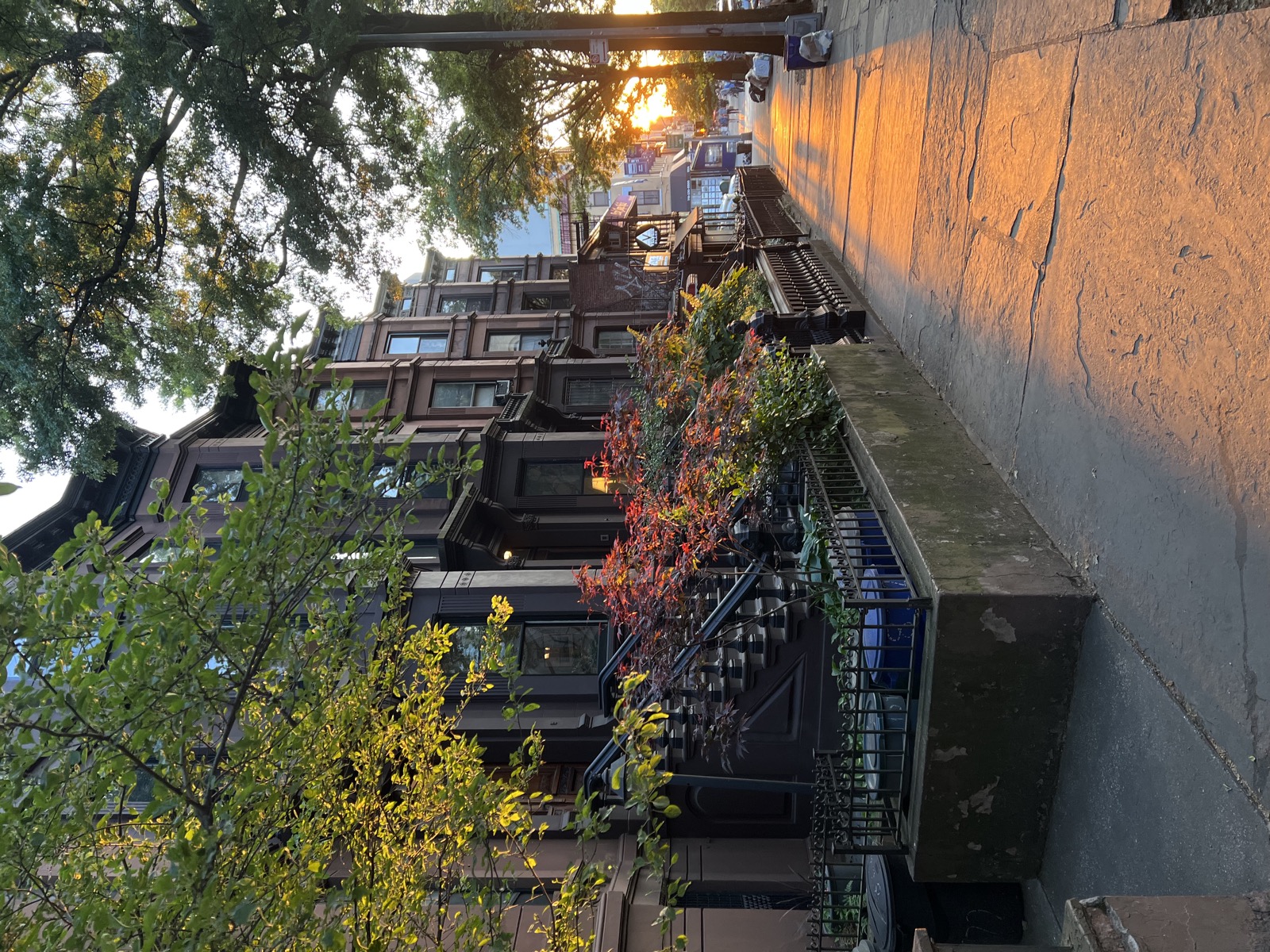
The defining material is brownstone itself, a warm brown Triassic-Jurassic sandstone quarried primarily in New Jersey and Connecticut. The typical Park Slope rowhouse rises three or four stories above a parlor floor elevated by a stoop. Ceilings run 11 to 14 feet on the parlor and upper floors. The facades carry decorative cornices, carved stone lintels, and elaborate cast-iron railings. The footprints are long and narrow, typically 20 feet wide, running deep into the block with south-facing backyards that receive afternoon light.
The architectural styles span the full range of late-Victorian residential design. Italian Renaissance with classical proportions and restrained ornament. Romanesque Revival in brick with rounded arches and heavy masonry. Queen Anne with asymmetrical facades, decorative tile, and multiple materials playing against each other. Neo-Grec with flat surfaces and precise incised ornament. French Second Empire with mansard roofs and dormers. You can read the decade of construction from the style. The blocks around Eighth and Ninth Streets, and the side streets between Garfield Place and Second Street, represent the peak of the tradition.
Inside these buildings you find original plaster medallions on the ceilings, marble fireplace mantels that have never been replaced, wide-plank hardwood floors that are old-growth and harder than anything milled today, and pocket doors that still slide on their original tracks. These interiors have survived because the buildings were well-built and because successive owners, from the original industrialists through the rooming-house era and back to single-family ownership, could not easily destroy what was too solid to tear out.
Protecting 140 years of craftsmanship requires a cleaning team that pays attention
A cleaning service that sends someone with one mop and one all-purpose spray into a four-story Park Slope brownstone is going to damage something. The parlor floor might have original wide-plank hardwood with a wax finish that water will ruin. The kitchen level might have stone tile. The garden level could be anything from flagstone to poured concrete to recently poured terrazzo. The bathrooms often have century-old hex tile where the grout cannot tolerate acid. The carved plaster cornices above doorways will push grime deeper into their crevices if you wipe them with a damp cloth. The cast-iron radiators collect dust between their fins all summer and burn it off when the steam heat kicks on in October.
Our house cleaning teams carry separate products for hardwood, stone, and tile, and they switch as they move between floors. They clean top-down so dust never settles on already-cleaned surfaces below. Decorative cornices get a soft brush. Marble mantels get a pH-neutral wipe only, never vinegar, never anything acidic. Radiators get attention between the fins, not just across the top. The wood floors get a barely damp microfiber mop and a cleaner formulated for wax finishes. These details survived since the 1880s. Our job is to keep them that way for the next generation.
The Food Co-op and the culture it created on Union Street
The Park Slope Food Co-op at 782 Union Street is one of the most unusual and genuinely community-driven institutions in American urban life. Founded in 1973 by roughly ten people operating out of a leftist community center, it has grown to nearly 17,000 member-owners. Every adult member contributes 2 hours and 45 minutes of labor every six weeks. You stock shelves, run the register, work the freezer, or sort produce in exchange for shopping privileges. The model has produced one of the most successful consumer cooperatives in the world and spawned replication attempts internationally.
The Co-op’s influence extends beyond its own walls. Its 50-year presence shaped the neighborhood’s relationship with food as a political and ethical act. Park Slope residents are disproportionately likely to seek organic, locally sourced, and ethically produced food. The concentration of specialty food shops, wine bars, and produce-focused restaurants within walking distance reflects a customer base that takes food seriously as a value system. The Brooklyn Conservatory of Music, offering affordable instruction since 1897 from its Victorian building at 58 Seventh Avenue, represents the same ethos applied to arts education. These are institutions that predate the gentrification and will likely outlast whatever comes next.
The restaurants reflect a neighborhood that takes eating seriously without being flashy
LORE on Fifth Avenue near Sixteenth Street may be the neighborhood’s most celebrated kitchen in recent years. Chef Jay Kumar, born in Mangalore, India, brings influences from Switzerland and South Asia to produce food that the Michelin Guide recognized with a Bib Gourmand distinction. The dishes are inventive without being precious, and the vegetarian program holds its own against everything else on the menu.
Al di la Trattoria at 248 Fifth Avenue has been serving northern Italian cooking of exceptional consistency for over 25 years. The Venetian braised rabbit, the handmade pasta, and the salt cod draw lines most nights. Four and Twenty Blackbirds on Third Avenue near Eighth Street turned the Elsen sisters’ salty honey pie into one of the most influential bakery items in Brooklyn. Miriam on Fifth Avenue does Israeli-Mediterranean brunch that draws weekend lines for shakshuka and housemade pastries. Brooklyn High Low on Seventh Avenue occupies the ground floor of a brownstone and has one of the most unexpectedly beautiful interior spaces in the entire neighborhood, a tea parlor that is quiet and transporting and completely unlike anything else on the avenue.
Your Saturday afternoon belongs at one of these places, not spent on your hands and knees scrubbing grout in a bathroom that was tiled during the McKinley administration. That is our job.
The co-ops along Prospect Park West need paperwork before anyone enters the building
The Gold Coast elevator buildings on Prospect Park West and the pre-war co-ops along the main avenues are not brownstones. They are brick buildings from the 1900s through the 1930s with ornamental lobbies, deep light courts, herringbone floors, and thick plaster walls. The apartments tend to be larger than anything built after 1945, with nine or ten foot ceilings and rooms that feel like rooms rather than partitioned spaces. Co-ops in this part of Brooklyn have building rules. Most require advance notice for any vendor. Some require a Certificate of Insurance naming the building as additional insured. A few require a signed vendor agreement on file before your cleaner steps into the elevator.
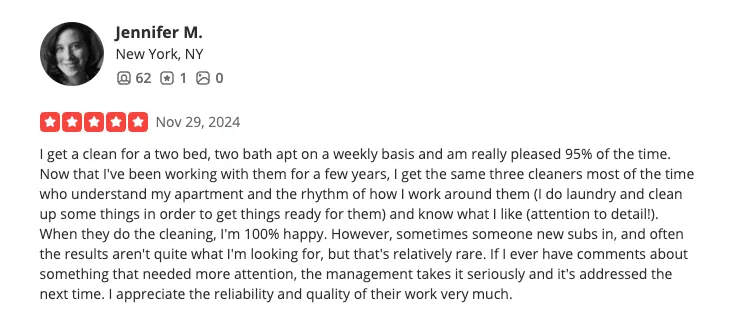
We handle all of this before your first appointment. You tell us the building name when you book and our dispatch team coordinates everything with management. For recurring apartment cleaning, we assign the same team every visit so the doorman knows them and your building manager does not receive a new vendor request every two weeks. If you have had a cleaning service turned away at the front desk before, that will not happen with us.
Families with young children need non-toxic products and teams that work around nap schedules
This neighborhood has one of the highest concentrations of young families in Brooklyn. The stroller density on Seventh Avenue is real, and homes with toddlers crawling on hardwood floors have different requirements than a studio apartment in Midtown. Every product we use in family homes is non-toxic and fragrance-free. No bleach, no ammonia, no volatile fumes in spaces where a child will be on the floor within an hour of us leaving. The floors get a pH-neutral cleaner that dries without residue.
We work around nap schedules. If your two-year-old sleeps from one to three, we start on the floors below and save the bedroom hallway for after they wake up. If the playroom looks like a tornado hit it, we clean around the chaos without rearranging everything into a system your child will not recognize. Homes with dogs returning muddy from Prospect Park get pet-hair removal built into every recurring visit, focused on the entryway, couches, and rugs where it concentrates.
Deep cleaning and move-in work for a market where brownstones change hands regularly
A proper deep cleaning in a four-story brownstone means reaching crown molding at 14 feet, pulling dust from behind radiators on every floor, scrubbing century-old grout in bathrooms, and cleaning inside cabinets that have not been opened in months. We handle move-in and move-out cleaning for the rental market, where floor-through apartments in brownstone conversions need to be spotless before a new tenant walks in.
Post-renovation cleaning is another common request. Park Slope owners invest heavily in restoring original details. They strip paint off fireplace mantels, refinish old-growth floors, and repoint brownstone facades. The plaster dust and grout haze left behind by contractors requires specialized removal that will not damage newly refinished surfaces. We have cleaned behind enough renovation crews in this neighborhood to know what the contractors leave and what it takes to remove it safely.
How the neighborhood changed from the wealthiest in America to a rooming house district and back again
The Great Depression and the postwar exodus to the suburbs dramatically altered Park Slope’s character. The grand Victorian mansions on the Gold Coast were converted into rooming houses and multi-family apartments. The quality brownstones on side streets were subdivided. Middle-class families left for Queens, Long Island, and New Jersey. Working-class Irish, Italian, and Puerto Rican families moved in. The neighborhood became substantially less affluent, and several of the grandest buildings deteriorated.
The rediscovery began in the late 1960s. In 1963, Everett Ortner, an editor at Popular Science, and his wife Evelyn, an interior designer, bought a brownstone on Berkeley Place. The building cost roughly $25,000. They began renovating it and encouraging others to do the same. Young professionals, artists, writers, and academics moved into the brownstones and discovered that beneath the subdivisions and rooming-house wear, the original architecture survived largely intact. The Park Slope Civic Council organized the community and advocated for landmark designation. By the 1980s the brownstone belt was firmly established as a prestigious address.
What happened after that was not merely gentrification but what academics call super-gentrification: the further upscaling of an already-expensive neighborhood through the in-migration of extremely high-income families who could outbid even the original gentrifiers. The median household income in Park Slope today is approximately $157,000. Renovated single-family brownstones on premier blocks sell for $3 million to $8 million. The neighborhood has become one of the most economically stratified and racially homogeneous communities in a borough defined by its diversity.
What booking looks like
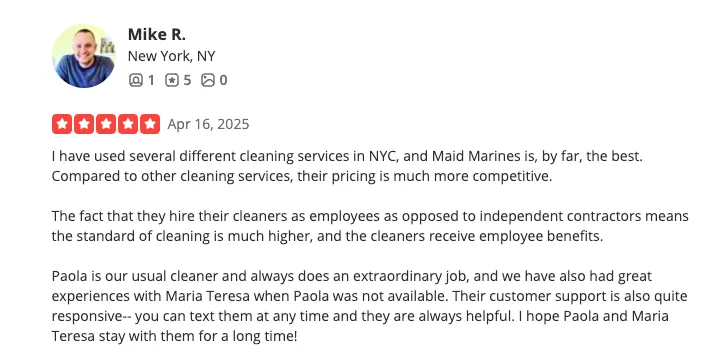
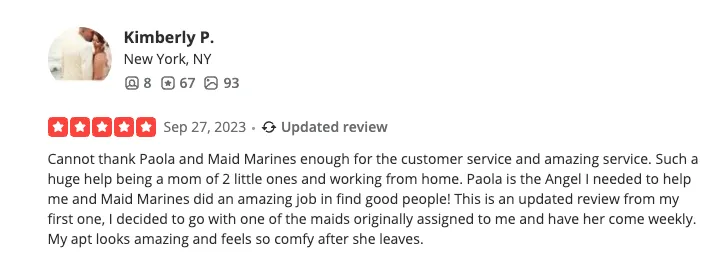
You pick your date and time on our booking page. You see your flat-rate price before you commit. If your brownstone has four floors, the price reflects that. If your co-op board needs paperwork, you tell us once and we handle it from there. Our cleaners are W-2 employees, not gig workers. They are vetted, insured, and they show up with the right products for your specific home.
We also serve nearby Bed-Stuy, DUMBO, Greenpoint, Williamsburg, and the rest of Brooklyn.