
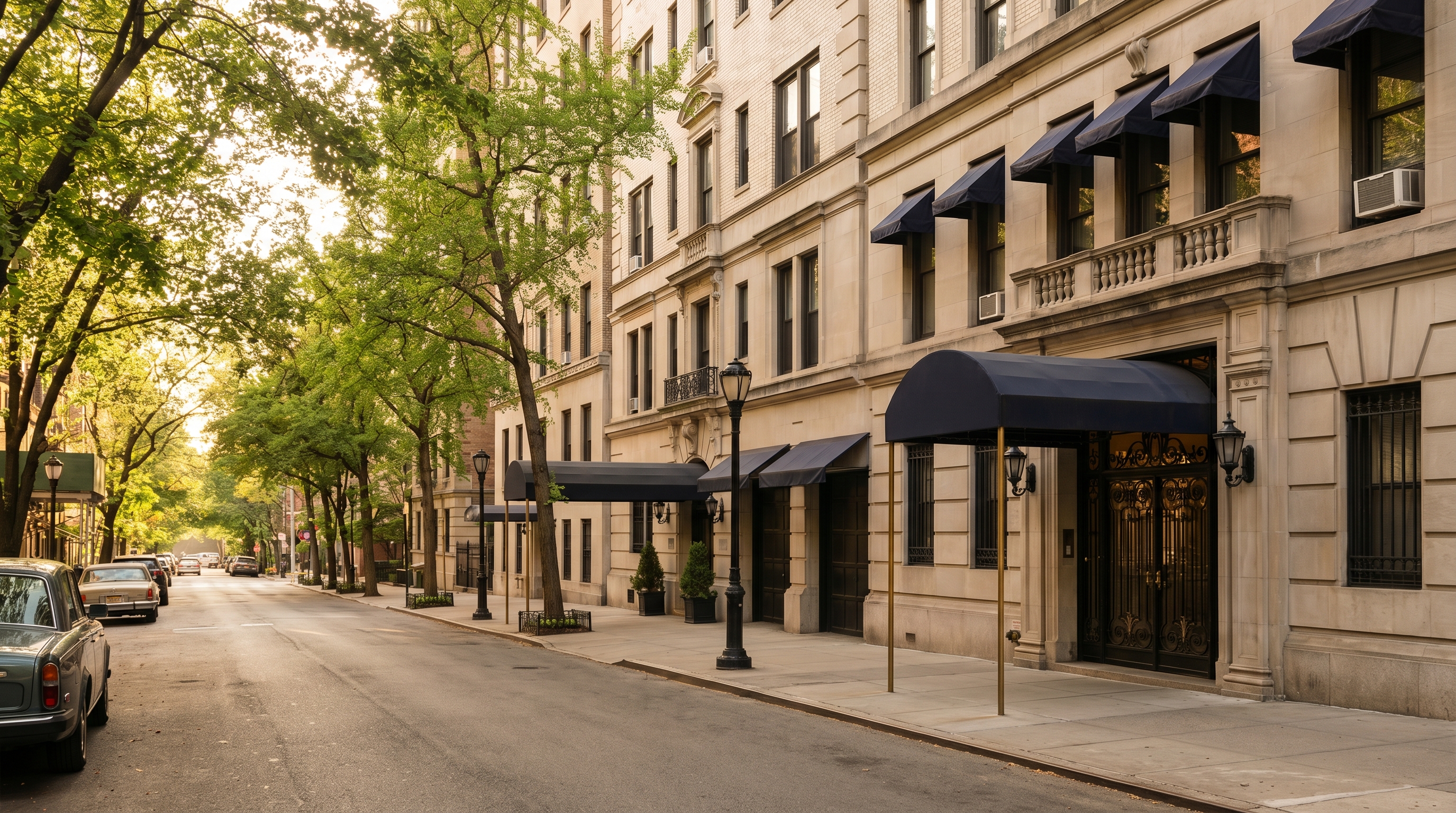
There is a rectangle of Manhattan between Central Park and the East River, 59th Street and 96th, where the city spent 150 years accumulating its finest things. Museums that hold millions of objects. Apartment buildings designed by Rosario Candela with herringbone parquet floors laid in 1930 that still catch afternoon light from park-facing windows. A stretch of Fifth Avenue once lined with private mansions belonging to the Fricks and Carnegies and Vanderbilts. Those mansions are mostly gone now, replaced by limestone co-op towers that are somehow even more exclusive. This is the Upper East Side, and it is not one neighborhood so much as several worlds stacked on the same grid, separated by avenue and era and tax bracket but sharing the same doormen, the same dry cleaners, and the same particular standards about how things ought to be maintained.
The neighborhood holds its reputation without trying. It does not market itself. The buildings speak. Park Avenue runs north through planted medians and prewar facades that have looked this way since before most of its current residents were born. Madison Avenue runs parallel one block east with galleries and cafes and flower shops that have served the same families for decades. And the Met sits at 82nd Street on land leased from the city for one dollar per year, anchoring nine museums along a single mile of sidewalk that collectively house more art than most countries.
The neighborhood that Gilded Age wealth built from Central Park to the East River
The Upper East Side story begins with the park. When Frederick Law Olmsted and Calvert Vaux broke ground on Central Park in 1858, the adjacent land along Fifth Avenue became the most desirable building ground in Manhattan overnight. By the 1880s, the avenue between 59th and 96th Streets was Millionaire’s Row. The Astors built here. The Vanderbilts built here. Andrew Carnegie commissioned a 64-room mansion at 91st Street in 1902, telling his architects to make it the largest and most modern private residence in New York. Henry Clay Frick answered with his own mansion at 70th Street in 1914, filling it with Vermeers and Rembrandts and Bellinis.
Those two mansions still stand. Carnegie’s is now the Cooper Hewitt Smithsonian Design Museum. Frick’s is the Frick Collection, one of the finest small art museums in the world. They survived because they were too beautiful to demolish and too expensive to replicate. Dozens of their neighbors were not as lucky. Between 1910 and 1950, Fifth Avenue’s private mansions fell one by one to make way for the great prewar cooperative apartment buildings that define the street today.
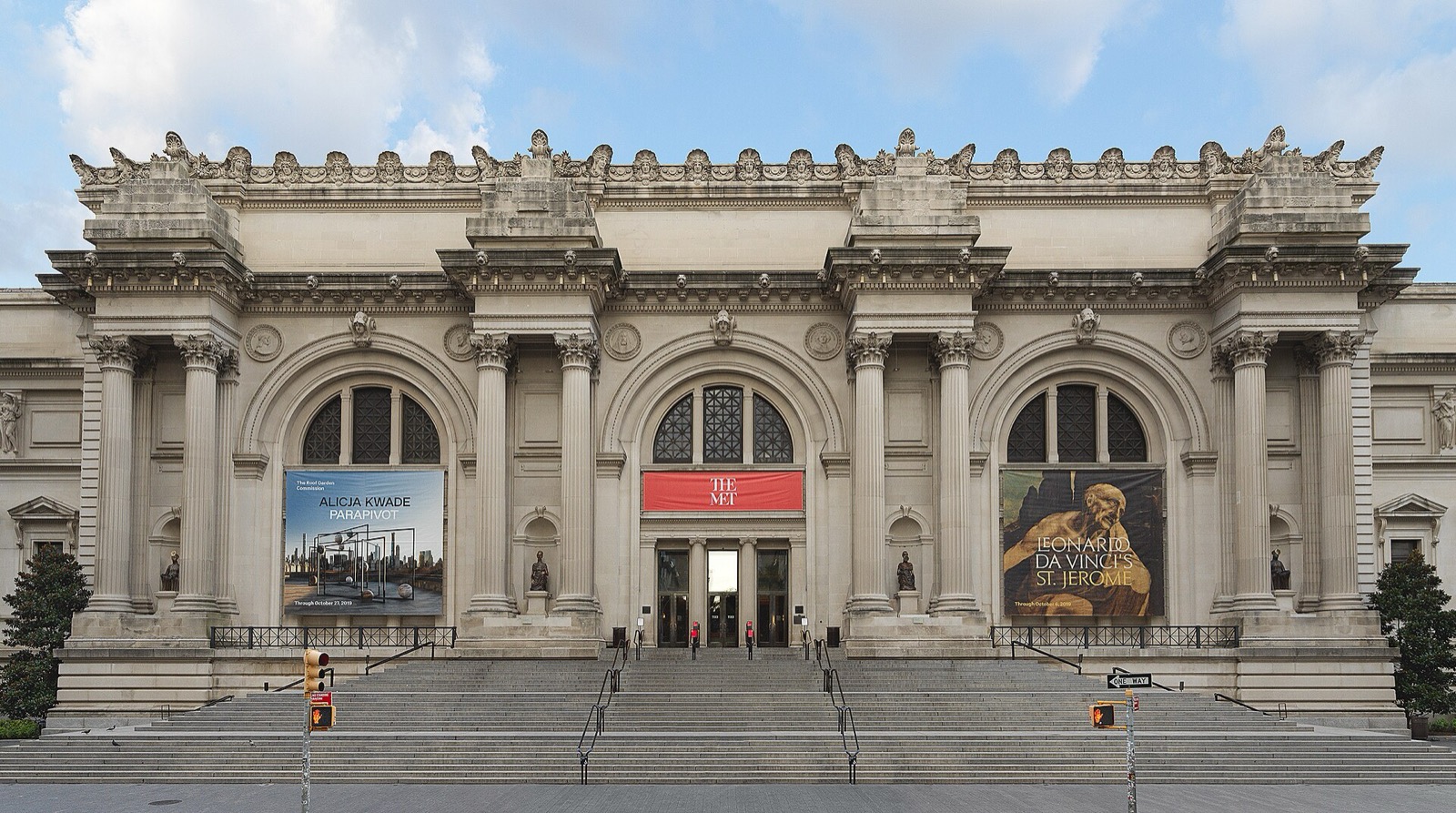
The Metropolitan Museum of Art opened on this stretch in 1880, twenty years after Central Park’s construction began reshaping the neighborhood. It started modestly. Today the Met occupies 2 million square feet, holds 1.5 million objects, and draws 6.5 million visitors annually. It sits on city parkland under a lease that has not changed since the 19th century. The building keeps growing. The art keeps accumulating. And the neighborhood keeps adding institutions beside it.
Museum Mile holds more world-class collections per block than anywhere else on earth
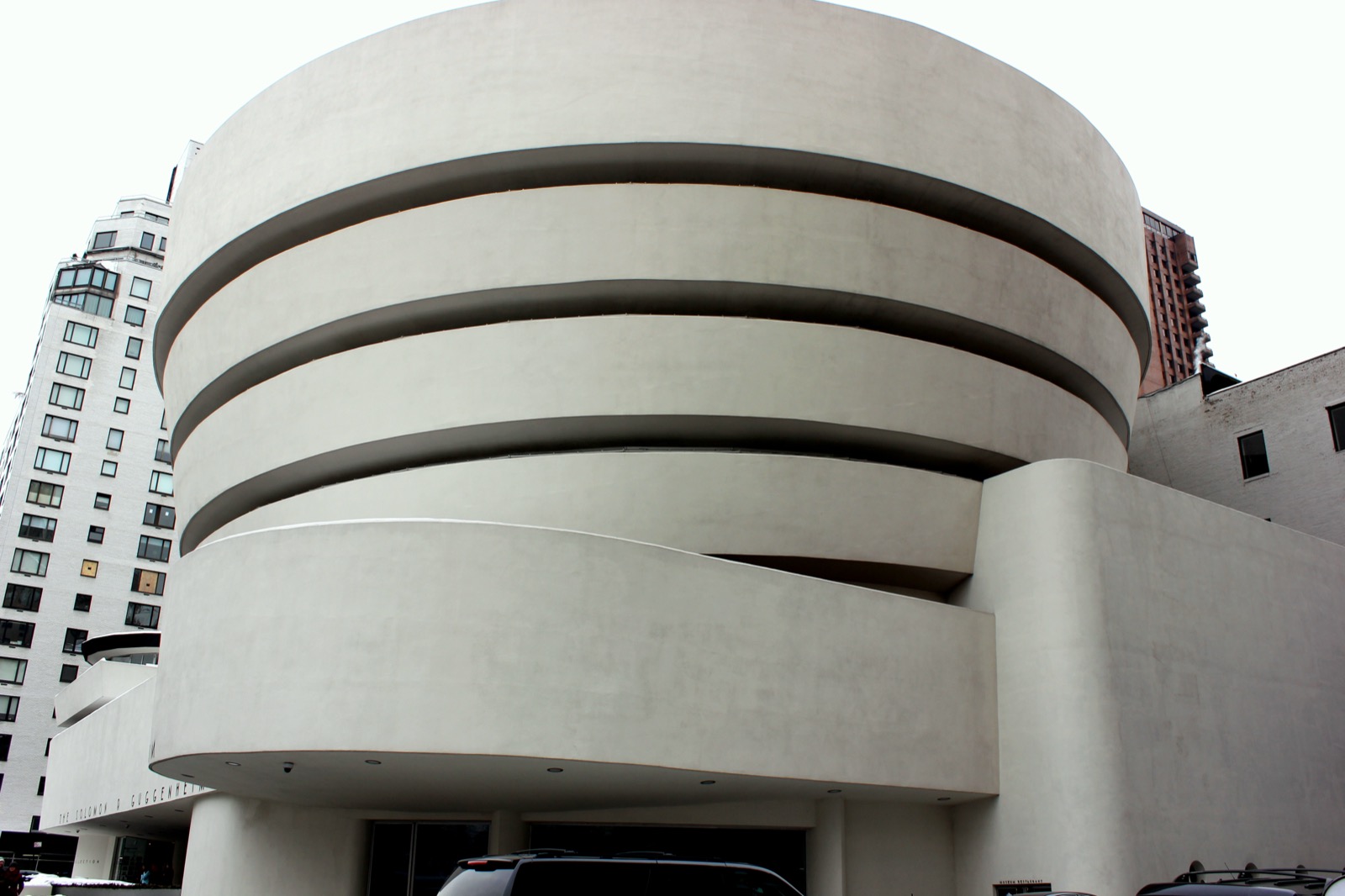
Walk north on Fifth Avenue from 82nd Street and you will pass nine museums in twenty-three blocks. The Met anchors the south end. The Solomon R. Guggenheim Museum sits at 88th Street, Frank Lloyd Wright’s spiraling white rotunda completed in 1959 over the objections of 21 artists who signed a letter protesting that the building was incompatible with displaying art. They lost that argument. The Guggenheim is now a UNESCO World Heritage Site and one of the most photographed buildings in the world.
Continue north. The Cooper Hewitt at 91st. The Jewish Museum at 92nd, housed in the Warburg mansion since 1947, a French Gothic Revival building designed by C.P.H. Gilbert in 1908. The Museum of the City of New York at 103rd. And scattered between them, the Neue Galerie at 86th Street, a museum of early 20th-century German and Austrian art inside the William Starr Miller mansion of 1914. The Neue Galerie holds Klimt’s Portrait of Adele Bloch-Bauer I, purchased in 2006 for $135 million, which was then the highest price ever paid for a painting.
This corridor was not planned. No committee sat down and decided that one mile of sidewalk should house the densest concentration of art in the Western Hemisphere. It happened institution by institution over a century, each museum drawn by the same magnetic force that drew the mansions before them: the park on one side, the money on the other, and an audience of residents who consider proximity to art a basic condition of life rather than a luxury.
From Jackie Kennedy to J.D. Salinger, the UES has always collected famous residents
The Upper East Side does not simply attract wealth. It attracts a particular kind of person who wants to live among beautiful things without making a production of it. Jacqueline Kennedy Onassis moved to 1040 Fifth Avenue in 1964 and stayed for thirty years until her death in 1994. Her apartment on the 15th floor faced Central Park directly. Real estate lore holds that she paid for the view by the inch. The building remains one of the most recognized addresses in the neighborhood.
John D. Rockefeller Jr. occupied a 24-room, 12-bath duplex at 740 Park Avenue from 1937 to 1960. The building, designed by Rosario Candela and completed in 1930, was constructed by James T. Lee, grandfather of Jacqueline Bouvier, who lived there as a child before the address became a symbol of concentrated American wealth. A single apartment at 740 Park sold in 2014 for $70 million.
Woody Allen lived and worked on the Upper East Side for decades, using the neighborhood as a setting so frequently that his films became a documentary record of its cafes, bookshops, and side streets. Tom Wolfe wrote from here. Joan Rivers maintained one of the most elaborately decorated apartments in New York at 1 East 62nd Street. J.D. Salinger grew up on Park Avenue. Madonna purchased a townhouse on East 81st Street for $40 million in 2009. Paul Newman and Joanne Woodward lived here quietly for years. Vladimir Horowitz practiced piano here. Andy Warhol kept an address here.
The neighborhood accommodates fame without noticing it. The doormen do not react. The neighbors do not photograph. This is part of the arrangement.
Yorkville remembers its German past in butcher shops and beer halls that survived a century of change
The Upper East Side east of Third Avenue is a different neighborhood entirely. This is Yorkville, and for a hundred years it was the center of German-American life in New York. The story begins with tragedy. On June 15, 1904, the steamship General Slocum caught fire on the East River carrying 1,400 passengers from the German community of Kleindeutschland on the Lower East Side. Most were women and children headed to a church picnic. Over 1,000 people died. The surviving families, devastated, abandoned their old neighborhood and relocated north to Yorkville, concentrating the German-American presence between Third Avenue and the river from the 70s to the 90s.
East 86th Street became German Broadway. Bakeries, beer halls, delicatessens, and social clubs lined the thoroughfare. Schaller and Weber opened at Second Avenue and 86th Street in 1937, a German-Austrian butcher shop and delicatessen that still operates today. Heidelberg Restaurant opened two years later at 1648 Second Avenue and remains one of the last German restaurants in the country, its menu largely unchanged since 1963. These are not tourist attractions. They are commercial survivors of a community that once filled these blocks and has now mostly dispersed, leaving behind a handful of institutions that refuse to close.
The demolition of the Third Avenue El in the 1950s accelerated the change. Anti-German sentiment during and after World War II pushed many families to anglicize their names or leave. The brownstones gave way to high-rises. But the butcher shop stays open. The restaurant still serves schnitzel. And the older residents remember when Second Avenue was a different world.
The prewar cooperative apartments represent a building tradition that demands preservation, not just cleaning
The great Park Avenue and Fifth Avenue cooperatives were designed in the 1920s and 1930s by architects who understood that residential buildings could be works of art. Rosario Candela designed more of these buildings than anyone, creating floor plans so elegant that they have been studied by architecture students for a century. Emery Roth, J.E.R. Carpenter, and others contributed buildings that collectively make the Upper East Side the world’s greatest collection of prewar luxury apartment architecture.
These buildings share characteristics that affect how they must be maintained. Thick masonry walls that keep noise out and moisture stable. Ceilings at 10 to 12 feet with elaborate plaster cornices and ceiling medallions. Herringbone parquet floors laid in patterns that catch light differently depending on the time of day. Marble-floored entry foyers. Cast-iron radiators behind decorative covers. Separate service entrances for deliveries and household staff. Every surface in these apartments was selected for beauty and durability, but durability does not mean invulnerability.
Herringbone parquet has seams running in two directions and the finish wears unevenly at each joint. A steam mop will push moisture into those seams and warp the wood over time. An acidic cleaner on the marble bathroom floors will etch permanently. The plaster crown molding at 11 feet collects dust that nobody addresses unless someone brings the right extension tools. These are surfaces installed nearly a hundred years ago, still in original condition, still catching that afternoon light from the park. They need a cleaning approach that protects what time has already preserved.
Our teams carry surface-specific products and switch between them as they move through a pre-war apartment. Flat microfiber mop with pH-neutral hardwood solution for the parquet. Soft dry cloth for the plaster. No vinegar, no ammonia, no spinning brushes anywhere near original materials. This is not extra caution. This is the baseline for cleaning a home where a wrong product choice on a 1930s floor is not something you can fix with a second pass.
Your Saturday belongs at the Met or JG Melon, not scrubbing radiator fins before heating season
The Upper East Side offers a quality of daily life that most neighborhoods cannot match. You can walk from your apartment to the Metropolitan Museum in minutes. You can have lunch at JG Melon, the cash-only burger institution at 74th and Third that has not changed since 1972. You can sit at the counter at Lexington Candy Shop, which has been serving egg creams and tuna melts since 1925. You can eat at Cafe Boulud inside the Surrey Hotel or wait in line for strudel at Cafe Sabarsky in the Neue Galerie, a Viennese coffeehouse operating inside a Gilded Age mansion.
Carl Schurz Park runs along East End Avenue between 84th and 90th Streets, 15 acres of green space with an East River promenade that offers views of Hell Gate and the Triborough Bridge. Gracie Mansion sits inside the park, built in 1799 by merchant Archibald Gracie, now the official residence of every New York City mayor since Fiorello LaGuardia in 1942. The park is quieter than Central Park and almost entirely unknown to people from outside the neighborhood.
None of this is available to you if your Saturday is consumed by the cleaning that accumulated during the week. The cast-iron radiators need their fins cleaned before October or the first blast of steam heat fills the apartment with burning dust. The parquet needs proper treatment, not a quick swipe. The crown molding at ceiling height needs someone who can actually reach it. These are the tasks that eat a weekend, and they are exactly the tasks that a trained team handles in three hours while you walk the park or sit at the museum. Book your cleaning and let us give you back the neighborhood.
Carnegie Hill and the landmarked district where every building is protected and every surface matters
Carnegie Hill runs from approximately 86th to 96th Street between Fifth and Third Avenues. The area was designated a landmark historic district in 1974, protecting roughly 400 buildings in styles ranging from Federal to Georgian. The townhouses here are among Manhattan’s finest. Four and five stories, no elevator, original woodwork on each floor, and garden levels with flagstone or brownstone that require careful product selection.
The name comes from Andrew Carnegie’s mansion at 91st and Fifth, now the Cooper Hewitt. Carnegie chose this location in 1898 because it was far enough north to build on a grand scale but close enough to society to remain relevant. His presence attracted other wealthy families, and the side streets filled with townhouses and small apartment buildings of exceptional quality. The Carnegie Hill Historic District was one of the earliest landmark designations in the city and one of the most fiercely defended.
Today these townhouses present a specific cleaning challenge. You cannot use the same approach on the parlor floor pine as on the kitchen stone tile one level down. The garden levels may have original flagstone that stains permanently with the wrong product. The upper floors have plaster walls and wooden banisters that require different tools than the marble vestibule at street level. Our teams switch products between floors and treat each level as its own job, because in a landmarked townhouse, the materials are not just surfaces. They are the building’s reason for protection.
Every UES building has protocols and we already know most of them
Most co-ops west of Lexington Avenue require 48 hours advance notice for any vendor. Some require a Certificate of Insurance naming the building as an additional insured. A few require both plus a signed vendor agreement and a copy of our workers’ compensation policy. The luxury condos along Fifth Avenue have strict service elevator time windows. The older buildings on Park Avenue have specific freight entrance hours. Some boards require vendor registration weeks in advance.
If you have ever had a cleaning service turned away at the front desk because the paperwork was not filed, you understand the problem. It wastes your time and theirs. Tell us your building name when you book and we coordinate everything with management before the first appointment. COI, elevator scheduling, notice periods, vendor registration. Our dispatch team works with UES buildings regularly and knows what most of them require before we ask. After the first visit, we handle every subsequent notification automatically.
What it looks like to have the Upper East Side’s best cleaning service handle your home
You pick your date and time on our booking page. You see your flat-rate price before you commit. If your building has access requirements, you tell us once and we handle it every time after that. Our cleaners are W-2 employees, not contractors from a gig platform. They are vetted, insured, and they arrive with the correct products for your specific surfaces.
If you are in a classic seven and want every radiator cover and vent grille dusted before October, that is part of the visit. If you are in a Carnegie Hill townhouse and need each floor treated as a separate job, that is our standard approach for those buildings. If you need a quarterly deep clean to supplement your daily housekeeper, we coordinate with them directly so there is no overlap or confusion.
UES residents also use us for move-in and move-out cleaning for the neighborhood’s active co-op and condo resale market, and recurring maid service on weekly or biweekly schedules. We serve the nearby Upper West Side and all of Manhattan.