
Astoria is named for a man who gave it almost nothing. In 1839, developer Stephen Alling Halsey christened his new waterfront hamlet after John Jacob Astor, the wealthiest person in America, hoping the gesture would prompt a financial investment in the neighborhood. Astor donated $500 to a local library and otherwise ignored the place entirely. His indifference did not matter. The name stuck, and the neighborhood became one of the most layered, culturally dense, and architecturally distinctive communities in all five boroughs. Nearly 190 years later, Astoria carries the name of a man who could not be bothered while the people who actually built it left their mark in brick, in music, in food, and in a piano factory that still hums along the waterfront.
The neighborhood where pianos are still made by hand
The Steinway and Sons piano factory has operated on the Astoria waterfront since 1870. That is not a plaque-on-a-building fact. The factory at 41-01 Steinway Street is a National Historic Landmark and it is still active. Concert grand pianos for Carnegie Hall, the Vienna Philharmonic, and classical soloists across the world are built here by hand, each one taking roughly a year to complete. Every Steinway concert grand played on a major stage anywhere on Earth was made in this Queens neighborhood.
William Steinway, son of company founder Heinrich Steinweg, did not just build a factory. He built an entire self-contained town. Steinway Village included worker housing, a post office, a school, a kindergarten (one of the first in New York City), a tavern, a billiards hall, and a park. The workers’ cottages he constructed along 38th Street in the 1870s still stand today, forming the Steinway Street Historic District and listed on the National Register of Historic Places. They are two-story wood-frame and brick cottages, a rare surviving example of 19th-century company-town housing anywhere in New York.
The Steinway Mansion itself, an Italianate villa at 18-33 41st Street, was built in 1858 by scientific instrument maker Benjamin Pike Jr. and purchased by William Steinway in 1870. It became the family residence and social headquarters for the village. The mansion was designated a New York City Landmark in 1967 and added to the National Register of Historic Places in 1983.
The German-American craftsmen who built Steinway Village and the surrounding residential blocks left their signatures in the brickwork throughout the neighborhood. The quality of masonry in central Astoria is frequently noted by architectural historians. The ornate corbeling at cornice lines, the precise mortar joints, the decorative terra cotta detailing on walkup facades from the 1900s through the 1930s all speak to a building tradition that valued craft over speed.
Protecting those surfaces requires the same kind of care that went into laying them. The plaster walls in these pre-war buildings dent if you bump them with a vacuum handle in a narrow hallway. The original hardwood floors have gaps between the planks where water and grit accumulate if you use a standard wet mop. The cast-iron radiators have fins that collect dust all summer and burn it off in October when the steam heat kicks on. A cleaning service that treats these apartments the same as new construction will damage something on the first visit. Our teams dust the radiator covers and the vents above them, clean floors with damp microfiber instead of flooding them, and move carefully through the three-foot-wide hallways that define Astoria walkup life.
Where the Marx Brothers made their first films and Sesame Street found a home
Astoria’s connection to American film and television is older than Hollywood’s dominance. The Famous Players-Lasky Corporation, which later became Paramount Pictures, built its East Coast production studio at 35th Avenue and 36th Street in 1920. The original building is a Spanish Colonial Revival landmark with red tile roofing and arched entryways. It is still standing and still in use.
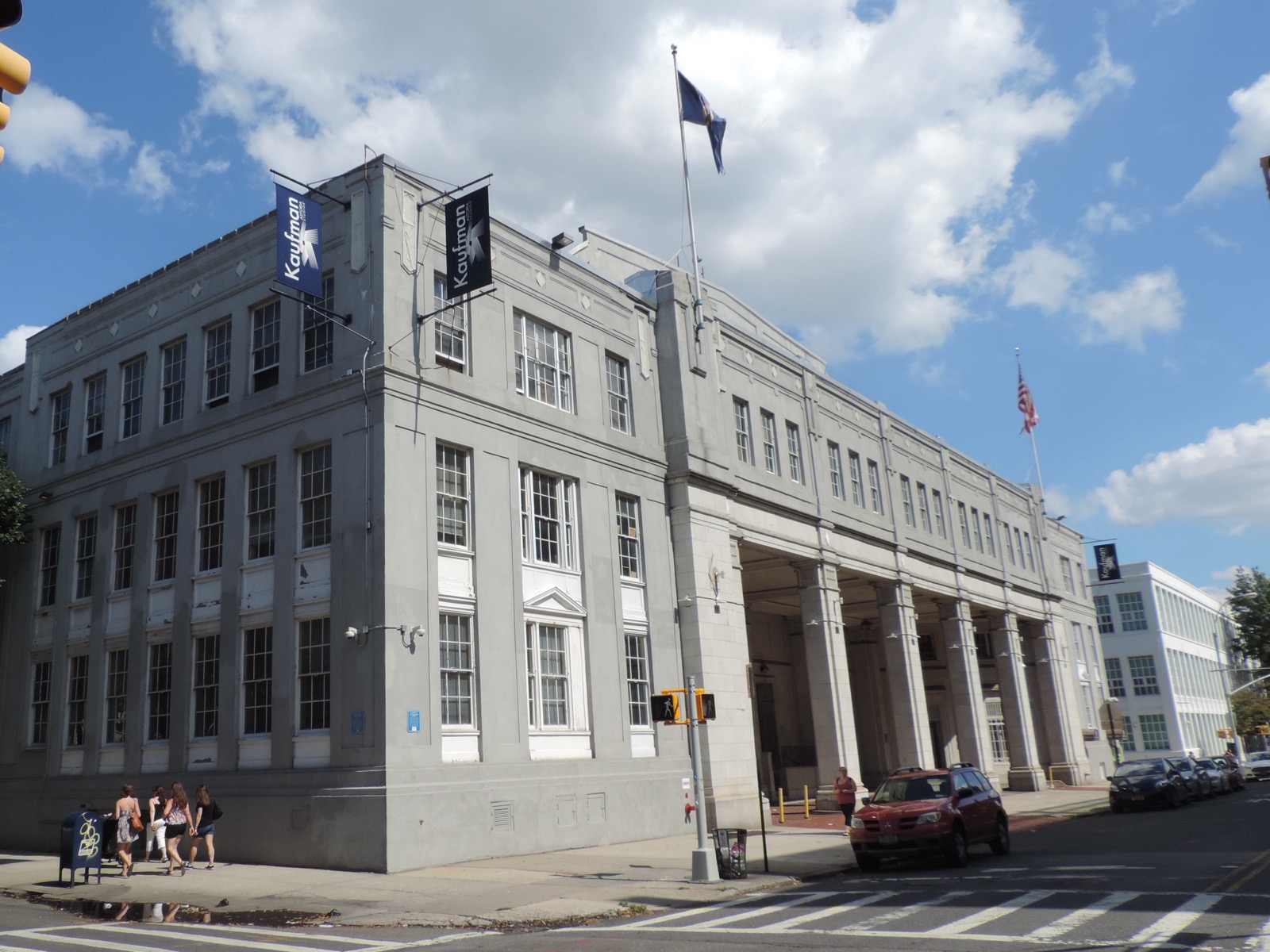
In the silent film era, Astoria Studios chose its location for proximity to Broadway talent. Actors could perform on stage at night and film during the day. The Marx Brothers shot their first two films here while still doing Broadway shows. “The Cocoanuts” in 1929 and “Animal Crackers” in 1930 were both produced at the Astoria facility, with Groucho, Harpo, Chico, and Zeppo commuting from the theater each morning. Rudolph Valentino, Gloria Swanson, and W.C. Fields all worked on this same Queens block.
During World War II, the U.S. Army Signal Corps took over the studio for training films. After falling into disrepair in the 1970s, the complex was revived in 1982 as Kaufman Astoria Studios, named for real estate developer George S. Kaufman. It remains one of the largest film production complexes on the East Coast.
The productions that have called Kaufman home read like a summary of American television itself. Sesame Street moved here in 1993 after 24 years in Manhattan, and Big Bird, Elmo, and the rest of the cast have been taped in Queens ever since. The Cosby Show filmed here. Orange Is the New Black. Nurse Jackie. Boardwalk Empire. Netflix and HBO both maintain production relationships with the facility.
Sesame Street’s presence alone makes the block unlike anything else in Queens. The show has taped at Kaufman continuously since 1993, making Astoria the longest-running home of the most watched children’s program in television history. Big Bird’s nest, Oscar’s trash can, and Hooper’s Store all exist as physical sets inside this building on 35th Avenue. Production crews, puppeteers, and child actors cycle through the neighborhood daily during taping seasons. You can walk past the studio loading docks on a Tuesday morning and see Muppet-scale set pieces being wheeled through freight doors. No other residential neighborhood in New York doubles as the production home of a show that has been on the air since 1969.
Adjacent to the studios, the Museum of the Moving Image opened in 1988 as the only museum in the United States dedicated entirely to the art, history, technique, and technology of film, television, and digital media. It underwent a $67 million expansion in 2011. Free admission on Fridays makes it one of the best two-hour escapes in Queens.
Your Saturday afternoon belongs at the Museum of the Moving Image, browsing the Jim Henson exhibit and watching archival footage in the screening room. It does not belong scrubbing bathroom tile. If your apartment cleaning falls on a Friday, the museum is free and four blocks from the N train.
One hundred languages spoken in roughly one and a half square miles
Astoria is not diverse in the way a corporate brochure means that word. It is diverse in the way that a Turkish cafe stands next to a halal butcher next to a Colombian bakery next to a Greek pastry shop that has been in the same spot since 1973. Census researchers have identified over 100 distinct languages spoken by residents of this neighborhood. That makes it one of the most linguistically dense communities on Earth.
The Greek immigration wave that defined modern Astoria began in the early 20th century and accelerated after World War II and the Greek Civil War. By the 1970s, an estimated 70,000 to 100,000 Greek and Greek-Cypriot immigrants and their descendants lived here, earning the neighborhood the title of “the Greek capital of the United States.” The community built Saint Demetrios Greek Orthodox Church on 30th Drive in 1927, which remains the largest Greek Orthodox church in Queens and a cultural anchor for Greek Astoria.
Titan Foods at 25-56 31st Street is the largest Greek grocery store in the United States. The imported olive oils, the feta from specific Greek islands, the tinned fish and specialty items flown in from Athens. Greek families drive from Long Island and New Jersey to shop here. It is a pilgrimage site for Greek food culture nationally.
Though the Greek population has dispersed to Long Island suburbs since the 1980s, the institutions persist. The Greek Independence Day Parade still fills 31st Street every March. The kafeneions on 31st Avenue still serve thick sweet coffee in tiny cups and argument in generous portions. The blue and white flag still hangs from balconies throughout upper Astoria.
The stretch of Ditmars Boulevard and Broadway between 31st and 35th Streets still functions as the cultural spine of Greek Astoria. Taverna Kyclades on Ditmars draws lines out the door for grilled octopus and whole fish. Stamatis and Gregory’s 26 Corner Taverna have been serving moussaka and lamb chops on the same blocks for decades. The Hellenic Cultural Center on Ditmars hosts language classes and youth programs that keep the traditions alive for second and third generation Greek-Americans who grew up here. Saint Demetrios Church still holds its annual Greek Festival every summer, filling 30th Drive with souvlaki smoke and bouzouki music for three days straight. No other neighborhood in the country maintains this density of Greek cultural infrastructure in such a compact footprint.
Their outgoing migration was met by waves of new arrivals who transformed Steinway Street into one of the most distinctive ethnic commercial corridors in the city.
Little Egypt and the six blocks that smell like the entire Middle East
Steinway Street between Astoria Boulevard and 28th Avenue is called Little Egypt, though the name understates what actually happens there. It started in 1987 with Kebab Cafe, the first Egyptian-owned establishment on the strip. Between 2000 and 2015, Jordanians, Egyptians, Yemenis, and Moroccans all arrived in what they saw as a flourishing neighborhood just fifteen minutes from Manhattan.
Today the corridor is a compressed version of the entire Arab world. Egyptian spice shops with burlap sacks of cumin spilling onto the sidewalk. Yemeni restaurants serving lamb mandi over enormous platters of rice. Hookah cafes where old men play backgammon in the afternoon smoke. Bangladeshi grocers with produce you cannot find anywhere else in the borough. The smell of shisha, cardamom coffee, and grilled meat drifts six blocks in either direction. The stretch between 25th and 28th Avenues on Steinway is home to the largest Egyptian community in the northeastern United States. Families from Cairo, Alexandria, and Upper Egypt settled here in waves through the 1990s and 2000s, drawn by affordable rents and an existing Arabic-speaking infrastructure that made the transition easier. The community built its own mosques, travel agencies, and money transfer shops alongside the restaurants. On a Friday afternoon the sidewalks fill with families and the cafes overflow onto folding chairs set up between parked cars.
Kebab Cafe at 25-12 Steinway Street remains the corridor’s most celebrated restaurant. Chef Ali Hassan runs a tiny, eccentric, and brilliant operation with no printed menu. He cooks whatever he feels like that day. You sit down and you trust him. Sabry’s does Egyptian-style seafood. Mombar, opened by chef Moustafa El Sayed from Alexandria, serves some of the best Egyptian cooking in the city. The Yemeni coffeehouses offer communal pots of Mufawar brewed with creamy milk and cardamom.
Alongside the Middle Eastern community, Bangladeshi, Brazilian, Mexican, Ecuadorian, and Colombian families have filled the inland neighborhoods. The Brazilian community produced excellent churrasco restaurants around 36th Avenue. The Latin American population concentrated in the southern blocks near Woodside contributes a significant Spanish-language commercial culture.
This is a neighborhood where daily home cooking is not a hobby but a cultural practice. Greek, Egyptian, Yemeni, Bangladeshi, Colombian, and a dozen other culinary traditions play out in apartment kitchens across Astoria every evening. That level of cooking with oil produces grease accumulation that a surface wipe cannot address. The film builds on backsplash tile, inside range hood filters, on cabinet faces above the stove. If your kitchen has months of accumulated buildup from daily cooking, the first visit should be a deep clean that strips everything down to the original surface. Once that reset is done, recurring visits keep it from coming back.
The bridge that inspired a continent and the pool that hosted Olympic trials
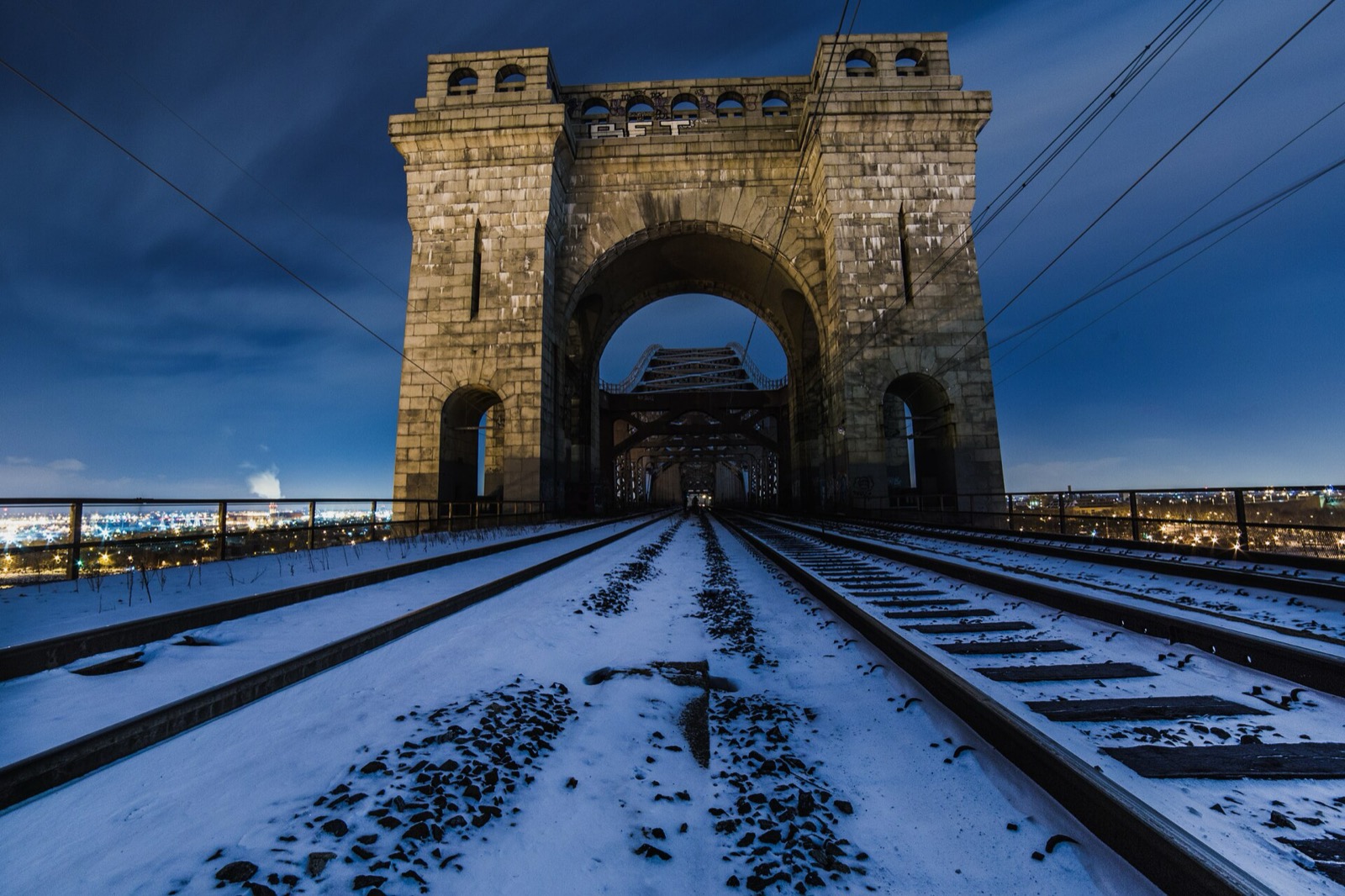
Astoria Park is sixty acres of waterfront along the East River, anchored by one of the most impressive pieces of bridge engineering in the Western Hemisphere. The Hell Gate Bridge, completed in 1916 by engineer Gustav Lindenthal, was the longest steel arch bridge in the world when built. Its crimson steel arch carries Amtrak trains across the turbulent tidal strait that the Matinecock people fished for centuries before European contact.
The bridge’s influence extended far beyond Queens. Australian engineers explicitly used the Hell Gate Bridge as the design template for the Sydney Harbour Bridge, completed in 1932. A bridge in Astoria Park became the model for one of the most recognizable structures in the Southern Hemisphere.
At the base of the park sits the Astoria Pool, opened on July 2, 1936, as the first of eleven giant swimming pools that Parks Commissioner Robert Moses built citywide that summer. It is 330 feet long and 165 feet wide, the largest public pool in New York City. WPA administrator Harry Hopkins called it “the finest in the world” at the opening ceremony. Two days later, on July 4, 1936, the pool hosted the U.S. Olympic trials for women’s swimming and diving, sending athletes directly to the Berlin Games. The pool went on to host Olympic trials again in 1952 and 1964. It was designated a New York City Landmark in 2006.
The RFK Bridge approach towers rise from the park’s southern end, their Art Deco mass a dramatic counterpoint to the Hell Gate’s steel elegance. Together, the two bridges frame one of the most architecturally commanding park views in any American city.
A block from the waterfront on Vernon Boulevard, Socrates Sculpture Park occupies a former landfill that artist Mark di Suvero transformed into an outdoor sculpture museum in 1986 with help from his neighbor, sculptor Isamu Noguchi. The park hosts rotating large-scale installations, free yoga on Saturdays, and outdoor film screenings on Wednesday nights in summer. It celebrates its 40th anniversary in 2026.
Christopher Walken grew up above a bakery on Broadway
Astoria has produced more performers, musicians, and entertainers per square block than most people realize. Christopher Walken was born Ronald Walken at 30-83 29th Street in 1943. His parents ran Walken’s Bakery at 29-13 Broadway. He grew up above the shop before the Deer Hunter, before the Oscars, before the cowbell sketch. A kid from a Queens bakery who became one of the most distinctive actors in American film.
Ethel Merman was born Ethel Agnes Zimmermann at 29-08 31st Avenue in 1908, the daughter of German immigrants. She changed her last name to fit it on a nightclub marquee and became the most powerful voice in Broadway history. Her belting soprano defined musical theater for three decades.
Tony Bennett was born in Astoria and later founded the Frank Sinatra School of the Arts in the neighborhood. Cyndi Lauper grew up here and has cited the neighborhood as a formative influence on her identity and aesthetic. Tony Canzoneri, boxing world champion in three weight classes during the 1920s and 1930s, was raised in Astoria after his family arrived from Louisiana.
The concentration of working actors, musicians, filmmakers, and visual artists in Astoria today remains among the highest in New York City outside Manhattan. This is partly logistical. Kaufman Astoria Studios creates an industry ecosystem that draws production staff and creative-economy workers. It is partly economic. Artists who cannot afford Manhattan or North Brooklyn but need excellent subway connections find that the N and W trains put them in Midtown in twenty minutes.
The oldest beer garden in New York City has been pouring since 1910
Bohemian Hall and Beer Garden at 29-19 24th Avenue is not merely old. It is a direct line to a version of Queens that most people have forgotten existed. Czech and Slovak immigrants formed the Bohemian Citizens’ Benevolent Society of Astoria in 1892. In 1910, they laid the cornerstone of Bohemian Hall. The main hall served as a Sokol gymnasium. By 1919, the outdoor bar and park were finished, just in time for Prohibition to ban the sale of alcohol. The beer garden managed to keep serving throughout by operating as a nonprofit cultural center.
It is the oldest beer garden in New York City. At one time, over 800 beer gardens operated in the five boroughs. Three were in Astoria alone. Bohemian Hall is the last survivor, listed on the National Register of Historic Places in 2001. The massive outdoor space under a canopy of old trees fills with families, young professionals, and Czech lager on summer evenings.
Rowhouses near Ditmars have their own cleaning problems
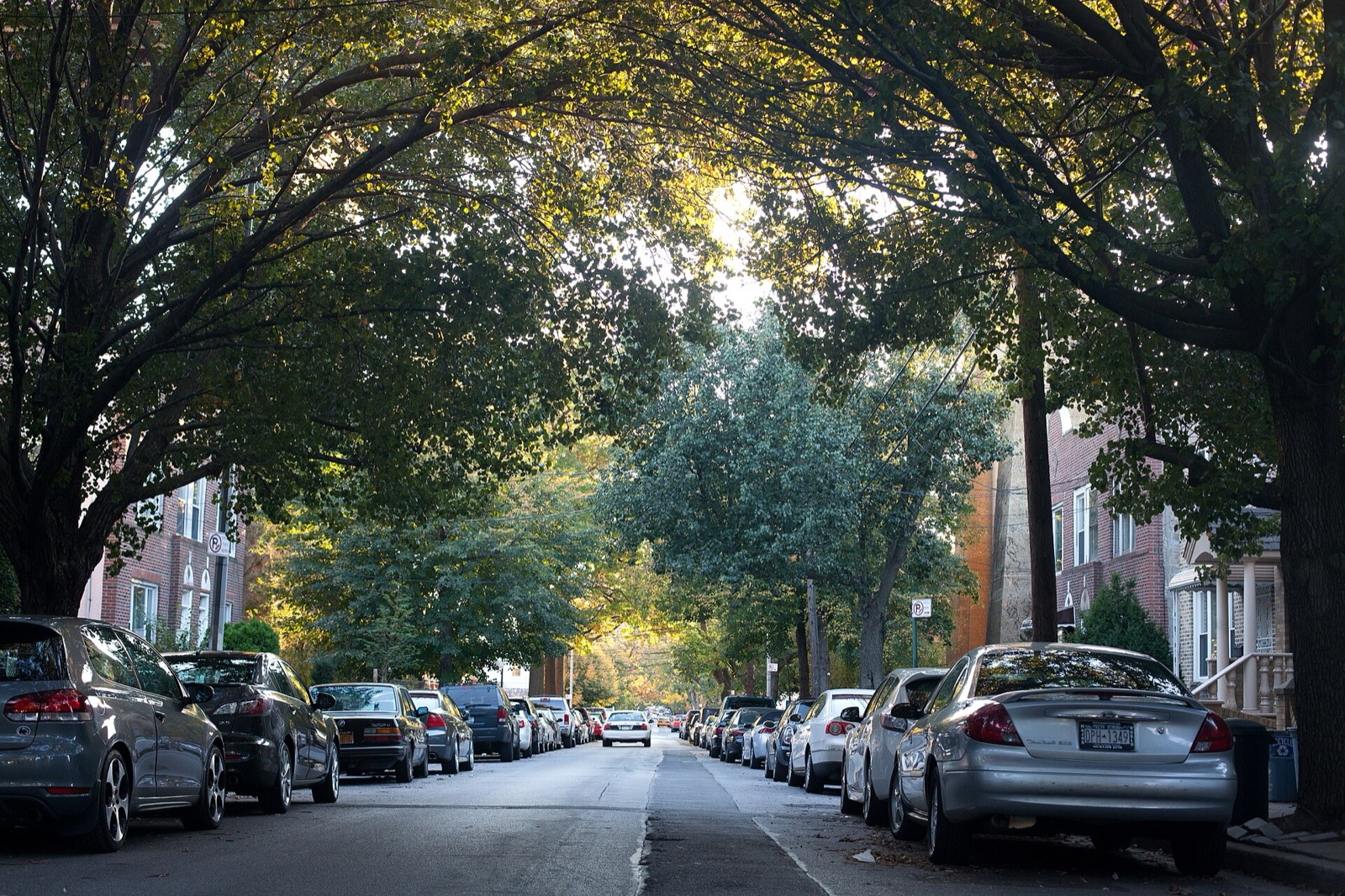
The attached brick rowhouses in northern Astoria, particularly along the blocks between Ditmars Boulevard and Astoria Park, are two and three story homes built in the 1910s and 1920s. Many have been converted from single-family to multi-family use, which means each floor operates as a separate living space with its own kitchen and bathroom. The surfaces change between floors. You might find original hex tile in a ground-floor bathroom, refinished pine upstairs, and vinyl in a converted basement unit.
We treat each floor as its own job because using the same product on 1920s hex tile and on vinyl sheeting produces two different bad outcomes. The hex tile grout needs a pH-neutral cleaner and a grout brush. The vinyl needs something gentler that will not cloud the surface. Our teams switch products as they move between floors in these homes. It takes more time but does not damage surfaces that are difficult or expensive to replace.
These rowhouses also tend to have small yards or rear gardens that track dirt into the home through a back entrance. If you have a ground-floor unit with a garden door, expect us to pay extra attention to the entryway and the first ten feet of floor inside. The semi-detached and detached houses near Ditmars and along the avenues near LaGuardia Airport are the most suburban housing in the neighborhood, with driveways and small yards. House cleaning for these homes follows a different approach than the walkup apartments a few blocks south.
The waterfront is not the same neighborhood it was fifteen years ago
The luxury residential explosion in Long Island City has sent price ripples northward into Astoria. New glass-and-steel towers along the western waterfront and Vernon Boulevard have brought a wealthier resident demographic to blocks that were purely working-class two decades ago. These buildings have doorman lobbies, service elevators, engineered hardwood, and floor-to-ceiling windows that show every fingerprint and streak.
The cleaning approach in a waterfront tower is different from the approach in a 1920s walkup three blocks east. The engineered hardwood handles different products than century-old pine planks. The bathroom fixtures are modern and resilient rather than vintage and fragile. The square footage tends toward 1,200 to 1,400 for a two-bedroom, with open floor plans that clean faster than compartmentalized pre-war layouts.
Astoria now operates on two real estate tracks. The pre-war brick walkups along 30th Avenue and Broadway rent for $2,000 to $2,800 for a one-bedroom. The new waterfront towers ask $3,000 to $4,500 for the same bedroom count. Both tracks represent Astoria, and both require cleaning teams that understand what they are walking into before they arrive.
Your cleaning takes about two and a half hours so here is how to spend them
Astoria is one of the easiest neighborhoods in the city to fill a few hours well. Walk to Astoria Park and do the full loop along the waterfront with the Hell Gate Bridge overhead and Amtrak trains crossing above. Browse the aisles at Titan Foods on 31st Street until you have spent forty-five minutes you did not plan on. Get a table at Taverna Kyclades on Ditmars if you timed it right, where the grilled octopus and whole branzino justify any wait. Grab a coffee at Gossip on 30th Avenue and sit in the back patio until your phone buzzes.
The Museum of the Moving Image on 35th Avenue has free admission on Fridays and you can easily spend two hours in the exhibits without checking the time once. Socrates Sculpture Park on Vernon Boulevard is free every day and the rotating installations give you something new to see each season. In summer, bring a blanket for the Wednesday night film screenings.
If your cleaning falls during late March, the Greek Independence Day Parade down 31st Street is worth planning around. The summer concert series at Astoria Park runs on select evenings with the RFK Bridge lit up behind the stage. Bohemian Hall is open year-round but in summer it becomes one of the finest outdoor drinking experiences in Queens.
The N and W trains from Ditmars reach Midtown Manhattan in about thirty minutes. The NYC Ferry Astoria route runs along the East River to 34th Street. You can leave your apartment to our team, cross the river, and come back to a place that smells clean and looks like someone who cares actually lives there.
What booking looks like
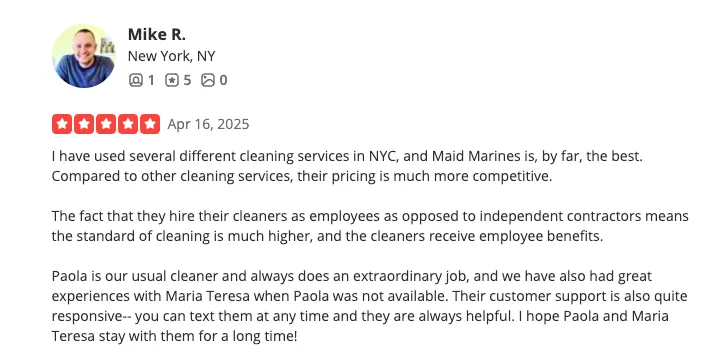
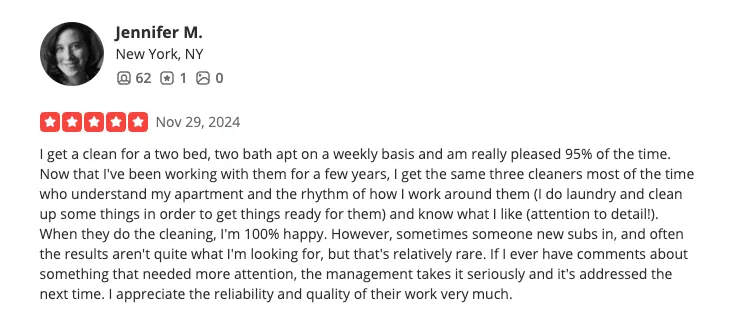
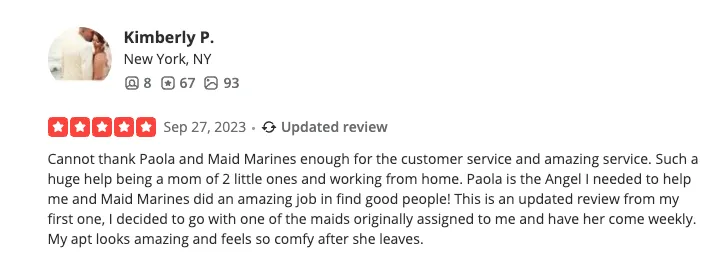
You pick your date and time on our booking page. You see your flat-rate price before you commit to anything. If your building has specific access rules, a co-op that requires a COI, or a lockbox code, you tell us once and we handle it from there. Our cleaners are W-2 employees, not gig workers. They are vetted, insured, and they arrive with everything they need.
We handle move-in and move-out cleaning for Astoria’s active rental market, recurring apartment cleaning on whatever schedule works for you, and house cleaning for the rowhouses and detached homes near Ditmars and Astoria Park. We serve nearby Long Island City, Sunnyside, and the rest of Queens.