

Bath Beach is the Brooklyn neighborhood that named itself after a spa town in England it had nothing in common with, built a beach resort on Gravesend Bay, watched the Belt Parkway pave the beach over in the 1940s, and then somehow became the filming location for the most famous opening scene in 1970s American cinema. The neighborhood has been many things to many people: a fashionable seaside retreat for 19th-century Brooklynites, a working-class Italian-American community that held tight for a century, and now one of the most genuinely diverse neighborhoods in the outer boroughs, where Chinese, Uzbek, Italian, Pakistani, and Albanian families share the same elevated subway and the same 86th Street commercial strip without much ceremony about it. None of that history is immediately visible when you walk Bath Avenue on a Tuesday afternoon. What you see is a dense grid of prewar brick rowhouses, stoops occupied when the weather permits, and a neighborhood that has been quietly absorbing waves of immigration for a hundred and fifty years without losing its fundamental character as a place where working families own homes and stay.
Bath Beach was a beach resort that no longer has a beach
The name is the first thing to explain, because it surprises everyone who hears it for the first time. Bath Beach takes its name from Bath, England, the Georgian spa town on the River Avon that became famous across the English-speaking world for its Roman-era thermal springs and its reputation as the most fashionable destination in England for health-seekers and genteel recreation. When developers began building the first resort hotels and boardinghouses along Gravesend Bay in the 1860s and 1870s, they were borrowing the vocabulary of European spa culture to signal something specific about what they were selling: a respectable, health-conscious seaside retreat for middle-class Brooklynites and Manhattanites who wanted the sea air without the rowdy working-class democracy of Coney Island a few miles down the shore.
The borrowing was purely aspirational. Bath, England had naturally occurring hot springs, the only ones in England, that made it a destination from Roman times through the Regency period. Bath Beach, Brooklyn, had no hot springs. It had Gravesend Bay, a perfectly functional beach, decent breezes, and a short carriage or rail ride from the Brooklyn ferry terminals. The developers named it after Bath anyway, and it worked well enough as marketing for a few decades. The resort hotels drew a better-heeled clientele than Coney Island’s amusement parks. The bathing beaches, the wooden pavilions, and the bay views gave the neighborhood a seasonal identity that the more earnest real estate promoters in the area could not match.
The decisive end to Bath Beach as a beach community came in the 1940s, when the Belt Parkway, then called the Shore Parkway, was routed directly along the Gravesend Bay shoreline. The highway paved over the remaining beaches and permanently severed the neighborhood from the water that had given it its name and its original identity. The “Bath” in Bath Beach became a historical artifact, the kind of name that survives long after the thing it describes is gone. The neighborhood that was named for bathing in the ocean has not had ocean access in more than eighty years. A narrow strip of park runs alongside the parkway now, and from the pedestrian path you can see the Verrazzano-Narrows Bridge and the open water of the bay, but you cannot get to it. The view is what remains.
Before the parkway and before the Italian-American rowhouse builders and before the resort hotels, there was one more chapter in Bath Beach’s early history that is easy to miss. In the mid-19th century, a parcel of land in the area was given to freed slaves who settled it, establishing one of Brooklyn’s earliest African-American communities. This community predated the Italian immigration wave that would define the neighborhood for the next century by several decades. It left little physical trace on the current landscape, but it represents a genuine piece of the neighborhood’s history that sits quietly beneath the more visible layers.
William Ulmer built a beer garden to save the shoreline from sobriety
In 1893, when the resort era of Bath Beach was already fading and the neighborhood was beginning its transition from seasonal destination to residential community, a brewer named William Ulmer opened a park on Gravesend Bay between Bath Beach and Coney Island that represented the entrepreneurial logic of late 19th-century Brooklyn in one concise package. Ulmer Park had carousels, swings, a dance pavilion, a rifle range, and extensive beachfront property. The formula was simple: keep the families entertained so the fathers keep drinking Ulmer’s beer. It was one of the most successful beer gardens in Brooklyn at a moment when Brooklyn had a serious number of beer gardens to compete with.
Ulmer was already one of Brooklyn’s most successful brewers before he opened the park. The park gave the brewery a direct-to-consumer entertainment venue and a captive audience on summer weekends. The name survived Ulmer himself. The Ulmer Park Branch of the Brooklyn Public Library at 2602 Bath Avenue takes its name from the park, as does the nearby MTA bus depot. The park itself was absorbed into the expanding residential development of the area as the 20th century progressed, but the library and the bus depot kept the name alive in a corner of Brooklyn where the original beer garden is several generations in the past.
The library branch, established in 1951 and moved to its current building in 1963, was renovated in 2016 into a genuinely useful neighborhood resource for a community where an estimated 53 percent of residents are foreign-born and English is the primary household language for only about a third of the population. The branch stocks materials in Chinese, Spanish, Russian, Arabic, and Italian alongside English. A beer garden became a library. The neighborhood keeps finding new uses for its history.
The rowhouses went up fast and they are built to last
Bath Beach’s housing stock tells the story of its 20th-century transformation from resort community to residential one. The dominant type is the semi-attached brick rowhouse, two stories plus basement, on a narrow lot with a small stoop and a modest rear yard. These houses were built primarily in the 1920s, 1930s, and 1940s as southern Brooklyn filled in with working-class families seeking home ownership within commuting distance of Manhattan. They are solid, well-proportioned, and enduring in a way that speculative construction of later decades often is not. The brick facades, the plaster walls, the hardwood floors, the steam radiators: all of it speaks to a building era that valued permanence over cost-cutting.
A significant portion of the housing stock is two-family construction, one household occupying each floor, with the owner typically living in one unit and renting the other. This pattern has been the primary wealth-building strategy for successive immigrant generations in Bath Beach. Italian-American families established it in the first half of the 20th century. Chinese-American buyers, now the plurality in the neighborhood, have pursued the same strategy in the decades since. The median real estate price in Bath Beach has reached levels that surprise people who think of it as a quiet outer-borough neighborhood, higher than 95 percent of all American neighborhoods according to some market data, driven entirely by demand for these two-family rowhouses from buyers who understand their investment logic.
The prewar construction throughout Bath Beach creates specific maintenance demands. Plaster walls develop hairline cracks over decades and need careful handling during cleaning. Hardwood floors respond differently to different products depending on their finish and age, and the wrong cleaner can dull or streak them permanently. Steam radiators are everywhere in these buildings, and they accumulate dust between their fins through the warm months, dust that burns off and fills the apartment with a distinctive smell when the heat comes back on in October. A house cleaning approach designed for glass-tower condos does not translate to a 1938 brick rowhouse on Bath Avenue. The materials are different, the scale is different, and the things that tend to go wrong are different.
Saturday Night Fever put 86th Street in the cultural record permanently
There is a specific moment in 1977 that Bath Beach residents can claim as a permanent contribution to American cinema, even though the moment is usually attributed to the wrong neighborhood. The opening sequence of Saturday Night Fever begins with John Travolta, as Tony Manero, walking down 86th Street in Bath Beach carrying paint cans and moving with the kind of deliberate confidence that suggested the street belonged to him. The Bee Gees song is playing. Travolta stops to study a pair of shoes in a storefront window. He buys two slices of pizza through the counter window of Lenny’s Pizza at 1969 86th Street, eating them folded as he walks. The sequence runs about ninety seconds and became one of the most recognizable opening shots in American film history.
The location is often cited as Bensonhurst, because Saturday Night Fever is primarily associated with that neighborhood and because the 86th Street commercial corridor runs through both. The actual filming was done in Bath Beach, and Lenny’s Pizza is still there, still serving counter-window pizza in roughly the same format it did when Travolta bought his slices. The shop has been a pilgrimage site for fans of the film for over four decades. You can stand at the counter, buy two slices, and eat them the same way Tony Manero did. The elevated subway still runs overhead. The scale of the street is essentially unchanged.
The 86th Street corridor had already appeared in The French Connection in 1971 and in the opening credits of the ABC sitcom Welcome Back, Kotter from 1975 to 1979 before Saturday Night Fever made it famous. Three major productions filmed the same stretch of elevated-subway-shaded commercial street within six years. Directors were drawn to it for the same reason residents have always lived on it: it looks exactly like an outer-borough Brooklyn street is supposed to look, dense and practical and particular, without trying to be anything other than what it is.
The commercial strip on 86th Street today tells the story of four decades of demographic change in one walkable mile. The Italian pizzerias are still there. Tommaso, at 1464 86th Street, has been serving red-sauce Italian food since the 1970s with waitstaff who serenade diners with operatic arias between courses. The Italian-American bakeries with sfogliatelle and cannoli in the window are still there. But layered over them, on the same blocks, you now have Chinese dumpling houses, Uzbek grocery stores, halal butchers, Pakistani restaurants, bubble tea shops, and a concentration of Chinese-language signage that reflects what has been one of the most significant demographic transformations in outer Brooklyn over the past three decades. The coexistence is not curated or performed. It is just what 86th Street has become through a hundred years of successive immigrant settlement.
The housing stock here needs people who know what they are working with
The two-family rowhouses of Bath Beach are not complicated buildings, but they reward cleaning that understands what they are made of. The plaster walls that cover most of the interior surfaces in prewar construction are not the drywall you find in a post-1980 apartment. Drywall can be wiped down, scrubbed, and generally handled with some confidence. Plaster is more fragile, especially in buildings that have settled over ninety years. The finish coat develops hairline cracks that can absorb moisture if you spray liquid cleaners directly onto the surface. We dust plaster walls dry and treat marks with a damp cloth, never a soaking one.
The hardwood floors in these rowhouses vary enormously depending on age, finish, and how they have been maintained. Old-growth wood floors with an oil finish need different care than floors that have been refinished with polyurethane. The wrong cleaner can leave a residue that takes weeks to notice but is very obvious once you do. We use pH-neutral floor cleaners and flat microfiber, not string mops that push dirty water into the grain. If you have just refinished the floors in your rowhouse, tell us when you book and we will adjust accordingly.
The steam radiators are the thing that most cleaning services skip past in prewar Brooklyn homes. The cast-iron units accumulate dust through the warm months when the heat is off, and it sits there undisturbed all summer. When the steam comes back on in October, that dust heats up and burns off, and the apartment smells like something is scorching for the first week of the season. A single pass across the top and nothing else is what that work usually looks like. Our crews dust the radiator covers, the vent grilles above them, and the sill and the wall behind each unit on every visit, which is the surface area that actually collects the summer’s dust. Detailing the interior of the cast iron itself takes tools we do not carry, and we would rather say so than let you discover it in October.
The two-family layout common in Bath Beach also creates a specific dynamic for recurring cleaning. Many homeowners in the neighborhood occupy one floor and rent the other, which means they need cleaning for their unit on a schedule that does not interfere with their tenant’s unit on a different schedule. We handle this regularly in southwestern Brooklyn. You tell us which floors are in scope, which entrance to use, and whether the tenant’s side is involved. We work around the arrangement.
What it actually looks and sounds like when we clean here
The D, N, and W trains run on an elevated line through Bensonhurst, and the stations closest to Bath Beach are the 18th Avenue, 20th Avenue, Bay Parkway, and 25th Avenue stops. Most of our cleaners who work the neighborhood know the route. They come up the stairs from the platform onto a commercial avenue, walk a few blocks into the residential grid, and the neighborhoods shifts immediately from the commercial noise of the elevated corridor to the quieter scale of the rowhouse streets. Bath Avenue, Benson Avenue, and the Bay Streets between the avenues are genuinely quiet on a weekday morning. The neighborhood operates at a slower pace than northern Brooklyn.
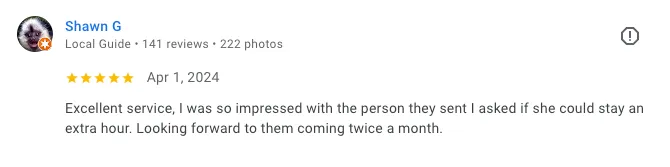
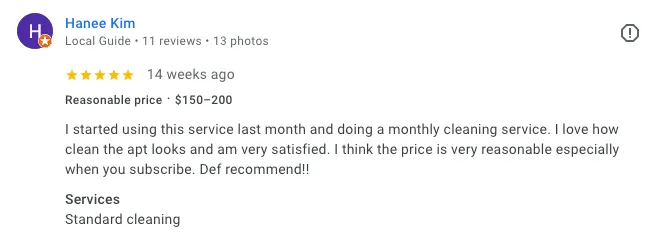
Most of the homes in Bath Beach are occupied when we arrive. The owner is home, or the tenant is home, or someone is home, because these are family homes with family schedules. We are used to that. We bring our own supplies, we work around your household, and we leave the place better than we found it. If you need to be at work or want to be at Dyker Beach Park for a few hours while we clean, that works too. You can book online and see your exact price before you commit to anything.
For deep cleaning in a prewar rowhouse that has not had a thorough cleaning in a while, plan for a longer appointment than you would in a newer building. The areas that accumulate in old construction, inside radiator fins, on top of door frames, behind the stove, inside the tracks of old windows, add up. A first deep clean often takes two to three times as long as a recurring clean, and it is worth doing properly once so the maintenance cleans can stay manageable.
The neighborhood nobody talks about but everybody lives in
Bath Beach has no headline-grabbing restaurant openings, no boutique hotel projects under construction, no real estate coverage in the publications that track where Brooklyn is going next. This is not a neighborhood in transition the way that phrase is usually used in New York. It is a neighborhood that has already absorbed multiple major transitions and has arrived at something stable: a dense, multiethnic, working-class residential community where home ownership is achievable, the transit connections are solid, and the commercial strip on 86th Street covers your everyday needs without requiring a trip to a neighborhood with a more fashionable address.
The Chinese-American community that now represents the plurality of Bath Beach residents did not arrive here by accident. They came for the same reasons the Italian-American community came before them: two-family rowhouses at prices that made ownership possible, a subway line to Manhattan, and a commercial strip that could serve their language and their food preferences. The neighborhood that was supposed to invoke an English spa town and ended up as a working-class Brooklyn beach resort ended up as something more durable than either of those things: a neighborhood where people actually want to live and are willing to pay to stay.
For apartment cleaning in the smaller co-op and rental units scattered through Bath Beach, recurring service is the practical answer for households where both adults work and the weekend has better options than scrubbing tile grout. For the two-family rowhouse owner, a reliable recurring maid service handles the primary unit on a schedule and frees up the energy you would otherwise spend on a building you are also managing. For people moving into Bath Beach, move-in cleaning on a unit that has been vacant is the right starting point before the furniture arrives. We are in Dyker Heights, Bensonhurst, and Gravesend on the same rotation, so Bath Beach fits naturally into routes we already run.
The Verrazzano-Narrows Bridge is visible from Bath Beach Park and from the pedestrian path along the Belt Parkway. On a clear day the view across the water toward Staten Island is as good as anything you can see from the waterfront neighborhoods in northern Brooklyn, without the crowds or the pricing. Bath Beach is that kind of place: the thing you are looking for, without the part you did not want.