
The neighborhood takes its name from a school, and the school takes its name from a Dutch humanist who died in 1536. That chain of cultural inheritance, from Erasmus of Rotterdam to a Federal-style academy on a Brooklyn dirt road in 1787 to the Gothic towers that rose around it in the early 20th century, is compressed into a single city block on Flatbush Avenue where the original wooden schoolhouse still stands in a stone courtyard, unchanged in its essential form since the year the United States Constitution was written.
Erasmus sits at the center of what was once the colonial town of Flatbush, one of six original Dutch townships on Long Island, and it has been accumulating history ever since. The Dutch called the land Vlacke Bos, meaning flat woodland, and the name stuck in modified form. The Canarsee Lenape people inhabited this territory for thousands of years before European colonization. Dutch farming families whose surnames still echo in Brooklyn street names operated here for two centuries before the neighborhood began its transformation from village to urban district.
The school on Flatbush Avenue is the reason the neighborhood has a name
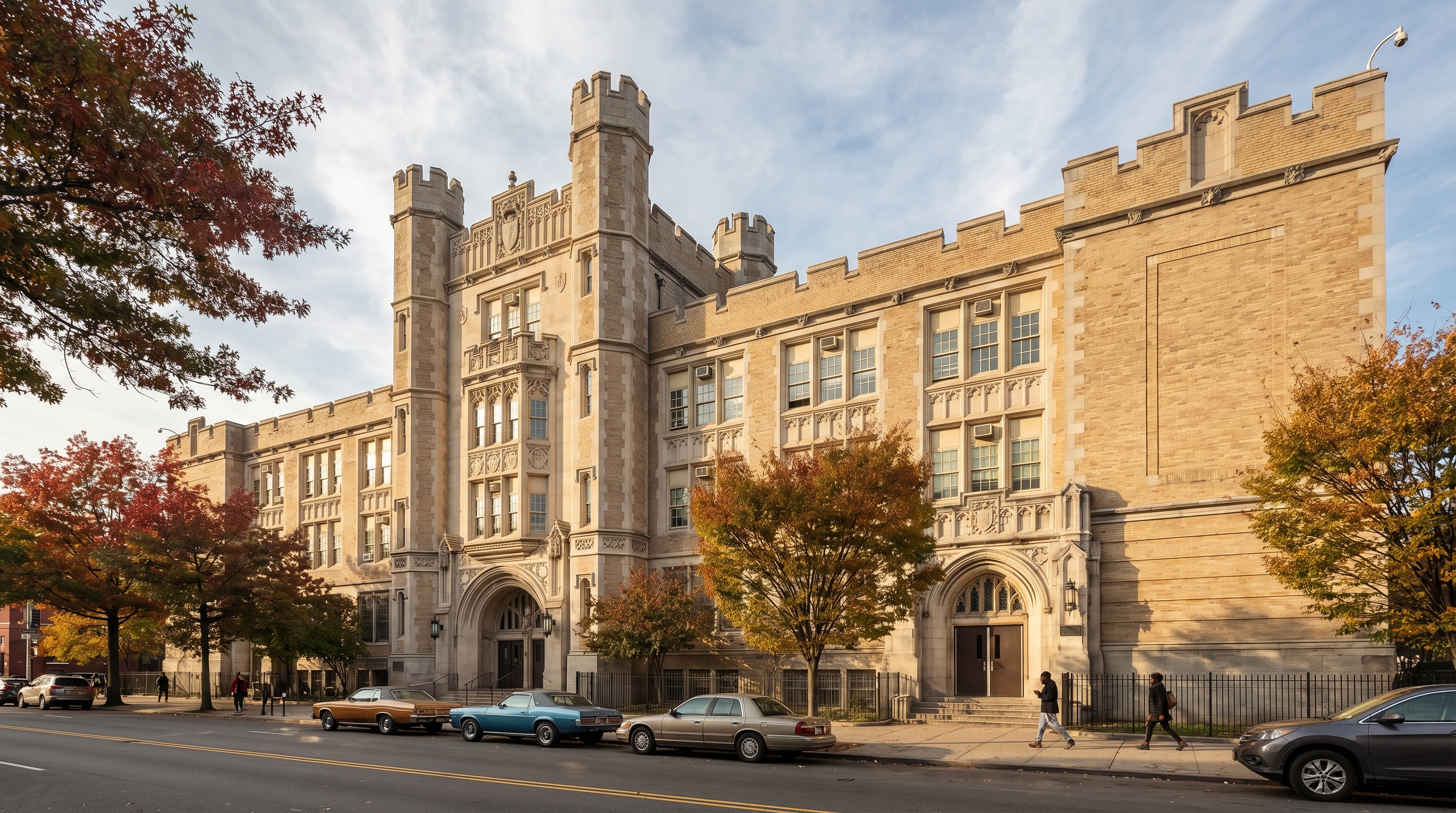
Erasmus Hall Academy opened in 1787, funded by contributions from Alexander Hamilton, Aaron Burr, John Jay, and Robert Livingston. The four founders helped finance what would become the first secondary school chartered by the New York State Board of Regents and, in 1801, the first in New York to admit female students. The original Federal-style building was two and a half stories of clapboard with a hipped roof, 12-over-12 windows, and a modest dignity suited to a community that considered education a civic obligation rather than a luxury.
Between 1905 and 1939, architect C. B. J. Snyder, who designed over 400 New York City school buildings and remains the most significant figure in the history of American public school architecture, built four Gothic Revival wings around the original academy. The result was a Collegiate Gothic campus of unusual ambition, modeled on Oxford and Cambridge, with arched cloisters, crenellated towers, carved limestone, and a central quadrangle that enclosed the 1787 Federal-style schoolhouse like a cathedral built around a country chapel. The contrast is deliberate and extraordinary. The old building from the founding era sits at the center of the medieval-inspired campus in one of the most architecturally layered spaces in Brooklyn.
The school produced Barbra Streisand, Neil Diamond, Bobby Fischer, Beverly Sills, and Clive Davis, all within a decade of one another in the 1950s. It also produced Bernard Malamud, Marky Ramone, Earl G. Graves, Clara Bow, and Mae West. Few public schools anywhere in the United States can claim an alumni list that spans that much of American culture. The concentration of talent in the same Brooklyn neighborhood at the same time is the kind of fact that does not invite explanation so much as wonder.
The pre-war housing stock that defines the cleaning challenge in Erasmus
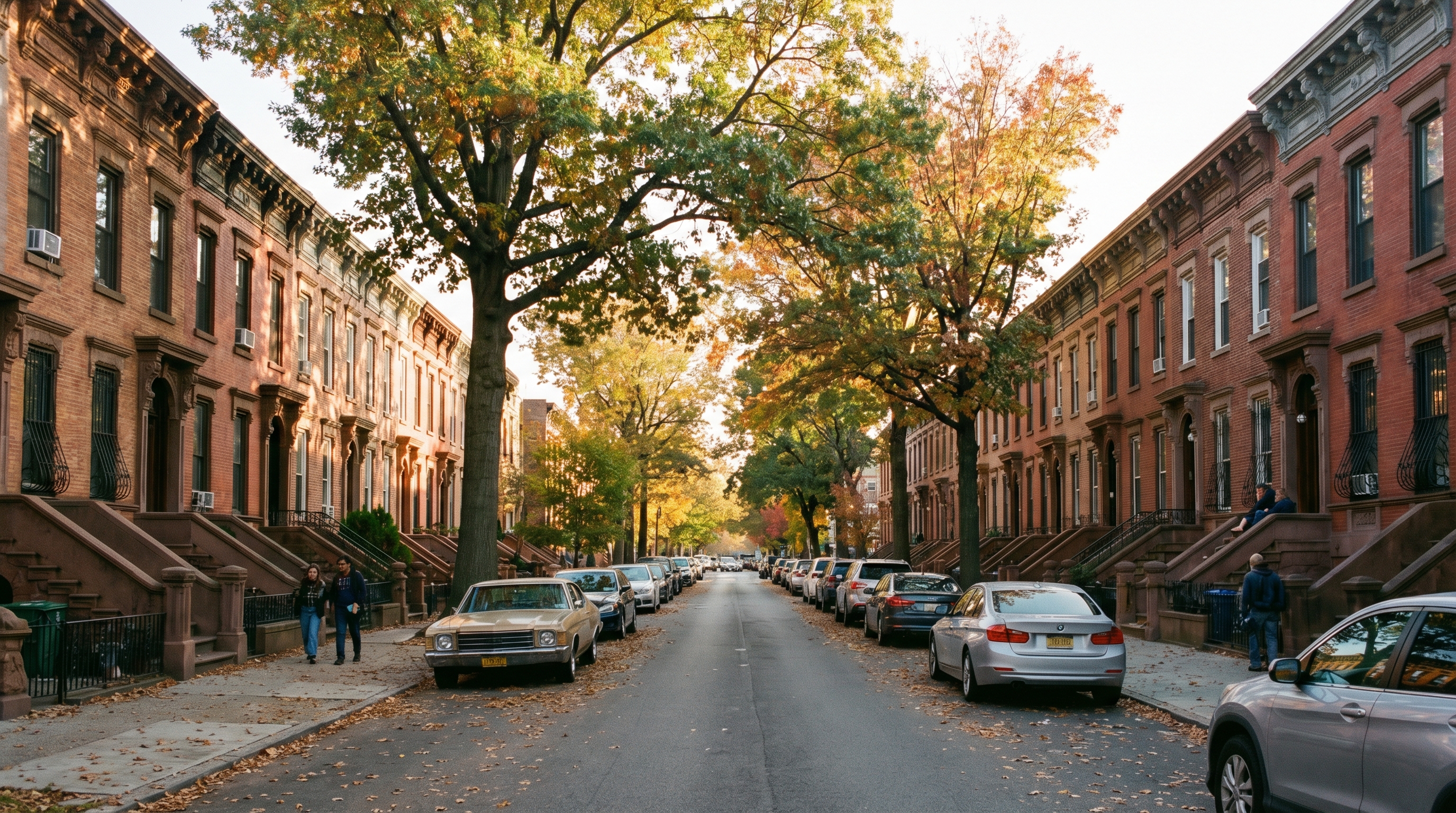
The residential fabric surrounding the campus is almost entirely pre-war, with more than 85% of buildings constructed before 1940 and many before 1930. The dominant type is the attached brick walkup apartment building of three to six stories, built in the 1920s and 1930s to house the working-class and lower-middle-class families who were the neighborhood’s population throughout most of the 20th century. Two-family rowhouses on cross streets like Snyder Avenue, Fenimore Street, and Albemarle Road make up a substantial secondary type, solid brick construction with stoops, original millwork, and the accumulated particularity of buildings that have housed many generations.
Pre-war construction in Erasmus means steam heat through cast-iron radiators, plaster walls rather than drywall, older window frames that let in drafts and outside dust, and kitchens that were designed for a different era of cooking and storage. These buildings require a different approach than modern construction. House cleaning in a pre-1940 brick walkup means understanding that plaster walls are more brittle than modern drywall and cannot take heavily saturated wiping. It means cleaning between the fins of steam radiators, which accumulate dust over the summer and release it as fine particles when the heat comes on in October. It means working around older tile grout in bathrooms that stains easily and requires non-acidic products to clean without damage.
The two-family rowhouses add a layer of complexity specific to Erasmus: many are owner-occupied on one floor with tenants in the other unit, and both need to be clean. Owners managing rental units below or above need a cleaning service that can coordinate access, work around tenant schedules, and deliver consistent results in apartments where condition varies significantly.
A Caribbean neighborhood with a commercial avenue that serves a large, transit-dependent community
The Caribbean character of Erasmus is not a recent development or a cultural district designation applied from outside. Jamaican, Haitian, Trinidadian, and Barbadian families began settling in the neighborhood in the 1960s and 1970s as the previous Jewish community left for the suburbs, and by the 1980s the demographic transition was complete. The community has been here for more than two generations now, and the neighborhood reflects that depth of settlement.
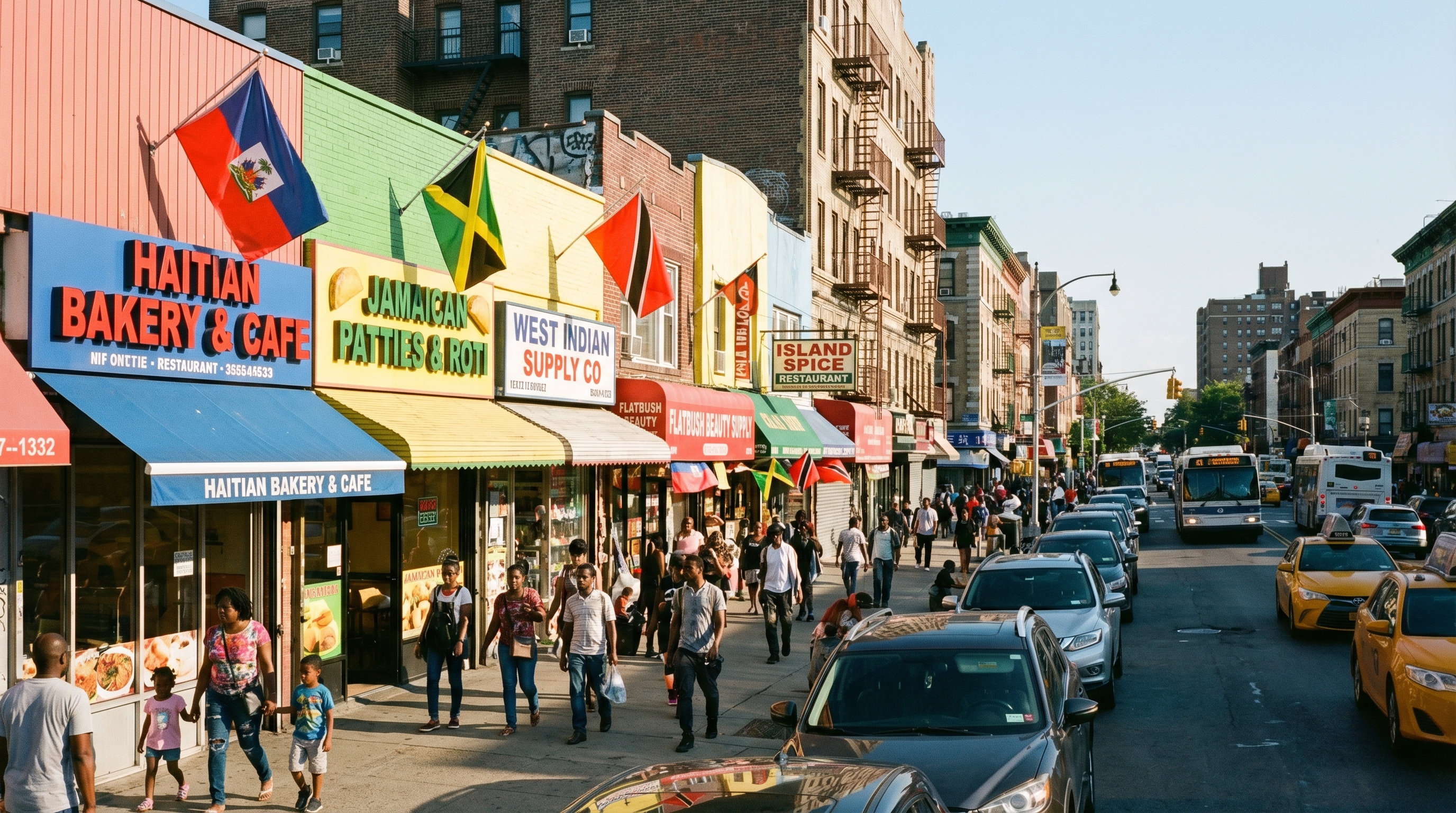
Flatbush Avenue carries the commercial energy. Haitian bakeries, Jamaican patty shops, West African hair braiding salons, Caribbean restaurants, bodegas, pharmacies, and community businesses line the avenue between Church and Snyder Avenues, serving a large and transit-dependent population. The 2017 designation of the Church Avenue and Utica Avenue corridors as Little Caribbean NYC gave official recognition to what the neighborhood had already been for decades: one of the most significant Caribbean-American cultural concentrations in the United States.
The transit infrastructure reflects the density of the population. The 2 and 5 trains run beneath Nostrand Avenue on the eastern edge of the neighborhood, with the Church Avenue station as the primary stop. The B and Q trains run beneath Flatbush Avenue on the western edge, providing additional coverage from the Newkirk Avenue and Beverly Road stations. The combination of four subway services, plus the B41 on Flatbush, the B35 on Church Avenue, and the B44-SBS on Nostrand, gives Erasmus more transit redundancy than most Brooklyn neighborhoods. Walk scores in the mid-to-high 90s reflect a neighborhood where most daily needs are reachable on foot and most residents do not own cars.
Apartments here get a particular kind of dirty
Urban dust in a dense transit corridor accumulates differently than suburban grime. The 2/5 express trains create vibration that settles fine particles into window frames and along baseboards. Kitchen surfaces in buildings without strong ventilation accumulate grease in layers that require real degreasers, not diluted all-purpose spray. Older bathroom tile grout in pre-war construction can be nearly impossible to restore once neglected, which is why regular apartment cleaning matters more in buildings like these than in modern construction where surfaces are easier to maintain.
Rental turnover in Erasmus creates consistent demand for move-in and move-out cleaning. The neighborhood’s median household income is substantially below the Brooklyn median, which means many tenants are working-class families who may not have had professional cleaning services and apartments that reflect years of accumulated use rather than recent renovation. We have cleaned enough pre-war walkups throughout central Brooklyn to know what that looks like: grease built up on kitchen cabinet surfaces, bathroom tile with years of soap scum in the grout lines, baseboards that have not been touched in a lease cycle. We handle all of it.
The Flatbush Dutch Reformed Church is across the street and has been there since 1654
Directly across Flatbush Avenue from the Erasmus Hall campus stands the Flatbush Dutch Reformed Church complex, a Federal-style stone building from the 1790s on the site where the congregation has worshipped continuously since 1654. The congregation predates the United States by 122 years. Inside the church, Tiffany Studios created stained glass windows commemorating the descendants of Flatbush’s original Dutch settler families, among the most beautiful religious art in Brooklyn and almost entirely unseen by people outside the congregation.
The Flatbush Town Hall, a Second Empire civic building from 1874, survives a few blocks north as a reminder that Flatbush was an independent municipality with its own government until Brooklyn annexed it in 1894. The neighborhood’s colonial, civic, and institutional history is concentrated along Flatbush Avenue in a way that few streets in Brooklyn can match.
Deep cleaning in pre-war buildings takes more time and more attention
A proper deep cleaning in a pre-war Erasmus walkup is not the same job as cleaning a modern condominium. The crown molding in older buildings collects dust in its profile. The plaster ceilings have cracks and texture that trap grime. The kitchen appliances in buildings that have not been renovated may be older and harder to clean around. The window sills accumulate street grime from Flatbush Avenue traffic. The bathroom grout in hexagonal floor tile common to pre-1940 construction requires specific technique and non-acidic products.
We have cleaned over 100,000 homes throughout New York City, and a significant portion of them are pre-war buildings in central Brooklyn neighborhoods like Erasmus. The cleaning challenges of this housing stock are not surprises to us. They are the expected conditions we prepare for on every job.
For families moving into a new apartment in the neighborhood, a move-in cleaning before furniture arrives is one of the most efficient ways to start a tenancy in a pre-war building where the previous occupant may have been there for years. For homeowners managing two-family buildings, recurring service for both units solves a logistics problem that builds up quickly when left unaddressed. For longtime residents who want to maintain a home that has been in the family for decades without the weekly labor of doing it themselves, a consistent recurring team that knows the building makes the difference.
Booking and what comes next
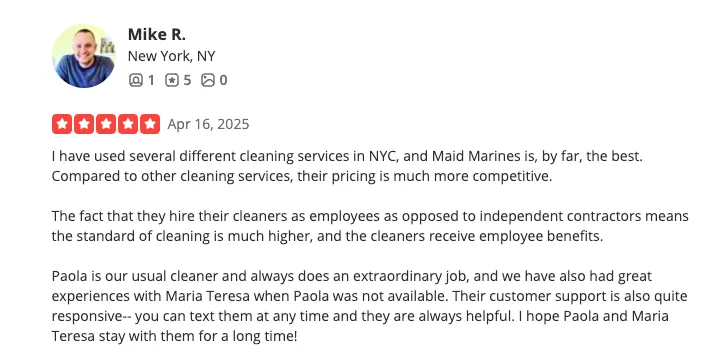
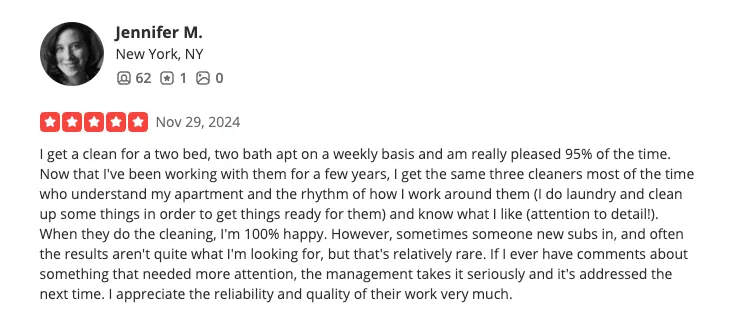
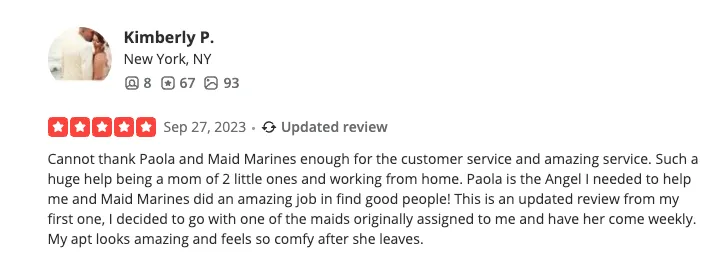
You pick your date and time on our booking page. The price is flat-rate based on the size of your home, and you see it before you commit to anything. Our cleaners are W-2 employees, not platform contractors. They arrive with the right products for pre-war surfaces, and for recurring bookings we assign the same team to your home consistently so they learn the apartment and what you care about.
We also serve nearby Flatbush, Crown Heights, Park Slope, Prospect Heights, and Midwood, as well as the rest of Brooklyn and the broader New York City area.