
Fort Hamilton sits at the southwestern tip of Brooklyn, where the land narrows to a bluff above the Narrows and the Verrazzano-Narrows Bridge rises from the water with a scale that is nearly impossible to absorb. The civilian neighborhood that shares its name with the military installation is small, quiet, and largely unknown to the rest of Brooklyn. It is one of the borough’s most self-contained communities, defined by prewar brick buildings, a remote location, and the kind of long-established residential culture that resists reinvention.
The U.S. Army Garrison Fort Hamilton is the only active military installation in New York City, and that fact shapes everything about the surrounding neighborhood. The sight of uniformed service members on the adjacent streets, the gated entrance on Marine Avenue, the Gothic Revival chapel visible from the perimeter road, the occasional military helicopter overhead — these elements create a context that no other neighborhood in the five boroughs can claim. The civilian blocks immediately surrounding the base are quiet and densely residential, home to a mix of longtime Arab-American, Irish, Italian, and Greek families who have occupied the same prewar co-ops and rowhouses for decades.
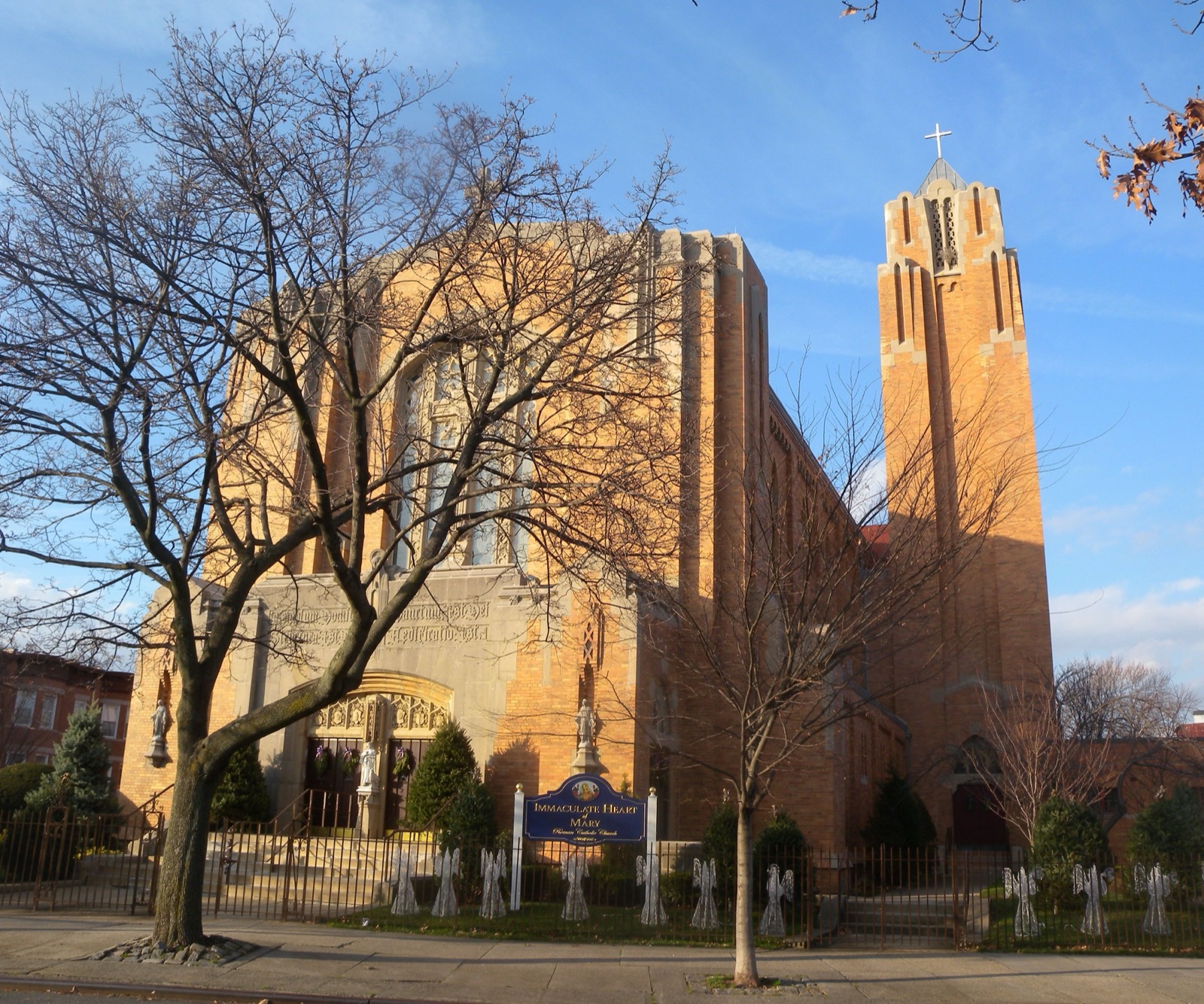
The civilian housing stock came up in the 1920s and has barely changed since
The residential architecture of the Fort Hamilton neighborhood reflects the same wave of prewar construction that shaped Bay Ridge and Bensonhurst in the decades before World War II. The dominant building type is the mid-rise brick co-op: four to seven stories, built in the 1920s and 1930s, with lobbies that retain original mosaic tile and wood paneling, apartments with nine-foot ceilings and plaster walls, and hardwood floors finished with wax rather than the polyurethane that became standard after the 1960s.
These buildings line Marine Avenue and the numbered residential side streets from 92nd through 101st. They are solid, well-maintained, and largely untouched by the renovation cycles that have transformed other parts of Brooklyn. The windows in many units are original double-hung wood sash. The radiators are original steam heat. The cast-iron tubs in the bathrooms are the ones that were installed in 1928. This is prewar New York maintained rather than replaced, which is a different kind of housing than what you find in newer construction and requires a different approach to keeping clean.
Attached brick rowhouses fill the side streets on the blocks between the co-ops and the base perimeter. These two-story and three-story structures have stoops, small rear yards, and the narrow-footprint layout typical of interwar residential construction in southern Brooklyn. Original hex tile in the bathrooms, original plaster walls in the bedrooms, and century-old hardwood in the living rooms are standard conditions. The rowhouses are quieter than the co-ops and more private, but they require the same attention to period surfaces.
The detached single-family homes along Narrows Avenue and Shore Road represent a different tier entirely. These are larger, older houses built on elevated lots with harbor views, and they are among the most desirable properties in the neighborhood despite the distance from fast transit. The interior conditions in these houses tend to be even more varied: some have been carefully maintained with original finishes intact, others have been partially updated over decades in ways that mix materials from different eras.
What the prewar floors and plaster walls actually require to stay in good condition
A co-op in a 1920s Fort Hamilton building is not a new construction apartment. The floors are old-growth hardwood, harder than anything milled today but finished with a surface layer that standard cleaning products will destroy over time. Wax finishes are incompatible with steam mops, wet mopping, and the kind of all-purpose spray products that work fine on polyurethaned floors. The wax absorbs moisture, softens, and eventually strips away, leaving the wood exposed and vulnerable. Replacing a wax finish requires stripping, sanding, and refinishing — an expensive process that is entirely avoidable with the right maintenance routine.
Our house cleaning teams carry wood-safe products formulated for wax finishes and use a barely damp microfiber mop rather than a wet one. The distinction matters in these buildings. The same logic applies to the original plaster walls, which are more porous than modern drywall and more sensitive to harsh cleaners. Bathroom hex tile grout in prewar units is original and should not be cleaned with acid-based products that eat through the grout over time. The cast-iron radiators that line every room need attention between the fins, not just across the top, because that is where dust builds up all summer and burns off in October when the steam heat comes back on.
We have cleaned over 100,000 homes across New York City, including a significant number of prewar co-ops and rowhouses in southern Brooklyn. The building-by-building knowledge that comes from that volume of work is why the product selections and techniques we use in a Fort Hamilton co-op are different from what we use in a new construction apartment in Downtown Brooklyn.
Robert E. Lee spent five years maintaining these harbor defenses
The Fort Hamilton military installation was begun in 1825 and completed in 1831, built of granite and gneiss in the Third System masonry style to command the Narrows with cross-fire batteries. Named for Alexander Hamilton, who had argued for systematic coastal fortifications as the nation’s first Treasury Secretary, the fort was designed to work in concert with Fort Wadsworth on the Staten Island side of the Narrows, creating an artillery envelope that could prevent any hostile vessel from entering New York Harbor.
Two of the most consequential figures in American military history spent their formative years here before the Civil War. Robert E. Lee served as post engineer at Fort Hamilton from 1841 to 1846, responsible for designing and overseeing improvements to the fort’s defenses. He lived in a house on the base, was baptized and confirmed at St. John’s Episcopal Church on Fort Hamilton Parkway, and was associated with the Chapel of St. Michael the Archangel, which still stands within the installation today. The Robert E. Lee House and the surrounding Colonels’ Row are listed on the National Register of Historic Places. Thomas “Stonewall” Jackson also served here as a young artillery officer before Lee’s posting, and two streets within the base — General Lee Avenue and Stonewall Jackson Drive — bear their names, making Fort Hamilton the site of one of New York City’s few remaining controversies over Confederate naming.
Abner Doubleday, long and incorrectly mythologized as the inventor of baseball, served as post commander in 1861, just months before the Civil War began.
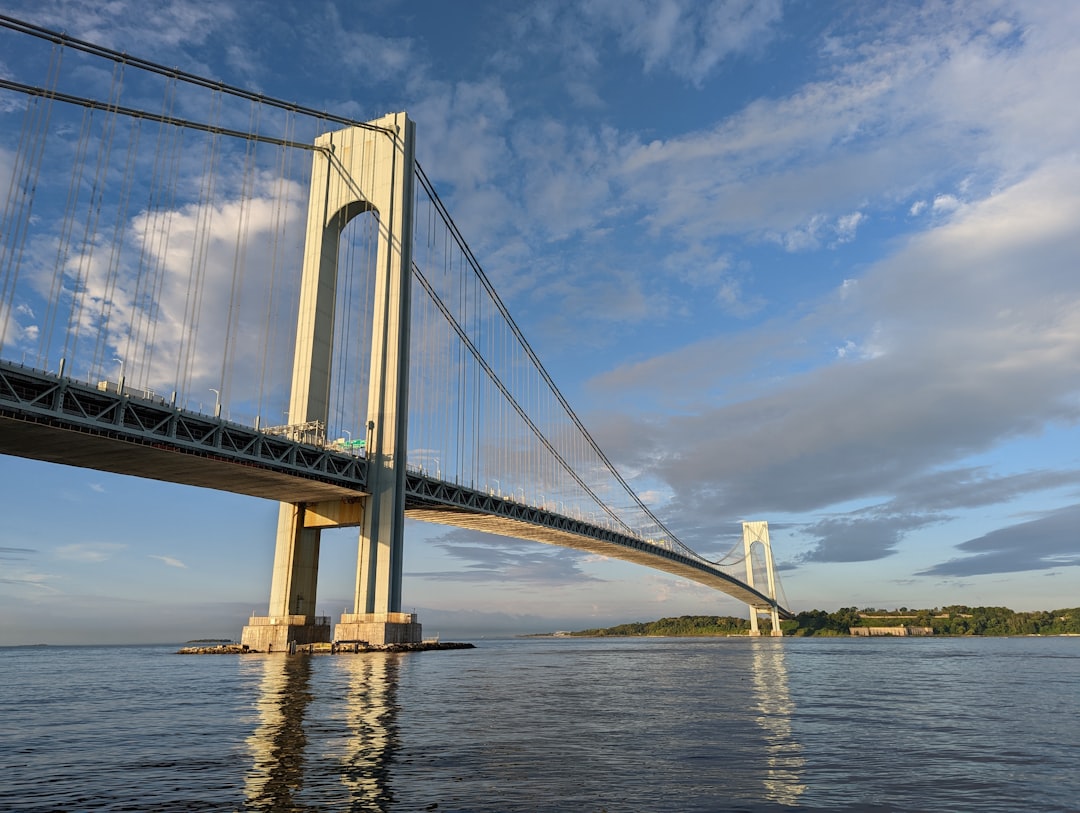
The Verrazzano-Narrows Bridge defines every horizon in this neighborhood
The bridge opened on November 21, 1964, and it changed the neighborhood permanently. Its Brooklyn anchorage is built at the edge of the Fort Hamilton installation, which means the towers rise from the water directly adjacent to the residential blocks of the civilian neighborhood. The scale is difficult to describe accurately. The towers reach 693 feet above the harbor. The span covers 4,260 feet. When you are standing on Shore Road or Narrows Avenue, the bridge does not look like something in the distance. It looks like it is directly above you, which in some technical sense it is.
The experience of living in the shadow of the Verrazzano is particular to this neighborhood. Container ships and tankers move through the Narrows at all hours. On clear winter mornings the harbor light is extraordinary. Shore Road Park, the narrow ribbon of public land along the bluffs, gives residents direct access to these views without a long walk. The American Veterans Memorial Pier at 101st Street lets you stand at water level under the bridge and understand its engineering from below.
Giovanni da Verrazzano was the Italian explorer who sailed into New York Harbor in 1524, the first European to do so. The bridge that bears his name stands almost exactly where his ship anchored, nearly 500 years earlier.
Transit isolation keeps Fort Hamilton affordable and insulated from gentrification
The commute from Fort Hamilton to Midtown Manhattan takes 45 to 55 minutes on the best available route, which is the R train from 95th Street or 86th Street on 4th Avenue. That walk to either station takes 10 to 20 minutes depending on where you are starting in the neighborhood. The D and N trains at Fort Hamilton Parkway are faster to Manhattan, and buses connect the neighborhood to the R at multiple points. None of this is fast by Brooklyn standards.
The transit deficit is structural, not incidental. The neighborhood’s location at the southwestern tip of the borough, bordered by a military installation that cannot be developed, placed it outside the subway network in ways that were never remedied. This distance has kept Fort Hamilton well outside the orbit of the gentrification wave that has moved through northern Brooklyn over two decades. The creative class and remote workers who reshaped Williamsburg, Bushwick, and even parts of Bay Ridge and Sunset Park have not arrived here in meaningful numbers. The result is a neighborhood that remains genuinely affordable by Brooklyn standards, with co-op one-bedrooms available below $400,000 and rental apartments below the Bay Ridge average.
What changes in Fort Hamilton changes slowly, driven by the gradual demographic shifts visible across all of southern Brooklyn rather than by outside investment. The Arab-American community continues to grow. Irish and Italian families of the second and third generations move on to the outer suburbs. Chinese and East Asian families seeking the low-density, owner-occupier character of southwestern Brooklyn have been arriving in increasing numbers. The military population turns over on its own schedule, rotating in and out on assignments that bring families from elsewhere in the country for a few years before moving them on again.
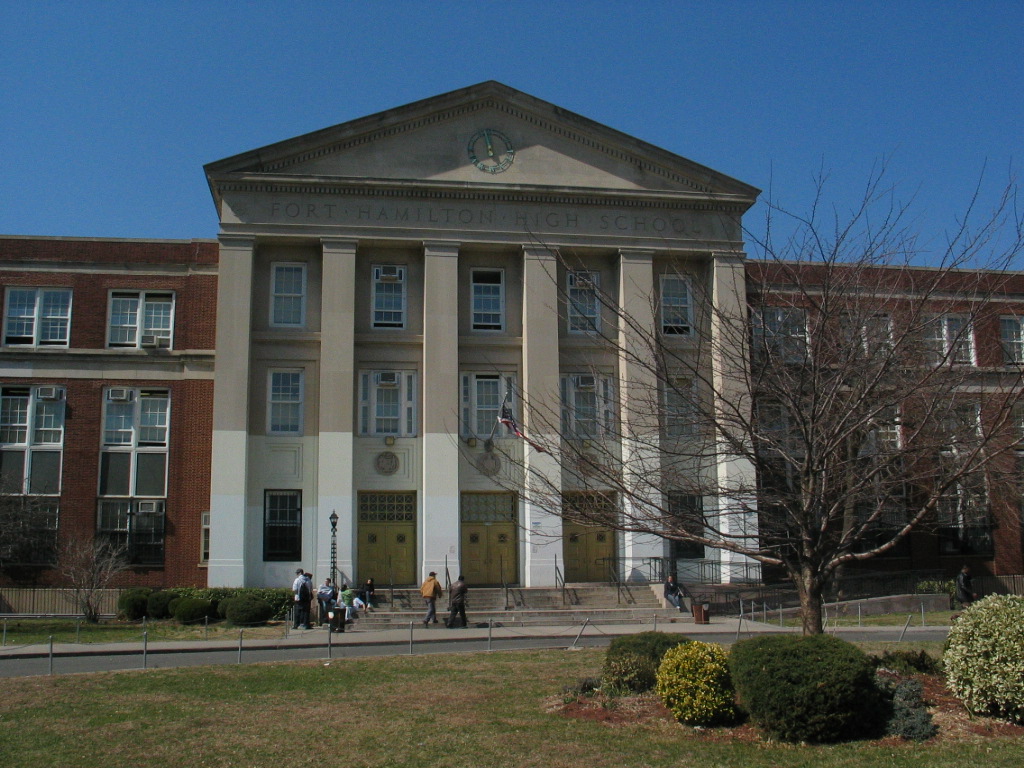
The housing that transient military families leave behind needs thorough cleaning
The military family housing within the Fort Hamilton installation is separate from the civilian housing market and not available to the public. But the civilian rental market surrounding the base has always absorbed a portion of the military population, particularly junior enlisted personnel and non-commissioned officers who live off-post with their families. These renters are transient by nature. Assignments rotate. Families arrive, fill an apartment for two or three years, and depart. The move-in and move-out cleaning demand in Fort Hamilton is higher per unit than in neighborhoods with a more stable residential population.
A thorough deep cleaning in a 1920s Fort Hamilton co-op means addressing everything that accumulates over a tenancy: the inside of kitchen cabinets and the refrigerator, bathroom grout in original hex tile, the dust that settles into original plaster baseboards, window tracks that have not been touched in months, and the film that builds up on original hardwood when the wrong cleaning products are used repeatedly. We handle move-in cleaning for new tenants arriving in a building where the previous occupants’ cleaning standards may not have matched their own, and we handle move-out cleaning for tenants who want their full security deposit back and need the place left in the condition the landlord expects.
Booking a cleaning in Fort Hamilton takes sixty seconds
Fort Hamilton is well within our regular southern Brooklyn service area. We clean throughout Bay Ridge, Bensonhurst, Sunset Park, and the surrounding neighborhoods. The distance and remote location that give the neighborhood its character do not add time or cost to your service.
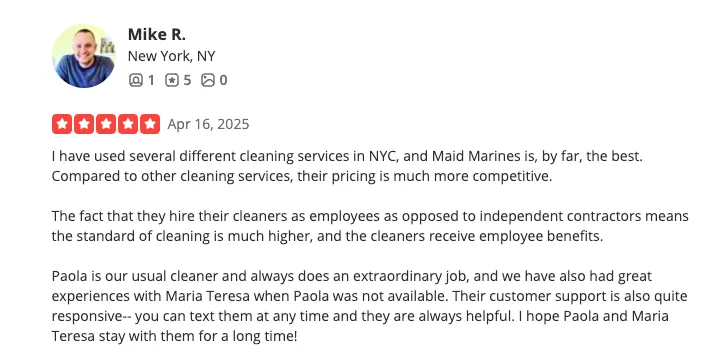
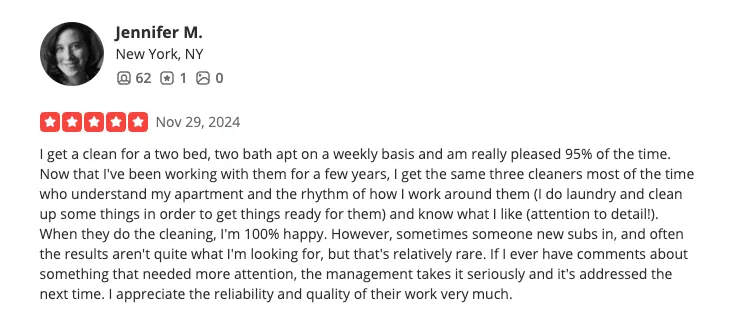
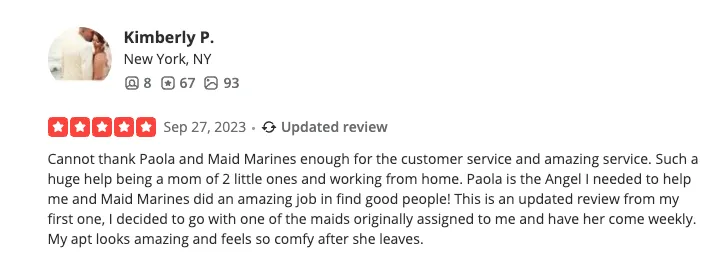
You can book online and see your flat-rate price before you commit to anything. No hidden charges, no upcharges for stairs or for the extra floor in your rowhouse, no surprise fees for older buildings. Our cleaners are W-2 employees, not gig workers. They are vetted, insured, and they arrive with products suited to your specific floors, tiles, and surfaces. For recurring appointments we assign the same team to your home each visit so they know the building, know your entry routine, and know what you care about.
If your co-op requires a Certificate of Insurance or advance notice, tell us when you book. We handle it before we arrive.