
Clinton is the name the city gave this neighborhood in 1959 and the name most of its civic institutions still use. The Clinton Housing Committee chose it. Community Board 4 uses it in meeting minutes. The NYCHA developments carry it. DeWitt Clinton Park carries it. The community gardens carry it. If you live on the residential cross streets between Ninth and Eleventh Avenues, west of the restaurant traffic and the theater crowds, Clinton is the name that describes where you actually live. It is the quieter half of a neighborhood that the rest of New York knows by a louder name.
The housing stock in Clinton runs from tenement walk-ups built in the 1880s to glass towers finished in the last five years. NYCHA developments sit on the same blocks as million-dollar condos. Rent-stabilized apartments share walls with gut-renovated units listed at triple the price. The cleaning job changes on every block because the buildings change on every block, and the residents in each of those buildings have different concerns about what happens inside their homes.
The residential side streets west of Ninth Avenue are where Clinton actually lives
The commercial energy of Ninth Avenue and the theater district along Eighth Avenue get the attention, but Clinton’s residential core is on the cross streets between Ninth and Eleventh Avenues. These blocks are quieter than visitors expect. Brownstones and brick townhouses from the 1870s and 1880s survive between the tenement buildings, their stoops intact, their facades recently pointed and cleaned. Street trees line most blocks. The scale feels more like a residential neighborhood than midtown Manhattan.
This is where long-term tenants live. Families who have been in the same rent-stabilized apartment for 20 or 30 years. Retired stagehands and theater workers who moved here when the rents were low enough to survive on an intermittent income. Recent arrivals who found a walkup listing between Ninth and Tenth and discovered that their block feels nothing like Times Square eight blocks east. The avenues are loud. The cross streets are not.
The walk-ups on these blocks are Old Law and New Law tenements, five and six stories of brick with narrow stairways and iron fire escapes. The apartments are compact. Studios and one-bedrooms between 400 and 900 square feet. Original hardwood floors, usually soft pine or fir that predates the sealed oak you find in newer buildings. Cast-iron radiators with decorative fins. Kitchens that were renovated just enough to pass inspection, with countertops that show every year of use. Bathrooms with original tile work in the ones that have not been renovated, and standard white subway tile in the ones that have.
Cleaning these apartments means knowing the difference between the old surfaces and the new ones in the same unit. The pine floors get a pH-neutral cleaner and a flat microfiber mop. Water sitting on unsealed pine darkens it permanently. The radiator covers and the vent grilles get dusted, and the floor behind them gets vacuumed instead of skipped. The tile work, whether original hexagonal mosaic or new subway tile, gets treated according to the grout condition. Our teams clean these buildings regularly and they know what each one needs before they walk in.
NYCHA developments anchor Clinton’s affordability and its community
The Elliott-Chelsea Houses and the De Witt Clinton Houses are two of the largest NYCHA developments in western Manhattan. They sit on the same blocks as the brownstones and the new condos, and they house thousands of residents who have called this neighborhood home for decades. The Clinton community is not just the people who arrived when the restaurants opened. It is also the people who were here before the restaurants arrived, and the public housing stock is what kept them here.
NYCHA apartments are straightforward cleaning jobs. The units range from studios to three-bedrooms, typically 450 to 900 square feet. Standard fixtures, standard layouts, standard access. The job is the same as any other apartment of the same size. We do not price differently based on building type. If your apartment is 700 square feet, it gets priced as a 700-square-foot apartment.
What is different about NYCHA buildings is access. Some developments have intercom systems. Some have sign-in procedures at the front desk. Some require that you meet visitors at the entrance. If your building has specific guest or vendor policies, tell us when you book and we work within them. We clean NYCHA apartments across the city and we are familiar with the procedures.
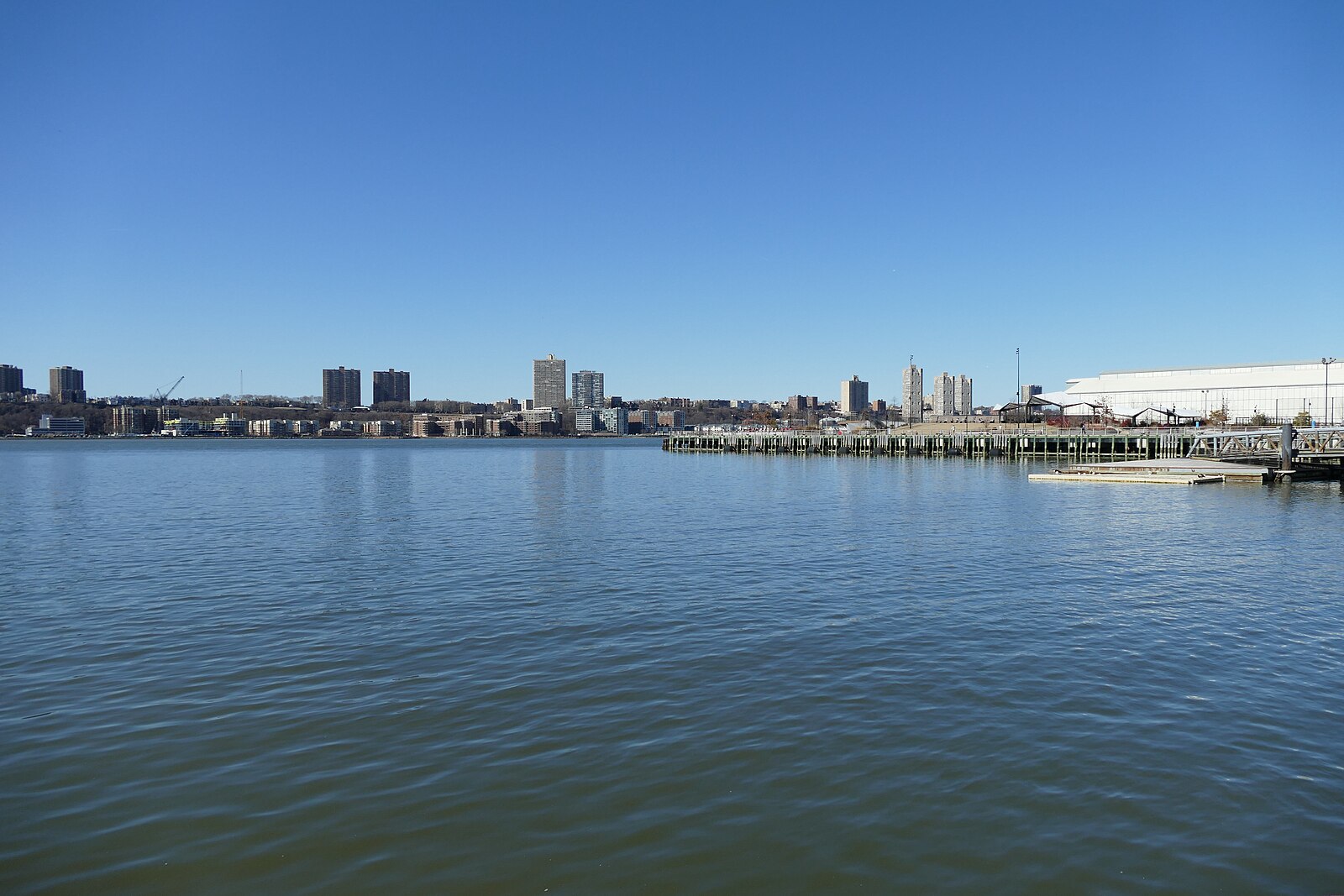
DeWitt Clinton Park is the neighborhood’s backyard and it earns the name
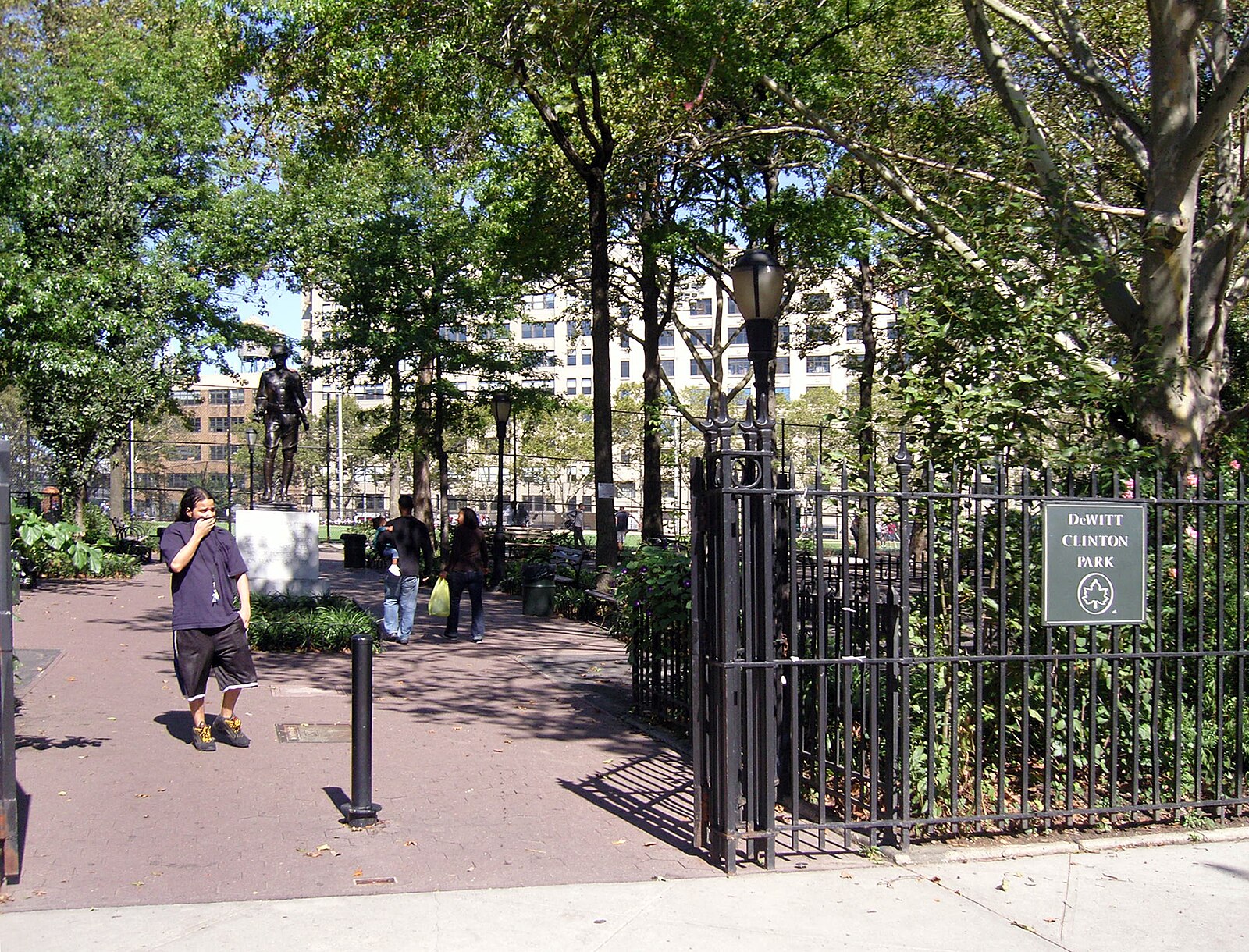
The park sits between 54th and 56th Streets on the western edge of Clinton, six acres of green space named for the governor who built the Erie Canal. It has baseball diamonds, basketball courts, a playground, a dog run, and open grass. For a neighborhood with almost no private outdoor space, this park is where the community gathers. Youth sports leagues run games here through the summer. Dog owners know each other by their dogs’ names. The benches along the interior paths fill up on weekend mornings.
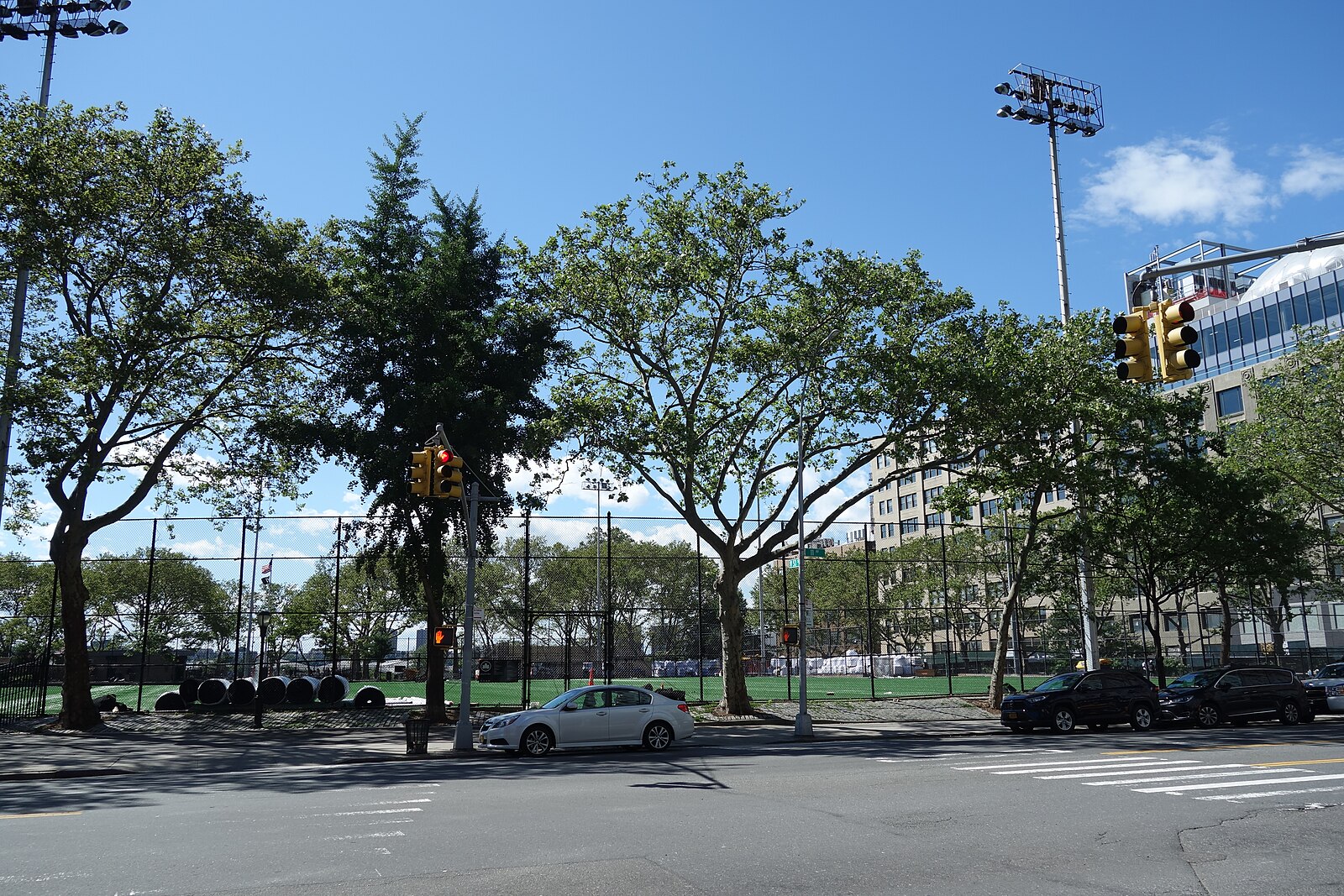
The park is also the landmark that gives Clinton its visual identity, separate from the commercial life of the avenues. If you live west of Tenth, DeWitt Clinton Park is your nearest open space, your kids’ sports field, and the place you walk through on your way to the river. It is one of the few parks in midtown Manhattan that feels like it belongs to its neighborhood rather than to tourists.
Clinton Cove Park, at the end of 55th Street on the Hudson River, extends the outdoor experience to the waterfront. Free kayak launches run through the summer months. The greenway path connects Clinton to the rest of Hudson River Park in both directions. Walking from DeWitt Clinton Park west to Clinton Cove and then south along the river to Chelsea is a two-hour loop that covers some of the best public space in Manhattan.
The community gardens on the cross streets are what kept this neighborhood a neighborhood
In the 1970s and 1980s, when the city was losing population and vacant lots were multiplying across Manhattan, residents of the Clinton cross streets did something that turned out to be historically significant. They claimed the empty lots and built gardens. The Clinton Community Garden on West 48th Street between Ninth and Tenth Avenues is one of several that survive. These gardens were not decorative. They were acts of territorial assertion by a community that was watching its neighborhood empty out and decided to fill the gaps with something living.
The gardens survived because the community organized to protect them. The same organizing energy that built the gardens also built the tenant associations, the community board participation, and the neighborhood watch groups that held Clinton together through the worst decades. Housing Conservation Coordinators, one of the most effective tenant organizing groups in Manhattan, has been based in Clinton since 1972. The Clinton Housing Development Company has built and preserved affordable housing since 1980. These are not abstract civic institutions. They are the organizations that kept people in their apartments when landlords wanted them out.
That organizing tradition is why Clinton has more rent-stabilized housing per block than most comparable Manhattan neighborhoods. The buildings are old enough to qualify and the tenants fought hard enough to keep them regulated. When you clean a rent-stabilized apartment in Clinton that has been occupied by the same tenant for 25 years, you are cleaning a home that was defended, not just rented.
Prewar co-ops and mid-rise apartments along Eighth and Ninth are a different cleaning job
The prewar elevator buildings along Eighth and Ninth Avenues date from the 1920s through the 1940s. Higher ceilings, thicker walls, hardwood floors that have usually been refinished at least once. Many have been converted to co-ops, with one-bedroom units selling in the range of $700,000 to $1.4 million. These buildings typically have a super or part-time doorman, and most require 48-hour advance notice for vendor access.
The cleaning in these apartments is less about navigating old surfaces and more about maintaining the finishes that the renovation installed. Refinished hardwood floors. Updated kitchens with stone or composite countertops. Bathrooms with modern fixtures. The challenge is that many of these apartments still have the prewar layout, which means small rooms with high ceilings, crown molding that collects dust above eye level, and closets that were built for 1930s wardrobes and have since been crammed with 2020s belongings.
Our teams serving Clinton handle both the un-renovated walkups and the updated co-ops, often on the same day, sometimes on the same block. The products and techniques change based on the surfaces. That is what apartment cleaning means in a neighborhood where the building stock spans 140 years.
New construction along Eleventh Avenue requires different logistics entirely
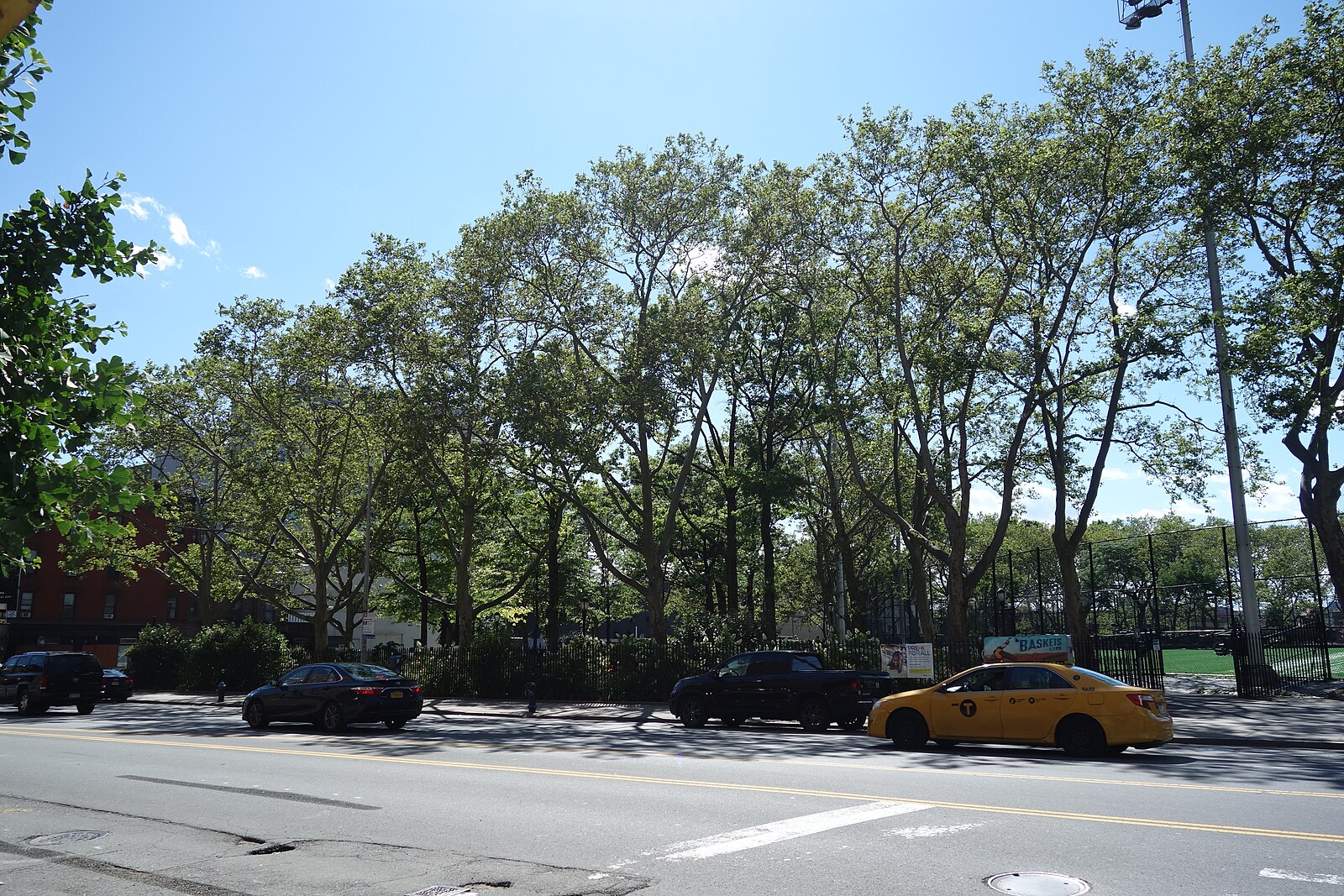
The luxury towers that have gone up along Eleventh Avenue and on the edges of Hudson Yards represent a different kind of cleaning job. Glass curtain walls with floor-to-ceiling windows where every streak is visible from across the room. Engineered stone countertops. High-end appliances. Central air instead of window units. Building management that requires Certificates of Insurance, service elevator reservations, and advance scheduling through a concierge desk.
These buildings also tend to have larger units. Two-bedroom condos running 1,200 to 1,800 square feet, priced at $1.5 million and up. The residents are often working professionals who are out of the apartment during the day and want the cleaning done while they are at the office. The logistics are about coordination with the building, not about getting a key from a neighbor.
We furnish COIs for new construction buildings along Eleventh Avenue regularly. If your building requires one, tell us the requirements when you book and we will have the paperwork submitted before the first appointment. We also coordinate service elevator access and any advance notice windows your management company requires. This is part of the standard process for apartment cleaning in these buildings.
The west-facing window problem is specific to Clinton’s geography
If your apartment faces west between Ninth and Eleventh Avenues, you get direct afternoon sun from roughly 1 PM until sunset. In summer, that is five or six hours of unbroken sunlight hitting your windows, your floors, and every surface on the western wall. The result is twofold. First, sun damage. Hardwood floors near west-facing windows fade faster than floors on the opposite wall. Furniture finishes break down. Second, every particle of dust and every streak on the glass is visible.
A standard cleaning routine does not account for this. Our recurring cleans for west-facing Clinton apartments include window sill wipe-downs every visit. The panes themselves are an add-on on every plan we sell, including a deep clean; choose it and they get a streak-free glass cleaner and are dried completely. If the afternoon sun is exposing every imperfection in your apartment, the answer is not cleaning more often. It is cleaning correctly.
What booking looks like for Clinton residents
You pick your date and time on our booking page. You see your flat-rate price before you commit. If your building has specific access requirements, whether it is a lockbox on a walk-up, a sign-in at a NYCHA development, or a COI for a new tower on Eleventh Avenue, you tell us once and we note it on your account permanently.
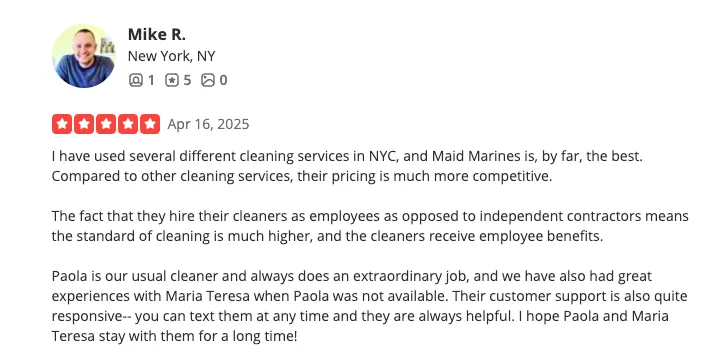
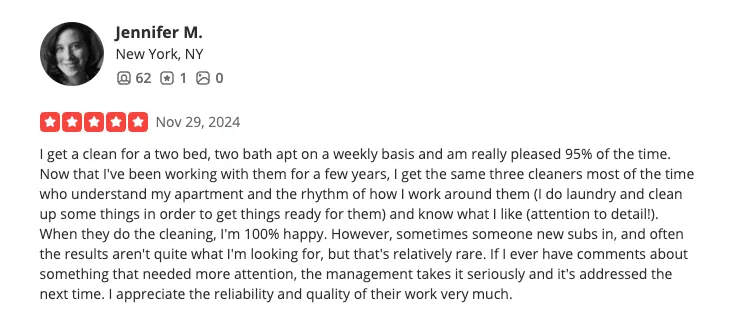
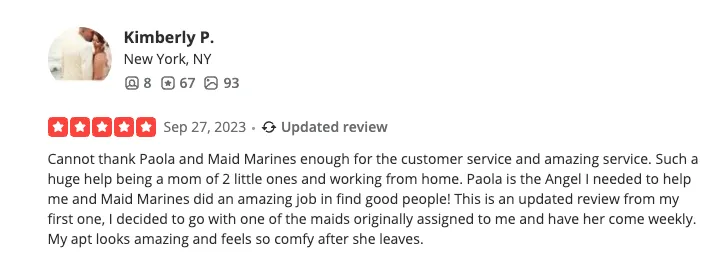
Our cleaners are W-2 employees, not gig workers. They are vetted, insured, and they arrive with everything they need. If you want the same team every visit so your dog gets used to them or because they have learned the particular needs of your apartment, we do that.
Clinton residents also use us for deep cleaning before heat season when the radiators need dust cleared from their fins, move-in and move-out cleaning for one of Manhattan’s most active rental markets, and recurring house cleaning on whatever schedule fits your life. We serve Clinton and all of western Manhattan, including nearby Hell’s Kitchen and Chelsea.