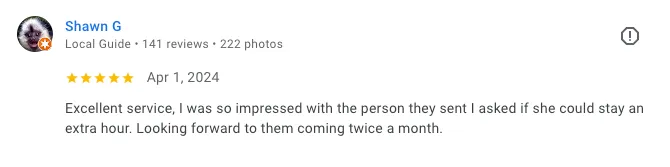

Hell’s Kitchen is the neighborhood that refuses to be renamed. The City of New York officially designated it “Clinton” in 1959, after Governor DeWitt Clinton, and most New Yorkers ignored this entirely. The name Hell’s Kitchen persists on restaurant awnings, in bar conversations, on real estate listings, and in the mouths of residents who understand that a name forged in 140 years of waterfront brawling, gang warfare, immigrant survival, and theatrical ambition is not something you trade in for a politician who has been dead since 1828. This is the neighborhood that produced West Side Story, trained Marlon Brando and James Dean in Method acting, and gave Larry David an apartment across the hall from the real Kramer. It runs on theater time, feeds on Ninth Avenue, and still fights about rent with a ferocity that would have made the Gopher Gang proud.
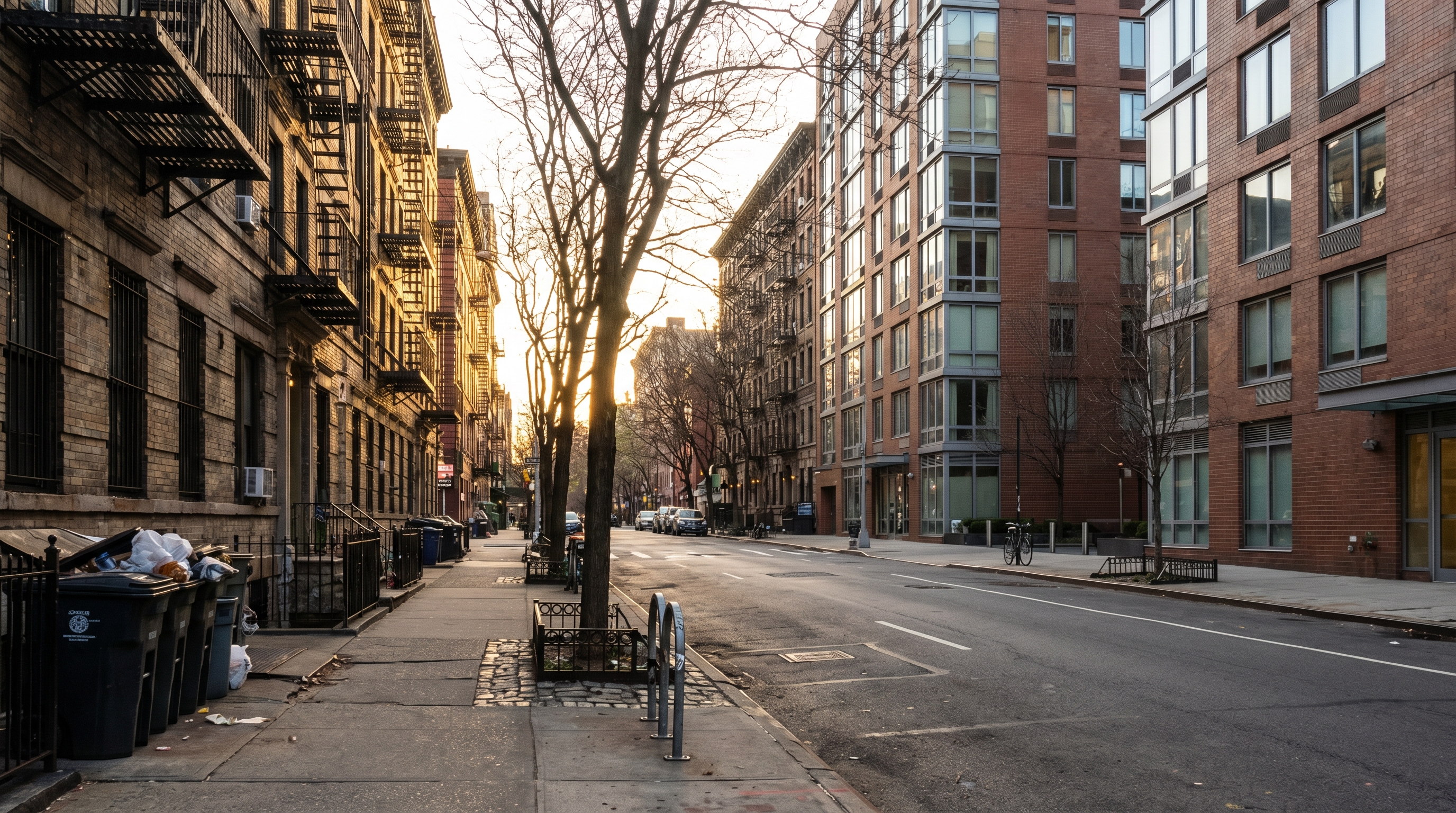
The name Hell’s Kitchen appeared in the New York Times in 1881 and nobody has been able to kill it since
The origin story most people repeat involves two cops watching a riot at Tenth Avenue and 54th Street on September 22, 1881. The veteran officer, a man named Davy Crockett (no relation to the frontiersman), allegedly told his rookie partner it was “hell itself.” The rookie replied: “Hell’s a mild climate. This is Hell’s Kitchen.” The New York Times printed it. The name stuck because it was accurate.
What was happening in 1881 was not a metaphor. The neighborhood between 34th and 59th Streets, west of Eighth Avenue to the Hudson River, was one of the most densely packed immigrant slums in the Western Hemisphere. The Irish had arrived in waves after the Potato Famine of 1845, filling tenements thrown up as fast as lumber could be nailed together. The Hudson River Railroad ran at street level along what is now Eleventh Avenue, killing so many pedestrians that the corridor earned the name “Death Avenue.” A man on horseback called the West Side Cowboy rode ahead of freight trains waving a red flag to warn people out of the way. The last West Side Cowboy, Bob Cook, made his final ride on August 8, 1941, when the High Line elevated freight rail finally moved trains off the street.
The Gopher Gang arose in the 1890s and controlled the blocks between 39th and 41st Streets with an estimated 500 members at peak strength. They ran protection rackets, waterfront theft, and political machine operations in open warfare with the police. After Prohibition reshuffled the power structure, the neighborhood produced the Westies in the 1960s, an Irish-American organized crime gang that federal prosecutors called “the most savage organization in the long history of New York City gangs.” Under leaders Mickey Spillane and Jimmy Coonan, the Westies ran loan-sharking, extortion, and contract killing until RICO prosecutions finally dismantled them in 1988.
West Side Story was written about the exact blocks where it is set
Arthur Laurents wrote the book for the 1957 musical after reading newspaper accounts of gang warfare in Hell’s Kitchen in the early 1950s. He and Jerome Robbins walked the neighborhood extensively during development, mapping the Jets’ territory onto the real blocks between 47th and 55th Streets. The Puerto Rican community had arrived in large numbers after World War II, settling primarily between 47th and 54th Streets, and the resulting tension between the established Irish-Italian residents and the newcomers gave Laurents his story. Leonard Bernstein composed the score. Stephen Sondheim, at 27 years old, wrote the lyrics. The four of them created the defining artistic document of this neighborhood by walking its streets and watching its conflicts unfold.
The theater connection runs deeper than one musical. Broadway’s proximity made Hell’s Kitchen the natural home for everyone who works backstage. Stagehands, chorus members, musicians, actors between shows, costume shop workers, casting directors. They needed affordable housing within walking distance of their theaters, and the neighborhood provided it for over a century. The Actors Studio, at 432 West 44th Street, is where Lee Strasberg developed Method acting and trained Marlon Brando, James Dean, Robert De Niro, Al Pacino, Ellen Burstyn, and generations of American actors from the 1950s forward.
Manhattan Plaza changed the equation in the 1970s. Two 46-story towers at 43rd Street between Ninth and Tenth Avenues, with 70 percent of the apartments set aside for performing artists. The subsidized housing drew everyone from struggling comedians to established performers. Larry David lived there across the hall from Kenny Kramer, who became the inspiration for Cosmo Kramer on Seinfeld. Jerry Seinfeld lived in the building. Alicia Keys grew up on West 51st Street, a 15-time Grammy winner who has said the neighborhood’s toughness and musical diversity shaped her debut album Songs in A Minor. Madonna lived here before she was Madonna.
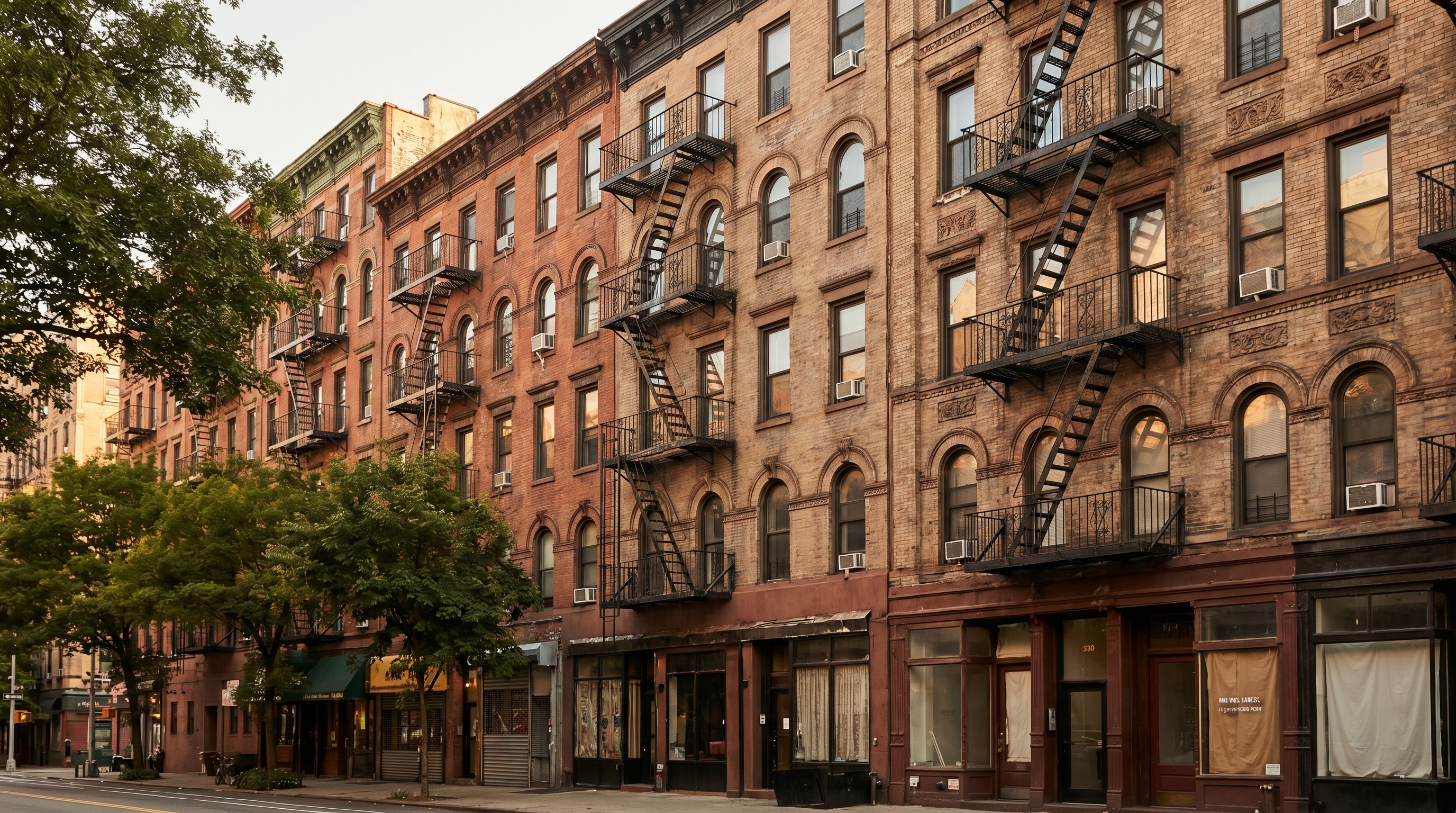
The tenements that housed five generations of immigrants are still standing and still occupied
The Old Law tenements between Ninth and Tenth Avenues were built before 1901 on 25-foot-wide lots with minimal light and air requirements. Five and six stories of brick, narrow stairwells, iron fire escapes bolted to the facades, and apartments so compact that families of eight shared rooms meant for three. The New Law tenements built after 1901 are identifiable by their dumbbell or U-shaped floor plans, which the Tenement House Act required to provide interior courtyards for ventilation. Both types survive in large numbers along the cross streets from 42nd to 57th.
These buildings have been renovated extensively since the 1990s, but their bones remain. Soft pine or fir hardwood floors that absorb water and scratch with abrasive pads. Cast-iron radiators with decorative fins that trap dust all summer and burn it off when the steam heat kicks on in October. Narrow kitchens with plumbing that has been updated just enough to function. Windows that face other buildings eight feet away, limiting natural light to whatever bounces off the brick opposite.
The prewar mid-rise elevator buildings along Eighth and Ninth Avenues date from the 1920s through the 1940s. Higher ceilings, thicker walls, hardwood floors that have usually been refinished. Many have been converted to luxury rentals or co-ops, with one-bedroom co-ops selling for $700,000 to $1.4 million. Along Eleventh Avenue, new glass and steel luxury towers from the 2010s and 2020s sit in sharp contrast to the tenement fabric one block east.
The cleaning challenges change on every block because of this architectural layering. A sixth-floor walk-up with original pine floors and century-old radiators is not the same job as a glass-walled condo with engineered stone countertops and floor-to-ceiling windows where every streak is visible from the street. The products are different. The access logistics are different. The surfaces that will be ruined by the wrong approach are different. Our teams work this neighborhood regularly and know what each building type requires before they walk in. The original hardwood gets a pH-neutral cleaner and a flat microfiber mop, never steam. The radiators get a brush and vacuum between the fins, not a wipe across the top. The luxury finishes get surface-specific care that protects the investment. This is what apartment cleaning looks like when you know the building stock.
Restaurant Row and Ninth Avenue built one of the great eating neighborhoods in America
West 46th Street between Eighth and Ninth Avenues has been called Restaurant Row since the 1940s, when pre-theater dining became an institution. Barbetta, at 321 West 46th Street, is the oldest Italian restaurant in New York City, founded by Sebastiano Maioglio in 1906 and still serving Northern Italian food from the original family cookbook. Joe Allen opened at 326 West 46th Street in 1965 and became the Broadway industry gathering spot, famous for its “flop wall” of posters from failed shows. These restaurants survived two World Wars, Prohibition, the Depression, the 1970s fiscal crisis, the crack epidemic, and gentrification. They are monuments to persistence.
Ninth Avenue is the neighborhood’s culinary spine and cultural heart. The corridor from 44th to 54th Streets contains one of the most diverse concentrations of restaurants in Manhattan. Greek, Thai, Mexican, French, Japanese, Italian, Korean, West African, Cuban. Poseidon Greek Bakery at 629 Ninth Avenue has been family-run since 1923, still making phyllo pastry by hand. Victor’s Cafe at 236 West 52nd Street has served Cuban cuisine since 1963, a relic of the neighborhood’s “Little Cuba” era. Danji at 346 West 52nd Street brought Michelin-recognized Korean-American small plates to the avenue. Every May since 1974, the Ninth Avenue International Food Festival has stretched 20 blocks with outdoor vendors and drawn over a million visitors in a single weekend, making it the largest outdoor food festival in New York City.
Your Saturday belongs at one of these places, not scrubbing your bathroom. The neighborhood exists to feed you, entertain you, and send you home happy. If you are spending your free time cleaning an apartment that collects restaurant exhaust grease from Ninth Avenue faster than you can wipe it down, something has gone wrong with your priorities. A recurring cleaning means your weekends belong to Restaurant Row and the river, not to a mop. Book your cleaning and reclaim the time.
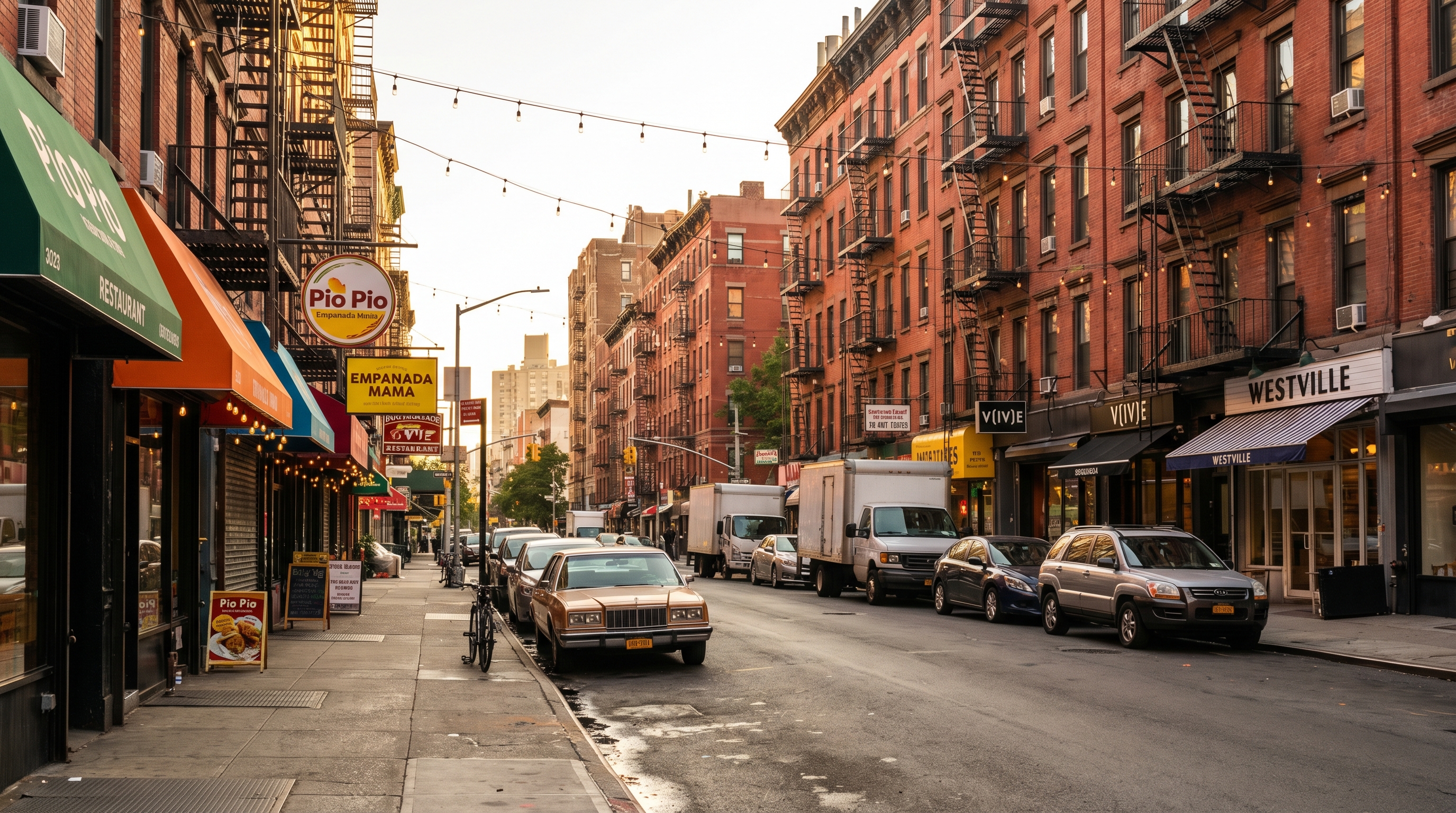
The Ninth Avenue grease problem is real and specific to this corridor
If your apartment faces Ninth Avenue between 44th and 54th Streets, you already know about this. The concentration of restaurant exhaust vents along the avenue produces airborne cooking grease that settles on windows, sills, and AC units facing the street. Interior window panes develop a hazy film. Window sills get sticky. The kitchen surfaces closest to avenue-facing windows accumulate residue that inland blocks never see.
A standard apartment cleaning routine does not address this. Our recurring cleans for Ninth Avenue units include sill and frame wipe-downs every visit. The panes are an extra you choose at booking on any plan, including a deep clean, and they get a degreasing glass cleaner when you do. If you have been wondering why your apartment feels oily no matter how much you clean, the avenue itself is the answer.
Three world boxing champions came out of these blocks
Rocky Graziano was born Rocco Barbella in Hell’s Kitchen and fought his way to the World Middleweight Championship in 1947. His autobiography Somebody Up There Likes Me became a 1956 film starring Paul Newman. Jake LaMotta, “The Raging Bull,” spent formative years in the neighborhood before his middleweight title run. James Braddock, the “Cinderella Man,” was born on West 48th Street in 1905 and became the heavyweight champion of the world in 1935 during the depths of the Depression. Boxing was a legitimate path to upward mobility for working-class youth in the first half of the 20th century, and Hell’s Kitchen produced more champions per square block than anywhere else in the country.
The LGBTQ+ community has made the northern blocks a center of nightlife and culture
Hell’s Kitchen has become one of New York’s most prominent LGBTQ+ neighborhoods, particularly for gay men who migrated north from Chelsea as rents there climbed through the 2000s and 2010s. The stretch of Ninth and Tenth Avenues between 47th and 52nd Streets has a dense concentration of LGBTQ+ bars, clubs, and gathering spaces. The neighborhood hosts significant Pride-adjacent events and maintains an active community organization infrastructure. This is a neighborhood where community loyalty to businesses that serve the community well translates into sustained, recurring relationships.
The Windermere is one of the oldest apartment buildings in New York and its story mirrors the neighborhood
The Windermere at 400 West 57th Street was erected in 1881, the same year the name “Hell’s Kitchen” appeared in the Times. It is recognized as the oldest large apartment complex still remaining in New York City. Seven stories, three wings, 39 apartments with marble fireplaces, hazelwood molding, parquet floors, hydraulic elevators, and telephone service. The exterior combines Queen Anne, High Victorian Gothic, and Romanesque elements, with three-story bowed oriels and Ohio stone trim. By the late 1890s, 80 percent of its 200 residents were women, including self-supporting artists and performers at a time when that was unusual.
The building’s decline tracked the neighborhood’s. Drug dealers and prostitutes moved in during the 1970s. By 1980 it was half empty. Remaining residents were burgled and threatened. It received landmark status in 2005 and has been under restoration, its arc from luxury to squalor to landmark mapping perfectly onto Hell’s Kitchen’s own trajectory from wealthy, to violent, to valued.
What booking looks like for Hell’s Kitchen apartments
You pick your date and time on our booking page. You see your flat-rate price before you commit. If your building has specific access requirements, you tell us once and we handle it from there. Walk-up with a lockbox, doorman building with an elevator reservation, luxury condo with a COI requirement. We have cleaned every type of building in this neighborhood.
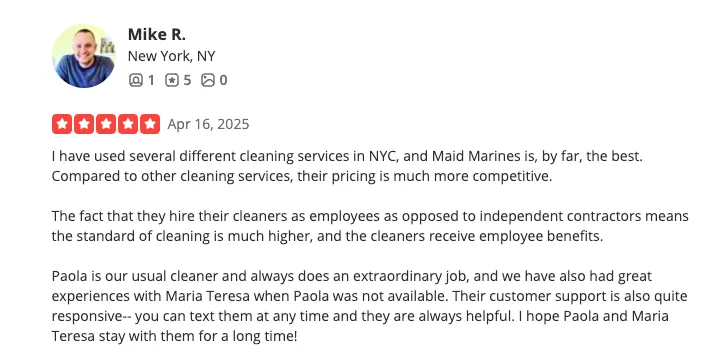
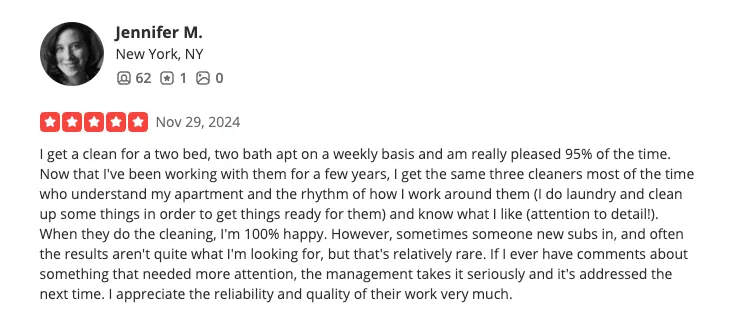
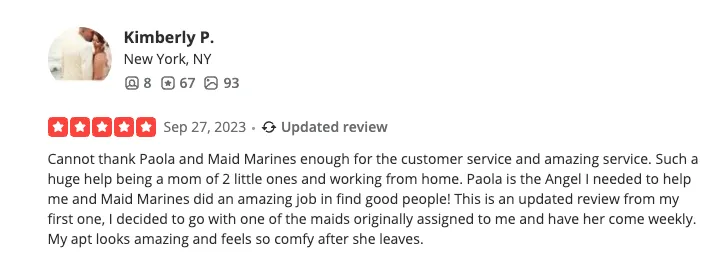
Our cleaners are W-2 employees, not gig workers pulled from an app. They are vetted, insured, and they show up with everything they need. If you work theater hours and need a mid-morning clean while you sleep in, we can do that. If you want the same team every two weeks so your nervous dog gets used to them, we do that too.
Hell’s Kitchen residents also use us for deep cleaning before or after the seasonal restaurant grease buildup, move-in and move-out cleaning for one of Manhattan’s most active rental markets, and recurring house cleaning on whatever schedule works around your life. We also serve nearby Chelsea, the Upper West Side, and the rest of Manhattan.