
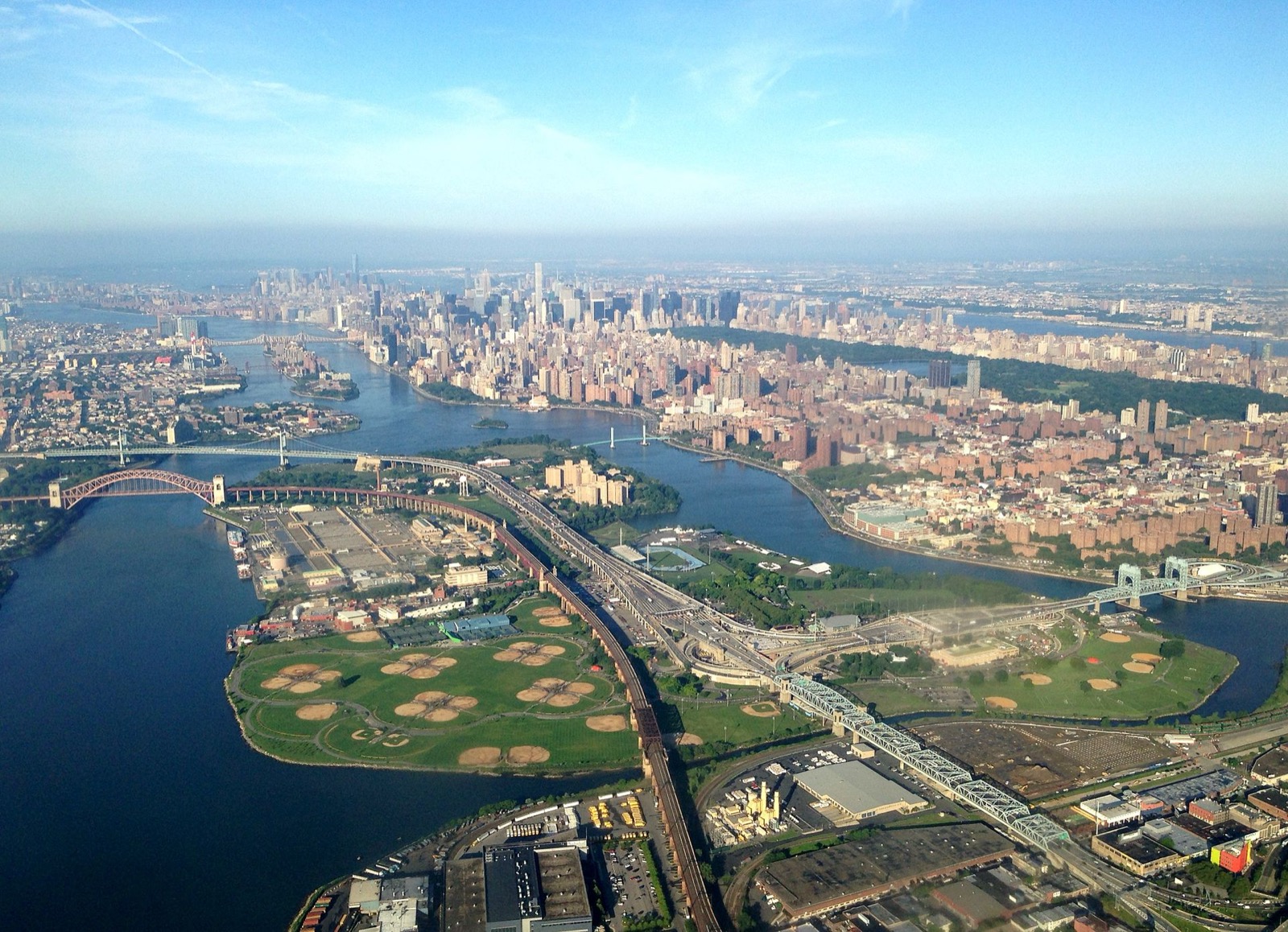
Randalls Island is a 480-acre island in the middle of New York City that has no residents. No apartments, no houses, no doorman buildings, no walk-ups. Nothing to clean in the conventional sense. It is entirely parkland, athletic fields, a world-class track and field stadium, a professional tennis center, an FDNY training academy, and a bridge that connects three boroughs. On a Saturday morning in summer, thousands of people are on this island playing soccer, running track, hitting tennis balls, cycling the perimeter path, or birdwatching along the shoreline. By nightfall they have all gone home, because there is nowhere to live here.
So why is a cleaning company writing about Randalls Island? Because the neighborhoods that ring this island are where our clients live. East Harlem residents walk across the 103rd Street footbridge to get to the fields. South Bronx families use the Randalls Island Connector from East 128th Street. Astoria residents cross the RFK Bridge. These people come home from the island to apartments that need cleaning. And the history of how this strange, unpopulated island came to exist in its current form is one of the most compressed and revealing stories in New York City.
Randalls Island spent a century as a place New York sent the people it did not want
The island’s history is a case study in how cities have treated their most vulnerable populations. Before European settlement, the Lenape people of the Reckgawawanc band used the two islands (Randalls Island to the north, Wards Island to the south, separated by the Little Hell Gate waterway) for fishing and seasonal habitation. The Hell Gate passage surrounding the islands was one of the most productive fishing grounds in the harbor and one of the most dangerous waterways on the eastern seaboard. The name “Hell Gate” is Washington Irving’s Americanization of the Dutch “Hellegat,” which may have meant “bright gate” or simply “narrow passage.” Either way, the tidal currents, whirlpools, and unpredictable rips through the strait wrecked hundreds of ships over three centuries.
Captain Jonathan Randel (sometimes spelled Randall) owned and farmed the northern island in the late 18th and early 19th centuries. He gave it his name and left no other historical distinction. The Ward brothers, Jaspar and Bartholomew, owned the southern island. The city bought both islands in the mid-19th century because it needed space for institutions housing the populations that the residential neighborhoods of Manhattan would not accept.
From the 1840s onward, the city built an archipelago of institutions on the islands. The House of Refuge, established in 1854, was a juvenile reformatory for delinquent boys and the largest such facility in the United States. The infant hospital and nursery took in orphaned and abandoned babies at a time when the mortality rate in such institutions was catastrophic by modern standards. A training school for children with cognitive and developmental disabilities. A psychiatric hospital complex on the Wards Island portion that would eventually grow into the Manhattan State Hospital. During the Civil War, the island served as a Union military training camp.
The pattern was consistent across decades. The city used these islands to contain the populations that the residential grid of Manhattan would not tolerate, from juveniles and the mentally ill to the addicted and the chronically poor. One historian described them as “islands of the undesirables.” At the institutional peak, the combined island complex held up to 7,000 people. Most of them had no choice in being there.
Robert Moses turned an island of institutions into a public park on the Fourth of July 1936
The transformation was one of the most dramatic in New York City park history. Robert Moses, who had been appointed Parks Commissioner in 1934, looked at Randalls Island and saw an opportunity. He proposed filling in the Little Hell Gate waterway between Randalls and Wards Islands with landfill to merge them into a single landmass, clearing the institutional buildings, and constructing a comprehensive recreation complex for the city’s working-class population. The Triborough Bridge, being built under Moses’s Triborough Bridge and Tunnel Authority, would use the island as its central hub, connecting Manhattan, Queens, and the Bronx through the merged island.
President Franklin D. Roosevelt opened the new Randalls Island park complex on July 4, 1936. It was a Robert Moses production. Speeches, crowds, the symbolic conversion of an island of asylums and reformatories into a democratic public park. The signature structure was Downing Stadium, a 22,000-seat athletic stadium that became the home of New York City track and field events. The Triborough Bridge opened the same year, and suddenly this isolated institutional island had vehicular access from three boroughs.
The politics of the transformation are worth understanding. Moses used New Deal federal funding and the revenue from bridge tolls to finance parks, parkways, and public works across New York City for decades. The Triborough Bridge and Tunnel Authority became one of the most powerful quasi-governmental agencies in American history, and Randalls Island was its physical headquarters. The island where the city once sent people it did not want to see became the hub of the infrastructure that connected the city together.
The park deteriorated for decades before a nonprofit brought it back
By the 1970s and 1980s, the story had turned again. Downing Stadium had deteriorated. The athletic fields were in poor condition. The facilities were underfunded, underused, and neglected in the way that New York City parks were neglected during the fiscal crisis and its long aftermath. The island that Moses had built as a showpiece of public recreation had become a cautionary example of what happens when a city stops investing in its own infrastructure.
In 1992, the Randall’s Island Park Alliance (RIPA) was established as a nonprofit partner to the city. The alliance model, pairing private philanthropic funding with public parks management, has become common across New York City since then. Central Park Conservancy, Prospect Park Alliance, Brooklyn Bridge Park Corporation. RIPA was one of the early versions of this approach.
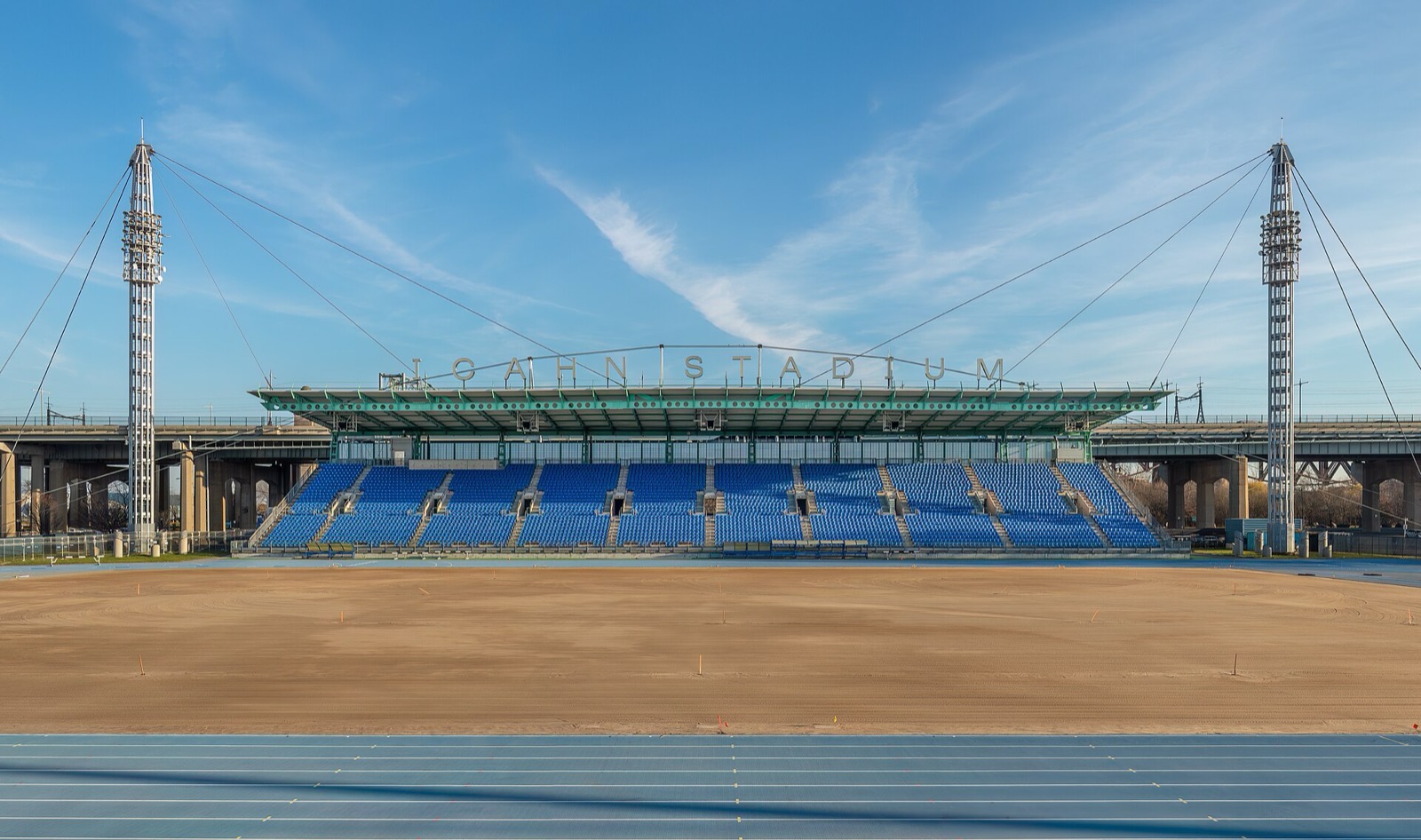
The results have been dramatic. RIPA has invested over $300 million in park infrastructure since its founding. Downing Stadium was demolished and replaced with Icahn Stadium in 2005, a 5,000-seat track and field facility with a World Athletics Class 1 certified 400-meter Mondo surface. The financier Carl Icahn funded the construction. In 2009, the Sportime Randalls Island Tennis Center opened with 20 courts (10 clay, 10 hard) and became the home of the John McEnroe Tennis Academy. The island now has over 60 athletic fields serving hundreds of organized leagues and school programs. It is one of the most intensively programmed recreational spaces in any American city.
The recovery took most of a century, but the island works now. And the most recent chapter is the $5 million restoration of soccer fields in 2025, where the former site of a COVID-era emergency shelter facility was rebuilt into new synthetic turf fields with improved pathways.
The 103rd Street footbridge is why East Harlem residents live where they do
If you live in East Harlem anywhere near the FDR Drive at 103rd Street, you are a 10-minute walk from 480 acres of parkland. The 103rd Street footbridge is a pedestrian and bicycle swing bridge connecting the East River Esplanade in Manhattan to the southwestern tip of Randalls Island. It is open 24 hours a day, 365 days a year. It is one of the most distinctive pieces of pedestrian infrastructure in New York City and the reason that people who need access to athletic fields, running paths, and open green space choose to live in upper Manhattan rather than somewhere with better subway service.
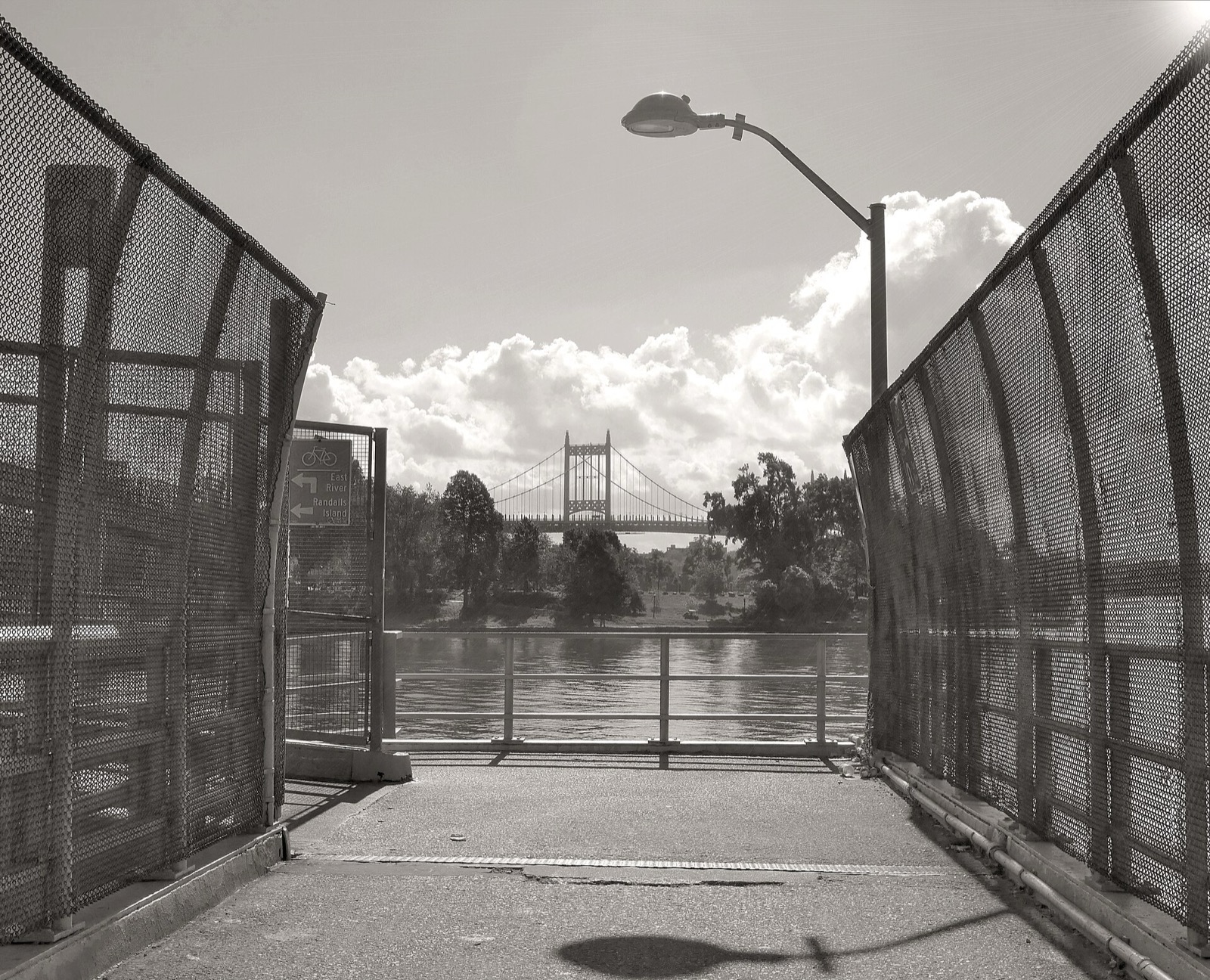
On a weekend morning, the bridge carries joggers heading for the island’s perimeter waterfront path, parents driving strollers to the fields where their kids play youth soccer, cyclists connecting the East River Greenway to the island loop, and coaches lugging equipment bags to the 60-plus fields. The view from the bridge looking west toward the Manhattan skyline is one of the best free panoramas in the city. The view looking east toward the Hell Gate passage and the bridge infrastructure is one of the most unusual.
The M35 bus from 125th Street and Lexington Avenue is the only public transit connection to the island, and it runs limited hours. Everyone else walks, bikes, or drives. The Randalls Island Connector provides pedestrian and bicycle access from East 128th Street in the Bronx, connecting South Bronx neighborhoods to the island without a car.
Icahn Stadium and the McEnroe Tennis Academy made a city park into a world-class venue
The facilities on Randalls Island are not the kind of facilities you normally find in a city park. Icahn Stadium’s Mondo Super X Performance track surface is the same material used at Olympic and World Athletics venues. The stadium hosts professional track and field meets, college athletics, and international competitions. It was built to a specification that most mid-size American cities would be proud to have in their dedicated sports arenas, and it sits on an island in the East River that you reach by footbridge or bus.
The Sportime tennis center is similarly out of scale for a public park. Twenty courts. Professional-quality Har-Tru clay and DecoTurf hard court surfaces. The John McEnroe Tennis Academy, named for and associated with the seven-time Grand Slam champion who grew up in Douglaston, Queens, operates here. It is one of the most prestigious youth tennis development programs in the country, running out of a facility on public parkland accessible by a swing bridge from East 103rd Street.
Then there is the FDNY Training Academy. The New York City Fire Department operates a major training facility on the island with burn structures (buildings specifically designed to be set on fire repeatedly for live fire training), apparatus bays, classroom buildings, and administrative offices. The sound of sirens, the sight of training exercises, and the occasional plume of smoke from the burn tower add an industrial note to the otherwise pastoral setting.
The island also hosts the kind of large-scale events that require the geographic containment an island provides. The Governors Ball Music Festival drew more than 70,000 attendees over three-day weekends for multiple years here before moving to Citi Field. Cultural festivals, community events, AFROPUNK, and NYC Pride-affiliated celebrations have all used the island’s open fields. When tens of thousands of people converge on a festival site, being on an island with controlled access points has practical advantages.
Cleaning near Randalls Island means serving the neighborhoods that feed into it
The apartments surrounding Randalls Island are as varied as any in New York City. East Harlem walk-ups from the 1890s with galley kitchens and cast-iron radiators. NYCHA tower complexes with visitor ID protocols and elevator access. New construction condos near 96th Street with doorman lobbies and polished floors. South Bronx apartments accessible from the Randalls Island Connector. Harlem brownstones and pre-war co-ops west of the park.
Each type of home presents different cleaning challenges, and we have written about most of them in detail on our neighborhood pages. The East Harlem page covers the specific requirements of pre-war tenements, NYCHA buildings, and the new condos near the Lexington Avenue line. If you live in Upper East Side territory south of 96th Street, that page covers your building type. The point is that Randalls Island itself does not need cleaning. But if your family uses the island every weekend and you come home to an apartment that does need cleaning, we are here.
For families with kids in youth sports on the island, the pattern is simple. Book a Saturday morning apartment cleaning during your coaching session or your child’s game. Walk across the footbridge, spend two or three hours at the fields, and come home to a clean apartment. If the apartment needs a full reset after a season of muddy cleats, grass-stained uniforms, and equipment bags piled in the hallway, book a deep clean and let us work through it.
If you are moving into one of the neighborhoods near the island because you want access to the fields and the footbridge, our move-in and move-out cleaning handles the full reset of your new apartment before you unpack.
The island has no residents but it has the best free view of the Manhattan skyline in the city
The view from Randalls Island’s western shore looking toward Midtown and the Upper East Side is one of those things that locals know about and tourists have not discovered. The full panorama of the Manhattan skyline, reflected in the Harlem River, unobstructed by buildings because you are standing on an island in the middle of the river. On a clear morning, the light catches the glass towers between 60th and 90th Streets and the view is genuinely spectacular.
The island has excellent birding. The northern and eastern shorelines attract migrating shorebirds, wading birds, and waterfowl during spring and fall migration. The Linnaean Society of New York lists the island as a productive site. You can catch striped bass and bluefish from the shore, fishing in the strong tidal currents of the Hell Gate passage in some of the most unusual urban fishing conditions in any American city.
At the northern tip of the island stands the ruin of a small 19th-century lighthouse that once guided ships through the Hell Gate. The lighthouse is a remnant from an era when the strait surrounding the island was one of the most dangerous waterways in New York Harbor, famous for currents and whirlpools that destroyed hundreds of vessels over three centuries. The lighthouse ruin is small and easy to miss, but it connects the recreational present to the navigational history of the waterway in a way that nothing else on the island does.
The island is many things simultaneously. A world-class athletic complex. A bird sanctuary. A festival ground. An FDNY training campus. A psychiatric hospital campus on the Wards Island portion. A day-use park. It is one of the strangest places in New York City, and the fact that it works as well as it does today is the result of a century of transformation, neglect, and renewal that compresses the entire arc of how New York treats its public spaces into 480 acres in the East River.
If you live near this island and you need your apartment cleaned, book online and we will take care of it while you take advantage of one of the best free recreational resources in New York City.