
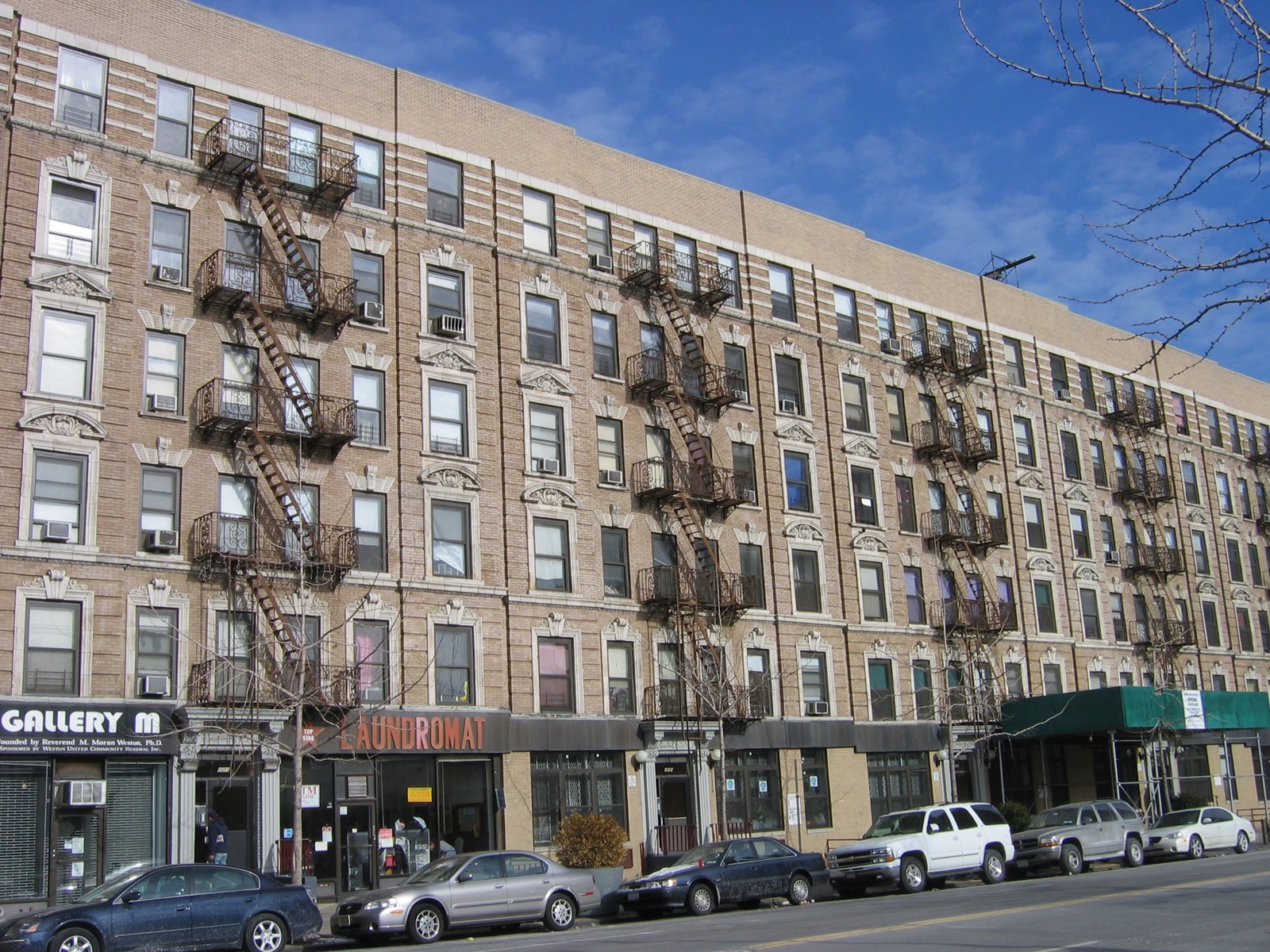
Harlem is a neighborhood where the cleaning changes depending on which block you are standing on. A brownstone floor-through on West 130th Street with original plaster walls and 120 years of accumulated detail is a completely different job from a new-construction condo on Frederick Douglass Boulevard with quartz countertops and engineered hardwood. A pre-war walk-up on Lenox Avenue where the cast-iron radiators have not been cleaned since the building was converted from coal heat is a different job from a renovated co-op on Seventh Avenue with central air and a doorman. The housing stock here spans every decade from the 1880s to last year, and the cleaning approach has to span with it.
That range is what makes Harlem’s buildings interesting to work in. It is also what makes generic cleaning services a bad fit. You need cleaners who understand what plaster walls need, what brownstone stoops need, what pre-war woodwork needs, and what a gut-renovated apartment with construction dust on every surface needs. Those are four different skill sets applied on the same grid of streets.
But this is Harlem, so before we talk about cleaning, it is worth understanding what neighborhood you are living in. Because the history of these blocks shaped the buildings you live in, and the buildings shaped what the cleaning job actually looks like.
The building boom that created Harlem’s brownstones happened because of a speculative collapse
Between 1880 and 1910, the extension of the elevated railroad into upper Manhattan triggered a building frenzy. Developers put up thousands of brownstone rowhouses, brick apartment buildings, and tenement-style walk-ups across the blocks between 110th and 155th Streets. They expected a wave of middle-class buyers moving north from the crowded Lower East Side and Midtown. The wave came, but not fast enough. The market overbuilt dramatically, and by the early 1900s hundreds of buildings sat partially vacant.
A Jamaican-born real estate agent named Philip Payton Jr. saw the opportunity. He convinced white landlords sitting on empty brownstones to rent to Black families at premium rates. African American families arriving from the South during the Great Migration began filling the blocks around 133rd and 134th Streets, and within two decades Harlem had become the cultural capital of Black America.
The irony is that the same speculative overbuilding that crashed the market also preserved the architecture. Because the brownstones lost their value, nobody had a financial reason to tear them down and rebuild. The buildings survived precisely because the neighborhood was depressed. That is why Harlem today has one of the finest collections of intact late-19th-century rowhouses in New York City. The stoops, the bay windows, the ornate cornices and lintels, the warm reddish-brown sandstone facing that gives the brownstone its name. All of it survived a century of neglect, and now it is the reason people pay $3 million for a townhouse on a block that was written off 40 years ago.
Strivers Row is the finest residential streetscape in Central Harlem and requires cleaning that matches
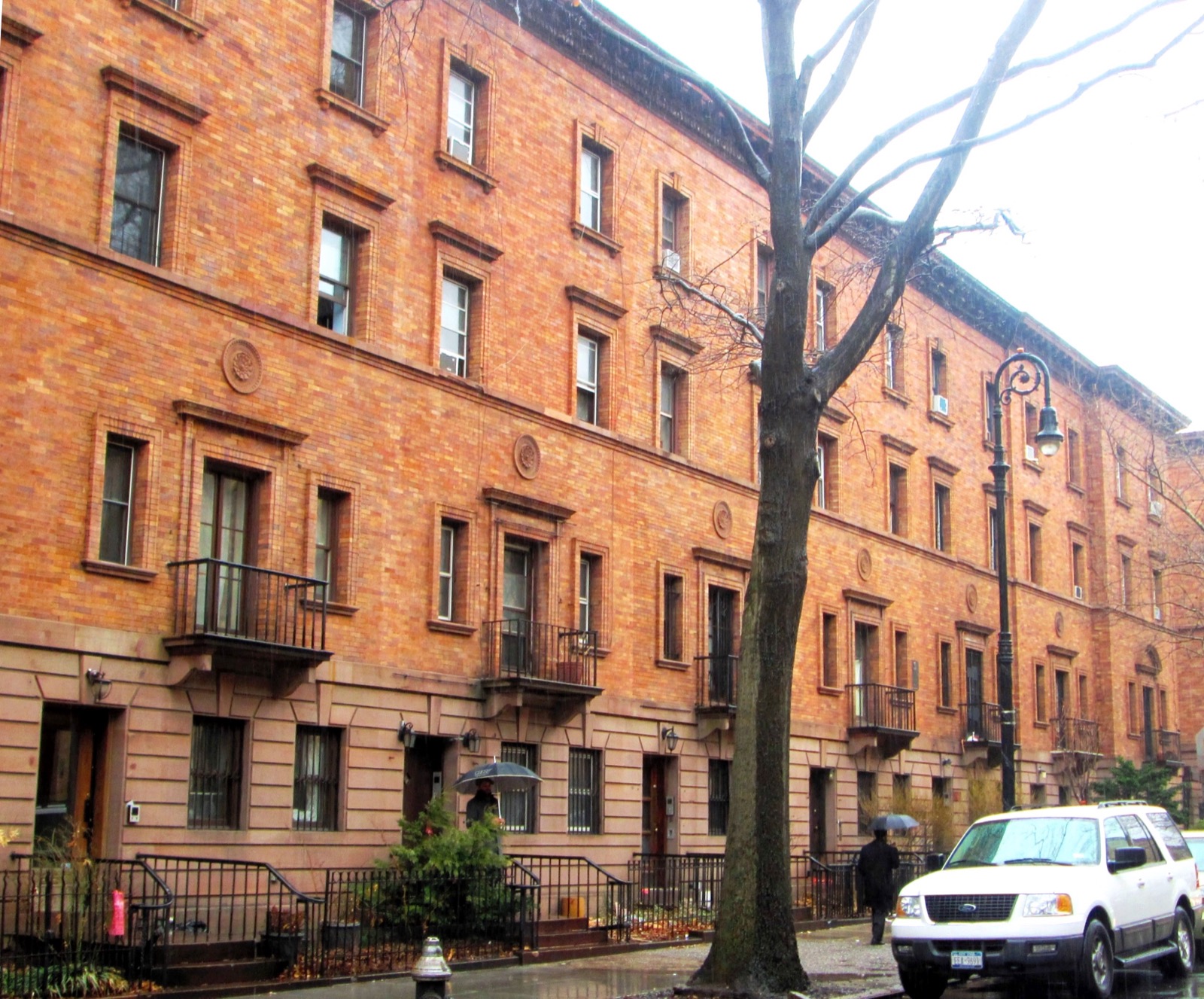
Three blocks of West 138th and 139th Streets between Adam Clayton Powell Jr. Boulevard and Frederick Douglass Boulevard hold 146 rowhouses designed by three different architectural firms for developer David King in 1891. The Stanford White-designed white Georgian brick houses on the north side of 139th Street are among the most architecturally distinguished residential buildings in Manhattan. The McKim, Mead and White firm designed several others. These buildings even have rear service alleys wide enough for horse-drawn carriages, still accessible through original iron gates.
Beginning in the 1920s, African American professionals moved in. Doctors, lawyers, musicians, educators. The kind of people who aspired to a certain standard of living in an era when most of New York was closed to them. The neighborhood earned its name from their ambition. Strivers Row.
Cleaning a Strivers Row townhouse means understanding that the woodwork is not replaceable. The original hardwood floors, the plaster ceiling medallions, the decorative molding around the window casings. We use pH-neutral solutions on the floors, dry microfiber on the wood, and we do not use silicone-based polishes that leave a cloudy buildup over time. These homes are landmarked. The interiors deserve the same respect.
The Harlem Renaissance happened in living rooms and on front stoops on these exact streets
Between 1920 and 1940, Harlem produced the most important artistic and intellectual movement in African American history. Langston Hughes lived at 20 East 127th Street for nearly two decades and wrote some of the most important poetry in American literature from that house. Duke Ellington lived at 935 St. Nicholas Avenue in Sugar Hill and made the Cotton Club on 142nd Street and Lenox Avenue the most famous jazz venue in the world. Zora Neale Hurston, Billie Holiday, Ella Fitzgerald, Louis Armstrong, W.E.B. Du Bois, Jacob Lawrence, Claude McKay. They all lived and worked within a few square miles of each other, producing art and ideas that permanently changed American culture.
The Savoy Ballroom at 596 Lenox Avenue between 140th and 141st Streets was where swing dancing was invented. The Cotton Club, despite its shameful whites-only admission policy, broadcast Duke Ellington’s orchestra to a national radio audience. The Schomburg Center, founded on the private collection of Afro-Puerto Rican intellectual Arturo Alfonso Schomburg, became and remains the world’s most important archive of African American history.
The Apollo Theater on 253 West 125th Street is still running Amateur Night, the same competition where a 17-year-old Ella Fitzgerald won in 1934 and nearly did not go onstage because she was terrified. James Brown, Stevie Wonder, Michael Jackson, Aretha Franklin, Sarah Vaughan. The wall of fame backstage is a roll call of 20th-century American music. The Wednesday night competition continues, and the audience is still the judge.
None of this is trivia. The Harlem Renaissance happened in the buildings that still line these streets. The brownstones, the walk-ups, the churches. The physical housing stock of Harlem is not separate from its cultural history. It is the same thing. When you clean a parlor floor on West 130th Street, you are maintaining a home that may have hosted a rent party in 1928, where jazz musicians played until morning to help the tenant make rent. The building remembers even if the current lease does not.
Brownstone townhouses from the 1880s need cleaners who understand what they cannot replace
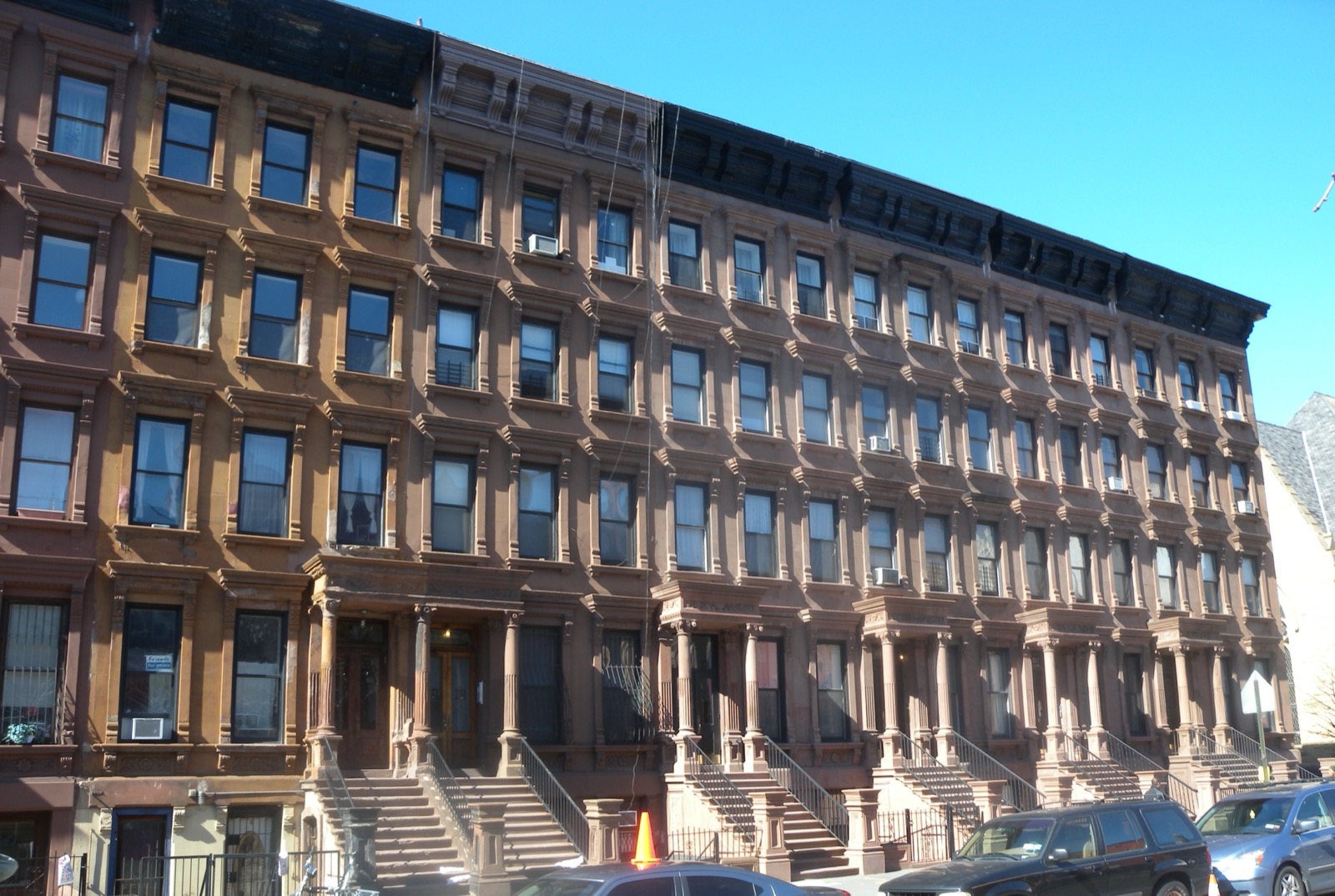
The defining building of Harlem is the brownstone rowhouse. Four or five stories, clad in New Jersey sandstone, with stoops, bay windows, and ornate lintels. Most were built between 1880 and 1910 in the Romanesque Revival, Renaissance Revival, and neo-Georgian styles. Inside, the surviving original features include hardwood floors, plaster walls with decorative molding, tile fireplace surrounds, and interior millwork that nobody installs anymore because the craftsmen who did that work are gone.
About a quarter of Harlem’s housing stock is brownstone or rowhouse. Many have been subdivided into four to eight rental apartments. A growing number are being reconverted to single-family use as property values rise, with full brownstones now selling for $2 million to $6 million depending on condition and block. Whether the brownstone is a single-family home or a building with eight apartments, the cleaning challenges are the same.
Water on unsealed plaster leaves permanent marks. Silicone-based furniture polish on original woodwork builds up into a cloudy film over years. Abrasive pads on hardwood scratch through the finish permanently. The stoops, while exterior and not part of our cleaning scope, are made of the same brownstone that gives the building its name, and they etch if you hit them with an acidic solution. We use dry microfiber on the woodwork, pH-neutral solutions on the floors, and we treat every decorative surface as what it is, which is irreplaceable work from a century ago.
For a full townhouse, we send a two-person team and allow three to four hours for a recurring house cleaning. The first visit takes longer. The garden-level kitchen, which in many Harlem brownstones is the primary living space, usually needs the most attention. Cooking grease from daily use accumulates on range hoods, cabinet faces, and the ceiling above the stove, and a standard wipe-down will not remove it. We degrease every kitchen surface within range and pull the drip trays.
Pre-war walk-ups are the most common dwelling in Harlem and the radiators tell the story
About 35 percent of Harlem’s housing is pre-war walk-up apartment buildings. Five and six stories of brick, built between 1900 and 1940, no elevator, with the bulk of the neighborhood’s rent-stabilized units. These buildings hold much of Harlem’s working-class and lower-income population and many of its longest-tenured residents. A family that has been in the same walk-up apartment for 30 years has a home that has absorbed 30 years of living.
The cast-iron radiators are the signature maintenance challenge. Every October, when the steam heat kicks on for the first time, the dust packed into the radiator fins burns off and fills the apartment with that scorched-lint smell that every New Yorker with pre-war heating recognizes. A surface wipe does not reach it, and neither does anything else in a cleaner’s bag. What we handle is the covers, the AC units, and the vent grilles, dusted on every visit, plus the floor and baseboard behind the unit that most crews skip because the radiator is in the way. The inside of the cast iron belongs to a radiator specialist. If you book a deep clean before heating season, at least the rest of the room is down to clean when the boiler comes on.
Walk-up apartments in Harlem typically run 500 to 900 square feet. The ceilings are often 9 to 10 feet, which means crown molding, light fixtures, and the tops of tall window frames are out of reach with standard equipment. Our teams bring step stools and extension tools. Let us know your ceiling height when you book.
Harlem’s co-ops and new construction have different logistics than the brownstones
The pre-war elevator buildings along Lenox and Seventh Avenues, six to twelve stories with doormen and larger apartments, operate on a different set of rules than the walk-ups and brownstones. Most are co-ops. That means a management company, a board, a Certificate of Insurance requirement, and often 48 hours advance notice for any vendor. We coordinate with building management offices across Manhattan every day. Let us know your building’s requirements when you book and we handle the paperwork.
The new construction along Frederick Douglass Boulevard south of 125th Street is the other end of the spectrum. Modern finishes, engineered hardwood, stainless appliances, quartz countertops, central HVAC instead of radiators. These apartments are straightforward to clean and usually take less time than a pre-war unit of the same size because there are fewer architectural details to work around. We use the same care with the finishes, but the approach is faster. A one-bedroom apartment cleaning in a new-build condo typically takes 90 minutes to two hours.
For anyone moving in or out of either building type, our move-in and move-out cleaning handles the full reset. Inside cabinets, appliance interiors, baseboards, window tracks, and every surface the next occupant will touch or open. In a neighborhood with this much brownstone renovation and apartment turnover, the move-in clean is one of our most requested services.
125th Street and the soul food corridor are worth your afternoon while we work
Harlem is one of the few neighborhoods in New York where you can drop your keys with the cleaner and spend three hours eating, walking, and absorbing more culture per block than anywhere else in the city. The cleaning takes about three hours for a standard apartment, longer for a full brownstone. Here is how to fill the time.
Walk 125th Street from the Apollo Theater to the Metro-North station and you have covered the most symbolically significant commercial street in Black America. The vendors selling incense and oils and African fabric are still there. The Dinosaur BBQ smell carries half a block on a cold afternoon. Bill Clinton’s post-presidential office at 55 West 125th Street still has his name on the building.
Head to Sylvia’s at 328 Malcolm X Boulevard for the fried chicken and collard greens that have been on the menu since 1962. The Sunday gospel brunch is a New York institution. Amy Ruth’s on 116th Street does chicken and waffles named after celebrities, with portions that will carry you through the rest of the day. Red Rooster at 310 Malcolm X Boulevard is Marcus Samuelsson’s flagship, and the downstairs Ginny’s Supper Club has live jazz on weekends.
If food is not what you need, the Schomburg Center at 515 Malcolm X Boulevard is free and you can spend an entire afternoon in the exhibitions. Marcus Garvey Park has the 1856 cast-iron fire watchtower on top of the rocky outcrop, the last surviving fire watchtower in New York City. Morningside Park on the western edge of Harlem sits on a natural escarpment with a waterfall basin and rock cliffs that feel like they belong upstate, not in Manhattan.
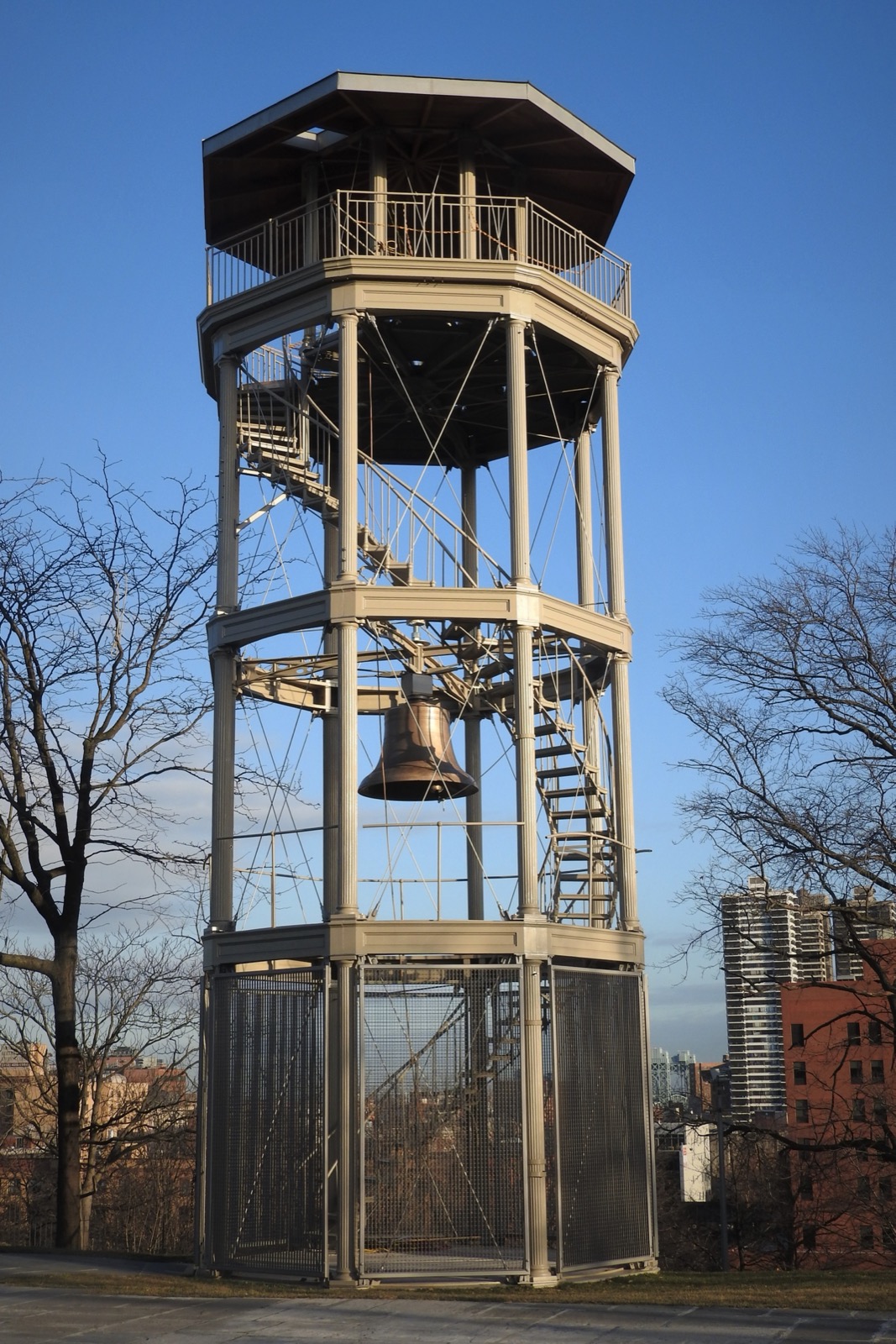
Getting our teams to Harlem is one of the easiest logistics problems in upper Manhattan
Harlem is one of the most transit-rich neighborhoods in the city. The 2/3 trains run up Lenox Avenue with stops at 110th, 116th, 125th, and 135th. The A/B/C/D trains serve St. Nicholas and Frederick Douglass Avenues with stops at 110th, 116th, 125th, 135th, and 145th. The 1/2/3 run along Broadway. The 4/5/6 serve the eastern edge along Lexington Avenue. Metro-North stops at 125th Street and Park Avenue with express service to Grand Central in about 12 minutes.
Our teams use whichever line gets them closest to your building. For brownstones on the residential side streets of Central Harlem, the 2/3 at 125th and Lenox or the B/C at 116th and Frederick Douglass are usually the fastest routes. For co-ops along Seventh Avenue, the B/D at 135th. For new construction south of 125th on Frederick Douglass, the B/C at 116th.
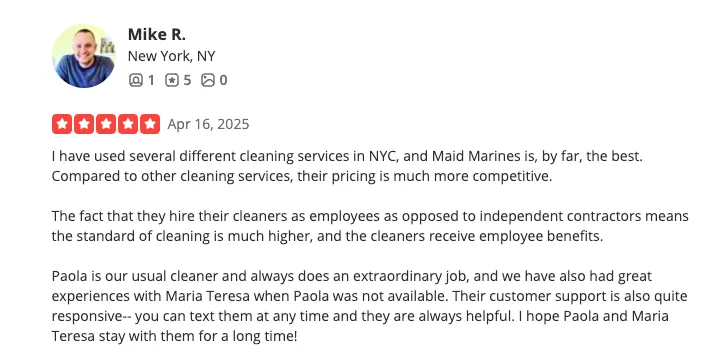
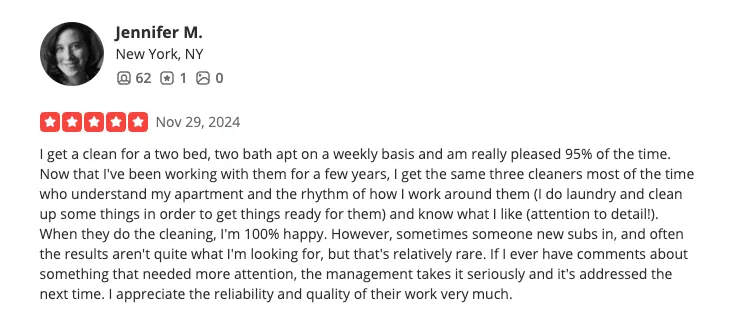
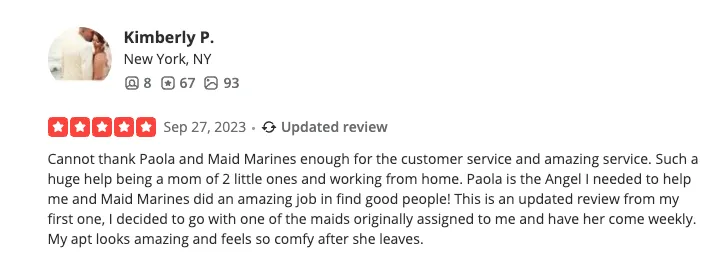
We serve all of Harlem from 110th Street to 155th Street, including Sugar Hill, Hamilton Heights, and the blocks along Edgecombe Avenue. Our cleaners are W-2 employees, not gig workers. They are vetted, insured, and they show up with the right products for your specific building type.
What booking looks like for Harlem residents
You pick your date and time on our booking page. You see your flat-rate price before you commit. If your brownstone has original plaster walls or decorative woodwork that needs careful handling, tell us once and we note it permanently on your account. If your co-op requires a COI and advance notice, we will coordinate with your building. If your walk-up radiators need attention before heating season, book a deep clean in September.
We serve Harlem and the surrounding neighborhoods, including the Upper West Side and the Upper East Side. Our teams know upper Manhattan and the buildings in it. The brownstone on 130th Street and the high-rise on Lenox Avenue are different jobs, and we staff them accordingly.