
Wards Island is not a neighborhood in the way New York City usually uses the word. There are no brownstones, no bodegas, no subway stops, no lease renewals. There are no residents in the conventional sense. What there is, on this 100-acre island in the East River between Manhattan and Queens, is one of the most layered and least-discussed histories of any piece of land in the five boroughs. And there are people who work here, people who receive care here, and buildings that need cleaning.
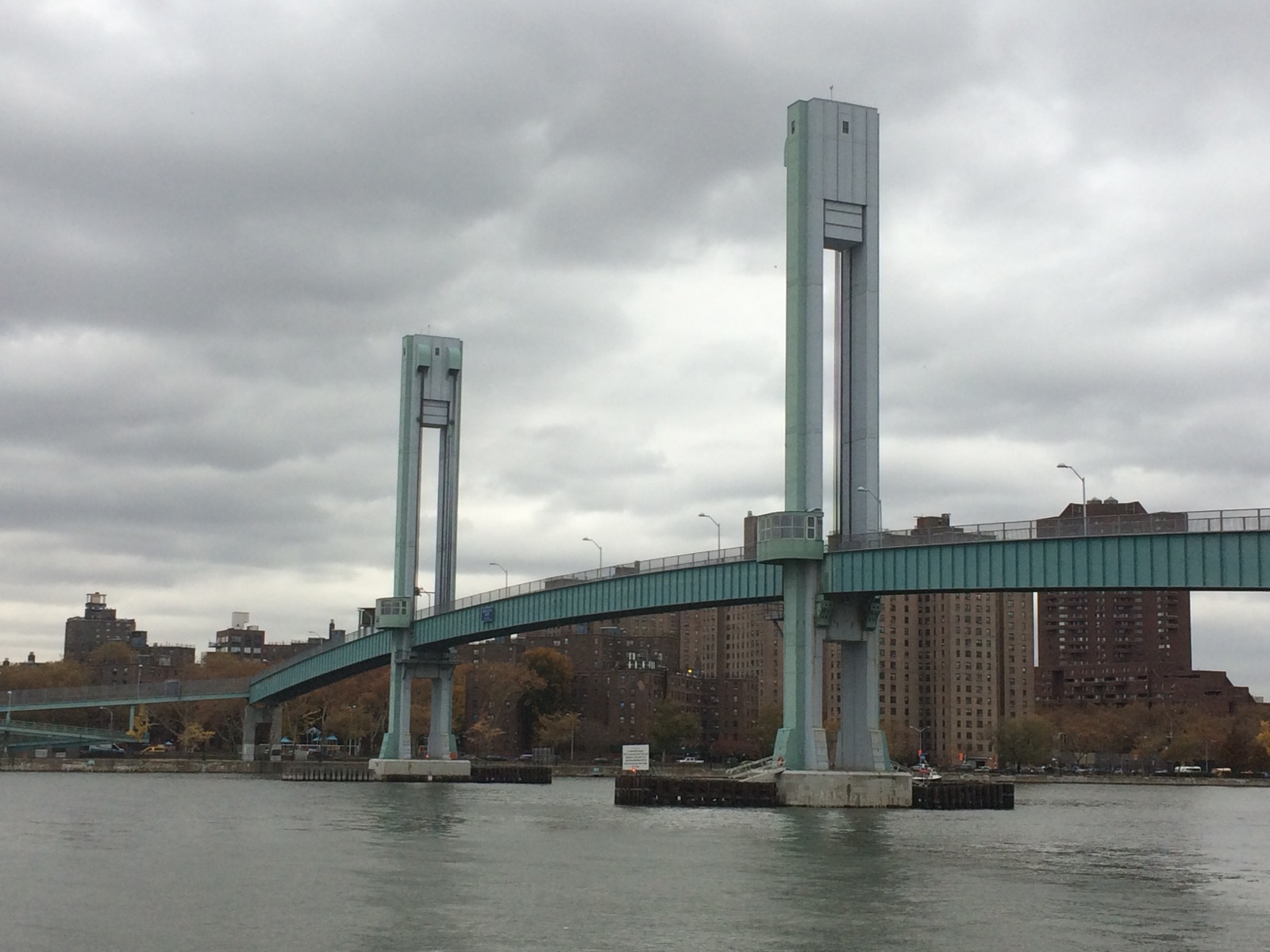
The island sits in the middle of Hell Gate, the treacherous tidal strait where the East River, Harlem River, and Long Island Sound converge. It is connected to Manhattan by a single 12-foot-wide pedestrian footbridge at 103rd Street. That bridge is open 24 hours a day, 365 days a year, and crossing it is one of the most historically weighted short walks available in New York City.
Wards Island was where 19th-century New York sent the people it did not know what to do with
The Lenape fished the Hell Gate currents around the island for centuries before the Dutch arrived. The name comes from Jaspar and Bartholomew Ward, two brothers who owned the island as farmland in the early 1800s. They farmed it. They sold it. And in 1851, the City of New York purchased Wards Island for a purpose that would define the next 175 years of its existence: institutional isolation.
The logic was geographic. The island was separated from Manhattan by the East River, from Queens by the Hell Gate, and from Randall’s Island to the north by a narrow channel called the Little Hell Gate. You could not easily get on or off. That made it perfect for the populations the city wanted out of sight. The sick. The dead. The mentally ill. The addicted. The newly arrived immigrants who were too ill or too poor to leave.
This was not unique to Wards Island. New York City has a long pattern of using its islands for this purpose. The mentally ill went to Blackwell’s Island, now Roosevelt Island. The incarcerated went to Rikers Island. The unclaimed dead went to Hart Island. And the immigrant sick, the buried poor, and eventually the largest concentration of psychiatric patients on Earth went to Wards Island.
100,000 people are buried beneath what is now a public park
Before the institutions came, the dead arrived first. Beginning in the 1840s, Wards Island served as a potter’s field for the city’s indigent and unidentified dead. The overflowing burial grounds at Madison Square Park and Bryant Park were running out of space, and the bodies were relocated to approximately 75 acres on the southern tip of the island.
Historians estimate that roughly 100,000 people were interred on Wards Island during this period. They were the unnamed poor of mid-19th-century New York. They ended up here because there was nowhere else to put them, and because putting them on an island meant that the living did not have to think about them.
Today, those 75 acres are a public park. Children play sports on fields built above the remains. Cyclists ride the waterfront path over ground that holds a century of the city’s forgotten dead. There is no significant public monument acknowledging what is beneath the surface. The island holds its history in its soil, and the soil says nothing about it unless you already know to listen.
The State Emigrant Refuge was the largest hospital in the world in the 1850s
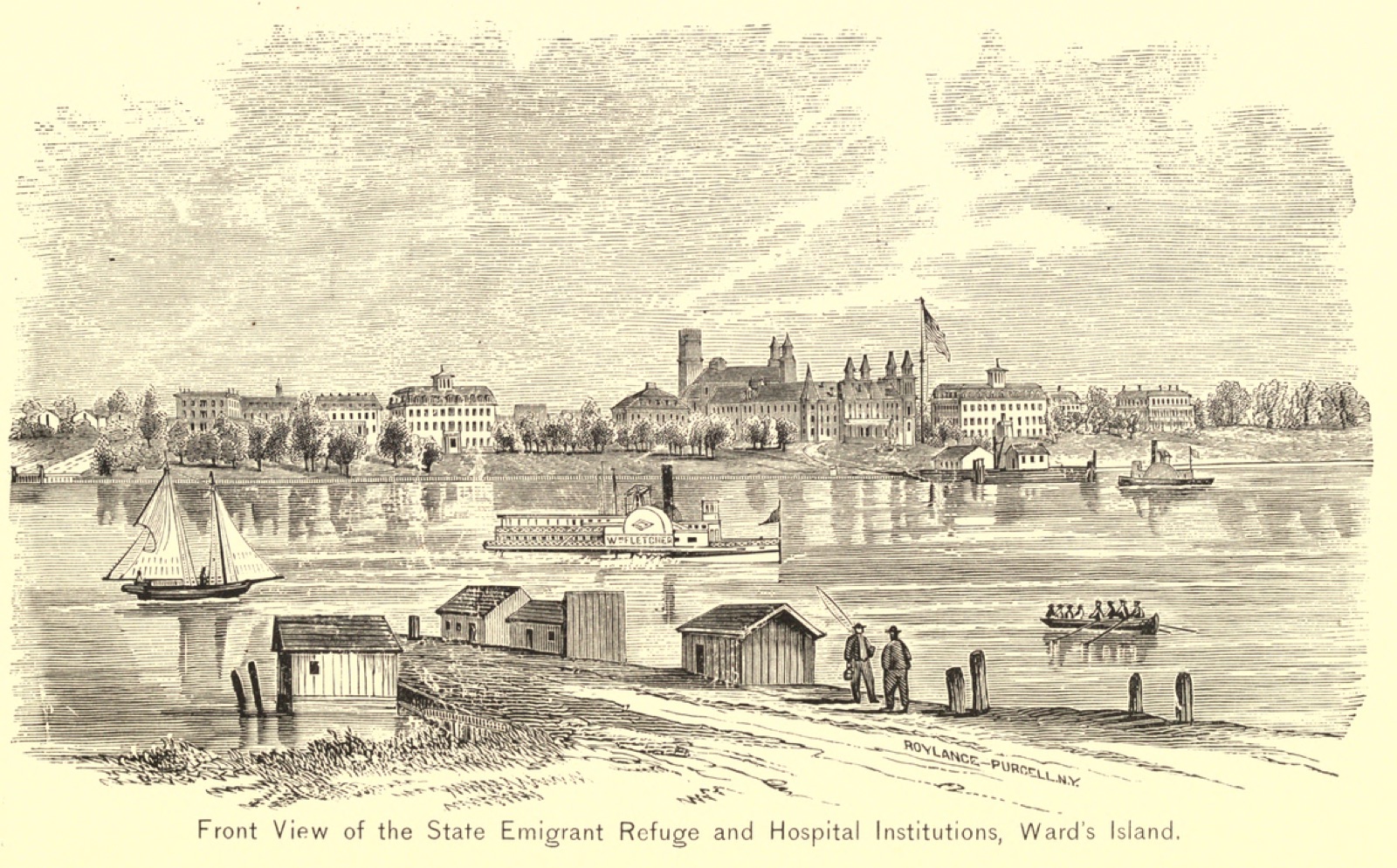
In 1847, New York State opened the State Emigrant Refuge on Wards Island. The purpose was to treat the massive wave of sick and destitute immigrants pouring through the port of New York. The Irish famine and the Central European revolutions of the late 1840s had created an immigration crisis that overwhelmed every existing medical facility in the city.
At its peak in the 1850s, the Emigrant Refuge was the largest hospital complex in the world. Hundreds of thousands of new arrivals were processed, examined, and treated here. The famine Irish who arrived after weeks in coffin ships, starving and sick with typhus and cholera, were brought to this island in the middle of the East River because there was simply nowhere on the mainland with enough capacity.
From 1847 until Ellis Island opened in 1892, Wards Island served alongside Castle Clinton in Lower Manhattan as one of the primary entry points for immigrants to New York. The stories of those hundreds of thousands of people form one of the most significant and least-commemorated chapters in American immigration history. After Ellis Island took over the processing function, Wards Island’s role as an immigration gateway ended. But the hospital infrastructure remained, and the city found new populations to house in it.
The world’s largest mental institution held 7,000 patients here in 1926
In 1863, the New York City Asylum for the Insane opened on Wards Island. It would grow over the next six decades into the largest psychiatric facility in the world.
Under state management beginning in 1899, the renamed Manhattan State Hospital expanded steadily. The campus filled with large Victorian and Edwardian brick buildings designed according to the therapeutic landscape theories of early psychiatric medicine. Tall windows to maximize natural light. Formal landscaping. The scale of a self-contained city. The hospital grew its own food. The patients, many of them committed indefinitely for conditions that would be treated as outpatient cases today, lived out years and decades on the island.
By 1926, the Manhattan State Hospital held approximately 7,000 patients. Seven thousand people on a single island, in a single institution, confined by water on all sides. It was the largest concentration of psychiatric inpatients anywhere in the world. The scale reflected both the early 20th century’s approach to mental illness (long-term institutionalization rather than community treatment) and the city’s persistent habit of using geographic isolation to manage populations it could not or would not integrate into the mainland.
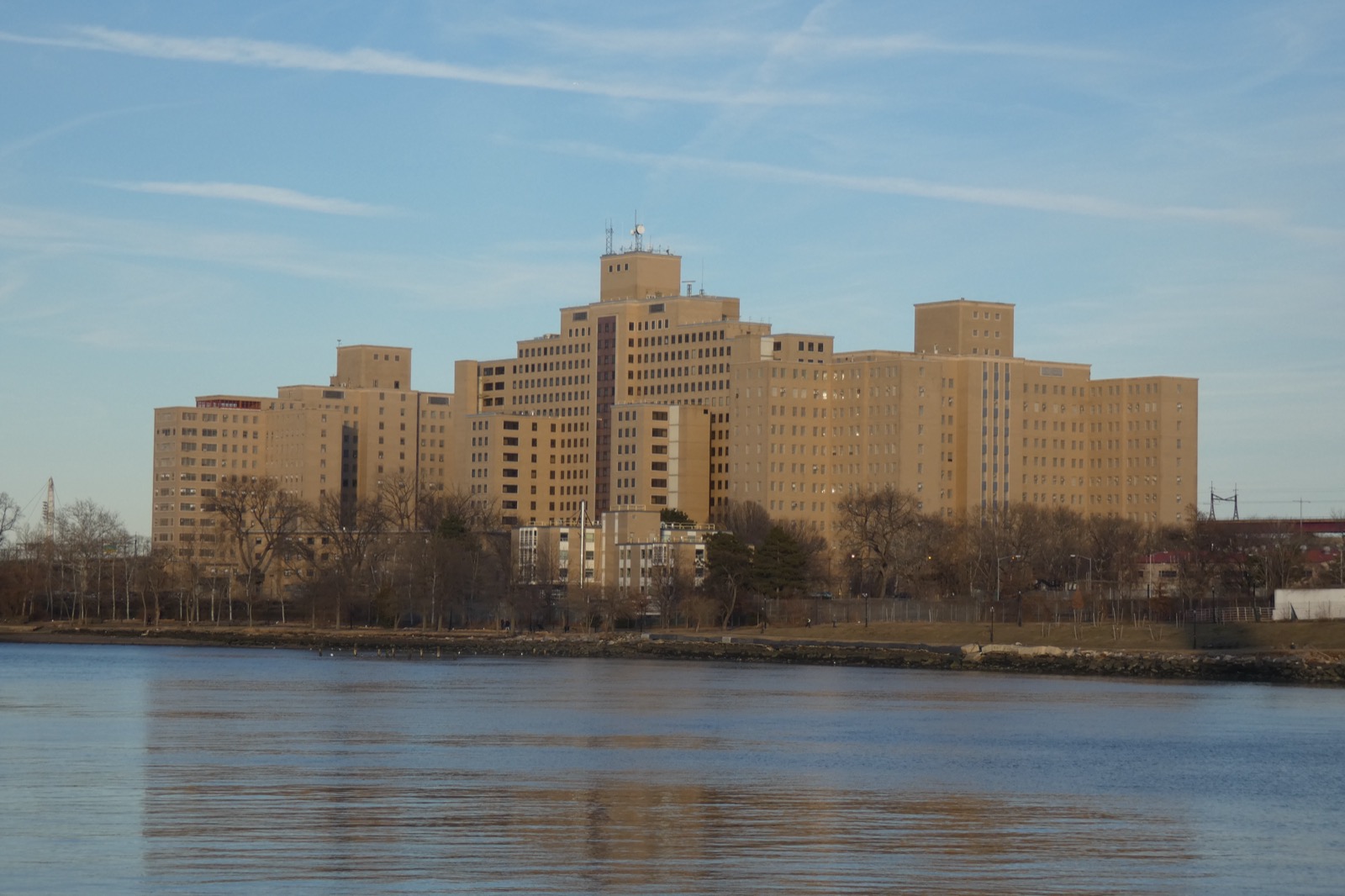
Between 1868 and 1875, the island also housed the New York Inebriate Asylum, one of the first institutions in the United States to treat alcohol addiction as a medical condition rather than a moral failing. The experiment was ahead of its time, chaotic in practice, and defunct within seven years. But it represents an early and largely forgotten chapter in American addiction medicine.
In 1969, the Manhattan State Hospital was reorganized and eventually consolidated into the Manhattan Psychiatric Center, which continues to operate on the southern portion of the island today. The Kirby Forensic Psychiatric Center, also on the campus, handles court-ordered psychiatric evaluations and treatment. The patient population is far smaller than the 1926 peak, but the institutional presence remains the defining feature of Wards Island’s southern half.
Robert Moses connected the two islands and the parks arrived
In the 1930s, Parks Commissioner Robert Moses turned his attention to the East River islands. His plan for Randall’s Island to the north involved building a massive recreation complex anchored by a stadium. Wards Island was drawn into the plan, though less completely.
The most consequential change was physical. In the 1960s, landfill connected Wards Island and Randall’s Island, eliminating the Little Hell Gate channel that had separated them. The two islands became a single landmass, though they retain separate names and distinct characters. The northern portion became Randall’s Island with its athletic fields and event spaces. The southern portion remained Wards Island with its psychiatric center and, increasingly, its parks.
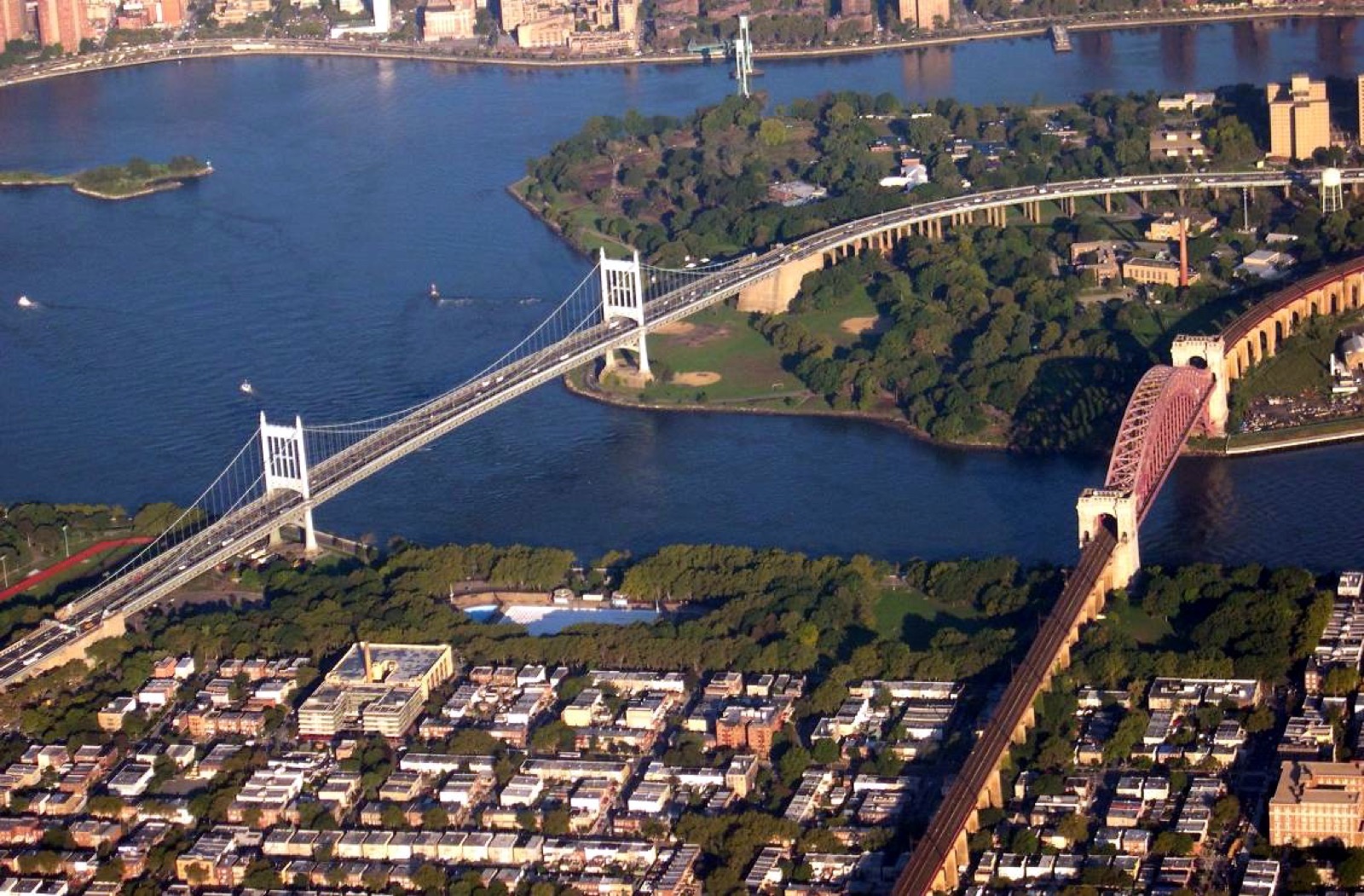
Today, Wards Island Park occupies the land surrounding the psychiatric center campus. Waterfront walking and cycling paths line the Hell Gate and Harlem River shorelines. A wildflower garden in the park’s interior, planted with native species and meadow grasses, is one of the most unexpected natural spaces in upper Manhattan. Standing on the eastern shore, you can see three boroughs simultaneously: Manhattan to the west, Queens to the east, the Bronx to the north. The Hell Gate’s narrow passage makes this three-borough panorama possible from a single viewing point.
The park is genuinely good. The waterfront views are genuinely spectacular. And underneath the playing fields and wildflower meadows, there are 100,000 unremembered people who ended up here because 19th-century New York did not have anywhere better to put them.
The shelter concentration on Wards Island continues a pattern the island has repeated for 175 years
Beyond the psychiatric center, Wards Island hosts a concentration of social service facilities providing shelter to homeless individuals. Several large shelter buildings operated under city contracts are located on the island. This is not new. The city has been placing socially marginalized populations on this geographically isolated island since the 1840s.
Community advocates have pointed out that housing homeless individuals on an island accessible primarily by a single pedestrian footbridge limits their access to jobs, services, and the social connections available in residential neighborhoods. City officials have defended the island’s capacity for large-scale facilities. The debate is the modern version of the same question Wards Island has posed for 175 years: when you put people on an island, are you helping them or hiding them?
Cleaning institutional spaces on Wards Island requires a different approach
The cleaning work on Wards Island is not apartment cleaning or house cleaning in the typical sense. The occupied spaces are institutional and facility-based. Staff apartments on the psychiatric center campus. Residential office spaces. Common areas in facilities that house hundreds of people. The buildings range from 19th-century Victorian structures with steam radiators and institutional tile to modern facilities with standard commercial finishes.
The older buildings on the Manhattan Psychiatric Center campus are architecturally significant. The surviving Victorian-era structures have tall windows, ornate brickwork, and interior details that reflect a period when even institutions were built with a kind of civic grandeur. Cleaning inside these buildings means understanding the materials. Steam radiator fins packed with decades of dust. Plaster walls that mark if you use too much water. Tile floors with grout that has absorbed a century of institutional use.
For staff housing and residential spaces on the island, we send teams who are experienced with institutional facilities. The access logistics, the scheduling coordination with facility management, the materials-awareness for older buildings. These are the same skills our teams use in pre-war Manhattan buildings across East Harlem and the Upper East Side, applied to a setting that happens to be on an island in the middle of the East River.
Getting to Wards Island is simpler than it looks
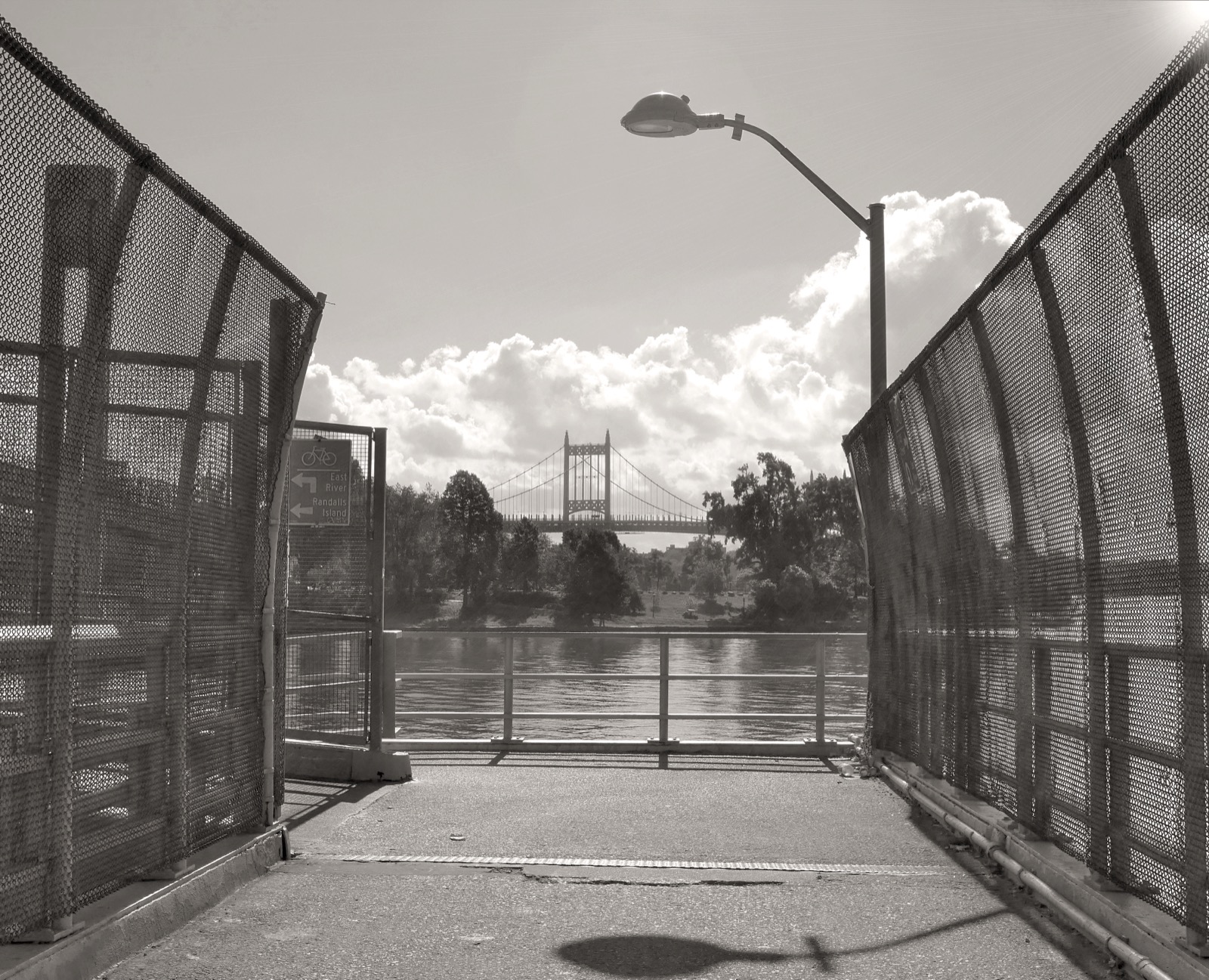
The 103rd Street Footbridge is the primary pedestrian and bicycle connection. It is open 24 hours a day, 7 days a week, and connects the East River Esplanade at East 103rd Street in Manhattan to the southwestern corner of the island. The walk from the East Harlem side takes about five minutes. Our teams serving upper Manhattan use it regularly.
For vehicle access, the Triborough Bridge provides a direct route. The M35 bus runs from 125th Street and Lexington Avenue to the Randall’s Island portion of the merged island, and Wards Island is accessible from there by walking south through the park.
The island’s isolation is more psychological than practical. It takes less time to walk across the footbridge from East 103rd Street than it takes to wait for an elevator in most Upper East Side high-rises. The perception that Wards Island is hard to reach is part of the same pattern that made the island useful to the city for 175 years. Separation by water creates a sense of distance that the actual geography does not support.
We serve Wards Island and all of upper Manhattan, including nearby East Harlem, the Upper East Side, and Roosevelt Island. Our teams arrive on time, whether by footbridge, vehicle, or subway to the closest mainland stops. If you need deep cleaning for a facility space or apartment cleaning for staff housing, you can book through our booking page and see your flat-rate price before you commit.