
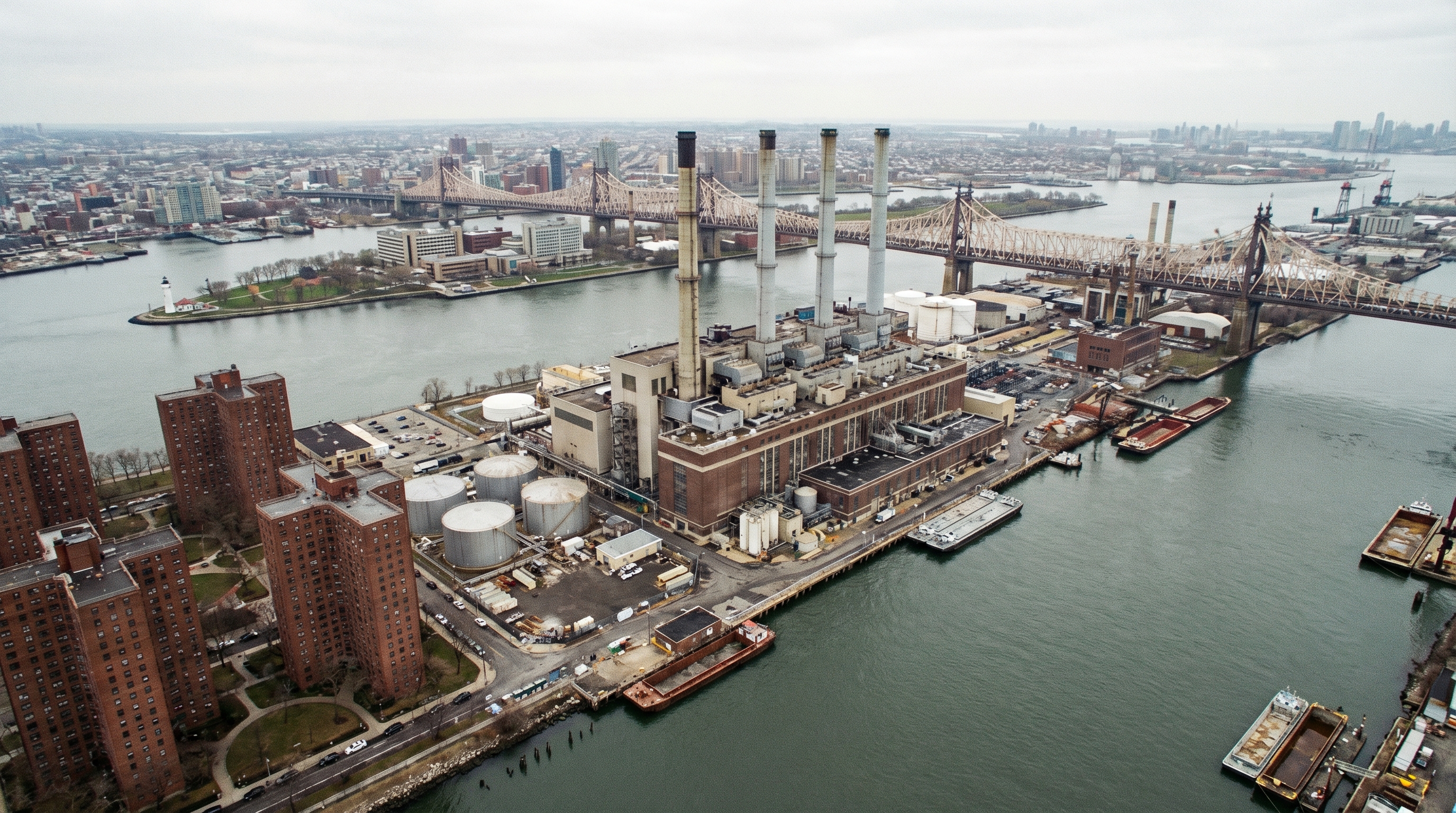
Ravenswood sits between two of the most written-about neighborhoods in western Queens and gets almost none of the attention itself. Long Island City is to the south with its glass towers and gallery district. Astoria is to the north with its Greek restaurants and music history. Ravenswood is the place in between, where a 1,000-megawatt power plant supplies a fifth of New York City’s electricity from a waterfront that, in any other decade, might have become another luxury residential corridor. It did not, and the neighborhood that resulted from that accident of infrastructure is genuinely distinctive in a way that most post-industrial Queens neighborhoods never managed to be.
What we clean in Ravenswood and why the housing stock matters
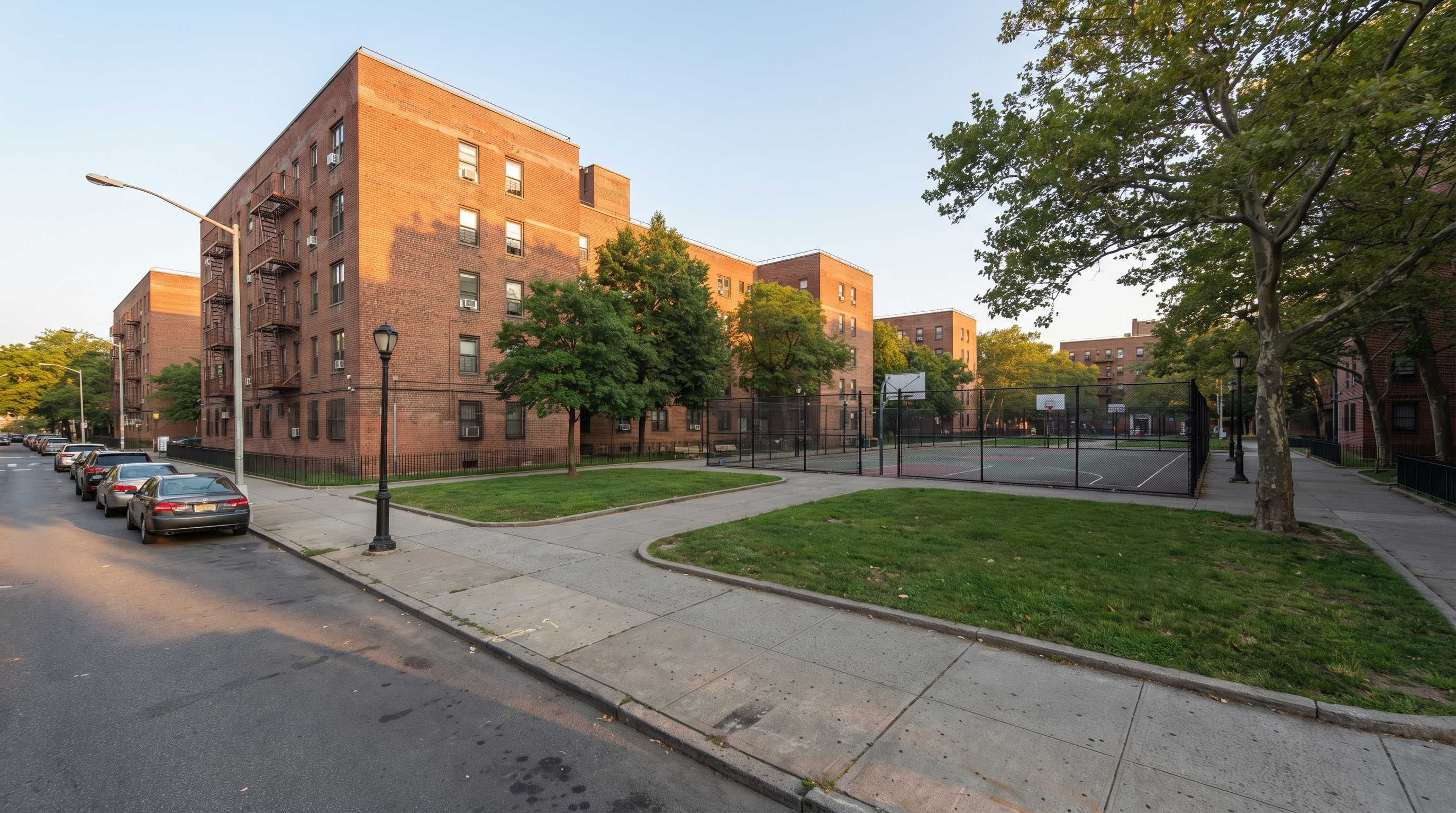
The Ravenswood Houses NYCHA development is thirty-one buildings of six and seven stories, containing 2,163 apartments on a 38.29-acre superblock. These are postwar brick buildings completed in 1951 with the modified Y-configuration that the New York City Housing Authority used throughout that era to maximize natural light in each unit. The apartments are painted plaster walls, linoleum or vinyl flooring in kitchens and bathrooms, original casement windows, and compact floor plans that run 600 to 900 square feet for a two-bedroom. They clean differently than pre-war plaster apartments because they were built to a different specification.
Outside the NYCHA superblock, the 21st Street corridor and its cross streets hold a mix of pre-war 4- to 6-story brick walkup apartment buildings from the 1920s and 1930s. These buildings have the original hardwood floors, hex tile bathrooms, and plaster walls that are standard in working-class Queens residential construction from that period. The gaps between the hardwood planks collect grit that a standard wet mop pushes deeper rather than removing. The hex tile grout in 1920s bathrooms is often original and should not be cleaned with acidic products that erode the old mortar. The narrow hallways in these buildings require different equipment maneuvering than an open-plan NYCHA floor plan.
Two-family brick homes in the northern section of the neighborhood, approaching Broadway, represent a third type. These are typically two floors with a shared entry and separate apartment doors, often with a small backyard. The ground-floor unit tracks dirt from the yard entrance. The upper unit tends to accumulate dust more heavily because it sits below the roofline.
Our apartment cleaning teams arrive with the right products for each surface type and switch between them as they move through the home. We do not clean 1920s hex tile the same way we clean 1950s NYCHA linoleum, and we do not clean old-growth hardwood the same way we clean modern vinyl plank.
Recurring cleaning for apartment buildings with over 100,000 homes served
Maid Marines has cleaned over 100,000 homes across New York City, including hundreds of apartments in western Queens buildings just like the ones in Ravenswood. The Ravenswood corridor, from the NYCHA development to the pre-war walkups on 21st Street to the two-family homes approaching Astoria, has a residential density that supports regular service. Recurring visits on a weekly, biweekly, or monthly schedule prevent the buildup that makes deep cleaning necessary on an emergency basis.
For NYCHA residents, a recurring clean makes practical sense. The apartments are compact enough that a two-hour biweekly visit covers everything thoroughly. For pre-war walkup tenants on 21st Street, recurring maintenance protects surfaces that are expensive or impossible to replace. The hex tile in a 1920s bathroom does not get relaid when it fails. Once the grout deteriorates from improper cleaning, the repair is a major project. A recurring clean with the right products prevents that outcome.
Deep cleaning for the kitchens that see real cooking every day
The Ravenswood community reflects the broader demographics of western Queens. Dominican, Bangladeshi, Latin American, and Greek household cooking traditions are all represented in the neighborhood’s apartment buildings, and all of them involve daily cooking with oil at higher heat levels than most American kitchens see. The result is grease film that builds up on backsplash tile, on cabinet faces above the stove, inside range hood filters, and on the interior surfaces of range hoods that have not been fully cleaned in months.
A standard recurring clean maintains these surfaces once the starting point is clean. Getting to that starting point requires a deep cleaning that strips the accumulated film. We use a degreaser safe for tile and painted cabinet surfaces that cuts through oil buildup without damaging the finish underneath. The range hood interior gets specific attention because that is where the grease concentrates and where a standard wipe-down does not reach. Once the deep clean resets the kitchen, the recurring standard cleans keep the grease from re-accumulating.
The same logic applies to bathroom tile grout in buildings where ventilation is limited. Six-story NYCHA buildings and pre-war walkups in Ravenswood often have bathrooms with small or no windows. Mildew and soap scum accumulate faster in low-ventilation bathrooms than in well-ventilated ones. A deep clean followed by regular maintenance visits prevents the mildew from reaching the grout, where it is much harder to remove without damaging old mortar.
Move-in and move-out cleaning in an active rental market
Ravenswood has a high renter concentration, and the rental market turns over consistently as residents are priced out of Long Island City to the south and Astoria to the north, and as new tenants arrive looking for the lower rents that Ravenswood still offers relative to its neighbors. Move-in and move-out cycles happen regularly in both the private market apartments along 21st Street and in the market-rate units in the area.
Our move-in and move-out cleaning covers the full apartment for both the departing tenant and the incoming one. For departing tenants: interior cabinet and drawer cleaning, oven and refrigerator interior, bathroom deep scrub, baseboards, window sills, and all the areas that building inspectors check. For incoming tenants: the same full clean before you unpack, so you know exactly what the conditions are when you move in, not what the previous tenant left behind.
We schedule move-out cleans the day before or the day of your final inspection and move-in cleans for the day before your furniture arrives. Book online through our booking page and select your date.
Your cleaning takes about two to three hours so here is how to spend them
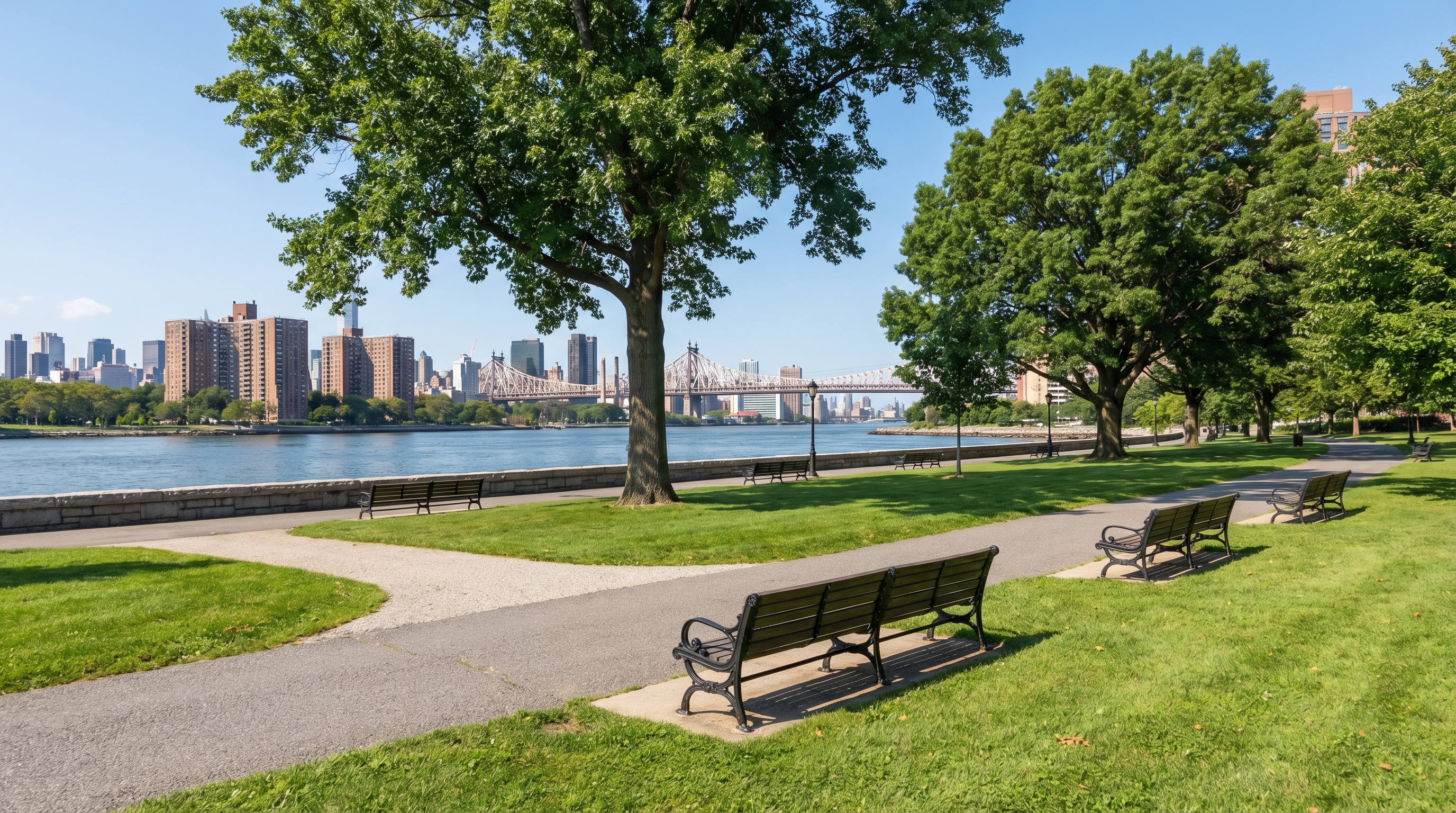
Rainey Park on Vernon Boulevard is the neighborhood’s own eight-acre waterfront green space, directly accessible on foot. Walk down to the East River waterfront and sit on a bench with views across to Roosevelt Island and Manhattan while your apartment gets cleaned. The park has baseball fields, basketball courts, handball courts, and walking paths along the water. It is named for Dr. Thomas Rainey, who spent decades advocating for the construction of the Queensboro Bridge, whose estate once occupied this exact stretch of waterfront.
A fifteen-minute walk north on Vernon Boulevard reaches Socrates Sculpture Park, the converted landfill turned outdoor sculpture museum that sculptor Mark di Suvero transformed starting in 1986. Free admission, rotating large-scale installations, and summer film screenings on Wednesday evenings. Continue another ten minutes to Astoria Park for the full sixty-acre waterfront experience under the Hell Gate Bridge.
The N and W trains from the 36 Av station put you in Midtown Manhattan in about twenty-five minutes. The F train from 21st Street-Queensbridge connects to Downtown Brooklyn and Lower Manhattan. If you prefer to stay close, the Museum of the Moving Image on 35th Avenue in Astoria is free on Fridays and two stops north on the N or W. Titan Foods on 31st Street has the kind of imported Greek grocery selection that turns a twenty-minute errand into an hour.
Getting to Ravenswood and building access logistics
Ravenswood is served by the 36 Av station on the N and W lines, which provides direct access northward to Astoria and southward to Queens Plaza and Midtown Manhattan. The 21st Street-Queensbridge station on the F train sits at the southern boundary of the neighborhood and connects to Manhattan via the Queens-Midtown Tunnel. The Q69 and Q32 buses run through the neighborhood connecting to Long Island City, Astoria, and the broader Queens bus network.
For building access, NYCHA Ravenswood Houses uses key fob systems for building entry. You provide your building access details when you book and our team handles entry from there. Pre-war walkup apartments on the 21st Street corridor are typically self-access with a lockbox or key at the door. Two-family homes near Broadway usually have a shared front door and a separate apartment door. If your building has any specific requirements, a building manager notification, or a specific entry window, include that in your booking notes and we coordinate before the first visit.
We are fully insured and bonded. If your building management requires a Certificate of Insurance before any vendor enters, let us know when you book and we will furnish one before your appointment.
What booking looks like
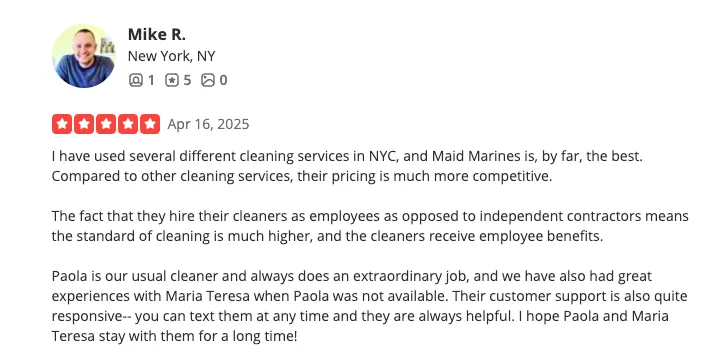
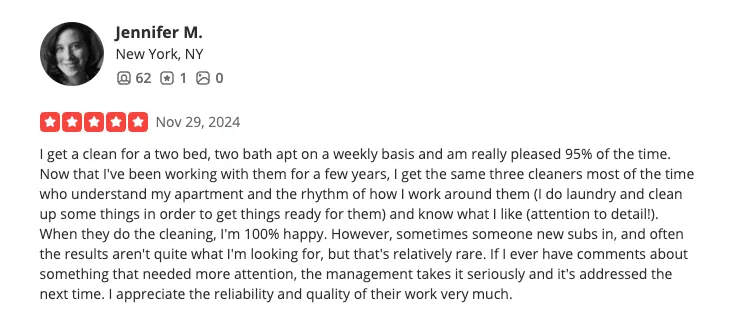
You pick your date and time on our booking page. You see your flat-rate price before you commit to anything. Our cleaners are W-2 employees, not gig workers. They are vetted, insured, and they arrive with everything they need for your specific home.
We serve all of Ravenswood including the NYCHA development, the 21st Street walkup corridor, and the residential blocks approaching Broadway. We also serve nearby Astoria and Long Island City, and all of Queens.