If your apartment was built or renovated in the last fifteen years, there’s a very good chance your floors are engineered hardwood. Most people don’t know which kind of wood floor they have, and with engineered hardwood it genuinely matters, because this floor is easy to keep looking new and surprisingly easy to ruin. The difference comes down to a handful of habits, and none of them are hard.
Engineered hardwood is a thin layer of real wood bonded to a plywood core. From above it looks identical to solid hardwood, because the part you walk on is real oak or walnut or whatever the builder chose. The difference is underneath. Solid hardwood is the same wood all the way through, so it can be sanded and refinished several times over its life. Engineered hardwood has a wear layer that’s usually just a few millimeters thick, which means it can be refinished once, and sometimes not at all. Practically speaking, the finish your floor has right now is the only one it’s ever going to have. Every cleaning rule that follows comes from that one fact.
Engineered hardwood is the default floor in new NYC developments
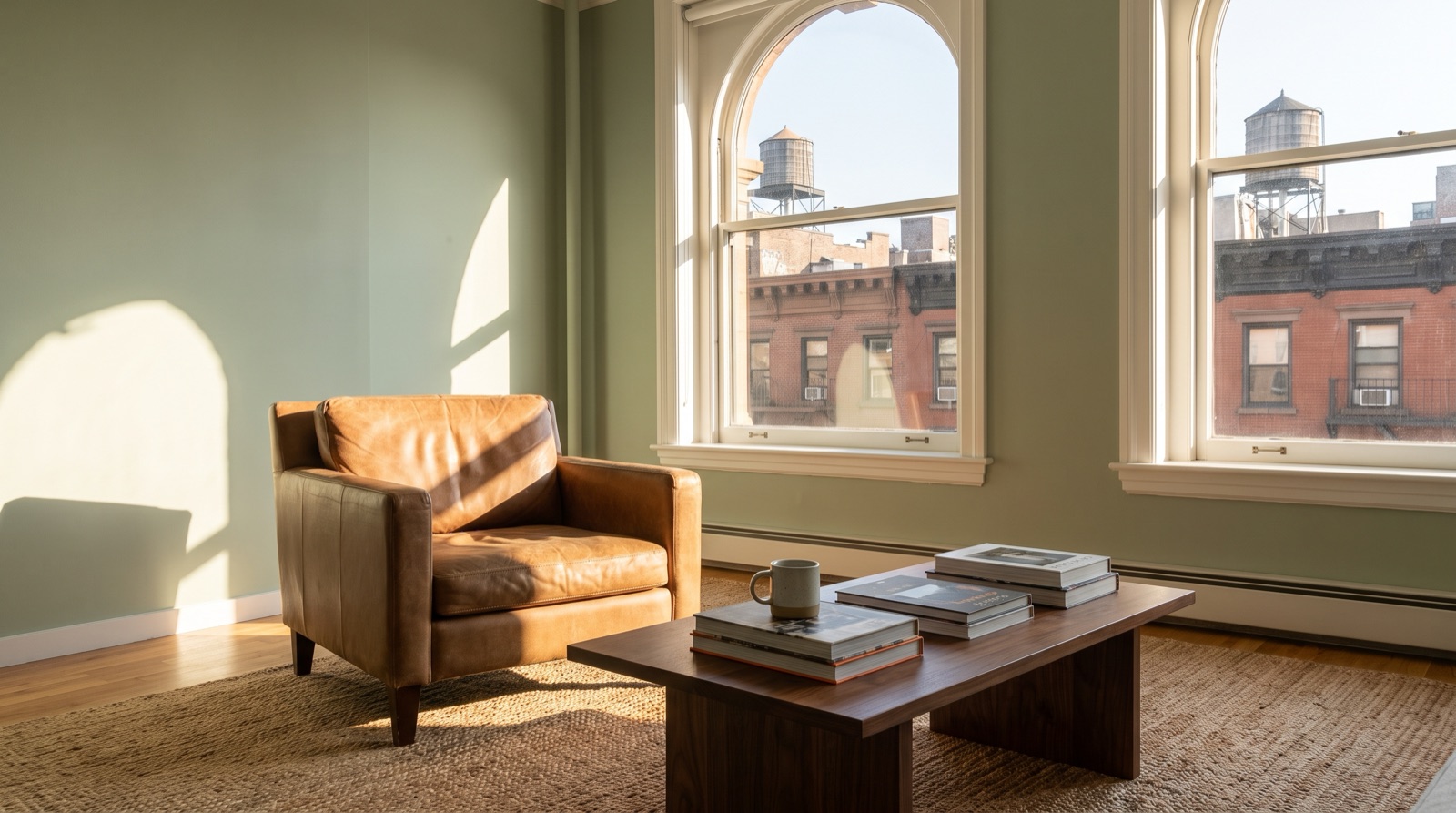
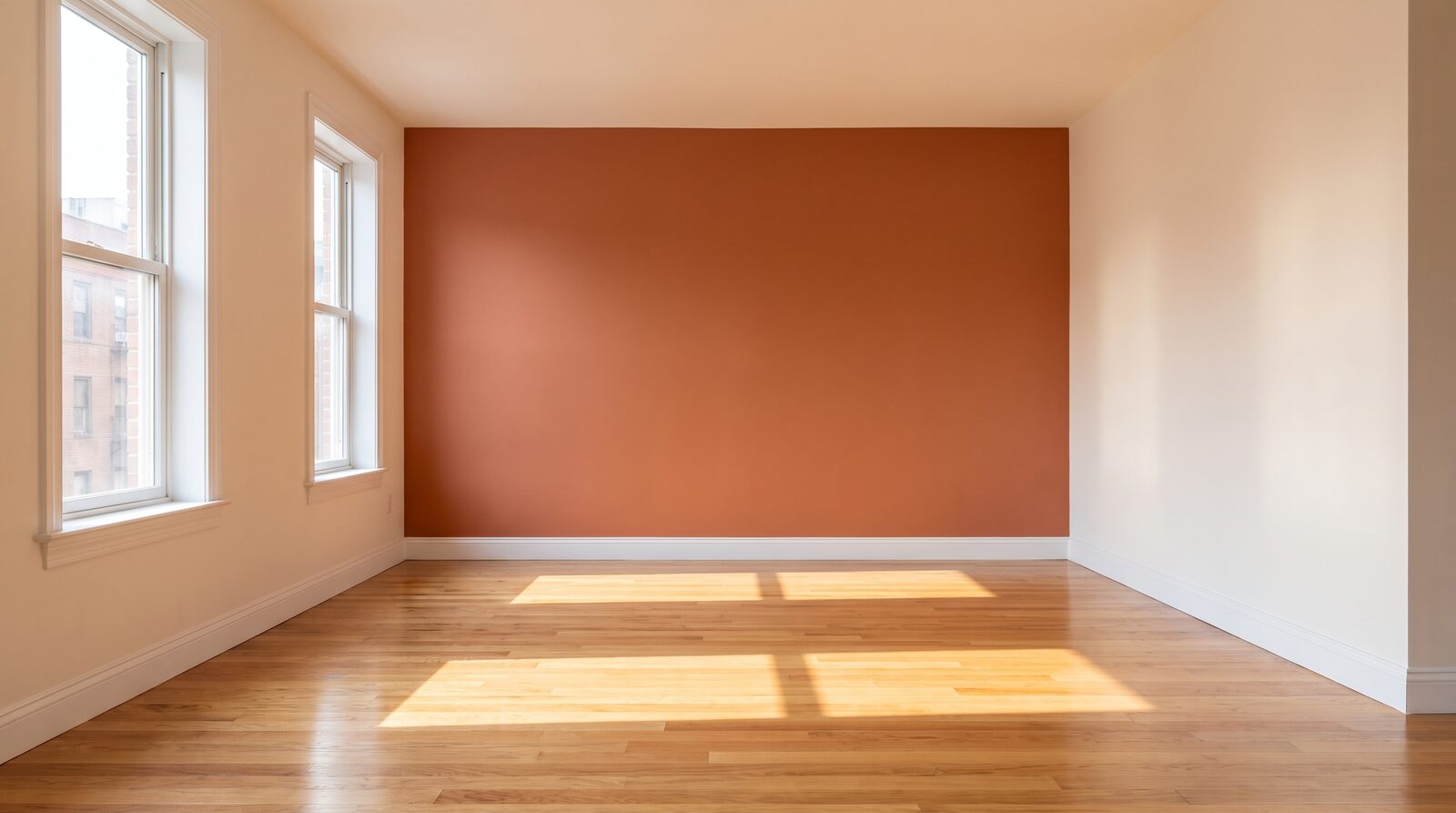
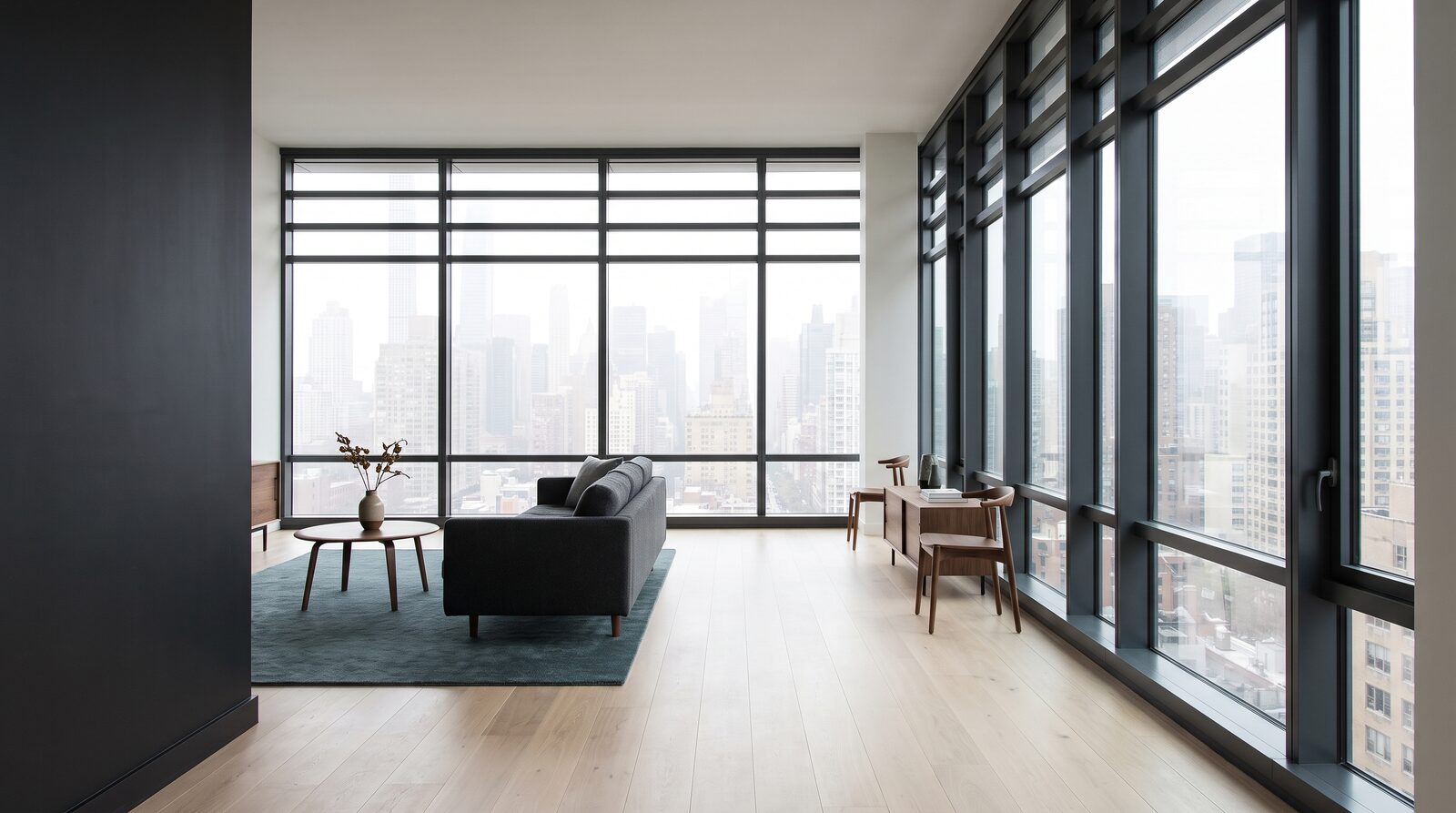
Walk into almost any condo or rental built in New York in the past decade and you’re standing on wide plank engineered oak. Builders spec it because it’s stable. Solid wood boards expand and contract with humidity swings, which is part of why prewar floors have gaps and the occasional cupped board. The layered core of engineered hardwood resists that movement, which matters in new buildings with forced air heat and sealed windows. Prewar apartments mostly have solid oak strip floors instead, and those forgive more abuse because they can always be refinished. I’ve written before about how differently new developments and prewar apartments clean, and the floors are a big part of that split. If you’re in a newer building, this is your floor, and the good news is that the routine for it is simple.
How to clean engineered hardwood floors comes down to dry first, damp second
The dry part is the one people skip, and it’s the more important of the two. Grit is what actually wears out a floor finish. Every bit of sand and street grime that comes in on shoes gets ground into the surface like fine sandpaper each time someone crosses the room, and New York produces more of that grit than almost anywhere. So the core habit is a microfiber dust mop or a vacuum on the hard floor setting, a couple of times a week in the areas that get walked on most. If your vacuum has a spinning brush bar, turn it off, because those bristles leave faint swirl scratches that add up over months.
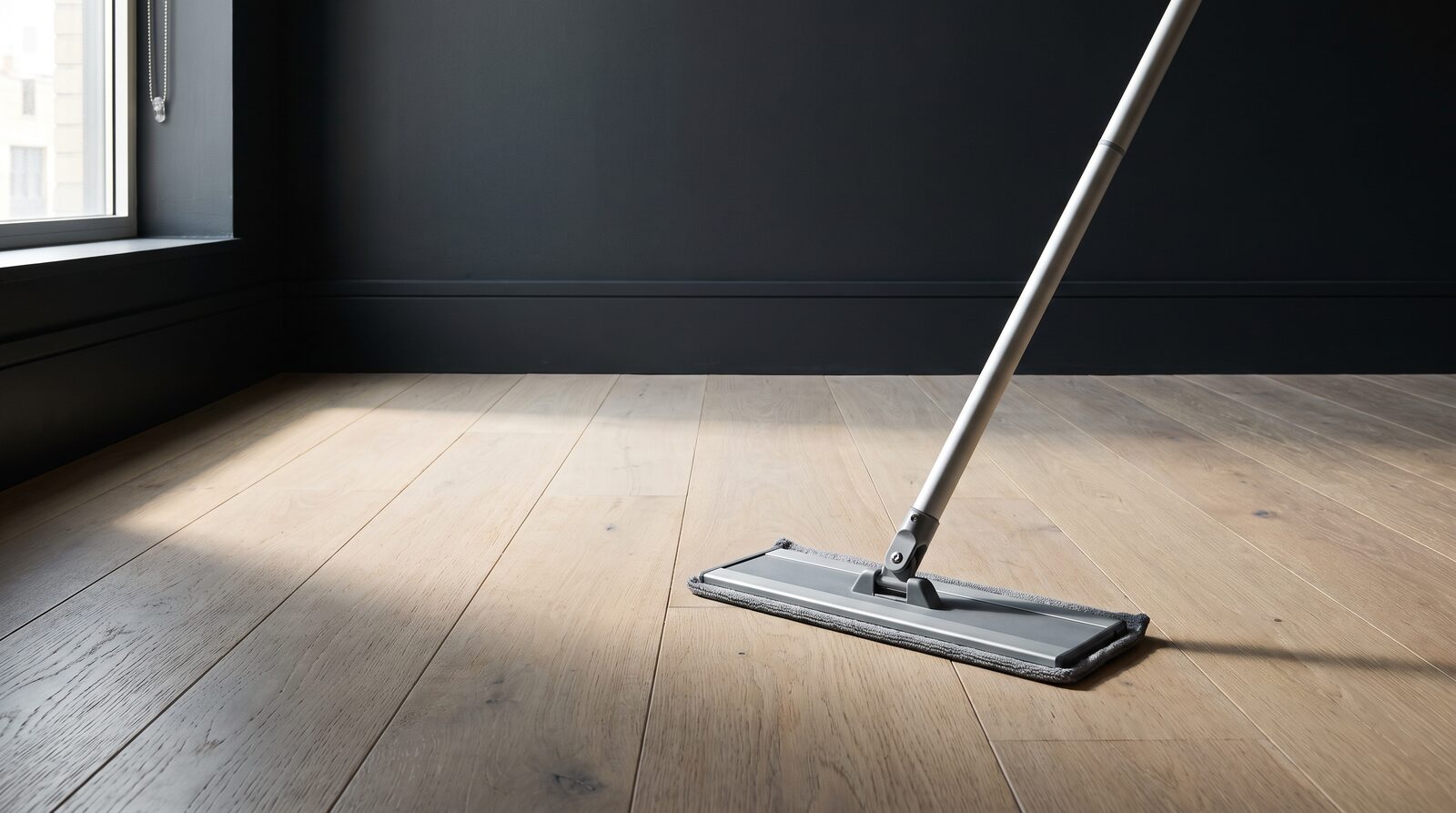
The damp part comes second and less often, weekly or every other week for most homes. Damp means a microfiber mop wrung out until it stops dripping entirely, used with a pH-neutral floor cleaner. Work with the grain of the boards in small sections. The test I give people is simple. The floor should be dry within a minute or two behind you. If you can still see a wet sheen sitting on the boards after you’ve passed, the mop is too wet.
Steam, vinegar, and wax are what actually ruin engineered hardwood floors
The floors I see in genuinely bad shape almost never got that way from neglect. They got that way from cleaning, just the wrong kind. Steam mops are the worst offender. They feel like a deeper clean, but the hot vapor gets forced into the seams between boards and clouds the factory finish, and most flooring warranties specifically exclude steam damage. Vinegar is the second one, and it gets recommended online constantly. It’s an acid, and it dulls a urethane finish a little more with every use, slowly enough that people blame the floor instead of the bottle. Wax, oil soaps, and shine restorer products are the third. They leave a film that grabs dirt, turns hazy, and is genuinely difficult to remove later. And soaking is the quiet one. Standing water works into the seams and swells the core layers, and once a board edge lifts, there is no cleaning fix, only replacement. Each of these feels like extra effort on the floor’s behalf, which is exactly what makes them so common.
Most spot problems on engineered hardwood have a boring fix
Scuff marks from shoes come off with a damp microfiber cloth and a little pressure, no product needed. Sticky spills are the same, handled right away rather than saved for mopping day. A cloudy or hazy patch is usually not floor damage at all. In my experience it’s almost always product buildup, from a shine product or from using too much cleaner, and the fix is lifting that residue rather than scrubbing harder at it. Fine scratches in the wear layer are the one problem without a satisfying answer, which is why prevention matters more on this floor than on any other. Felt pads under furniture legs and a mat at the door do more for engineered hardwood than anything you can buy in the cleaning aisle.
Choosing a floor cleaner for your whole house means cleaning to the pickiest floor
People ask me how to pick one cleaner when their apartment has wood in the living room, tile in the bathroom, and vinyl in the kitchen. My answer is to clean to the pickiest floor, because the pickiest floor sets a rule that happens to work everywhere. A pH-neutral cleaner is safe on engineered hardwood, solid wood, luxury vinyl, tile, and natural stone alike. Vinegar etches stone and dulls wood. Bleach and ammonia products are for disinfecting problems, not for floors. So one neutral floor cleaner covers the entire home, and you stop needing a cabinet full of specialized bottles. This is what I mean about the habits being easy. On this floor, the correct method is also the simplest one.
A professional clean earns its keep here in two situations. The first is buildup, when a floor has years of polish or the wrong products hazed onto the finish and needs that residue lifted carefully instead of mopped over again. The second is plain consistency, because the routine above only protects the floor if it actually happens. Floors are part of every standard clean we do, along with the kitchen, the bathrooms, and the dusting, and the cleaner brings all the supplies and equipment. If you’d rather have that upkeep on a schedule, our apartment cleaning service covers it, and the Book Now page shows your exact price upfront before you commit to anything.
Engineered hardwood asks very little of you. Keep grit off it, use very little water, and stick to a neutral cleaner, and the one finish it came with will look new for a very long time.
Common Questions
- Can you use a wet mop on engineered hardwood?
- No, not an actually wet one. A damp mop that has been wrung out until it stops dripping is fine, and it's how these floors are meant to be cleaned. The problem with a wet mop is standing water, which works into the seams between boards and swells the plywood core under the wood. A swollen core makes board edges lift, and cleaning can't undo that. A good test is that the floor should be dry within a minute or two of mopping. If it's still visibly wet after that, use less water.
- How do you care for engineered hardwood floors?
- Dry dust with a microfiber mop or a vacuum a couple of times a week, damp mop with a pH-neutral cleaner every week or two, and keep steam, vinegar, wax, and standing water away from the finish entirely. Beyond cleaning, put felt pads under furniture legs and a mat at the door, because tracked-in grit and dragged furniture cause most of the damage these floors ever see. The wear layer is thin, so protecting the factory finish is the whole game.
- How do I choose a floor cleaner for my whole house?
- Pick a pH-neutral floor cleaner, because it's the one chemistry that's safe on every common flooring at once. Engineered hardwood, solid wood, luxury vinyl, tile, and natural stone all tolerate it, while vinegar etches stone and dulls wood finishes, and bleach-based products are too harsh for wood. One neutral cleaner covers the whole home, and you only reach for a specialized product when you have a specialized problem.
- Does a standard house cleaning include the floors?
- Yes. A standard clean is a full clean of the home, and the floors are part of it along with the kitchen, the bathrooms, and dusting, with the cleaner bringing all the supplies and equipment. If the floor has years of buildup or the whole apartment needs a reset, a deep cleaning adds baseboards and a deeper scrub on top of everything the standard already covers.