Our cleaners carry a Swiffer and no mop. Most of us grew up thinking a mop and bucket is what a real floor clean looks like, and a Swiffer is the quick version you grab when guests are on the way.
I see it a little differently. On a typical apartment floor, the way you clean matters a lot more than the tool in your hand. A Swiffer used with a good method, on a floor that’s been vacuumed first, gets that floor properly clean. A mop works the same way, which is probably why some mopped floors look great and others look streaky an hour later. So the Swiffer vs mop question is really two questions. Why don’t we bring a mop, and how do you get a good result from a Swiffer?
A mop and bucket doesn’t travel well around NYC
Our cleaners get around the city the way most New Yorkers do, by subway, bus and on foot. A lot of the time they go from one home straight to the next on the same day. Everything they need fits in a rolling tote, including cleaning products, cloths, sponges and scrub brushes, a duster, gloves, shoe booties, a Swiffer and a vacuum. Our FAQ page covers what our cleaners bring if you’re curious.
Adding a mop and bucket to that is where it gets hard. A wet mop drips, and a bucket of water is heavy and sloshes every time the train stops. Neither one goes well on a crowded subway car, or up five flights of a walk-up with the tote already in hand. If you drove from job to job in a van, a mop and bucket would be a lot easier to manage.
A fresh Swiffer pad keeps one home’s floor out of the next
The bigger reason is cleanliness. A mop head needs to be washed and fully dried between uses, and there’s really no way to do that between back-to-back homes. If a cleaner used the same mop head all day, the second home would get a little of the first home’s floor, and the third home would get a little of both. I wouldn’t want that in my own home.
Our cleaners put a fresh pad on the Swiffer at every home. It’s a simple thing, but it’s the main reason I’m comfortable with the Swiffer.
Then there’s the dirty water. In a small apartment, the places to dump a bucket are the tub, the toilet or the kitchen sink, and all three usually get cleaned on the same visit. Pouring gray mop water into a freshly cleaned tub undoes part of the work that was just done.
Swiffer vs mop depends a lot on the floor
A mop and bucket is the right tool for plenty of floors. If you’re cleaning a big commercial kitchen, a garage, or a floor so dirty it needs to be flooded with water and scrubbed, a mop makes sense and a Swiffer would struggle. Lots of people mop their own homes and do a great job of it.
A typical NYC apartment is a different kind of floor, though. It’s usually small, and most of what’s on it is dust, hair, grit tracked in from the street, and the odd sticky spot near the stove. That’s the kind of floor a Swiffer handles well, and it’s what our cleaners see in most apartment cleanings.
A Swiffer has a couple of real advantages there. You control how much moisture goes down, so hardwood can get very little and tile can get a bit more, instead of every floor getting the same bucket of water. Standing water is what damages wood floors, because it seeps into the seams and makes the boards swell. The head is also flat and low, so it gets under beds, under radiators and around the base of the toilet, which are hard spots to reach with a full-size mop.
Where a Swiffer falls short is when people expect it to do everything on its own. It isn’t built to scrub, and a pad pushed across a dirty floor fills up fast. That’s where the method comes in.
Vacuuming first is what makes a Swiffer work
If I could only give one piece of advice about floors, it would be to vacuum before mopping, whatever you mop with. It matters even more with a Swiffer. A pad is good at picking up fine dust and light grime. It isn’t good at loose grit, crumbs and hair. If those are still on the floor, the pad catches some of them, fills up, and drags the rest around in streaks. Grit dragged across hardwood can also leave fine scratches over time.
When the floor is vacuumed first, the loose stuff is already gone. The pad only has to deal with what’s actually stuck to the floor, which is the job it’s good at. That’s why our cleaners carry a vacuum along with the Swiffer.
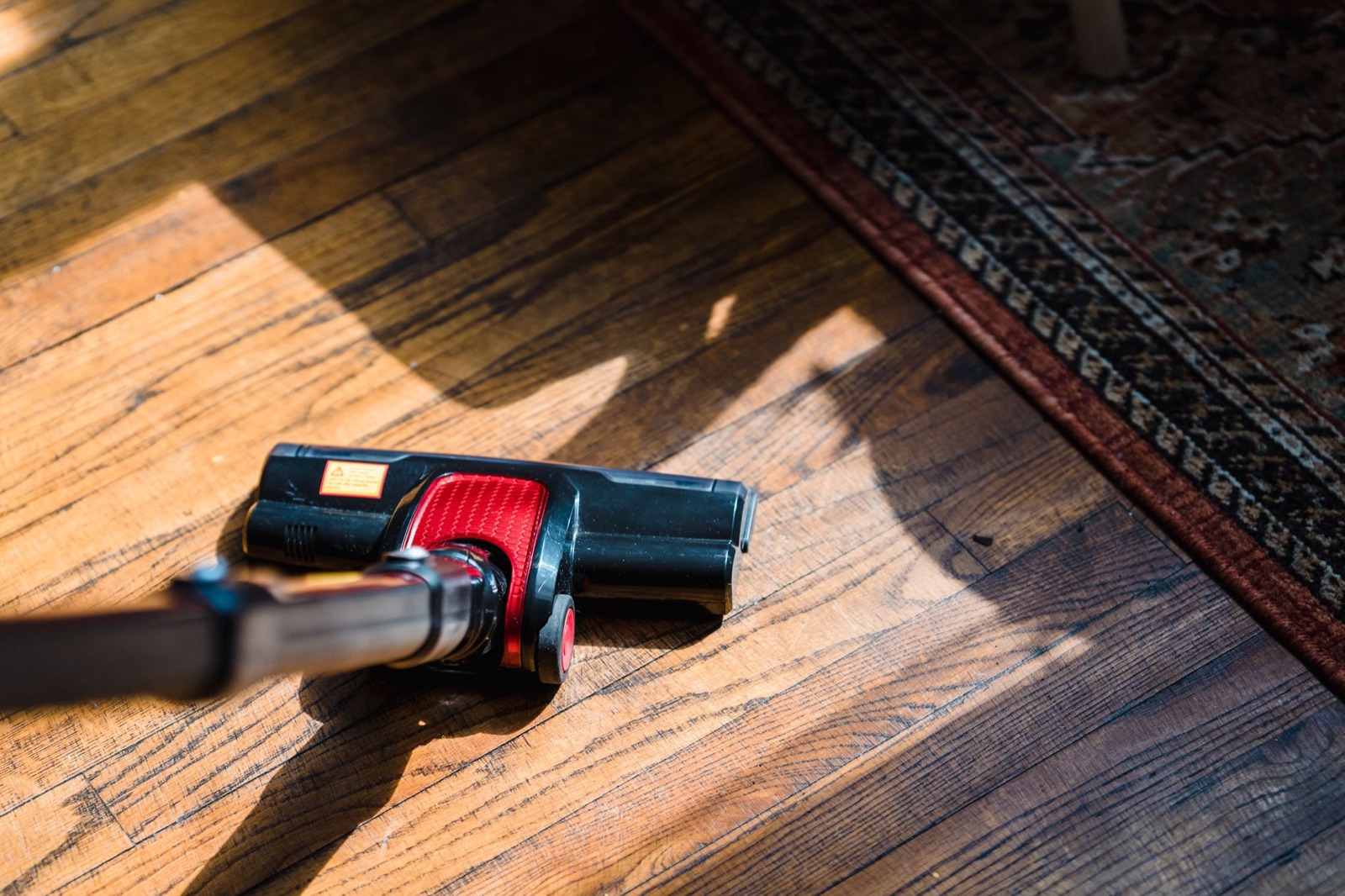
Photo by Liliana Drew on Pexels
Using a Swiffer properly comes down to the order of the steps
Our cleaners are trained on how to use the Swiffer, and none of it is complicated. The steps below are the way I’d tell a friend to do it at home.
- Vacuum the whole floor first, including along the baseboards.
- Take care of sticky spots by hand. A dried splash by the stove needs a damp cloth and a little pressure, so handle those spots before the pad comes out.
- Put on a fresh pad and start in the corner of the room farthest from the door. Work your way back toward the door so you never walk across floor you’ve already finished.
- Go along the edges and into the corners, then reach the head under low furniture.
- Change the pad when it’s loaded. A full pad just moves dirt around. A big room or a dirty floor can easily take more than one pad, and that’s normal.
- Match the moisture to the floor. Tile and sealed vinyl can take a little more. Hardwood and laminate want much less, so the floor looks damp for a moment and dries quickly, with no puddles in the seams. Our cleaners adjust this to the floor in each home, and it’s worth doing at home too.
What I like about this method is that none of it depends on a fancy tool. It depends on doing the steps in order and not rushing the pad changes. A mop used the same careful way would work too. The Swiffer version just travels better and starts fresh in every home. If you’re home during a cleaning you’ve booked with us, you’ll see the vacuum and the Swiffer both come out of the tote.
So my honest answer on Swiffer vs mop is that the tool matters less than people think. A floor that gets vacuumed first, then cleaned with a fresh pad from the far corner back to the door, comes out clean.
Common Questions
- Is a Swiffer as good as a mop?
- On a typical apartment floor, I think it is, as long as the floor gets vacuumed first and the pad gets changed when it's full. The method matters more than the tool, and a rushed job looks streaky with either one. A mop and bucket is still the better choice for a very dirty floor that needs a lot of water and scrubbing.
- Do professional cleaners use a mop?
- Some do, and it makes sense for crews that drive between jobs in a van. Our cleaners get around NYC by subway, bus and on foot, so they carry a Swiffer and a vacuum in a rolling tote instead. Each home also starts with a fresh pad, since there's really no way to wash and dry a mop head between back-to-back homes.
- Should you vacuum before you Swiffer or mop?
- Yes, whatever you mop with. A pad is good at fine dust and light grime, but loose grit, crumbs and hair just fill it up and get dragged around in streaks. Grit pushed across a wood floor can also leave fine scratches over time. Vacuuming first means the pad only has to handle what's actually stuck to the floor.
- Is a Swiffer safe on hardwood floors?
- In my experience, yes, as long as you keep the moisture on the light side. Our cleaners adjust how damp they go to the type of floor, and hardwood gets the least. Standing water is what hurts wood, since it seeps into the seams and makes the boards swell, so the floor should look damp for a moment and dry quickly. If your floor came with care instructions from the maker or installer, I'd follow those first.
- How often should you change a Swiffer pad?
- Change it whenever it looks loaded, even if you're halfway through the room. A full pad stops picking up dirt and starts moving it around, which is usually where the streaks come from. A big room or a dirty floor can easily take more than one pad, and vacuuming first helps each pad go further.