A friend told me his wife burns incense in the house, and every time she does it seems to leave a lot of dust around the place. He asked me two things. What is that dust, and is burning incense indoors actually bad for you? Candles came up too, more as an afterthought.
The way he described it, the incense seemed to attract dust. I think it’s simpler than that. Most of that dust is the smoke itself. It floats in the room’s air first and settles out slowly over a few hours. So the dust he’s seeing is basically a gauge of how much smoke the room was holding.
The dust from burning incense is really three different things
The first is ash. That’s the gray powder and little bits that fall off the stick or cone. Most of it lands near the holder, but some drifts a bit and some gets tracked around the room.
The second is soot, the fine particles that make up the smoke itself. These are small enough to float for hours, so they spread through the whole room and settle on every flat surface, not just near the holder. They also build up where smoke rises, where air moves, and on cold glass, so the ceiling above the holder, the area around vents, and the inside of the windows pick up more than you’d expect.
The third is the part people don’t usually think about. Incense smoke carries oily, resin-like compounds that condense on surfaces into a thin film. It’s slightly sticky and kind of yellowish-gray, like a milder version of the film in a smoker’s apartment. That stickiness explains a lot. Regular dust clings to it, so the place seems to get dusty faster, and a dry duster tends to smear it instead of lifting it.
We’ve cleaned over 100,000 homes, and where incense gets burned often, our cleaners see pretty much the same signs. There’s usually ash under the holder, a gray film on nearby shelves, and a film on the inside of the window glass.
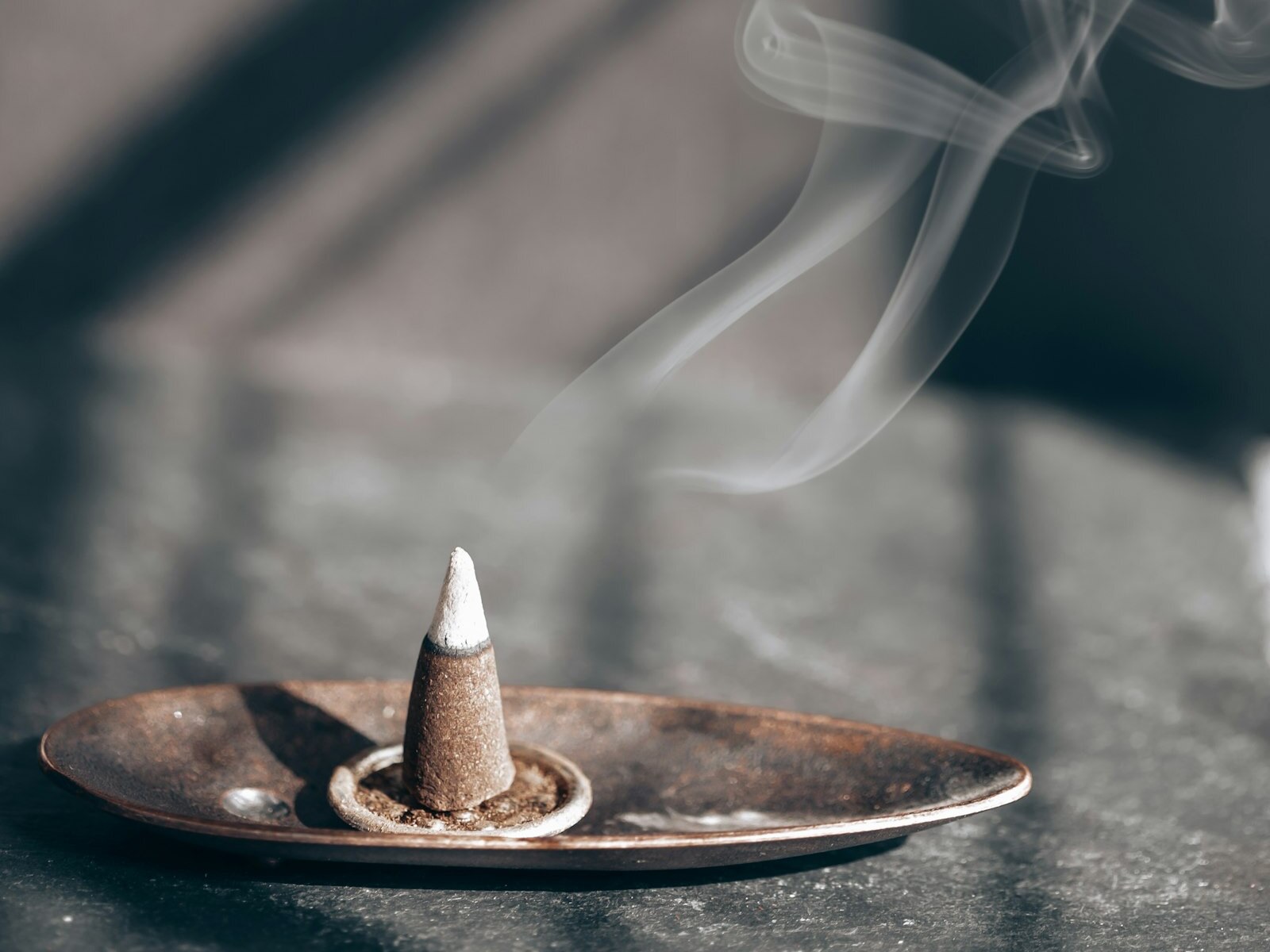
Photo by Ray Albrow on Unsplash
Incense dust piles up faster in a small apartment with the windows shut
If the dust is smoke that came back down, then cleaning it up is the second question. The first is how much smoke the room is holding, and how fast that smoke leaves. A shelf that’s gray by the end of the day is telling you the indoor air was full of smoke for a while.
This is where the size of the room matters. A small apartment just has less air for the smoke to spread into, and in the colder months the windows stay shut, so nothing carries the smoke out. The same stick of incense leaves a lot more behind in a one-bedroom in January than in a big house with the windows open. That’s probably why New Yorkers notice it so much.
Whether burning incense indoors is bad for you mostly depends on how much and how often
The health side follows from the same idea. The particles landing on the shelf are the ones people breathe while it burns. Fine particles like that can irritate your eyes, nose, and throat, and they can make asthma and other breathing problems worse. Incense smoke also carries gases you can’t see, like carbon monoxide and other byproducts of burning.
I don’t think that makes every stick a problem. Burning incense for hours every day in a small closed bedroom is the case worth rethinking. An occasional stick in the living room with a window cracked is a pretty different situation. Kids, older people, anyone with asthma, and pets are more sensitive to smoke in general, birds especially. I’m not a doctor, but if someone in the house gets headaches, a cough, or itchy eyes when the incense is going, that’s worth paying attention to.
There’s also the fire side, which is mostly common sense. Unattended candles and incense are a real cause of house fires. A holder with a wide tray made of something that can’t burn, like ceramic or metal, catches falling embers and ash. Keep candles at least a foot from curtains, bedding, and paper, and put both out when you leave the room or go to sleep.
Candle soot is a smaller version of the same thing
Most of it comes from the flame not burning cleanly. A long wick, a draft, or a flame that flickers and smokes will put out black soot, and a steady flame mostly won’t. You see it as a dark patch on the ceiling right above where candles usually sit, a black film on the inside of jar candles, and a dark haze on the walls nearby. Sometimes it shows up as faint dark lines on walls or along carpet edges where air moves.
The fix is mostly two habits. Trim the wick short, about a quarter inch, before you light it, and keep the candle out of drafts from windows, fans, and vents. Heavily scented candles tend to soot more, so if one spot on the ceiling keeps darkening, the candle might be worth switching.
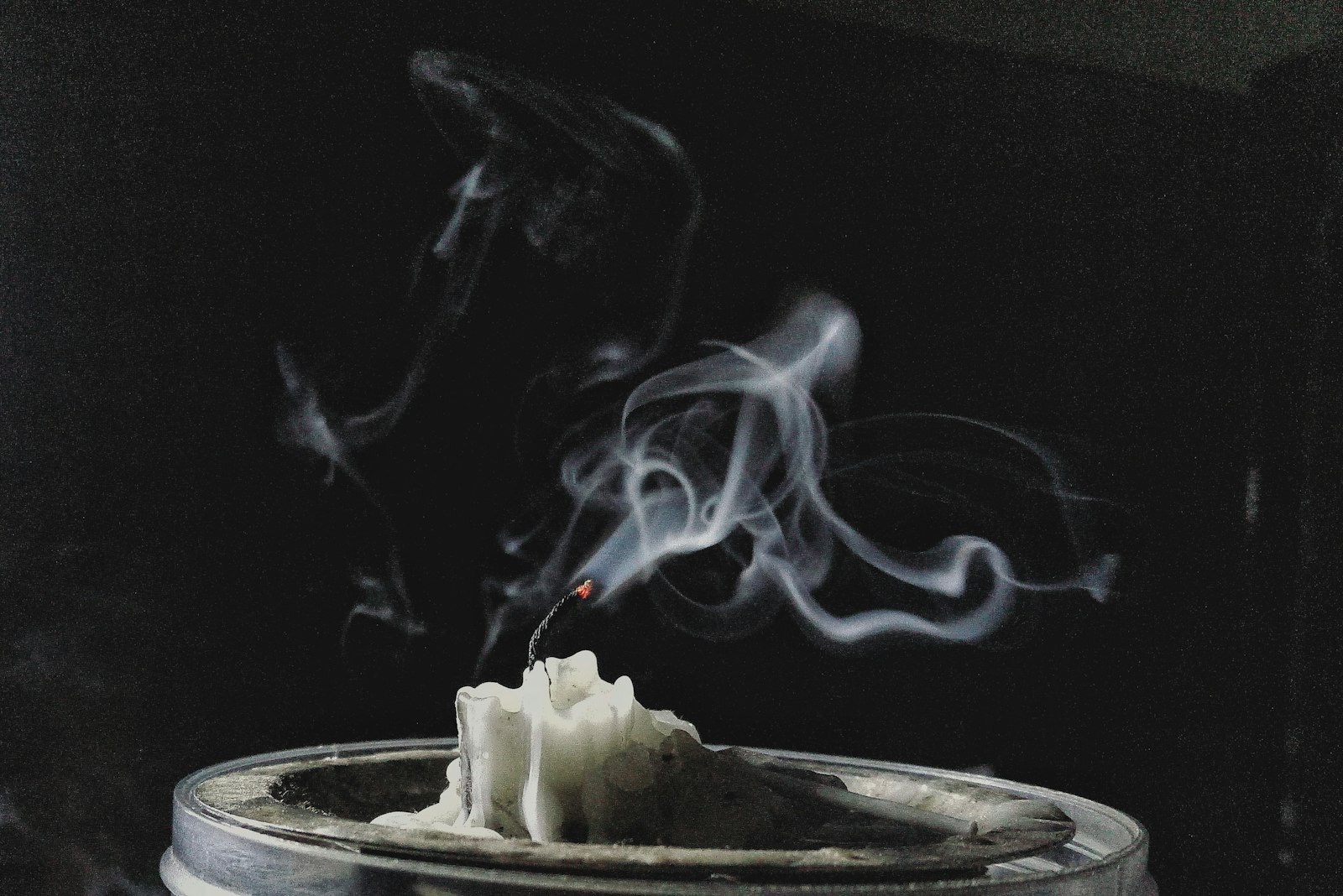
Photo by Don Kaveen on Unsplash
Less incense soot comes down when the smoke has somewhere to go
If it were my place, I’d start with the air before the cleaning. A cracked window or the kitchen or bathroom exhaust fan running while the incense burns moves a lot of smoke out. Burning it in the bigger room instead of a small closed bedroom gives the smoke more air to spread into. Shorter or less frequent burns mean less smoke to begin with. Changing the air filters more often helps too, and a HEPA purifier does a good job on fine particles.
Cleaning incense soot works better with a damp cloth than a dry duster
The air comes first, but when it’s time to clean, the main thing I’d change is the duster. A dry duster pushes fine soot around and smears the sticky film. A slightly damp microfiber cloth picks up both the ash and the film. Walls and ceilings are trickier, because wiping soot with a wet rag first can smear it into the paint. A dry soot sponge (a dry chemical sponge) goes first, then mild soapy water. Window glass and other shiny surfaces come clean with warm water and a little dish soap, which cuts the oily film. Curtains and other fabric hold smoke too and need a wash.
Months of built-up film on walls, ceilings, and baseboards is more of a deep cleaning job than a quick wipe. If you book one, mention the incense so the crew knows the film is smoke and not regular dust. In between, wiping shelves with a damp cloth every week or so keeps the film from building back up, whether you do it yourself or it’s part of a regular apartment cleaning.
Most of the gray dust on the shelf is just the smoke that was in the room. If you want less of it, give the smoke a way out.
Common Questions
- Will incense residue on walls come off, or do I need to repaint?
- Usually it comes off. A dry soot sponge lifts most of the loose soot, and mild soapy water takes care of the sticky film after that. Flat paint is the hardest to clean because scrubbing can leave a shiny patch, so I'd test a spot behind a piece of furniture first. If a shadow is still there after cleaning, a stain-blocking primer before you repaint keeps it from showing back through.
- Is burning incense safe around pets?
- Pets breathe the same smoke you do, and in a small apartment they don't have much room to get away from it. Birds are especially sensitive to smoke and fumes, so I wouldn't burn incense in the same room as a bird. For cats and dogs, I'd burn it with a window cracked and leave the door open so they can walk away if they want. If a pet already has breathing problems, it's worth asking your vet before burning anything around them.
- Does an air purifier help with incense smoke?
- It helps with part of it. A purifier with a HEPA filter catches a lot of the fine particles, so less soot ends up on the shelves. A HEPA filter doesn't catch the gases in the smoke, though, so burning less and letting fresh air in still matter more. I'd run the purifier and crack a window, not pick one over the other.
- Are soy or beeswax candles cleaner than regular candles?
- Maybe a little, but I think the wax matters a lot less than the flame. Soy and beeswax might put out slightly less soot than regular paraffin, but no candle burns soot-free. A wick trimmed to about a quarter inch and a spot out of drafts make a much bigger difference. Heavily scented candles also tend to soot more, whatever the wax.