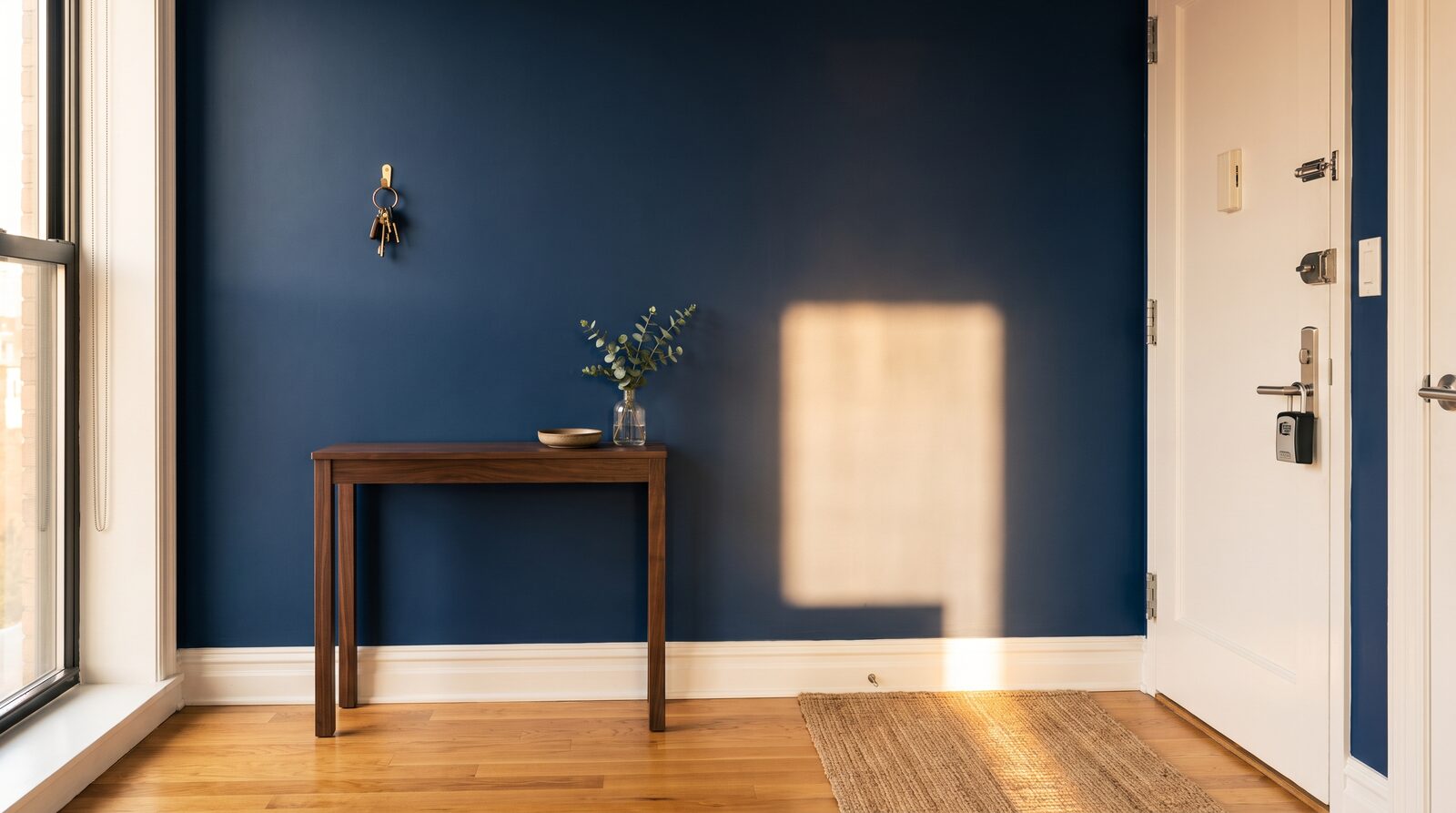
Security deposits get argued over more than almost anything else in New York renting, and after being around a lot of empty apartments in the hours before a final walkthrough, I’ve noticed the arguments almost always come down to the same handful of things. They’re usually not the things people spent the most time cleaning.
The mismatch is pretty simple. Tenants clean the things they look at every day. Landlords check the things they’d have to pay someone to deal with before the next tenant moves in. Those are different lists, and your deposit rides on the second one. So the smartest way to plan a move-out cleaning is to work from the landlord’s list, in the landlord’s order.
What landlords check when you move out is mostly grease and grime
When a landlord or super does the final walkthrough, the kitchen gets checked first, and within the kitchen, the greasy stuff gets checked first. They open the oven, they open the fridge, and they run a finger along the range hood. Then comes the bathroom, mostly grout, tile, and fixtures. Then floors, then walls and nail holes, then closets. I’ve seen enough of these walkthroughs to say the order is remarkably consistent.
The logic makes sense once you see it from their side. Normal wear and tear, meaning faded paint, small nail holes, worn spots in the floor finish, generally can’t be deducted from a deposit. Dirt can. And the most expensive dirt to remove is exactly the stuff that builds up in kitchens and bathrooms. Baked-on oven grease and stained grout take real labor to fix, so that’s where the inspection attention goes.
What you should clean before moving out, room by room
If you’re doing the clean yourself, work through the apartment in roughly this order:
- Kitchen grease. Degrease the stovetop, the burner grates, the range hood, and the backsplash. Wipe the cabinet fronts nearest the stove, which collect a film most people never notice until they touch it.
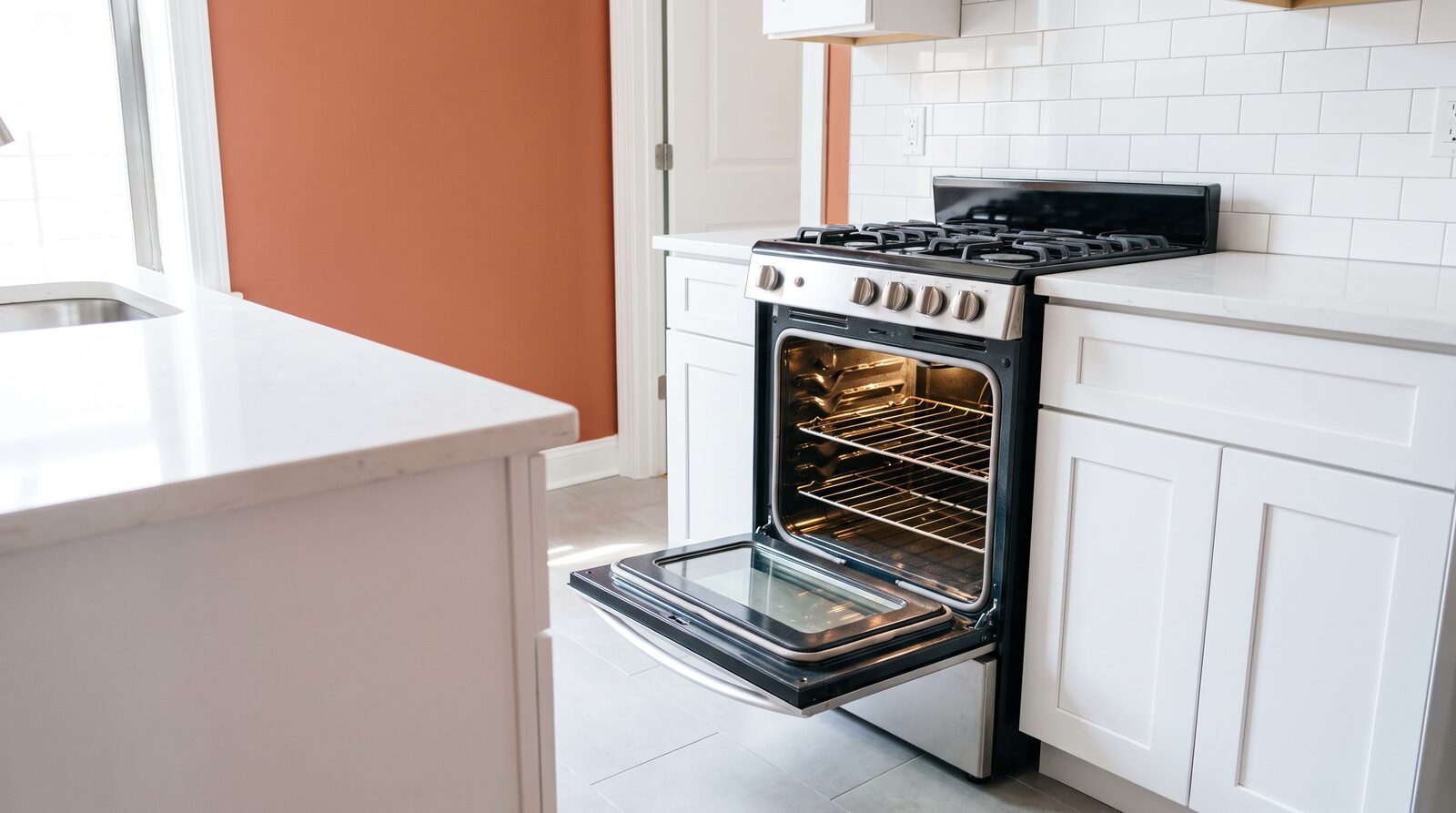
- Inside the oven. Racks out, oven cleaner or a baking soda paste, and give it time to work. This is the single most skipped job in DIY move-outs and the first door a landlord opens.
- Inside the fridge. Empty it completely, pull the shelves and drawers, wash them in the sink, and wipe down the interior walls. If the fridge is being turned off, prop the doors open so it doesn’t grow smells for the next tenant.
- The bathroom. Grout and caulk lines, the tub or shower walls, the fixtures, the toilet including the base, and the mirror. Water spots on chrome come off with vinegar and make a bigger visual difference than almost anything else in the room.
- Floors. Vacuum carpets and mop hard floors last, after everything else, working toward the door. Get the corners and along the baseboards, which is where the movers’ dust settles.
- Walls and nail holes. Wipe scuffs with a damp cloth or a melamine sponge, and fill nail holes with a little spackle if your landlord expects it. Some landlords treat a few small holes as normal wear and tear, so check your lease before you repaint anything.
- Closets and cabinets. Empty every shelf and drawer, then wipe them out. Landlords open closets specifically because people forget them, and a stray hanger sitting in a layer of dust reads as a rushed job.
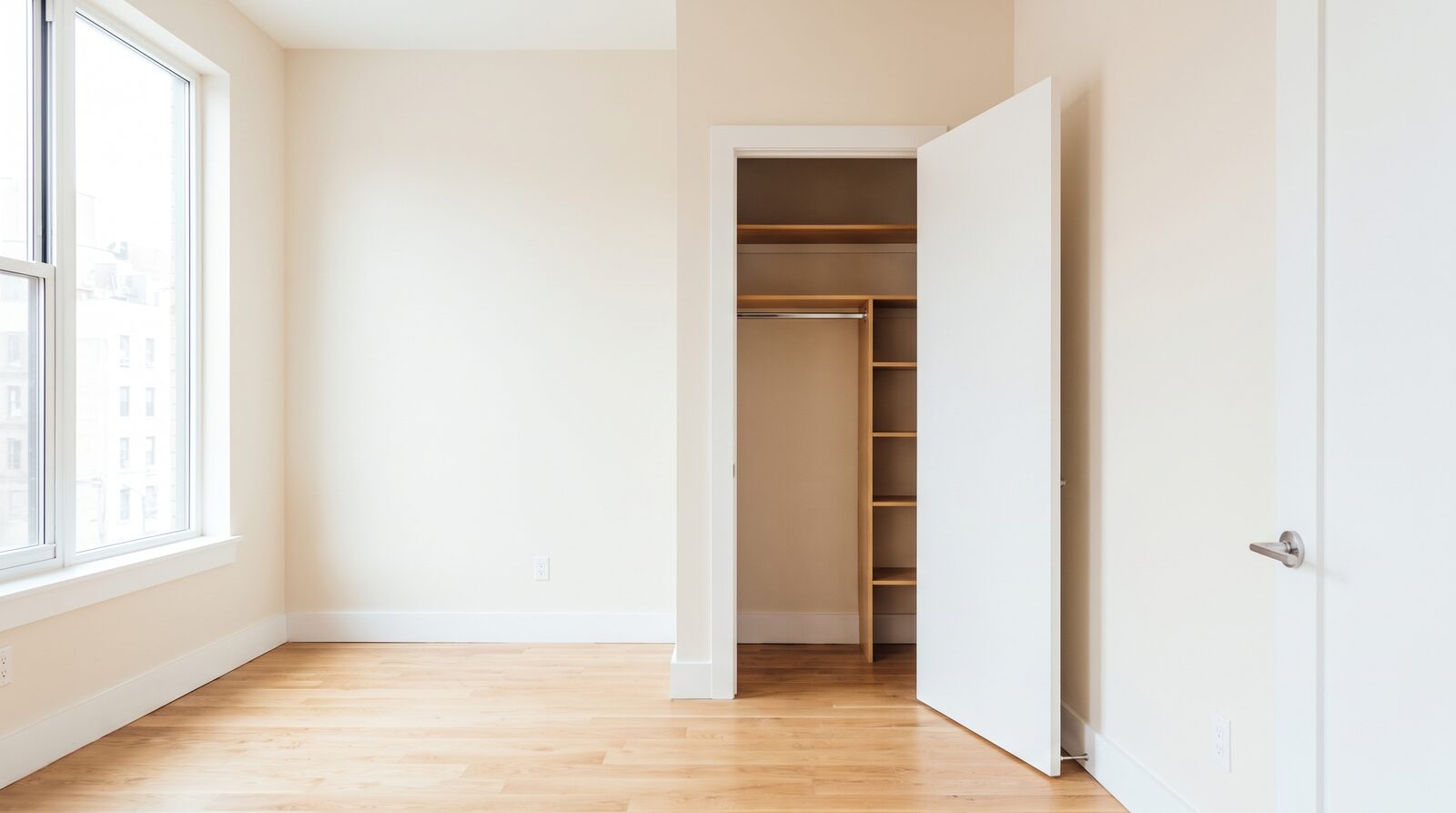
Everything on that list assumes the apartment is empty, which matters more than people think. I’ll come back to that.
The security deposit fight is usually won with photos, not arguments
I’m not a lawyer and none of this is legal advice, but the practical shape of the rules is worth knowing. In New York, a landlord generally has fourteen days after you move out to return your deposit, along with an itemized statement for anything they deducted. Itemized is the useful word. Deductions have to be named, which means a vague sense that the place “wasn’t clean” is a weak position for a landlord if you can show otherwise.
Showing otherwise is the easy part if you plan for it. After the final clean, photograph the inside of the oven, the inside of the fridge, the tub and grout, each room from the doorway, and the insides of the closets. Your phone timestamps all of it. And if you can be present for the walkthrough, be present, because most disagreements get resolved on the spot when both people are looking at the same clean oven.
You don’t have to professionally clean your apartment when you move out
There’s no rule that says a move-out clean has to be done by a company, unless your lease specifically requires it, and some do, so read yours. What the landlord cares about is the condition of the apartment, not who got it there. So the real question is hours.
An honest estimate for a one-bedroom, cleaned to walkthrough standard, is most of a day, and the oven is the reason. Degreasing an oven properly is slow, unpleasant work, and it’s the job people abandon halfway through. When we do move-in and move-out cleans, the inside of the oven and the inside of the fridge are included at no extra charge, and that inclusion exists precisely because a move-out isn’t really done without them. On a standard clean, each of those is a $40 add-on.
The pricing itself is straightforward. A move-out clean starts at the standard rate for your apartment size, then adds $140 per bedroom and $50 per bathroom for the heavier scope. A two-bedroom with one bathroom comes out to $529, with the fridge and oven included in that number. It’s the same structure as our deep cleaning, because it’s essentially the same clean pointed at an empty apartment instead of a full one. One honest caveat about carpets, though. We vacuum them and we never shampoo or steam-clean them, so if your lease requires professional carpet shampooing, that specific line item needs a carpet company.
The move-out cleaning goes between the movers and the walkthrough
Timing matters more on a move-out clean than on any other kind, because the clean has to land in the narrow window after the apartment is empty and before you hand back the keys. Cleaning around boxes doesn’t work. Movers kick up a surprising amount of dust on their way out, and every surface a box was sitting on needs a wipe once it’s gone.
The schedule that works best is movers one day, the cleaning the next morning, and the walkthrough after that. If your lease ends on the 31st, don’t stack all three on the 31st. Give yourself the buffer day. You can book a move-out cleaning online with the exact price shown upfront, and nothing is charged until after the clean is done, which is more than I can say for most of the other bills that show up during a move.
The core idea is simple. Your deposit isn’t decided by how hard you cleaned, it’s decided by whether the specific things landlords check got handled and whether you can prove it. Clean to their list, photograph the result, and the fourteen-day wait tends to be uneventful.
Common Questions
- What should I clean before moving out?
- Clean the kitchen including inside the oven and fridge, the bathroom including grout and fixtures, the floors, the walls and nail holes, and the insides of closets and cabinets. That order mirrors what gets checked at the walkthrough, so give the kitchen and bathroom most of your time. Grease and grout are where deposit deductions actually come from.
- Do I need to professionally clean my apartment when I move out?
- No, not unless your lease specifically requires it. Landlords care about the condition of the apartment, not who cleaned it. Hiring it out makes sense when you're short on time or don't want to spend a day on the oven, which is why our move-out cleaning includes the inside of the oven and fridge at no extra charge.
- What do landlords check when you move out?
- Landlords check the kitchen for grease first, including inside the oven and fridge, then the bathroom grout and fixtures, then floors, walls and nail holes, and the insides of closets and cabinets. They're looking for anything they'd have to pay someone to clean before the next tenant, because dirt is deductible from a deposit while normal wear and tear generally isn't.
- Does a move-out cleaning include the inside of the oven and fridge?
- Ours does, at no extra charge. On a standard clean, inside the fridge and inside the oven are $40 add-ons each, but a move-in and move-out cleaning includes both because an empty apartment isn't really clean until they're done. Note that we vacuum carpets rather than shampoo them, so lease-required carpet shampooing needs a separate specialist.