I’ve been thinking about home scent a lot lately. Not in a candle-obsessed way, but in the way you start thinking about it when you walk into a space and something just feels right without you being able to name it. I noticed this pattern at open houses. You walk in, the place smells great, you feel more positive about the kitchen even though the kitchen is the same as the last three apartments you saw. That’s not an accident, someone planned that.
I ended up talking to a friend of mine who stages homes for realtors in Brooklyn, and she said something that stuck with me. She said most people think about home scent as a single decision, like you pick a candle and you’re done. But the people who do it well think about it in layers, the same way you’d think about lighting. You don’t just put one lamp in a room and call it lit. You have overhead light, task light, ambient light. Scent works the same way, and the effect of doing it right is that people walk in and can’t quite figure out why the space feels so good.
That framing changed how I approach it entirely. So I want to walk through what I’ve learned, both from her and from my own experiments at home, about how to actually layer summer home fragrance through a space.
The base layer of any summer home fragrance starts with a clean house
This probably seems obvious, but it’s worth being direct about it. No amount of fragrance layering does anything useful on top of a house that smells like last night’s dinner and the bathroom trash. The first layer of scent in any home is the absence of bad scent, and that’s the foundation.
My stager friend was blunt about this. She said the number one mistake she sees in home staging is people trying to mask odors with fragrance instead of removing them first. A heavy candle burning on top of a musty apartment doesn’t smell like a candle. It smells like a musty apartment that’s trying too hard.
This is basically what a deep cleaning does. It resets the olfactory baseline, starting with the drains, garbage disposal, fridge seals, grout, the area behind the stove, and the bathroom exhaust fan. Those are the spots where odors live, and they need to be dealt with before you start thinking about what you want the place to smell like. In summer especially, heat amplifies everything, so the neutral baseline matters even more than it does in winter.
But a deep clean is a reset, not a maintenance plan. A recurring maid service keeps the baseline intact week to week, but even between visits, the things that make odors linger day to day in summer are pretty mundane. Garbage sits in the kitchen for too long in the heat and the whole apartment absorbs it. Sheets and pillowcases hold body oils and sweat that build up fast when it’s humid. Couch cushion covers and throw pillow cases trap odors you stop noticing because you’re around them all day. Shower more frequently in summer, not just for yourself but because the steam and moisture in a small bathroom create a breeding ground for mildew smell. Taking the garbage out daily instead of every few days makes a bigger difference than any candle.
Two tools that help a lot with maintaining that clean baseline are an air purifier and a dehumidifier. An air purifier with a HEPA filter pulls out airborne particles that carry odors, cooking smells, pet dander, dust. A dehumidifier keeps the humidity below that 30-50% range the EPA recommends where mustiness starts to develop, which in a New York summer is basically every day from June through September. Running both quietly in the background means you’re constantly pulling stale air and moisture out of the equation. The fragrance you layer on top of that actually gets to be the thing you smell, not a mask competing with whatever’s been building up underneath.
[IMAGE: A sunny Brooklyn apartment kitchen with clean white countertops, a small herb plant on the windowsill, and a reed diffuser next to the stove]
Layering scents means using different fragrance methods in different zones
This is the part that was new to me. The idea is that you don’t want your whole home smelling like one thing. You want a cohesive but varied scent experience as you move through the space. Each room gets a different delivery method and sometimes a different but complementary scent.
The way my friend breaks it down for staging is pretty simple. She uses three categories of fragrance delivery.
Passive diffusion is things like reed diffusers, linen sprays, sachets in drawers, and essential oil on cotton balls tucked behind books. These are low and slow. They create a barely-there background scent that you notice subconsciously but can’t really pinpoint. She puts these in entryways, hallways, bedrooms, and closets. For summer she leans toward light citrus, eucalyptus, or clean linen scents, nothing heavy.
Active diffusion is candles and electric diffusers. These are stronger and you use them in rooms where you want a more deliberate fragrance presence, like the living room or the dining area. For summer, she avoids warm stuff like vanilla, cinnamon, anything that feels “cozy.” Instead she goes for green tea, cucumber, fresh herb blends, or light florals. The goal is that the scent should feel like it belongs in a room with the windows open.
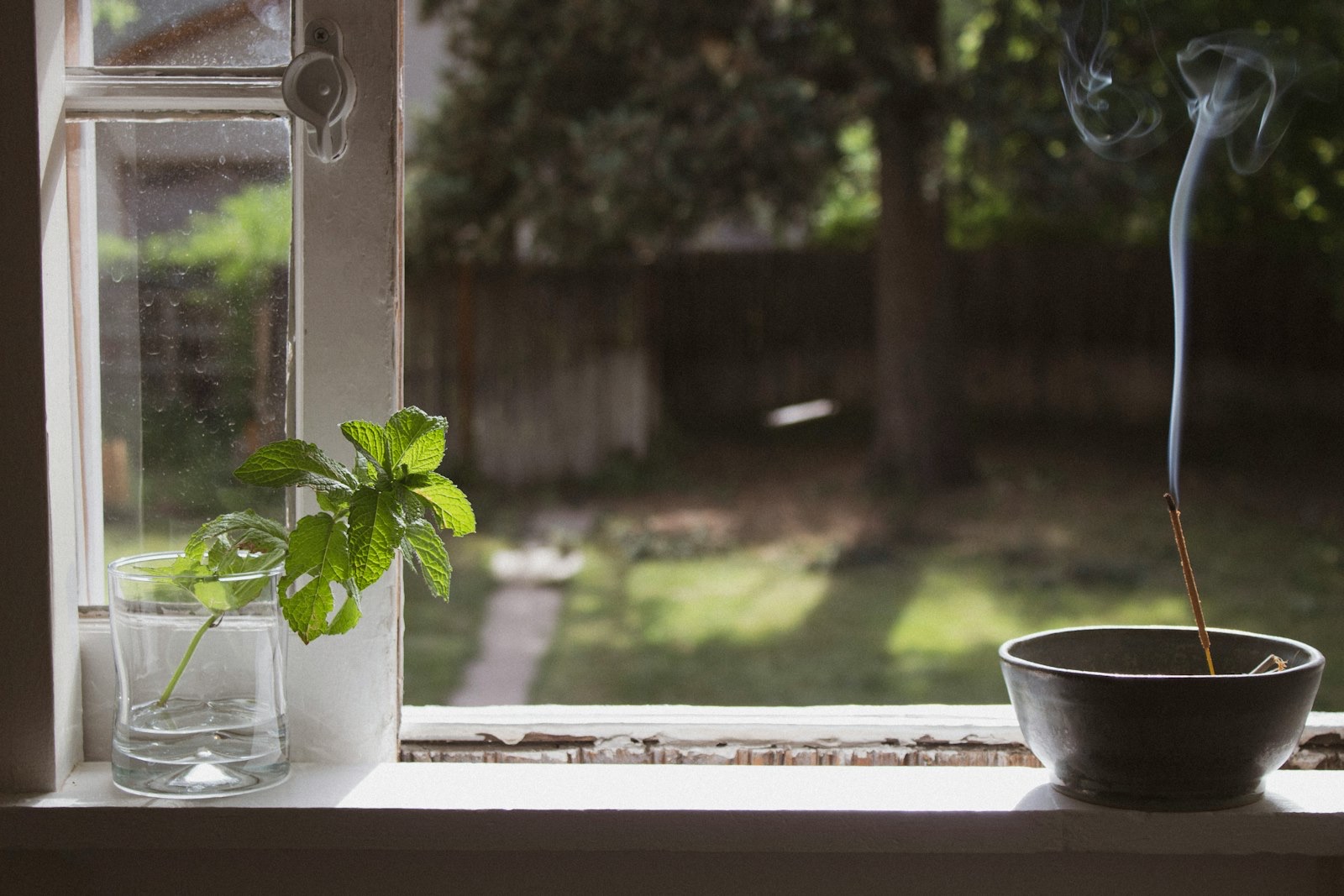
Natural fragrance is the third category and honestly the one I’ve gotten the most use out of. Fresh herbs on the kitchen counter, a bowl of lemons, eucalyptus branches in a vase in the bathroom, fresh flowers on the dining table. These don’t require buying any fragrance products at all. They just smell like what they are, and in summer that’s usually enough for the rooms where you spend the most time.
The layering part is combining all three across the home so the overall effect is cohesive but not uniform. So the hallway might get a reed diffuser, the living room a candle, the kitchen fresh herbs, eucalyptus in the bathroom, and a linen spray on the bedroom pillows. No single source is overwhelming, but together they create a sense that the whole home just smells good.
Outdoor fragrance for your patio or deck follows different rules
If you have any outdoor space, whether it’s a deck, a patio, a rooftop, or even a fire escape garden, the approach changes. Outdoor scent is fighting wind, open air, and whatever your neighbor is grilling. You can’t be subtle about it.
My friend says for outdoor spaces she thinks about fragrance as environmental rather than decorative. Citronella obviously serves double duty because it also keeps mosquitoes away, but she layers it with other things. Large outdoor candles with strong throws, like ones with lemongrass, cedar, or grapefruit. Potted herbs placed around seating areas, especially rosemary, lavender, and mint, which release scent when you brush against them or when the sun hits them. If there’s a water feature, even a small tabletop fountain, the moving water carries and disperses nearby scents.
The biggest mistake she sees with patio fragrance is using the same delicate scents that work indoors. A subtle reed diffuser on a windy deck does nothing. Outdoor spaces need bigger, bolder fragrance sources. She actually recommends doubling up on candles outdoors, placing two or three in a cluster rather than spacing them out, because the combined throw is what creates the fragrance zone around the seating area.
I tried this last summer with a cluster of three lemongrass and cedar candles on our back table, surrounded by potted rosemary, and it genuinely transformed the space. We started eating dinner outside almost every night just because the atmosphere was so much better.
[IMAGE: A small Brooklyn brownstone backyard patio at dusk with string lights, clustered candles on a wooden table, and potted herbs along the railing]
Realtor staging tricks are actually just good home scent tips
One thing I kept coming back to in my conversation with my friend is that the techniques she uses for staging aren’t really staging tricks. They’re just good home fragrance practices that most people never think about because they approach scent as an afterthought.
A few of her specific recommendations that I’ve adopted. First, she always puts a light scent near the front door because that’s the first impression of the whole home. A small reed diffuser on the entry table or a sachet hanging inside the coat closet. You don’t notice it consciously when you walk in, but you notice its absence if you take it away.
Second, she matches the scent intensity to the room size. Small bathroom, small scent source. Living room, something with more throw. This seems obvious but most people just put their one favorite candle in the living room and leave every other room unscented.
Third, and this is the one that surprised me, she rotates scents seasonally. Not just summer versus winter, but early summer versus late summer. In June she uses lighter, greener scents. By August she shifts toward richer florals and warm citrus. The reasoning is that your nose adapts to a constant scent within about two weeks, so it stops registering. Researchers call this olfactory habituation. Rotating keeps the fragrance experience fresh without having to increase intensity.
That nose adaptation point is actually the best argument for layering in general. If your whole house smells like one lavender candle, you stop smelling it after a few days. But if there’s citrus in the hall, green tea in the living room, and herbs in the kitchen, your nose gets a new input in every room and the effect stays alive much longer.
The real point of summer home fragrance is that your space should feel intentional
I think what clicked for me in all of this is that scent is one of the most powerful and most neglected parts of how a home feels. People will spend hours picking paint colors and furniture, then just grab whatever candle is on sale at the grocery store and call it done. Realtors figured out a long time ago that scent drives emotional response to a space more than almost anything visual. That’s why staged homes always smell great. It’s not a nice-to-have, it’s a deliberate part of how they make you feel about the space.
For regular life, you don’t need to go as far as a home stager. But the framework is useful. Start with a clean baseline, which might mean booking a cleaning to reset things if the apartment has been accumulating summer cooking smells and humidity for a while. Then layer light passive scents in transition spaces, something a bit stronger in gathering rooms, and natural fragrance wherever you can. If you have outdoor space, go bigger and bolder than you think you need to.
The compound effect of doing all of this, even casually, is that your home stops being a place that just smells neutral and starts being a place that actively feels good to walk into. That’s the difference between a house that’s clean and a house that feels like someone actually thought about what it’s like to be there. We think about that a lot when we’re doing apartment cleanings and house cleanings, leaving a space that doesn’t just look clean but feels clean when you walk in the door.
Common Questions
- What summer home fragrances work best in small NYC apartments?
- In a small space, less is more. A single reed diffuser in the main living area and a sachet or two in closets is usually enough. Citrus, eucalyptus, and green tea are good summer choices because they feel light and open. Avoid anything heavy or warm like vanilla or sandalwood, which can make a small apartment feel stuffy in the heat. Fresh herbs on the kitchen counter do a lot of work for free.
- How do I keep my home smelling fresh between cleanings in summer?
- The biggest summer scent offenders are drains, garbage, and humidity in the bathroom. Running ice and lemon through the garbage disposal weekly, taking trash out more frequently than you do in winter, and running the bathroom fan for 15 minutes after every shower handles most of it. Layer a reed diffuser in the entry and fresh eucalyptus in the bathroom on top of that, and you're in good shape between professional cleanings.
- Can you actually layer different scents without them clashing?
- Yes, but they need to be in the same scent family or at least complementary families. Citrus and herb scents layer well together. So do green and floral. What clashes is mixing categories, like a vanilla candle in the living room and a citrus diffuser in the hallway. The simplest rule is to pick one palette for the season, like citrus-herb-green, and keep everything within it.
- What outdoor fragrance actually works on a small patio or deck?
- Cluster your candles instead of spreading them out. Three candles together create a fragrance zone that one candle alone cannot. Lemongrass, cedar, and grapefruit all throw well outdoors. Potted rosemary, lavender, and mint release scent in the heat and when you brush past them. For a small space like a fire escape garden or a narrow deck, two clustered candles plus one potted herb is enough.
- Do professional cleaners leave a scent behind, or should I add fragrance after?
- A good cleaning leaves behind a neutral, clean smell rather than a heavy chemical or perfume scent. That neutral baseline is actually the ideal starting point for adding your own fragrance layers. I would always add your own scent after the cleaning, not before, since the clean slate is what lets the fragrance come through clearly without competing with anything.