One of the more common things we hear after a cleaning is that the windows still look dirty. Sometimes that’s fair. More often, when our teams look closely, the room side of the glass is clean and the haze is coming from somewhere a cloth can’t fix. Glass that looks dirty after a cleaning is usually one of six different problems, and each one has a different fix. Only some of them are cleaning problems.
Telling them apart matters more than it sounds. If the haze is between the panes of a double-pane window, you could have the glass cleaned every week and it would look exactly the same. If it’s streaks, the window is fine and the cleaning just wasn’t finished properly. So before asking whether the windows were cleaned well, it’s worth asking where the haze actually is and whether it’s dirt at all.
Windows that look dirty after a cleaning are often dirty on the outside
In most NYC apartments the outside surface collects far more grime than the inside. Soot from traffic, pollen, grit from construction down the block, and whatever the rain washes down the face of the building all land out there. When the inside is clean and the outside isn’t, the window still looks dirty from your couch, because you’re looking through both surfaces at once. The simplest check is to wipe a small patch on the room side with a clean, damp cloth and dry it. If the haze doesn’t change, it isn’t on your side of the glass.
We clean interior windows only, as an add-on when you book a cleaning. It isn’t part of a standard clean or a deep clean, and it sits with the other extras on our services page. The outside of a window is a different job, and on an upper floor of a high-rise or a prewar walk-up it’s work for a window washer with a harness and proper safety gear. We’d rather say so plainly than have you expect it from a home cleaning.
Streaks on windows really are a cleaning problem
Streaks are different from everything else on this list because the window itself is fine. If you see streaks after a cleaning, the glass wasn’t finished properly, and that’s true whoever did the cleaning, us included.
Streaks almost always come from one of three things. Too much product gets left on the glass, a cloth that’s already dirty or damp pushes residue around instead of lifting it, or the glass gets cleaned in hot direct sun and the product dries before it’s wiped off. Plenty of prewar windows sit right above a radiator, and in winter that glass can get warm enough to cause the same early drying. Windows that get low sun, like west-facing ones in the late afternoon, show streaks worst, because the light comes in low and lights up every pass of the cloth.
You can usually tell streaks from the other causes by their shape. They follow the direction someone wiped, in arcs or long lines, and they smear when you rub them with a dry fingertip. Because they sit on the surface, a careful second wipe takes them off.
Fog between window panes means the seal around the glass has failed
Most windows in newer high-rises, and a lot of replacement windows in older buildings, are double-pane. Two sheets of glass sit in a sealed unit with a small gap of air between them. When the seal around that unit fails, moist air gets into the gap and condenses on the inside faces of the panes. That’s the fog or milky haze you’re seeing. It often comes and goes with the temperature and the sun, and over time it can leave a white film behind as the moisture dries.
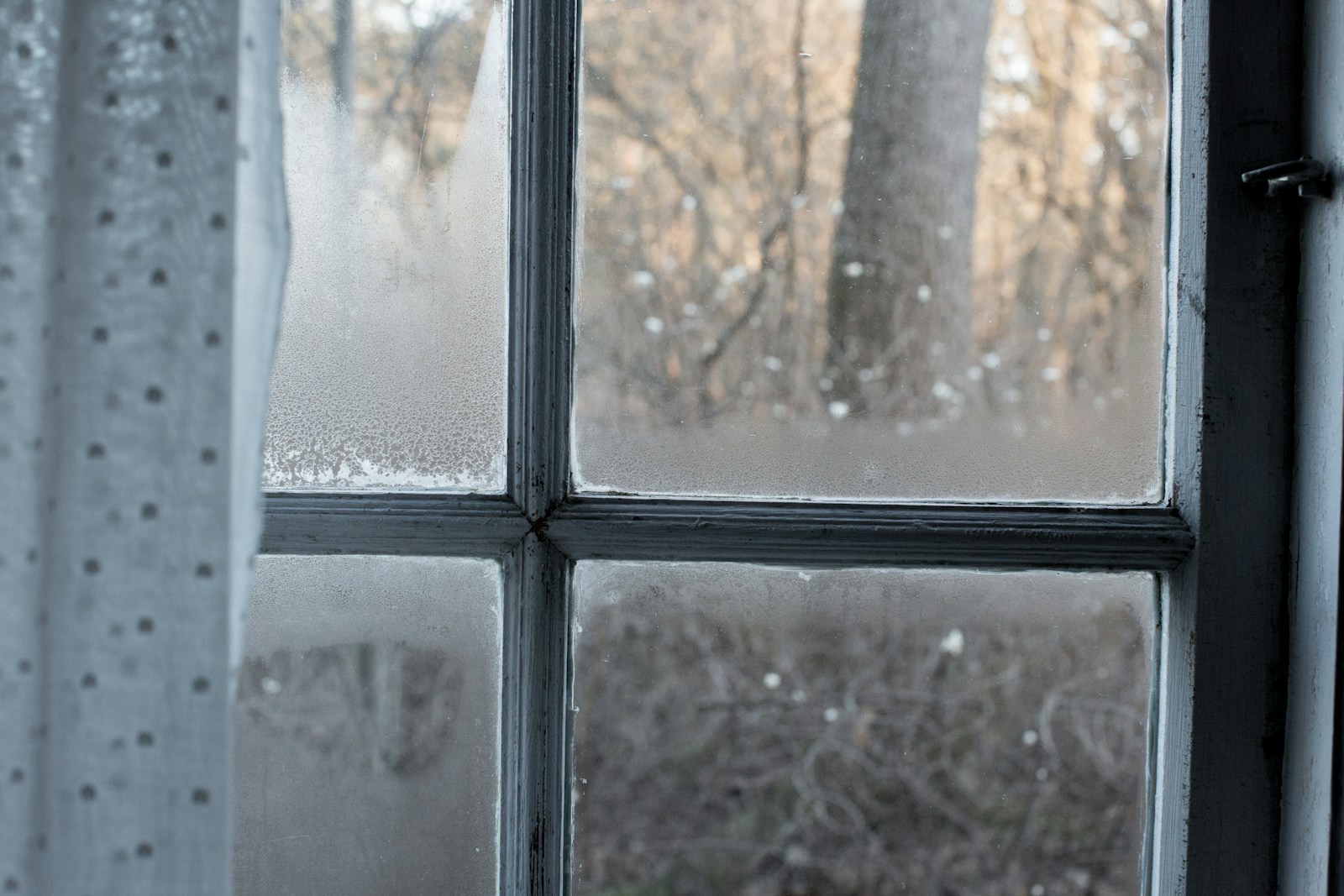
Photo by Ozgu Ozden on Unsplash
Those two inside faces are sealed off from the room and from the street. A cleaner can’t reach them, so no cleaning can fix fog between window panes, no matter what product or tool they bring.
The test takes a couple of minutes. Wipe the room side with a clean, damp cloth and dry it. If you can safely reach the outside, from a terrace or on a ground-floor window, wipe that too. If it’s a double-pane window, both sides are clean, the glass feels smooth, and the haze shifts with the weather or the time of day, it’s between the panes. Haze that never moves and feels slightly rough is more likely etching. The fix is replacing the sealed glass unit or the whole window, and at that point you’re calling a window replacement company, not a cleaner.
Cloudy windows that won’t come clean usually have hard water damage in the glass
The most common version we see starts as hard water spots. Minerals in water dry onto the glass as small white spots and rings. In NYC a common source is a window AC unit on the floor above, dripping onto the window below all summer and carrying grime from the unit and the building with it. Rain running off brick, mortar, or concrete carries lime down onto the glass, and that runoff is the kind most likely to etch it. Garden sprinklers can spot the back windows of brownstones too. Nearly all of this lands on the outside, which puts it back in the first category.
Fresh spots usually come off with normal cleaning. The trouble is time. When the minerals sit on the glass for months, they etch it, which leaves the surface slightly rough and cloudy. At that point the cloudiness is in the glass, not on it, and cleaning can’t remove it. If the spots look exactly the same after a careful cleaning, etching is the likely reason.
Scratches are the other kind of damage that gets mistaken for dirt. At some point in the window’s past, someone used the wrong tool on it. Usually it was a razor scraper run over gritty glass to take paint off after a renovation, or a scrub pad that dragged grit across the surface. Fine scratches catch the light at an angle and look a lot like streaks. The difference is that streaks change when you wipe them and scratches don’t. If your fingernail catches on the line, it’s a scratch, and new glass is the only real fix for the deep ones.
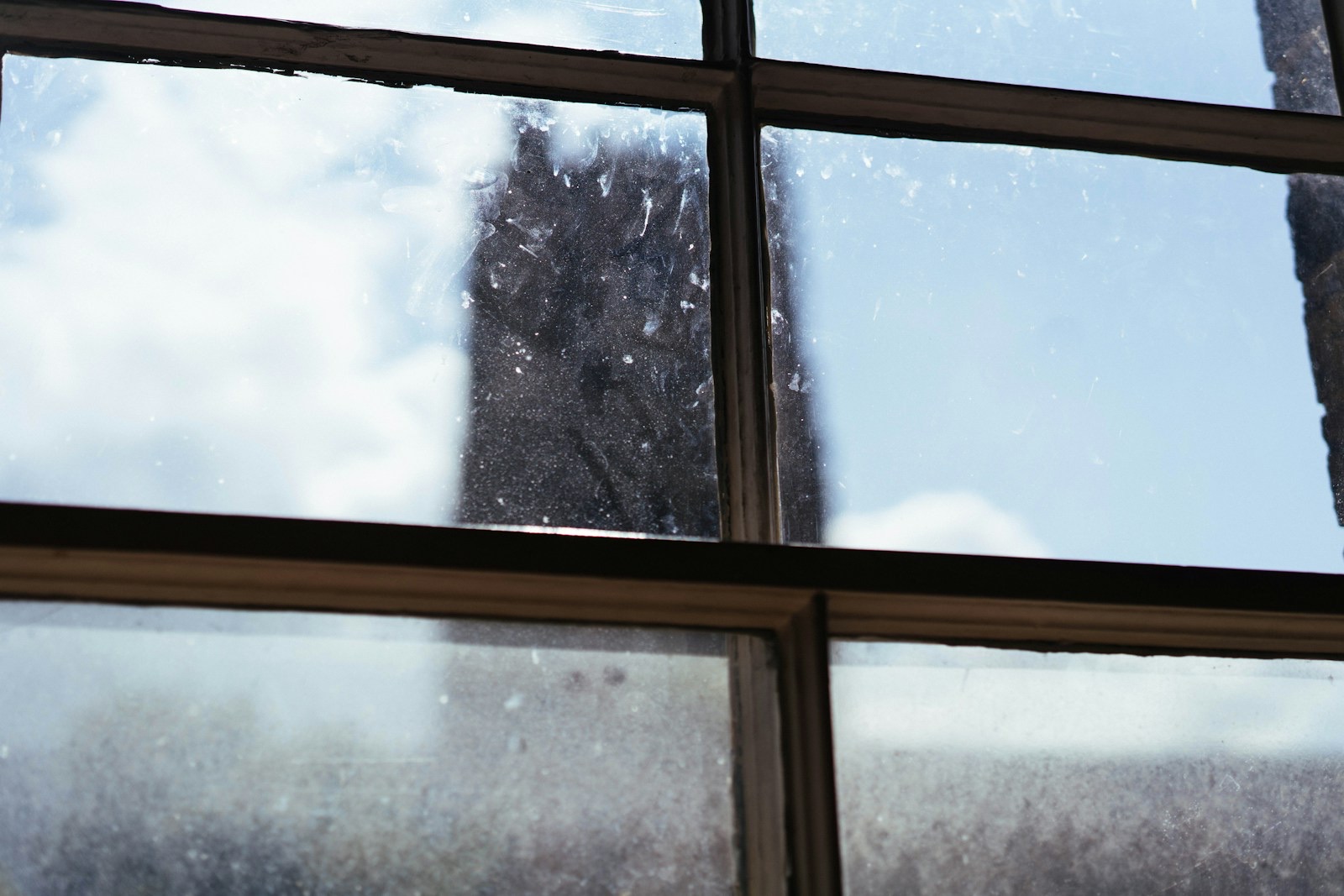
Photo by Phil Hearing on Unsplash
Old frames shed chalk and rust that make clean windows look dirty again
The last cause isn’t the glass at all. Older aluminum frames oxidize into a chalky white powder, old wood sashes in brownstones peel, and the steel casement windows in a lot of prewar buildings rust. Every rain and every wipe of the frame carries a little of that back onto the glass.
We see this a lot in prewar apartments. The glass is clear when the team leaves, and a week later there’s a chalky or rust-colored film along the bottom edge again. Cleaning the glass more often won’t change that pattern. The frame is the problem, and the fix is refinishing or replacing it.
So the next time the windows look dirty after a cleaning, start by finding where the haze actually is. Streaks are a cleaning problem, grime and spots on the outside are a job for a window washer, and fog between the panes, etching, scratches, and a shedding frame are window problems that cleaning can’t fix for good.
Common Questions
- Can fog between window panes be cleaned?
- No cleaning can fix it, because the fog is moisture that got inside a double-pane window after the seal around the glass failed. It condenses on the inside faces of the panes, and those faces are sealed off from the room and the street, so a cleaner can't reach them. The fix is replacing the sealed glass unit or the whole window.
- Do you clean the outside of windows?
- No, we clean interior windows only, as an add-on you pick at booking. It isn't part of a standard clean or a deep clean. The outside of a window, on any floor, needs a different service, and on an upper floor in NYC that means a window washer with a harness and proper safety gear.
- Will cleaning remove hard water spots on windows?
- Fresh hard water spots usually come off with normal cleaning. Spots that sit on the glass for months can etch it, and then the cloudiness is in the glass itself, which cleaning can't remove. If the spots look exactly the same after a careful cleaning, etching is the likely reason. Spots from a dripping window AC unit upstairs usually land on the outside of the glass, so even fresh ones need an exterior window cleaning, not an interior one.
- How can you tell where the haze on a window is?
- Wipe a small patch on the room side with a clean, damp cloth and dry it. If the haze is gone, it was on your side. If it's still there and you can safely reach the outside, from a terrace or on a ground-floor window, wipe that too. If it's a double-pane window, both sides are clean, the glass feels smooth, and the haze shifts with the weather or the time of day, it's between the panes. Haze that never moves and feels slightly rough is more likely etching. A thin line that doesn't change when you wipe it and catches your fingernail is a scratch.
- Why are there streaks on my windows after cleaning?
- Streaks mean the glass wasn't finished properly, whoever did the cleaning. They usually come from too much product left on the glass, a dirty or damp cloth that pushes residue around, or glass cleaned in hot sun or above a warm radiator, where the product dries before it's wiped off. Streaks follow the direction someone wiped and smear under a dry fingertip, and a careful second wipe takes them off.