
East Gravesend does not announce itself. There is no famous arch, no park with a name people use as a shorthand for an entire lifestyle, no block of restaurants with a two-hour wait on Saturday. What the neighborhood has is something harder to achieve and slower to accumulate: 80 years of successive immigrant communities building real lives on the same streets, layering one culture’s institutions onto another’s without erasing what came before.
The neighborhood sits in the southern tier of Brooklyn between McDonald Avenue to the west, Ocean Parkway to the east, Avenue P to the north, and the Belt Parkway service roads to the south. The F train runs along the western edge under the elevated IND Culver Line structure on McDonald Avenue, with stations at Kings Highway, Avenue U, and Avenue X. The blocks between these boundaries are among the most densely populated in the entire country, with approximately 39,000 persons per square mile in the 11223 ZIP code. Yet the streetscape is almost entirely two- and three-story brick houses. The density is not vertical. It is the density of families packed closely into a grid of practical, durable, working- and middle-class homes.
The housing stock that defines East Gravesend shapes how every home needs to be cleaned
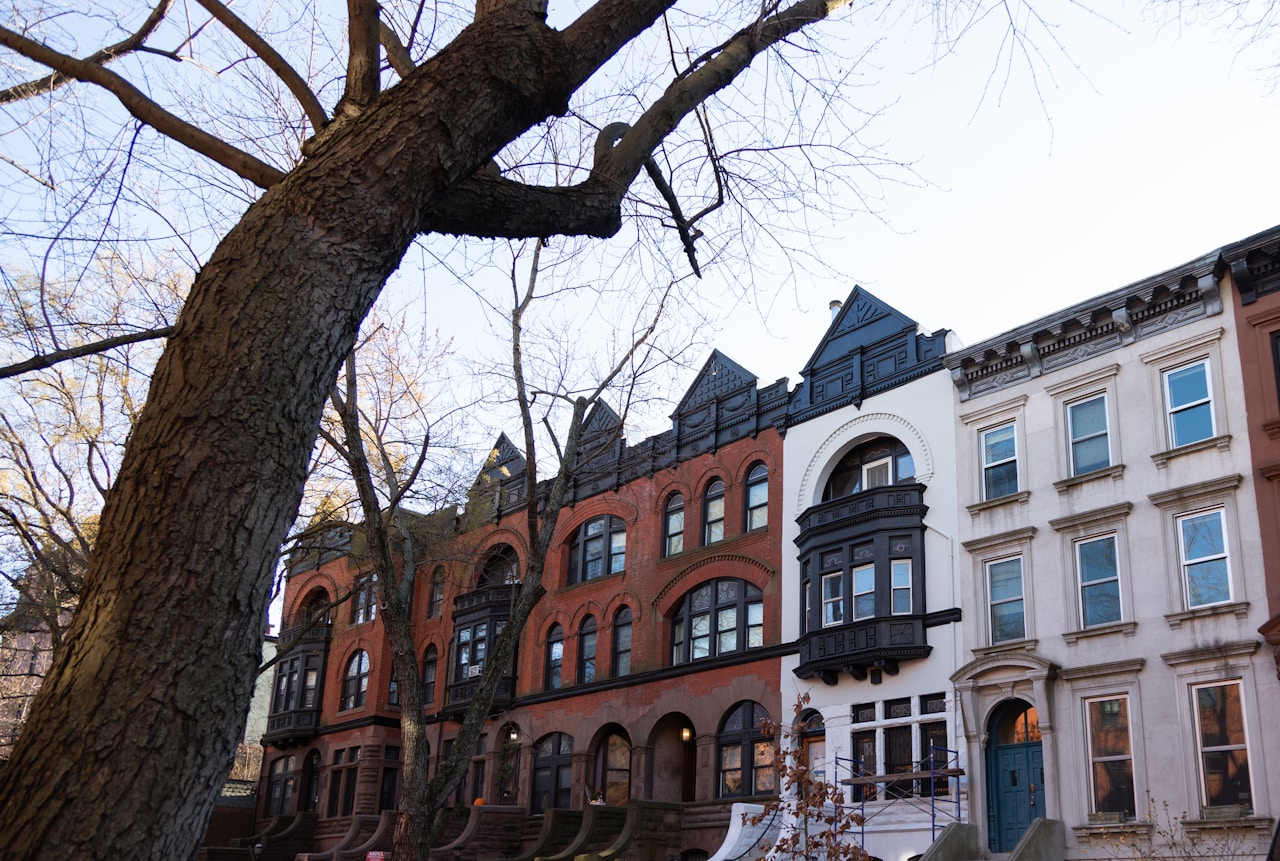
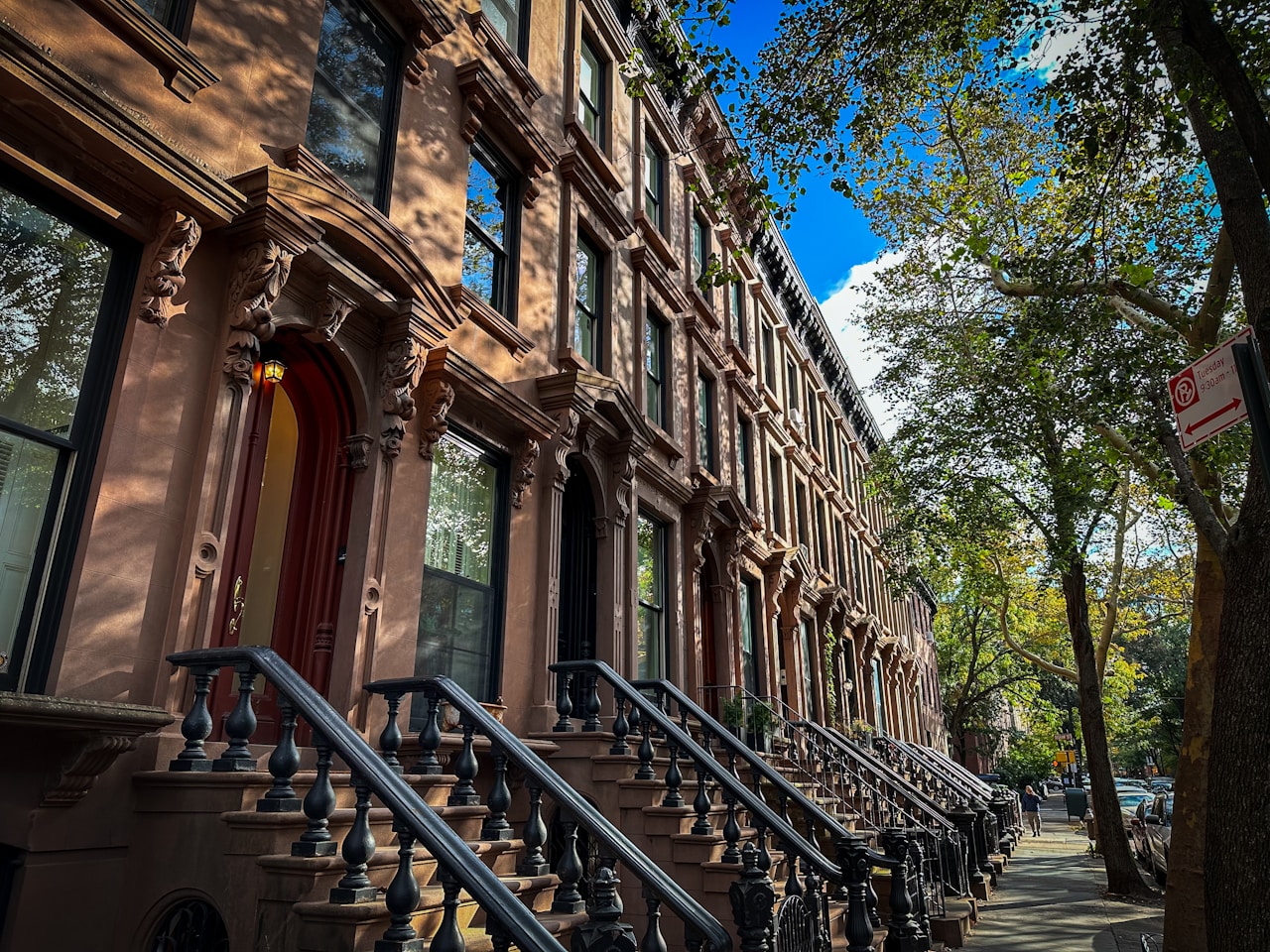
The two-family semi-detached brick house is the dominant building type in East Gravesend, accounting for roughly half to sixty percent of all housing units in the neighborhood. These houses were built primarily between the 1920s and the 1950s to a consistent formula: two to three stories, tan or red brick exterior, a modest stoop, a small front yard almost always paved over, a side driveway leading to a garage, and a rear yard that may be concrete, planted, or some combination. The owner occupies one floor and rents the other. Many of these homes have been in the same family for two or three generations. Multi-generational occupancy is the rule, not the exception, particularly in the Syrian Jewish and Chinese communities that now make up the neighborhood’s two largest groups.
Inside these houses you find practical layouts that have been incrementally modified for 50 or 70 years. The kitchens have been renovated piecemeal. The bathrooms may have the original tile from the 1940s or a recent renovation or something in between. The floors are typically hardwood, sometimes refinished, more often not. The radiators are cast iron and run hot in winter. The closets are shallow and run deep. The basements are usually finished as additional living space, laundry rooms, or storage. These are not architecturally distinguished homes, but they are solid, functional, and deeply lived-in. Cleaning them well means understanding how they were built and how they have been used.
Our house cleaning teams bring separate products for hardwood, tile, and stone surfaces. They work top-down so that dust dislodged from ceiling corners and the tops of cabinets does not settle on surfaces already cleaned below. Radiators get attention between their fins, not just across their flat tops, because that is where the dust compacts over a winter season. Wax-finished hardwood gets a barely damp microfiber mop, not a wet mop and a general-purpose spray. These details matter in homes that have been continuously occupied for 50 years and are not getting refinished anytime soon.
How the neighborhood came to be home to four distinct communities on the same blocks
East Gravesend was never ethnically singular. Its settlement history is a sequence of waves, each arriving when the previous wave had established enough stability to afford to move slightly further out, with the earlier arrivals staying rather than leaving.
The first significant residential settlement came with Italian-American and Irish-American families in the early 20th century, as the subway and rail network extended into southern Brooklyn and made the flat land east of McDonald Avenue accessible for daily commuters. The brick houses they built are the ones still standing. Sephardic Syrian Jewish families, who had first settled in Bensonhurst and the neighborhoods north of Gravesend, expanded south and east through the mid-20th century, building synagogues, yeshivas, and community organizations along the Kings Highway and Avenue U corridor. The Syrian Jewish community in this area, often called the SY community by its members, is one of the most cohesive ethnic communities in New York City, maintaining its own social world, cuisine, and institutions with unusual persistence across generations.
Beginning in the 1980s and accelerating through the 1990s and 2000s, Fujianese Chinese families moved into the neighborhood in significant numbers, expanding outward from Sunset Park’s 8th Avenue Chinatown as that community grew. Chinese families now represent approximately 41 percent of residents in the 11223 ZIP code, making them the largest single group, and Avenue U has become a destination for Chinese and Asian cuisine that draws diners from across the borough. Russian-speaking families, many of them Jewish, added another layer following the collapse of the Soviet Union, settling throughout the southern Brooklyn corridor that includes East Gravesend.
Walk Kings Highway on a weekday morning and all of this is present at once: the Chinese seafood restaurant with the Mandarin menu, the Syrian Jewish bakery with ma’amoul and challah in the window, the Russian deli with cured fish in the case, the Dominican beauty supply store, the halal butcher. None of it represents intentional diversity programming. It represents decades of successive arrivals each finding a place in the neighborhood and staying.
A neighborhood built on one of the most remarkable founding stories in American history
The broader Gravesend area, of which East Gravesend is the eastern section, has the distinction of being one of the earliest English-chartered communities in the New World and the only one known to have been founded by a woman. In 1643, Lady Deborah Moody, a wealthy English widow who had fled religious persecution in Puritan Massachusetts, received a land patent from Willem Kieft, Director General of New Netherland. The patent made her the first woman known to have received a land charter in North American colonial history. She designed the original Gravesend village as four square blocks arranged around a central common, guaranteeing religious freedom to all residents at a time when almost no colonial settlement offered such a guarantee.
The four-block street grid she laid out in 1643 is still visible today in the streets around the Old Gravesend Cemetery: Village Road North, Village Road South, Village Road East, and Van Sicklen Street. The Old Gravesend Cemetery, dating to that same year, is the oldest municipal cemetery in New York City. Lady Moody is believed to be buried there in an unmarked grave. The oldest confirmed headstone dates to 1676.
East Gravesend, as the eastern section of that original colonial grant, carries this history without particularly advertising it. The two-family brick houses of the 1930s and 1940s have no visible relationship to the 1643 colonial plan. But the street grid persists, and the cemetery sits at its center, and the history is there for those who look.
What cleaning in a multi-generational, owner-occupied household actually requires
Homes that have been in the same family for two or three generations accumulate a particular kind of complexity. The kitchen may have three generations of appliances, some of which have not moved in years. The floors may have sections of different materials: original hardwood in the parlor, ceramic tile added in the kitchen renovation, a carpet in the back bedroom that predates the current occupant. The basement likely functions as both storage and additional living space. The upper rental unit may have different finishes and a different condition than the owner’s floor.
Our apartment cleaning and house cleaning teams approach each unit independently rather than assuming uniformity across floors. If the owner’s first floor has waxed hardwood and the rental unit above has vinyl plank installed more recently, they switch their floor products accordingly. If the basement has been converted to a second kitchen with commercial cleaning product residue in the grout, that gets addressed differently than a standard bathroom tile job. Multi-unit and multi-generational households in East Gravesend are a significant part of our work in this neighborhood, and the approach is calibrated to the variability those homes present.
Multi-generational households also often have considerations around elderly residents who may be home during cleaning, pets that know their routines, and children’s rooms that should not be reorganized even when cleaning them. These are not exceptional requests. They are the standard reality of the owner-occupied two-family homes on these blocks. We build them into the appointment structure.
Deep cleaning and move-in work in a neighborhood where long tenancies are the norm
East Gravesend has one of the highest homeownership rates in Brooklyn, estimated at 40 to 50 percent in the broader Gravesend area compared to a borough average of 32.5 percent. Many of those owners have lived in their homes for decades. When ownership changes, after a death, a divorce, or a family decision to sell after 30 or 40 years, the homes that come to market have often not had a professional cleaning in years.
A deep cleaning in a home like this means reaching surfaces that have not been addressed in a long time: the tops of kitchen cabinets, the inside of closets and drawers, behind and beneath appliances, the grout in bathrooms that has been cleaned but never scrubbed, the window tracks, the baseboards behind furniture that has not been moved. We also handle move-in and move-out cleaning for buyers and renters taking over these homes. A proper move-in clean before a long-tenancy house passes to new owners is one of the more substantial jobs in residential cleaning, and it is work we do regularly in this neighborhood.
Post-renovation cleaning is another common request in East Gravesend. Owners invest in updating homes that have been in the family for generations: new kitchens, new bathrooms, refinished floors. The plaster dust, grout haze, and construction residue left after a renovation require careful removal that will not damage newly finished surfaces. We have cleaned behind enough renovation crews in southern Brooklyn to know what contractors leave and what it takes to address it safely.
The F train and the southern Brooklyn highway network give this neighborhood practical access
The F train runs along the full western edge of the neighborhood on the elevated IND Culver Line above McDonald Avenue. The Kings Highway station serves the primary commercial corridor; the Avenue U station serves the Asian food corridor and residential blocks to the south; the Avenue X station marks the southern boundary. From Kings Highway, the F train reaches 34th Street-Herald Square in roughly 35 to 45 minutes. The B and Q trains are accessible at Ocean Parkway’s Brighton Beach stations, approximately a 10 to 15 minute walk east.
The Belt Parkway is accessible from the southern edge of the neighborhood via Shore Parkway service roads, connecting to the Verrazzano-Narrows Bridge and the larger Brooklyn highway network. The practical result is a neighborhood that is reasonably accessible from most of Brooklyn and from Manhattan via transit, but that retains its residential, low-key character because it sits at the end of the F line rather than on a route that brings significant through traffic.
We serve East Gravesend as part of our broader Brooklyn coverage. If you are near the neighborhood boundaries, we also serve Gravesend, Bensonhurst, Brighton Beach, Midwood, and Flatbush.
What booking looks like
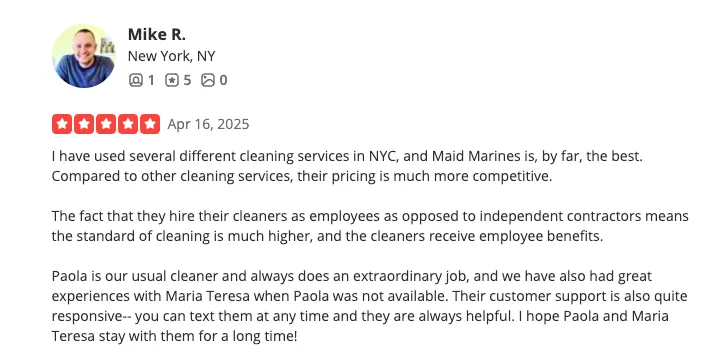
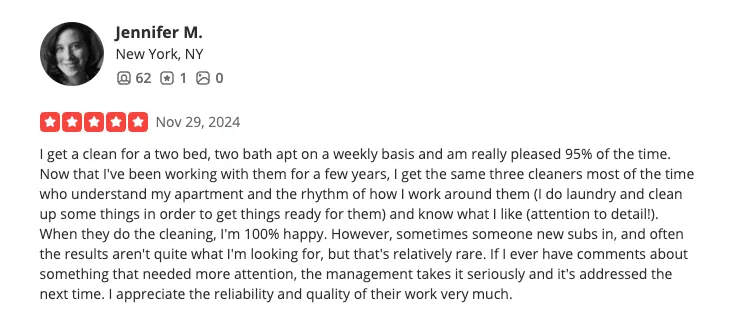
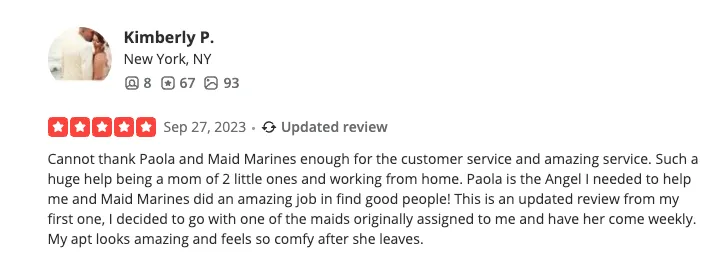
You pick your date and time on our booking page. You see your flat-rate price before you commit. We have cleaned over 100,000 homes across New York City and we know what it takes to do these jobs well in neighborhoods like East Gravesend, where the housing stock is practical and densely lived-in and the households are multi-generational and owner-occupied. Our cleaners are W-2 employees, not gig workers. They are vetted, insured, and they show up with the right products for your specific home.