
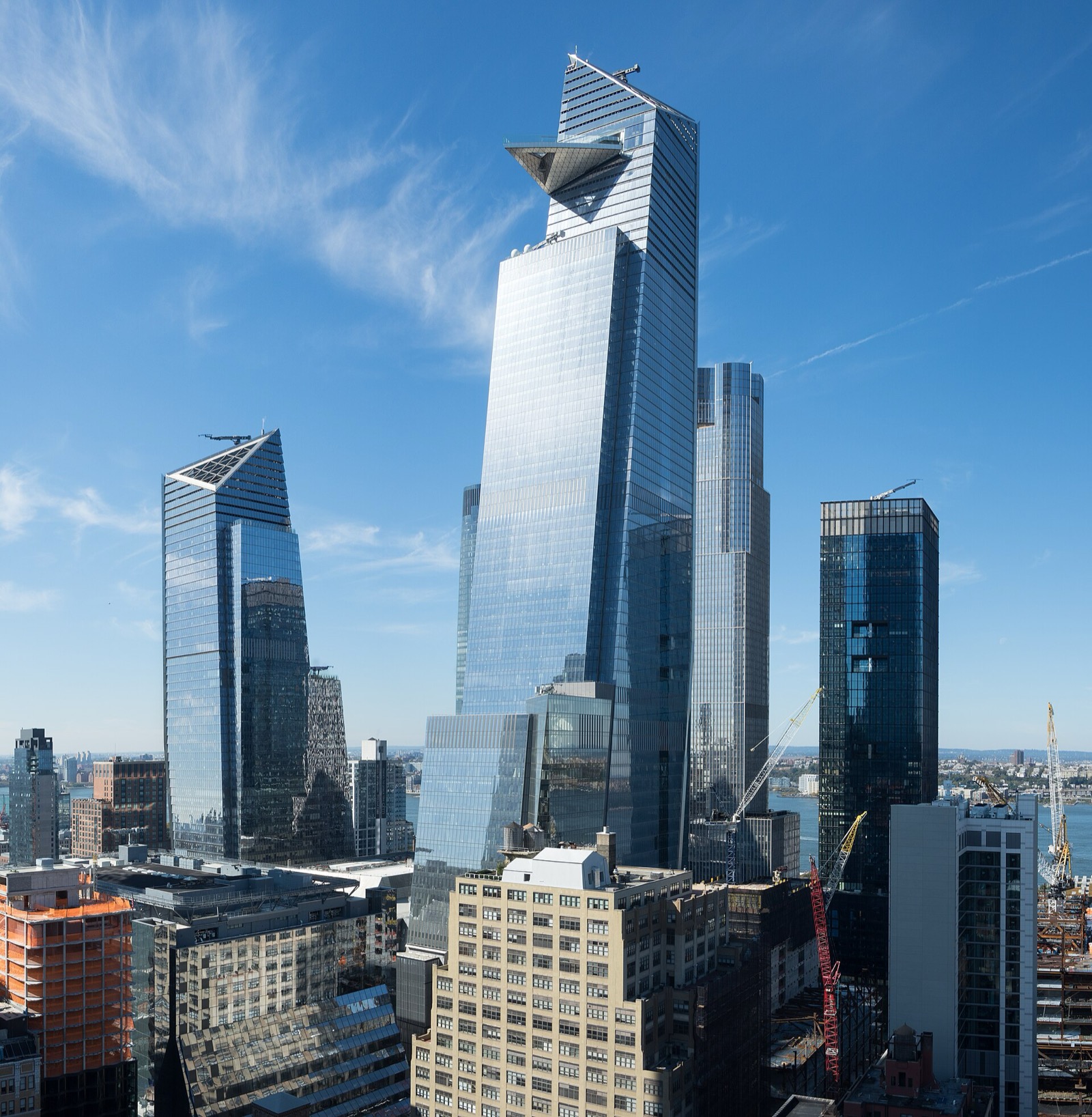
Hudson Yards is built on a platform over a live railroad. Every residential tower in the development sits on an engineered deck spanning 28 acres of Long Island Rail Road track, and commuter trains park and service beneath the apartments every day. This is not a metaphor for anything. It is a literal fact about what holds the floor under your feet when you stand in a Hudson Yards condo 80 stories above the rail yard. The largest private real estate development in American history since Rockefeller Center exists because engineers figured out how to build skyscrapers on top of moving trains. Understanding that fact changes how you think about everything else in this neighborhood, including what it takes to clean these apartments properly.
The $25 billion development that created a neighborhood from scratch on the Far West Side of Manhattan
The story of Hudson Yards starts with something that did not happen. New York City bid to host the 2012 Summer Olympics, and the Bloomberg administration proposed building a stadium over the LIRR rail yards between 30th and 33rd Streets as the centerpiece. The New York Jets would have been the anchor tenant. The MTA rejected the stadium proposal in 2005 under political pressure. New York lost the Olympics to London.
What survived the failed bid was the rezoning. The Hudson Yards Special District, approved in January 2005, covered 45 city blocks and designated the Far West Side as a new commercial and residential district. The $2.4 billion extension of the 7 train from Times Square to a new station at 34th Street and Eleventh Avenue made the development possible. Without that single subway stop, nothing that followed would have been built.
Related Companies, the developer, began construction of the platform in 2012. The engineering challenge was straightforward in concept and staggering in execution. Build a steel-and-concrete deck over 28 acres of active rail track, designed to flex and vibrate without disrupting train operations below, strong enough to support multiple skyscrapers, and maintain the whole thing permanently while both the trains and the buildings continue operating. The first phase opened on March 15, 2019.
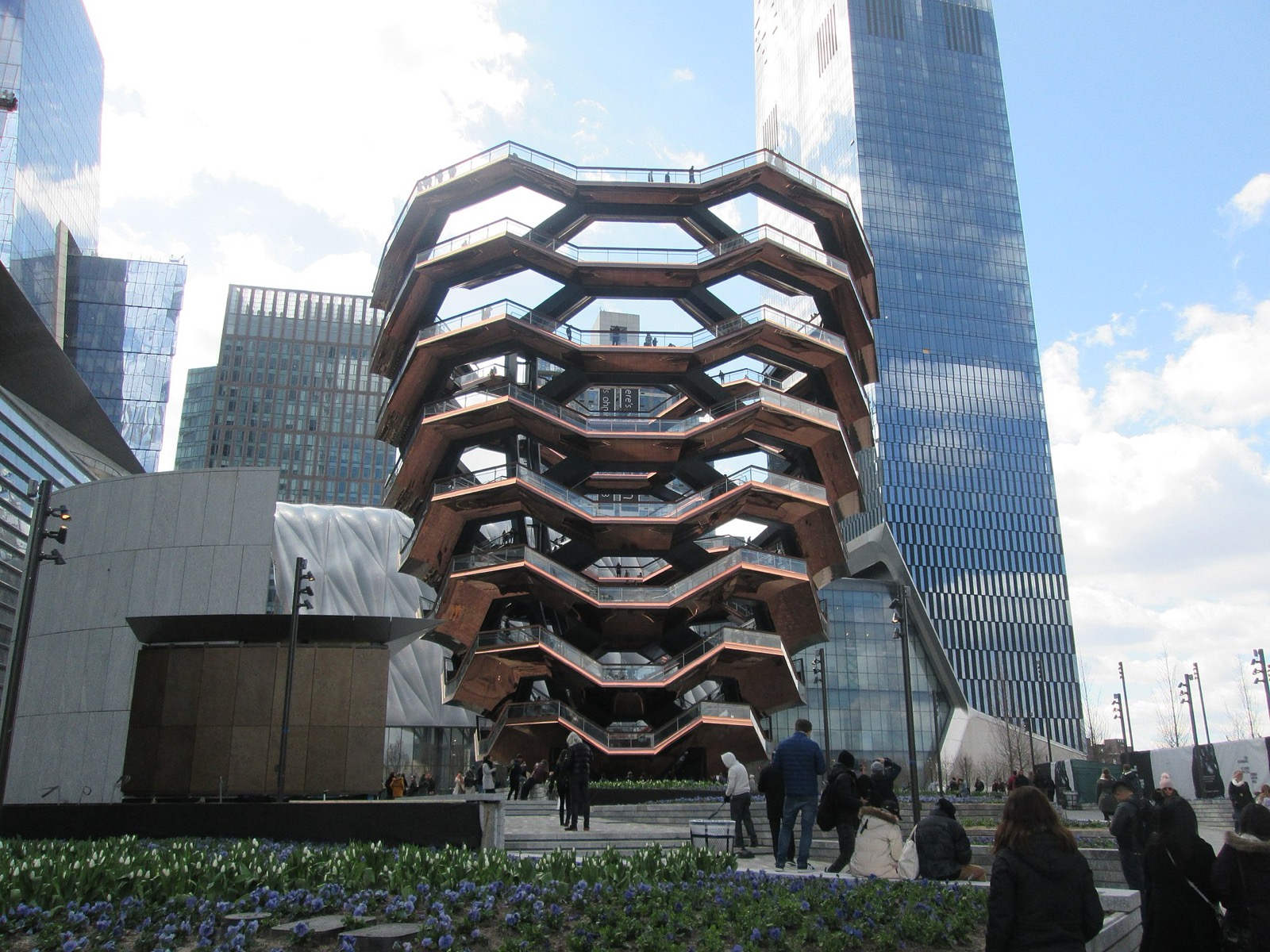
The Vessel cost $200 million and became one of the most photographed structures in New York before it became one of the most controversial
Thomas Heatherwick designed it. A 150-foot honeycomb of 154 interconnected staircases, 80 landings, and 2,500 steps, all clad in copper-colored steel panels. The whole thing weighs roughly 600 tons. It opened with the rest of Phase 1 in March 2019 and immediately became the visual icon of Hudson Yards. People came from around the world to climb it and photograph it from every angle. The views from inside the structure, looking out through the hexagonal openings toward the towers and the river, were genuinely compelling.
Then people began jumping. Multiple suicides from the upper landings led to closures, redesigns, and a public debate about whether the structure should ever have been approved without adequate safety barriers. The Vessel has been closed and partially reopened multiple times since. Its future, as of 2026, involves supervised access and modified programming. It remains one of the most discussed public art projects in the history of New York City, for reasons its designer never intended.
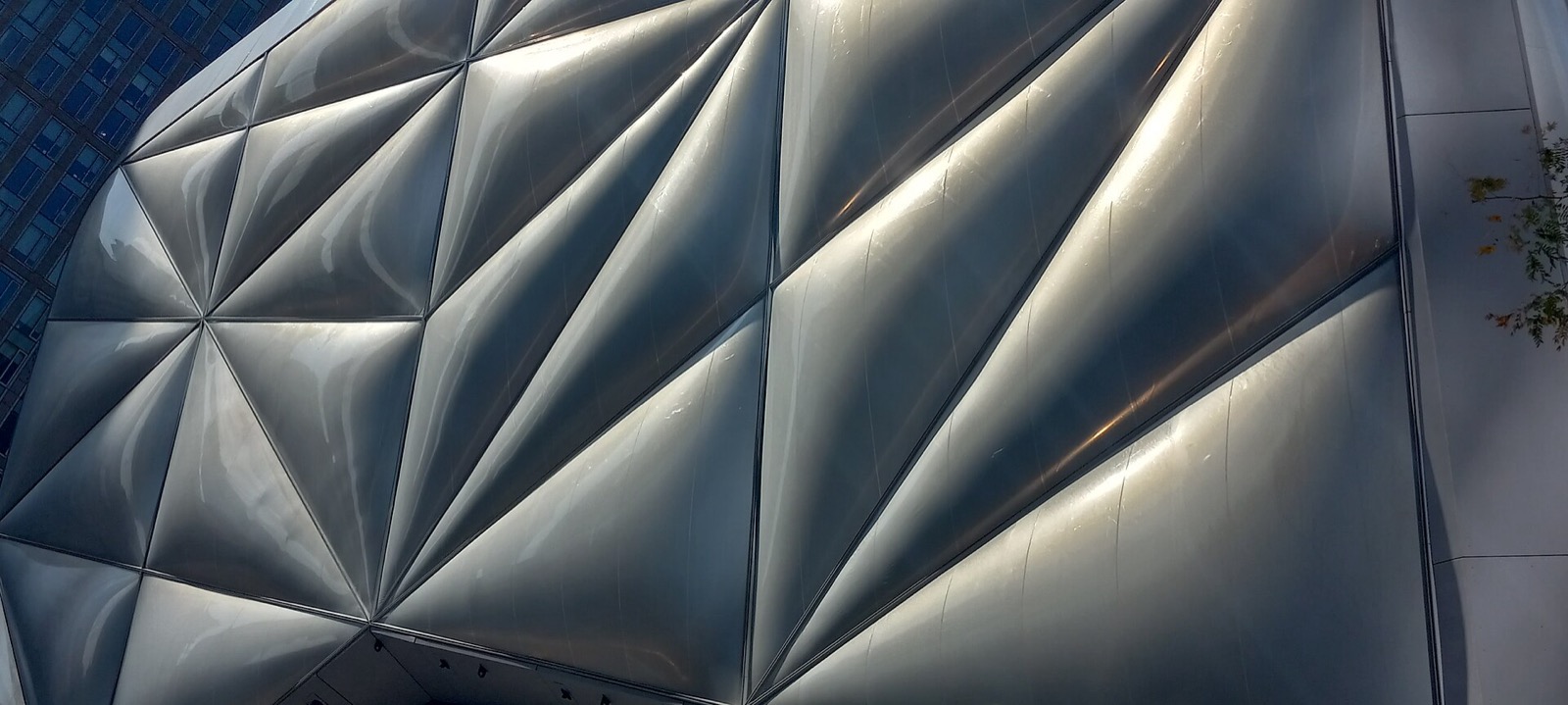
The plaza around the Vessel is the public center of the development. The Shed, the movable-shell performing arts center designed by Diller Scofidio + Renfro, sits at the base of 15 Hudson Yards. Its retractable outer shell weighs 3,800 tons and rolls on rails to create different performance configurations. It is a serious cultural institution with ambitious programming. The Edge observation deck at 30 Hudson Yards cantilevers 80 feet from the building face at 1,100 feet, making it the highest outdoor sky deck in the Western Hemisphere. The glass floor lets you look straight down to the street.
Every major architecture firm in the world competed for a commission here and the buildings reflect that ambition
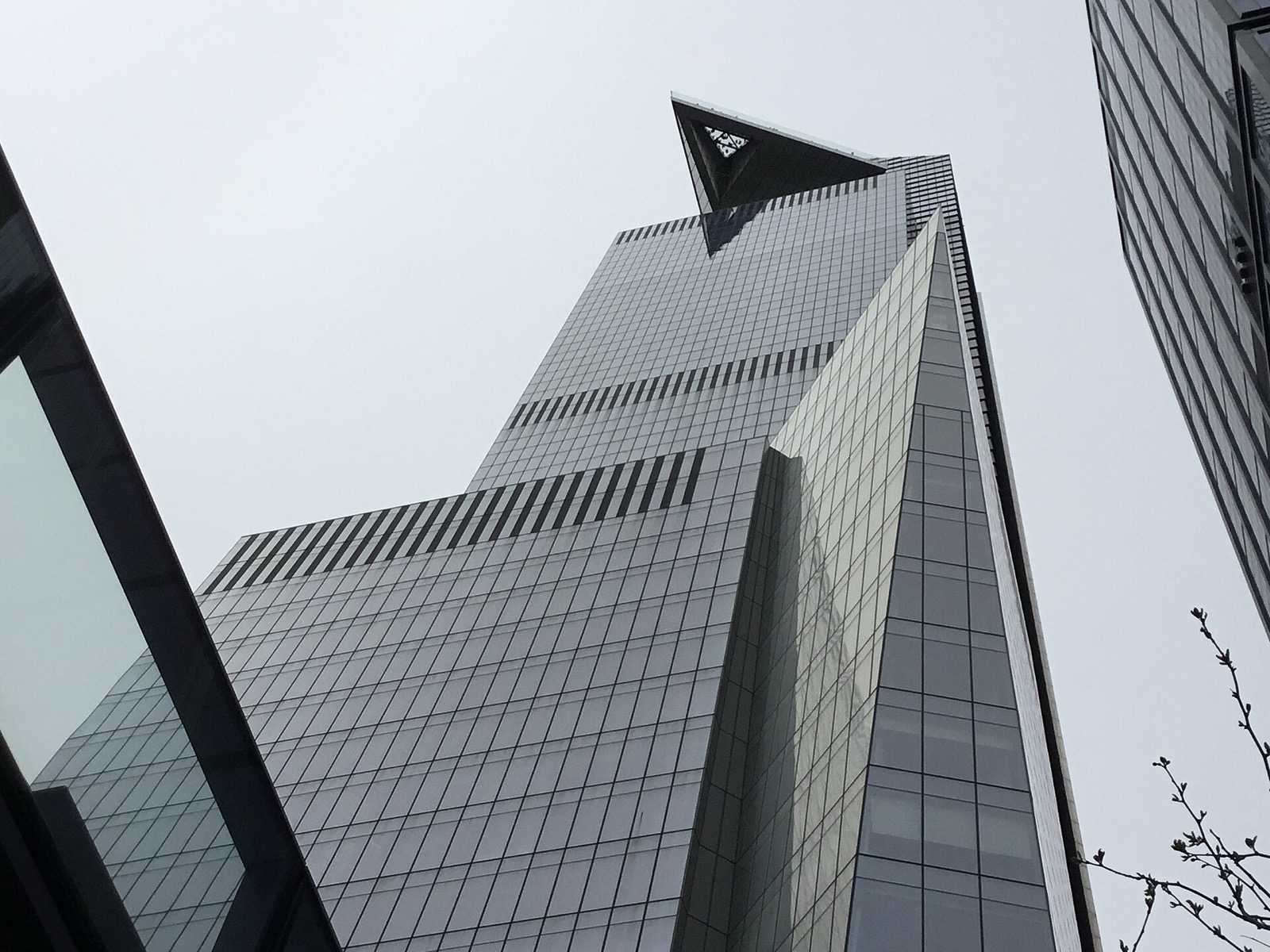
Kohn Pedersen Fox designed 30 Hudson Yards, the tallest building in the development at 1,268 feet and the third-tallest in New York City. It houses KKR, WarnerMedia, and the Edge. Skidmore, Owings and Merrill designed 35 Hudson Yards, the 88-story Equinox Hotel tower with luxury condominiums above floor 38. Diller Scofidio + Renfro with Rockwell Group designed 15 Hudson Yards, another 88-story tower with condominiums and the Shed at its base. 10 Hudson Yards, designed by KPF and completed in 2016, was the first tower finished and houses Coach/Tapestry’s headquarters.
The architectural roster reads like a shortlist for the Pritzker Prize. The developer used it deliberately. Marquee names generate press, press generates attention, attention generates sales. The result is a skyline that is genuinely impressive from across the Hudson River or from the High Line Spur that threads through the development. Whether the buildings work as a neighborhood rather than a collection of trophy commissions is a question that takes longer to answer.
The residential interiors match the exterior ambition. Wide-plank engineered hardwood floors. Engineered quartz or natural stone countertops. Italian cabinetry with soft-close hardware. Floor-to-ceiling glass on multiple exposures. In-unit washer/dryers. Central air. Smart home systems. These are finishes selected by interior designers for brochures and showrooms, and they require cleaning products and techniques matched to what they actually are. A quartz countertop does not respond to vinegar the way a granite one does. An engineered hardwood floor does not tolerate the steam mop that works fine on ceramic tile. Every surface in a Hudson Yards apartment was chosen for its appearance, and keeping that appearance requires knowing what will damage it.
Floor-to-ceiling glass towers need cleaning teams who understand luxury finishes and concierge logistics
The cleaning challenge in Hudson Yards is not dirt. These are new buildings. Nothing is crumbling. Nothing has decades of wax buildup or cast-iron radiators packed with dust from the 1940s. The challenge is precision on high-end finishes and the logistics of working inside a managed luxury development.
Start with the glass. Floor-to-ceiling windows on multiple exposures mean the interior surfaces show everything. Fingerprints, water spots from condensation, haze from the wrong cleaner. You cannot spray a window in direct sunlight and expect it to dry without streaks. You cannot use an ammonia-based product on glass next to finished wood or stone without risking damage to the adjacent surface. Our teams apply cleaner to the microfiber first, never directly to the glass, and work in sections to prevent drying lines. In a unit with glass on three sides that takes real time and care — which is exactly why the windows are an add-on you choose and see a price for, rather than something folded into the flat rate.
The countertops come next. Engineered stone, usually quartz composite, is the standard in Hudson Yards kitchens. Quartz resists staining better than marble or granite but it still etches from acidic products and dulls from abrasive pads. We use a pH-neutral cleaner and a soft microfiber. No vinegar. No citrus-based sprays. No scouring pads. The matte or polished finish you paid for stays the way you paid for it.
The flooring varies by tower and unit. Wide-plank engineered hardwood is common. It looks beautiful and shows every drop of standing water. We use a damp flat microfiber mop with a wood-safe cleaner, wrung out thoroughly. No steam. No wet mop. No product pooling at the seams. This is apartment cleaning for surfaces that were designed for showrooms and now have to survive daily life.
Then there are the building logistics. Every residential tower in Hudson Yards has a concierge desk, a doorman, a management office, and rules. Service elevator reservations are typically required, sometimes in advance. A Certificate of Insurance naming the building as additional insured is standard before any vendor enters. Some buildings require 48-hour notice. Some require vendor registration forms. A few require all of the above plus a background check.
We handle this. You tell us your building’s requirements when you book. Our dispatch team files the COI, books the service elevator, and coordinates with your concierge for every appointment. You do not manage the paperwork. We do. Our cleaners show up knowing where to go, which elevator to use, and what the building expects. This is not our first time working in a building with a lobby desk and rules. We clean luxury condos across Manhattan and the coordination is part of the service.
Hudson Yards residents are rarely home during cleaning and that changes the logistics entirely
The residential population here skews toward finance and technology professionals, international buyers with multiple residences, and high-net-worth individuals who travel frequently. A meaningful number of Hudson Yards units sit empty for weeks at a time. The owner is in London, or Hong Kong, or at their second property. The apartment collects a fine layer of dust on every dark surface, on the countertops, on the glass, on the wide-plank floors. When they return, they want the apartment to feel lived-in and clean, not abandoned.
A biweekly or monthly recurring cleaning service handles this. We coordinate access through your concierge, clean the unit while you are away, and it is ready when you get back. If you want a deep clean before a specific return date, we can schedule that with short notice as long as building access is arranged.
For residents who are home, the calculation is different. A two-bedroom apartment in 15 or 35 Hudson Yards takes roughly two and a half to three hours to clean properly. That is enough time to walk the High Line south to Chelsea and back, eat lunch at Mercado Little Spain, or take in a show at the Shed. Hudson Yards was designed with the idea that everything you need is within the development or a short walk. Use that while we handle the surfaces that need more care than a quick wipe.
The High Line connects Hudson Yards to a city with actual history and the contrast is part of the experience
The most common critique of Hudson Yards is that it has no soul. Everything was built at the same time by the same developer to the same master plan. There are no old buildings with stories. No small businesses that survived from an earlier era. No architectural accidents. No texture accumulated over decades of organic change. The neighborhood is six years old. The question of whether it will develop genuine character over time or remain a luxury campus is still open.
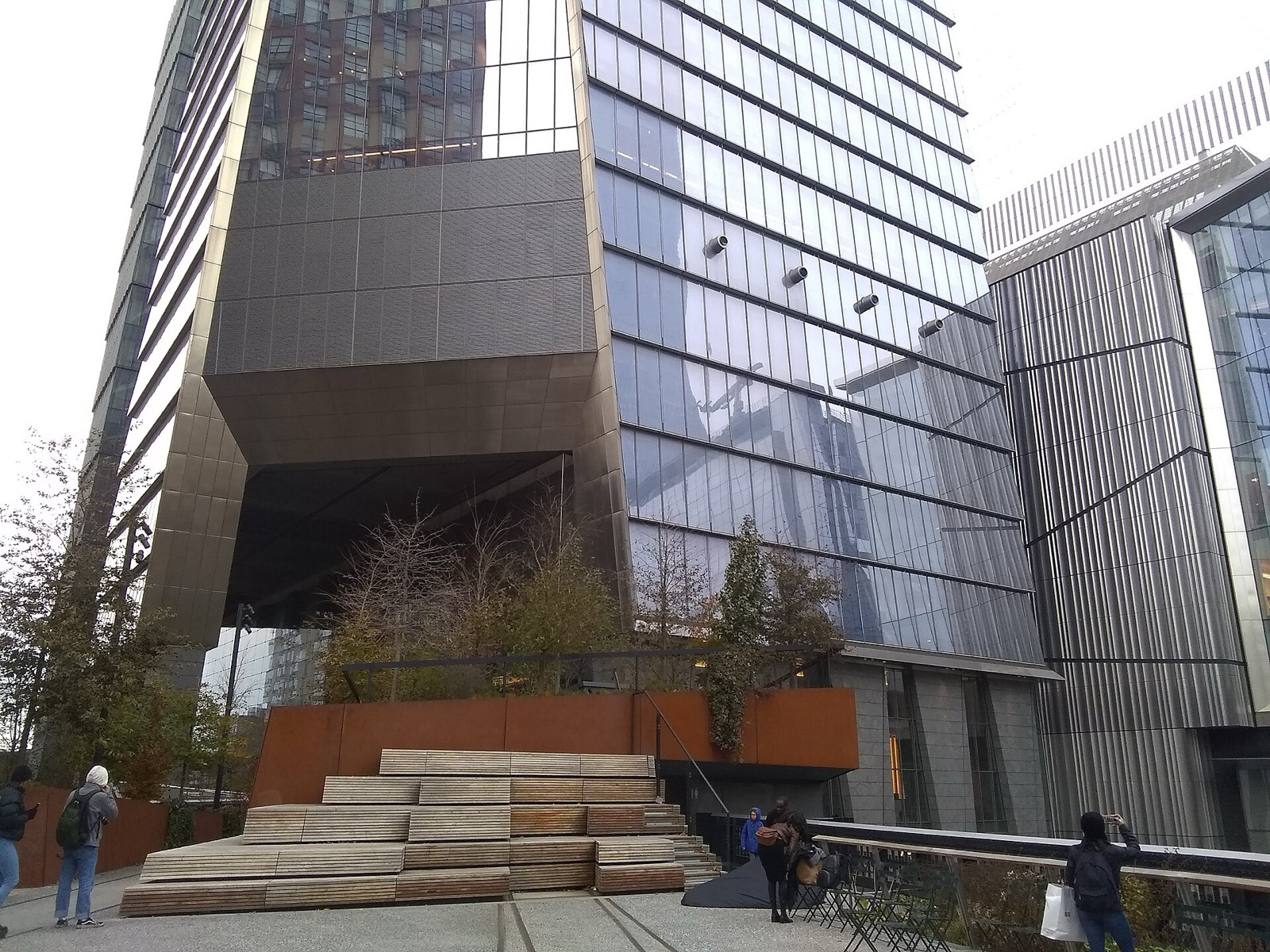
The High Line Spur, which extends into the heart of the development, provides the strongest physical connection to existing Manhattan. Walk south on the elevated park and within ten minutes you are in the middle of Chelsea’s gallery district, surrounded by converted warehouses, 19th-century rowhouses, and the accumulated layers of 200 years of city life. Walk north and you are in Hell’s Kitchen, where tenements from the 1880s share blocks with new glass towers. The High Line literally bridges the gap between Hudson Yards and the city around it.
Jose Andres understood something about this when he designed Mercado Little Spain for the ground floor of the Shops at Hudson Yards. He built a sprawling Spanish food market representing regional cuisines from the Basque Country to Galicia, with pintxos bars, a jamon counter, a paella station, and a proper Spanish bakery. In a development that critics call sterile, the Mercado has been cited repeatedly as the best reason to visit Hudson Yards. It is the most human space in the development, noisy and aromatic and crammed with small plates in a way that the glass towers above never feel.
What booking looks like for Hudson Yards residents
You pick your date and time on our booking page. You see your flat-rate price before you commit. Tell us your building’s access requirements once and we handle the concierge coordination, COI filing, and service elevator booking for every visit. If your unit has specific finishes or surfaces you want handled carefully, note it when you book and we flag it permanently on your account.
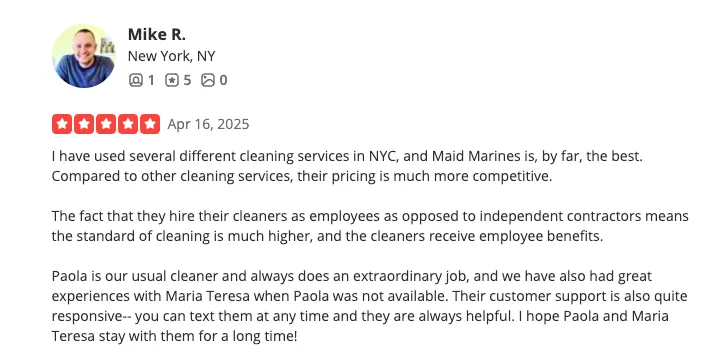
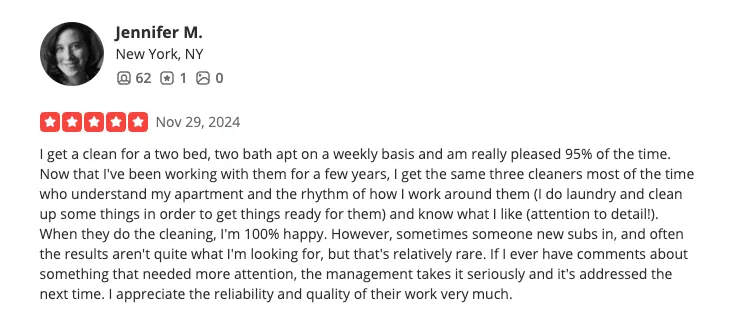
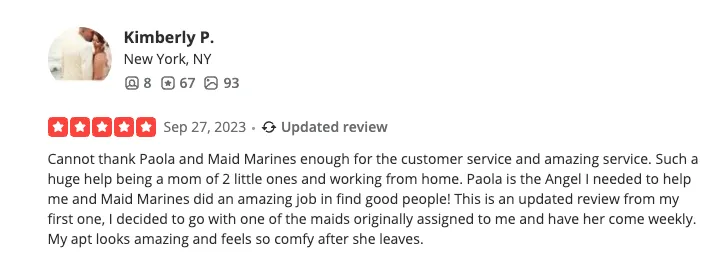
Our cleaners are W-2 employees, not gig workers pulled from an app. They are vetted, insured, and they show up with products matched to the surfaces in your apartment. If you want the same team for every visit because you are particular about how your space is maintained, we do that. If you need turnover cleaning between short-term guests, we handle that too.
We serve Hudson Yards and the surrounding neighborhoods, including Chelsea and Hell’s Kitchen. Our teams use the 7 train to 34th Street-Hudson Yards station, one stop from Times Square. The development was built around that station. We arrive on time because the transit was designed to make that possible.