
The West Village is the part of Manhattan where the streets have no logic and the buildings have no elevator and a three-story brick rowhouse from 1830 costs more than most houses in America. It is west of Seventh Avenue, south of 14th Street, and it exists because the city could not impose its grid here. The streets were already built when the commissioners arrived in 1811. The old farm roads and property lines from the Dutch colonial era were too entrenched to demolish. So the grid went around the neighborhood, and everything that makes the West Village different from the rest of Manhattan follows from that one fact.
The streets curve. They intersect at odd angles. You can walk three blocks and end up where you started. The sightlines are short, the buildings are low, the trees arch over the sidewalks in summer, and the pace of life on a Tuesday afternoon is quieter than most people expect from the center of New York City. This is intentional. The people who pay $8,000 a month to live in a fourth-floor walk-up on Perry Street are paying for the quiet as much as the address.
That quiet, and the 200-year-old architecture that produces it, is also what makes cleaning here different from cleaning anywhere else in Manhattan.
West Village Federal rowhouses from the 1820s have surfaces that cannot be replaced
The defining building of the West Village is the Federal-style rowhouse. Three and four stories of red or yellow brick, built between 1820 and 1840 for the tradesmen, sailors, and dockworkers who lived near the Hudson River piers. The house at 17 Grove Street, built in 1822, is considered the finest surviving Federal rowhouse in Manhattan. Its neighbors on Grove, Perry, Charles, Bank, and Barrow Streets were built in the same decades and have been standing ever since.
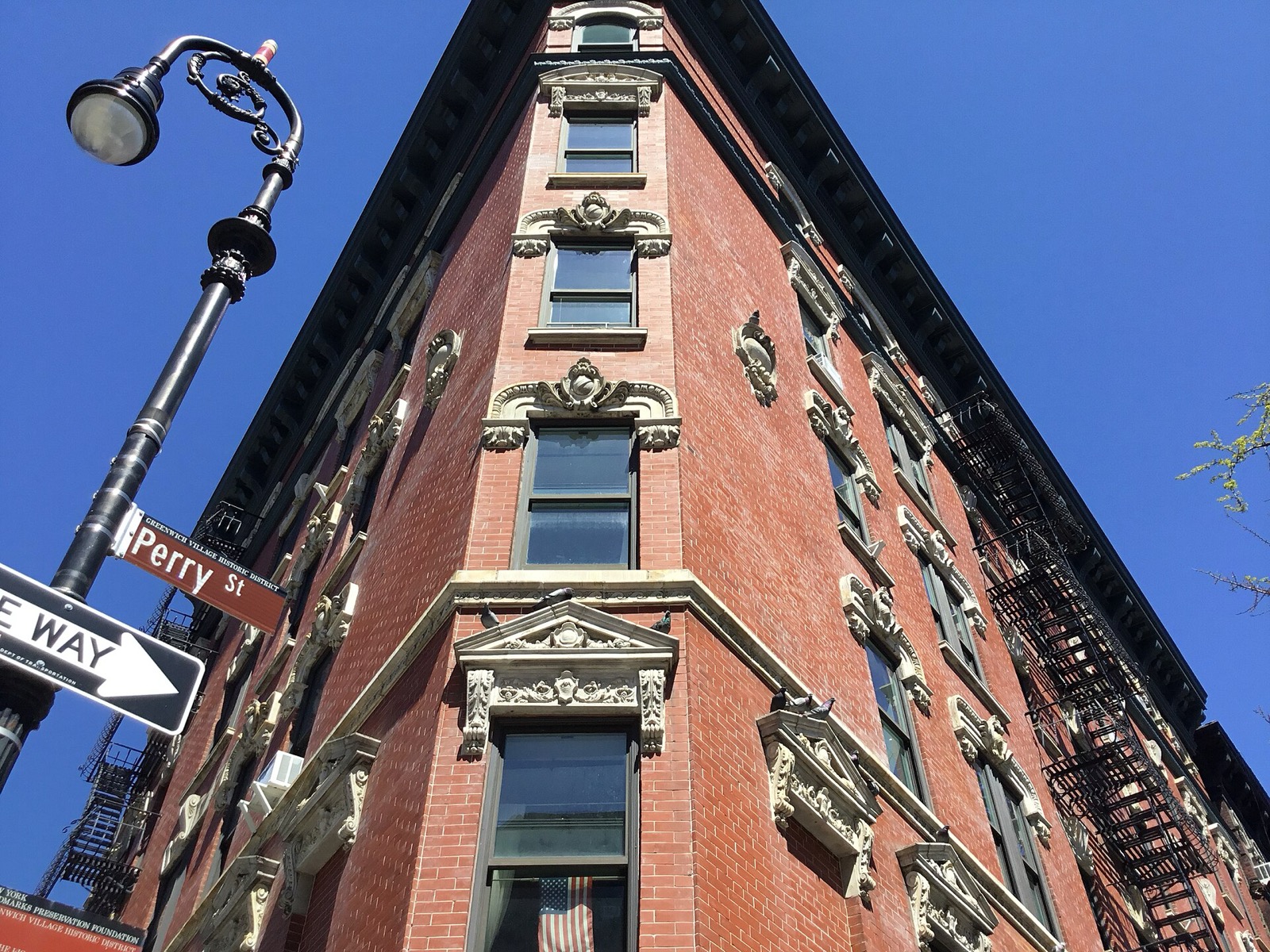
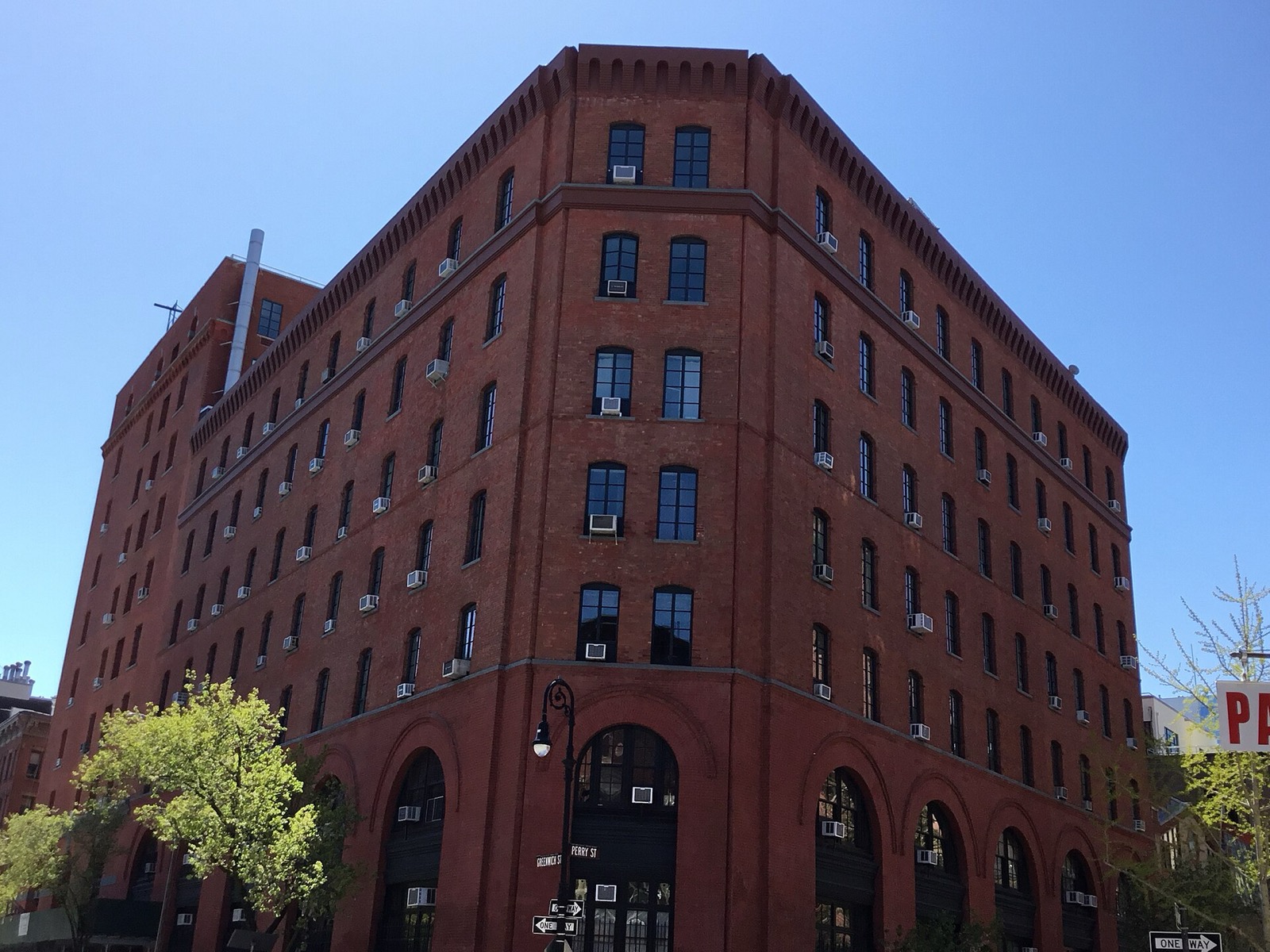
After the Federal period came the Greek Revival. The dominant type on most West Village blocks is the Greek Revival rowhouse from the 1835 to 1860 era. Stoop entrances, ornate doorways with pilasters and entablatures, larger windows, and the brownstone basements that became standard in the mid-19th century. Together, the Federal and Greek Revival buildings create a streetscape of remarkable consistency. The scale is intimate. Almost nothing in the West Village is taller than four stories.
Both building types share a problem that modern construction does not have. The interior surfaces are original or nearly original, and they cannot take what a modern cleaning product will dish out. The plaster walls have decorative molding that chips under abrasive contact. The wide-plank floors are often softwood, not the red oak that became standard later in the century, and they scratch more easily. Marble entry floors etch permanently if you use anything acidic. The woodwork, the mantels, the hand-planed door casings and ceiling medallions are handmade objects from a century when that craft still existed.
We clean these surfaces with pH-neutral products, dry microfiber on all woodwork, and nothing containing silicone on any original surface. Silicone-based polishes are the most common mistake. They build up over years into a cloudy film on antique wood that obscures the grain and is extremely difficult to reverse. The whole Greenwich Village Historic District exists to protect this building stock from being demolished or altered beyond recognition. Our cleaners treat the interiors with the same respect.
Jane Jacobs wrote the most important book about cities from her house on Hudson Street
The most influential work of urban planning ever published was conceived and written from 555 Hudson Street in the West Village. Jane Jacobs moved there in 1947 and spent the next two decades observing the street life outside her window. What she saw became “The Death and Life of Great American Cities,” published in 1961, a book that changed how the entire field of urban planning thinks about what makes cities work.
Jacobs described what she called the “sidewalk ballet” of Hudson Street. The shopkeeper sweeping, the schoolchildren passing, the delivery man, the neighbor with the dog. She argued that the short blocks, mixed uses, old buildings, and dense pedestrian traffic of the West Village were not signs of blight or decay. They were the features that made a neighborhood function. The book was a direct attack on the dominant planning ideology of the era, which wanted to bulldoze neighborhoods like the West Village and replace them with highways and housing projects.
She did more than write about it. When Robert Moses proposed the Lower Manhattan Expressway, a ten-lane elevated highway that would have demolished everything between Spring Street and Broome Street and destroyed SoHo and most of the south Village, Jacobs organized the community opposition that stopped it. The expressway was never built. The neighborhood still exists because she lived here and fought for it.
That combination of intellectual work and physical activism made the West Village the test case for a way of thinking about cities that now feels obvious but was genuinely radical in 1961. The short blocks, the mixed-age buildings, the irregular streets, the human scale that Jane Jacobs pointed to as evidence are still here. They are also the features that make the neighborhood expensive to live in and particular to clean.
The Stonewall uprising happened on Christopher Street and changed American civil rights
The West Village’s identity as the center of gay life in New York City developed after World War II. Gay men and lesbians who had been brought to the city by wartime service found cheap housing and a tolerant social atmosphere in the rowhouses west of Seventh Avenue. By the late 1950s, Christopher Street and the surrounding blocks had a thriving if underground gay bar culture. The bars were raided regularly by police. The patrons were arrested, harassed, and publicly humiliated.
On June 28, 1969, the patrons of the Stonewall Inn at 51-53 Christopher Street fought back. The police had come for another routine raid of a Mafia-owned gay bar and the crowd refused to comply. The uprising lasted several nights. Within weeks the Gay Liberation Front had formed. Within a year the first Pride March had taken place. The Stonewall Inn was designated a National Historic Landmark in 2016 and became the centerpiece of the first National Monument dedicated to LGBTQ history.
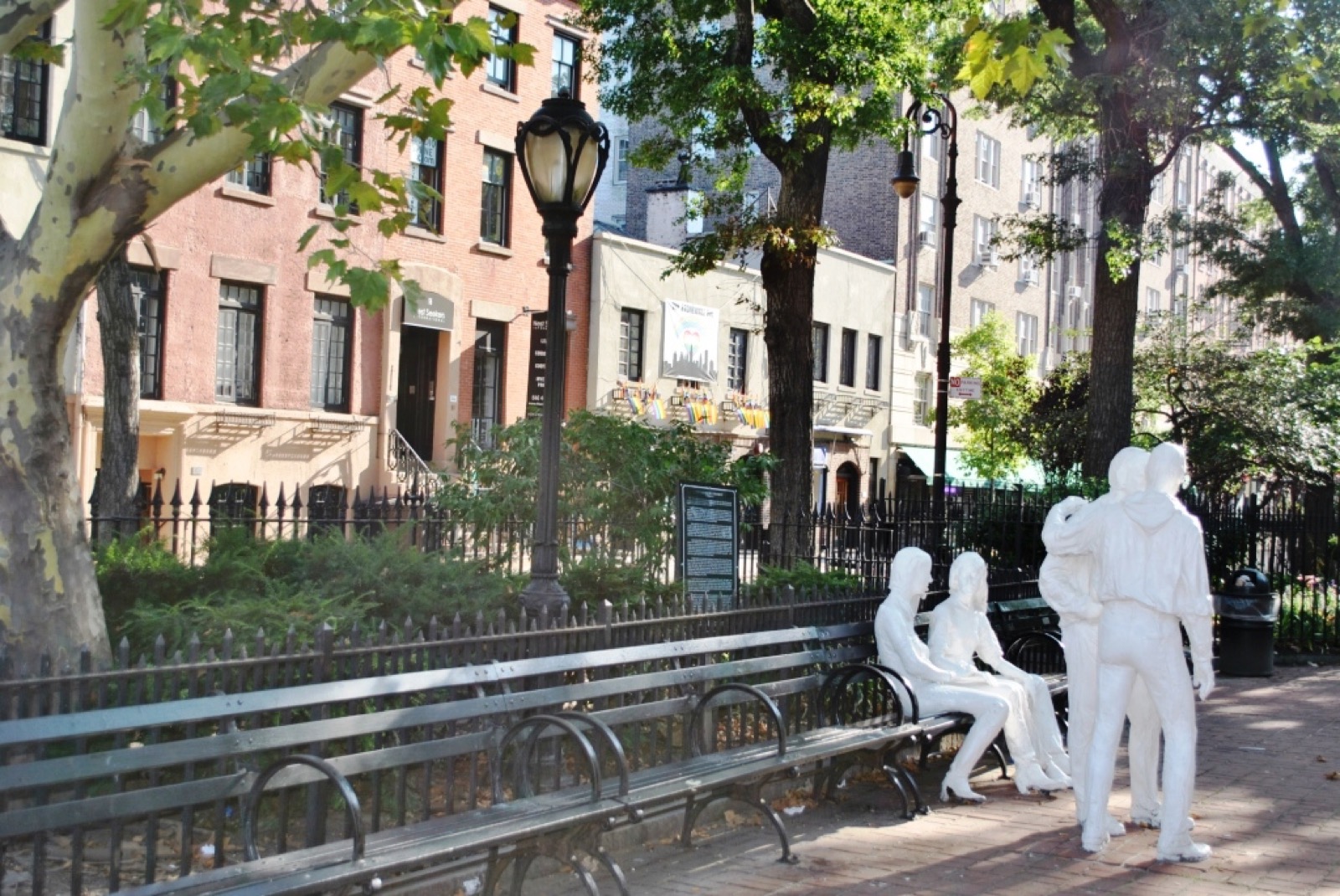
Christopher Street today is quieter than it was in the decades after Stonewall. Rising rents have displaced many of the bars, bookshops, and community spaces that once lined the street. The Stonewall Inn is still open, still serves drinks. Julius Bar on West 10th Street, the oldest gay bar in New York City, is still operating. The rainbow crosswalks still mark the intersection at Sheridan Square. The neighborhood is expensive enough now that the community it sheltered can barely afford to live here anymore. But the buildings are the same buildings. The streets are the same streets. And the march still passes through every June.
The literary mythology of the West Village is layered into specific addresses
The West Village accumulates cultural history the way its rowhouses accumulate dust. Address by address, decade by decade.
Edna St. Vincent Millay lived at 75 1/2 Bedford Street in the 1920s. It is the narrowest house in Manhattan at 9.5 feet wide, three stories tall, built in 1873 in a former carriage alley. Cary Grant and John Barrymore also lived there at different times. It is still a private residence and still inhabited.
e.e. cummings lived at 4 Patchin Place from 1923 until his death in 1962. Patchin Place is a tiny private court off West 10th Street, a row of ivy-covered 19th-century houses behind an iron gate. He wrote there for nearly 40 years. The house has not changed substantially.
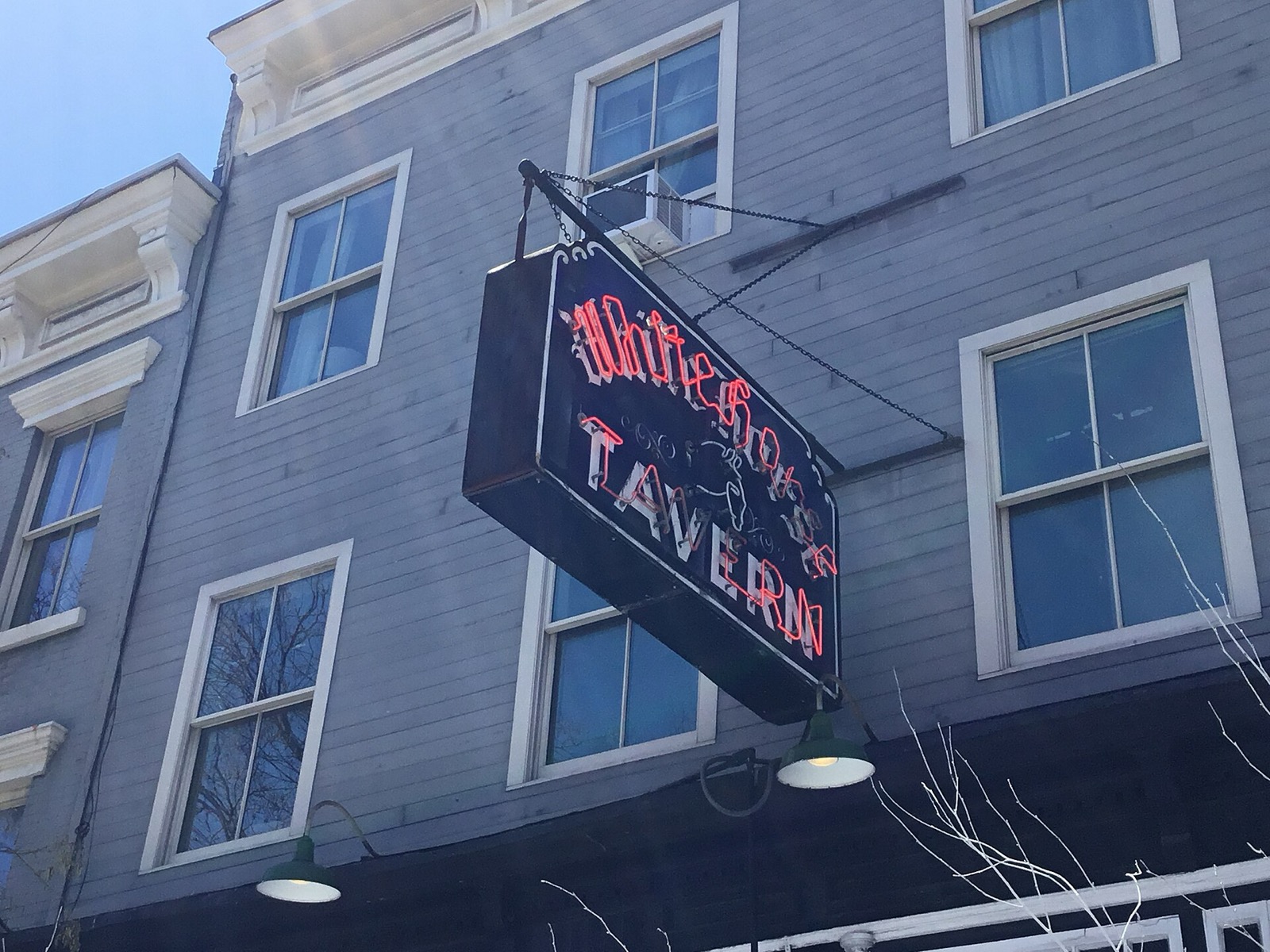
Dylan Thomas made the White Horse Tavern at 567 Hudson Street his second home during his four New York visits in the early 1950s. On November 9, 1953, he reportedly declared he had drunk 18 straight whiskeys, collapsed, and was taken to St. Vincent’s Hospital, where he died four days later. The bar has been open since 1880. The booths look essentially the same. It still serves burgers and fish and chips and the mythology is included at no extra charge.
Bob Dylan arrived in the West Village in January 1961 and lived at various addresses including 161 West 4th Street. He played the Gaslight Cafe and Cafe Wha? on MacDougal Street. Within two years he had written “Blowin’ in the Wind” and “The Times They Are a-Changin’” and the folk music revival was underway.
These are not plaques on buildings in a neighborhood that has moved on. The buildings are still residential. The bars are still bars. The streets are the same width and the cobblestones on some blocks are the same cobblestones. Walking the West Village is walking through a place that has been continuously inhabited and mythologized for 200 years.
West Village townhouses are the most expensive per-square-foot residential properties in New York
The real estate economics of the West Village are the logical end point of what happens when you protect a neighborhood’s building stock, restrict new construction, and let demand do the rest. The Greenwich Village Historic District, designated in 1969, covers most of the West Village and prevents demolition or incompatible new development. The supply of housing is essentially fixed. The demand is not.
A one-bedroom co-op in a West Village walk-up rents for $4,500 to $7,500 a month. A two-bedroom starts at $6,000 and goes well past $12,000. A full townhouse on Perry or Grove or Charles Street sells for $8 million to $30 million. The very qualities that made these buildings feel cramped to their 19th-century working-class occupants, the low ceilings, narrow staircases, original plank floors, no elevator, are now priced as luxury features. The transformation from longshoremen’s housing to celebrity address is one of the most complete in urban history.
The practical implication for cleaning is straightforward. Residents at this price point expect care that matches the investment. A $10 million townhouse with original 1830s woodwork is not getting the same cleaning approach as a postwar rental in Midtown. Our cleaners know the difference. They have cleaned enough West Village interiors to understand what products go on what surface and why it matters.
West Village co-ops and walk-ups have specific logistics that matter for cleaning access
Most residential buildings in the West Village are walk-ups. Four and five stories, no elevator, narrow stairwells, and the particular physical reality of carrying equipment up four flights in a building that was designed for people who owned less than modern New Yorkers do. We factor the stairs into scheduling but we do not charge extra for them.
The co-op boards in the West Village are serious about vendor access. Most buildings west of Seventh Avenue require 24 to 48 hours advance notice before any outside worker enters. Many require a Certificate of Insurance naming the building as additional insured. We furnish COIs regularly and coordinate with management offices as a routine part of scheduling. If your building has a lockbox or a superintendent who holds keys, we work with whatever system is in place.
The waterfront towers on West Street, the Richard Meier glass buildings on Perry Street and the newer construction along the Hudson, are a different category entirely. Doorman buildings, concierge desks, elevator scheduling, freight elevator requirements for heavy equipment. We handle those logistics too. The point is that the West Village has a wider range of building types and access procedures than most neighborhoods in Manhattan, compressed into a few dozen blocks. We have cleaned in most of them.
Cleaning in the West Village comes down to knowing what not to do
The recurring theme across every building type in the West Village is restraint. The neighborhood is full of surfaces that punish aggressive cleaning. Plaster that marks when wet. Softwood that scratches when scrubbed. Marble that etches with acid. Antique wood that clouds under silicone. Cast-iron radiator fins packed with dust that burns off every October. High ceilings that collect what you cannot reach.
Our teams carry step ladders for the crown molding and ceiling fixtures. They use radiator brushes and vacuum attachments to clean between the fins instead of wiping the top. They use pH-neutral solutions on floors, dry microfiber on woodwork, and they know not to spray anywhere near a framed piece on the wall. Every visit follows the same protocol because consistency is what keeps a 200-year-old home in condition.
For the first visit in a West Village home, we recommend a deep clean. The deep clean resets every surface: inside cabinets, behind furniture, baseboards, window tracks, radiator fins, and everything above eye level that has been collecting dust for months or years. After that initial reset, recurring apartment cleaning or house cleaning on a weekly or biweekly schedule keeps it maintained. The difference between the first visit and the second is significant in homes with this much architectural detail.
For residents moving in or out, our move-in and move-out cleaning covers the full scope. West Village walk-ups turn over regularly despite the prices, and the condition a landlord leaves a unit in varies widely. We clean every surface the next tenant will open or touch.
What booking looks like for West Village residents
You pick your date and time on our booking page. You see your flat-rate price before you commit. If your building requires a COI or advance vendor notice, you tell us once and we store it permanently on your account. If your townhouse has different surfaces on every floor, we note the details and use the right product on each one. If your dog needs the same team every visit, we assign them. Our cleaners are W-2 employees, not gig workers. They are vetted, insured, and they show up with the right products for your specific home.
We serve the West Village and the surrounding neighborhoods, including Greenwich Village, Chelsea, Tribeca, and Hudson Yards. Our teams use the Christopher Street station on the 1 train, the 14th Street stations on the A, C, E, and L, and the West 4th Street station on the F and M. Transit access to the West Village is excellent and so is our availability.
Your afternoon belongs at Via Carota on Grove Street, or walking the Hudson River Greenway south toward Tribeca, or sitting in Abingdon Square Park with a coffee while the Greenmarket sets up around you. The cleaning is what we handle.