
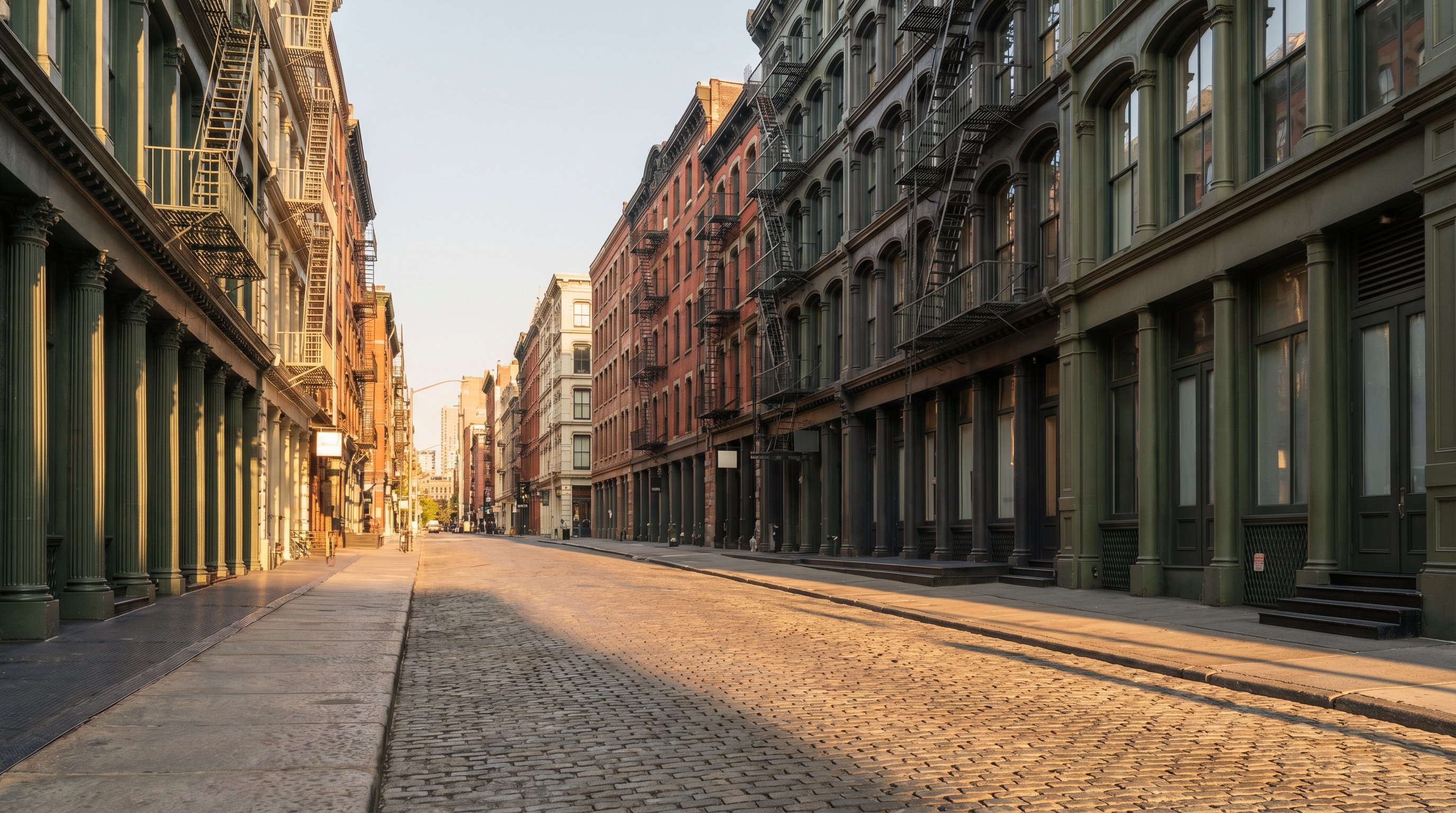
The streets are quiet in Tribeca. That is always the first thing people notice. You come south from the noise and compression of Canal Street into a neighborhood where the buildings drop to five and six stories, the cobblestones on Washington Street absorb traffic noise, and the sky opens up above you. The sidewalks are wide and nearly empty. No tourist crowds, no fast-food chains on every corner, no bodegas hawking lottery tickets. Just the low hum of a neighborhood that has become the most expensive residential zip code in New York City while somehow remaining one of the most pleasant places to spend an afternoon.
Tribeca is not a neighborhood that announces itself. It does not need to. The name alone, coined in 1971 by a community group looking for artist zoning rights, carries enough weight to stop a conversation in any city in the world. The Triangle Below Canal. A 60-block stretch of lower Manhattan that has been, within living memory, three entirely different places: a dying industrial zone of produce merchants and cold-storage warehouses, a rough-edged artist enclave full of painters in illegal loft arrangements, and finally the most expensive and celebrity-dense residential neighborhood in the United States.
The neighborhood that invented its own name started as the largest produce market in America
Before anyone called it Tribeca, this was the Washington Market district. Built in 1813 near the Hudson River, the market grew into the largest wholesale produce hub in the United States by the 1830s. About one-eighth of all produce in the nation passed through New York City, and most of it came through here. The market spread for blocks along Washington, Greenwich, and West Streets, fed by ships arriving at the Hudson River piers and later by railroad cars from across the country. Egg merchants, coffee importers, tea dealers, butter wholesalers, and meat-packers occupied virtually every building. The streets were heavy with delivery wagons, and later trucks. The neighborhood smelled of commerce for 150 years.
The buildings rose to serve the market. Through the 1850s and 1880s, developers used a new technology called cast-iron construction to put up five-to-eight story commercial lofts as fast as they could. Prefabricated iron facades with arched windows, fluted columns, and ornamental pediments were bolted together over masonry frames. The result was an architecture of maximum openness: massive arched windows flooding deep floor plates with natural light, flexible column-free interiors, and romantic street-level facades painted in whites, creams, and grays. These buildings were built for commerce. They would wait a century for someone to realize they were beautiful.
When the market died the artists arrived and renamed everything
The demolition of Washington Market began in the late 1950s. The city cleared blocks of warehouses to make way for the World Trade Center, the expansion of City Hall, and the widening of West Street. By the early 1970s, the commercial tenants who had operated here for over a century were gone. What remained were vast, empty loft spaces with soaring ceilings and extraordinary light, and nobody particularly wanted them.
The artists wanted them. The same forces that had colonized SoHo to the north pushed painters, sculptors, and filmmakers into these abandoned commercial spaces. Robert Rauschenberg, one of the most important American artists of the 20th century, worked in Tribeca lofts from the 1960s onward. Richard Serra, the monumental sculptor whose massive steel installations responded directly to the industrial scale of the neighborhood, maintained his studio here for decades. The artists found the bones of the neighborhood magnificent in a way that no one had bothered to articulate before.
They needed a name. The old Washington Market identity felt industrial and dead. A community group, probably the Washington Market Artists Association or the Triangle Below Canal Block Association, coined “TriBeCa” in 1971 or 1972, modeled on the SoHo acronym that had worked so brilliantly for the neighborhood to the north. They reportedly considered “Lo Cal” and “So So” as alternatives before settling on the one that stuck. The New York City Planning Commission formalized the name, and by 1976 the Landmarks Preservation Commission had designated four historic districts covering more than 60 blocks. The naming gave the neighborhood an identity. The landmark designation protected its architecture. Within 15 years, the invented name had made this place internationally famous.
Robert De Niro bet his career on the neighborhood and won
The single most important figure in Tribeca’s modern identity moved here in the late 1970s. Robert De Niro had already won an Academy Award. He could have lived anywhere in the world. He chose the empty warehouses south of Canal Street and then spent the next four decades building institutions that anchored the neighborhood’s cultural life.
In 1989, De Niro and producer Jane Rosenthal founded TriBeCa Productions. In the early 1990s, he converted the Martinson Coffee building on Greenwich Street into the Tribeca Film Center, a multi-use production, screening, and office complex at 375 Greenwich Street. The project was deliberate neighborhood building. De Niro understood that Tribeca’s identity could be anchored in film the way SoHo’s was anchored in visual art.
Then came September 11, 2001. The World Trade Center stood two blocks from the heart of Tribeca. The collapse filled the streets with ash, debris, and toxic dust. Thousands of residents were evacuated for weeks. Restaurants shuttered. The economic life of lower Manhattan was obliterated overnight.
De Niro’s response was characteristically direct. In 2002, he, Rosenthal, and partner Craig Hatkoff launched the Tribeca Film Festival specifically to restore economic and cultural life to the neighborhood. The first year drew 150,000 attendees. The festival, now entering its 25th year in June 2026, has grown into one of the most significant cultural events in the United States, drawing approximately 150,000 attendees annually and producing over 600 screenings across film, television, podcasts, games, and immersive media. Its founding purpose was the revival of a wounded neighborhood, and that purpose succeeded beyond anything its founders imagined.
The Odeon and the birth of downtown restaurant culture
In October 1980, Keith McNally, his brother Brian, and Lynn Wagenknecht opened The Odeon at 145 West Broadway. When it opened there was not much in this neighborhood. There were certainly no restaurants. McNally and Wagenknecht had been inspired by the bistros of Paris and wanted to create a restaurant that was convivial and informal but served genuinely excellent food. They picked a former cafeteria with a beautiful Art Deco neon sign and created something that had not existed in America before: a come-as-you-are restaurant that was better than a coffee shop but had no captains or tails.
The downtown art world showed up immediately. Andy Warhol, Jean-Michel Basquiat, Keith Haring, Roy Lichtenstein, and Robert De Niro became regulars. The Saturday Night Live cast ate here. Jay McInerney put The Odeon on the cover of Bright Lights, Big City. The restaurant proved that a neighborhood with no restaurants could become a restaurant neighborhood overnight if the food and the energy were right. The Odeon is still there, still excellent, still operating in its original space with the original neon sign. It turned 46 in 2026.
The restaurant culture that followed is the neighborhood’s greatest living achievement. Locanda Verde at the Greenwich Hotel serves Andrew Carmellini’s Italian cooking to a packed room of celebrities, film industry figures, and neighborhood regulars at every meal of the day. Nobu at 105 Hudson Street has been the flagship of Japanese-Peruvian fusion since 1994. Bubby’s on Hudson Street has served all-American comfort food since 1990. Tiny’s and the Bar Upstairs occupies three interconnected floors of a pink-painted landmarked townhouse on West Broadway. Per capita, Tribeca may have more excellent restaurants within a few square blocks than any neighborhood in New York.
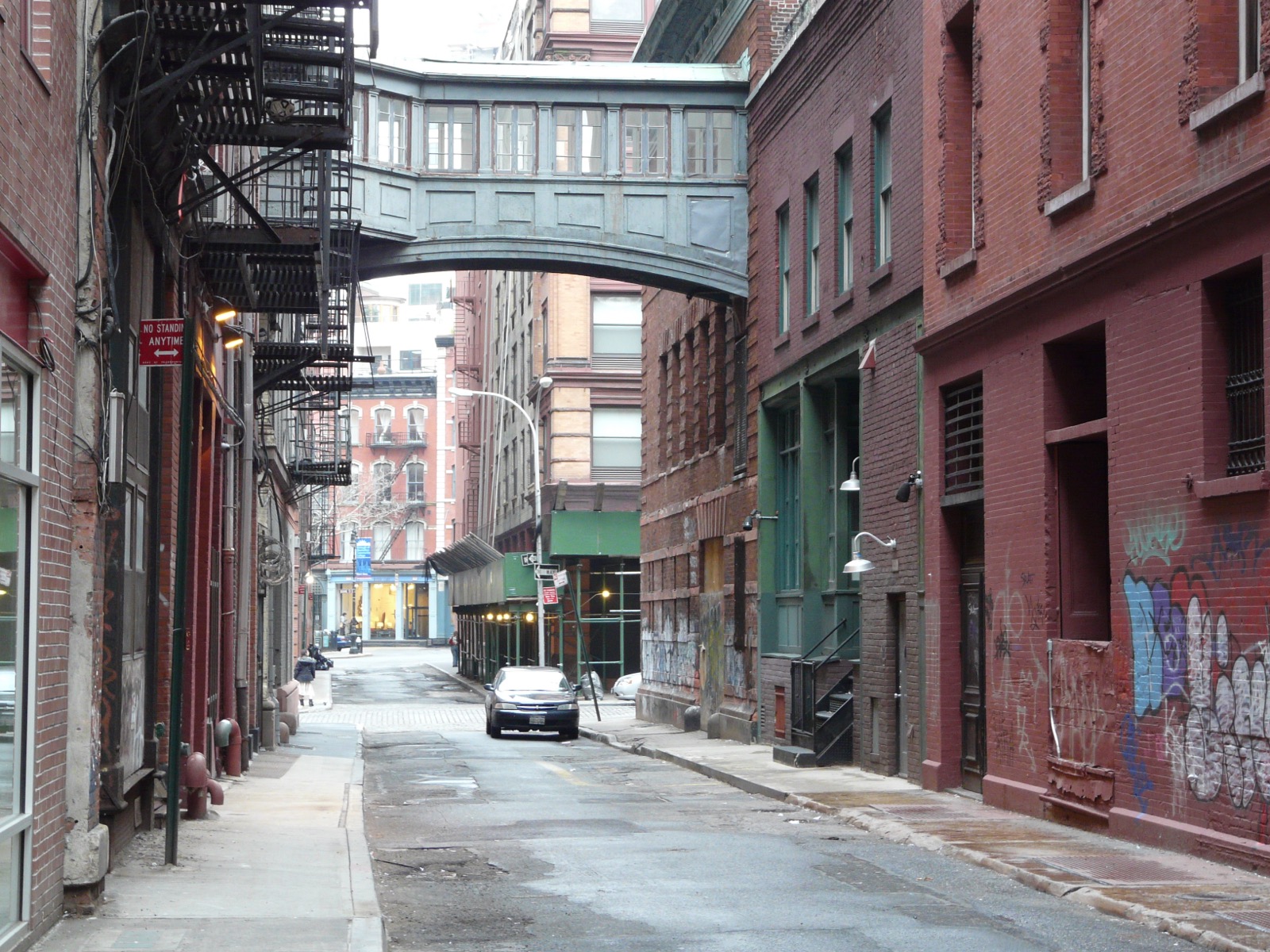
Cast-iron lofts from the 1860s need cleaning that understands preservation not just surfaces
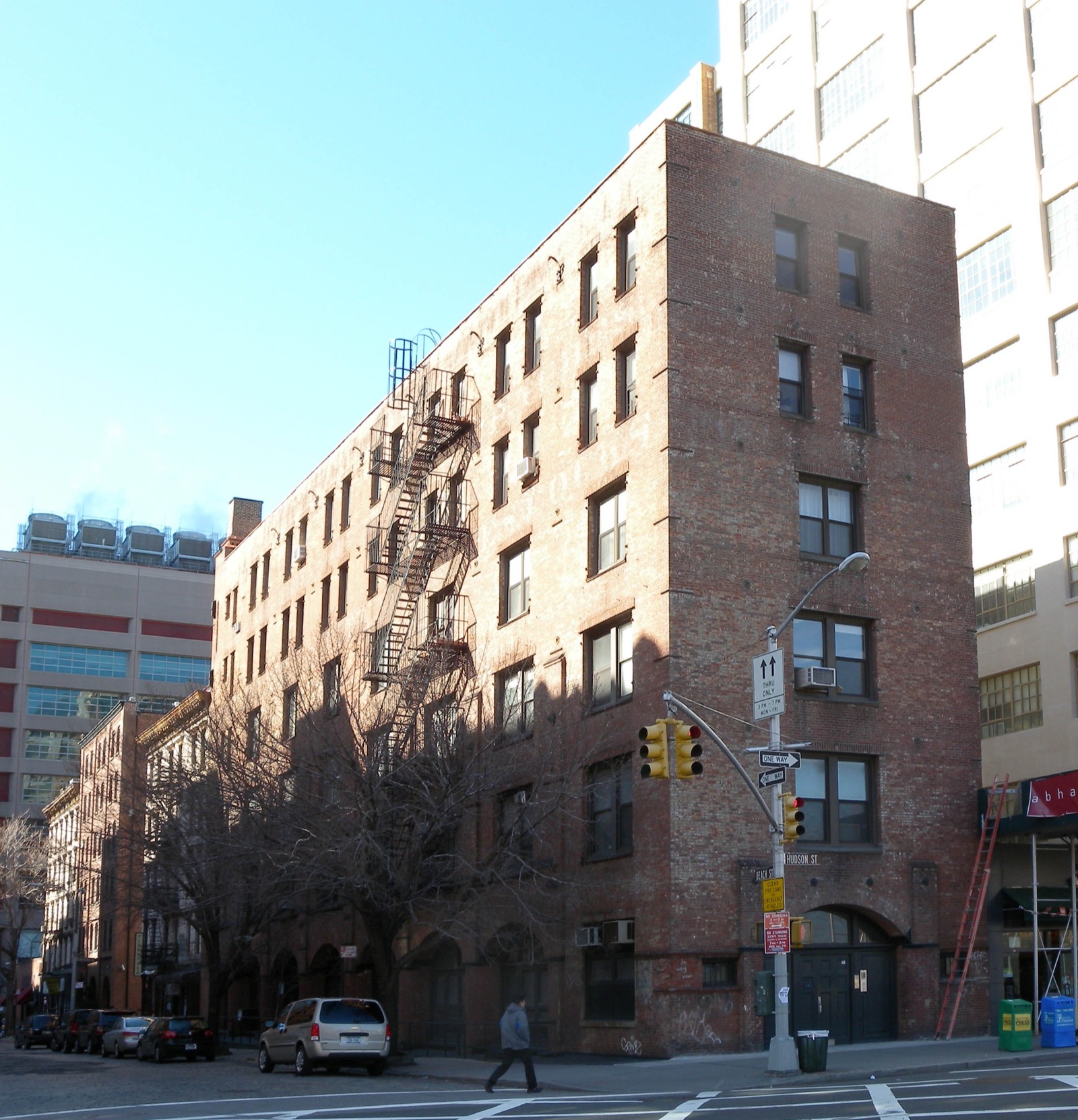
This is where the architecture of Tribeca becomes a cleaning problem. The converted warehouses along Hudson Street, Greenwich Street, and Franklin Street were built between 1850 and 1890 as commercial loft buildings. When developers converted these spaces to residences in the 1980s and 1990s, the resulting apartments inherited industrial proportions: open layouts of 1,500 to 5,000 square feet with no hallways, no interior walls, and ceilings at 11 to 14 feet.
The exposed brick in these lofts is 160 years old. The mortar between those bricks is lime-based and softer than anything used in modern construction. A wet cloth pushes dirt deeper into that mortar and leaves permanent marks. Water stains that surface through old brick are essentially irreversible. Our cleaners use a soft dry brush on exposed brick surfaces. Nothing wet, nothing abrasive.
The cast-iron columns that hold these buildings up are decorative as well as structural. They show dust immediately against their dark patina. The arched window frames, often 8 to 10 feet tall, collect grit on their tops and sills that most cleaning services never check because they cannot reach them without extension poles. The polished concrete floors that many lofts have installed show every streak and scratch permanently if cleaned with the wrong pad or product. These are surfaces that do not tolerate error. Our teams carry surface-specific products and switch between them as they move through a home, using flat microfiber mops with pH-neutral solution on sealed concrete and soft-bristle attachments on original wide-plank hardwood.
This is apartment cleaning at a scale and complexity that exists nowhere else in New York. The open floor plans mean dust travels freely across the entire living space and settles on every horizontal surface. Without walls to contain it, a single 3,000-square-foot loft accumulates particulate matter on shelving, mantels, window tops, and lighting fixtures at a rate that a compartmentalized apartment simply does not.
Your Saturday belongs at Pier 25 or the Tribeca Film Festival not scrubbing polished concrete
The families who live in these loft buildings actually know each other. Their children go to PS 234 and PS 150, two of the highest-performing elementary schools in New York City. On weekends they fill Hudson River Park at Pier 25, which has miniature golf, a trapeze school, sand volleyball courts, and a kayak launch. Washington Market Park on Greenwich Street, named for the great produce market that stood here for 150 years, is the neighborhood’s quieter green space with its restored Victorian-era cast-iron fence.
The Tribeca Film Festival fills the neighborhood every June with screenings, panels, and industry events. The holiday markets along Hudson and Greenwich Streets make December genuinely pleasant. Laughing Man Coffee on Duane Street is Hugh Jackman’s fair-trade project where all profits go to the Laughing Man Foundation for children in coffee-growing communities. Walker’s on North Moore Street has been operating since the 1880s with tin ceilings, great burgers, and a genuine old-bar atmosphere that has somehow survived the neighborhood’s transformation into a billionaires’ enclave.
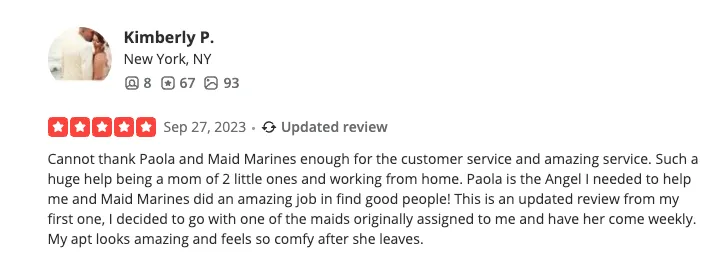
None of this happens while you are on your hands and knees cleaning polished concrete. The loft ceiling you cannot reach, the brick you are afraid to touch wrong, the building management paperwork you forgot to file. That is our job. Yours is to spend three hours at the Odeon or walking the Hudson River Greenway or sitting in Washington Market Park while your home is handled by people who know what they are doing.
The Jenga Tower and the new luxury condos are a different job entirely
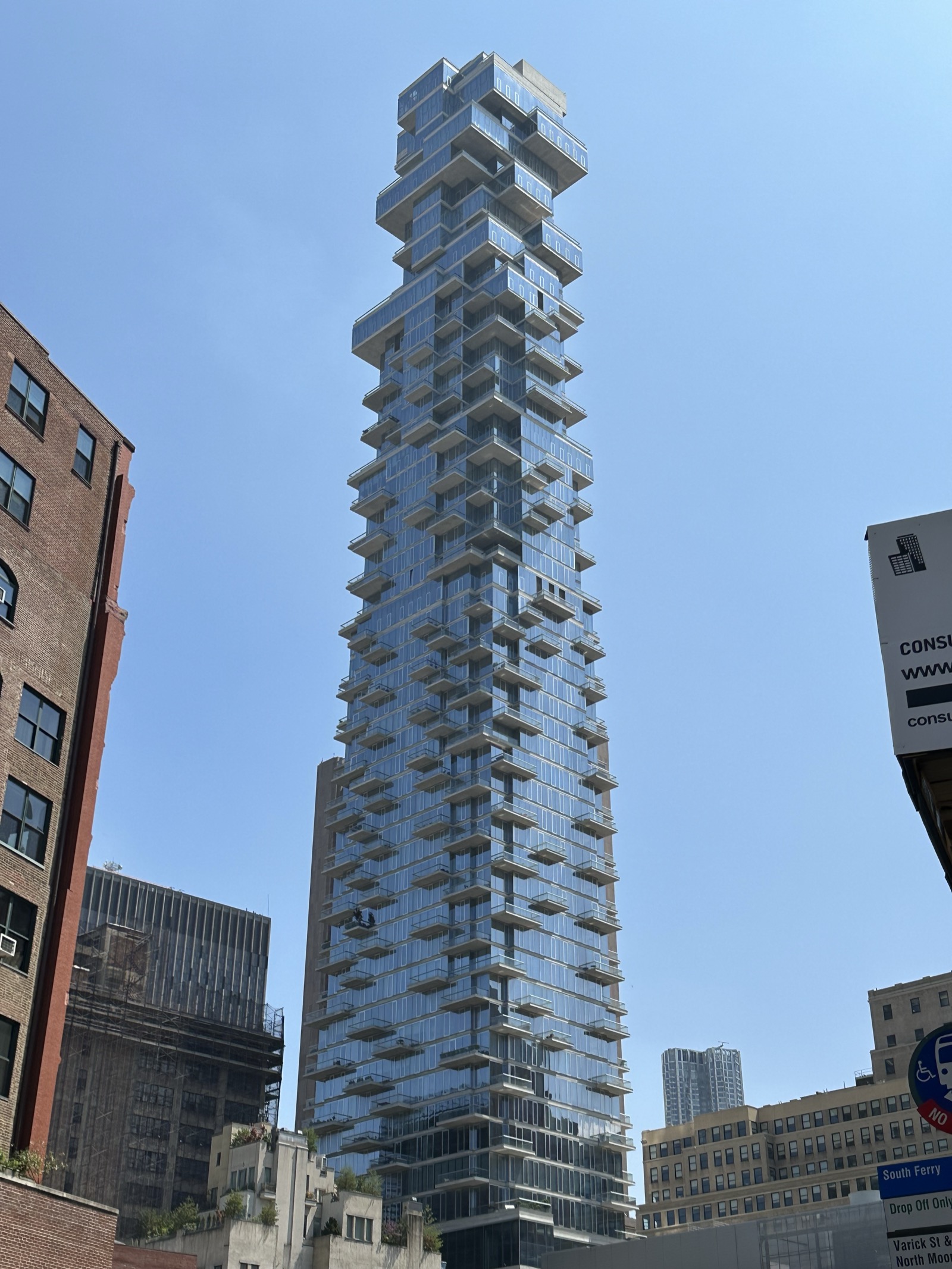
56 Leonard Street, the Herzog and de Meuron tower completed in 2017, stands 57 stories above a neighborhood of five-story cast-iron lofts. Each floor is cantilevered at a different angle and setback, creating the appearance of stacked blocks about to topple. At its base sits a 40-ton reflective sculpture by Anish Kapoor, installed in 2023 after 15 years of delays. The building contains 145 luxury condominiums with a 75-foot lap pool and private cinema room. Units have sold for between $2.5 million and over $45 million.
Two blocks west, 70 Vestry Street is Robert A.M. Stern’s 14-story waterfront condominium with a French limestone facade. Only 46 residences, interiors by Daniel Romualdez, units up to 7,000 square feet with Hudson River views. Tom Brady purchased here for approximately $37 million. Lewis Hamilton bought in the same building the following year. The structure has more combined sporting championships represented in its ownership than virtually any building in the world.
These buildings have engineered stone that shows water rings. Floor-to-ceiling glass where every streak catches light from the street. Custom millwork that scratches if cleaned with standard products. The materials are different from the historic lofts, and so are the logistics. Full-service buildings in Tribeca have advance-notice requirements, service elevator reservations, COI paperwork, and security protocols that vary building by building. We coordinate all of this with management before the first appointment. When you book your cleaning, tell us your building and we handle the rest.
The celebrities live here because nobody bothers them and your cleaner should operate the same way
Tribeca is famously reserved. Jay-Z and Beyonce have owned at 1 York Street on the waterfront. Taylor Swift’s loft at 155 Franklin Street is one of the most famous addresses in celebrity real estate. Ryan Reynolds and Blake Lively, Justin Timberlake and Jessica Biel, Jennifer Lawrence, Mariah Carey, and dozens of others have made this neighborhood their primary residence specifically because the culture here is one of not acknowledging fame. The doormen do not talk. The other residents do not gawk. The cleaning crew should operate with the same discretion.
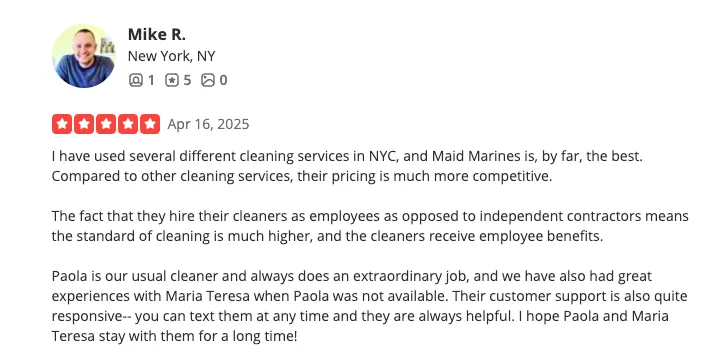
Our cleaners are W-2 employees, vetted, insured, and trained to work in homes where privacy is not negotiable. We do not discuss client addresses. We do not take photos. We coordinate building access through proper channels and arrive through service entrances as required. The median household income in Tribeca exceeds $200,000 and asking rents have reached $8,295 per month, the highest of any neighborhood in New York City. The homes here contain things that are irreplaceable. The people who live here expect competence without drama.
Every building in Tribeca has its own rules and we track all of them
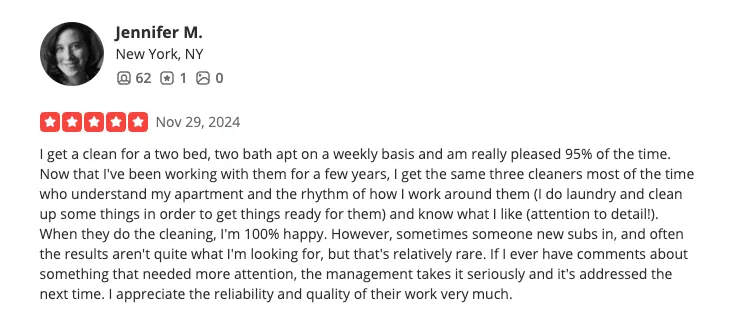
Co-ops along the side streets often require 48 hours advance notice for any vendor. Some require a Certificate of Insurance naming the co-op board as additional insured. The newer condos have their own protocols entirely. Service elevators that must be reserved by a specific time. Sign-in procedures at the front desk. Approved vendor lists that take a week to get on. This is the number one logistical complaint we hear from Tribeca residents who have tried other cleaning services. The cleaning itself might have been fine, but the coordination of getting a cleaner into the building fell apart.
After your first booking, our dispatch team coordinates notice periods, elevator scheduling, and any paperwork your management office requires for every recurring appointment. You do not need to remember to call the front desk. This is why people switch to us. We handle deep cleaning after renovation dust settles into those 13-foot ceiling heights, recurring house cleaning on a schedule that works around your life, and move-in and move-out cleaning for the neighborhood’s active rental and sale market. You see your flat-rate price on our booking page before you commit to anything. No hourly billing, no surprises after the fact.
We also serve nearby FiDi, Chelsea, and the rest of Manhattan.