
Most people who have ever been to East Elmhurst arrived by air and left the same way. LaGuardia Airport sits at the neighborhood’s northern edge, its runways extending into Flushing Bay a few hundred feet from the last residential block, and the planes that serve 30 million passengers a year fly their final approaches directly over East Elmhurst’s rooftops. For the people who actually live here, that roar is as unremarkable as a garbage truck. They have heard it so many times that it does not register. What registers, instead, is the smell of sancocho drifting from a neighbor’s window on Sunday afternoon, or the pan de bono stacked in the Colombian bakery window on 25th Avenue, or the quality and age of the brick homes on the Gold Coast blocks where Dizzy Gillespie and Ella Fitzgerald once kept permanent addresses.
This is one of the most consequential neighborhoods in New York City that almost no one can name. The jazz legends lived here. Malcolm X lived here. Joe Louis trained here during his championship years. The Colombian diaspora built one of its most durable American communities here. And yet East Elmhurst operates with the indifference of a place that never needed outside acknowledgment to know its own worth.
The housing stock that made the Gold Coast possible
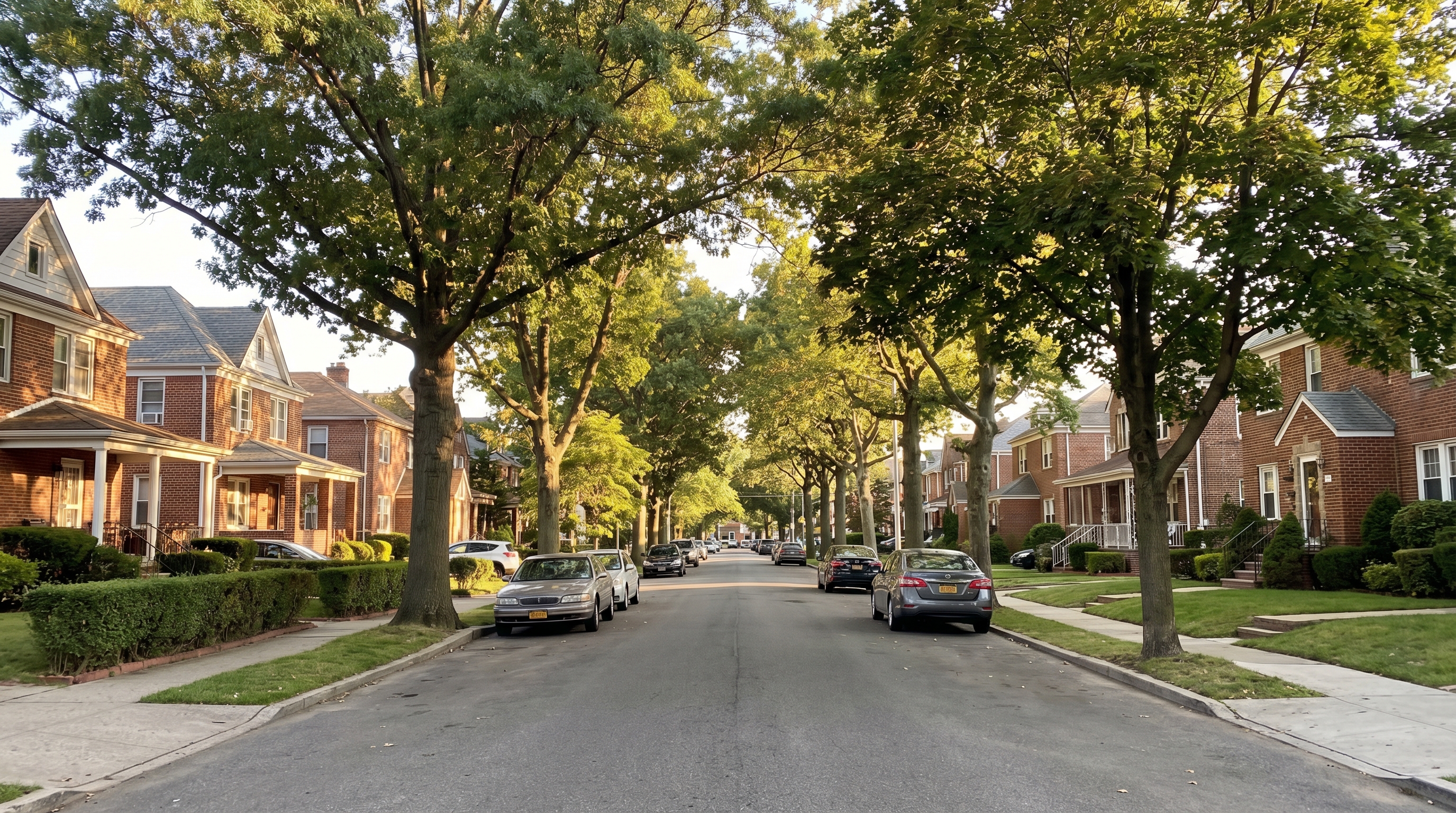
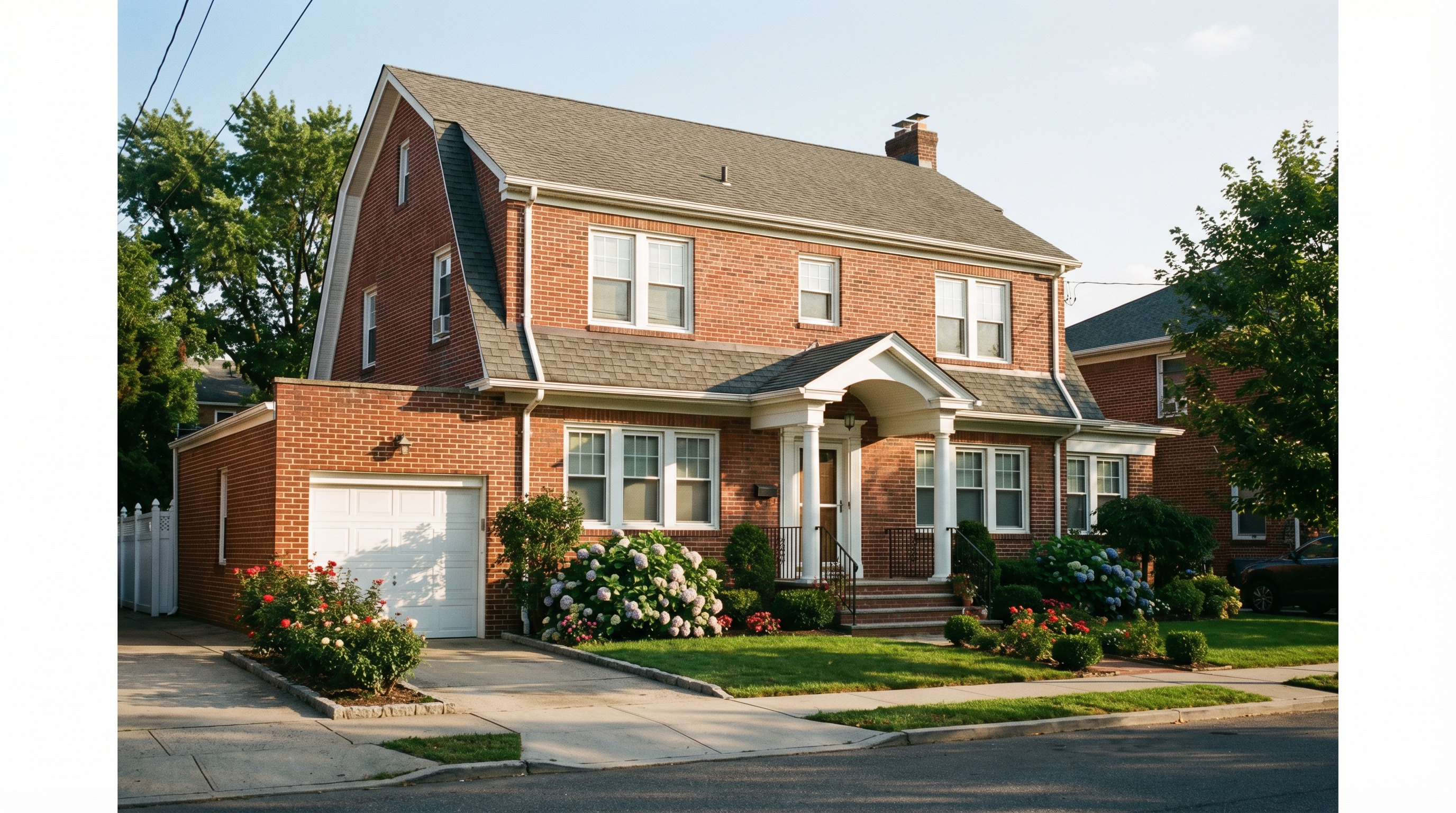
East Elmhurst’s interior residential blocks are dominated by detached and semi-detached one- and two-family homes built between 1925 and 1955. These are not brownstones and they are not apartment towers. They are frame and brick houses in the Tudor Revival, Dutch Colonial, Colonial Revival, and Craftsman traditions, sitting on small lots with front yards, covered stoops, and detached or attached garages. A tree-lined street in the neighborhood’s interior feels suburban in a way that most of New York City does not. The scale is human. The buildings have setbacks. There are lawns.
This is not an accident of urban planning but a direct product of the neighborhood’s history. When African Americans began purchasing homes in East Elmhurst during and after World War II, drawn by housing stock that was actually available to them in a city otherwise locked by restrictive covenants and redlining, they chose and maintained properties that matched their aspirations. The resulting community, which became known informally as the Gold Coast, was one of New York City’s most respected Black middle-class neighborhoods by the 1950s. The homes that housed doctors, lawyers, jazz musicians, and athletes reflect that care. The better-maintained blocks between 25th Avenue and 23rd Avenue in the 94th to 97th Street range still carry the visual evidence of that investment: larger brick two-family homes with formal front entries, brick facades in good repair, and landscaped front gardens.
These homes are also the source of a specific cleaning challenge. A two-family house from 1942 has original hardwood throughout the main floors, typically wax or shellac finished rather than polyurethaned. The kitchen has vintage tile. The bathroom has hex tile over a mortar bed. The plaster walls and ceilings have survived decades of New York City weather. Cleaning them correctly means using the right product on each surface rather than a single all-purpose spray that will strip a wax finish or pit old tile grout. Our house cleaning teams work through these homes room by room with the specific products each surface requires.
What LaGuardia does to your home
Living adjacent to one of the busiest airports in the country produces a cleaning reality that most neighborhoods do not deal with. The fine particulate that settles near LaGuardia is not standard household dust. It is a combination of jet exhaust byproducts, rubber particulate from runway landings, and the general atmospheric output of a facility handling hundreds of daily operations. It settles on window sills, accumulates on exterior-facing surfaces, and over time coats interior glass with a thin film that smears if you wipe it with the wrong cloth.
The standard approach that works in an apartment three subway stops from the nearest airport does not produce the same result in East Elmhurst. Interior glass needs a streak-free cleaner applied with microfiber technique, and it is an add-on you choose at booking rather than part of the visit. Window tracks and sills along Astoria Boulevard or the blocks near the Grand Central Parkway accumulate faster than those deeper in the residential interior. For homes that have not had a professional clean recently, a deep cleaning reset is typically the right first visit to pull out the accumulated film from surfaces that are otherwise difficult to notice until you hold them up to the light.
25th Avenue and the Colombian corridor
The commercial heart of East Elmhurst runs along 25th Avenue. This is not a tourist destination. There is no signage calling it Little Colombia. There is no chamber of commerce promoting it. There is just a succession of Colombian bakeries, lunch counters, produce stands, butchers, and specialty grocers operating in Spanish, serving a community that has been here for four decades and shows no signs of leaving.
The bakeries are the first to open. By early morning, the cases fill with pan de bono, almojabanas, and arepas de choclo made from sweet yellow corn dough stuffed with cheese and griddled fresh. By midday the lunch counters serve bandeja paisa, a Colombian mixed plate that includes grilled beef, fried pork belly, red beans, rice, a fried egg, and a plantain, which is one of the most efficient caloric deployments in the Western Hemisphere. On Sunday afternoons the smell of sancocho de gallina, a slow-cooked chicken and vegetable soup, drifts from kitchen windows on the residential blocks behind the avenue.
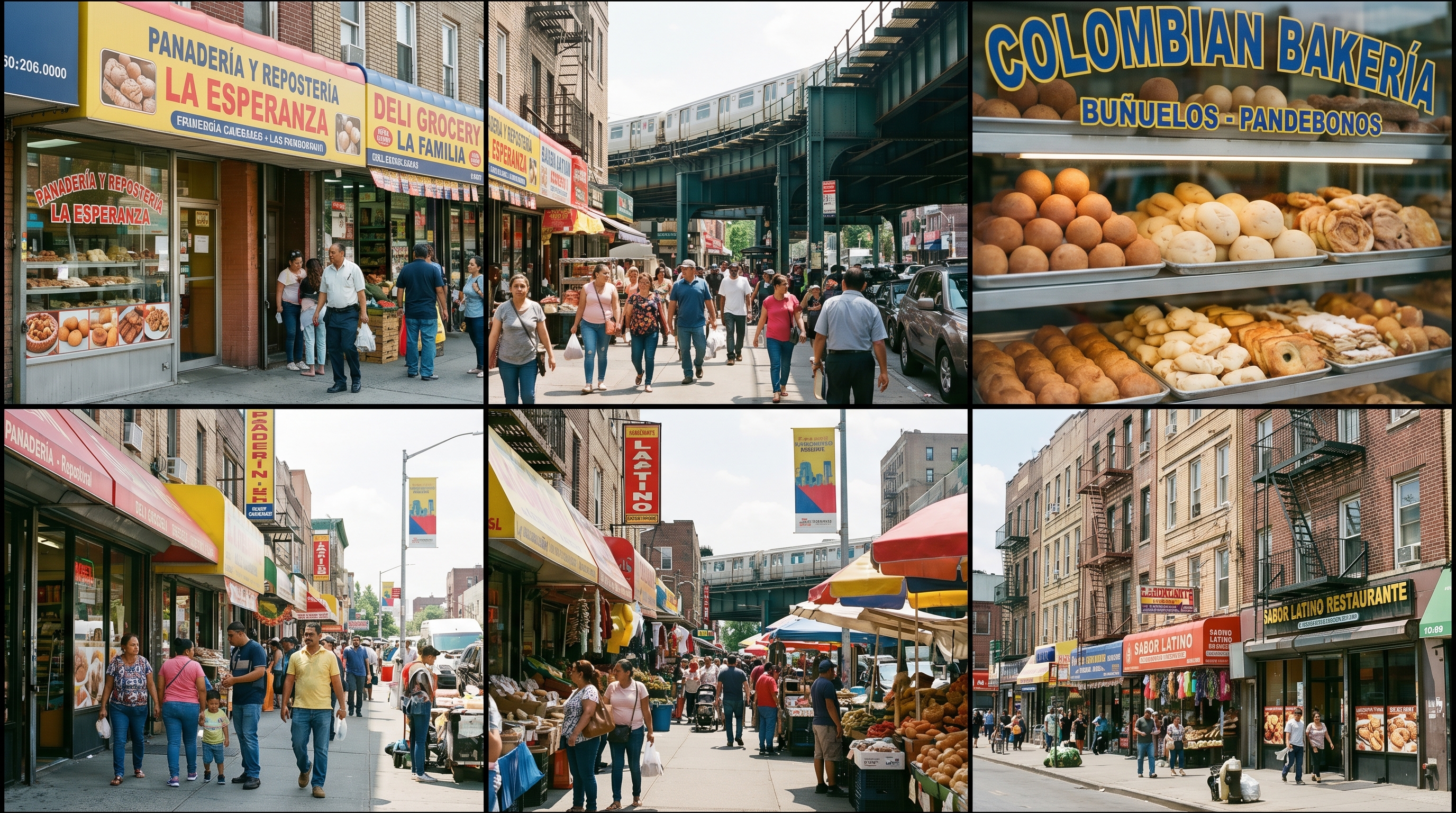
This corridor also explains something about who lives in East Elmhurst today. The Colombian community on 25th Avenue is multigenerational. The grandparents who came in the 1970s and 1980s have children and grandchildren who grew up in Queens and stayed. The community institutions, the churches, the social clubs, the block associations that maintain the commercial strip, are deep-rooted in a way that resists displacement. Astoria’s rents are pushing past $2,500 for a one-bedroom, and some of those renters are moving east into East Elmhurst for the lower costs and larger apartments. The Colombian community, however, is not going anywhere.
The apartment buildings along the avenues
Not everyone in East Elmhurst lives in a detached house. Along Astoria Boulevard and the 25th Avenue corridor, a stock of 4-to-6-story pre-war apartment buildings exists, mostly brick construction from the 1920s and 1930s with modest ornamental terra cotta detailing and the compact apartment layouts of that era. These buildings were built to house the working-class families employed by the emerging airport economy and the manufacturing that surrounded it. They are not glamorous, but they are solid, and many of their one- and two-bedroom apartments are larger than anything built in the same era in Manhattan.
The pre-war walkup in this neighborhood presents its own cleaning considerations. The apartments typically have original hardwood in the living areas, kitchen tile that has been relaid at least once, bathroom fixtures that range from thoroughly modernized to untouched since Eisenhower. The building hallways and common areas are often the province of super-dependence, meaning the individual apartment cleaning matters more because the building does not compensate. Our apartment cleaning teams handle these buildings on the same routes that serve Astoria and Long Island City, and the walkup stair-carry with full supplies is part of the standard approach.
A neighborhood that does not explain itself
East Elmhurst is the kind of place that has never needed to introduce itself to outsiders. It existed and thrived under the radar of the mainstream New York City narrative for its entire modern history, from the Gold Coast era through the Colombian transformation through the current moment of quiet appreciation from renters priced out of Astoria. Its identity is not a product of branding or marketing. It is a product of multigenerational ownership, community investment, cultural depth, and the particular dignity that comes from a neighborhood that has known its own worth for a long time without needing anyone else to confirm it.
The planes still come in low over the rooftops. The bakeries on 25th Avenue are still open before anyone else. The brick homes on the Gold Coast blocks still have the proportions and the materials of people who built to last. And the neighborhood continues to do what it has always done: absorb new arrivals, maintain its institutions, and keep going without much fuss.
What booking looks like
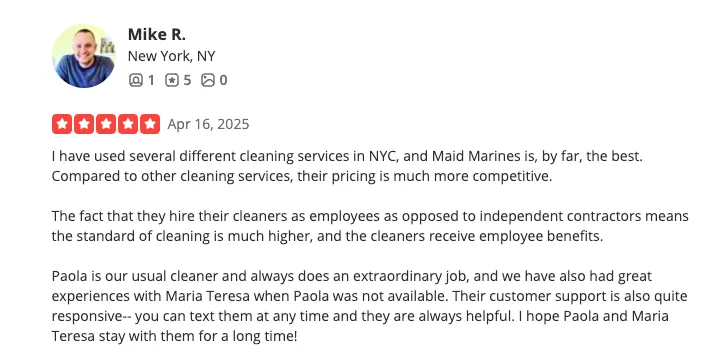
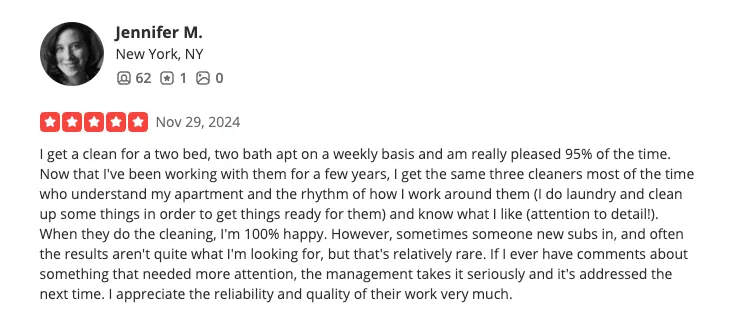
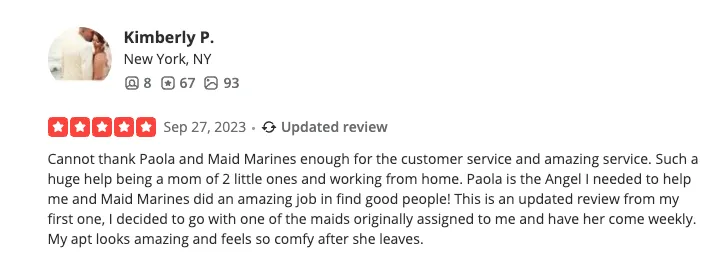
You pick your date and time on our booking page. You see your flat-rate price before you commit. If your home is a two-family house on one of the Gold Coast blocks, the price reflects the square footage. If you have a pre-war walkup apartment on Astoria Boulevard, that gets priced accordingly. Our cleaners are W-2 employees, vetted and insured, and they arrive with the correct products for the surfaces in your specific home.
We have cleaned over 100,000 homes across New York City. That number means East Elmhurst’s housing stock, from the 1942 Dutch Colonial with original hardwood to the 1928 walkup apartment with hex tile and plaster walls, is not new to us.
We also serve nearby Astoria, Long Island City, Sunnyside, and the rest of Queens.