
The Bragaw family were French Huguenots who bought this land in 1713 and called their estate Sunnyside Hill. The name stuck for three centuries, surviving Dutch farmers, Irish laborers, Romanian butchers, Korean grocers, and a brief visit from Leon Trotsky. The hill itself is real. It faces south, catches more light than the lower ground around Newtown Creek, and gives the neighborhood its particular quality of afternoon brightness that residents notice on their first week and take for granted by their third month.
What the Bragaws could not have predicted is that their sunny hillside would become one of the most important experiments in American housing, one of the most linguistically diverse square miles in the Western Hemisphere, and one of the few remaining places in New York City where a commercial street works the way commercial streets are supposed to work.
The planned community that changed how America thinks about housing
In 1924, a group of progressive architects and developers broke ground on 77 acres of former farmland at the eastern edge of Sunnyside. Their names read like the guest list for a very specific kind of dinner party. Clarence Stein and Henry Wright drew the plans. Frederick Ackerman contributed architectural details. Marjorie Sewell Cautley designed the landscape. Alexander Bing put up the money. Eleanor Roosevelt sat on the board. Lewis Mumford, the urban critic who had spent years writing about what cities should become, moved in as one of the first residents.
They were building Sunnyside Gardens, the first application of Ebenezer Howard’s Garden City principles to urban housing in the United States. Howard’s idea, born in England with Hampstead Garden Suburb and Letchworth Garden City, was that working-class families deserved green space and community without having to leave the city. Stein and Wright translated that idea into something that could fit inside the New York City street grid: attached rowhouses of one to three families, arranged around shared interior courtyards, with stores and garages pushed to the perimeter so the interior blocks stayed quiet and green.
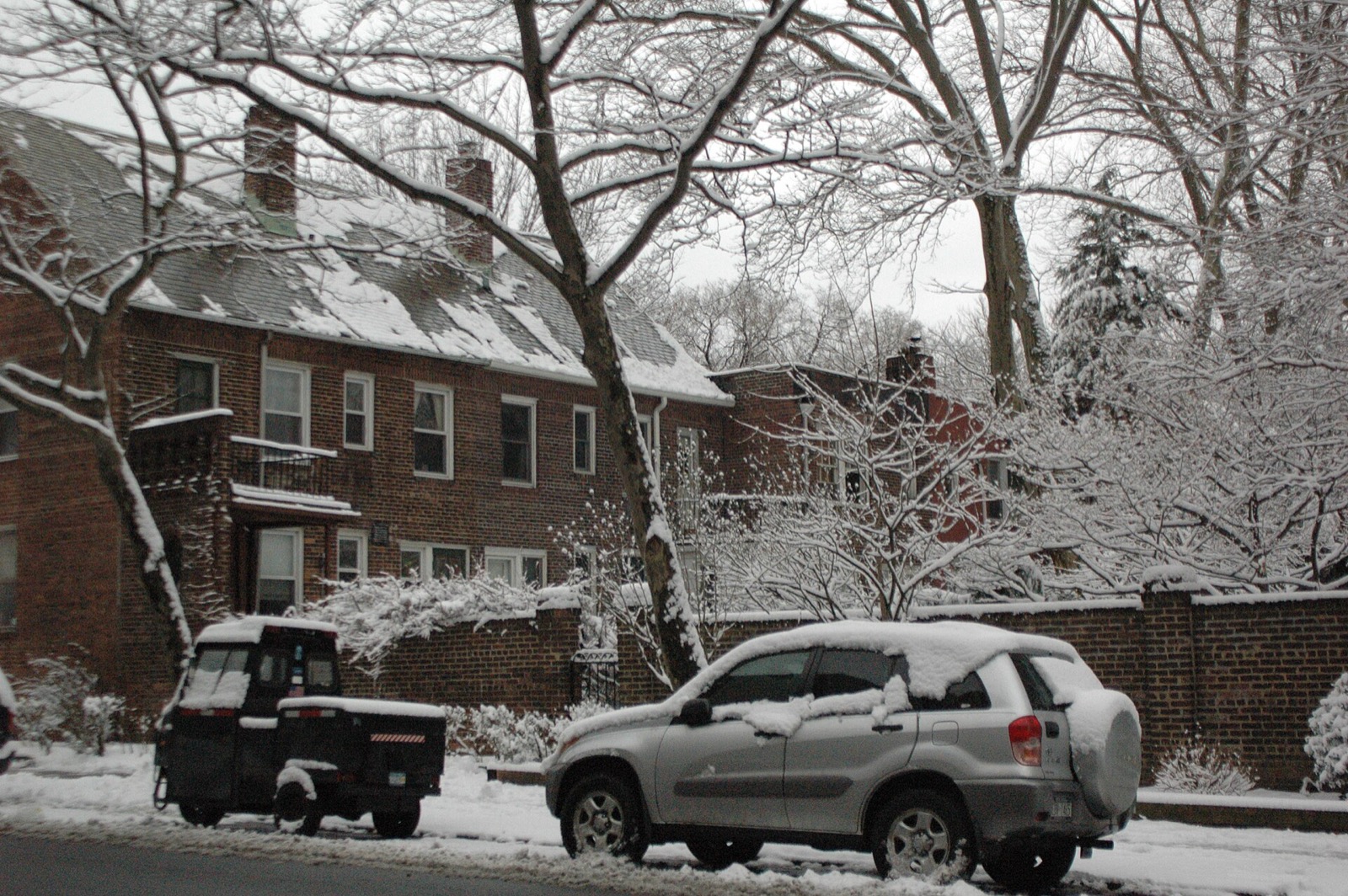
The homes were built of Hudson brick. Each had a small front garden facing the street and a private garden in the rear that opened into a common courtyard shared with neighbors. The effect from the sidewalk is one of unusual quiet for a Queens residential block. From inside the courtyard, it feels like a village dropped into the middle of a city.
The City Housing Corporation finished building in 1928. The results were so influential that urban planners studied them for the next five decades. Radburn, New Jersey copied the courtyard model directly. The British New Town movement of the 1950s and 1960s drew on the same principles. The neighborhood was added to the National Register of Historic Places in 1984, and in 2007 the New York City Landmarks Preservation Commission officially designated it as a city landmark district.
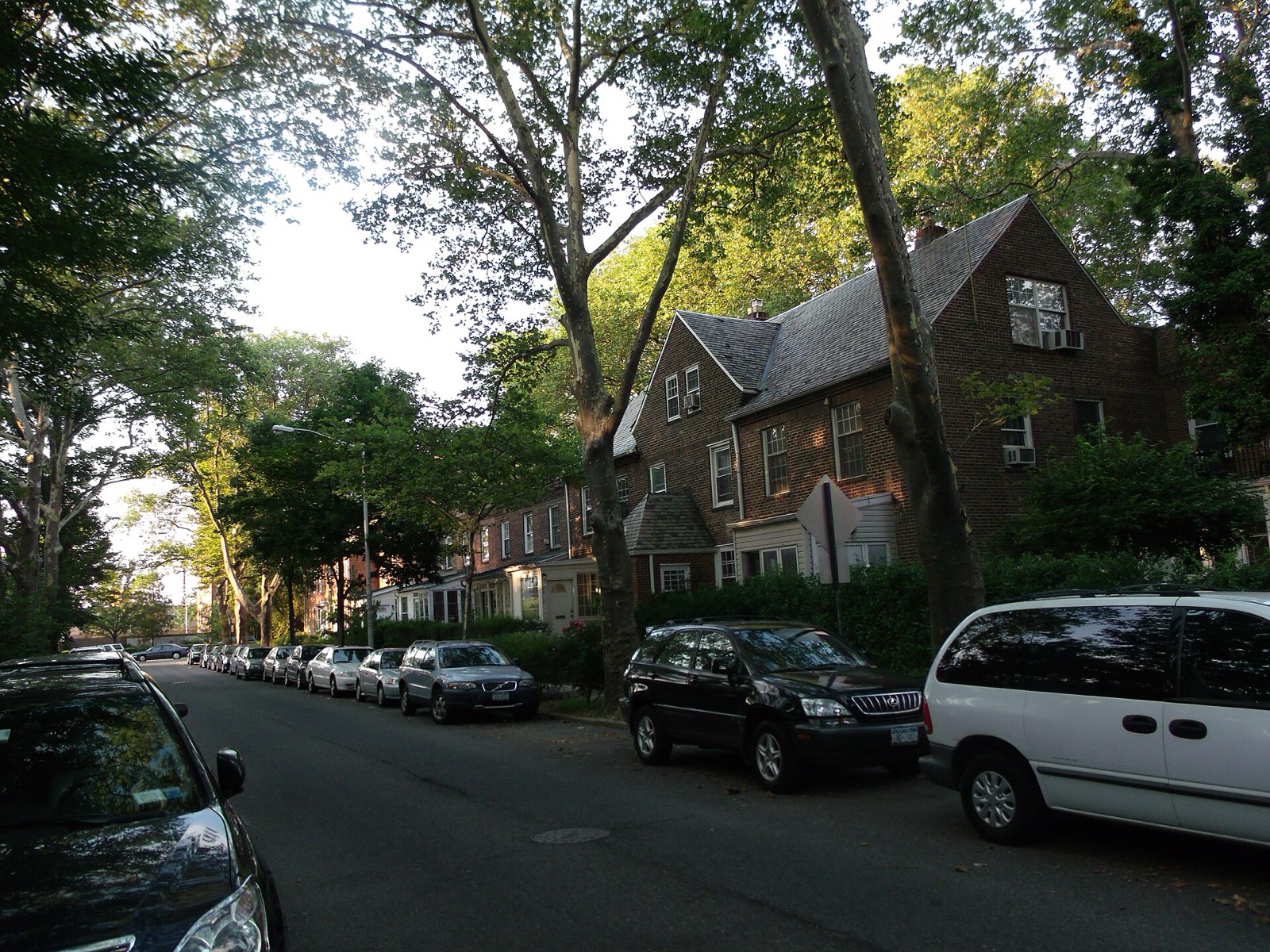
The homes themselves have survived remarkably well. The original 1920s hardwood floors have been sanded and sealed multiple times across a century, sometimes unevenly. The clay tile in the bathrooms is often unglazed or only lightly glazed. The plaster walls carry a hundred years of paint layers. These are surfaces that tell you exactly how they have been cared for, and they punish carelessness. An acidic cleaner on that clay tile will etch the surface permanently. A wet mop left too long on those hardwood floors will raise the grain in ways that cannot be undone without sanding.
This is one of the places where the connection between cleaning and preservation is not metaphorical. When we send a team into a Sunnyside Gardens rowhouse, they are working on nationally landmarked surfaces. We use pH-neutral solutions on the tile, flat microfiber mops with wood-safe product on the floors, and we never use abrasive pads on anything that has survived since the Coolidge administration. The shared courtyards mean tracked-in garden soil in every entryway from April through October. We pay attention to that entry area on every visit, because the dirt that gets past the front door is what damages those original floors over time.
Before the Gardens there were farms and then there was the railroad
The land that became Sunnyside was part of the Town of Newtown under English colonial jurisdiction, occupied by farms from the mid-1600s onward. The terrain was good for agriculture. It drained well, sat at slight elevation, and the south-facing slope made it productive. Nobody lived here in any density for two hundred years.
The Long Island Rail Road established its route through western Queens in the 1830s, initially as a way to reach the ferry to Manhattan. The right-of-way runs along the southern edge of what would become Sunnyside and still functions as one of the neighborhood’s geographic boundaries today. As the railroad expanded, it required maintenance and storage capacity for its growing fleet. The result was Sunnyside Yards, which opened in 1910 and eventually grew to 180 acres, making it one of the largest rail facilities in the United States.
The residential development started in the 1890s and accelerated after trolley lines and then the subway extended into western Queens. Real estate developers subdivided the old farmland into residential lots and applied the name Sunnyside, referencing the south-facing hillside and the abundant light. It was a marketing term, but unlike many Gilded Age real estate names, it described something real. The neighborhood does get more light than the lower ground to the south.
The immigration waves that made Sunnyside what it is today
Irish, German, and Eastern European Jewish immigrants built the first residential blocks between 1900 and 1920. After World War I, Romanian, Hungarian, and Polish families arrived in significant numbers, drawn by cheap rents and the subway. By the 1930s, Sunnyside had a working-class Eastern European character that would persist for half a century.
The neighborhood also attracted a different kind of resident. The affordable apartments and progressive atmosphere drew labor organizers, writers, and left-wing intellectuals. The Socialist Party maintained a real presence here. A colony of Jewish Communists settled into a ten-block section in the early 1940s, establishing a political tradition that still echoes in the neighborhood’s tenant-organizing culture and democratic socialist political representation.
The famous residents from this era give you a sense of the neighborhood’s range. Frank McCourt, who would later win the Pulitzer Prize for Angela’s Ashes, lived in Sunnyside while teaching English at Stuyvesant High School. The neighborhood’s Irish working-class character was the backdrop for the years before his memoir made him famous. James Connolly, the Irish revolutionary executed after the 1916 Easter Rising, lived in Sunnyside while working as a labor organizer in New York before returning to Ireland. And Trotsky himself spent several months in New York in early 1917, just before the Russian Revolution, with connections to the Sunnyside area that locals have disputed and claimed for decades.
The mid-century decades brought incremental demographic change. Puerto Rican and African American families moved into parts of the neighborhood as western Queens diversified. But the real transformation came between the 1970s and 1990s, when Korean, Colombian, Bangladeshi, and Chinese immigrants arrived in numbers that fundamentally changed Sunnyside’s character. The Korean community built institutions along Skillman Avenue and Queens Boulevard. The Colombian community established bakeries, restaurants, and a soccer league. The Bangladeshi community grew along the southern blocks.
Today the numbers tell the story. The population of roughly 40,000 to 45,000 is approximately 30 percent Hispanic, 28 percent Asian, 25 percent white, and 10 percent Black. Spanish, Korean, Bengali, Romanian, and Greek are all spoken in significant numbers alongside English. The grocery stores on Skillman Avenue reflect this in their stock: you can buy pan de bono, banchan, halal meat, and Romanian sausage within four blocks of each other.
Skillman Avenue is what a commercial street looks like when it actually works
Walk the six blocks of Skillman Avenue between 42nd and 48th Streets on any weekday morning and you will understand something that urban planners spend entire careers trying to explain. A Colombian bakery at one end smells of pan de bono and cafe negro. A Korean grocery two doors down has banchan in refrigerated cases by the entrance. A Romanian butcher has been operating the same storefront since 1978. A wine bar with reclaimed wood tables opened last year. Everyone is walking somewhere and buying something. The street is dense with foot traffic and commerce and human activity, and none of it is curated or marketed or designed for photographs.
This is what happens when a commercial strip serves real residents rather than performing urbanity for visitors. The businesses survive because people who live on the surrounding blocks need groceries, need coffee, need a haircut, need lunch. The diversity of the businesses reflects the diversity of the residents, which reflects 120 years of successive immigration waves, each community finding affordable rents and building institutions.
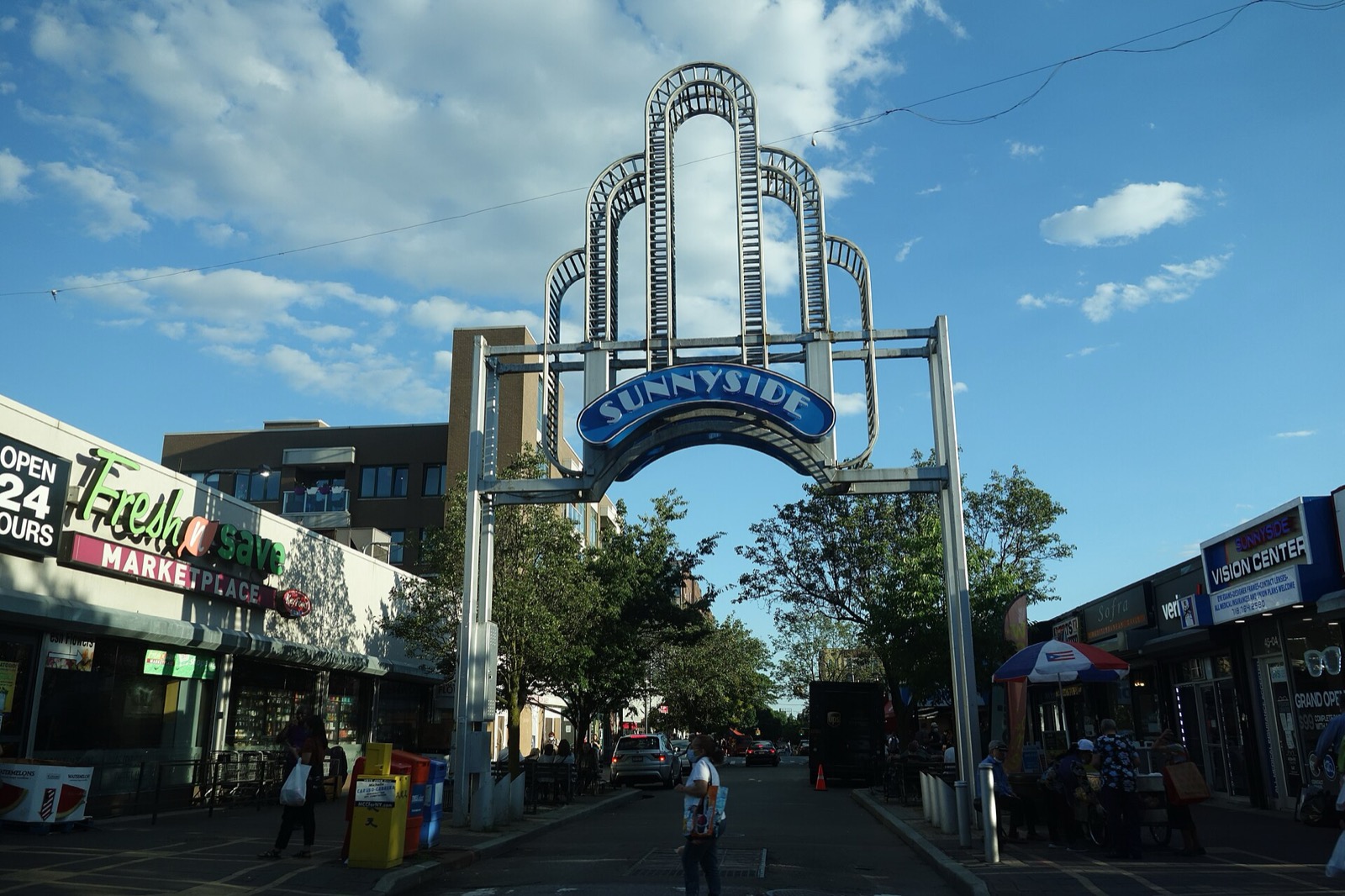
The Sunnyside Arch, a 25-foot art deco structure at Queens Boulevard and 46th Street, marks the entrance to the neighborhood. It was built in 1982 by a local business group and received a major renovation in 2009 that added new benches, bike racks, trees, and color-changing lights. It is meant to symbolize the gateway to Queens, and in a certain light, from a certain angle, looking south toward Skillman Avenue with the 7 train rattling overhead, it does.
Your Saturday morning belongs here. It belongs at the Colombian bakery getting coffee, browsing the Korean snack aisle, picking up something at the Romanian butcher. It does not belong scrubbing your bathroom tile or degreasing the range hood. The oil-based cooking that is common in Sunnyside kitchens across every cuisine creates a grease film around the stove and backsplash that all-purpose spray will not cut. Our teams use a food-safe degreaser on those surfaces, followed by a clean neutral wipe. They know the difference between a kitchen that gets fried eggs twice a week and one that handles daily Korean or Colombian cooking. If you want the inside of the range hood done, tell us when you book your cleaning and we will schedule extra time.
The prewar buildings that line Queens Boulevard and the streets behind it
Most of Sunnyside outside the Gardens is six- and seven-story prewar brick apartment buildings along Queens Boulevard and Skillman Avenue, plus smaller walkups on the side streets. These buildings went up in the 1920s and 1930s with tiled lobbies, windowed hallways, generous room sizes, and cast-iron radiators that still run on steam heat.
The radiators matter. Dust settles into a cast-iron unit from April onward, and when the steam heat kicks on in October it burns off and fills the apartment with a particular smell that residents know well. We dust the radiator covers and the vents above them on every visit, including the fall transition when the accumulation is at its worst. It will not stop October entirely, but it keeps the amount of loose dust drifting toward the radiator down through the warm months.
The Queens Boulevard co-ops sometimes require advance vendor notice and a Certificate of Insurance before anyone can work in the building. If your building has that requirement, tell us once when you book. We deal with Queens co-op management offices regularly and will have the COI to your building before the first appointment.
The 7 train connects Sunnyside to Midtown in twenty minutes
Three stations serve the neighborhood along Queens Boulevard: 40th Street-Lowery Street, 46th Street, and 52nd Street. The IRT Flushing Line runs above the boulevard on an elevated structure that gives riders one of the best subway views in the city. On clear days you can see the Manhattan skyline from the platform, with the rowhouse fabric of Sunnyside spreading out below.
The Woodside LIRR station at the neighborhood’s eastern edge is one stop from Penn Station. Nine to twelve minutes and you are in Midtown. This is one of the fastest commutes in Queens, and it is one of the reasons young professionals who have been priced out of Long Island City and Astoria keep discovering Sunnyside.
Our teams arrive via the 7 train to 40th Street-Lowery Street or 46th Street, depending on which block you are on. They bring everything with them. You do not need to supply products, equipment, or instructions about your floors unless you want to. Most of our Sunnyside clients hand off a key or a lockbox code and come back to a clean apartment.
The Sunnyside Yards are the neighborhood’s most significant unresolved story
The 180-acre Long Island Rail Road maintenance facility occupies the entire northern portion of the Sunnyside area between Queens Boulevard and Skillman Avenue. It is not accessible to the public, but it defines the neighborhood’s northern horizon. You see it from every elevated 7 train platform: acres of tracks, maintenance equipment, and stored train cars stretching from roughly 39th Street to 55th Street.
Proposals to build a platform over the yards and develop housing, offices, and parks on top have emerged in every decade since the 1970s. The model is analogous to what happened at Hudson Yards in Manhattan, but the scale is larger and the politics are more complicated. A platform over Sunnyside Yards could add thousands of housing units. It could also transform western Queens more dramatically than anything since the early 20th century subway extensions.
The neighborhood’s strong tenant-organizing tradition, rooted in its left-progressive political history, means this will not happen without a fight over what gets built and who benefits. Organizations like Sunnyside-Woodside Together monitor displacement and push back against speculative practices. The community’s position is that if development comes, it should serve the people already here rather than create another luxury enclave for a professional class that can afford to live anywhere.
The St. Pat’s for All parade started here as a protest and became a celebration
In 2000, Brendan Fay founded St. Pat’s for All as a direct response to the exclusion of LGBTQ groups from Manhattan’s St. Patrick’s Day Parade. The march rolls up Skillman Avenue every first weekend of March, drawing thousands of participants from across the city. It began as a protest and became one of Sunnyside’s signature annual events, a celebration of Irish heritage that includes everyone the Fifth Avenue parade would not. The parade is now in its 27th year and has become something larger than its origins. It is a neighborhood claiming a tradition on its own terms.
The neighborhood has other recurring events that reflect its character. The Sunnyside Shines Summer Strolls close Skillman Avenue to car traffic on select weekday evenings from June through September for live music, food vendors, and street shopping. The Sunnyside Gardens Historic District occasionally opens its shared courtyards for holiday walks in December, offering a rare chance to see the interior green spaces from the 1920s plan.
The real estate market reflects the neighborhood’s particular appeal
Sunnyside sits in an interesting position. It has excellent transit, genuine walkability, and the kind of neighborhood character that cannot be manufactured. But it prices notably below both Long Island City and Astoria, the two neighborhoods immediately adjacent. One-bedroom apartments in prewar buildings rent for $1,800 to $2,500 per month. Two-family rowhouses sell for $700,000 to $1,200,000. Sunnyside Gardens homes, because of the landmark designation and the architectural significance, command a premium: $800,000 to $1,400,000 for a single or two-family home.
The market attracts people who prioritize transit access and walkability over luxury amenities and waterfront views. First-time buyers, young families, and renters who have been priced out of adjacent neighborhoods keep arriving. The professional class arrival is changing the commercial mix on Skillman Avenue. Wine bars and specialty coffee are appearing alongside the Colombian bakeries and Korean grocers. The question everyone asks is whether rising rents will gradually displace the communities that made Sunnyside worth moving to.
The Phipps Houses and the architecture you can read from the sidewalk
The Sunnyside Gardens experiment inspired a second wave of progressive housing two blocks north. The Phipps Garden Apartments, built in 1931 by the Phipps Houses foundation (established by Henry Phipps, Andrew Carnegie’s business partner), added a 344-unit garden apartment complex designed by Clarence Stein. The Phipps buildings expanded on the Gardens courtyard model at a larger scale, wrapping six-story brick apartment blocks around a central garden open to residents. The landscaped courtyard, with its mature trees and walking paths, remains one of the few genuine interior green spaces in western Queens that is not visible from any public street.
Together, the Gardens rowhouses and the Phipps apartments represent two distinct chapters in the same planning philosophy: that urban housing could include shared green space without sacrificing density. Walking from the low-rise Gardens blocks into the Phipps complex, you can see how Stein evolved his thinking across seven years. The rowhouse courtyards are intimate and semi-private. The Phipps courtyard is communal and scaled for apartment living. Both work. Both require cleaning teams who understand that tracked-in garden debris from these shared green spaces is not a seasonal problem but a year-round one, and that the prewar plaster and original tile in the Phipps units demand the same careful handling as the Gardens homes next door.
The Romanian and Turkish communities that settled along Skillman Avenue in the 1920s and 1930s left architectural traces that are still visible. The Romanian Orthodox Church on 43rd Street, built in 1955, anchored a community that had been gathering in rented halls for decades before. A few blocks away, a Turkish social club operated from a converted storefront through the 1960s. These were communities that cooked daily with heavy oils and spices in small prewar kitchens with limited ventilation, building up the kind of layered grease residue on cabinets and range hoods that we still encounter in apartments that have been continuously occupied for decades. The cooking traditions changed as Korean, Colombian, and Bangladeshi families arrived, but the kitchen challenge remained the same.
How cleaning works here across a century of housing stock
Sunnyside has a range of dwellings that spans from 1920s landmark rowhouses to postwar walkups to new construction condos. The cleaning approach changes with the building.
In the Gardens rowhouses, the priorities are preservation. The hardwood floors are not the refinished oak you find in new construction. They are original surfaces that have been sanded multiple times across a hundred years, sometimes unevenly. We use a flat microfiber mop with a wood-safe solution and avoid anything that pools or sits. The shared courtyard access means we deal with garden soil tracked into every entryway from spring through fall.
In the prewar walkups and Queens Boulevard co-ops, the priorities are steam-heat radiators, grease-heavy kitchens, and tiled bathrooms that have seen 90 years of use. The buildings have generous room sizes and high ceilings but limited ventilation, which means cooking odors and dust accumulate differently than in modern construction.
In the newer units, standard deep cleaning protocols apply. These are spaces with engineered hardwood, quartz counters, and modern ventilation that handle aggressive cleaning products without damage.
We send teams who know the difference. Sunnyside residents book us for recurring apartment cleaning, seasonal deep cleaning before and after the steam heat season, move-in and move-out cleaning for the active rental market along Queens Boulevard, and full house cleaning for the Gardens rowhouses and two-family homes on the side streets.
What to do with the two to three hours while we work
Walk Skillman Avenue from end to end. Get a pan de bono and a cafe negro at one of the Colombian spots. Browse the banchan selection at the Korean grocery. Stop at the Romanian butcher if you want to bring something home for dinner. If you feel like sitting down, Quaint on Skillman has a seasonal menu and solid cocktails, and Cositas Ricas does Colombian home cooking with no pretense. Sik Gaek on Roosevelt Avenue is worth the walk for the spectacle alone: giant king crab legs steamed at the table in a room full of adventurous eaters.
If you have kids, Bliss Street Playground at 43rd and 48th has shaded benches and enough space to burn an hour. Lou Lodati Park is two blocks from the 46th Street station. Donovan’s on Roosevelt Avenue near the Woodside border is worth the ten-minute walk for a burger and a dark pub on a Saturday afternoon.
The 7 train puts you at Times Square in twenty minutes if you want to run errands in Manhattan while we work. Or stay in the neighborhood. Your floors will be done when you get back, the radiators will be dust-free, and the kitchen will smell like clean rather than last night’s cooking oil.
We also serve nearby Astoria, Long Island City, and Forest Hills.