

Queens Village named itself after the whole borough, and if you have spent any time on Hillside Avenue, you start to understand why the early real estate developers thought that was a reasonable claim. Walk from Springfield Boulevard east toward the Nassau County line and you pass Jamaican patty shops, Pakistani biryani restaurants, Bangladeshi fish curry spots, Trinidadian roti counters, Nigerian grocery stores, Guyanese lunch spots, Haitian family operations, and South Asian sweet shops selling fresh jalebi and cardamom chai. All of this on one street, in one neighborhood, in one borough. The developers who coined the name in the 1850s had marketing ambitions. The neighborhood that grew up around their LIRR station became something they could not have predicted: a place that actually does represent Queens better than almost anywhere else in it.
The houses behind that commercial strip are the other half of what Queens Village is. Brick Tudor Revivals and Colonial Revivals from the 1920s and 1930s with original plaster walls and hardwood floors. Postwar Cape Cods with dormered upper levels and finished basements. Two-family brick houses where the owners live upstairs and rent downstairs. The residential streets have the property-proud quality that comes from real homeownership. Driveways swept. Landscaping maintained. Front steps mopped. These are homes that belong to people who intend to keep them.
The neighborhood named itself the representative village of all of Queens, and the claim has only gotten more interesting with time
The name was a marketing decision, not a geographic fact. In the 1850s and 1860s, developers platting residential lots around a Long Island Rail Road stop in central Queens needed a name that would attract buyers. They chose “Queens Village” deliberately, implying not merely a neighborhood but the neighborhood of Queens County, the representative community of the whole place. The LIRR made it official when the station opened in 1869, and the name has held ever since.
Before the developers arrived, the area had a different identity entirely. Local maps and records from the colonial and early American period called it “Little Plains,” a name that described the flat, open grassland terrain that distinguished it from the more rolling terrain toward Nassau County. The Jameco band of the Lenape used this land before English settlers arrived in 1656 to incorporate it into the Town of Jamaica. The corridor now traveled by Jamaica Avenue and Jericho Turnpike follows the approximate route of a Lenape trail that is somewhere between 3,000 and 4,000 years old, one of the oldest continuously used transportation corridors in North America.
The English farm grants held through the 18th century, with large agricultural properties spanning what are now the numbered residential streets from the low 220s out toward the Nassau County line. The Jamaica and Flatbush Turnpike, now Jamaica Avenue, was the primary road east-west, carrying travelers between Jamaica and Long Island. When the LIRR came through in 1869, the agricultural character gave way to suburban development almost immediately. The first buyers were middle-class families from Brooklyn and Manhattan who wanted more space: skilled tradespeople, civil servants, garment workers, small businessmen. They built Colonial Revivals and Craftsman bungalows on the newly platted lots. The neighborhood that took shape in the decades around the turn of the 20th century established the physical form that much of Queens Village still carries today.

The postwar brick homes and 1930s Tudors tell two different cleaning stories
The housing stock of Queens Village breaks into clear generations, and each generation has its own cleaning needs.
The Tudor Revivals and Colonial Revivals built between the wars are the neighborhood’s most interesting homes to work in. Half-timbered facades, steeply pitched roofs, brick or stone first floors, and interiors with original plaster walls, crown molding, oak wainscoting, and hardwood floors that have been refinished or maintained across eighty or ninety years. These homes were built to last, and they have. The surfaces reward the right approach and punish the wrong one. Original plaster develops hairline cracks along seams if you push moisture into the walls, which means spray bottles near plaster surfaces require care. The hardwood floors in the older homes are individual strip boards, not engineered flooring, and they swell at the edges if a mop holds too much water. Cast-iron radiators in the rooms heated by steam run hot in winter and collect dust between their fins all summer, which burns off unpleasantly when the heat kicks on in October if no one has cleaned them.
The postwar Capes and ranches built in the late 1940s through the early 1960s are different animals. Brick exteriors, tile or hardwood floors on the main level, finished basements with the laundry and a family room, dormered upper levels with carpeted bedrooms. These homes are practical and well-used, and they accumulate household dirt in the reliable patterns of busy families. Kitchens with heavy cooking histories, bathrooms with tile grout that needs real scrubbing, window sills that collect grit from the street, and finished basements that become the room where everything goes until someone cleans them.
The two-family homes are a different logistics problem. Two households, one building, sometimes one landlord who owns the whole structure and wants both units done in the same window. We handle two-family cleanings regularly in Queens Village and southeast Queens. The key is getting the booking right: two unit sizes, access for both, the total price visible before anyone commits to anything.
The cooking on these blocks is serious, and the kitchens know it
Queens Village is a neighborhood where cooking happens daily, at scale, across a remarkable range of culinary traditions. The South Asian households on and near Hillside Avenue cook with mustard oil, ghee, and a full range of spices that build grease films on range hoods and backsplashes over time. The Caribbean households cook oxtail, curry goat, and fried chicken. The West African households use palm oil and groundnut paste. All of this cooking is excellent, and all of it creates a specific cleaning challenge that standard all-purpose spray products are not equipped to handle.
Heavy cooking residue, the kind that builds up on the range hood and the upper cabinet faces closest to the stove, requires a commercial-grade degreaser applied with dwell time, not wiped over and moved on. The difference between a kitchen that looks clean and a kitchen that is clean shows up on the hood housing and the tile around the range. Most cleaning services spray and wipe in one motion and call it done. We pre-treat the hood exterior and the backsplash tiles, let the degreaser sit, then lift the buildup rather than moving it around.
The shoe-off culture present in many South Asian, East Asian, and Caribbean households in Queens Village also shapes the cleaning approach. In a home where shoes come off at the door, floors need to be genuinely clean, not just visually acceptable. The mopping technique matters. The product matters. The order in which you work the floor matters, because you want to finish at the exit, not track through a freshly mopped room to get out.
Francis Lewis signed the Declaration of Independence from this part of Queens, and the neighborhood still carries his name
Francis Lewis was born in Wales in 1713, emigrated to New York, and established himself as a successful merchant. He was a delegate to the First Continental Congress and one of the 56 signatories of the Declaration of Independence. After signing, British forces destroyed his Long Island estate and imprisoned his wife in retaliation. She died in 1779, a direct casualty of his political decision. Lewis lived until 1802, long enough to see the country he helped found take shape.
The park and boulevard bearing his name sit in the neighborhood he was connected to in the colonial period. Francis Lewis Boulevard runs north-south through eastern Queens Village, carrying traffic between the Belt Parkway corridor and Hillside Avenue. It is a residential arterial in the numbered-street grid, lined with the brick Capes and two-family houses that define the area. The park at the south end is a neighborhood recreational space, modest by Queens park standards, with athletic courts and walking paths. The history is not visible from the street. You have to know where you are standing to understand what it means.
The same quality runs through a lot of Queens Village history. The Lenape trail under Jericho Turnpike is not marked. The colonial farm grants are not memorialized. The synagogues that became churches and mosques carry their original architectural character in the facades but changed congregations. The neighborhood accumulates layers without advertising them.

Former synagogues and the houses of worship built to replace them are some of the most architecturally interesting buildings on the block
Queens Village has an unusually dense inventory of houses of worship for a residential neighborhood, and the history embedded in those buildings is one of the most legible physical records of how the neighborhood has changed over the past seventy years.
In the 1930s through the 1950s, Queens Village was predominantly Jewish, Irish, and Italian, a middle-class white ethnic neighborhood typical of the outer boroughs in that period. The Jewish community built synagogues, many of them architecturally substantial buildings with limestone facades, arched windows, and interior details worth maintaining. When the Jewish community relocated to Nassau County in large numbers beginning in the late 1960s, those buildings did not sit empty. They were purchased and converted. Some became Baptist or AME churches. Some became Pentecostal storefronts. Some became Hindu temples. At least one became a mosque. The architectural shells remained, the original limestone and brick and stained glass, while the communities inside changed entirely.
Walking the residential streets of Queens Village, you can identify these converted buildings by their former synagogue proportions: the generous floor plates, the tall windows designed for natural light in a sanctuary space, the Star of David occasionally still visible in a decorative panel above a doorway that now opens into a different faith tradition. The neighborhood’s religious landscape today includes Black Baptist and AME churches, Hindu temples, mosques, Sikh gurdwaras, and Pentecostal congregations, with Catholic churches serving the remaining white ethnic and Latin American communities. The density of houses of worship concentrated in a relatively small geographic area reflects how many communities have chosen to root themselves here across different generations.
A recurring clean handles what the neighborhood’s real estate market demands
Queens Village is a buyer’s market compared to western Queens and Brooklyn, and that gap has been closing steadily for a decade. Single-family homes that were selling in the low $500s five years ago have moved toward $600,000 and above. Two-family homes, a significant part of the housing stock, trade in the $700,000 to $850,000 range. Buyers priced out of Park Slope, Astoria, and Long Island City have been arriving in southeast Queens with the same expectations they brought from those markets: renovated kitchens, maintained exteriors, clean interiors.
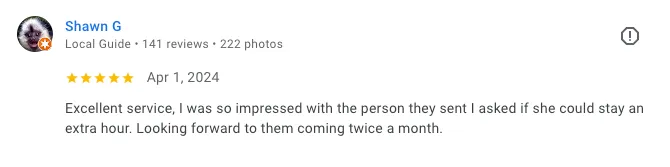
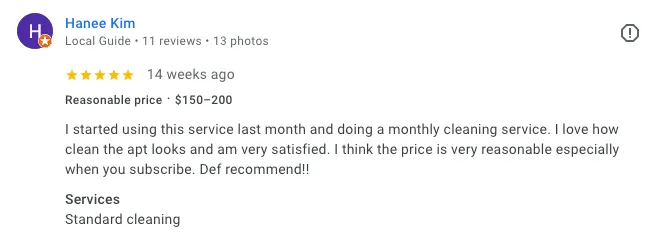
For homeowners thinking about resale, that shift matters. A deep clean before listing is standard at this point, not optional. But the more important service for Queens Village’s high homeownership rate is the recurring clean, the biweekly or monthly appointment that keeps a house maintained rather than requiring a major reset before every sale or family event.
The two-family owners have their own set of considerations. A unit that turns over needs a move-in move-out cleaning before the new tenant arrives, and a landlord who relies on good tenants has an interest in the property looking like it is cared for. We handle both the owner-occupied upstairs units and the rental units below on the same visit. The logistics work, and the total price for both is clear before you book anything.
For the older Tudor Revival and Colonial Revival homes, the deep cleaning is where we earn the most trust. These houses accumulate cleaning debt in the spaces that routine maintenance skips: the radiator fins, the window channels, the grout in original tile bathrooms, the crown molding that collects dust above eye level. A proper deep clean at the start of a recurring relationship resets those surfaces to a baseline that the regular visits can maintain.
Your cleaning takes about three hours so here is how to use them in a neighborhood with more on offer than its reputation suggests
The honest answer is that most people who do not live in Queens Village have no idea what Hillside Avenue actually contains. The food corridor running east from Springfield Boulevard toward the Nassau County line is one of the most genuinely diverse commercial strips in the United States. You can eat your way through Jamaican, Pakistani, Bangladeshi, Trinidadian, Guyanese, Nigerian, Ghanaian, and Haitian cooking within fifteen minutes of walking. The South Asian sweet shops along Hillside serve fresh jalebi alongside cardamom chai. The roti shops open early and the doubles are right. If you want to understand what people mean when they say Queens is the most diverse county in the country, this is a better argument than any demographic chart.
For time outdoors, Baisley Pond Park to the south has walking paths around an actual pond, athletic fields, and enough acreage to fill a full cleaning window without repeating a route. Springfield Park is closer to the residential core and good for a quieter morning walk. Francis Lewis Park serves the eastern part of the neighborhood with courts and open space. None of these is Prospect Park or Flushing Meadows, but all of them are genuinely pleasant on a dry morning and usually uncrowded on weekday visits.
If you want to get out of the neighborhood entirely, the LIRR Queens Village station on the Hempstead Branch puts you at Penn Station in 35 to 40 minutes, and since East Side Access opened, Grand Central Madison is also an option. That is a real midtown errand window. Book a morning clean, take the LIRR in for a few hours, and come back to a clean house. The transit math works in a way that the neighborhood’s car-dependent reputation sometimes obscures.
What a Queens Village cleaning actually looks like when you book
You pick your date and time on our booking page and see your flat-rate price before you commit to anything. If you have a two-family home and want both units done, book them together. If you have a finished basement, count it in your square footage. If your kitchen has seen serious cooking and needs degreasing, mention it in the booking notes and we account for it.
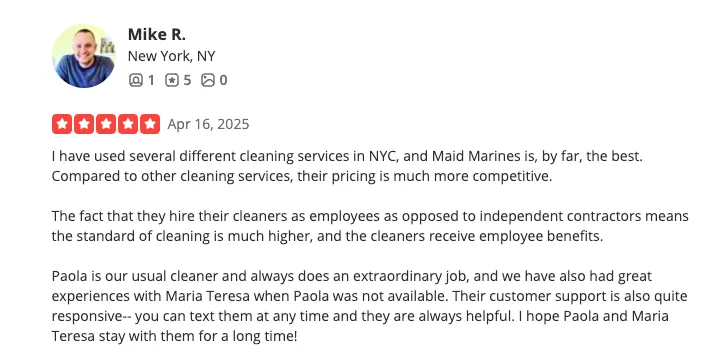
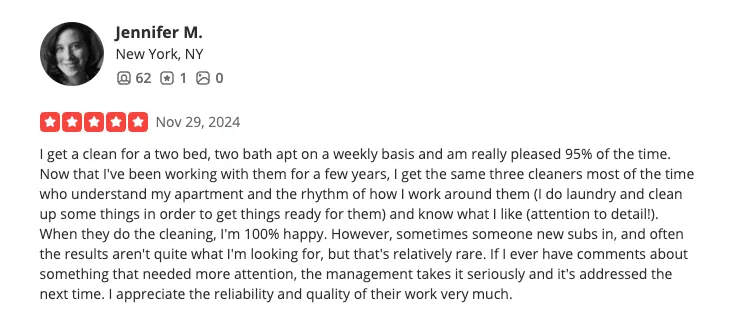
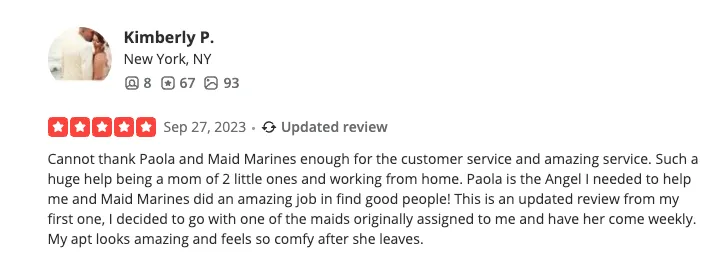
Our cleaners are W-2 employees, not gig workers. They arrive with everything they need, including the right degreasers for heavy cooking residue, the right products for original hardwood floors, and the right technique for homes where shoes come off at the door. We send the same team to the same home on recurring visits so they learn the house, know what matters to the household, and do not have to be re-briefed on every visit.
Queens Village homeowners also use us for house cleaning on a recurring schedule, deep cleaning before the holidays or after a renovation, and apartment cleaning for the rental units in two-family homes. We serve nearby southeast Queens neighborhoods including Laurelton, Cambria Heights, and the surrounding areas, and connect to the wider Queens network that includes Forest Hills and Long Island City.
The neighborhood named itself after the whole borough and then spent a hundred and fifty years becoming a place that actually earns the claim. The Tudor homes on the quiet interior blocks, the Hillside Avenue corridor that contains more of the world than most American cities see in total, the generational homeownership that has survived every wave of change the outer boroughs have experienced since the war. This is a neighborhood that holds. Let us handle the cleaning while you go enjoy it.