
Steinway is named for a piano company, which is unusual. Almost no neighborhood in New York City carries the name of a private commercial enterprise rather than a landform, a historical figure, or an immigrant community. The name arrived in the 1870s when William Steinway, son of the company’s German-born founder, purchased roughly 400 acres of northwestern Queens farmland and proceeded to build an entire self-contained town around a piano factory. He put up worker housing, a library, a post office, a kindergarten, a church, and a volunteer fire department. He gave the street his family name. The company town dissolved within a generation after his death in 1896, but the factory never stopped making pianos. Today, more than 150 years after William Steinway first broke ground in Queens, the building at 1 Steinway Place is still producing Steinway concert grands for Carnegie Hall.
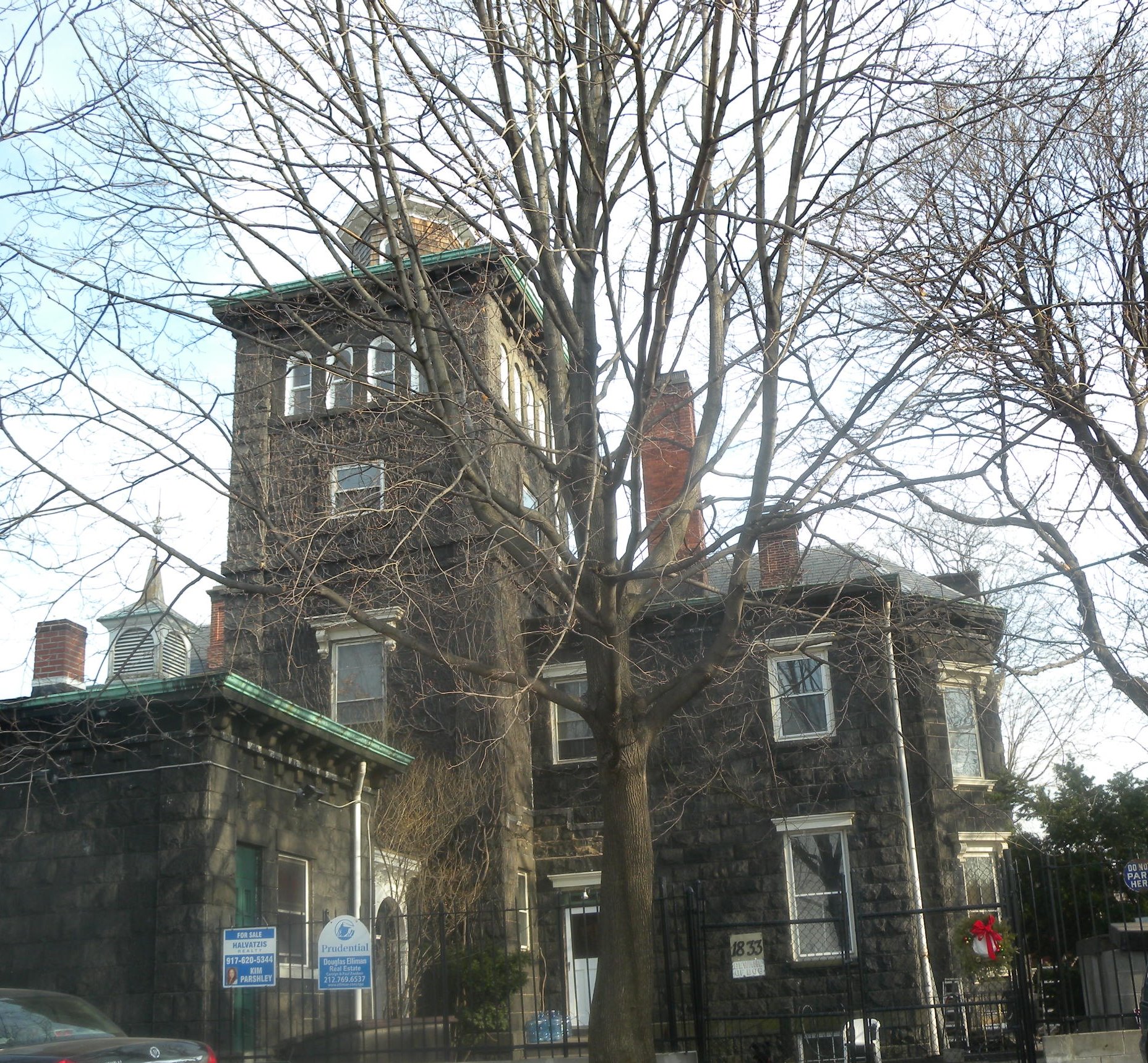
That continuity is the central fact of the neighborhood. The area has moved through German craftsmen, Italian and Greek immigrants, and a large Egyptian and Yemeni community, and each wave left a different commercial corridor and a different social texture. But the factory stayed. The residential blocks built for piano workers in the 1870s and 1880s are still occupied. The Steinway Mansion on 41st Street, an Italianate villa built in 1857 and purchased by William Steinway as his personal residence, is still standing and still carries landmark designation. The Ditmars Boulevard dining scene that the Greek community built over the middle decades of the 20th century is still among the most concentrated restaurant blocks in Queens. Steinway is the rare neighborhood where layers accumulate rather than replace each other.
A company town that became a neighborhood
William Steinway arrived in Queens in 1870 with a specific plan. His Manhattan factory had outgrown its space and labor costs were rising. He purchased land along Bowery Bay on the western waterfront for multiple reasons: water access for receiving raw timber from the South and shipping finished pianos to dealers, room to expand production, and distance from the labor organizers who were active in Manhattan. He paid approximately $60,000 for the initial acreage.
What he built over the following two decades was one of the most complete examples of 19th-century industrial paternalism in American history. The factory came first, with its own foundry and sawmill. Then came rows of workers’ housing, modest but solid brick homes that employees could rent or buy. A kindergarten was established at a time when the concept had barely arrived in American public education. A library followed. Then a post office, with Steinway, Queens as its address. A German Lutheran church reflecting the workforce’s origin. Parks and recreational spaces. Eventually a horse-drawn streetcar line connecting the village to Long Island City.
William Steinway also invested in something that would outlast the company town by more than a century. His Steinway Railway Company built the East River tunnels that today carry the 7 train between Queens and Manhattan. The tunnels were intended to serve the company town. William Steinway died in 1896 before the project was completed, and the tunnels were eventually acquired and opened as part of the IRT system. He funded a 19th-century transit project and inadvertently shaped the 20th century’s subway map.
The company town model dissolved by the 1920s as workers sought ownership rather than employer tenancy, and the 1898 consolidation absorbed the neighborhood into greater New York City. But the physical remnants survived. The worker cottages on the side streets around 38th Street remain occupied today. The Steinway Mansion on 41st Street, which William Steinway used as his personal residence and as the social headquarters for the enterprise, is a designated New York City Landmark. The factory, as always, kept making pianos.
The housing stock that defines Steinway cleaning
The built environment of Steinway reflects its layered history in direct ways that affect how homes need to be cleaned. Company-town-era housing means pre-war brick construction, often two-story attached rowhouses with plaster walls, original hardwood floors, and radiator heat. These homes were built for working families and the craftsmanship is solid but not decorative. The walls have gained a hundred years of paint layers. The floors have original planks with gaps where dust accumulates between the boards. The cast-iron radiators have fins that collect dust through the summer and release it as burned smell when the heat returns in October.
The mid-rise walkup apartments built along Steinway Street and the commercial corridors in the early 20th century follow a similar pattern. Three to six story brick buildings with tile or linoleum in the kitchens and bathrooms, hardwood in the living spaces, and plaster throughout. The narrow hallways typical of these buildings require care when moving equipment through them. The bathrooms often have original hex tile where the grout cannot tolerate acidic cleaners.
Newer construction appears at infill sites along the main commercial corridors. These buildings tend toward 4 to 8 stories with modern interior finishes, engineered hardwood, and bathroom tile that tolerates more aggressive products than the vintage hex tile in the older buildings. The approaches differ and a cleaning team that treats them the same will damage something in one or the other.
Our house cleaning teams carry separate products for hardwood, stone, and tile and switch between them as they move through different rooms and floors. Pre-war floors get a damp microfiber mop rather than a wet mop. Radiators get attention between the fins with a brush attachment, not just a wipe across the top. Plaster walls get the same care as the floors below them. We have cleaned over 100,000 homes in New York City and the recurring lesson is that old buildings require product-specific technique at every surface, not a single spray-and-wipe approach.
The piano factory and why it never left
Most 19th-century company towns in American cities no longer have the company. The factory moved offshore or closed, the industrial buildings were converted to condos, and the neighborhood became a real estate story with a historical footnote. Steinway is not that story. The factory at 1 Steinway Place has been making concert grand pianos since 1872 without interruption. Through two World Wars, the Great Depression, corporate acquisition by a hedge fund, and a global pandemic, the Queens building kept producing instruments.
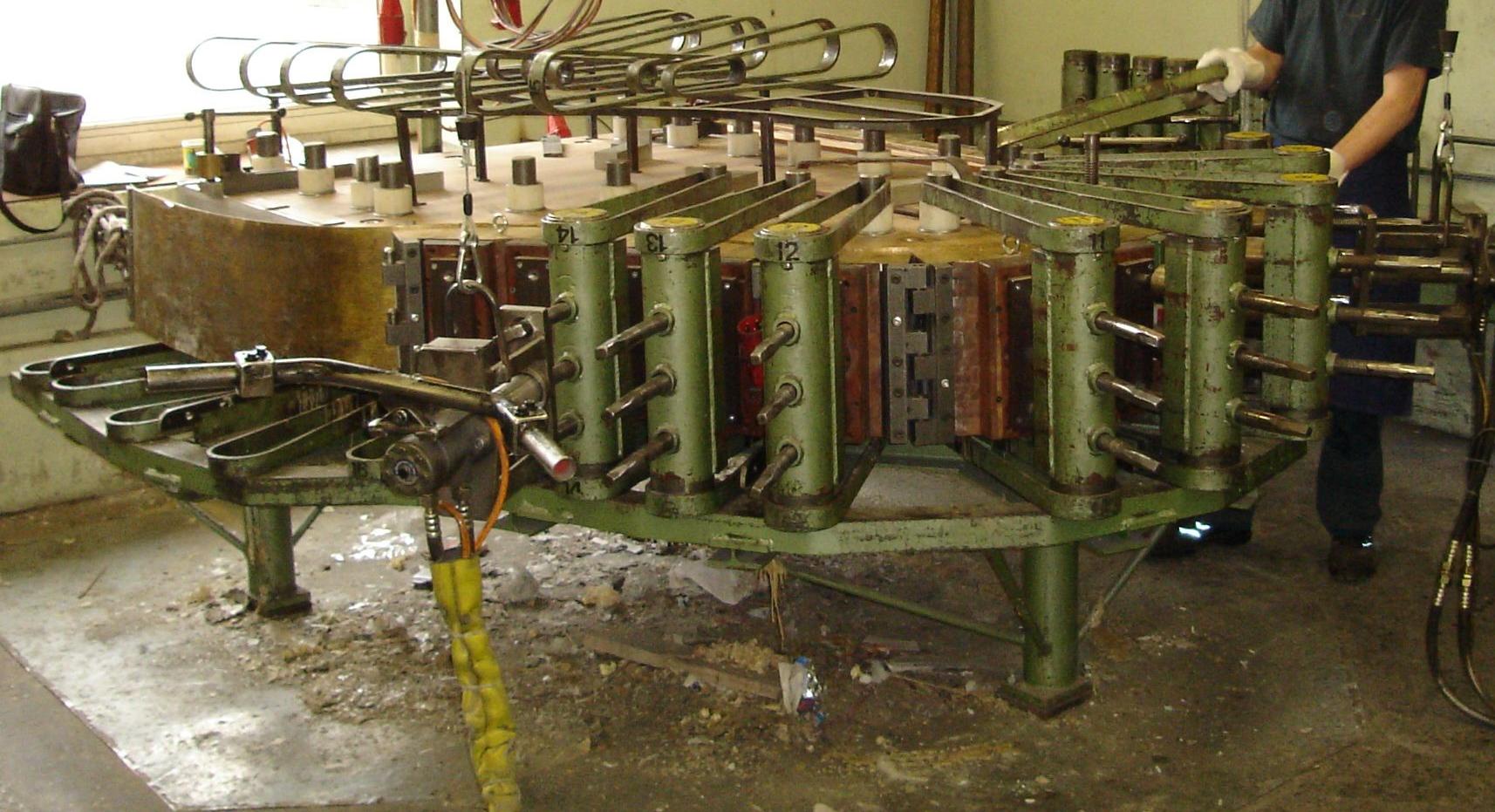
The scale of that continuity is worth stating plainly. Each Steinway concert grand requires approximately one year from raw lumber to completed instrument. Workers hand-select timber and store it for years before it enters production. The piano’s curved outer rim is bent by hand in a process that takes multiple skilled workers working simultaneously. The voicing and tuning at the end of the process can take weeks. About 1,000 of these instruments are completed each year at the Queens factory.
Steinway & Sons has been the exclusive piano provider to Carnegie Hall since 1891. Every concert grand played at a Carnegie Hall recital was built on this block in northwestern Queens. When a pianist sits down for a performance at the most famous concert hall in the United States, they are touching an instrument made by craftspeople who live and work in Ditmars-Steinway. That is a form of manufacturing continuity that no other residential neighborhood in New York City can claim.
Factory tours are available by appointment and take visitors through every stage of production, from the raw timber storage through rim bending, key fitting, and final voicing. The tours run most of the year and booking in advance is required. It is one of the few places in New York City where you can watch 19th-century craft techniques practiced at production scale in the same building where they were developed.
Ditmars Boulevard and the Greek dining culture that built it
The northern end of the Steinway neighborhood runs into Ditmars Boulevard, one of the most concentrated restaurant corridors in Queens. The Greek and Italian families who arrived in the early and middle 20th century built the commercial infrastructure of this stretch and much of it remains intact. Outdoor cafe tables, family-run restaurants, and neighborhood businesses that have been on the same block for decades give Ditmars a European-village feel that distinguishes it from the more transient commercial strips elsewhere in Queens.
Taverna Kyclades at 33-07 Ditmars Boulevard is consistently ranked among the best Greek restaurants in New York City. Whole grilled fish, octopus, and traditional seafood dishes cooked simply and brought out correctly. The wait on weekend evenings is real and worth it. Elias Corner at 24-02 31st Street operates with no printed menu. The staff tells you what arrived fresh that day. Trattoria L’incontro at 21-76 31st Street has earned James Beard Award semifinalist recognition for traditional southern Italian cooking that draws diners from across the borough.
The outdoor dining season on Ditmars, from late spring through September, turns the boulevard into a social space where neighbors sit at tables on the sidewalk until late evening. The community that built this culture over three or four generations is still here. The restaurants they opened and the walking pace they established on the street remain the dominant character of the northern neighborhood.
The Middle Eastern corridor that transformed lower Steinway Street
South of Astoria Boulevard, Steinway Street becomes a different neighborhood entirely. The Egyptian and Yemeni commercial corridor that developed here from the 1970s onward is now one of the most authentic Middle Eastern commercial districts in the United States. Egyptian spice shops with open sacks of cumin and cardamom on the sidewalk, Yemeni restaurants serving lamb mandi over rice, hookah cafes where the smoke drifts out the door in the afternoon, halal markets with produce from the Arab world. The community that built this corridor came from Cairo, Alexandria, and Sana’a and has been written up in international Arabic-language media as a destination for Arab immigrants arriving in New York.
Kebab Cafe at 25-12 Steinway Street is the corridor’s most celebrated establishment. Chef Ali Hassan runs a tiny operation with no menu and no advance order. He cooks what he feels like that day. You sit down and you trust him. The restaurant has been reviewed and recommended in American and international food media for decades and the format has never changed.
The two commercial identities of Steinway Street, Greek and Italian on Ditmars at the north end and Egyptian and Yemeni on the lower stretch to the south, are separated by only a few blocks but operate as culturally distinct commercial worlds. They coexist on the same street grid and share very little overlap. The result is a neighborhood where you can walk four blocks and feel like you have moved between different cities.
Apartment and house cleaning for a neighborhood that cooks every day
Steinway and Ditmars-Steinway are neighborhoods where daily home cooking is a cultural practice rather than an occasional activity. Greek, Italian, Egyptian, Yemeni, and other cuisines are cooked in apartment and rowhouse kitchens across the neighborhood on a regular basis. High-heat cooking with oil produces grease accumulation that a surface wipe cannot address. The film builds on backsplash tile, inside range hood filters, on the cabinet faces above the stove, and along the walls adjacent to the range. Left for several months, it becomes a deep clean job rather than a recurring maintenance task.
For recurring apartment cleaning, we cover the stovetop, range hood exterior, and countertops on every visit. When you start with us after a period of heavier buildup, we typically recommend a deep cleaning for the first visit to strip the grease back to the original surface. Once that reset is done, the recurring cleans prevent it from accumulating again. Homes in this neighborhood that cook daily almost always benefit from the deep clean as a starting point.
Move-in and move-out cleaning is another common request. Steinway and Ditmars have an active rental market with apartments that change hands through the year. A rowhouse floor-through that has had a tenant for several years needs thorough work before the next person moves in. We handle the full scope, including inside cabinets, under the stove and fridge as far as we can reach, bathroom grout, and the accumulated grime in corners that nobody cleans during a regular visit.
What booking looks like
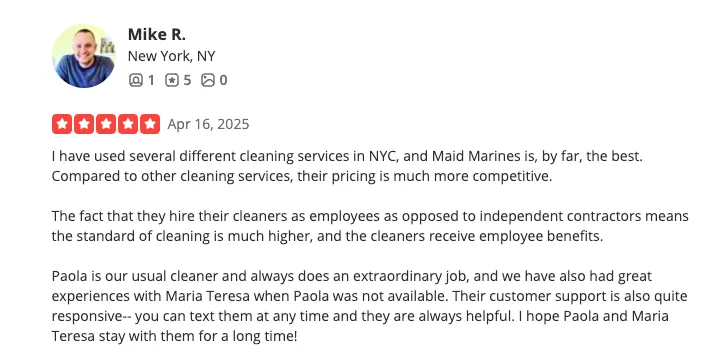
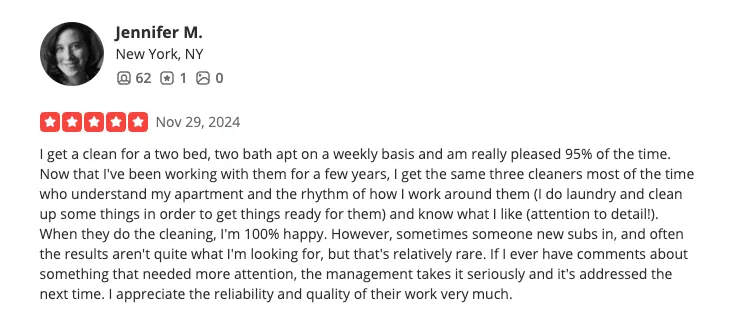
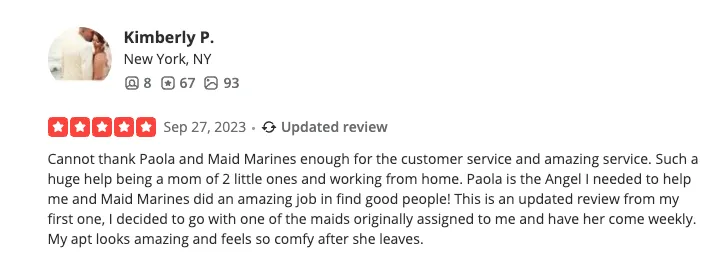
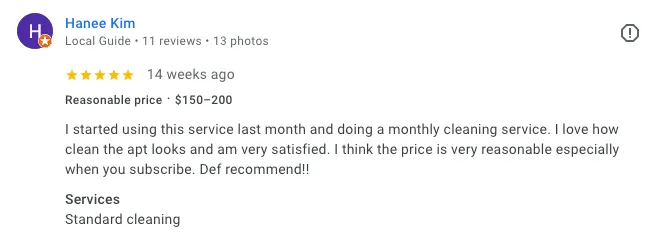
You pick your date and time on our booking page. You see your flat-rate price before you commit to anything. If your building is a co-op that requires a COI, or if you have a specific surface concern from an older home, you tell us when you book and we handle it. Our cleaners are W-2 employees, not gig workers. They are vetted, insured, and arrive with the right products for the specific surfaces in your home.
We also serve nearby Astoria, Long Island City, Sunnyside, and the rest of Queens.