
The A train has been running above Liberty Avenue since 1936, and for as long as it has been running, City Line has been a neighborhood in motion. The elevated steel structure casts shifting shadows on the storefronts below every few minutes when a train passes, and the rhythm of that passing — the rumble underfoot, the screech of steel on steel, then quiet again — is the background sound of daily life here. You either grow used to it or you never notice it at all. Most people grow used to it.
City Line sits at the eastern edge of Brooklyn, where the borough ends against the Queens county line as precisely as a cut on a map. The neighborhood takes its name from that line — the eastern boundary of the old City of Brooklyn before the 1898 consolidation brought all five boroughs together into a single city. Before consolidation, people living near that eastern edge would say they lived at the city line, and the phrase stuck long after the line became an intra-borough boundary rather than a municipal frontier. City Line is named for its position, not for any feature of the land itself, which says something true about a neighborhood whose identity has always been defined by adjacency and crossing.
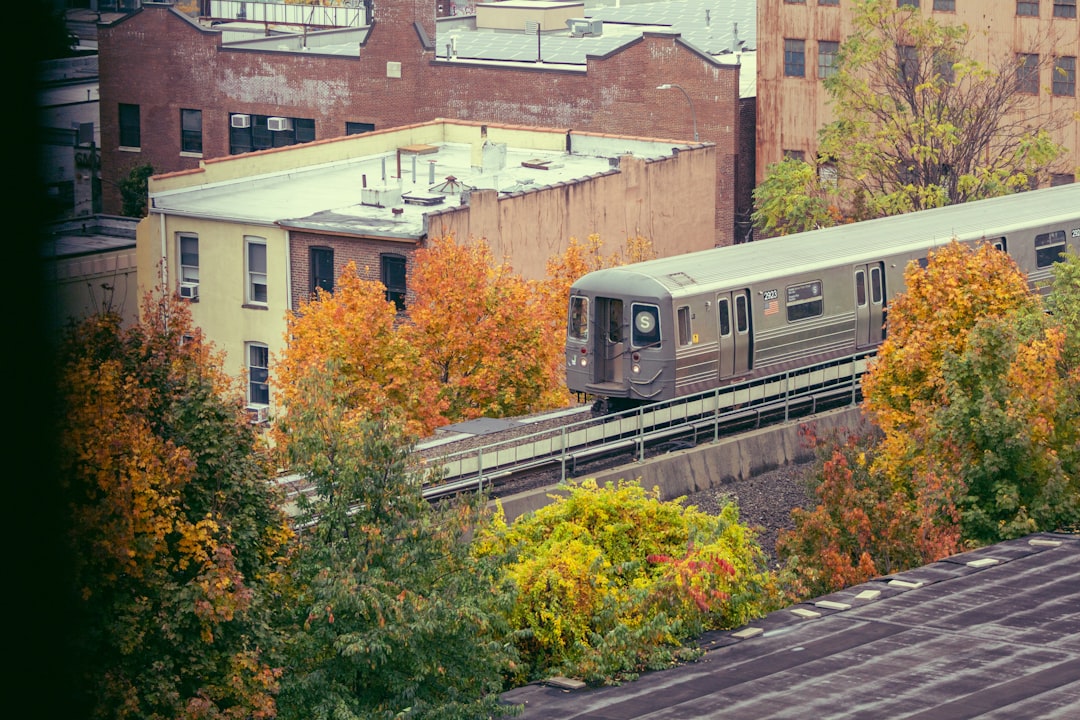
The housing stock here was built in one generation and has outlasted several more
City Line was developed in a compressed burst from roughly 1920 through 1950, following the 1936 opening of the IND Fulton Street Line that brought the A train to Liberty Avenue. Before the subway arrived, the neighborhood was a semi-peripheral settlement at the edge of the city’s reach. After it, the blocks filled in rapidly with the attached brick row houses that still constitute nearly all of the neighborhood’s residential fabric today.
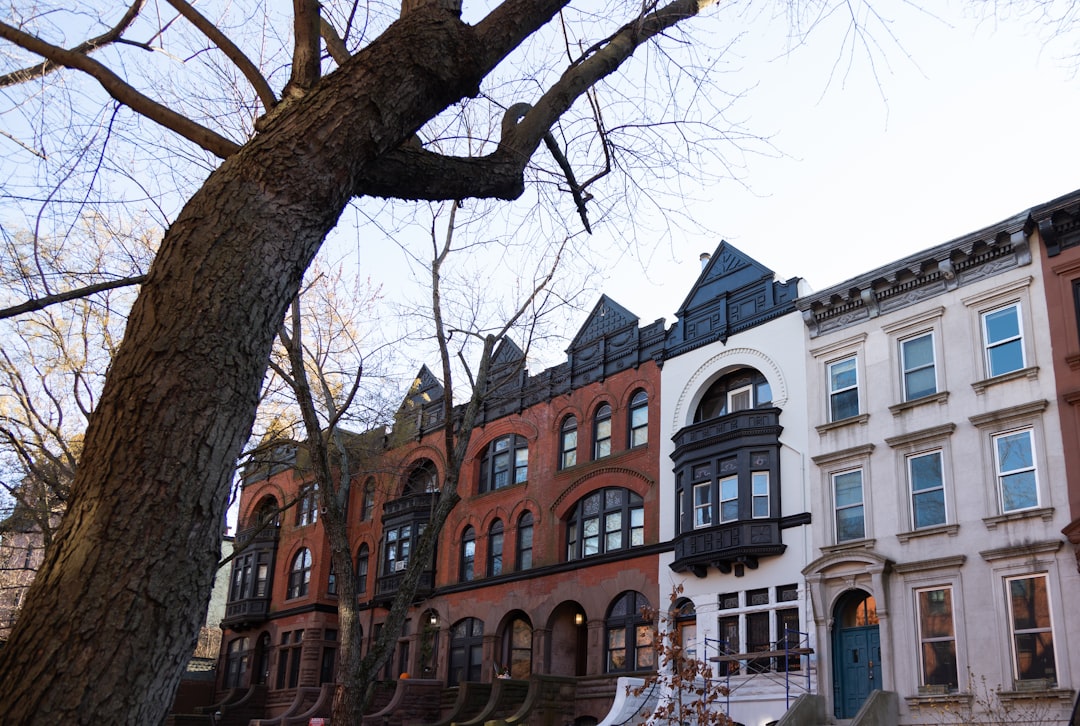
The dominant building type is the two-family attached row house. These are modest, durable structures built for working-class homeownership: two stories over a raised foundation, brick construction with shallow stoops and small iron-railed front gardens, decorative cornices at the roofline, and ground-floor entry vestibules that separate the two units. Most were designed around the economics of working-class ownership — you live in one unit and rent the other, using the rental income to carry the mortgage. That model has proven durable across multiple generations and multiple waves of immigrant homebuyers.
The blocks built in the 1920s and 1930s have a uniformity to them that reflects both the compressed development period and the working-class pragmatism of the builders. There was no money for architectural flourishes. What the houses have instead is good brick, solid construction, and a scale that fits human beings comfortably. Ceilings run eight to nine feet. Rooms are appropriately sized for families. The kitchens are small. The bathrooms are functional. These are not grand homes by any measure, and they are not trying to be.
Walk-up apartment buildings of four to six stories make up the remainder of the housing stock, concentrated near the transit corridors at Liberty Avenue and near the A/C stations. These buildings date from the same period and have the same brick-and-fire-escape character as similar structures throughout working-class Brooklyn.
What distinguishes City Line’s housing from that of neighboring East New York or Brownsville is the relative absence of large public housing developments. The Cypress Hill Houses NYCHA towers sit just to the west in Cypress Hills proper, but within City Line’s narrower boundaries the housing stock is almost entirely private, owner-occupied or small-landlord rental, built at a human scale that has resisted the kind of institutional intervention that transformed other parts of eastern Brooklyn.
Cleaning a two-family row house requires a different approach than cleaning a co-op or a condo
The two-family row house presents specific cleaning conditions that differ from the brownstones of Park Slope or the elevator buildings of downtown Brooklyn. The footprint is narrow and the layout is long — rooms run front to back through the house rather than spreading laterally, which means traffic patterns concentrate on a central hall and stairway that collect dust and grime faster than any other surface in the home.
The brick-and-plaster construction from the 1920s and 1930s produces plaster walls that are genuinely hard and durable, unlike modern drywall, but that require care around paint adhesion. Old-growth pine and hardwood floors from this era are often unfinished or finished with a polyurethane applied decades ago that has softened and scuffed. Bathrooms in these units typically have original hex tile floors with grout lines that narrow and deepen with age, trapping soap residue and mineral deposits that resist surface cleaning.
Kitchens in these houses tend to be galley-style — a single run of cabinets and appliances along one wall of a narrow room — which means cooking grease accumulates on a small number of surfaces that receive heavy use. The range hood, the backsplash behind the stove, and the cabinet faces directly above the cooking surface all need real attention in a home where cooking happens daily, which is every home in this neighborhood.
We have cleaned over 100,000 homes across New York City, and a significant portion of them are exactly this type: Inter-War brick row house, working-class family, daily cooking, narrow layout, original surfaces that need product-appropriate care. Our house cleaning teams work top to bottom and carry separate products for tile, hardwood, and painted plaster surfaces. They do not apply one all-purpose spray to every surface and call it done. In a row house built 80 years ago, that approach does damage over time.
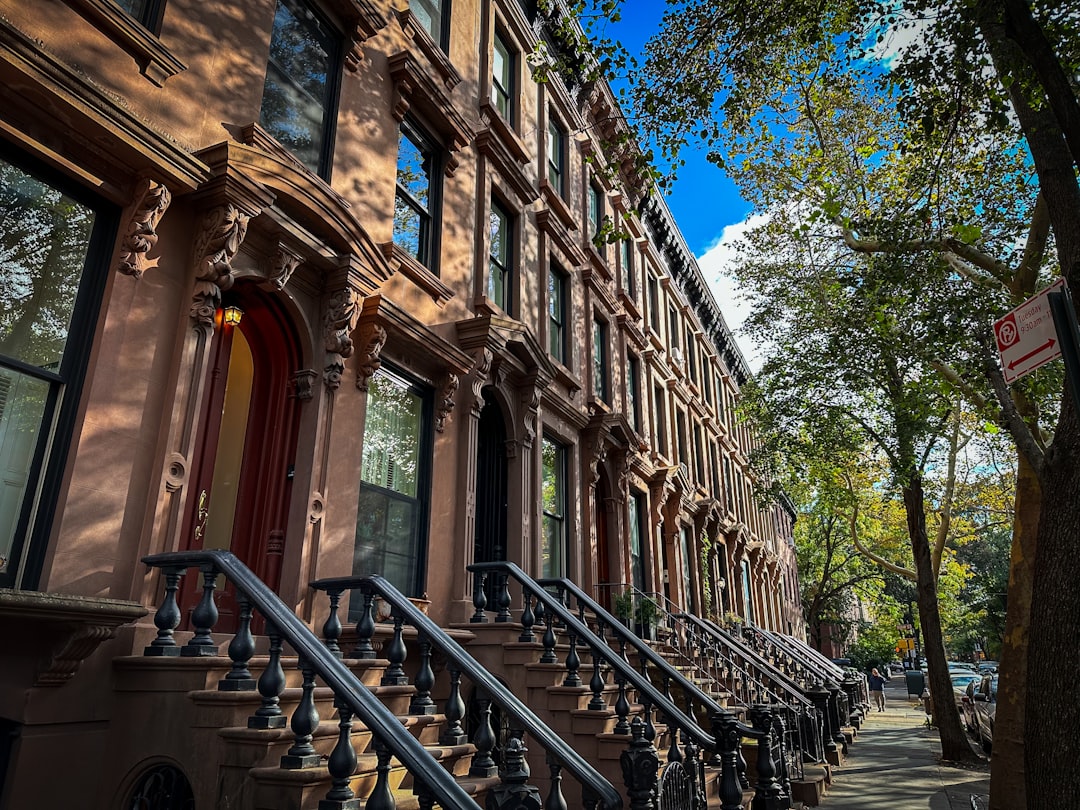
Liberty Avenue is the neighborhood’s main street, transit corridor, and cultural identity all at once
Liberty Avenue is unusual among Brooklyn commercial streets because it performs three functions simultaneously. It is a shopping and dining corridor. It is the elevated right-of-way for the A train, whose steel columns run down the center of the avenue from Euclid to the borough line. And it is the street that crosses from Brooklyn into Queens without a gap — you can walk east on Liberty Avenue, pass a borough line marker in the middle of the road, and continue into Ozone Park without ever leaving the sidewalk or changing direction.
The commercial character of Liberty Avenue is Caribbean and South Asian. Guyanese curry shops, Trinidadian patty stands, Bangladeshi sweet shops and halal butchers, Jamaican rum cake bakeries, West Indian grocery stores carrying provisions — scotch bonnet peppers, saltfish, dried cassava, coconut water in green shells — that you cannot find at a standard supermarket. The businesses here are not curated for visitors; they operate for the people who live on the blocks behind them. The prices reflect this.
The Guyanese presence on Liberty Avenue is particularly significant. New York City is home to over 130,000 Guyanese-Americans, the largest concentration outside Guyana itself, and the communities of City Line and adjacent Ozone Park are central to that diaspora. The cuisine reflects Guyana’s ethnic complexity — South Asian, African, and Creole traditions blended over centuries of shared history — and the restaurants and home kitchens of Liberty Avenue produce that food daily. A plate of rice, curried goat, and pholourie from a Guyanese shop on Liberty Avenue costs about what lunch has always cost in this part of Brooklyn, which is not much.
The Bangladeshi community that has grown substantially since the 1990s adds another layer. Liberty Avenue now has sweet shops selling mishti doi and rossogolla alongside the Caribbean establishments. Bengali-language signs appear on storefronts between Creole-language ones. The avenue is ethnically dense in a way that is neither managed nor designed — it is simply what happens when multiple immigrant communities settle on the same commercial corridor over several decades.
The neighborhood’s position on the borough line creates conditions found nowhere else in the city
You can stand on Liberty Avenue in City Line and place one foot in Brooklyn and one in Queens. The borough line runs through the center of the avenue, and businesses whose footprints straddle that line technically operate in two boroughs simultaneously — a legal and practical curiosity that affects liquor licensing, sanitation pickup schedules, and address conventions. Some buildings on the avenue have Brooklyn addresses on one side and Queens addresses on the other.
This border quality is not just a trivia fact. It shapes the neighborhood’s character in ways that are subtle but real. City Line residents live at the edge of one administrative system and the beginning of another, which means they have access to two borough’s worth of commercial life within walking distance. The Q11 and Q41 Queens buses cross Liberty Avenue and continue into Ozone Park and Richmond Hill, giving City Line residents access to the commercial corridors of those neighborhoods as well as their own. The neighborhood is not bounded by the borough line the way most neighborhoods are bounded by rivers or parks — it bleeds through it.
For cleaning purposes, this matters primarily in terms of scheduling. We serve both sides of the Liberty Avenue corridor. If you live in City Line proper — on the residential blocks south of Liberty Avenue between Euclid and the borough line — we reach you on the Brooklyn side of that border. Same teams, same pricing, same availability as everywhere else we serve in Brooklyn.
Deep cleaning after years of hard use is one of the most common requests in a neighborhood like this
Working-class neighborhoods with high homeownership rates and multigenerational households tend to have a specific relationship with professional cleaning services. Many families manage cleaning internally for years, decades, or across generations without ever calling a service. When they do call, it is often because something has accumulated to the point where the internal approach is no longer keeping up — a kitchen that has taken on decades of cooking grease, bathroom tile that has been cleaned but never truly deep-cleaned, hardwood floors that have been swept and mopped but never had the waxy buildup of old cleaning products stripped away.
Our deep cleaning service is built for exactly this situation. It addresses the buildup that standard maintenance cleaning does not reach: along baseboards, inside the oven and refrigerator, the floor under the stove and fridge as far as reach allows, around drain covers and overflow plates in the bathroom. Cabinet and drawer interiors are an extra you tick at booking, and they are folded into the rate on a turnover. In a row house that has been occupied continuously for 30 or 40 years, the first deep clean is a restoration as much as a cleaning. It takes longer than a standard visit and uses different products for different surfaces, but it produces a measurable change that a maintenance clean cannot.
After the first deep clean, recurring apartment cleaning every two or four weeks keeps the home at the restored standard without requiring another full reset. Most clients in this situation stay on a recurring schedule once they experience what a clean home actually feels like — not a scrubbed home, but a genuinely clean one.
Move-in and move-out cleaning for a neighborhood where tenant turnover happens in two-family homes
City Line’s two-family row house model creates a specific rental dynamic. The owner-occupied unit changes hands infrequently. The rental unit on the second floor, or the ground-floor apartment in a three-unit building, turns over on a normal residential cycle — leases end, tenants move, new tenants arrive. The condition in which a unit is returned and the condition in which it is offered to new tenants matters to the owner’s relationship with their building and their income.
We handle move-in and move-out cleaning for City Line’s rental units on both sides of a tenancy. Move-out cleaning after a tenant vacates covers every surface in the unit, including inside cabinets, the oven and refrigerator, bathroom fixtures, and the tile grout that accumulates during a tenancy. Move-in cleaning before a new tenant arrives is essentially the same scope, carried out on a unit that may have been sitting empty for a week or two and has collected dust. In either case, the goal is a unit that a new tenant can move into with confidence that the surfaces they are living on were genuinely cleaned, not just swept and wiped.
For owners managing a rental unit in their own home, we offer the option to coordinate directly with the tenant for recurring service so the owner does not need to be present or involved. The tenant schedules and pays; the owner knows their building is being maintained without having to manage the relationship. This arrangement is common among the homeowners in City Line and Cypress Hills who own their buildings but work long hours and cannot supervise maintenance directly.
What booking looks like for City Line residents
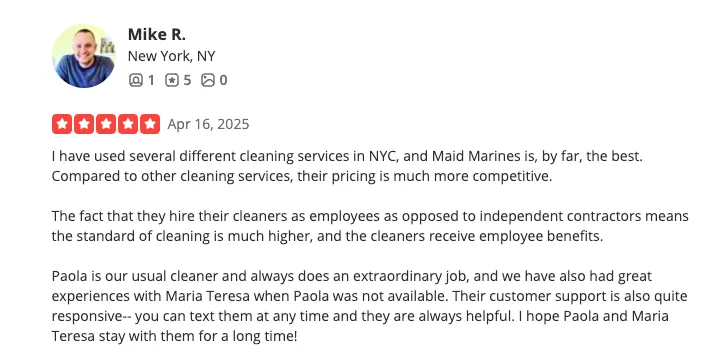
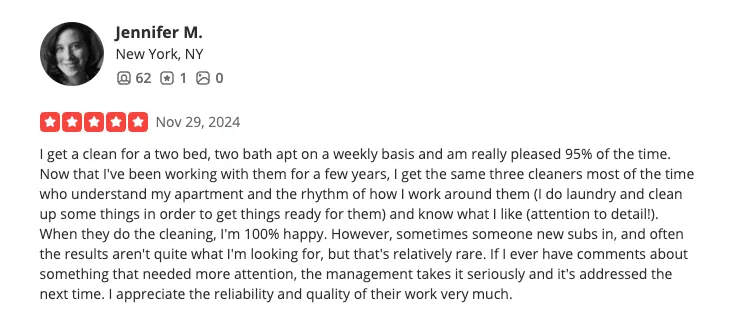
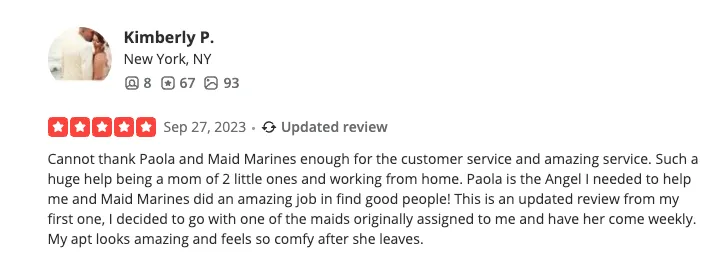
You pick your date and time on our booking page. You see a flat-rate price before you commit to anything — no hidden fees for tight hallways, no upcharges for older buildings. Our cleaners are W-2 employees, not gig workers. They are vetted, insured, and they bring the right products for the surfaces in your specific home.
We also serve nearby Bed-Stuy and Bushwick, and the rest of Brooklyn. If you want a one-time deep cleaning in NYC first before setting up a recurring schedule, that option is available on the same booking page. The A train will be running overhead whether you book or not. Might as well book.