
The first thing that stops people on Marlborough Road is the silence. Seven miles from Times Square, in a borough that runs at volume, the canopy closes overhead and the sound drops. Mature elms and maples reach over the rooflines of two-and-a-half-story Victorian houses set back behind actual front gardens, and the city is somewhere else for a moment. Children ride bikes on the sidewalk. A front porch has two chairs on it and someone is using them. This is Ditmas Village, and it takes most people who arrive here for the first time a full minute to recalibrate.
The neighborhood sits in the heart of central Brooklyn, bounded by Coney Island Avenue to the west and Ocean Avenue to the east, with Cortelyou Road running east-west through its middle like a Main Street that someone forgot was in a borough. The core of it — the Ditmas Park Historic District, designated by the Landmarks Preservation Commission in 1981 and added to the National Register of Historic Places in 1983 — covers eight blocks of residential streets built almost entirely between 1902 and 1914, roughly 2,000 to 2,500 freestanding houses constructed in a twelve-year window by developer Lewis H. Pounds and a generation of local architects. The streets carry English pastoral names — Marlborough, Argyle, Westminster, Rugby, Beverly — evoking an imagined countryside that the developer thought middle-class buyers would find aspirational. A century later they still do.
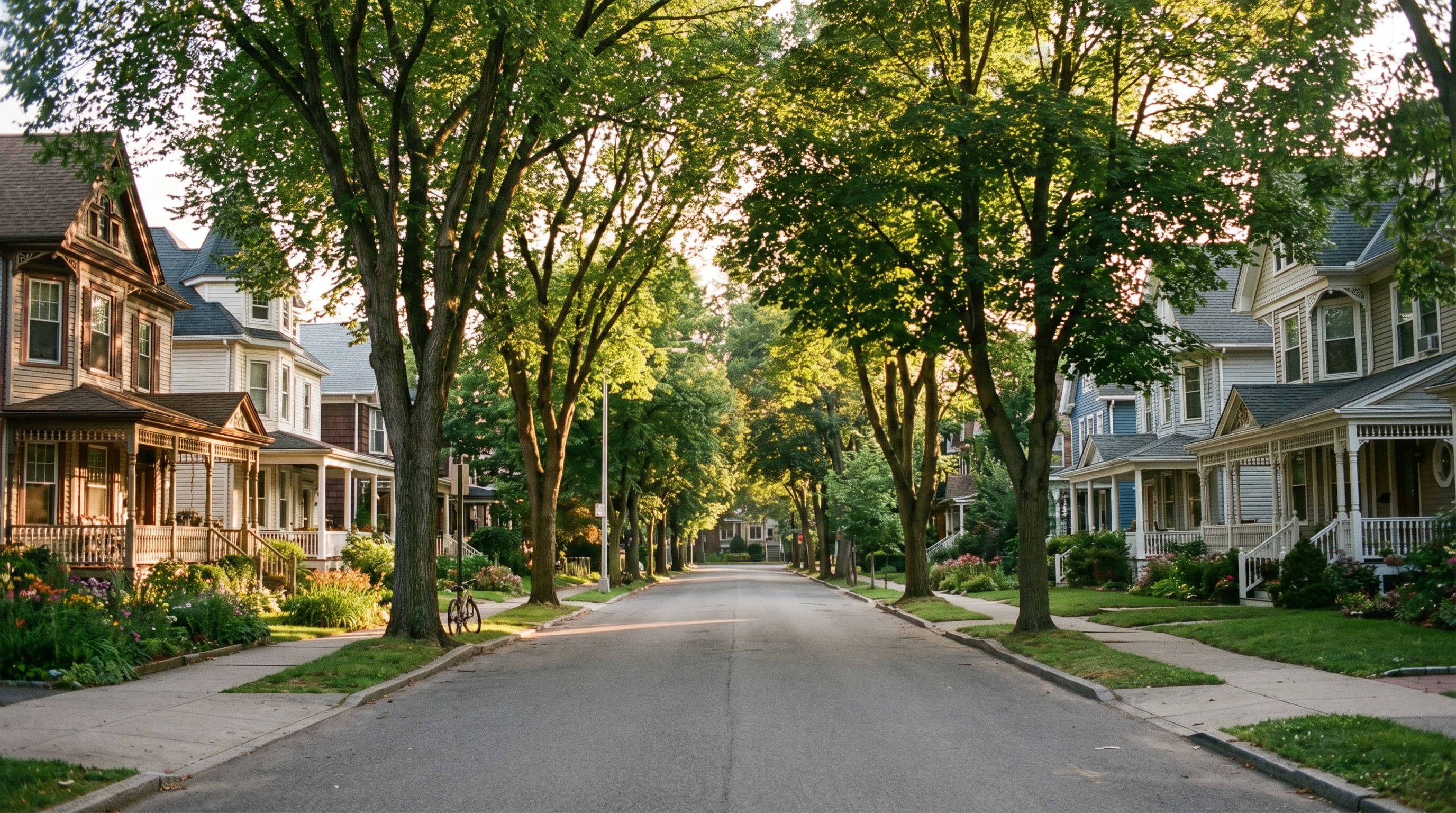
The housing stock here is unlike anything else Brooklyn has to offer
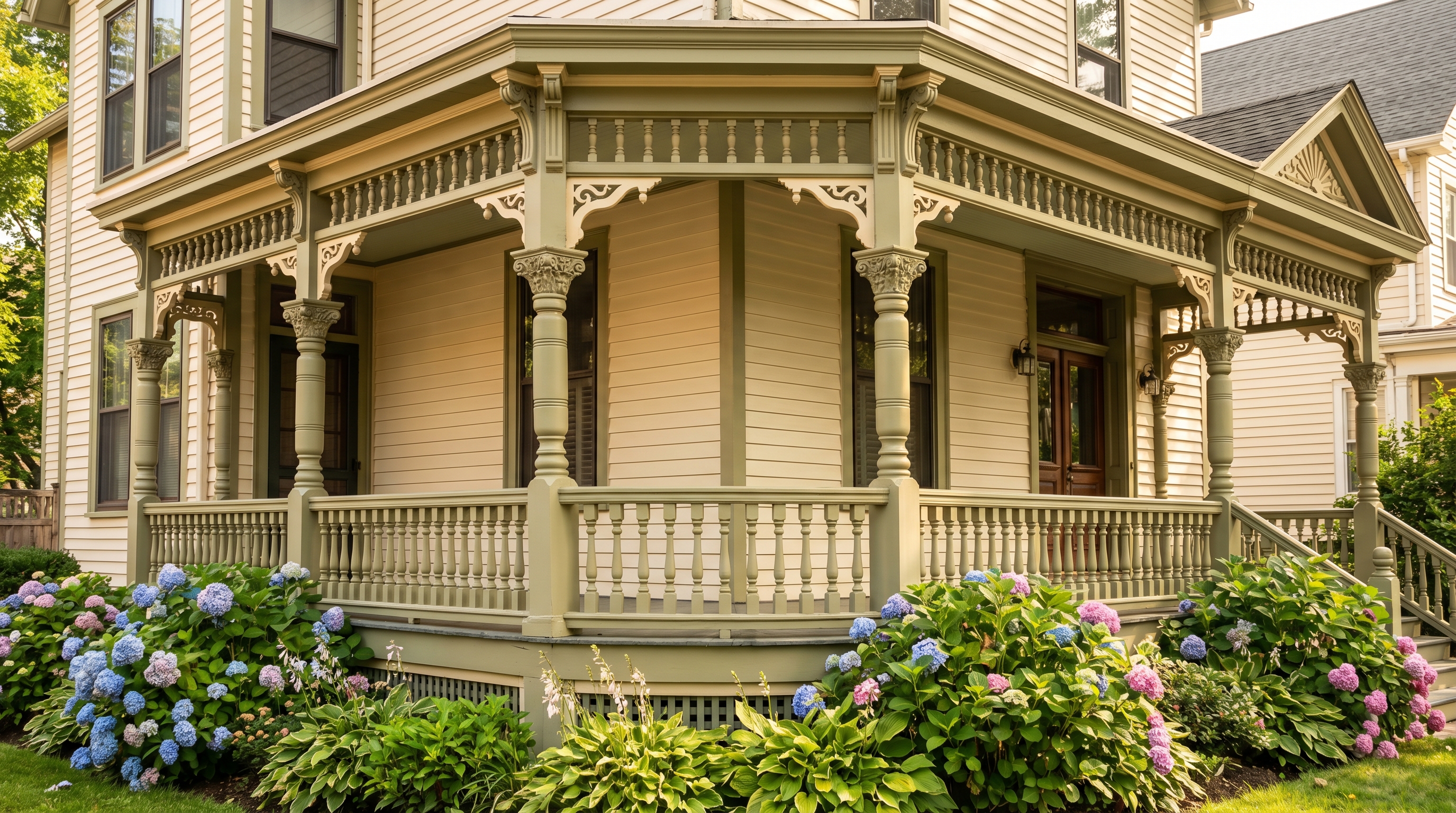
The dominant type is the freestanding wood-frame house, a dwelling category so rare in Brooklyn outside of this neighborhood that most residents of the borough have never lived in one. Colonial Revival, Queen Anne, Tudor Revival, Shingle Style, Bungalow-Craftsman — the range is considerable, though all the houses share the same essential quality: they sit on their own lots, set back from the sidewalk, with front gardens, deep porches, and typically a side yard or rear garden. The scale is suburban. The construction is solid.
Inside, the original details survived in large numbers. Wide-plank old-growth hardwood floors that were milled before modern softwoods became the standard. Plaster walls with original molded cornices above doorways. Pocket doors on original tracks. Decorative fireplace mantels in wood or tile. These are houses built to a standard of domestic finish that new construction has not matched since, and the neighborhoods’s buyers have spent decades restoring them after a mid-century period of subdivision and neglect.
Beyond the historic district core, the surrounding streets carry a more typical Brooklyn mix: pre-war two-family rowhouses, six-story brick apartment buildings from the 1920s and 1930s, and some newer construction along the commercial corridors. The ZIP code 11226 encompasses more than the Victorian houses, but the Victorian houses are what define the neighborhood’s character in the minds of everyone who lives here.
What it means to clean a wood-frame Victorian properly
A cleaning team that arrives at a four-bedroom Victorian on Argyle Road with a single mop and a bottle of all-purpose spray is going to do damage. The hardwood floors are almost certainly wax-finished rather than polyurethaned, which means excess water will raise the grain and cloud the surface. The plaster walls are more brittle than modern drywall and cannot tolerate the scrubbing that works on painted gypsum board. The ornamental spindles on the wraparound porch collect dust in their turned grooves, and wiping across the surface does not reach it. The cast-iron radiators pull dust from the air all summer and burn it off when the steam heat begins in October.
Our house cleaning teams work with separate product sets for wood, stone, and tile surfaces, and they switch between floors as the materials change. They clean top-down throughout, so dust from cornices and crown molding does not resettle on surfaces already cleaned below. Radiator and vent covers get dusted, along with the wall and the sill behind each one. Decorative woodwork gets a soft brush rather than a damp cloth. The floors get a barely damp microfiber mop and a cleaner formulated for wax finishes. These houses were built to last 150 years and have so far made it. Our job is to contribute to that trajectory rather than work against it.
We have cleaned well over 100,000 homes across New York City, and the Victorian houses of Ditmas Village represent some of the most rewarding and most demanding work we do. The scale of a two-and-a-half-story freestanding house, the variety of original finishes on different floors, the porches and garden-facing rooms that accumulate different kinds of debris — all of it requires the kind of attention to material that has become central to how we train.
Cortelyou Road changes the neighborhood’s register entirely
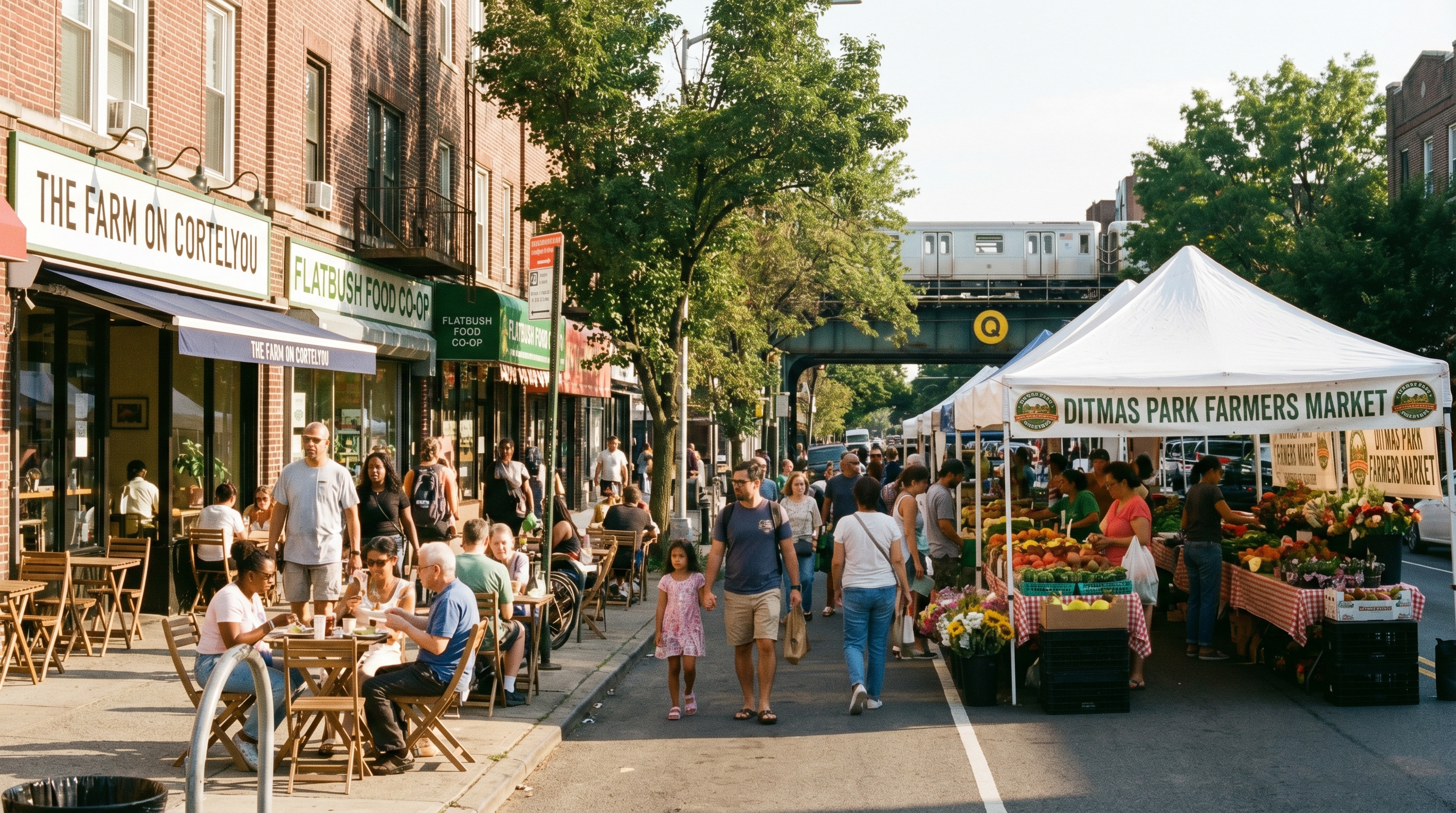
One block from the quiet of Marlborough Road, Cortelyou Road operates at a completely different frequency. The strip between Coney Island Avenue and East 16th Street holds an improbable concentration of genuinely good independent restaurants, a wine bar, a Sunday farmers market, coffee shops, and the kind of retail that develops when a block has been building its identity for two decades rather than being assembled all at once. Time Out New York named it one of the best blocks in the city for food as early as 2009, and the assessment has held.
Farm on Adderley opened on Cortelyou in 2006 and helped establish what the block could be. Mimi’s Hummus draws borough-wide regulars for mushroom hummus and green shakshuka. Castello Plan handles the wine-and-small-plates dimension. Cafe Tibet serves handmade momos and broth that would feel at home in Lhasa. The Sunday Greenmarket runs year-round and draws the neighborhood’s full demographic range rather than a single slice of it. This is a Main Street in the genuine sense, shared by everyone who lives here rather than curated for one demographic.
Your Sunday morning belongs on Cortelyou Road. That is true whether you have lived here for thirty years or moved in last month. Book your apartment cleaning or house cleaning for Sunday morning and spend the time at the market while we work.
The diversity here is real and has been stable for decades
Ditmas Village is one of the places in Brooklyn where the word diversity describes something actual rather than aspirational. The Caribbean-American community — Haitian, Jamaican, Trinidadian, Barbadian, Guyanese — represents the largest single cultural bloc, a legacy of immigration patterns that began in the 1960s and deepened over decades. South Asian families, particularly Bangladeshi and Pakistani households, anchor the Coney Island Avenue corridor. Russian and Eastern European immigrants settled here. The newer arrivals of the past two decades — younger professionals, families with children, artists — layered onto rather than replaced the existing population.
The coexistence has been more stable than in many Brooklyn neighborhoods that underwent similar transitions, partly because the Victorian houses encouraged owner-occupancy by long-term Caribbean families who purchased decades ago at far lower prices. Owner-occupied properties resist the displacement dynamics that follow rapidly rising rents in purely renter-occupied areas. The neighborhood is not static — commercial rents on Newkirk Avenue are rising, and longtime Caribbean-serving businesses are under pressure — but the rate of change has been slower and more negotiated here than in Crown Heights or Bushwick.
Moving in or out of the historic district
A house that has been a long-term rental in the Ditmas Park Historic District carries decades of accumulated residue in the places that regular cleaning never reaches: inside cabinet interiors, behind radiators, in the channels of original window frames, in the grout of original tile floors, beneath kitchen appliances. A proper move-in or move-out cleaning here is a full-day project for a two-person team, and it covers every surface that a new occupant will interact with before their furniture arrives.
We clean inside all cabinets and drawers, the interior of the oven and refrigerator, all bathroom tile and grout, window sills and ledges, and baseboards throughout. Appliances stay put: we take the floor under the stove as far as reach allows and do the same for the refrigerator, and if you slide the fridge out before we start, behind it gets done too. For move-out work on rental units, the standard is whatever the lease requires for security deposit return, and we are familiar with what Brooklyn landlords typically inspect most carefully. For move-in work, the standard is a house that feels genuinely new rather than merely surface-cleaned.
Deep cleaning for houses that were built when things were made to last
A deep cleaning in a full Victorian house addresses the accumulation that regular recurring visits cannot reach: crown molding at twelve feet, the fins of cast-iron radiators on multiple floors, grout in original bathroom tile, inside closets that have not been cleared since the previous tenants, the underside of radiator covers, and the dust that settles in the decorative brackets and corbels of porches and exterior-facing rooms.
Post-renovation cleaning is another recurring need in this neighborhood. Ditmas Village homeowners invest heavily in restoring original details — stripping paint from fireplace mantels, refinishing old-growth floors, rebuilding decorative porch trim. The plaster dust, grout haze, and construction debris that contractors leave behind requires careful removal that will not damage newly refinished surfaces. We clean behind renovation crews regularly in this neighborhood and know what they leave and what it takes to remove it safely.
How to book
Select your date and time on our booking page and see your flat-rate price before you commit. If your Victorian has a porch you want included, a front garden entry you want addressed, or original finishes you want to flag, note it in the booking comments and we will account for it. Our cleaners are W-2 employees, vetted and insured, and for recurring house cleaning we assign the same team to your home consistently so they learn the space.
We also serve nearby Park Slope, Bed-Stuy, Bensonhurst, Williamsburg, and the rest of Brooklyn.