
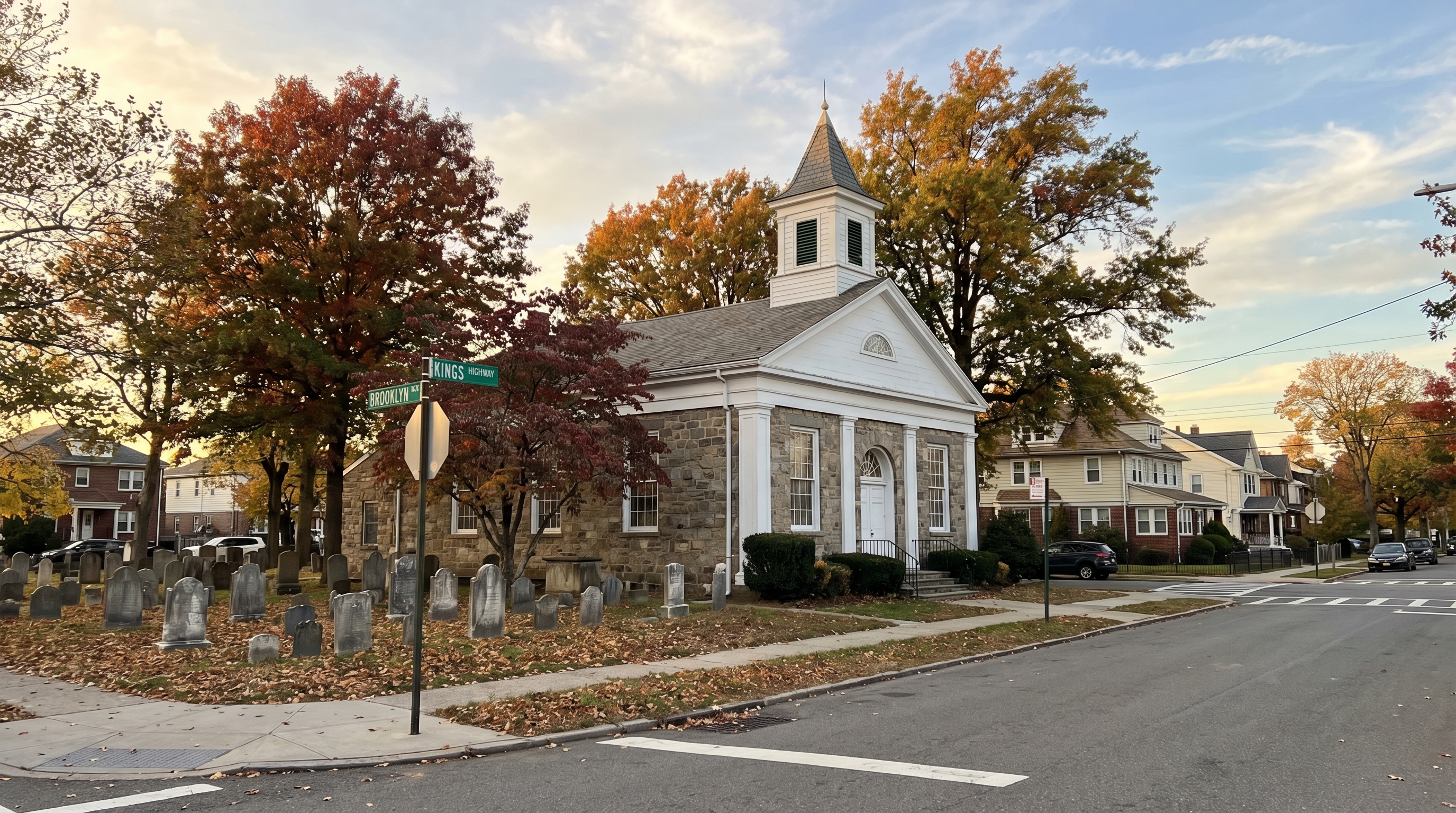
Flatlands is one of the oldest communities in all of New York City and one of the least discussed. The Dutch settled here in 1636 on the flat glacial outwash plain south of Brooklyn’s terminal moraine, naming the settlement Nieuw Amersfoort. Three hundred and ninety years later, the neighborhood looks like most of the detached-home outer Brooklyn built in the postwar era: streets of one- and two-story brick houses, driveways, small yards, Kings Highway for shopping, the Belt Parkway to the south. What distinguishes it is what you stumble on between those ordinary blocks. A 1766 Dutch Colonial farmhouse with Hessian soldiers’ names scratched into its windowpanes from the American Revolution. A 1720 farmhouse that served as a stop on the Underground Railroad. A Greek Revival stone church from 1848 with a cemetery that has been receiving burials continuously since 1660.
We have cleaned over 100,000 homes across New York City. Flatlands homes have a particular character that goes back to how this neighborhood was built: solid postwar construction, high homeownership, families who have been in the same house for twenty or forty years.
The Waxman split-level and its cleaning requirements are specific to this part of Brooklyn
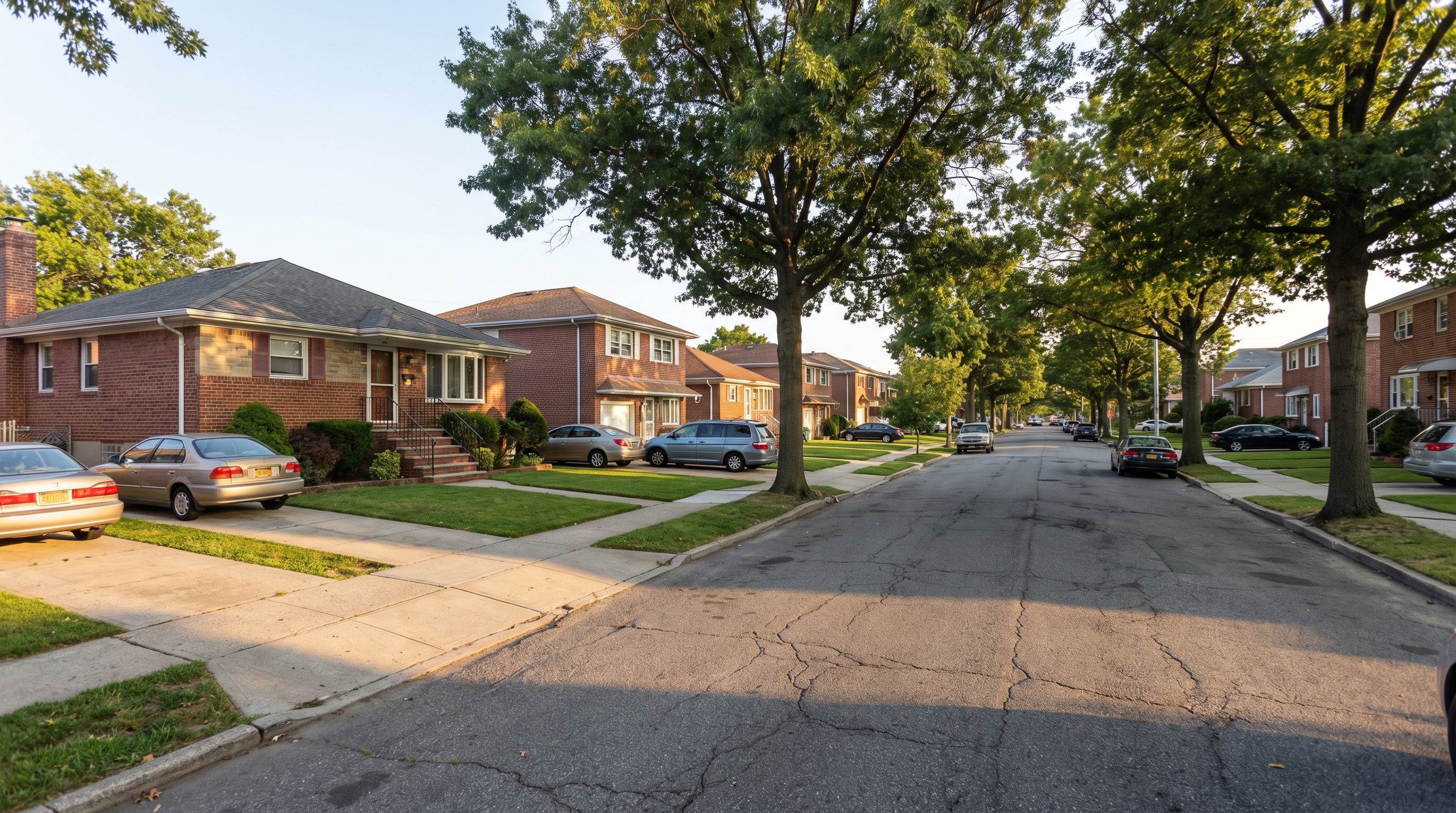
The dominant housing form in Flatlands is the detached brick house built between the 1940s and the 1970s. The Waxman split-level — a two-story detached brick house with a half-level stair arrangement, horizontal facade, and a small driveway — was built by developer Sam Waxman and his contemporaries across hundreds of Flatlands blocks, and the uniformity is striking when you walk the neighborhood. These are not rowhouses. They are not tenements. They sit on real lots with front yards and backyards. They are the suburban-style housing stock of outer Brooklyn, built for returning veterans and their families who wanted space and ownership within city limits.
Inside these homes the cleaning picture is specific. The finished basement, which in most Waxman homes functions as a second living room, gets used hard and collects as much grime as the main level. The baseboard heaters that run through the living areas accumulate dust between their fins through the entire heating season. The kitchen soffits above the cabinetry trap grease near the range in ways that a surface wipe will not address. Split-level staircases have risers and treads and railings that collect dust in ways a single-floor sweep does not encounter.
Our house cleaning teams work room by room, top to bottom, so dust never falls onto an already-cleaned surface below. We clean the baseboard heater fins, not just the exposed face. The kitchen soffit gets treated separately. In a Waxman split-level, the half-level landing between floors is often a forgotten accumulation point that a team paying attention will catch.
Semi-detached two-family homes are also common throughout Flatlands, particularly on blocks like East 69th, East 72nd, and the streets running between Kings Highway and Avenue N. These mirror-image paired brick homes share a party wall and have a unit on each floor. The owner typically occupies the lower level; a family member or tenant is above. Owner-occupant floors in these homes tend to be well-maintained but are often larger than they appear from the street. The upper unit sees different wear and benefits from separate scheduling as a rental turnover or recurring maintenance clean.
Deep cleaning for homes that have been in the same family for decades
Flatlands has one of the highest homeownership rates in Brooklyn, roughly 54 to 56 percent owner-occupied, well above the borough average of about 29 percent. Many of those owners have been in the same home for twenty, thirty, or forty years. Long-term ownership means a home that has been loved and lived in, and it also means that certain areas have accumulated years of buildup that a regular maintenance visit will not reach.
A deep cleaning in a Flatlands ranch or split-level starts at the top and works down: ceiling fans and light fixtures, then window sills and blinds, then all surfaces and appliances, then floors. The grout in original 1950s and 1960s ceramic tile bathrooms is porous and absorbs grime in ways that surface wiping does not address. We use a grout-safe cleaner and a stiff-bristle grout brush. Under the refrigerator and the stove as far as reach allows, along the baseboard edges in rooms that get cleaned around rather than under, and across the tops of the door frames — these are the places that a first deep clean will find years of accumulated residue. Cabinet and drawer interiors are an add-on you choose at booking rather than part of a deep clean. We quote the work honestly based on what the home actually needs rather than surprising you with additional charges after we arrive.
After a thorough first deep clean, recurring visits run significantly faster because we are maintaining a clean baseline rather than restoring one. Most Flatlands homeowners who establish a recurring schedule find the first visit takes two to three times as long as the ones that follow.
Move-in and move-out cleaning for a stable ownership market
Flatlands is not a high-turnover rental market the way parts of northern Brooklyn are. What it does have is a steady flow of ownership transfers: the longtime owner passing a two-family to an adult child, the family who has owned a ranch on East 48th Street for thirty-five years listing it when the parents can no longer manage the stairs, the buyer who closes on a Waxman split-level and wants it spotless before the moving truck arrives.
Move-in and move-out cleaning in these homes covers the scope that a new owner needs to see before bringing in furniture: inside all cabinets and drawers, inside the oven and refrigerator, window sills and ledges throughout, bathroom tile and grout, inside closets, under the appliances as far as reach allows, and baseboards in every room. A home that has been lived in for decades carries its history in places a surface wipe will not reach. We quote these jobs after understanding what the home has — one floor or two, how many bathrooms, whether the basement is finished — rather than applying a single flat rate to situations that vary considerably.
We also handle apartment cleaning for upper-unit turnovers in two-family buildings throughout the neighborhood, and recurring maintenance for second-floor units where the owner wants the space kept up between occupants.
What the historic landmarks mean when they are surrounded by brick ranches
Walking the blocks between Kings Highway and Avenue T, you will occasionally encounter something that stops you. The Wyckoff-Bennett Homestead at 1669 East 22nd Street is one of the oldest standing residential structures in Brooklyn. Built circa 1766 by Hendrick H. Wyckoff on land that had been in the family since the colonial era, it is a gambrel-roofed Dutch Colonial farmhouse with fieldstone at the foundation and wide wooden clapboards above. Hessian soldiers were quartered in it during the American Revolution. Two of them scratched their names into the window glass — names and unit identifications that are still visible today. The house is a National Historic Landmark and it sits surrounded entirely by mid-century brick homes that were built about 170 years after the farmhouse was. The contrast is quintessential New York: history deposited in layers without the luxury of coherence.
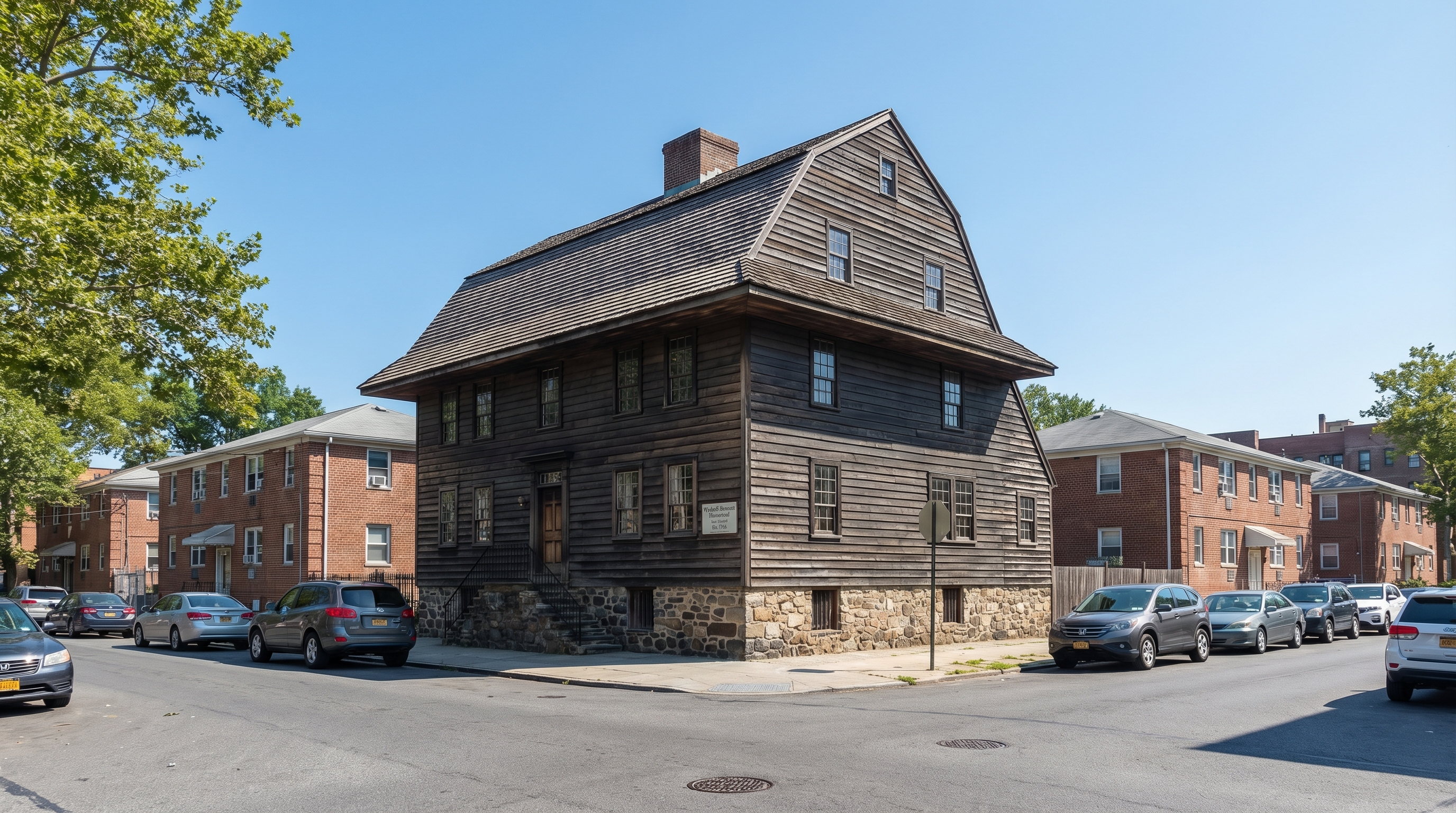
The Hendrick I. Lott House on East 36th Street, built circa 1720, is another surviving Dutch-American farmhouse from the original Nieuw Amersfoort settlement. It was documented as a stop on the Underground Railroad. The Flatlands Dutch Reformed Church at Kings Highway and East 40th Street, built in 1848, stands on the site of a congregation organized in 1654. The churchyard beside it has been receiving burials for approximately 365 years. These are not museums — they are buildings that have been standing through every chapter of American history, from the Dutch colonial period through the Revolution through the farm era through the postwar buildout, surrounded now by the neighborhood that grew up around them between 1945 and 1975.
Kings Highway and the food that actually defines the neighborhood
Kings Highway runs east-west across the full width of Flatlands and is one of Brooklyn’s most commercially diverse streets. The range of businesses on any given block — kosher bakeries and Caribbean takeout and Chinese restaurants and halal butchers and Russian appetizing stores and Jamaican patty stands — reflects a half-century of successive immigrant communities finding affordable commercial space on the same corridor. It was not planned this way. It accumulated this way.
The food culture of Flatlands is primarily domestic. The Caribbean-American community that has been the neighborhood’s dominant demographic since the 1980s and 1990s cooks seriously at home. Saturday mornings in Flatlands smell of jerk and curry from open windows. Sunday dinners of curried goat, pelau, or oxtail stew are made from scratch. The restaurants on Flatlands Avenue and Kings Highway — TriniJam for Trinidadian doubles and roti, Footprints Cafe for jerk chicken and curry goat, the Chinese takeout spots and kosher delis — serve the everyday quick-meal needs. The real food culture happens behind closed doors.
Getting a cleaning team to East 48th Street is not a problem
Flatlands has no subway station within its borders. That is one reason it has remained more affordable than otherwise comparable Brooklyn neighborhoods and largely outside the gentrification pressures that have transformed areas with better transit access. It is not a logistics problem for us. Our teams drive in via the Belt Parkway or Flatbush Avenue. Parking is not a challenge in Flatlands the way it is in Williamsburg or Park Slope. There are driveways, front-of-house spots, and low-density residential streets where parking is generally available.
We cover all of southeastern Brooklyn and have recurring clients throughout Flatlands, Bergen Beach, Marine Park, and Canarsie. If your building or block association has any vendor requirements or needs a certificate of insurance, we can provide that on request.
How to book and what to expect
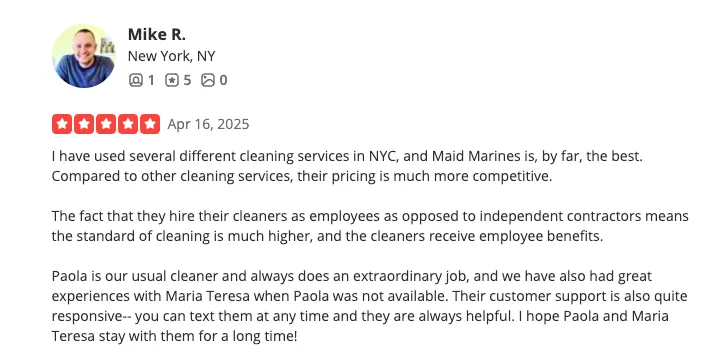
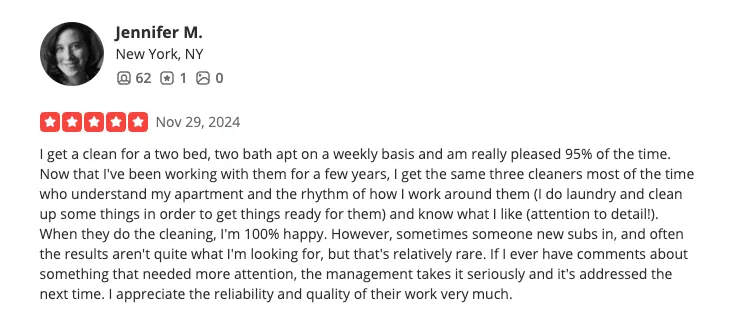
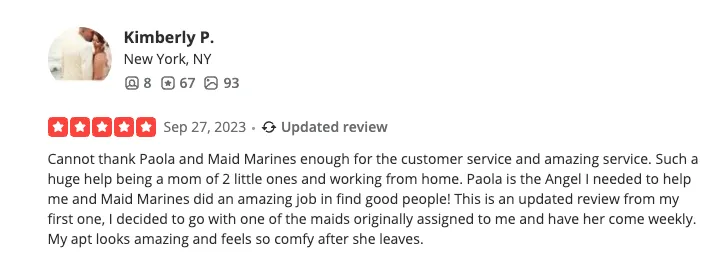
You select your date and time on our booking page and see your flat-rate price before you commit. If you have a two-story split-level with a finished basement, the price reflects the actual square footage. We use non-toxic, fragrance-free products on every surface, and we carry separate products for hardwood, linoleum, ceramic tile, and stone so we are not using the same cleaner on different floor types. Our cleaners are W-2 employees, vetted, insured, and familiar with the postwar housing stock of southeastern Brooklyn.
We also serve nearby Bergen Beach, Marine Park, Canarsie, Midwood, and the rest of Brooklyn. To check availability and pricing for Flatlands, visit our cleaning services page or book directly in under sixty seconds.