

Canarsie sits at the end of the line in the most literal sense possible. The L train, which the MTA officially calls the BMT Canarsie Line, runs from 8th Avenue in Manhattan through Williamsburg and Bushwick and East New York and terminates at Rockaway Parkway, right here, with Jamaica Bay visible two blocks south. Most of Brooklyn barely knows this neighborhood exists. The people who live here are fine with that.
The neighborhood carries a name that has not changed in nearly 400 years. Before the Dutch arrived in 1636, before the fishing village, before the resort era, before the white ethnic enclave, before the busing riots, the Canarsie people occupied this stretch of Jamaica Bay’s western shore. Munsee-speaking Lenape who harvested striped bass and oysters and blue crab from the same waters where you can fish today at Canarsie Pier. Their name survived everything that came after: the Dutch settlement, British rule, the Victorian fishing trade, a century of development, and two complete demographic transformations. In a city that erased most of its indigenous geography, Canarsie is unusual. The name is still the name.
A fishing village, an amusement park, and a neighborhood that built itself from scratch
The small village at the foot of Rockaway Parkway was a genuine fishermen’s hamlet through the early 1800s. Accessible only by boat or rough cart track, the dozen or so families who lived there made their living off Jamaica Bay the same way the Canarsie people had for centuries before them. Canarsie oysters sold in Manhattan markets. Striped bass and blue crab drove the local economy. The bay was the neighborhood’s reason for existing.
The Brooklyn, Canarsie and Rockaway Beach Railroad reached the village in 1865, and that changed everything. Suddenly Canarsie was accessible from the rest of Brooklyn, and entrepreneurs moved fast to capitalize on it. Hotels, bait shops, summer cottages, and seafood restaurants appeared along the bayfront. By the 1870s and 1880s, Canarsie had become a popular destination for middle-class New Yorkers seeking fishing and crabbing day trips. An elevated trolley line replaced the railroad in 1906, the direct predecessor of the L train that runs today, and resort development accelerated. The Golden City Park amusement complex opened along the bayfront in the early 20th century with rides and attractions that drew families from across southeastern Brooklyn, briefly rivaling Coney Island.
The resort era ended by the 1930s as the marshes were filled in and streets were platted. The neighborhood that rose in its place was a brick residential community built for working-class and lower-middle-class families seeking to own a piece of something permanent. Italian-American and Jewish-American families arrived through the 1920s and 1940s. By 1950, the population stood at roughly 30,000. By 1970, it had grown to over 80,000.
The defining architecture of that era is still the dominant housing stock today. The one- and two-family brick detached house, built primarily between the 1930s and 1970s, is what Canarsie looks like when you walk a residential block away from the commercial corridor. These are not brownstones or rowhouses in the traditional Brooklyn sense. They are low-profile brick structures with front stoops, small yards, and driveways, scaled for families who wanted a house, not just an apartment. The Waxman split-level, a type of two-story brick home built widely across southeastern Brooklyn in the 1960s with a characteristic horizontal facade and half-level stair arrangement, is particularly common here. Developers built these blocks for postwar buyers who wanted the suburban model on Brooklyn land they could actually afford.
The racial battle that put Canarsie in political science textbooks
The Canarsie of 1970 was approximately 98% white. The neighborhoods surrounding it had shifted through the 1960s as Black and Puerto Rican families moved in and white families moved out. Canarsie, sitting at the southeast corner of Brooklyn with the Belt Parkway as its southern wall and Jamaica Bay as its floor, became a kind of holding position.
In 1972, the busing of a small number of Black children to a Canarsie school triggered weeks of organized resistance that drew national attention. White residents staged school boycotts, violent protests, and neighborhood blockades. The sociologist Jonathan Rieder spent years in the neighborhood afterward, interviewing residents and documenting the episode’s dynamics. His 1985 book, “Canarsie: The Jews and Italians of Brooklyn Against Liberalism,” became one of the most cited texts in American political sociology, used in university courses for decades to understand how white working-class communities reconciled their self-image with their resistance to integration. The book put Canarsie in a national conversation it had not asked to be part of.
The demographic change came anyway. Through the 1970s and 1980s, white families left. Caribbean-American families, arriving from Jamaica, Trinidad, Barbados, Guyana, Haiti, and St. Lucia, moved in, drawn by the neighborhood’s relatively affordable housing stock, its backyard spaces, and its L train access. By the early 1990s, Canarsie had been transformed. Today the neighborhood is approximately 90% Black, with the Caribbean-American community forming the core. It is one of the highest concentrations of West Indian immigrant families in all of Brooklyn.
The transformation was not cosmetic. It was complete. Caribbean bakeries and Jamaican patty shops replaced Italian delis and Jewish appetizing shops on Rockaway Parkway. Baptist and Pentecostal churches moved into buildings that had been Catholic parishes. The cricket pitches in Canarsie Park filled with organized leagues from the Jamaican, Trinidadian, Barbadian, and Guyanese communities. A neighborhood that had spent three decades resisting change absorbed forty years of it and built something new on the other side.
Rockaway Parkway is to Canarsie what a main street is to a small town
Come out of the L train at Rockaway Parkway and you understand the neighborhood in the first block. The elevated track rattles overhead. A Jamaican patty shop has a line out the door even on a Tuesday morning, selling the baked pastry pockets filled with spiced beef, vegetables, or saltfish that are the fundamental street food of Canarsie and the Caribbean-American community. A barbershop has the flags of Trinidad and Jamaica painted on its awning. A Caribbean bakery produces fresh hardo bread and coco bread. On weekend mornings, a jerk chicken drum smoker appears on the sidewalk two blocks south, the chicken marinated in Scotch bonnet and allspice, slow-cooked over charcoal in a halved oil-drum grill. The smell carries for half a block.
Rockaway Parkway runs north-south from Linden Boulevard at the neighborhood’s commercial northern edge all the way down to Canarsie Pier at the bay. Along the way it passes through everything that makes this neighborhood what it is: the hair salons, the insurance offices, the small West Indian restaurants serving oxtail and curry goat and rice and peas, the produce stands, the churches. The commercial fabric is modest, rarely more than two or three stories, with the L train elevated structure keeping low watch overhead.
Two blocks east of the main strip, Flatlands Avenue carries its own commercial life: bodegas, Caribbean bakeries, barbershops, and community institutions running east-west through the middle of the neighborhood. Linden Boulevard forms the northern boundary, a heavy bus corridor connecting Canarsie to East Flatbush and Brownsville. These streets are not designed for tourists or trend pieces. They are designed for people who live here and need to buy groceries and drop off dry cleaning and pick up their kids.
The housing stock that requires a cleaner who has actually been in one of these homes
Canarsie’s dominant residential form, the two-family detached or semi-detached brick home, has specific cleaning characteristics that differ from the apartments and brownstones that most NYC cleaning services are oriented toward.
Two-family houses typically have two full floors, each functioning as a separate apartment, often with a finished basement below that serves as additional living space. The house may have three or four different flooring surfaces across its levels, hardwood on the second floor, tile in the basement, carpet in a bedroom. The kitchen and bathrooms in older homes from the 1940s and 1950s often have original hex tile, cast iron fixtures, and grout that is forty or fifty years old. That grout has absorbed decades of cooking grease and soap residue, and cleaning it properly means using the right chemistry and the right brush, not running a mop across the surface and calling it done.
The split-level homes that are common in the eastern parts of the neighborhood add a wrinkle of their own. Half-level stairs mean carrying equipment between areas that are neither a full floor apart nor on the same level, a layout that affects how long a thorough clean actually takes. Finished basements with laundry, a TV room, or a guest bedroom add square footage that does not always get included in an initial quote if you are not specific about it.
Hardwood floors throughout the upper levels of older Canarsie homes require dry or damp microfiber, never soaking wet and never steam. Steam forces moisture into the seams between boards and causes swelling over time, which is how floors that have survived fifty years start to buckle. A lot of the hardwood under rugs in these homes has not been treated properly in years and needs a careful hand rather than an aggressive pass.
The NYCHA buildings at Breukelen Houses, completed between 1951 and 1955 across 18 buildings on Remsen Avenue, are a different type of unit entirely. Standard apartment layouts, linoleum or tile floors, and building access that requires coordinating with management. We clean apartments at Breukelen and throughout the neighborhood’s walk-up rental buildings on the same booking system as everything else. You confirm access, we show up.
For homeowners with a rental tenant upstairs, we handle both units. You can book your floor for a recurring schedule and let your tenant arrange theirs separately, or we can coordinate both on the same visit. Canarsie’s ownership structure, many buildings with an owner on the ground floor and a tenant above, means this split-unit dynamic comes up constantly. It is not complicated once we know what you need.
Canarsie Park on a Saturday morning is something most of Brooklyn will never see
The 132 acres of Canarsie Park run along Seaview Avenue parallel to the Belt Parkway, with Jamaica Bay visible just south of the park’s wetland edge. Cricket pitches in the eastern section host organized league play from the Jamaican, Trinidadian, Barbadian, and Guyanese communities throughout the warm months, Saturday and Sunday mornings from April through October. Soccer fields run alongside. Basketball courts. A skate park. Jogging paths. The particular outdoor sound of southeastern Brooklyn, the Belt Parkway hum beyond the tree line, the distant bay.
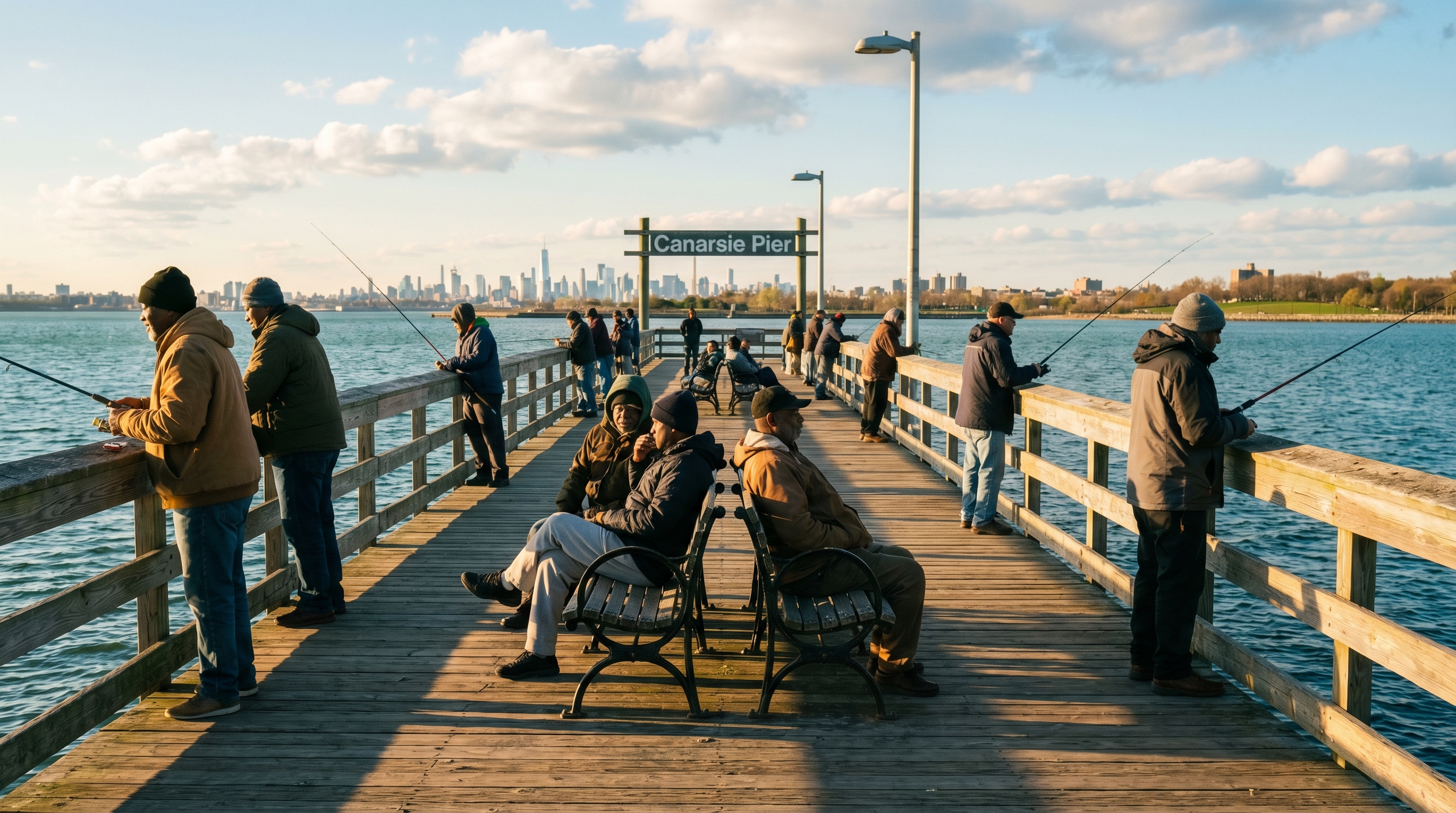
At the end of Rockaway Parkway, past the L train terminus and the last commercial block, Canarsie Pier reaches out over Jamaica Bay into open sky. The pier is maintained by the National Park Service within the Gateway National Recreation Area and is free year-round. People fish from folding chairs. They bring coolers. They wait for striped bass and bluefish and blue crab, the same fish the Canarsie people were harvesting from this water before there was a city here. On a clear morning the bay is genuinely still and genuinely large, the way New York City’s water almost never feels when you are standing on it.
This is where Canarsie residents spend Saturday mornings, not thinking about the grout in their bathrooms. That part is what a recurring cleaning appointment is for.
Armando’s Pizza on Rockaway Parkway has been in operation since 1960, a remnant of the Italian-American era that survived every demographic shift by making excellent food and not making a big deal of itself. Trini Jam serves Trinidadian doubles, curry goat, oxtail, and stew chicken to regulars who have been coming for years. Weekend jerk chicken from the sidewalk drum smokers on Rockaway Parkway is as good as anything available in the neighborhoods that get written up in food publications. The Canarsie Courier, the local newspaper, covers community news in a neighborhood that does not expect outside coverage and has learned not to need it.

The people who grew up in Canarsie tend to stay in Canarsie
Curtis Sliwa, who founded the Guardian Angels in 1979, grew up in Canarsie. He started the red-beret patrol organization in response to the crime crisis of the late 1970s on New York’s subway system, a response born from the specific urban experience of a working-class kid from this neighborhood. The Angels spread to cities across the country and internationally. John Salley, the NBA champion who won titles with the Detroit Pistons, Chicago Bulls, Los Angeles Lakers, and Miami Heat, attended Canarsie High School. He was the first player in NBA history to win championships with three different franchises.
Howard Schultz, who built Starbucks from a regional coffee roaster into a global brand, grew up in the Canarsie public housing projects and credits his working-class Canarsie origins repeatedly in interviews and in his books. Warren Cuccurullo, who played with Frank Zappa in the 1970s, co-founded Missing Persons, and spent a decade as a member of Duran Duran, is from this neighborhood. The alumni list is eclectic in the way that neighborhoods without a consistent identity tend to be, because what connects them is not a shared aesthetic or class background but a place that asked them to figure things out on their own.
The homeownership culture in Canarsie is part of what keeps it stable. Many Caribbean-American families who bought into the neighborhood in the 1980s and 1990s still live here, in the same two-family houses their parents purchased. Their children own homes on the next block. The Breukelen Houses apartments where grandparents arrived in the 1970s house grandchildren today. This is not a neighborhood cycling through demographic waves on a ten-year clock. The community that rebuilt Canarsie after white flight has been here for forty years and shows no sign of leaving.
What getting your Canarsie home cleaned actually looks like
You book online, pick your date, and see your flat-rate price before committing to anything. For a two-family house, you specify which floors you need covered and whether the basement is finished living space. The price reflects the actual square footage and cleaning needs, not a rough estimate. You can see the full breakdown at our booking page.
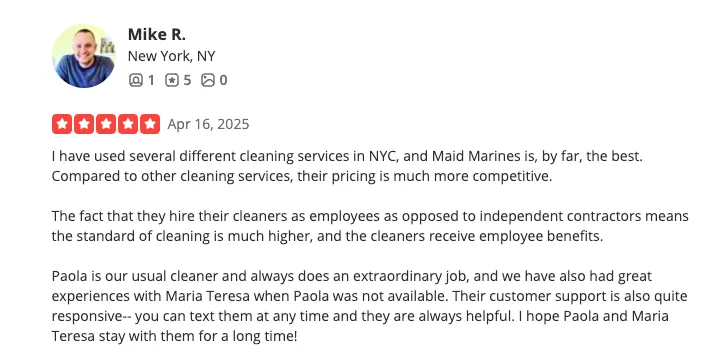
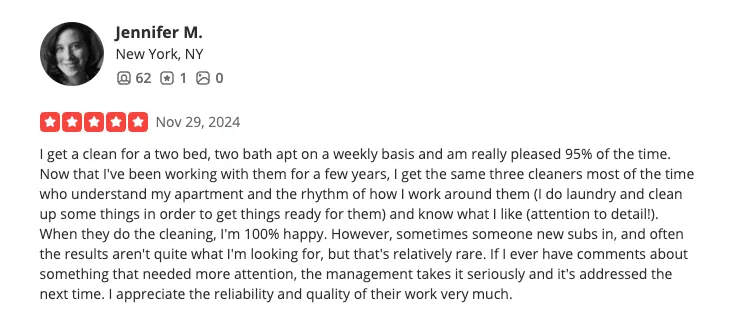
Our cleaners are W-2 employees. Not gig workers with variable quality, not independent contractors who show up in their own car with their own products that may or may not match what your floors need. People we vetted, trained, insured, and pay a fair wage. They show up with everything needed and they leave the place clean.
For homeowners who have not had a proper deep clean done since they moved in or after a renovation, that is a different scope from recurring maintenance. We quote deep cleans separately and tell you what it covers. For renters moving in or out of an apartment on Flatlands Avenue or Linden Boulevard, move-in and move-out cleaning is available and we work around your lease dates.
The house cleaning that makes the most practical difference in Canarsie is recurring. The two-family homes here accumulate dust in ways that apartments with less floor-to-ceiling volume do not. Basements add square footage that rarely gets touched until it has to be dealt with all at once. A regular schedule, every two weeks or monthly, means the house stays at a level where the work is maintenance rather than recovery. That is the difference between spending your Saturday at Canarsie Pier and spending it on your hands and knees.
We also serve nearby neighborhoods including East Flatbush and Flatlands with the same flat-rate model and the same W-2 cleaners.