

East Flatbush is the neighborhood the city’s real estate narrative keeps stepping around, which is exactly why it matters and why so many people miss what it actually is. While the gentrification machine catalogued every brownstone in Park Slope, wrote up every coffee shop in Crown Heights, and assigned a walking tour to every block of Prospect Lefferts Gardens, East Flatbush was simply being itself: Caribbean, working-class, rooted, and completely disinterested in performing any of that for an outside audience. It is one of the largest neighborhoods in Brooklyn, home to more than 100,000 residents, and it has built something that most New York neighborhoods can only approximate: a community with actual continuity across generations.
The Church Avenue corridor will tell you everything you need to know within about four blocks. Jamaican patty shops that have been in the same location for forty years. Haitian créole conversations at the beauty supply counter. The smell of jerk chicken and doubles and Guyanese curry mixing in the street air. The intersection at Church and Nostrand Avenues carries a co-name that places all of this in formal context: Bob Marley Boulevard, bestowed in 2006, honoring the reggae icon and the neighborhood’s Jamaican community in one of the very few New York City street renamings that acknowledges a non-American cultural figure. The murals inside the Church Avenue subway station, created by the late artist Desarte, depict a West Indian market scene that is simply a portrait of the street above it.
A Dutch colonial town, a streetcar suburb, and the Caribbean diaspora that made it what it is
East Flatbush sits on land that was Canarsee Lenape territory for thousands of years before European contact. The Canarsee people called the western Long Island landscape Sewanhacka and moved seasonally through its forests, wetlands, and salt marshes. The Dutch colonial town of Flatbush — founded in the 1650s as Vlacke Bos, meaning flat woodland — absorbed what would become East Flatbush into its agricultural territory. Dutch farming families worked the land for two centuries.
The name traveled from Dutch geography to Brooklyn bureaucracy in the straightforward way these things do: East Flatbush is the eastern portion of the original Flatbush township, the agricultural land east of the village core around what is now the Erasmus area. The diagonal spine of Flatbush Avenue was built on an ancient Lenape footpath, and the Dutch described what they saw: flat land covered in brush and woodland. The “East” was administrative, added as the neighborhood developed its own character. Sub-neighborhoods carried their own names in the same unsentimental Brooklyn tradition. Wingate was renamed from Pig Town in honor of General George Wingate, the NRA founder, when the small animal farms that gave it its original name gave way to brick houses. Remsen Village took the name of the Dutch colonial Remsen family. Rugby and Farragut honored a British county and a naval officer. The streets filled up.
The major development phase ran from the 1890s through the 1930s, when East Flatbush was reshaped from scattered farmland into one of Brooklyn’s defining streetcar suburbs. Electric trolleys along Church Avenue, Utica Avenue, and Kings Highway connected the neighborhood to downtown Brooklyn, and developers subdivided the old estates into narrow lots, building the two-family brick houses, small apartment buildings, and Colonial Revival rowhouses that still dominate the neighborhood today. Families arrived seeking an affordable version of the suburban life being marketed in adjacent Ditmas Park: solid housing, tree-lined streets, and transit access at a price the Victorian historic district never offered.
Through the first half of the twentieth century, East Flatbush was a Jewish and Italian working-class neighborhood. Synagogues and Catholic churches served a tight-knit community of immigrants and second-generation families who owned their two-family houses and ran the local businesses on Church Avenue and Utica Avenue. The transformative shift came in the 1960s and accelerated through the 1970s and 1980s, as Caribbean immigrants arrived in numbers that would redefine the neighborhood entirely. Jamaican, Trinidadian, Barbadian, Guyanese, and Haitian families settled here, buying the two-family houses from Jewish and Italian families who were leaving for Long Island and New Jersey and building community institutions — churches, restaurants, mutual aid organizations, cricket grounds, political clubs — that have defined the neighborhood ever since. By the 1990s, East Flatbush had emerged as the densest concentration of Caribbean-American culture in the United States.
The brick two-family house as a community strategy, not just a building type
The housing stock in East Flatbush is a record of its development history that you can read from the street without looking anything up. The dominant type is the attached or semi-detached brick two-family house from the 1910s through 1930s, modest in individual scale and deeply effective as an urban fabric. The continuous stoops, the consistent setback from the sidewalk, the old-growth street trees on blocks like Rutland Road and Snyder Avenue and East 51st Street: these residential streets have maintained a human proportion and a physical dignity through nearly a century of use.
Barrel-front rowhouses, where the facade curves outward in a gentle bow, appear on many blocks alongside brick Tudor Revival houses with their decorative half-timbering and arched entryways. Colonial Revival detailing shows up consistently: symmetrical facades, six-over-six windows, cornice lines with simple dentil molding. The scale is consistently two to three stories throughout the neighborhood, with six-story prewar brick apartment buildings appearing along the major commercial avenues and on some residential cross streets.
More than 80% of the buildings were constructed before 1940. That durability is real: brick construction from this period has survived a century without the structural crises common in wood-frame neighborhoods. But a century of use has left its mark in ways that matter when you are thinking about house cleaning. Original hardwood floors in the two-family houses are almost certainly wax-finished or oil-finished, not polyurethane, which means water-heavy mopping clouds the finish and raises the grain. Plaster walls scratch and chip under cleaning tools designed for drywall. The tiled vestibules in the ground-floor entries, with their original hex or basket-weave patterns, need a grout brush and a pH-neutral cleaner, not bleach, which whites the grout but etches the tile over time. These are not exotic problems. They are the ordinary maintenance challenges of a pre-war housing stock that has been occupied continuously for a hundred years and is worth caring for correctly.
The two-family house is also a community strategy, and it is worth understanding that before you understand anything else about East Flatbush. The defining pattern of Caribbean immigrant homeownership in this neighborhood is to buy a two-family, occupy one unit, and rent out the other. The rental income subsidizes the mortgage. Wealth accumulates. The house passes to the next generation. It is a model of economic resilience that does not show up in the metrics that most observers use to evaluate neighborhood health, but it has worked here for sixty years and is the primary reason East Flatbush maintained stability through economic downturns and housing market pressures that destabilized other Brooklyn neighborhoods with similar demographics.

A 1929 movie palace sat dark for 38 years and came back as one of New York’s great civic stories
The Kings Theatre at 1027 Flatbush Avenue is a French Baroque Revival movie palace built in 1929 as one of five Loew’s Wonder Theatres in the New York metropolitan area. Its interior is among the most opulent ever built for a cinema: gilded plasterwork in elaborate cartouches and swags, marble-clad lobbies with vaulted ceilings, painted medallions above the 3,000-seat auditorium, and a level of ornamentation that borrowed from the Palace of Versailles without apology. When it opened, it was a democratic gesture of architectural grandeur — a movie palace in a working-class Brooklyn neighborhood, offering its residents the same visual magnificence that was being offered to patrons in midtown Manhattan.
The Kings closed in 1977 as the neighborhood’s demographics shifted and the economics of single-screen movie palaces collapsed nationally. It sat dark for 38 years, one of the longest stretches any major New York City theater has been closed before returning to operation. During those decades, the interior remained largely intact beneath layers of dust and deterioration. The plasterwork survived. The marble held. The painted ceilings faded but did not disappear.
A $95 million restoration by the NYC Economic Development Corporation brought it back. The Kings reopened on February 3, 2015 with a concert by Diana Ross. It is now listed on the National Register of Historic Places and operated by ATG Entertainment, hosting national touring productions, major concerts, and comedy shows. Attending a performance at the Kings Theatre is, among other things, an experience of what civic investment in a working-class neighborhood can produce when the city decides the investment is worth making. The restoration is on a different scale than anything else in the neighborhood, but its meaning is not separate from the neighborhood. It mirrors East Flatbush’s own arc: undervalued, left to decline while attention went elsewhere, then recognized belatedly for what it always was.
Busta Rhymes, Bob Marley Boulevard, and the West Indian American Day Parade’s cultural roots
East Flatbush has produced and shaped cultural figures with a density that reflects its status as a community of genuine creative energy. Busta Rhymes was born and raised in East Flatbush and attended Samuel J. Tilden High School at East 49th Street and Snyder Avenue — the neighborhood’s public high school — before becoming one of hip-hop’s most inventive performers. Fabolous comes from the East Flatbush community. The Haitian musical world of Brooklyn, which includes Wyclef Jean’s broader community roots, has had a significant presence in East Flatbush, one of the largest Haitian diaspora communities in the United States outside of Florida.
Wyclef Jean’s Fugees and the broader Haitian musical network found in East Flatbush a community that carried music across the Atlantic and built something new with it in Brooklyn. The neighborhood’s connection to Jamaican music runs just as deep. The Bob Marley Boulevard co-naming at Church and Nostrand Avenues is not a symbolic gesture disconnected from daily life. It is accurate. The reggae that Marley made in Kingston has been part of the soundtrack of East Flatbush for as long as the neighborhood has been Caribbean, and the street sign is just the city catching up to something that was already true.
The West Indian American Day Parade, which routes along Eastern Parkway in Crown Heights to the north, has its cultural roots in the East Flatbush and Crown Heights Caribbean community. The parade itself draws up to two million people on Labor Day and generates an estimated $300 million in economic activity for the long weekend. East Flatbush participates in its own register: block parties and barbecues spread across the residential streets all weekend, the aroma of jerk chicken and curry goat from every other yard, the music running from Saturday through Monday. The parade’s official route does not pass through the neighborhood, but the celebration does.
Church Avenue is one of Brooklyn’s great food streets, and it does not need your approval to know it
The food on Church Avenue and Utica Avenue is not filtered through the expectations of an outside audience. It is prepared by community members for community members, which is the only setting in which certain foods make complete sense.
Jamaican patty shops are on nearly every commercial block. Golden Krust, the national chain that started in the Bronx but has been a West Indian Brooklyn institution for decades, sits alongside independent patty makers who have been doing it longer than most of their customers have been alive. Allan’s Bakery is a neighborhood institution of the first order. The flaky, spiced beef and chicken turnovers are to the West Indian community what the pizza slice is to Italian-American New York: fast, cheap, and absolutely representative of something real.
A&A Bake and Doubles on Utica Avenue near Snyder Avenue has been serving Trinidadian doubles since 2002 and has become the New York spiritual home of the form. Two pieces of fried bara dough surrounding curried channa (chickpeas), topped with various chutneys. The shop draws doubles devotees from across Brooklyn who have learned that this is where the standard is set. Bamboo Walk Caribbean Restaurant on Utica Avenue serves Jamaican cooking — oxtail, jerk chicken, curried goat — with the casual warmth of a place that has been feeding the same community for years and is not trying to be anything other than what it is.
Zanmi brings Haitian cuisine to a somewhat more deliberate register, serving lambi (conch), black rice, and fried plantains in a room that gives you time to think about what you are eating. Limin’ Restaurant covers the Southern Caribbean traditions, the Trinidadian and Bajan cooking, with the easy warmth of a neighborhood spot that knows its clientele by face. BunNan Flatbush Central Caribbean Marketplace has become known well beyond the neighborhood for its plantain sandwiches — two pieces of fried green plantain standing in for bread, surrounding jerk chicken, griot, red snapper, or mushrooms — a preparation that requires no translation once you have eaten it.
The full range of West Indian cooking is available within walking distance on Church Avenue and Utica Avenue. Haitian créole, Jamaican jerk, Trinidadian doubles, Guyanese curry, Barbadian flying fish, Grenadian oil down. This is the Caribbean diaspora’s culinary breadth in a single commercial corridor, and it has been here for forty years without requiring a food writer from north Brooklyn to tell it what it is.

The prewar brick needs the right approach and the kitchen needs honest attention
The cleaning challenges in East Flatbush are specific to what the housing stock actually is. A neighborhood of prewar brick two-family houses, occupied continuously for a century, each one a little different from the next depending on who has been in it and what they have done to it.
Original hardwood floors are the first thing to get right. The two-family houses on Rutland Road, Snyder Avenue, and the quieter residential blocks were built in an era when wood floors were wax-finished or oil-treated, not sealed with polyurethane. Mopping these floors wet lifts the finish and clouds the grain. We use a barely damp microfiber mop with a pH-neutral wood-safe cleaner. No steam. No vinegar. No ammonia-based products that work fine on modern surfaces and destroy old ones. If we do not know the floor finish, we ask before we start.
The kitchen gets particular attention in East Flatbush because the cooking here is serious. Jerk seasoning, deep frying, long-simmered Haitian stews, curry that carries its oils into the air and lands on every surface within reach. A standard wipe-down of the stovetop is not the same thing as cleaning a stovetop that has seen this kind of cooking. We clean the grates and burner caps, the area around the burners, the backsplash and the wall tile the burners throw oil at, and the visible surfaces of the hood. Heavy grease in the vent filter overhead is a different job entirely, one that needs a degreasing soak, and it is not part of a deep cleaning here — worth arranging on its own before it turns into a ventilation problem.
The tiled vestibules in the ground-floor entries are the spot that most cleaning services skip or rush. Original basket-weave and hex tile patterns from the 1920s and 1930s are worth maintaining correctly. The grout needs a brush, not a mop, and it needs a pH-neutral cleaner, not bleach. Bleach whitens grout temporarily and etches the tile surface over time. The difference shows up in a few years.
Bathrooms in the prewar units are typically small, tiled floor to ceiling in a period when white subway tile was the standard, and the grout lines are very long relative to the square footage. The cleaning approach is different from a modern bathroom: more grout work, more attention to the original chrome fixtures that the neighborhood’s older units still carry, and a lighter touch on surfaces that have seen a century of use.
Two-family buildings also mean two sets of surfaces to coordinate when the owner wants the whole building cleaned. We do that regularly. The logistics of scheduling around a tenant, accessing a basement laundry area, or cleaning a shared hallway are not complicated — they are just specific, and they are worth addressing once at the start so that every visit after that runs without friction.
Your Saturday belongs on Church Avenue or at the Kings Theatre, not scrubbing grout lines
East Flatbush gives you a specific kind of weekend if you let it. Church Avenue on a Saturday morning is active in a way that most commercial strips in Brooklyn are not: the produce markets are stocked with plantains, yuca, callaloo, scotch bonnet peppers, and dried saltfish; the patty shops have lines before noon; the doubles at A&A sell out if you wait too long. You can spend a Saturday morning on that corridor eating and buying groceries and talking to vendors and never feel like you have left something unfinished.
Wingate Park at Brooklyn Avenue and Winthrop Street has athletic fields, a running track, handball courts, and a pool that makes summer afternoons in the neighborhood genuinely good rather than something to endure. Brooklyn College’s campus at the southern edge — Georgian collegiate architecture, a central quad designed by Skidmore, Owings and Merrill, opened in 1937 — is worth walking through if you have not done it. The campus is open and the quad is one of the finer outdoor collegiate spaces in New York.
The Kings Theatre calendar runs year-round with national touring productions and major concerts. An evening at a show there is as much about the restored interior as anything on the stage: you are sitting in a 3,000-seat gilded auditorium that was dark for nearly four decades and came back.
None of these things require leaving the neighborhood or crossing a bridge. East Flatbush contains more than enough for a Saturday, and the Saturday is better spent doing any of it than cleaning tile grout or scrubbing a range hood. That is what a recurring apartment cleaning handles.
What booking a cleaning in East Flatbush actually looks like
You pick your date and time on our booking page and see your flat-rate price before you commit. Two-family house, single-family attached, prewar apartment: each gets priced on bedrooms, bathrooms, and square footage, and the price reflects what the space actually requires.
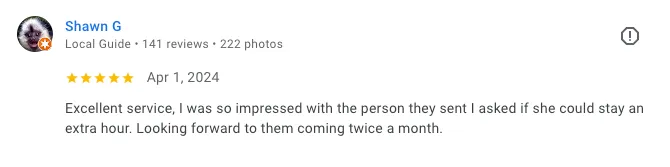
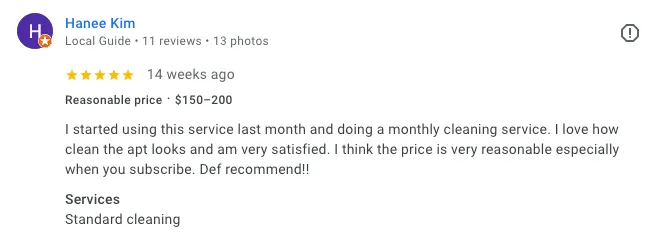
Our cleaners are W-2 employees, not gig workers. They show up with everything they need, they know the difference between a wax-finished floor and a polyurethane one, and they do not need to be managed through the job. If you are an owner-occupant in a two-family and you want us to clean both units on the same day, we coordinate that. If you need a move-in or move-out clean before or after a tenancy change, that is a different scope and we price it accordingly. If you want a deep cleaning to get the baked-on oven interior and the bathroom grout lines handled before we set up a recurring schedule, we start there and move to a maintenance rhythm from the second visit.
East Flatbush is a neighborhood where we work regularly. The streets are not unfamiliar, the housing types are not a surprise, and the cooking-heavy kitchen is not an exception. We know what we are showing up to. You can book online in about sixty seconds and we handle the rest.