
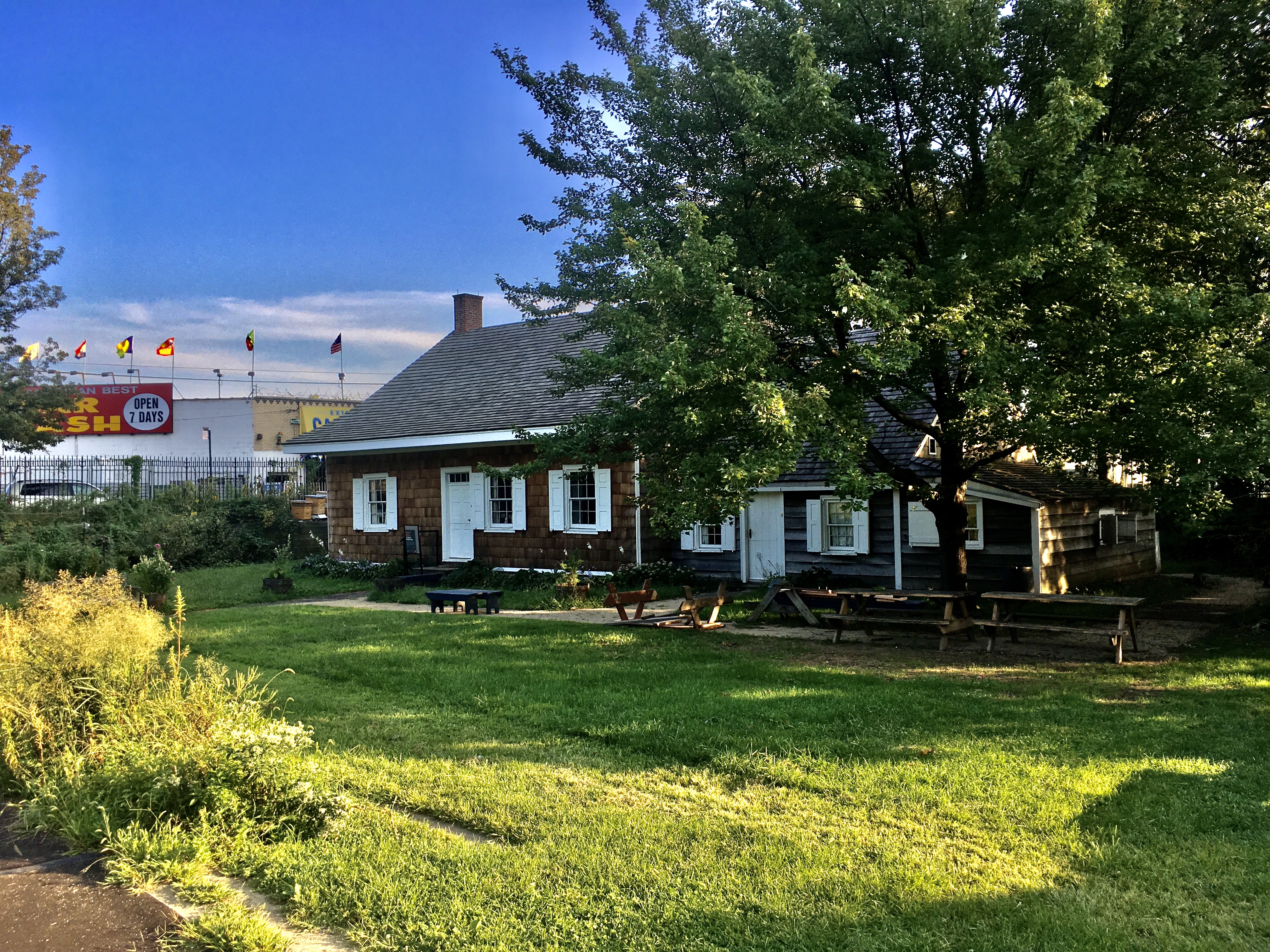
Before it was Wingate, it was Pigtown. That name belonged to the pig farms that occupied this land through the 19th century, operated by Italian and Irish immigrant families supplying pork to a growing Brooklyn that was still an independent city. The farms were functional, profitable, and fragrant in ways that did not survive urbanization. When trolley lines and subway extensions made central Brooklyn developable, the farmland was subdivided into the standard Brooklyn street grid, and builders erected the two- and three-story apartment houses that still line the interior streets of Midwood, Rutland, and Winthrop today. The pigs went. The buildings stayed.
The name changed too, eventually. Wingate derives from Wingate Park, established in 1941 on land purchased by the city, a WPA-era investment in recreational infrastructure for working-class Brooklyn. The park was named for George Wood Wingate, a Civil War Union officer who co-founded the National Rifle Association in 1871 and the Public Schools Athletic League in 1903 — two organizations with essentially nothing in common except the man who helped start them. The park was built 13 years after his death, and the neighborhood acquired his name gradually through the latter 20th century, as real estate professionals and municipal planners sought a label for the sub-area distinct from the broader Flatbush designation.
The housing stock in Wingate tells a specific story about mid-century Brooklyn
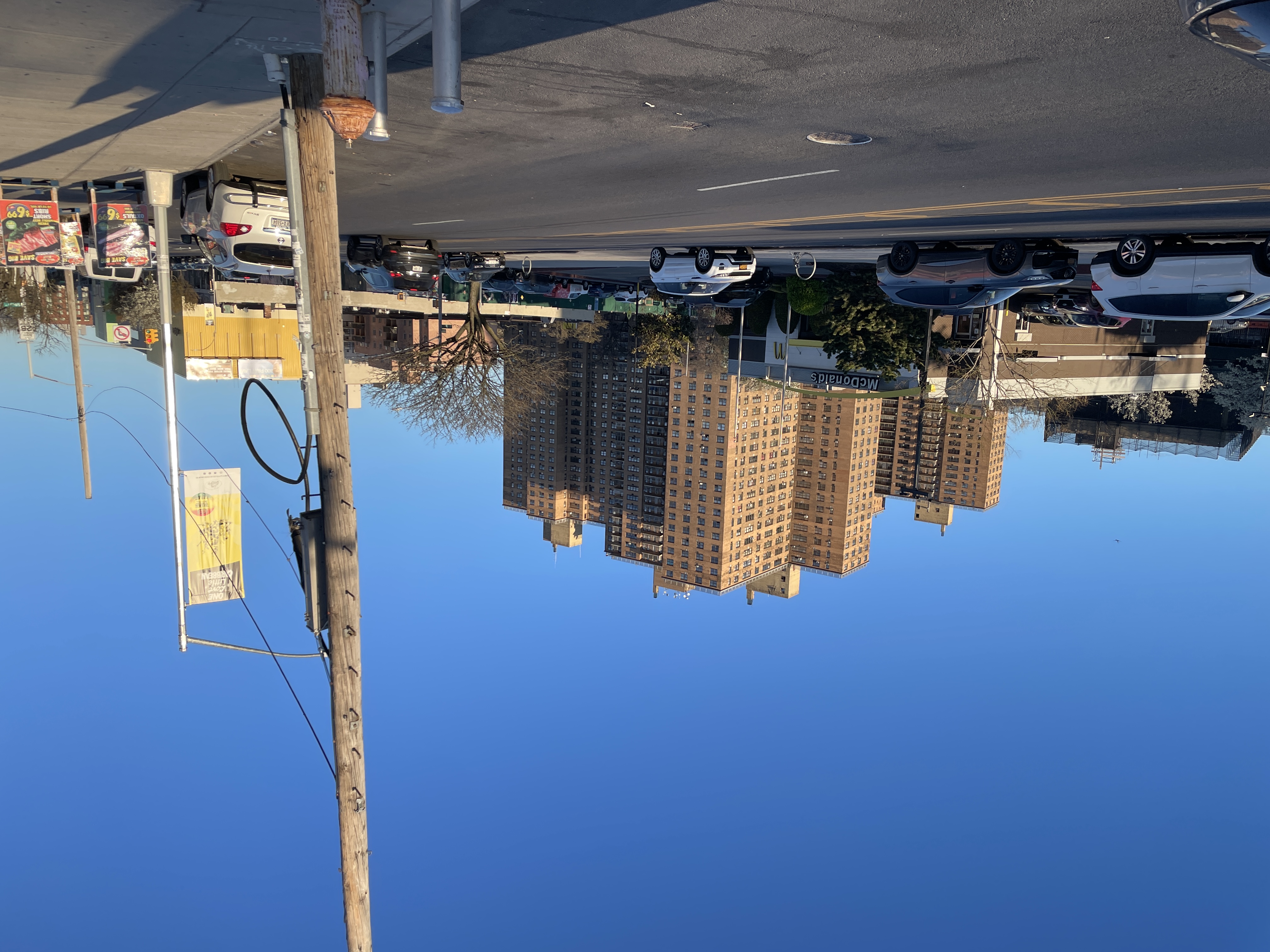
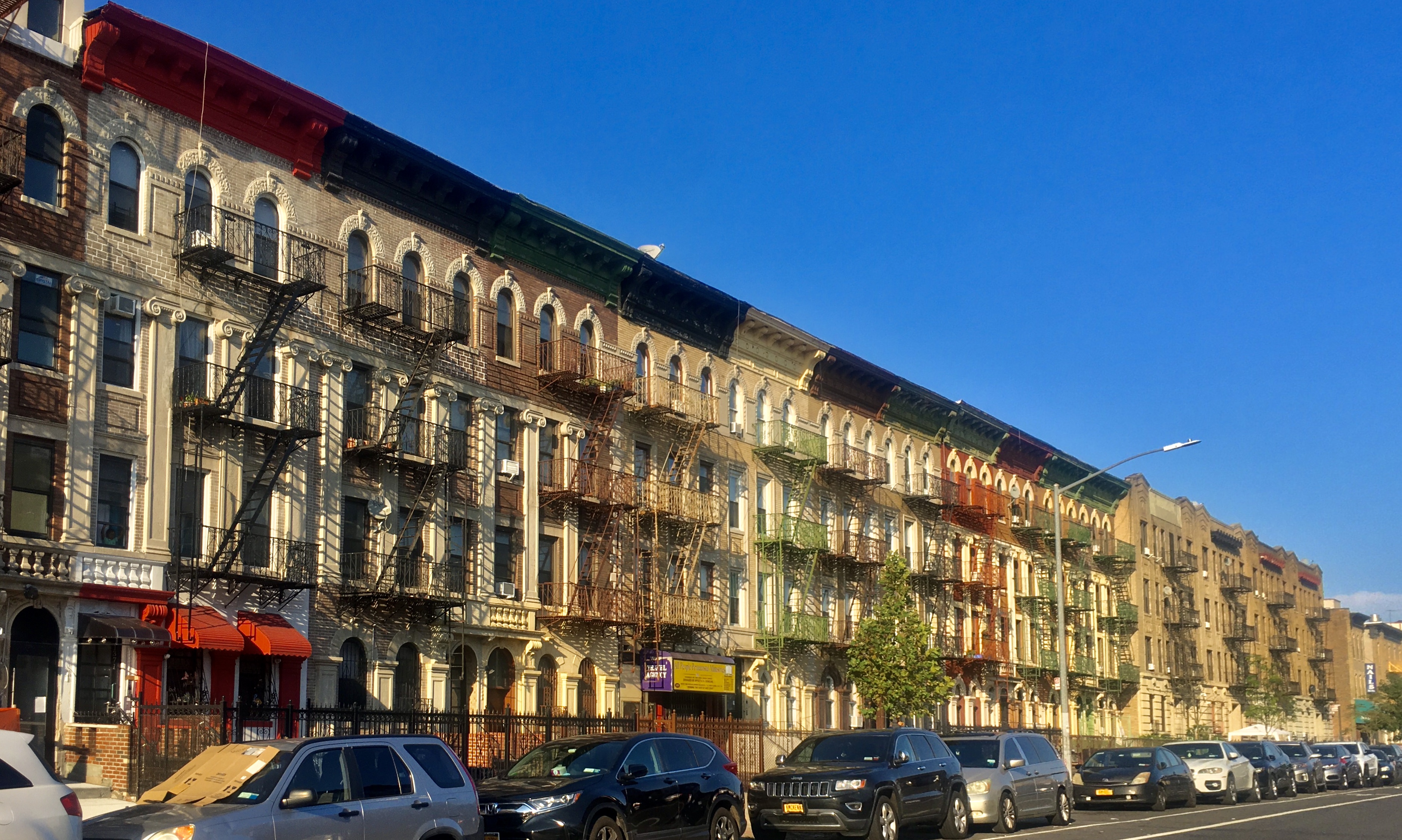
Drive through Wingate today and what you see is almost entirely the product of one era of construction: the 1940s through the 1960s, when New York City was building at scale to house the postwar working class. The dominant type is the 3-to-6-story rectangular brick apartment building, solid and functional, with no architectural ambition beyond delivering apartments to people who needed them. These buildings cover the blocks between Empire Boulevard to the north and Winthrop Street to the south, between New York Avenue to the west and Troy Avenue to the east.
Alongside them, on the quieter interior streets, are the earlier buildings: 2-to-3-story prewar apartment houses from the 1910s and 1930s, built in the first wave of residential development after the farmland was subdivided. These are smaller in scale, closer to the street, and often have the original details that come with age: hardwood floors with oil or wax finishes rather than polyurethane, tub-style bathrooms with older tile in tub surrounds, plaster walls rather than drywall. They are not architecturally distinguished, but they are well-built, and they have the feel of buildings that were built to last rather than built to sell.
What Wingate does not have is the architectural grandeur of neighboring Prospect Lefferts Gardens, where the Lefferts Manor Historic District preserves a remarkable intact collection of early-20th-century rowhouses on landmarked blocks. PLG’s architectural distinction is part of what drove its gentrification. Wingate’s more modest built environment — useful, durable, unremarkable — has not attracted the same wave of investment or displacement. The neighborhood in 2025 remains predominantly rental, with approximately 80 percent of residents renting rather than owning. Rents run below the borough median: studios at $1,500 to $1,900 per month, one-bedrooms at $1,800 to $2,200, two-bedrooms at $2,200 to $2,800. These are among the more affordable units in Brooklyn at comparable transit distances to Manhattan.
Apartment cleaning in a rental-dense neighborhood requires the right approach to older surfaces
The practical consequence of Wingate’s housing stock for apartment cleaning is that most apartments are in walkup buildings without elevators, with standard-size units running 650 to 900 square feet for a one-bedroom. Our cleaners carry everything they need up the stairs. We do not charge a walkup premium, because most of the rental stock in this part of central Brooklyn is exactly this.
What matters more than the building format is the surface treatment. Older hardwood floors in prewar Wingate buildings are often oil-finished or wax-finished, which behaves differently from the polyurethane-sealed floors common in post-1990 construction. Water and harsh alkaline products will damage them. We use a barely damp microfiber mop and a wood-safe pH-neutral cleaner on these surfaces. Old tile in tub surrounds gets a non-abrasive approach that cleans without scratching the glaze. These details matter more in a prewar building than in a new one, where everything was designed to tolerate modern cleaning chemistry. The goal in any older Wingate apartment is to clean without degrading what is already there.
For CAMBA Gardens residents and others in newer construction at 560 Winthrop Street and nearby developments, the surfaces are modern and the cleaning approach is standard. We handle both contexts within blocks of each other in this neighborhood.
The Caribbean-American community that built Wingate over 50 years
By the 1960s and 1970s, African American and Caribbean-American families were moving into central Brooklyn as earlier working-class residents relocated to Queens and Long Island. Wingate, like neighboring Crown Heights and East Flatbush, became a Caribbean settlement: primarily Jamaican, Barbadian, Trinidadian, and Haitian families establishing households, churches, and businesses in a place that had been functionally agricultural within living memory.
That community has been here for more than 50 years. What it built is not cosmetic. The churches on the interior streets are real institutions: Baptist and Pentecostal congregations with Caribbean-American pastoral leadership that provide social networks, community meeting space, mutual aid, and cultural anchoring beyond Sunday services. The food on Schenectady Avenue is priced for neighbors — Jamaican patties from the corner, Trinidadian doubles from the bodega, curry goat from Bell’s Jamaican Restaurant. The music in Wingate Park during the Summer Concert Series is reggae and calypso and R&B played for residents who have been coming to the park for decades, not for an audience that discovered the neighborhood this year.
The neighborhood’s demographic composition has remained stable through the broader gentrification wave that has reshaped Crown Heights and Flatbush. The Caribbean-American community’s institutional depth — churches, mutual aid networks, intergenerational family structures — provides real friction against rapid displacement. Wingate in 2025 is at the margins of that wave rather than at its center, adjacent to neighborhoods experiencing significant change but not yet in the middle of it.
Deep cleaning and move-out work for a high-turnover rental market
The rental concentration in Wingate produces consistent demand for move-in and move-out cleaning. Renters leave apartments after a year, two years, five years, and landlords expect the unit returned in clean condition before the security deposit comes back. Lease renewal inspections are another common trigger: a thorough deep cleaning before the landlord walks through is practical insurance in a rental market where documentation matters.
A proper deep clean in a Wingate walkup apartment means going beyond the surfaces that a recurring visit covers. Inside the oven, where grease accumulates over months of use. Inside the cabinets, where crumbs and spills collect. Inside the refrigerator. The bathroom grout, which discolors over time in apartments with older tiling. Baseboards along the floor perimeter, which collect dust and scuff marks. Window sills and tracks, which accumulate grime in units that face busy streets. We have done this work across thousands of Brooklyn rental apartments, and we have the cleaning checklist and the products to do it correctly in older buildings.
Post-renovation cleaning is another recurring need. Wingate residents who invest in updating their apartments — refinishing floors, retiling bathrooms, replacing kitchen surfaces — end up with a layer of construction dust and grout haze that requires specialized removal before the space is livable. We clean behind renovation crews regularly in this part of Brooklyn and know what contractors leave and what it takes to remove it safely from older surfaces.
The park is the neighborhood’s center of gravity
Wingate Park is 5.89 acres, opened in 1957 on land the city purchased in 1952. It contains baseball diamonds, a running track, soccer fields, basketball courts, a public swimming pool, and fitness equipment. In a neighborhood of 0.3 square miles bounded by four streets, a 5.89-acre park is not a minor feature. It is the dominant public space, the place where the neighborhood’s social life happens outside of church and home and commercial corridor.
On any afternoon: pickup basketball, youth soccer, residents running laps on the track who have been running here for years, children on the playground, older adults on benches in the sun. The park functions as community infrastructure in a way that most formal community centers do not achieve. The Summer Concert Series — free and outdoor, running for decades — is the neighborhood’s most visible annual tradition, drawing central Brooklyn residents for reggae, calypso, and R&B without a cover charge.
Transit and connectivity for a compact neighborhood
Wingate’s subway access comes from the IRT Nostrand Avenue Line on the western boundary. Nostrand Avenue Station, at Nostrand Avenue and Flatbush Avenue, and Sterling Street Station, approximately two to three blocks from the neighborhood’s western edge, both serve the 2 and 5 trains. The 2 runs all times; the 5 runs rush hours. From either station, downtown Brooklyn and Atlantic Terminal are roughly 30 minutes. The B44 and B44-SBS run along Nostrand Avenue, connecting north toward Atlantic Avenue and south toward Kings Highway. The B46 runs along Troy Avenue on the eastern boundary. The B41 connects along Empire Boulevard to Park Slope and East Flatbush. For a neighborhood this compact, the bus network and nearby subway cover most daily movement efficiently.
How to book cleaning service in Wingate
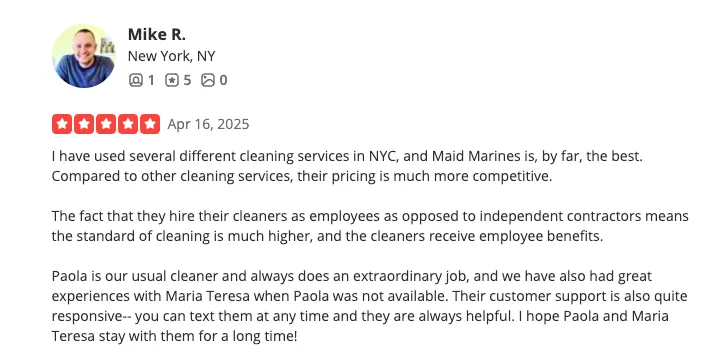
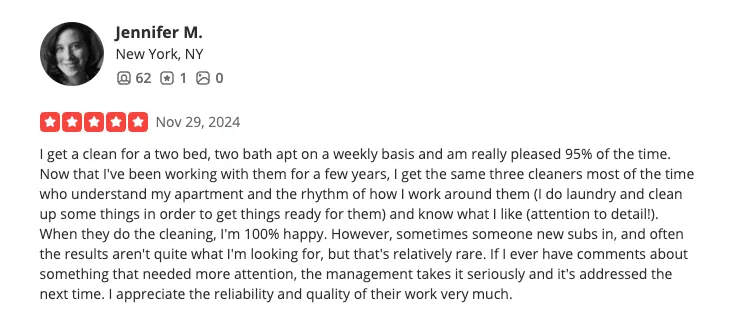
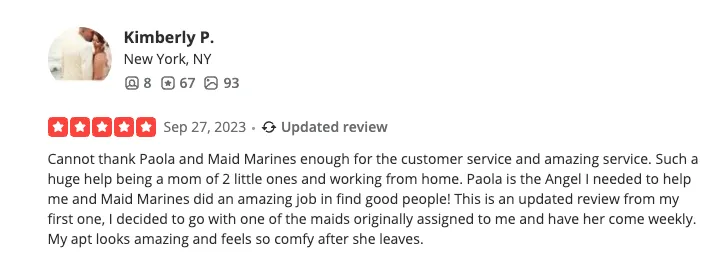
You pick your date and time on our booking page. You see your flat-rate price before you commit to anything. For a walkup apartment in a standard Wingate postwar building, the price reflects the size and number of bathrooms, not the absence of an elevator. Our cleaners are W-2 employees, not gig workers. They arrive with the right products for the surfaces in your specific apartment.
We have cleaned over 100,000 homes across New York City, and central Brooklyn is a significant part of that work. Whether you need a one-time deep cleaning before a lease renewal, a move-out clean before the next tenant arrives, or recurring house cleaning on a schedule that fits your life, you can book all of it from the same page.
We also serve nearby Crown Heights, Flatbush, Bed-Stuy, Park Slope, and the rest of Brooklyn.