
The ground beneath Battery Park City did not exist until 1966. Every building, every park bench, every stretch of the Hudson River Esplanade sits on roughly 1.2 million cubic yards of rock and dirt that was dug out of the earth to make room for the World Trade Center and pushed into the river to create 92 acres of new land. Before the fill operations began, the spot where 16,000 people now live their daily lives was the bottom of the Hudson River. It is one of the only neighborhoods in Manhattan where the land itself is younger than most of the people walking on it.
That origin story matters for understanding what Battery Park City is and why it feels the way it does. This is not a neighborhood that grew organically over centuries the way most of New York did. It was designed from a blank slate, built to a master plan, and managed by a state authority that still owns the land under every building. And somehow, despite all of that top-down planning, it turned into a genuinely pleasant place to live. The families are real. The community is real. The waterfront is extraordinary. The fact that none of it was supposed to happen the way it did is part of what makes it interesting.
The World Trade Center excavation created Battery Park City out of the Hudson River
The idea started with a logistics problem. In the early 1960s, Governor Nelson Rockefeller and the Port Authority needed to figure out what to do with the enormous volume of earth that would be excavated from beneath the World Trade Center site. Shipping it out by barge would be expensive and slow. The lower Manhattan waterfront, meanwhile, was a graveyard of rotting piers that had served the era of ocean liner travel and had been abandoned as air travel took over in the 1950s. The solution was to dump the excavation fill into the Hudson River alongside those dying piers and create new real estate in the process.
Fill operations started in August 1966 when World Trade Center excavation began. By 1973, when the Twin Towers were dedicated, approximately 700 feet of new land had been pushed into the river south of Chambers Street. But New York City nearly went bankrupt in the 1970s, and the landfill sat for years as a rubble-strewn, windswept no-man’s-land at the edge of the financial district. Nothing grew on it. Nobody lived on it. It was just dirt.
In 1982, while the site sat empty, the artist Agnes Denes planted a two-acre field of golden wheat on the fallow landfill near Wall Street. The project was called “Wheatfield, A Confrontation.” The image of that wheat field, blowing in the wind with the Twin Towers rising behind it, became one of the most iconic photographs in American land art history. It was a statement about displaced values and land use, about the absurdity of a vacant two-acre field in one of the most expensive cities on earth. And then the wheat was harvested, the field was cleared, and the developers moved in.
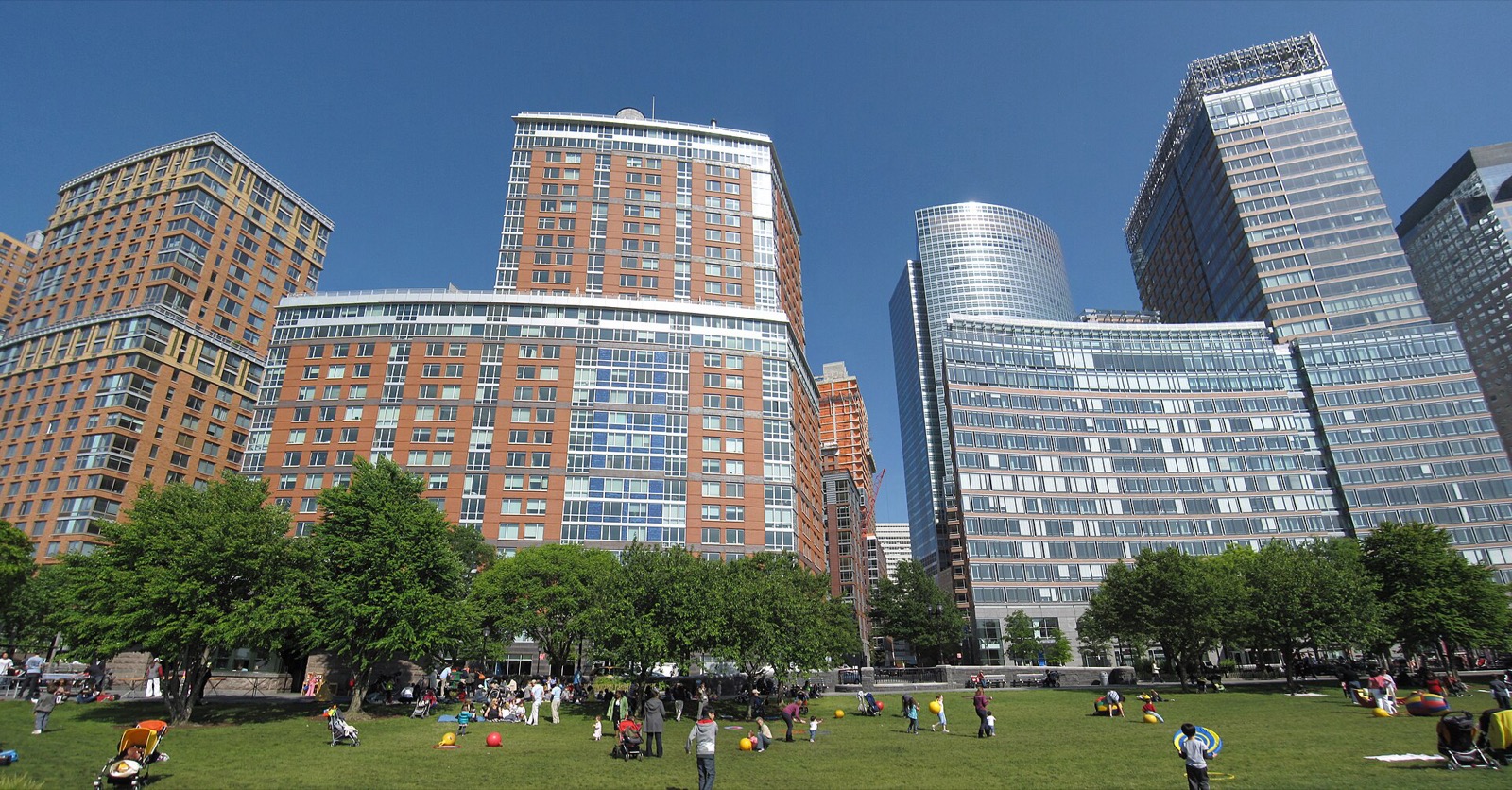
The 1979 master plan is why Battery Park City feels like a neighborhood instead of a housing project
The turning point for Battery Park City was not the landfill or the money. It was a decision about architecture. In 1979, architects Stanton Eckstut and Alexander Cooper developed a master plan that threw out the modernist superblock approach that had produced so many lifeless housing projects across the city. Their plan was deliberately humble. Break the site into small, varied parcels. Force buildings to respect the existing street grid. Require ground-floor retail on every block. Mandate a continuous public waterfront esplanade from one end of the neighborhood to the other. Make the buildings look like they belong in the city, not like they were airlifted from a suburban office park.
The plan worked. Residential construction moved quickly through the 1980s and 1990s, producing a neighborhood of brick-and-limestone buildings in a range of historicist styles that borrow from Manhattan’s prewar residential tradition. Buildings like Gateway Plaza, the Rector Place cluster, and Liberty Terrace were each designed by different architects but follow compatible height limits and material palettes. The effect is a streetscape that reads as coherent without being monotonous. The buildings look older than they are, which was the point.
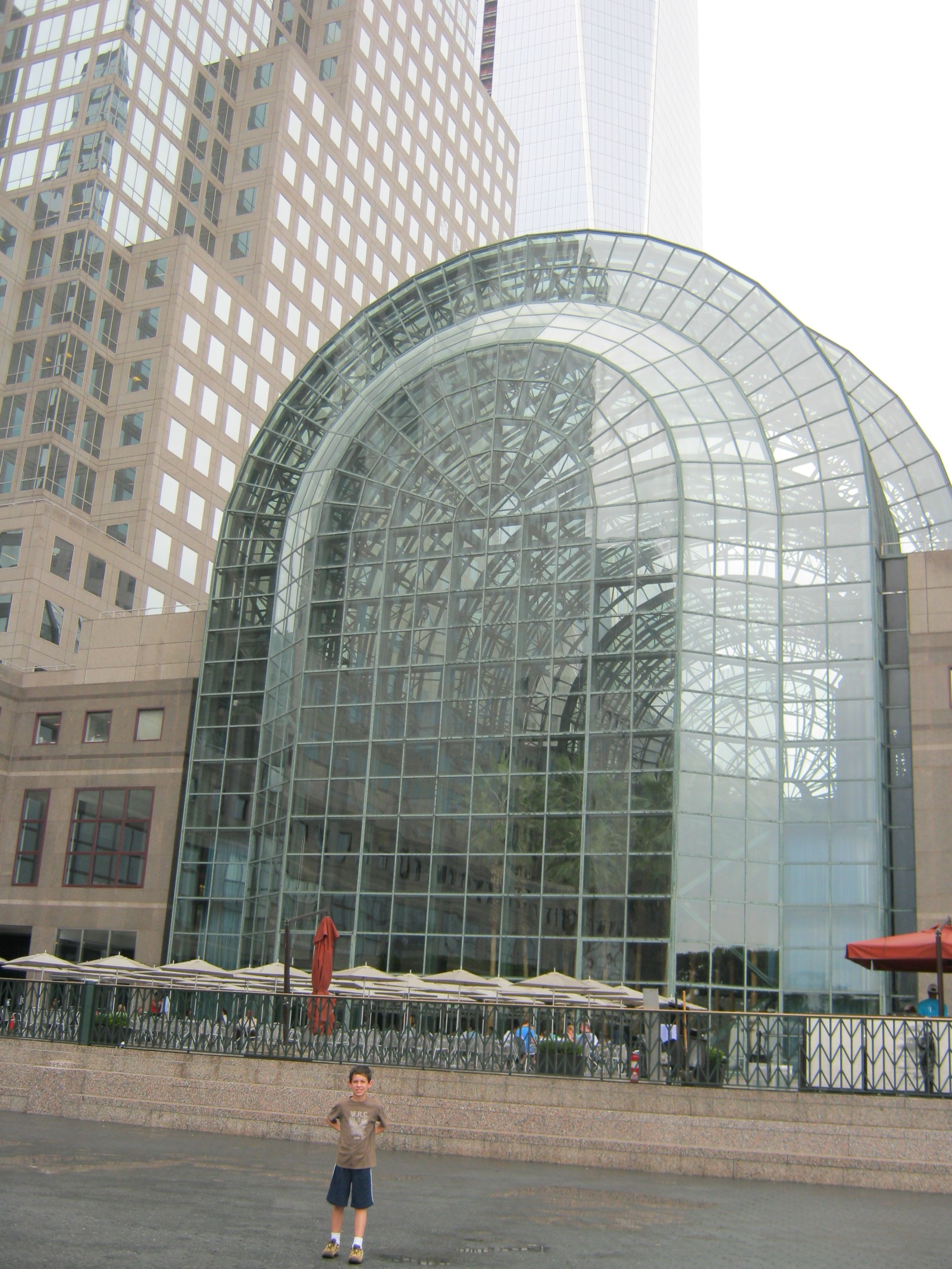
The commercial anchor came with Cesar Pelli’s World Financial Center, now called Brookfield Place, which opened in phases between 1985 and 1988. Four granite-and-glass office towers with distinctive copper-topped pyramids and domes. And at their center, the Winter Garden, a 45,000-square-foot glass barrel-vault atrium flanked by 16 Washington palm trees transplanted from the Mojave Desert in California. Those palms have survived in a glass atrium in lower Manhattan since 1988, making them among the northernmost sustainably grown palms in the country. The Winter Garden was heavily damaged when 2 World Trade Center collapsed 350 feet away on September 11, 2001. It was rebuilt and reopened in 2002.
High-rise apartment cleaning in Battery Park City starts with understanding building access
Nearly every residential building in Battery Park City has a doorman, a concierge, or both. Most have freight elevators with scheduled time slots. Many management companies require a Certificate of Insurance before any service provider can set foot past the lobby. If you have lived here for any length of time, you know the drill. What matters is whether your cleaning service knows it too.
We handle COI paperwork for every building in the neighborhood. Gateway Plaza, the Visionaire, Riverhouse, Liberty Luxe, Tribeca Pointe, Liberty View, the Rector Place buildings. Send us your management company’s requirements when you book your first apartment cleaning and we will have the certificate filed before we arrive. Keys get left with the front desk or in a lockbox. If your building requires a freight elevator reservation for a large cleaning job, we coordinate that with the super or management office so we are not standing in the lobby waiting.
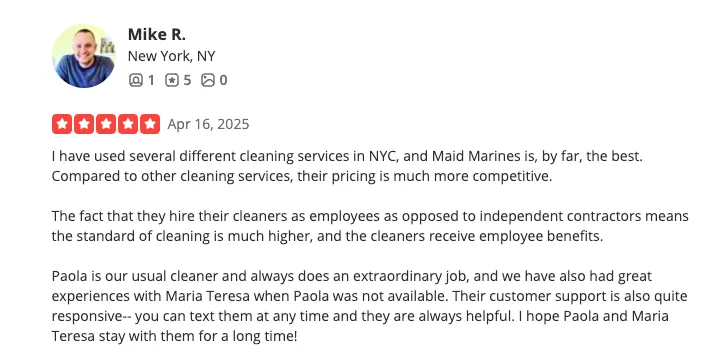
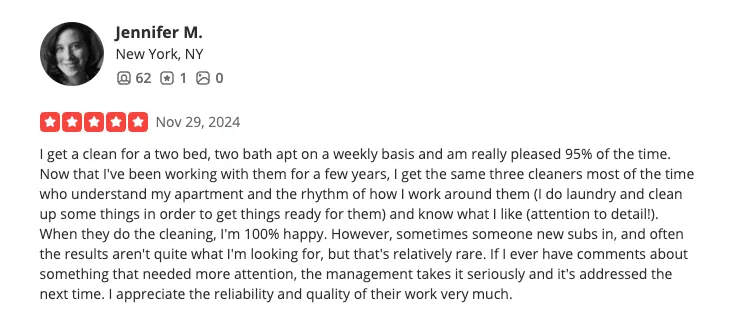
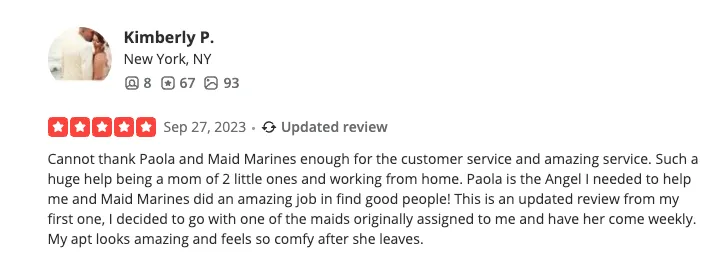
The buildings here are well-maintained, which means the common areas and hallways are always clean. Residents expect the same standard inside their apartments. That is what we deliver. Our cleaners are W-2 employees, vetted and insured, and they arrive with the right equipment for the specific surfaces in your home.
The LEED-certified buildings need cleaners who understand what is underneath the floors
Battery Park City set environmental building standards before most cities were thinking about them. The Battery Park City Authority adopted mandatory LEED certification for new construction in 2000, making it one of the first planned communities in the country to do so. The Visionaire at 30 West Street is LEED Platinum. Riverhouse at 1 River Terrace was New York City’s first fully LEED Gold building. These are not marketing labels. They represent real engineering decisions that affect how the apartments need to be cleaned.
The LEED-certified buildings typically have engineered hardwood over radiant floor heating, low-VOC interior finishes, and grey water recycling systems that are sensitive to what goes down the drains. We use pH-neutral, low-toxicity cleaning products that will not damage engineered floors, leave residue that interferes with radiant heat transfer, or introduce harsh chemicals into building systems that were designed to avoid them. No wax-based polishes. No ammonia-heavy glass cleaners. No steam mops on floors with heating elements underneath.
These materials need cleaners who understand what they cannot replace. A steam mop on engineered hardwood over radiant heating can delaminate the floor. An acidic bathroom cleaner on low-VOC sealed stone can etch the surface permanently. The green building label on the lobby wall is not decoration. It represents a set of material choices that require matching care.
Your Saturday should be spent at Teardrop Park watching your kids climb the boulders, not worrying about whether your cleaning products are compatible with your floor heating system. That is a problem we solve before we walk in the door.
The parks of Battery Park City are among the finest designed landscapes in any American city
The public spaces here are genuinely special. Not in the way that real estate brochures describe everything as special, but in the way that landscape architects and urban planners travel here from around the world to study what was built.
Teardrop Park, designed by Michael Van Valkenburgh Associates and completed in 2004, is 1.8 acres of naturalistic landscape tucked between residential towers. Large boulders brought in from upstate New York form climbing surfaces for children. Wildflower meadows change color through the seasons. A sand play area and water spray feature keep the under-five crowd occupied for hours. The park won a National Honor Award from the American Society of Landscape Architects and it earns the distinction every day when every bench is full of parents who live within two blocks.
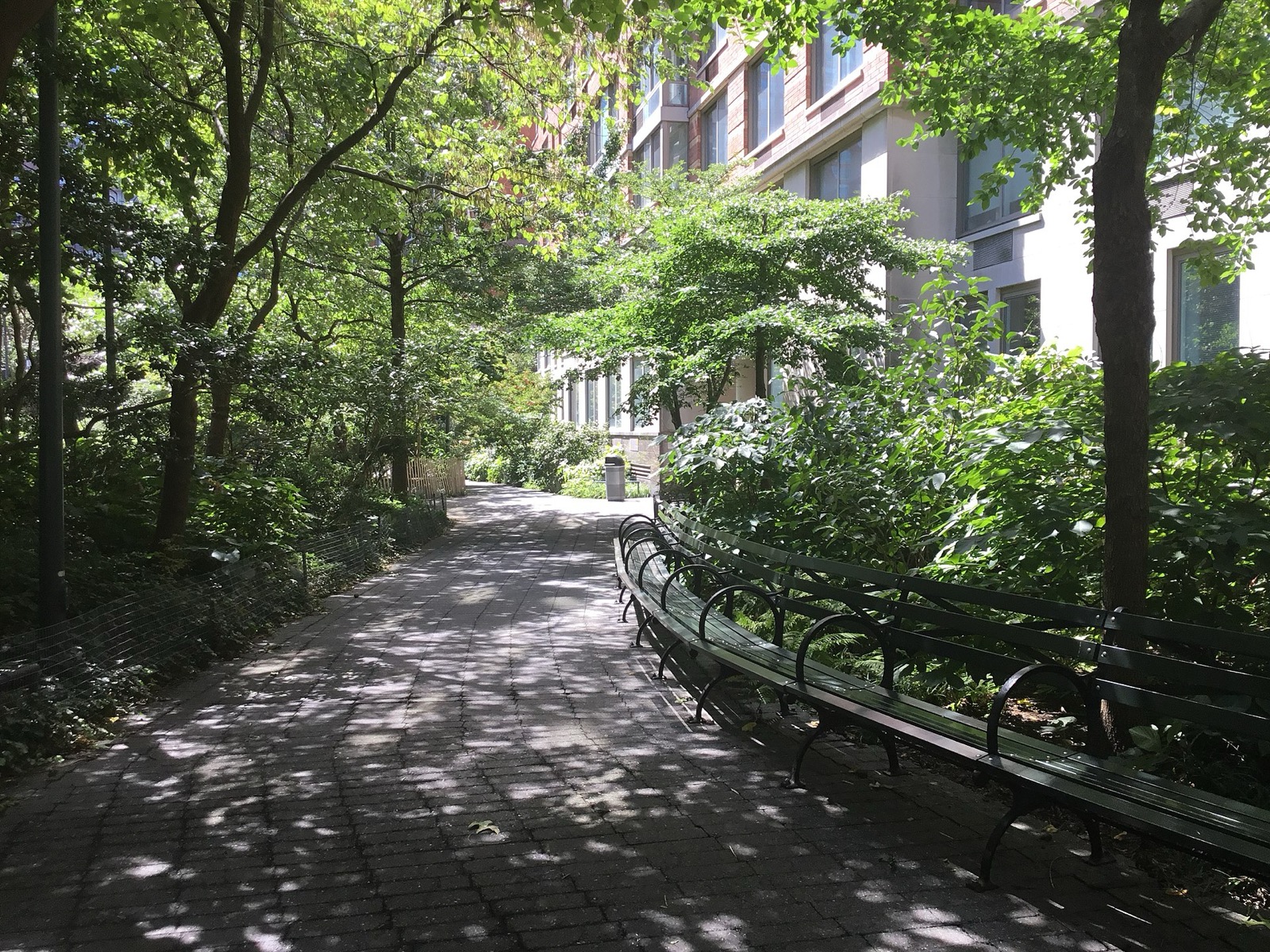
Robert F. Wagner Jr. Park anchors the southern end of the neighborhood with formal gardens, waterfront lawns, and the recently completed resiliency pavilion, a flood barrier designed to protect against 100-year storm surges. Nelson A. Rockefeller Park provides 3.5 acres of playgrounds and open lawn at the northern end. South Cove, designed by artist Mary Miss and Stanton Eckstut in 1988, is a curved wooden dock and wildflower promenade that feels more like coastal Maine than Manhattan.
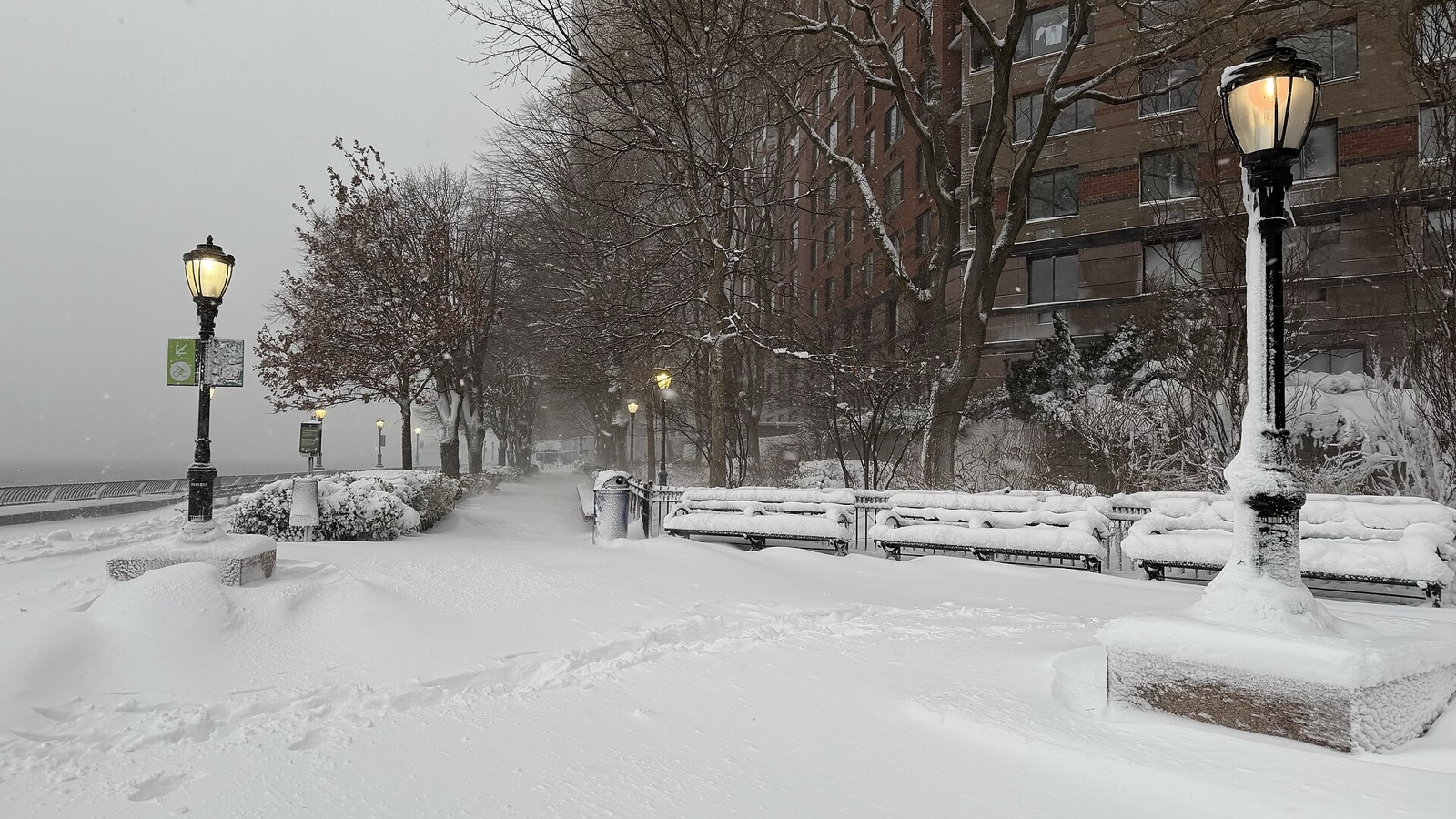
And then there is the Esplanade itself. A 1.2-mile continuous waterfront promenade from Historic Battery Park in the south to Stuyvesant High School in the north. Unobstructed views of the Hudson River, the Statue of Liberty, Ellis Island, and the New Jersey skyline. Joggers, cyclists, families with strollers, dog walkers, people sitting on benches doing nothing at all. It is one of the finest urban waterfronts in the United States, and the residents who live alongside it know it.
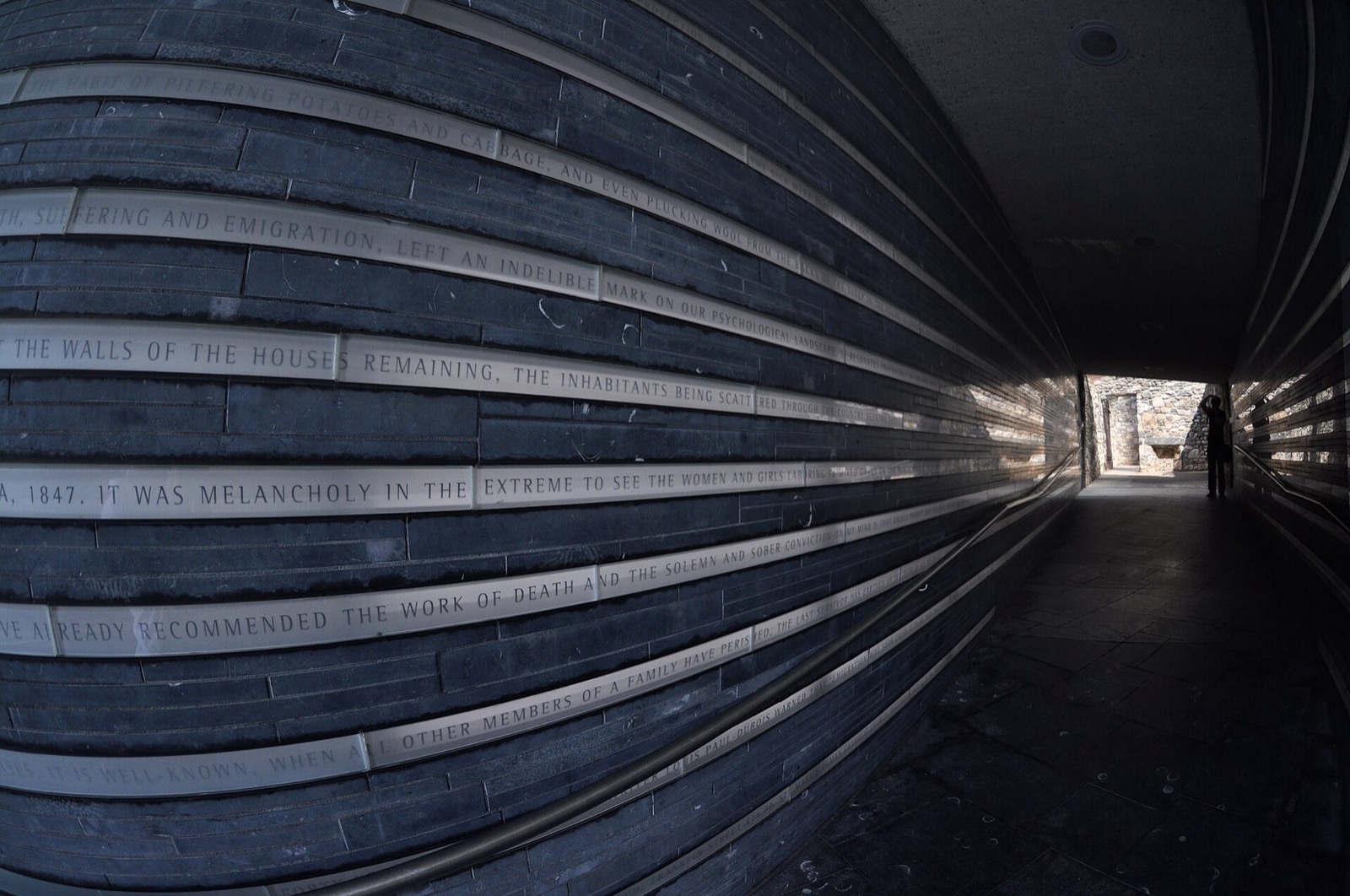
The neighborhood has over 40 permanent public artworks installed throughout its parks and walkways, including pieces by Tom Otterness, Jim Dine, Louise Bourgeois, and Ned Smyth. The Irish Hunger Memorial at Vesey Street and North End Avenue is a quarter-acre landscape containing 111 stones from every county in Ireland and a transplanted 19th-century stone cottage from County Mayo. You walk through a dark passageway and up a hillside path, and suddenly you are looking at the Hudson River from behind the ruins of a famine-era Irish cottage. It is one of the most quietly affecting monuments anywhere in the city.
September 11 left permanent marks on this neighborhood that are still visible today
Battery Park City sits immediately west of the World Trade Center site. When the Twin Towers collapsed on September 11, 2001, debris, ash, and the shockwave flooded the neighborhood. The Winter Garden’s glass was shattered. Residential lobbies were inundated. Every resident was evacuated, and many could not return for weeks or months. Some never came back.
The neighborhood rebuilt. The Winter Garden reopened in 2002. Buildings were repaired and reoccupied. But September 11 is woven into the physical and emotional fabric of the community in ways that visitors do not always see. The 9/11 Memorial at South Cove, dedicated in 2015, stands as a permanent reminder within walking distance of the rebuilt World Trade Center. Long-term residents, the ones who were here before that morning, carry the experience in their relationship to the neighborhood itself. The community that exists now was shaped as much by destruction and return as by the original master plan.
Gateway Plaza is the largest building in the neighborhood and the most straightforward to clean
Gateway Plaza opened in 1983 as the first completed residential building in Battery Park City. It is enormous. 1,712 units across a complex that feels more like a small city within the neighborhood than a single building. The apartments are older than the luxury condo towers that came later, with more standard materials, conventional layouts, and finishes that have been updated over four decades of occupancy. Vinyl and laminate flooring, standard countertops, older bathroom tile.
For cleaning purposes, Gateway Plaza is straightforward. The surfaces are durable and the layouts are efficient. A one-bedroom takes about the same time as a comparable unit anywhere in Manhattan. The building has doorman access and freight elevators, so the logistics are the same as the newer towers, but the interiors are less delicate. It is one of the more affordable addresses in the neighborhood, with rents running 15 to 20 percent below the market rate for Battery Park City overall, which makes it popular with younger professionals and families starting out.
The luxury condos at the Visionaire, Riverhouse, Liberty Luxe, and the Rector Place buildings are different. Wider plank hardwood. Marble bathroom surfaces. Custom cabinetry. Double-height windows that show every streak. These apartments take more time and more care per square foot, and we price accordingly. The cleaning team we send to a Visionaire unit is prepared for the surfaces they will find. The team we send to Gateway is equally prepared for those surfaces. The difference is in the materials, not in the quality of the cleaning.
The waterfront geography creates a cleaning pattern that is specific to this neighborhood
Battery Park City is surrounded on three sides by water and parkland, with the West Side Highway forming a kind of moat on the fourth side. That geography means a few things for daily life. First, the air is different. There is more humidity coming off the river, especially in summer, and the salt and moisture leave a film on windows and exterior-facing surfaces that residents in Midtown or the Upper East Side simply do not deal with. The floor-to-ceiling river-facing glass that commands the highest rents also shows every water spot, every fingerprint, every streak when the afternoon sun hits it.
Second, the parks and the Esplanade generate a steady flow of tracked-in dirt, pollen, and seasonal debris. Families with children who spend their afternoons at Teardrop Park or Rockefeller Park bring sand, grass, and park dust into lobbies and apartments daily. Dog owners walking the Esplanade bring in the same. The river wind carries fine grit that settles on balconies, window sills, and any outdoor surface.
These are not problems. They are just the reality of living on a waterfront in a neighborhood built around outdoor life. A regular cleaning schedule accounts for them. Entry-area attention and the sills come with recurring service in Battery Park City. The interior window glass is priced separately — add it to the booking, on its own or alongside a seasonal deep clean to reset after winter, and the quote carries the number before you confirm.
The small-town feeling is real and it comes from the geography
Residents who have been in Battery Park City for years describe a small-town quality that sounds improbable for a Manhattan neighborhood. They know their neighbors. They recognize faces on the Esplanade. The parents from Stuyvesant High School know each other from the dog run at Wagner Park. The same families have been in the same buildings for fifteen or twenty years.
That feeling comes from the physical isolation. West Street, six lanes of traffic, separates Battery Park City from the rest of lower Manhattan in a way that feels almost complete. You do not pass through Battery Park City on your way somewhere else. There are no through streets that connect to the rest of the grid. You have to want to be here. The result is a self-contained residential community that operates at a slower pace than the financial district next door. The streets are clean. The retail is curated. There are no bodegas. There are no surprise storefronts. Everything is maintained, managed, and intentionally pleasant.
For the families who chose this neighborhood precisely for those qualities, it works. The children have parks and clean air and an Esplanade that runs for over a mile along the river. The commute to Midtown is a ferry ride or a walk through the Brookfield Place tunnels to the World Trade Center PATH or subway stations. The grocery store is on South End Avenue. The French food hall is at Brookfield Place. The Saturday morning routine is coffee at Le District, the kids at Teardrop Park, and the cleaning team at the apartment.
Moving in or out of a Battery Park City high-rise is a logistics job
If you are moving into or out of a Battery Park City apartment, the building will have rules. Freight elevator time slots, floor protection requirements, COI from the moving company, and often a specific window of hours during which move-in activity is permitted. The apartment itself needs to be cleaned before you hand over the keys or after you receive them.
Our move-in and move-out cleaning covers the full reset. Inside cabinets, appliance interiors, baseboards, window tracks, bathroom tile and grout, and every surface the next occupant will touch or open. We coordinate with your building’s move schedule so the cleaning happens in the right window. If you are moving out and need the apartment inspection-ready for the management company, we deliver that standard.
For residents moving between Battery Park City and nearby Tribeca or the Financial District, we can often schedule the move-out clean at one address and the move-in clean at the other within the same week. The neighborhoods are close enough that our teams know both well.
What booking looks like for Battery Park City residents
You pick your date and time on our booking page. You see your flat-rate price before you commit. If your building requires COI paperwork, tell us which building and management company when you book and we will file it before the first visit. If you have specific surface notes, radiant floors, engineered hardwood, marble countertops, whatever the case is, you tell us once and we note it permanently on your account.
Our cleaners arrive through the front desk or concierge. Keys get picked up and returned the same way. If you prefer to be home, that works too. If you work from home and need us to work around your office setup, just say so.
We serve Battery Park City and all of lower Manhattan, including nearby Tribeca, the Financial District, Chelsea, and Hell’s Kitchen. Our full list of cleaning services covers everything from recurring maintenance to one-time deep cleans. Our teams know the buildings, the surfaces, and the building management requirements in this neighborhood. We show up prepared.