
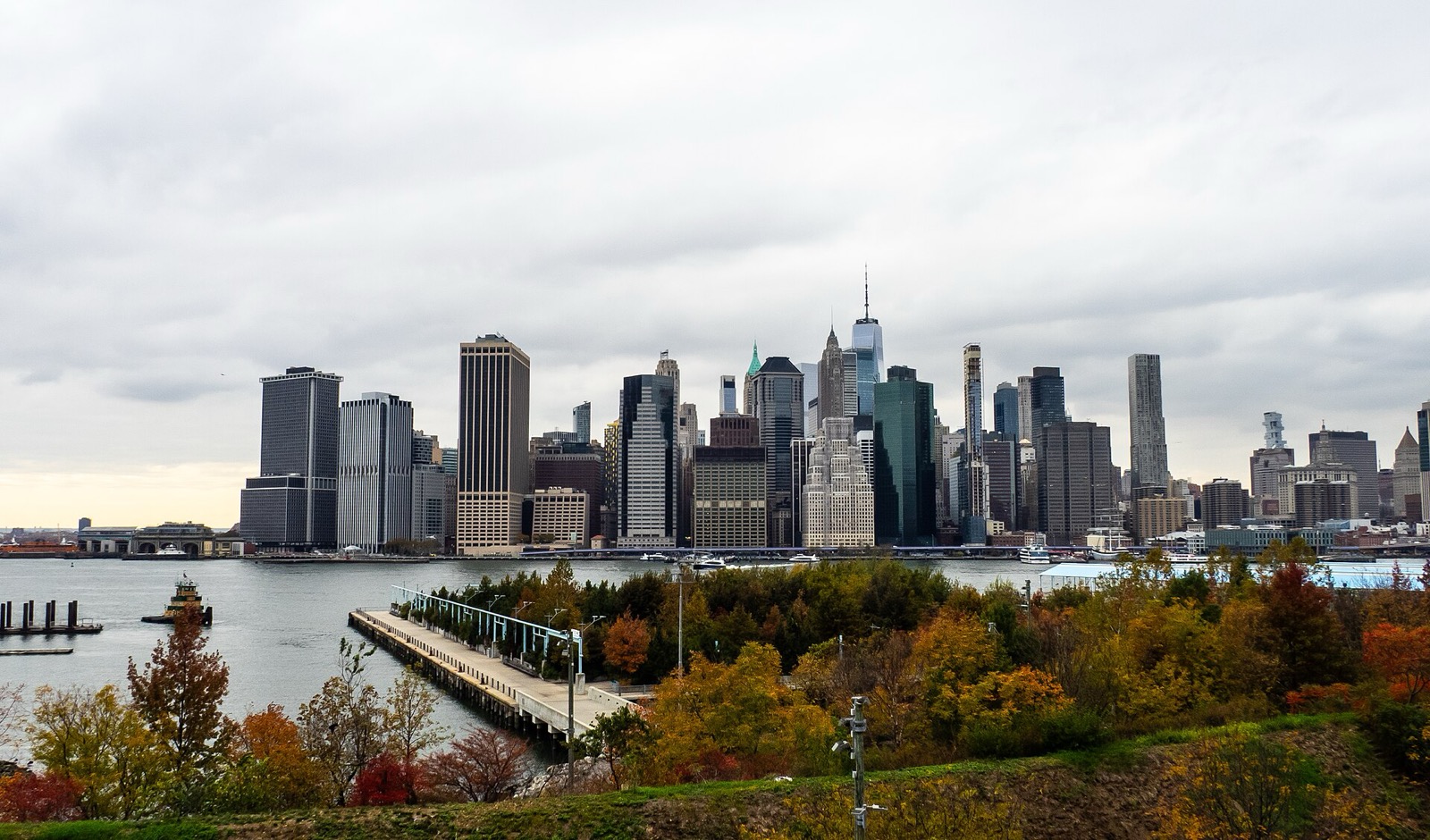
New York City was born at the bottom of Manhattan Island. Not in a grand civic gesture but in a rough Dutch trading post, planted in 1624 on a shore thick with oyster beds, where 400 people speaking 18 different languages built a settlement they called New Amsterdam. Four centuries later, the narrow streets they laid out still twist through the Financial District, unchanged in their paths if not in their scale. The wooden buildings are gone. In their place stand some of the most significant structures in American history, rising 40, 50, 60 stories from lanes that are 30 feet wide. And in a development that would have baffled anyone standing here in 1990, people now live in these buildings. Tens of thousands of them. In apartments carved from the bones of trading floors, law offices, and bank vaults.
The Financial District is a neighborhood that spent 370 years refusing to be one. It is now becoming one faster than almost any place in New York.
Where Wall Street got its name and how a Dutch wall shaped four centuries of American finance
The most famous street in global finance is named for a fence. In 1653, Director General Peter Stuyvesant ordered a wooden palisade wall built across the width of Manhattan Island, from the Hudson River to the East River, to defend New Amsterdam against a possible English attack. The wall was constructed partly by enslaved Africans and European colonists working side by side in the colony’s characteristic mix of exploitation and diversity. It ran roughly along the line of what is now Wall Street. The wall was torn down in 1699, 35 years after the English took the colony without firing a shot and renamed it New York. But the street kept the name, and the name became the most loaded two syllables in capitalism.
What happened on Wall Street between the 1790s and the present reads like a compressed history of American power. The Buttonwood Agreement of 1792, signed by 24 stockbrokers under a sycamore tree at 68 Wall Street, created what became the New York Stock Exchange. Alexander Hamilton, the first Secretary of the Treasury, chartered the Bank of New York and the US Mint from offices in these blocks. He is buried in the graveyard of Trinity Church at the corner of Broadway and Wall Street, having been killed in a duel with Aaron Burr in 1804. J.P. Morgan ran the most powerful private bank in American history from 23 Wall Street, a building that still bears shrapnel marks from a wagon bombing in 1920 that killed 38 people. Morgan refused to repair the pockmarks. They remain visible today.
The Federal Reserve Bank of New York sits at 33 Liberty Street in a Florentine Renaissance building designed to project permanence. Eighty feet below street level, its vaults hold approximately $600 billion in gold bars belonging to 36 foreign governments and international organizations. It contains more gold than Fort Knox.
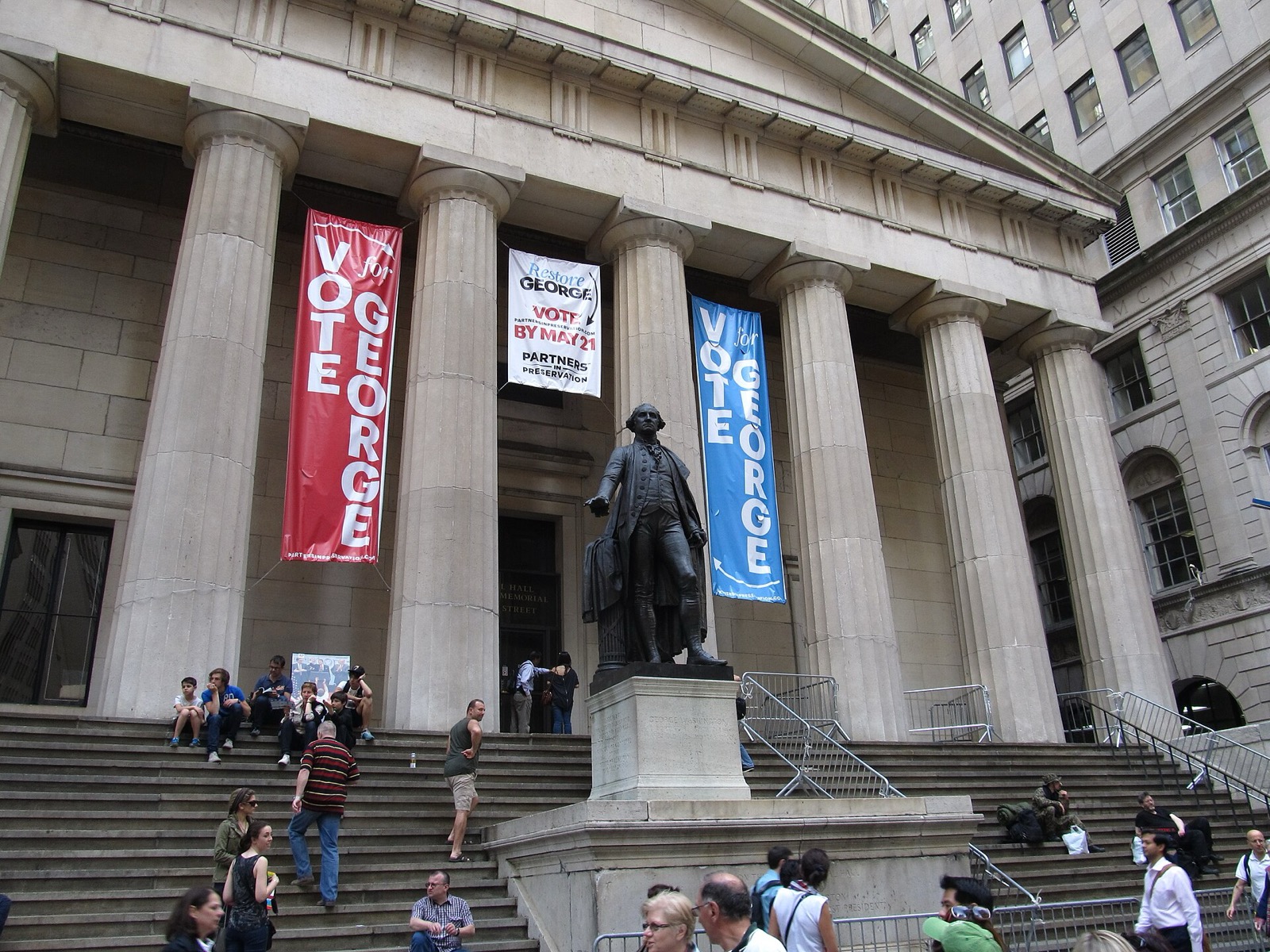
Federal Hall and the corner where American democracy started
Stand at the intersection of Wall Street and Broad Street and you are standing at one of the most historically dense corners on the planet. On April 30, 1789, George Washington stepped onto the balcony of Federal Hall and took the oath of office as the first President of the United States. Congress met in the building until 1790, when the capital moved to Philadelphia. The current Federal Hall is an 1842 Greek Revival replacement, now a National Memorial. A bronze statue of Washington stands on the front steps, one hand extended over the street where it all began.
Directly across from Federal Hall, the New York Stock Exchange fills the block with its 1903 Beaux-Arts facade. The Corinthian columns and the pediment sculpture representing “Integrity Protecting the Works of Man” face a street barely wide enough for two cars. This is where the opening and closing bells ring, where roughly 3,000 bell ceremonies have taken place since 1903, and where the daily rhythm of the world’s largest stock exchange by market capitalization sets the tempo for the entire neighborhood.
The NYSE trading floor itself covers 23,000 square feet behind that facade, roughly three quarters the size of a football field, with four rooms wired to process billions of dollars in transactions before lunch. The building was declared a National Historic Landmark in 1978, but it is still very much a working exchange. You can stand on Broad Street on any weekday morning and watch the floor traders filter in through the side entrance on New Street, badge lanyards already around their necks, coffee in hand, moving with the particular pace of people who know that market open at 9:30 is not a suggestion. The security perimeter that rings the building after 2001 has become part of the architecture now, concrete barriers dressed in planters that nobody questions anymore. Tourists line up along the barricades to photograph the columns. Residents who live a block away barely glance at them on the way to the grocery store. That is the FiDi contradiction in miniature. The most consequential financial building on earth is also the thing you walk past to get a bagel.
The bronze statue of Washington on Federal Hall’s steps has become FiDi’s unofficial neighborhood mascot. Joggers loop past it at 6 AM. Office workers eat lunch on the steps in its shadow. Tourists recreate the inauguration pose with one hand raised. The statue was sculpted by John Quincy Adams Ward in 1882 and placed on the exact spot where Washington stood to take the oath. The granite steps beneath it are worn smooth from 140 years of foot traffic. Behind Washington’s back, through the Doric columns, the National Memorial’s rotunda houses the Bible used at the inauguration and the stone slab from the original balcony where Washington stood. Free admission, open weekdays, and almost nobody who lives in FiDi has been inside. It is one of those places you keep meaning to visit because it is right there and you pass it twice a day.
Broad Street runs south from this intersection. In the days of New Amsterdam, Broad Street was not a street at all but a canal, the widest waterway in the Dutch colony, flanked by merchants and traders. The canal was filled in, but the unusual width of the street preserves its memory. Fraunces Tavern sits at the southern end of Broad Street at 54 Pearl Street, operating in a building from 1719. George Washington drank here after the Battle of Yorktown. He delivered his farewell address to his officers in the upstairs dining room in 1783. The tavern is still open, still serving, equal parts museum and functioning pub.
The skyscrapers that turned narrow colonial streets into the most famous canyons in architecture
The Financial District’s skyline is an accident of economics and geology. The colonial street plan left lanes so narrow and land so expensive that the only direction to grow was up. Beginning in the 1880s, the neighborhood became the testing ground for the tallest buildings in the world.
The Woolworth Building at 233 Broadway, completed in 1913, stood 792 feet and 57 stories tall. Designed by Cass Gilbert in Gothic Revival style and paid for in cash by Frank Woolworth, it was nicknamed the “Cathedral of Commerce” at its dedication. It held the title of world’s tallest building for 17 years. The lobby interior is a spectacle of Byzantine mosaics, vaulted ceilings, and carved marble. In 2015, Alchemy Properties purchased the top 30 floors and converted them into 32 individually crafted condominiums. The five-story penthouse inside the copper-clad pinnacle reaches 727 feet above the street and includes a private observatory terrace.
40 Wall Street, a 927-foot Art Deco tower completed in 1930, was briefly the tallest building in the world before the Chrysler Building’s secret spire was revealed weeks later. The Cunard Building at 25 Broadway, a 1921 Beaux-Arts masterpiece, has a monumental vaulted booking hall interior that once processed passengers boarding transatlantic steamships. One New York Plaza, a 50-story modernist tower from 1969 at the tip of Manhattan, is now converting to residential.
The density of significant architecture packed into these 20 blocks is unmatched in the Western Hemisphere. And increasingly, these buildings are not just landmarks to photograph from the sidewalk. They are places where people wake up, make coffee, and get ready for work.
How office towers became apartments and why that changes everything about cleaning them
The transformation that defines the modern Financial District began quietly in the 1990s. The city’s 1995 Lower Manhattan Revitalization Plan offered tax incentives for converting office space into housing. After September 11, the incentives expanded and the urgency grew. Thousands of businesses had relocated. The neighborhood needed a new reason to exist outside of business hours. The answer was residential conversion.
The numbers tell the story. In 1990, the Financial District had almost no permanent residents. By 2023, the residential population exceeded 60,000. One Wall Street, a 1931 Art Deco tower designed by Ralph Walker as the headquarters of the Irving Trust Company, became 566 luxury condominiums in the largest office-to-condo conversion in city history. The developers spent years replicating and reglazing the original terra-cotta facade details and restoring the coffered ceiling panels from Frank Woolworth’s private office for the residential lobby. Units start above $1 million.
25 Water Street, a Brutalist 1960s office building that once housed JPMorgan Chase and the New York Daily News, is now the largest office-to-residential conversion in United States history. Redesigned by CetraRuddy under the name SoMA, it holds 1,320 apartments across a gut-renovated interior with ten new stories added above the original parapet. The old brick facade, designed to look like a punch card because the building originally held computers rather than people, was replaced entirely with new fenestration to bring in light.
These conversions create apartments that look and feel unlike anything else in Manhattan. The floor plates were designed for trading desks, not bedrooms. Ceilings sit at 10 to 12 feet because commercial drop tiles were removed to expose the original structural height. Windows span entire walls because they were engineered to light 15,000 square foot open floors. The apartments that result from this process run 1,000 to 2,500 square feet with proportions that feel more like lofts than traditional New York units.
They also create cleaning challenges that do not exist in conventional residential buildings. The ceiling height puts dust-collecting surfaces, ductwork covers, sprinkler pipe housings, and recessed light fixtures beyond the reach of standard equipment. The commercial-scale windows show every streak and water spot from across the room when afternoon light comes through. Original marble and terrazzo from Art Deco lobbies often continues into private hallways and foyers, requiring pH-neutral products that most general cleaning crews do not carry. Our teams bring extension poles, step ladders, and squeegee kits on every FiDi visit because these buildings demand it. We handle the apartment cleaning for dozens of converted towers in the neighborhood and our equipment list reflects what the spaces actually require.
Stone Street and the oldest layer of New York that you can still walk through
Not everything in the Financial District reaches for the sky. Some of the most important history sits at ground level, on streets barely wider than a hallway.
Stone Street is the oldest paved street in New York. In 1658, the residents of what was then called Breuers Straet in New Amsterdam pooled their own money and petitioned to pave the lane with cobblestones. It was the first cobbled street in the colony. The Dutch had already built North America’s first commercial brewery on this block, with stores and lofts crafted for import merchants lining the narrow lane.
The street survived the English conquest, the Revolution, the Great Fire of 1835 that destroyed most of the wooden Dutch and early American buildings of lower Manhattan, and 350 years of development pressure. The Federal-style commercial buildings that line the lane today date to the 1830s, rebuilt after the fire. The Stone Street Historic District was designated a protected New York City Landmark in 1996 and added to the National Register of Historic Places in 1999.
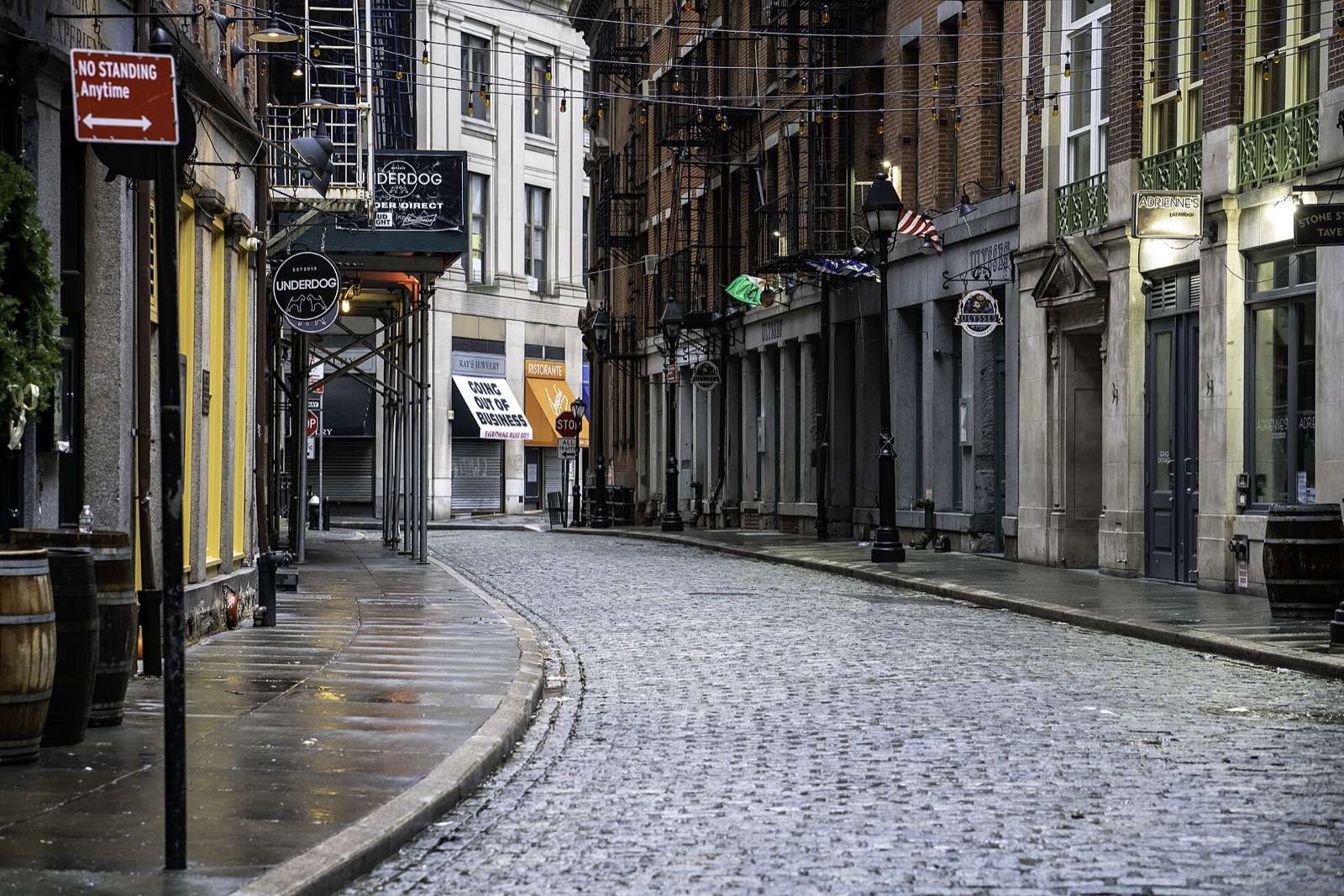
Today, Stone Street is the Financial District’s outdoor living room. From May through October, a dozen restaurants and bars push their tables into the lane and the entire alley becomes a single open-air dining room. Ulysses’ Folk House, the first Stone Street bar when it opened in 2003, anchors the scene with a raw bar and pints. Adrienne’s Pizzabar draws lunch crowds from every surrounding tower with thick rectangular Roman-style slices. On a warm Friday evening, the cobblestones disappear under hundreds of people doing what people have done on this exact spot for nearly 400 years: eating, drinking, and arguing about money.
Your Saturday afternoon belongs here, or at the Seaport, or walking Battery Park with a view of the harbor. Not scrubbing the inside of your oven or trying to reach the dust on the ductwork above your kitchen. When you book a cleaning, you see your flat-rate price before you commit. Our team handles the building access, the vendor registration, and the service elevator while you spend those hours somewhere in the neighborhood that is actually worth your time.
Trinity Church and the graveyard where the architect of American capitalism is buried
Trinity Church sits at the head of Wall Street where it meets Broadway. Completed in 1846 in Gothic Revival style and designed by Richard Upjohn, it was the tallest structure in New York City until 1869 at 281 feet. The church is still an operating Episcopal parish. The graveyard is the oldest continuously active churchyard in Manhattan, and it is open to the public.
Alexander Hamilton is buried here. So is Robert Fulton, who built the first commercially successful steamboat. So is Albert Gallatin, who served as Secretary of the Treasury under Jefferson and Madison. The graveyard is a quiet rectangle of old stone and shade trees, surrounded on all sides by towers that dwarf the church by a factor of five. It is one of the most surreal juxtapositions in the city: 18th-century headstones at the foot of 21st-century glass.
A block south, St. Paul’s Chapel at 209 Broadway is the oldest surviving church building in Manhattan, built in 1766. George Washington worshipped here after his inauguration. On September 11, 2001, St. Paul’s stood 300 feet from the World Trade Center. A giant sycamore tree in the churchyard absorbed the bulk of the debris. The chapel survived without a single broken window. For eight months afterward, it served as a 24-hour rest station for rescue workers, with hundreds of volunteers operating around the clock.
The World Trade Center, the memorial, and the neighborhood that rebuilt itself
The original World Trade Center complex occupied 16 acres in the northwestern Financial District. The Twin Towers, at 110 stories each, were the tallest buildings in the world when they were completed in 1972 and 1973. On September 11, 2001, the towers were destroyed in the worst terrorist attack on American soil, killing 2,977 people.
The rebuilt complex tells the story of what came after. One World Trade Center, at 1,776 feet, is the tallest building in the Western Hemisphere. The height is a deliberate reference to the year of American independence. Designed by David Childs of Skidmore, Owings and Merrill, it is a crystalline glass obelisk that changes color with the light, tapering from its square base to an octagonal top. The observation deck on floors 100 through 102 offers views that reach to the horizon in every direction.
The 9/11 Memorial, designed by Michael Arad and Peter Walker, occupies the exact footprints of the Twin Towers. Two acre-square reflecting pools send water cascading into voids that seem to have no bottom. The names of all 2,977 victims are inscribed in bronze around the edges. White oak trees ring the plaza. The underground museum contains artifacts, testimonies, and preserved remnants of the towers. It is one of the most visited memorial sites in the world.
The Oculus, Santiago Calatrava’s transit hub, rises between the memorial pools like a ribbed white cage opening toward the sky. It cost $3.9 billion, making it the most expensive train station ever built. Inside, the soaring central hall connects eleven subway lines and the PATH to New Jersey through a single underground complex. The Fulton Center, opened in 2014, serves 300,000 daily passengers and connects to the Oculus via underground passages.
For residents, the Oculus has become something Calatrava probably did not intend: a climate-controlled shortcut and a living room that happens to be 350 feet long. The underground retail concourse links Brookfield Place, the World Trade Center towers, Fulton Center, and a dozen subway lines without ever stepping outside. On a February morning with wind chill dropping to single digits off the Hudson, you can walk from your apartment at One Wall Street to a PATH train at the World Trade Center without touching the sidewalk. In summer the retractable skylight at the peak of the central spine opens fully, and the steel ribs frame a strip of sky that lines up precisely with the sun on September 11 each year. The light fills the hall floor to ceiling for a few minutes. Calatrava designed it that way on purpose. Every other day of the year the building functions as a mall and a commuter tunnel. On that one morning it becomes a memorial.
The 9/11 Memorial itself has reshaped how people experience the southwestern corner of the neighborhood. The twin reflecting pools sit in the exact footprints of the original towers, each one nearly an acre, with bronze parapets listing 2,977 names arranged not alphabetically but by “meaningful adjacency,” grouping coworkers, friends, and family members together. White roses appear on birthdays, placed by memorial staff in the name panels each morning. The surrounding plaza of 416 swamp white oak trees creates a canopy that feels deliberately separate from the financial district’s pace. Residents walk their dogs along the perimeter paths at dusk. Children from PS 234 and Millennium High School cut through the grove on the way to soccer practice at Battery Park City. The memorial museum below ground holds the last steel column removed during the recovery, still covered in signatures and messages from ironworkers. The Survivors’ Staircase, 38 granite steps that hundreds of people used to escape on September 11, was extracted intact and installed as a permanent exhibit. Living in FiDi means these landmarks are not field trip destinations. They are the things you pass between the pharmacy and the subway.
The neighborhood that exists today around the memorial is not the same one that existed before September 11. The residential boom that followed was partly an economic response to vacancy and partly a collective decision that lower Manhattan would not be abandoned. The families pushing strollers past the reflecting pools live in the buildings that rose from the recovery. The schools that opened after 2001 serve children who have known no other neighborhood.
The food scene that grew up around Wall Street and the Seaport
For most of its history, the Financial District’s food economy served one purpose: feeding the lunch crowd. Restaurants opened at 11 and closed at 3. After 6 PM, the neighborhood went dark.
Delmonico’s at 56 Beaver Street is the exception that predates the rule. Established in 1837, it is the oldest continuously operating restaurant in New York City and arguably the most important restaurant in American dining history. Delmonico’s is credited with inventing eggs benedict, lobster Newberg, chicken a la king, and baked Alaska. More significantly, it invented the business lunch as a social institution. When 19th-century railroad barons and financiers discovered they could make deals over food rather than in offices, the power lunch was born. The dining room is a Victorian interior of dark wood paneling, white tablecloths, and the quiet confidence of a place that has been doing the same thing for 189 years.
Harry’s NYC at 1 Hanover Square has been Wall Street’s power-lunch steakhouse since 1972, operating in the historic 1854 India House. The Tin Building by Jean-Georges opened in 2022 in the restored 1907 Fulton Fish Market building at the Seaport. Eleven restaurants and two bars across four floors, from Japanese sushi to French bistro, in 53,000 square feet of food. Manhatta, Danny Meyer’s dining room on the 60th floor of 28 Liberty Street, serves a menu rooted in New York culinary history with views that justify any reservation price.
The Seaport itself has been reborn. Pier 17 was rebuilt as a multi-level entertainment complex with a rooftop concert venue, restaurants, and the best outdoor views of the Brooklyn Bridge in lower Manhattan. What was once a dead zone after dark is now one of Manhattan’s most visited evening destinations.
What the conversion wave means for keeping these apartments clean
The Financial District is still converting. 25 Water Street is bringing 1,320 new apartments online. Projects like 55 Broad Street are adding another 571 rental units. The post-COVID office vacancy that pushed rates above 20 percent has made the economic case for conversion nearly irresistible, and the city’s 467-m tax incentive is accelerating the pipeline. The residential population is going to keep growing.
Every one of these conversions produces apartments with the same characteristics. Commercial ceiling heights. Oversized windows. Original stone and metal finishes that the developers chose to preserve because they add value. And every one of them needs cleaning that accounts for these features rather than ignoring them.
Our teams clean converted towers throughout FiDi. We know what a squeegee technique does for 10-foot commercial glass that spray-and-wipe cannot. We know that the marble extending from the lobby into private hallways at One Wall Street, 20 Exchange Place, and 75 Wall Street needs pH-neutral products and soft microfiber, not the acidic all-purpose cleaner that will etch the surface permanently. We know that the ductwork covers and sprinkler housings at 11 feet collect a layer of gray grit that migrates down to countertops and furniture over months if nobody addresses it.
The new luxury towers around the World Trade Center, including 30 Park Place and 111 Murray Street, present different problems. Engineered stone countertops that show water rings. Matte-finish hardwood that dulls with the wrong product. Frameless glass shower enclosures where hard water deposits become permanent without regular attention. These finishes are designed to look untouched and they punish any cleaning approach that is not calibrated to the material.
For deep cleaning after renovation work, move-in and move-out cleaning in the neighborhood’s fast-moving rental market, or recurring house cleaning on a schedule that works around your life, we bring the right products and the right equipment for whatever your building demands.
How to book and what happens when you do
You pick your date and time on our booking page. You see your flat-rate price before you commit. If your building has vendor registration requirements, you tell us the building name once and we handle the paperwork, elevator scheduling, and front desk coordination on every future visit. Most FiDi residents leave access with their doorman and come home to a clean apartment after work.
Our cleaners are W-2 employees, not gig workers pulled from an app. They are vetted, insured, and they bring everything they need. If your apartment has original stone finishes, we use the right products. If your ceilings are 11 feet, we have the reach. If your windows are commercial scale, we have the technique.
The Financial District spent 400 years as a place people left at 6 PM. It is now a place where people come home to apartments carved from the most significant buildings in American commercial history. Those apartments deserve cleaning that understands what they are and where they came from. We also serve nearby Tribeca and the rest of Manhattan.