
Manhattan Valley is the part of the Upper West Side that the Upper West Side does not talk about at dinner parties. It sits between West 96th and West 110th Streets, Broadway to the west and Central Park to the east, occupying a literal topographic valley carved by a stream that once ran from the park to the Hudson River. The stream is long gone, filled in when the grid was imposed on Manhattan in the 19th century, but the depression in the terrain is still there. Walk the cross streets and you can feel the gentle drop. The name is geographically honest.
The neighborhood used to be called Bloomingdale, from the Dutch Bloemendaal, meaning vale of flowers. That name stuck through two centuries of farmland, a period as home to the Bloomingdale Insane Asylum, and decades of dense residential development. By the late 1960s the community chose to rebrand. Bloomingdale had become associated with decline, rising crime, and landlord abandonment. The Manhattan Valley Development Corporation, founded in 1968, pushed the new name as part of a broader project of community self-determination. They chose renovation over demolition when most of the city was tearing buildings down, and they chose to keep the existing residents when displacement was the norm. That decision shaped everything about the neighborhood that exists today.
Pre-war buildings in Manhattan Valley need cleaners who know what they are walking into
The housing stock here tells the story of a neighborhood that was built for the middle class and has held onto more of its original character than the blocks to the south. Six-to-twelve-story pre-war apartment buildings in brick and limestone line the major avenues. Many have decorative terra-cotta cornices, terrazzo lobby floors, and original elevator fixtures from the 1920s. The side streets, particularly West 104th, 105th, and 106th, hold brownstone and limestone rowhouses from the 1890s with original stoops, iron railings, and four-story facades. And in the northeast corner, NYCHA public housing developments from the 1950s and 1960s anchor a population that most Manhattan neighborhoods have priced out entirely.
The range of housing is what makes Manhattan Valley genuinely unusual. Within a few blocks you have Central Park West co-ops where units sell for $2 million, Manhattan Avenue townhouses listed at $5 million, rent-stabilized one-bedrooms on Amsterdam Avenue where families have lived for 30 years, and public housing where the cleaning concerns are practical and immediate. A cleaning service that treats every home the same is a cleaning service that will damage something in this neighborhood.
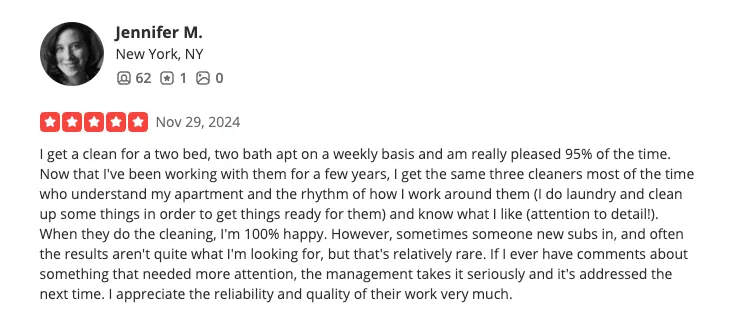
The pre-war apartments are the most common job we handle here. The buildings along Broadway, Amsterdam, Columbus, and West End Avenue were built between 1900 and 1935, and the interiors have the characteristics of that era. Hardwood floors, some with original finishes that have not been refinished in decades. Plaster walls and ceilings with decorative molding that will chip if you scrub it. Cast-iron radiators connected to steam heat systems that trap a summer’s worth of dust between the fins. Kitchens that have been renovated anywhere from zero to three times in a century.
We send teams that know these buildings. The floors get a pH-neutral solution and microfiber, not a bucket of water that warps old wood. The plaster gets dusted carefully. The radiator fins get a brush and vacuum attachment to pull the debris that burns off every October and fills the apartment with that unmistakable scorched smell. These are standard procedures for us, not add-ons.
The community that chose renovation over demolition when the rest of the city was tearing itself apart
The Manhattan Valley Development Corporation is one of those organizations that most New Yorkers have never heard of but that shaped an entire neighborhood. When it was founded in 1968, the blocks between 96th and 110th Streets were in serious trouble. White middle-class residents had left for the suburbs. Building owners were dividing apartments into single-room occupancies, deferring maintenance, and in some cases actively harassing tenants to clear buildings for demolition and redevelopment. By 1960 the area had the highest juvenile delinquency rate in Manhattan.
The MVDC took a different approach. Instead of demolishing deteriorated buildings and replacing them with towers, they rehabilitated hundreds of existing structures. Instead of displacing the Puerto Rican and Dominican families who had settled here in the 1940s and 1950s, they fought to keep them. The result, decades later, is a neighborhood that still has more rent-stabilized apartments per capita than comparable Manhattan neighborhoods. It is also the structural reason that Manhattan Valley has maintained genuine demographic diversity while the southern Upper West Side has become increasingly homogeneous.
That diversity is not abstract. Walk Amsterdam Avenue north of 100th Street and you pass Dominican restaurants serving rice and beans and rotisserie chicken at prices that the rest of Manhattan abandoned years ago, next to yoga studios and farm-to-table cafes that arrived in the last decade. The Latino cultural presence, built by generations of Puerto Rican and Dominican families, is still visible in the churches, the storefronts, the community organizations, and the street life. Columbia graduate students share the same blocks. Long-term Jewish residents who have been here since before the demographic shift share the same buildings. Young professionals priced out of neighborhoods further south fill the new construction.
This mix produces different cleaning needs on the same block. A market-rate two-bedroom in a renovated pre-war building on Columbus Avenue has different surfaces and different expectations than a rent-stabilized apartment in a walk-up on Amsterdam. A townhouse on Manhattan Avenue has four floors of irreplaceable 1890s materials. A NYCHA apartment needs practical, thorough cleaning without the boutique treatment. We adjust for each.
The Manhattan Avenue townhouses are some of the finest intact Victorian residential architecture in northern Manhattan
The two-block stretch of Manhattan Avenue between West 105th and West 107th Streets holds a row of limestone and brownstone townhouses from the 1890s and 1900s that anyone who cares about New York architecture should walk past at least once. These are three- and four-story houses with original stoops, original facades, and a scale and consistency that most Manhattan blocks have lost to mid-century demolition and replacement.
Individual townhouses on this stretch sell for $4.5 million to $6 million. The interiors are what you would expect from 130-year-old houses that people have invested heavily to maintain. Oak floors, some original, some refinished multiple times over the decades. Plaster walls with decorative molding. Tile fireplace surrounds. Interior millwork that was installed by craftsmen whose skills do not exist in the modern construction workforce. Every floor of a four-story townhouse typically has different materials, which means switching products as you move between levels.
We clean these homes understanding that the surfaces are irreplaceable. A mistake on original 1890s hardwood is not a re-do. A scratch in a hand-laid tile surround is permanent. Silicone-based polish on century-old oak paneling builds into a cloudy film over years. We use dry microfiber on the woodwork, pH-neutral solutions on the floors, and we treat every decorative plaster surface as what it is: work from people who are gone, in materials that are not made anymore.
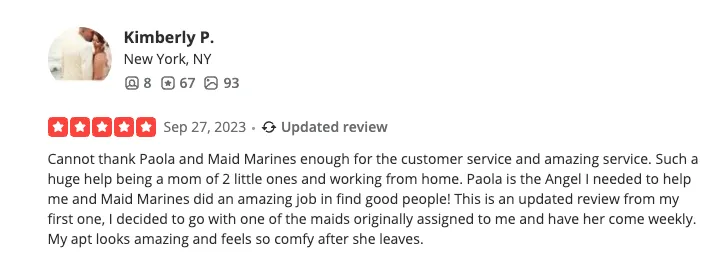
For townhouse owners who want recurring house cleaning, we send a two-person team and allow three to four hours depending on the size. The same team comes back each visit. A house with this many details is worth learning once and remembering.
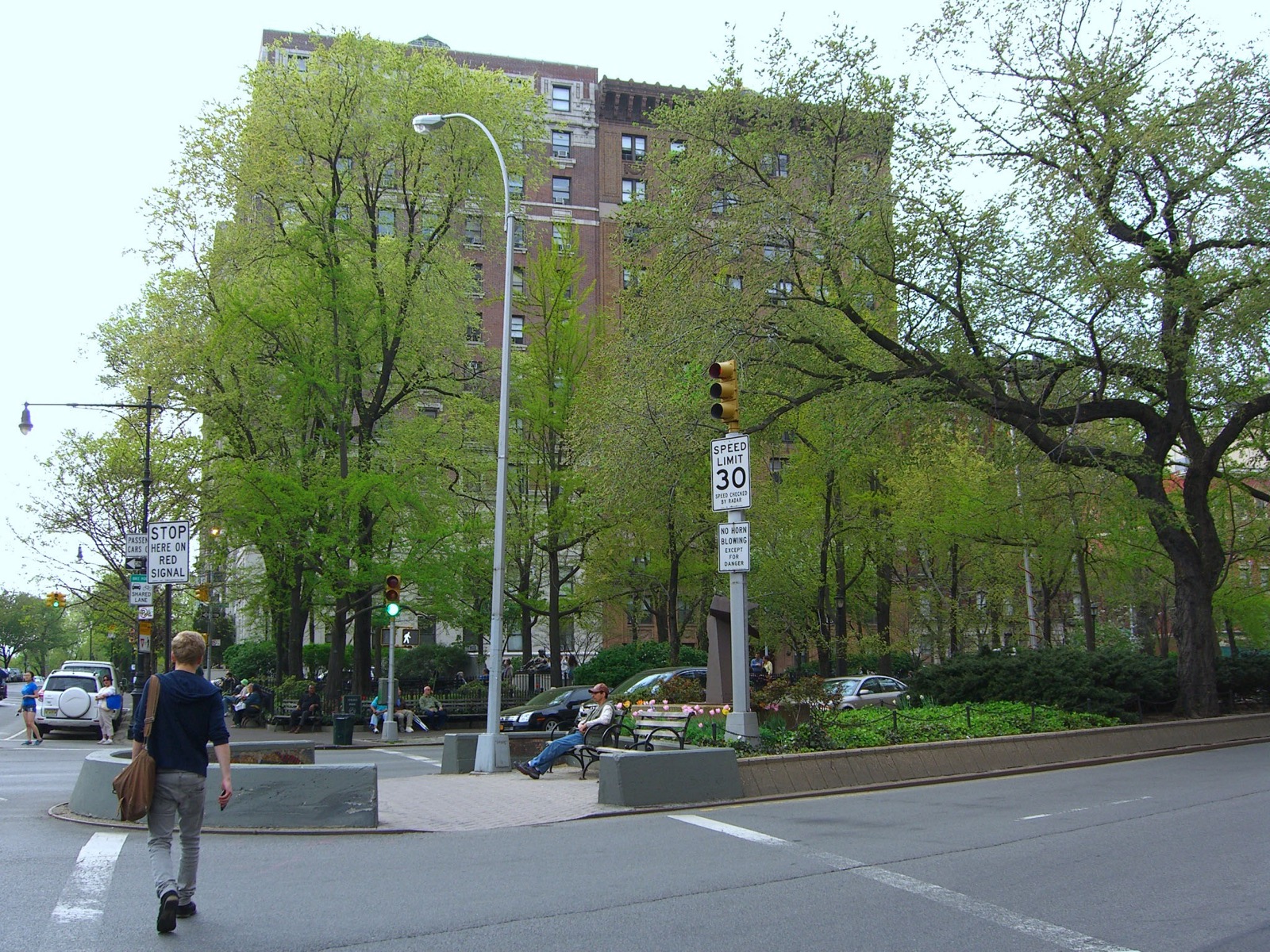
444 Central Park West and the Gothic Revival building that anchors the neighborhood skyline
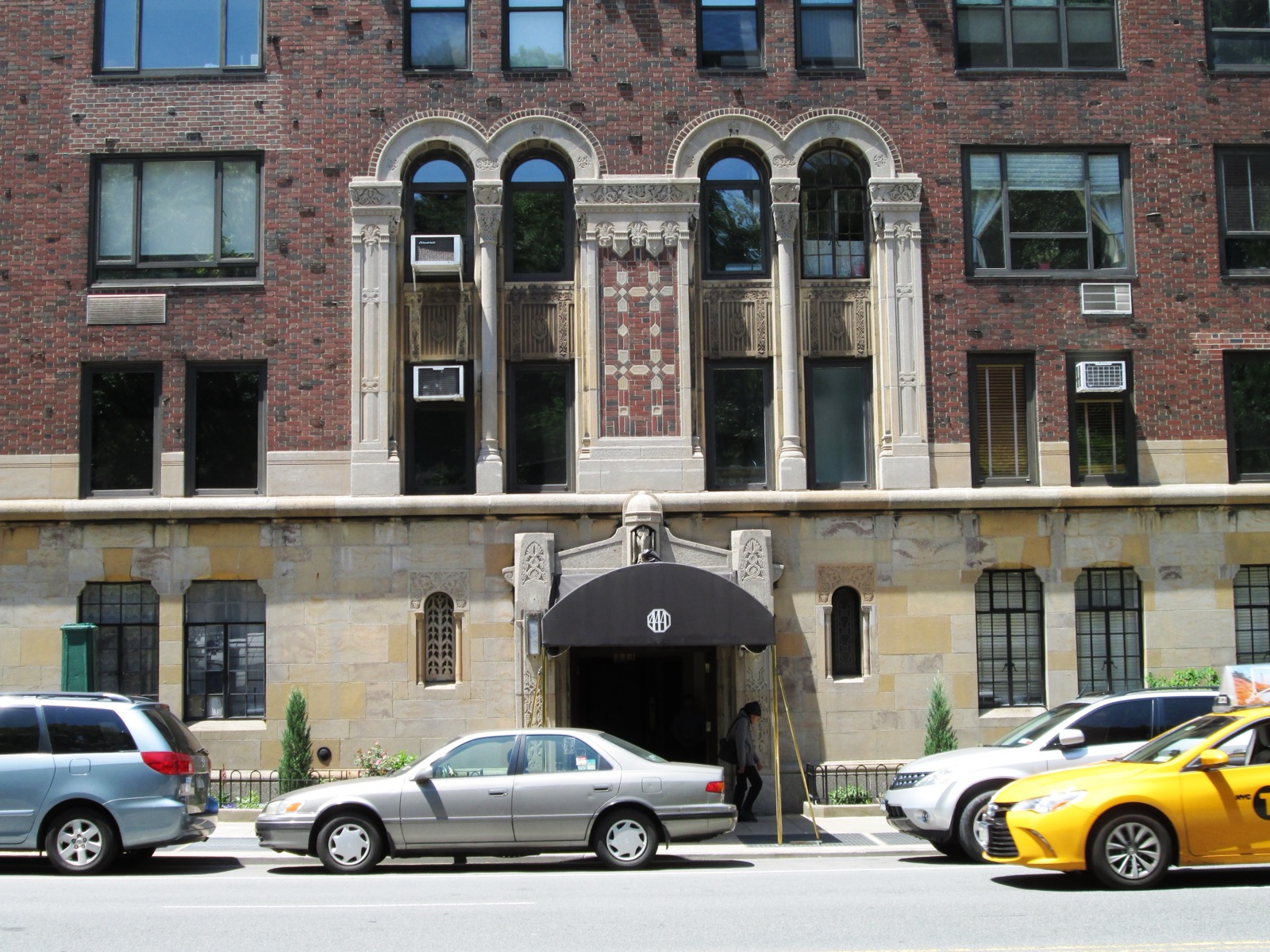
At the southeastern corner of Manhattan Valley, where West 104th Street meets Central Park West, stands 444 Central Park West. It is a 19-story Gothic Revival cooperative apartment building designed by the firm Boak and Paris and completed in 1929. The limestone facade features pointed arch windows, Gothic tracery, and a vertical emphasis that gives it a cathedral-like silhouette against the Central Park backdrop. The building houses 120 units and was converted to cooperative ownership in 1976.
From the west side of Central Park, the building is visible for blocks. It is the kind of architecture that Manhattan used to produce routinely and now produces almost never. The interiors match. These are large pre-war apartments with the ceiling heights, the millwork, and the plaster detail that the building’s era produced at its best.
Co-ops along Central Park West in Manhattan Valley follow the same access protocols as their counterparts to the south. Most require 48 hours advance notice for service providers. Some require a Certificate of Insurance naming the building as additional insured. When you book your cleaning, give us your building name and address and our dispatch team handles the coordination directly. We work with Central Park West buildings regularly.
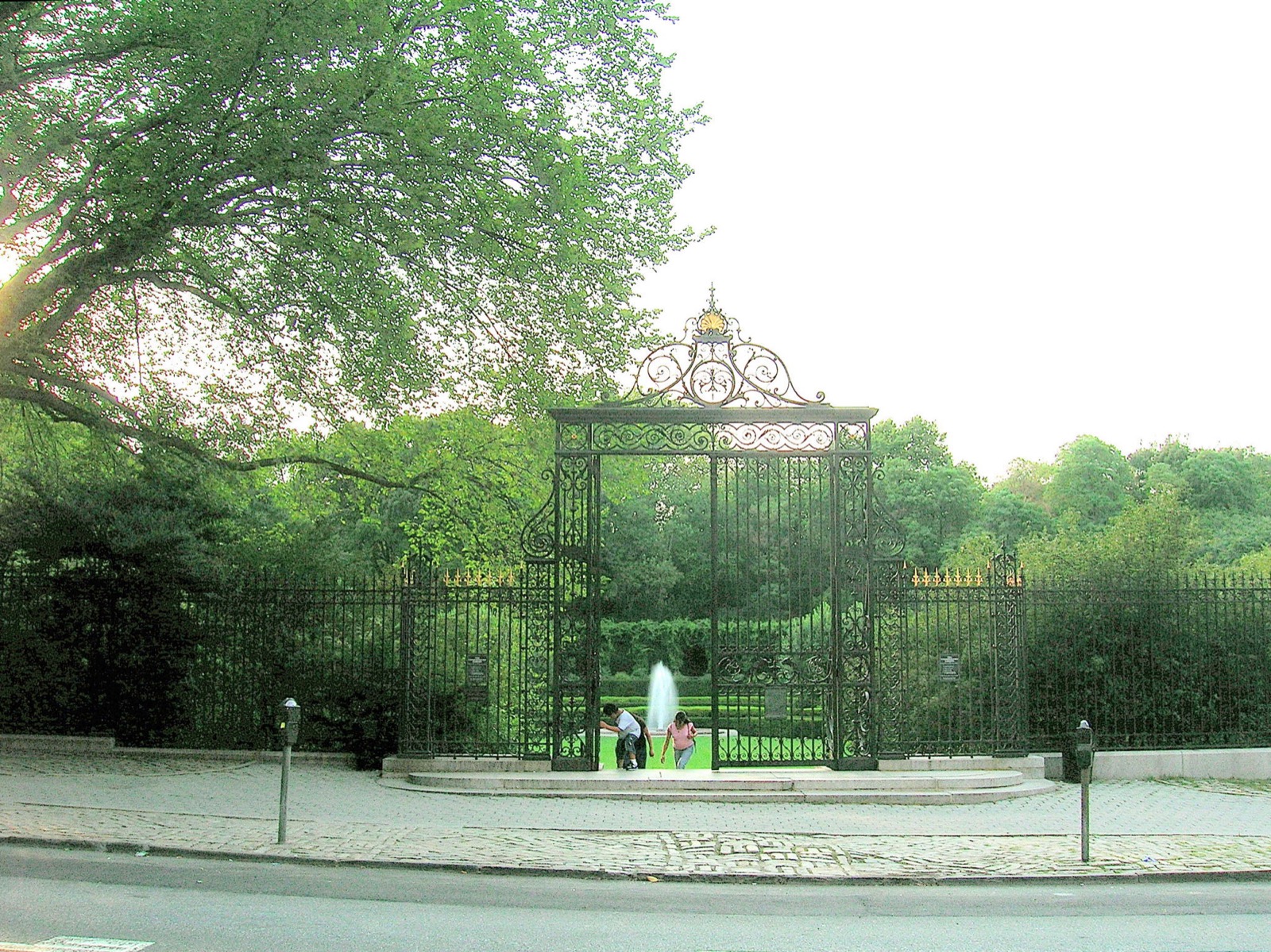
The northern end of Central Park is Manhattan Valley’s backyard and most residents know it better than tourists ever will
The sections of Central Park that sit alongside Manhattan Valley are the parts of the park that most visitors never reach. The Conservatory Garden, entered through the Vanderbilt Gate at 105th Street, is the only formally designed garden in the entire park. It has three distinct sections, Italian, French, and English, and it is the kind of place where you can sit for an hour on a weekday afternoon without anyone else on the bench. The Harlem Meer, an 11-acre lake at the northern end with the Charles A. Dana Discovery Center, is where neighborhood residents fish, walk, and watch birds. The North Meadow, the Great Hill, and the Loch are all within a few minutes walk from any apartment in Manhattan Valley.
This is the tradeoff of living ten blocks north of the prestige Upper West Side. You are further from Lincoln Center and the Museum of Natural History but closer to the best parts of the park that nobody fights over. The 96th Street express stop puts Midtown 15 minutes away. The 1 train has local stops at 103rd and 110th. The B and C trains run along Central Park West with stops at 103rd and 110th. Transit is not a compromise here. It is one of the strongest features of the neighborhood.
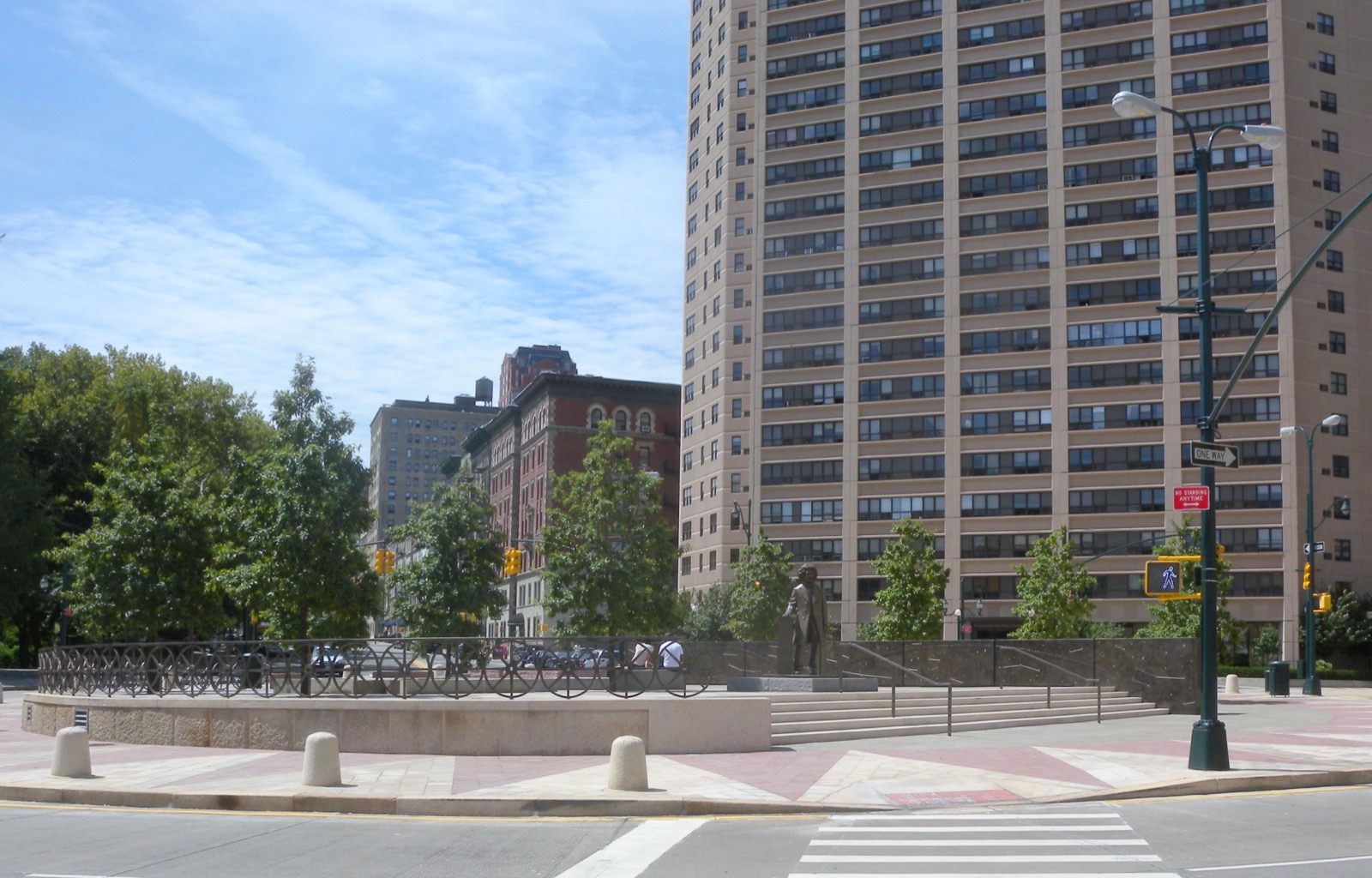
At the northern boundary, Frederick Douglass Circle at Central Park West and West 110th Street holds a bronze statue of Frederick Douglass unveiled in 2010. It was one of the first public monuments to a Black American on a major New York thoroughfare. Cathedral Parkway, as 110th Street is also known, marks the grand approach to the Cathedral of Saint John the Divine and the transition to Morningside Heights. The boundary between neighborhoods is porous. Columbia University is about ten blocks north, and its graduate students and faculty have been renting apartments in Manhattan Valley for generations, drawn by the lower rents and the same transit lines.
Straus Park and the couple who refused to separate on the Titanic
At the intersection of West 106th Street, Broadway, and West End Avenue sits Straus Park, a small triangular public park that holds one of the most quietly devastating memorials in New York City. The sculpture Memory, by Augustus Lukeman, honors Isidor and Ida Straus. Isidor was co-owner of Macy’s department store and a longtime resident of the neighborhood. On the night of April 14, 1912, when the Titanic struck an iceberg and began to sink, Isidor and Ida were offered places in a lifeboat. Ida reportedly refused to leave her husband. Isidor refused to board before other passengers. Neither survived.
The park, with its benches and tree canopy, is a neighborhood gathering point. Residents walk their dogs there, read on the benches, and pass through on their way to Broadway. Most of them know the story. The memorial is not grand. It does not announce itself from a distance. It is a quiet acknowledgment of a choice two people made in a moment when most people would have chosen differently.
The apartments surrounding Straus Park, along West End Avenue and Broadway, are classic Manhattan Valley pre-war stock. Six to twelve stories, brick and limestone, many with rent-stabilized units. These are the buildings that produce the majority of our recurring apartment cleaning work in the neighborhood. Studios, one-bedrooms, and two-bedrooms with the standard pre-war layout: hardwood floors, plaster walls, galley kitchens, and bathrooms with hex tile from the original construction. Straightforward cleaning when you know the surfaces.
What Manhattan Valley apartment cleaning actually looks like when you book
You pick your date and time on our booking page. You see your flat-rate price before you commit. If your building has specific access requirements, a COI process, or surfaces that need careful handling, you tell us once and we note it permanently on your account. If your pre-war apartment has radiator covers and vent grilles that need dusting on every visit, that is standard for us. If your townhouse needs each level treated as its own surface job, we already do that.
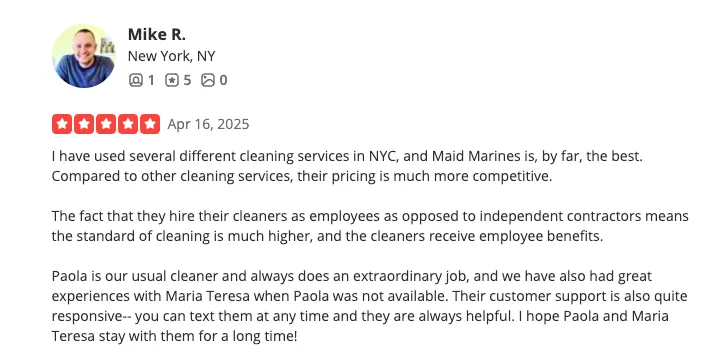
Our cleaners are W-2 employees, not contractors from a gig platform. They are vetted, insured, and they bring everything they need. We serve Manhattan Valley and the surrounding neighborhoods, including the Upper West Side to the south and the rest of Manhattan.
For tenants moving in or out of Manhattan Valley’s active rental market, our move-in and move-out cleaning handles the full reset. Inside cabinets, appliance interiors, baseboards, window tracks, and every surface the next occupant will open or touch. The turnover in this neighborhood runs year-round because of the mix of students, young professionals, and families cycling through the rent-stabilized and market-rate stock. We have availability.
The neighborhood that chose to keep its residents, renovate its buildings, and rename itself on its own terms deserves a cleaning service that pays attention to what actually makes it different. Manhattan Valley is not the Upper West Side. It is the place the Upper West Side was before the money arrived, and it has held onto more of that character than anyone expected. We think the cleaning should reflect that.
For a deep clean that resets a pre-war apartment from years of accumulated dust in radiator fins and wax buildup on hardwood floors, or for recurring cleaning that keeps a Manhattan Avenue townhouse maintained at every level, the booking page has your price and your date.