
Washington Heights sits on a ridge of Manhattan schist 265 feet above the Hudson River, the highest natural terrain on Manhattan Island. The apartment buildings that line Fort Washington Avenue along that ridge were built in the 1920s and 1930s with thick masonry walls, hardwood floors, and terra cotta ornament that you do not find in newer construction anywhere in the city. Cleaning these apartments is not the same job as cleaning a postwar rental in Midtown. The surfaces are different. The layouts are different. The building stock carries a century of use.
But that is a small part of what this neighborhood is. Washington Heights has a history that makes most of Manhattan look young, and a living culture that makes most of Manhattan look thin. Before we talk about cleaning, you should know where you live.
Fort Washington fell to the British here in 1776 and the prisoners never came home
The land under Washington Heights was one of the most strategically important positions on the eastern seaboard. The Lenape used the ridgeline as a travel corridor and the high bluffs above the Hudson for defensive positions. Every subsequent military force recognized the same advantage.
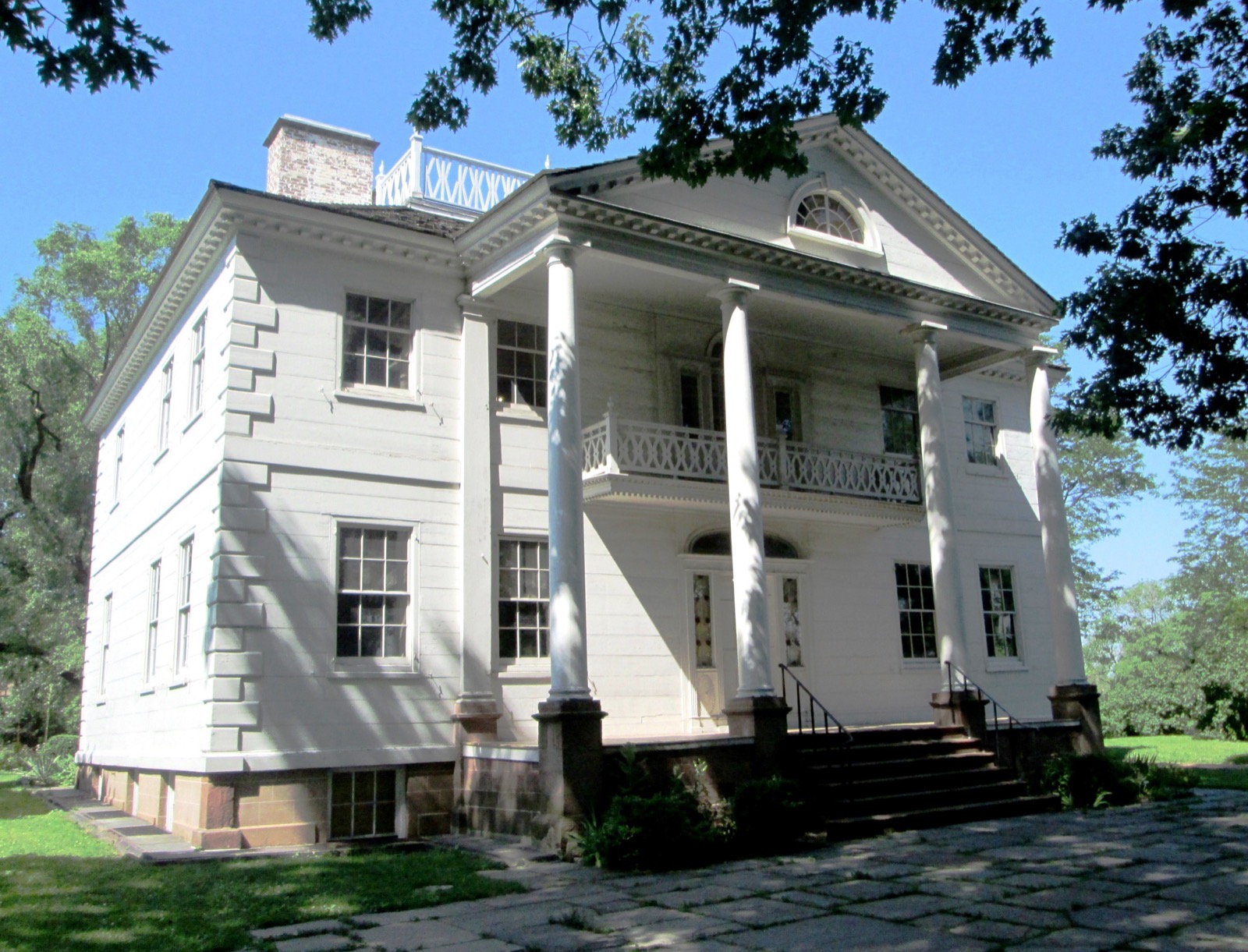
After the Dutch and English settled Manhattan, the high ridge was divided into large farms and country estates. Roger Morris built a Georgian-Palladian country home on the highest point in 1765. That home, the Morris-Jumel Mansion at 65 Jumel Terrace, still stands. It is the oldest house in Manhattan. George Washington used it as his headquarters for a month in 1776.
That month ended badly. After losing Brooklyn in August 1776 and retreating from lower Manhattan, Washington’s army built a defensive fortification on the ridge at what is now 183rd Street between Fort Washington Avenue and Pinehurst Avenue. The fort commanded views of both the Hudson and Harlem Rivers. It was named Fort Washington.
On November 16, 1776, approximately 8,000 British and Hessian troops attacked the fort from multiple directions simultaneously. Despite fierce resistance, 2,818 American soldiers surrendered. It was the largest single American military capture of the entire Revolutionary War.
The men who surrendered were imprisoned on British ships in New York Harbor. The conditions were so brutal that over 11,500 American prisoners of war died in captivity during the course of the war. That is more than all American battlefield deaths combined during the entire Revolution.
The site of Fort Washington is now Bennett Park, the highest natural point in Manhattan. Masonry remnants of the fort’s walls are visible in the park. A historical marker describes the battle. Most people walk through without reading it. The spot where the largest American military disaster of the Revolution happened is now a small neighborhood park where kids play on the weekends.
The subway turned farms into apartment buildings in less than two decades
After the Revolution, Washington Heights went back to being rural. Large estates and country residences lined the ridge. John James Audubon, the naturalist who painted “The Birds of America,” spent his final productive years on an estate that is now Audubon Terrace and the surrounding blocks. He died there in 1851 and is buried in Trinity Church Cemetery at 155th Street, the only remaining active burial ground in Manhattan.
The Washington Bridge over the Harlem River, completed in 1888, was the first major connection between the Heights and the mainland. But it was the subway that truly changed everything. The IRT reached 168th Street in 1904 and Dyckman Street in 1906. Within two decades of the subway’s arrival, the estates and farms were subdivided, the rocky terrain was blasted and leveled, and block after block of pre-war apartment buildings rose to house working-class immigrants from the Lower East Side and Midtown tenements. Irish, Jewish, and Greek families filled these new buildings, seeking larger apartments than what they had downtown.
By the 1930s, Washington Heights had become one of the most densely Jewish neighborhoods in the United States. A large concentration of German Jewish refugees fleeing Hitler’s Germany settled along Fort Washington Avenue and the surrounding blocks after 1933. The neighborhood earned the nickname “Frankfurt on the Hudson” for the density of German-speaking Jewish families. These refugees included an unusually high proportion of professionals, doctors, lawyers, academics, and artists who transformed the neighborhood’s intellectual character. They established synagogues, delicatessens, coffeehouses, and a German-language cultural life that was distinctive in New York’s Jewish geography.
Yeshiva University’s main building at Amsterdam Avenue and 185th Street, completed in 1928 in a combination of Romanesque Revival, Byzantine, and Moorish Revival styles, anchored the neighborhood’s institutional Jewish presence. It is one of the most architecturally distinctive buildings in upper Manhattan.
Washington Heights became the capital of the Dominican diaspora and it still is
The demographic transformation that followed was profound. As the German-Jewish community aged and moved to the suburbs of Long Island and New Jersey, the affordable apartment stock attracted new immigrants, primarily from the Dominican Republic. Dominican migration to the United States began in earnest after the 1961 assassination of dictator Rafael Trujillo ended the regime that had suppressed emigration. Washington Heights, particularly the 181st Street corridor, became the center of the Dominican diaspora in the United States. It holds that position today.
By 1990, Dominicans were the single largest ethnic group in the neighborhood. Approximately 55 to 60 percent of Washington Heights residents are of Dominican origin, making this the largest Dominican community in the United States. About 65 to 70 percent of households speak Spanish as the primary home language.
Walk down 181st Street on any afternoon and the sensory experience is specific. The smell of fresh pasteles being made at a counter. Baseball commentary in Spanish from every other window. Women doing grocery shopping at produce stands spilling onto the sidewalk. The occasional burst of a merengue ringtone. The barbershops operate as social institutions. The Dominican social clubs have been here longer than most of the buildings’ current tenants. The churches are full on Sunday.
The 181st Street produce markets are among the best and cheapest in Manhattan. Mangoes, plantains, yuca, breadfruit, and tropical produce available at prices far below what grocery chains charge downtown. Dominican bakeries serve pan de agua, bizcocho, and pasteles on every block. Malecon at 4141 Broadway has set the standard for Dominican restaurant cooking in New York for decades with its pollo al carbon. El Presidente near 171st Street serves mofongo, mashed plantains with garlic and pork crackling filled with seafood, that is among the best in the city.
In July 1992, the neighborhood was the site of three days of civil unrest following the police killing of Jose “Kiko” Garcia, an unarmed Dominican immigrant. The uprising, triggered by long-standing tensions between the Dominican community and the police department, led to sustained conversations about police accountability that anticipated national conversations by decades. It was a turning point in the city’s relationship with its Dominican community.
Lin-Manuel Miranda grew up on 183rd Street and put Washington Heights on the national map
The most prominent cultural artifact to come out of this neighborhood is “In the Heights,” the Broadway musical by Lin-Manuel Miranda, who grew up in Washington Heights. Miranda’s family is Puerto Rican, and the musical is set explicitly in the Dominican community of Washington Heights. It won four Tony Awards in 2008 and became one of the defining American theatrical works of the early 21st century. A film adaptation followed in 2021.
Miranda went on to create “Hamilton,” the most commercially successful Broadway musical in history. But he started here, on 183rd Street, attending school in the neighborhood before his family moved downtown for Hunter College High School. He came back as a young adult to live in Washington Heights and to write about it.
The success of “In the Heights” gave Washington Heights a national visibility that went beyond the city’s usual geography of fame. Adriano Espaillat, born in the Dominican Republic and raised in Washington Heights, became the first Dominican-American elected to the U.S. Congress in 2016. Alex Rodriguez, the three-time AL MVP, was born in Washington Heights before his family moved to Miami. Guillermo Linares became the first Dominican-born elected official in United States history when he won a city council seat in 1991. Junot Diaz, who won the Pulitzer Prize for “The Brief Wondrous Life of Oscar Wao,” drew on the Dominican diaspora of the Northeast including Washington Heights for his fictional world.
The neighborhood produced a congressman, a baseball superstar, a Pulitzer Prize winner, and the creator of the most successful Broadway show in history. All from the same zip codes.
The Cloisters is probably the most unlikely institution in New York City
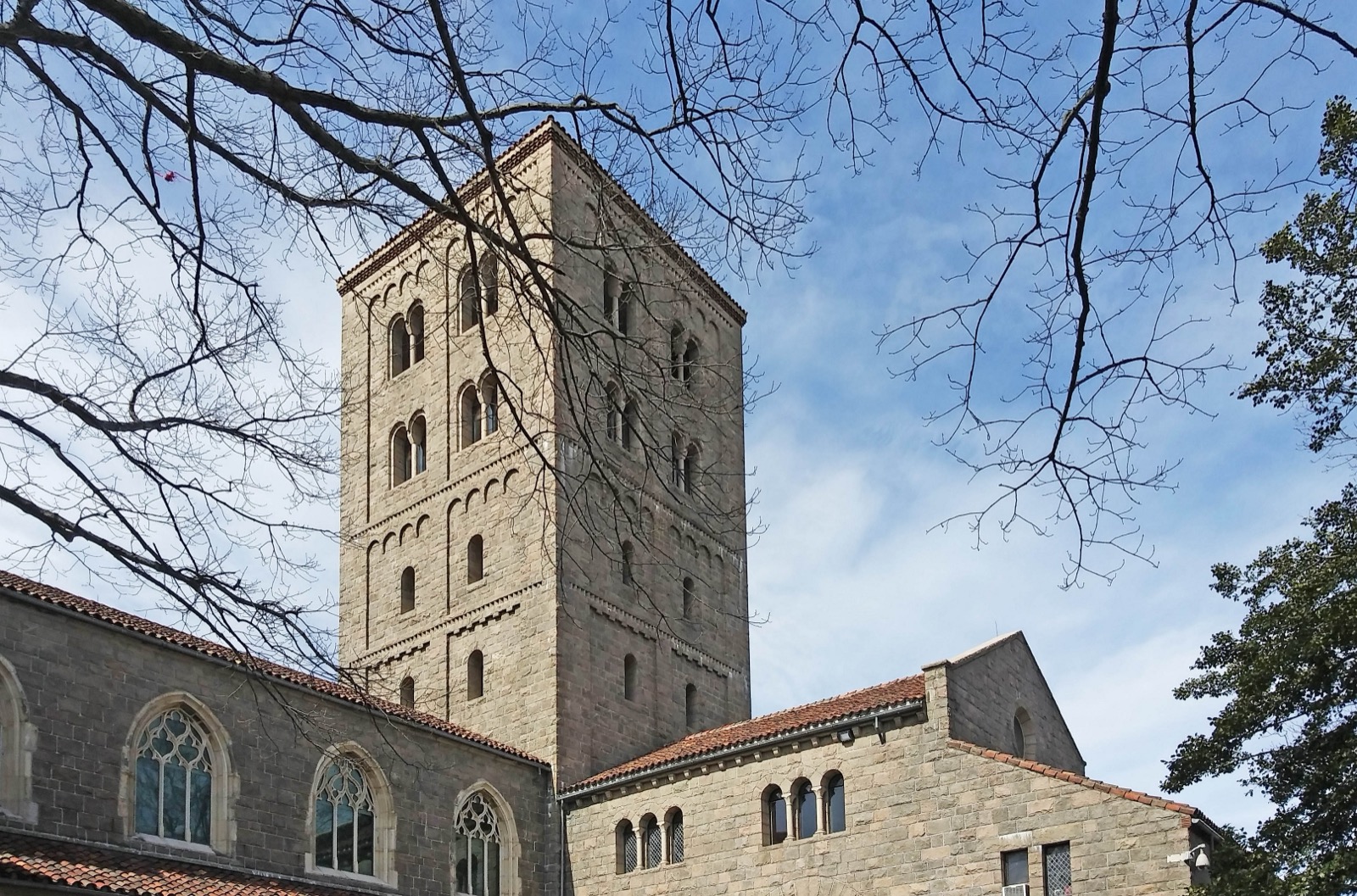
At the northern end of Washington Heights, in Fort Tryon Park, sits a genuine medieval monastery assembled from actual pieces of five French abbeys and reconstructed on a Manhattan hilltop above the Hudson River. The Cloisters is a branch of the Metropolitan Museum of Art devoted to medieval European art. The building was designed by Charles Collens and completed in 1938. It incorporates cloisters, a Romanesque chapel, and a Gothic chapel removed from their original European sites and reassembled here.
John D. Rockefeller Jr. funded both the museum and the surrounding 67-acre Fort Tryon Park, designed by Frederick Law Olmsted Jr. and donated to the city in 1935. Rockefeller also purchased the Palisades across the Hudson to ensure the view from the Cloisters would never be obstructed by development. That view, a protected wilderness of cliffs and trees across the river, is essentially unchanged from what it looked like in the 18th century.
The Cloisters houses the Unicorn Tapestries, seven tapestries woven in the Southern Netherlands around 1495 to 1505 and considered among the finest medieval textile artworks in existence. Most New Yorkers who have not visited have a hard time believing the place is real. A medieval monastery on top of a Manhattan hill, housing tapestries from the 15th century, overlooking a view that a billionaire preserved specifically so nothing would ever block it. It is real.
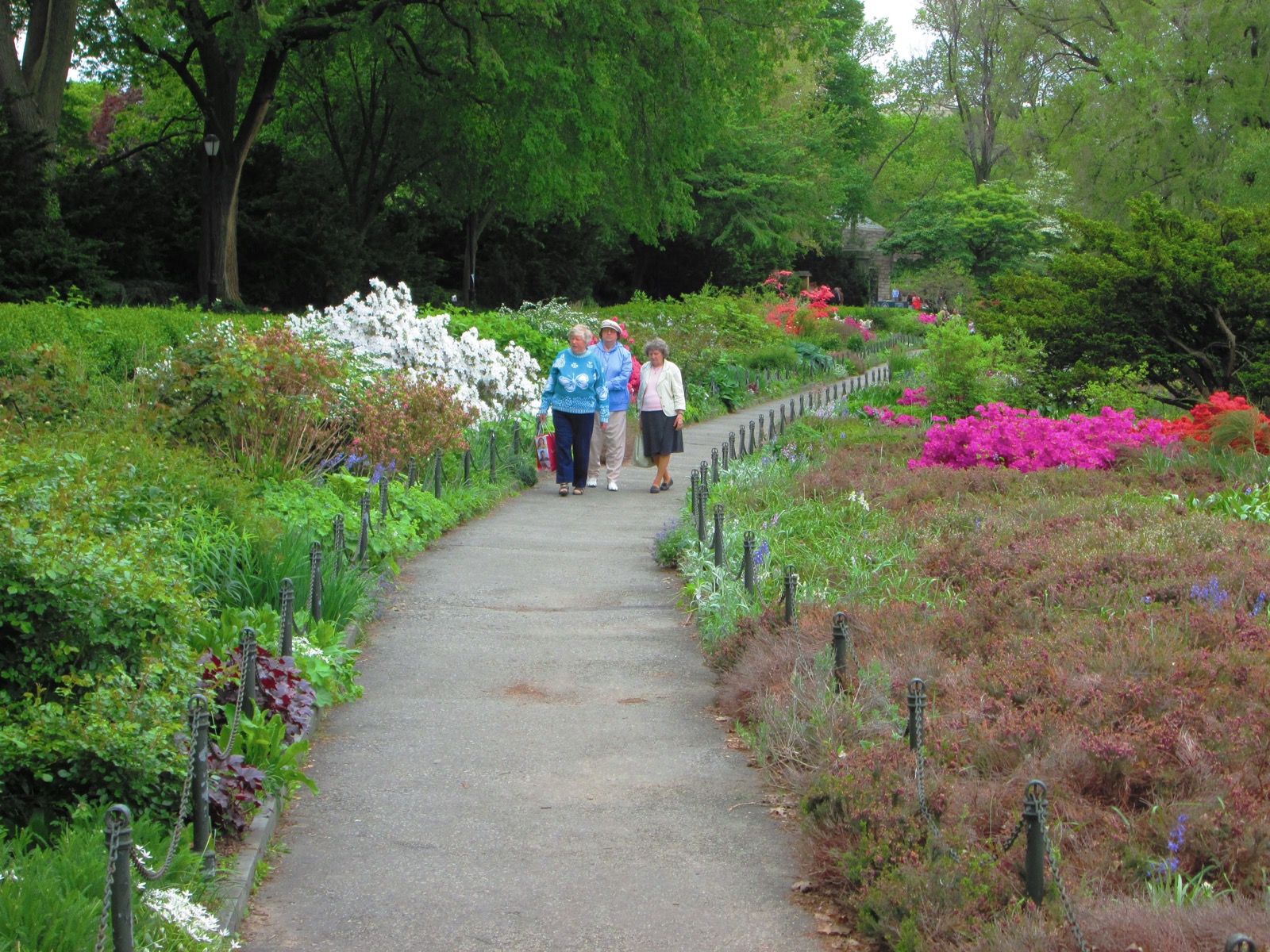
Fort Tryon Park itself is a masterpiece of landscape architecture. The Heather Garden at the park’s summit is the largest public perennial garden in the NYC parks system, containing one of the most diverse botanical displays in any urban park in the United States. It peaks in fall when the heather blooms purple against views of the Hudson.
The George Washington Bridge is at the end of the street and the United Palace is around the corner
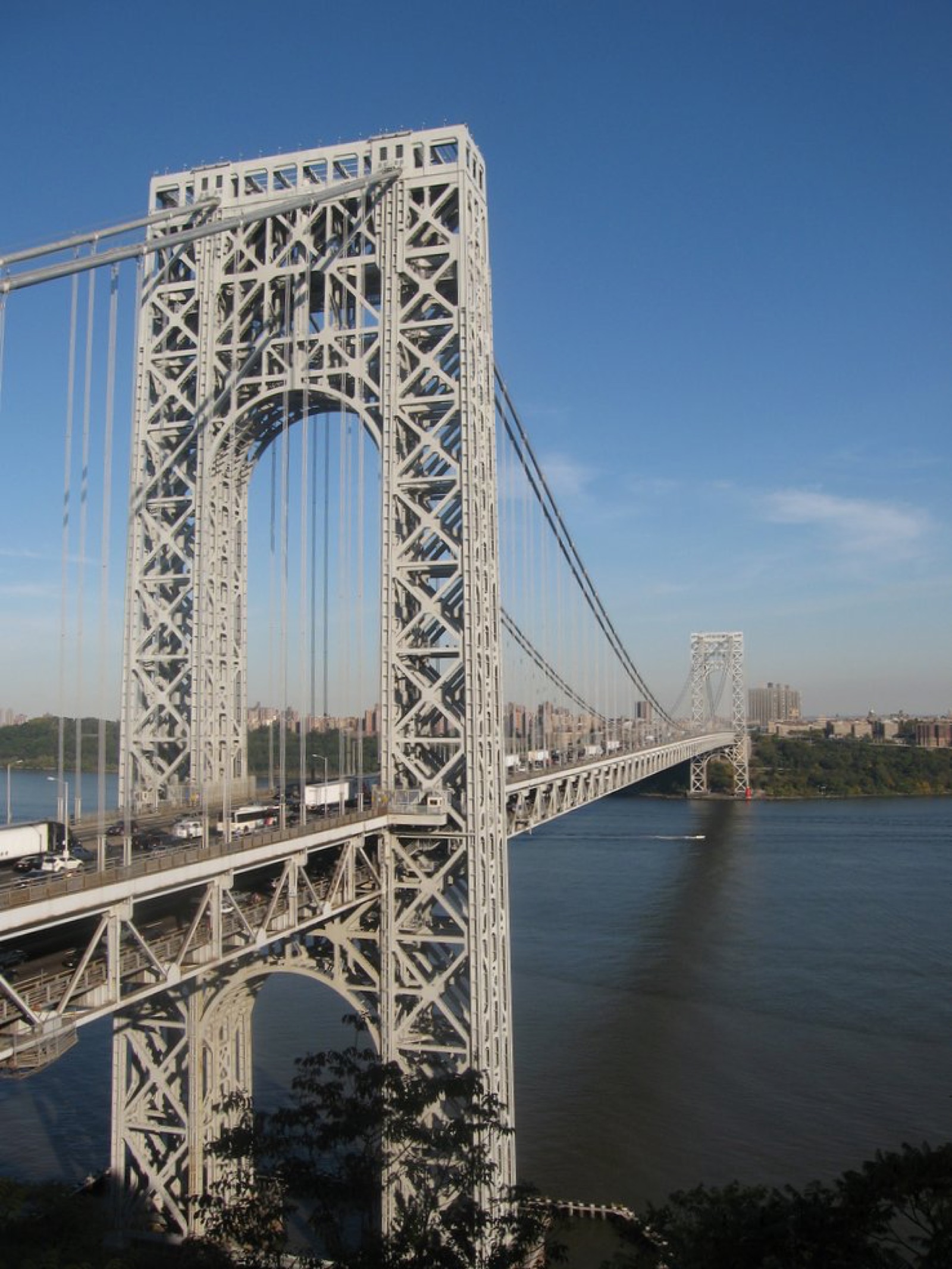
The George Washington Bridge is the defining physical landmark of Washington Heights. Its Manhattan anchorage sits at Fort Washington Avenue and 178th Street. Completed in 1931 and designed by O.H. Ammann, it was the longest suspension bridge in the world for 27 years. Its lower deck was added in 1962. The bridge carries approximately 100 million vehicle crossings per year, making it the busiest motor vehicle bridge on Earth.
The bridge’s bare steel towers were originally designed to be clad in granite, but the cladding was never applied when money ran short during the Depression. Architect Le Corbusier called it “the most beautiful bridge in the world” specifically for the rawness of the uncased steel. From Fort Washington Avenue, the bridge appears at the end of cross-streets framed between apartment buildings, a piece of industrial-scale engineering that somehow looks graceful from above.
At the base of the bridge’s Manhattan tower, the Little Red Lighthouse at Jeffrey’s Hook was made famous by the 1942 children’s book “The Little Red Lighthouse and the Great Gray Bridge.” The lighthouse was decommissioned in 1947 but is now a New York City Landmark open on select summer weekends.
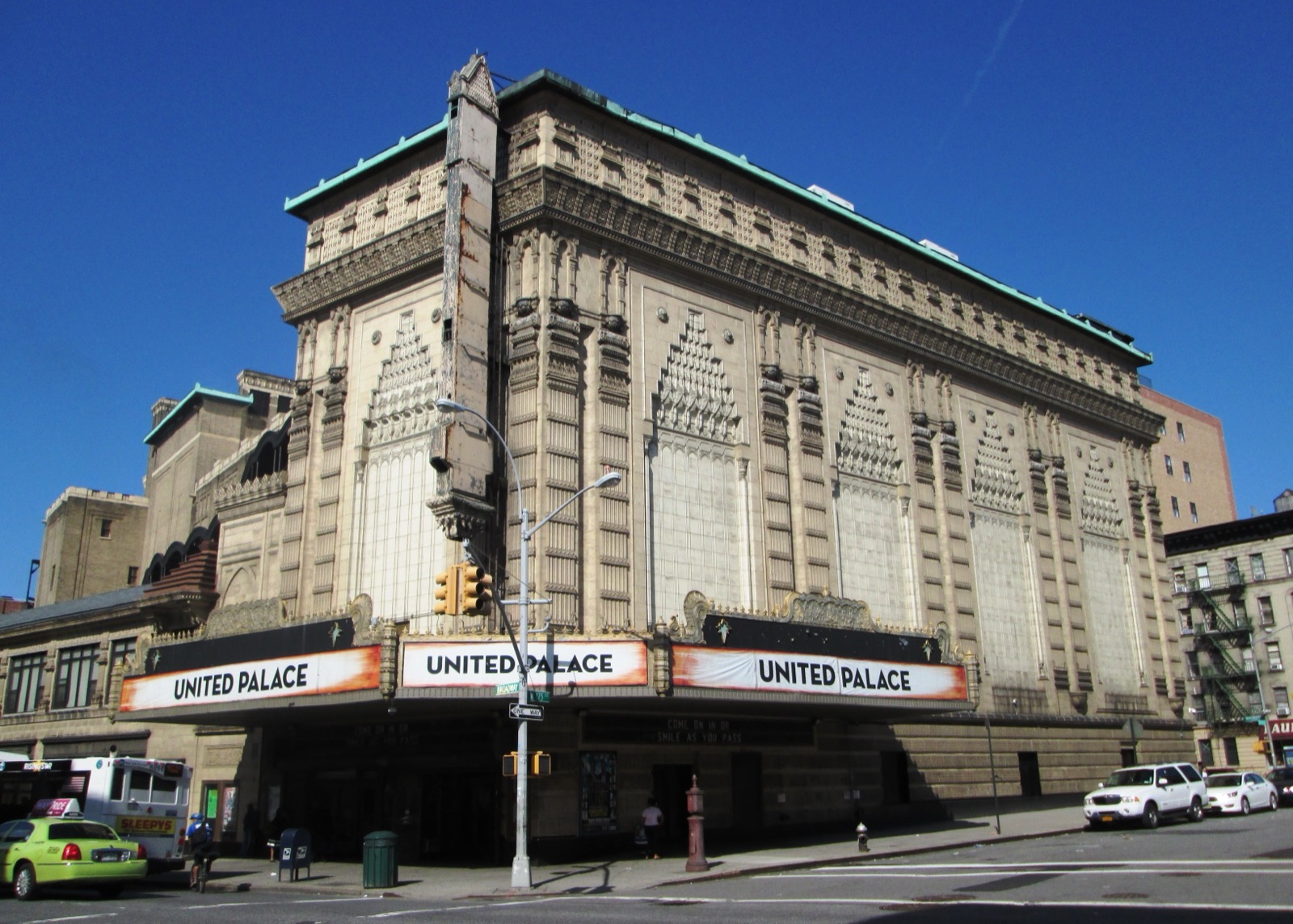
At 175th Street and Broadway, the United Palace Theatre is one of five “Wonder Theatres” built for the Loew’s chain by architect Thomas Lamb in the late 1920s. Completed in 1930, the 3,400-seat auditorium was designed in what the architects described as “Hindu-Moorish-Romanesque-Renaissance” style. The interior features gilded plasterwork, painted ceilings, and one of the most elaborate movie palace designs in the United States. It is a New York City Landmark and now serves as a multi-use venue for concerts, community events, and church services.
Audubon Terrace was meant to be an American Acropolis and the High Bridge is the oldest in the city
Between 155th and 156th Streets on Broadway sits Audubon Terrace, a planned cultural campus built in 1908 on the site of John James Audubon’s estate. Designed by Charles Pratt Huntington in the Beaux-Arts style and funded by Archer Milton Huntington, the campus was intended to become an American Acropolis. At its peak it housed six cultural institutions including the Hispanic Society of America, which holds works by El Greco, Velazquez, and Goya. The grand classical buildings around a central courtyard represent some of the finest Beaux-Arts civic architecture in New York City.
At the neighborhood’s southern boundary, Highbridge Park runs 119 acres along the Harlem River from 155th to 180th Streets. The park contains the High Bridge, completed in 1848 as part of the Croton Aqueduct system. It is the oldest surviving bridge in New York City. Originally built to carry water into Manhattan, it was restored and reopened as a pedestrian and bicycle crossing in 2015. The Highbridge Pool, designed by Aymar Embury II and opened in 1936, is the only outdoor public pool in upper Manhattan.
Pre-war apartment buildings in Washington Heights need cleaners who know what a hundred years of use looks like
The overwhelming majority of housing in Washington Heights was built between 1910 and 1940. These six-to-eight-story brick apartment buildings are the defining housing type, and they account for roughly 70 percent of the neighborhood’s units. The quality of construction is generally high. Thick masonry walls, hardwood floors, generous room sizes, and detailed lobby tilework in the better buildings. Fort Washington Avenue has a concentrated run of well-preserved 1920s buildings with elaborate terra cotta ornament comparable to the best pre-war residential corridors anywhere in Manhattan.
A majority of these apartments are rent-stabilized, which means many tenants have been in their units for decades. That kind of tenure means the apartment has absorbed decades of use. Wax buildup on hardwood floors that has not been stripped since the last refinish. Cast-iron radiator fins packed with dust that burns off every October when the steam heat kicks on, filling the apartment with that scorched-lint smell for the first week. Kitchen cabinets with layers of cooking grease that surface wiping will not remove. Decorative plaster molding in the better buildings that chips if you scrub it with anything abrasive.
The first cleaning in a long-tenured Washington Heights apartment is always a deep clean. We work room by room, top to bottom, and reset every surface. The hardwood gets pH-neutral cleaning that does not strip the finish. The plaster molding gets dry-dusted. The radiator covers and vent grilles get dusted and the floor around them gets vacuumed. After that initial reset, recurring apartment cleaning on a weekly or biweekly schedule keeps it maintained.
The pre-war layouts tend to be more compartmentalized than newer construction. Separate kitchens with doors. Formal dining areas. Long hallways. More rooms means more surfaces, more corners, more baseboards. We account for that in our scheduling. A two-bedroom pre-war in Washington Heights takes longer to clean properly than a two-bedroom in a postwar high-rise because there is simply more interior detail.
The kitchens run daily and the grease is a different cleaning job
Washington Heights has one of the most active home-cooking cultures in Manhattan. Dominican cooking involves daily use of the stove at high heat. Frying oil from tostones and chicharron. Slow-cooked habichuelas. Pollo guisado. Mangu for breakfast. These kitchens produce real food every day, and the exhaust fan cannot keep up.
The result is grease films on range hoods, cabinet faces, backsplashes, and the ceiling above the stove. Curry and sofrito leave seasoning residue that a standard wipe-down will never touch. Dominican ice cream parlors and bakeries may dominate the commercial strip, but the real cooking happens at home.
We degrease every kitchen surface within six feet of the stove, pull the drip trays, and clean the hood’s exterior housing. If the oven interior needs attention, add a deep clean and we handle it. Your evening should be spent eating mofongo at El Presidente or picking up pasteles from one of the bakeries on 181st Street, not scrubbing the grease off your kitchen ceiling.
Medical campus housing and new construction near 168th Street clean differently
The NewYork-Presbyterian/Columbia University Irving Medical Center at 168th Street is one of the largest teaching hospital complexes in the United States. It employs thousands of people. Columbia maintains a significant amount of housing for residents, fellows, medical students, and affiliated staff. This institutional housing stock functions as a parallel rental market within the neighborhood, with below-market units turning over on academic and residency schedules.
The medical campus housing turns over more frequently than the rent-stabilized pre-war stock. We handle the full reset for move-in and move-out cleaning near 168th Street regularly. Inside all cabinets, appliance interiors, baseboards, window tracks, and every surface the next occupant will see or open. If you are finishing your residency and need the apartment spotless for your security deposit inspection, book a move-out cleaning and tell us your date.
New market-rate construction is also appearing in the Broadway corridor and near the transit hub at 168th Street. These newer buildings have different surfaces, laminate countertops instead of tile, vinyl plank instead of hardwood, smoother walls without decorative molding. They clean faster per square foot than the pre-war stock. We adjust our approach based on the building, not the neighborhood.
What booking looks like for Washington Heights residents
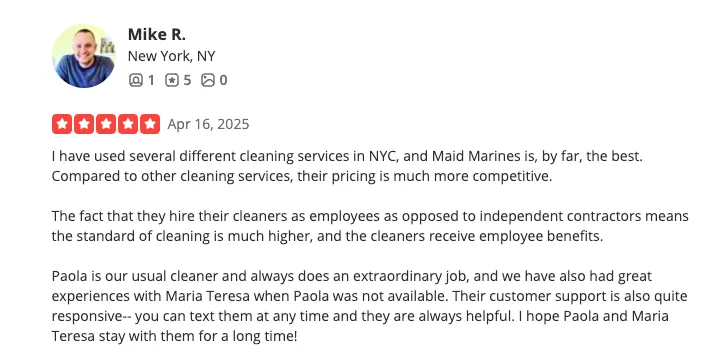
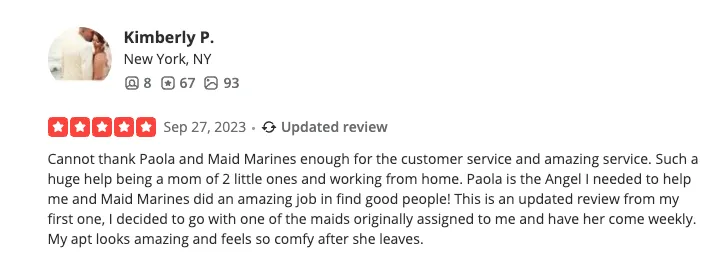
You pick your date and time on our booking page. You see your flat-rate price before you commit. If your pre-war apartment has surfaces that need careful handling, you tell us once and we note it permanently on your account. Our cleaners are W-2 employees, not gig workers. They are vetted, insured, and they show up with the right products for your specific apartment.
We serve Washington Heights and surrounding neighborhoods in upper Manhattan, including nearby Inwood, Hamilton Heights, Harlem, and Manhattan Valley. Our teams use the A express from 181st Street, which reaches Midtown in about 20 minutes. The A and 1 trains both stop at 181st, making it one of the best-served intersections in Manhattan outside Midtown. That transit access means our cleaners can reach you reliably regardless of weather or schedule.
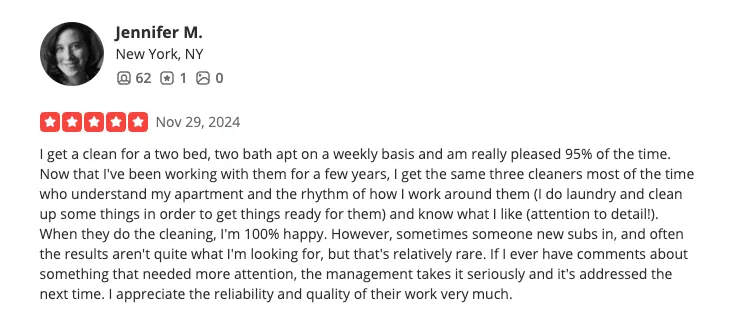
The neighborhood has been here since before the country existed. The apartment buildings have been here for a century. The Dominican community that made this place what it is has been here for 60 years. If you live here, you probably plan to stay. We send the same team every visit because your apartment is worth learning once and remembering.