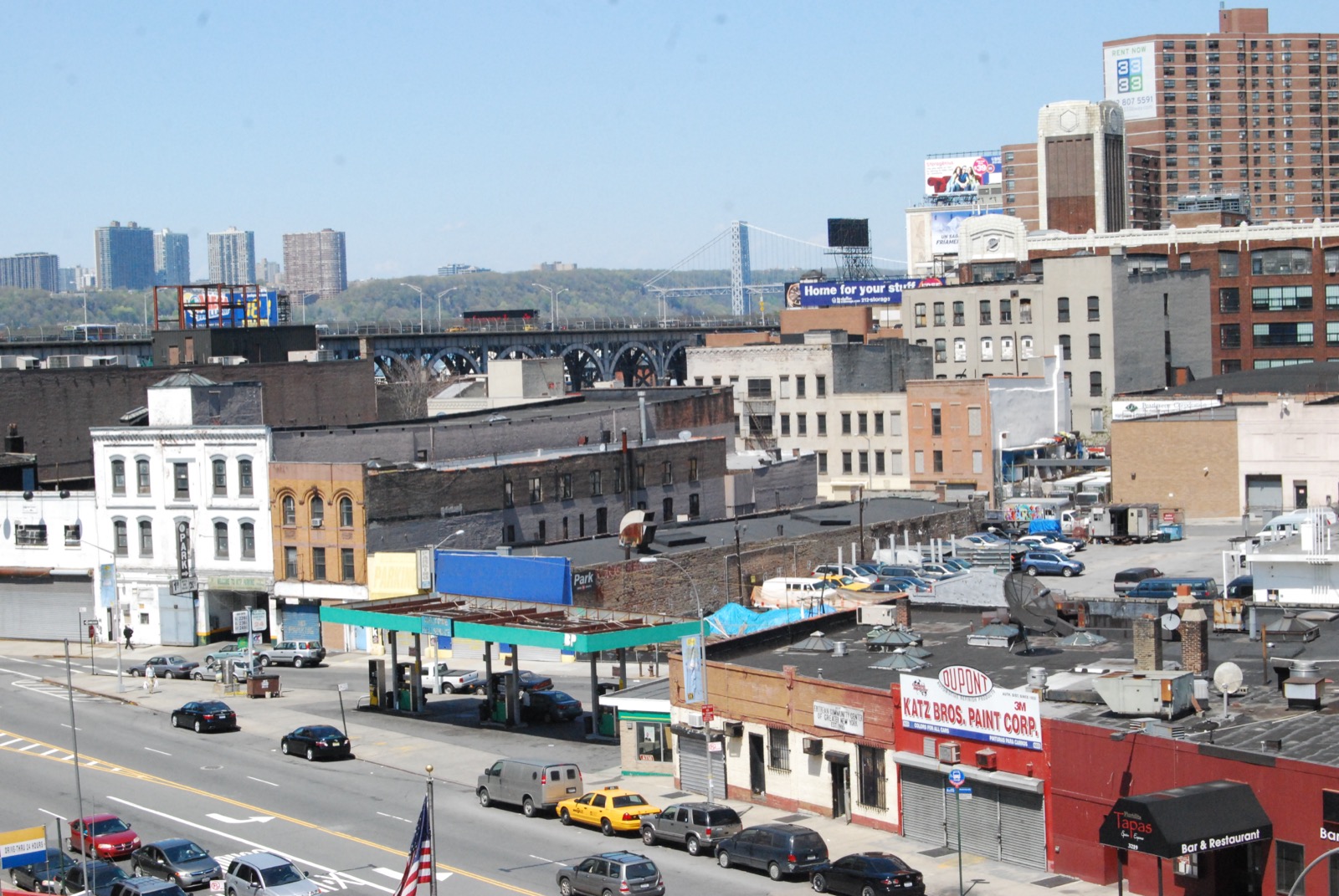

Manhattanville sits in the topographic dip between Morningside Heights and Hamilton Heights where a freshwater creek once carved a valley through Manhattan schist. That valley was paved over more than a century ago, but the low point is still visible. Broadway dips noticeably between 125th and 131st Streets. The geological hollow has always defined the neighborhood, and what fills it has changed with every generation.
In the 1860s, it was breweries and factories. In the 1950s, it was public housing towers. Today, it is a $6.3 billion university campus designed by Renzo Piano, rising on the same blocks where the Clausen and Flanagan Brewery once shipped beer to the rest of Manhattan. The old manufacturing district between Broadway and the Hudson River is being converted into life sciences labs, creative workspaces, and commercial offices. And the residential blocks east of Broadway still hold the six-story pre-war walk-ups and NYCHA towers where the neighborhood’s longest-standing residents live.
That collision of old and new, institutional and residential, public housing and Renzo Piano glass, is what makes Manhattanville different from anywhere else on the island. It is also what makes cleaning here a genuinely varied job. The housing stock ranges from 1950s NYCHA apartments with cast-iron radiators and painted metal cabinets to brand-new market-rate units with quartz countertops and floor-to-ceiling windows that have never been lived in. The cleaning approach changes building by building.
Pre-war walk-ups and NYCHA towers in Manhattanville carry decades of use in every surface
The residential core of Manhattanville is two building types that dominate the blocks east of Broadway and along Amsterdam Avenue. The first is the six-story pre-war walk-up apartment building. Brick facades, fire escapes, modest storefronts at ground level, and no elevator. These buildings were put up in the early twentieth century when the IRT subway line pushed residential development into upper Manhattan, and they have been absorbing tenants and daily use ever since.
The cleaning reality in these apartments starts with the radiators. Cast-iron steam radiators in pre-war walk-ups collect dust between their fins for years. Every October, when the building super fires up the boiler and the steam heat kicks on for the first time, that dust burns off. The scorched-lint smell fills the apartment for a week. Clearing the inside of the cast iron before heating season is what eliminates that smell, and it is a specialty trade rather than a cleaning one. What we take on is the covers and the vent grilles dusted every visit and the floor and baseboard around the unit cleaned instead of skipped, which keeps the room from feeding the problem all summer.
The kitchens in these walk-ups are compact. Counter space is limited, storage is vertical, and the range hood, if there is one, vents into a shared shaft that may or may not actually pull air. Grease accumulates faster in a kitchen with poor ventilation, and many of these kitchens see heavy daily cooking. Dominican and West African food traditions are deeply rooted in this neighborhood, and the spice oils, frying, and slow cooking leave residue on cabinet faces, backsplash tiles, and the ceiling above the stove that a quick surface wipe will not touch. We degrease every kitchen surface within reach of the cooking zone and wipe the hood down on the outside if the unit has one.
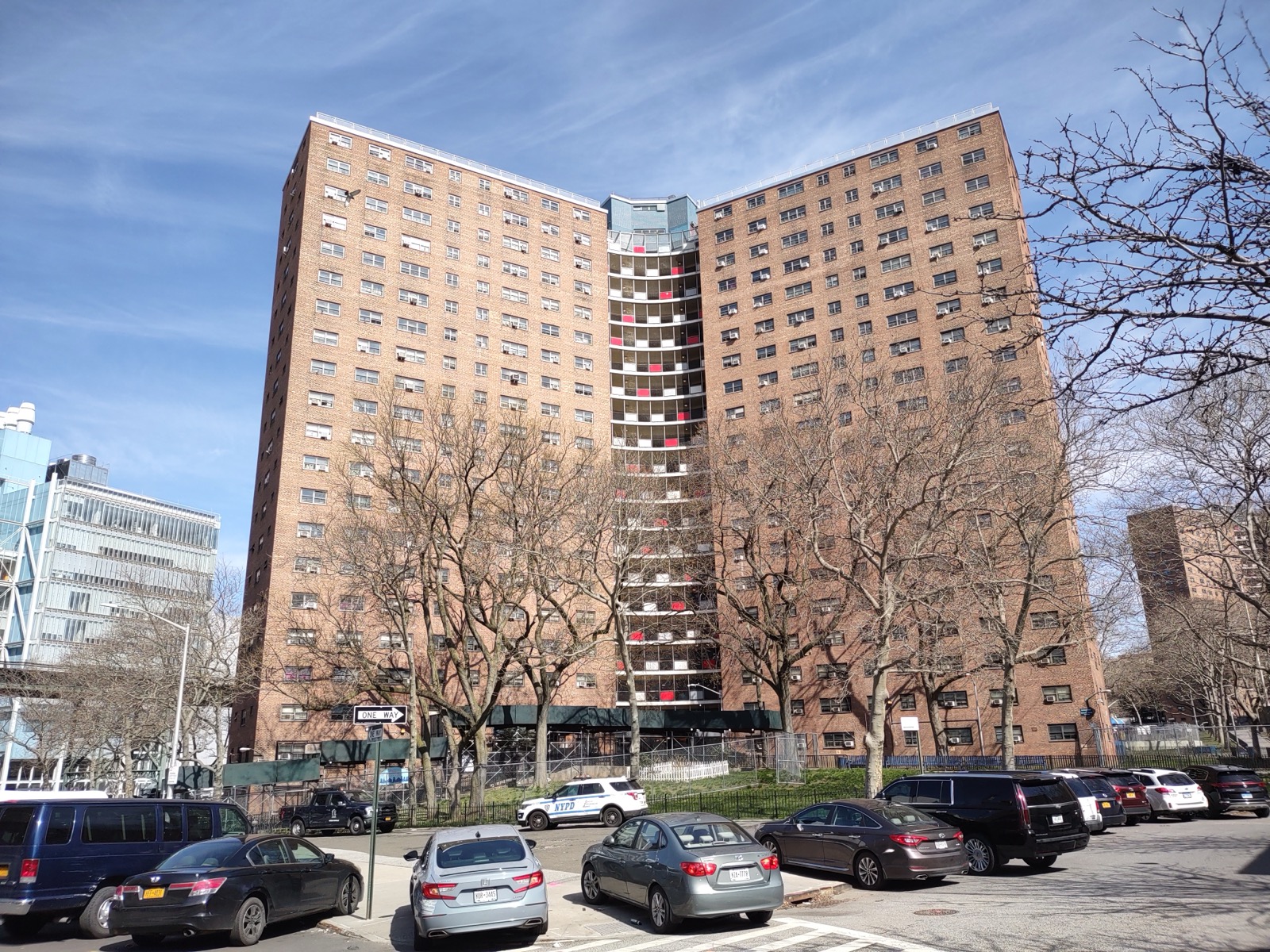
The second dominant building type is the NYCHA tower. Manhattanville Houses, completed in 1961, holds 1,272 apartments in six towers between 129th and 133rd Streets. Grant Houses, completed in 1956, adds over 1,500 apartments in ten buildings at the southern edge of the neighborhood between 123rd and 125th on Broadway. Together they house a significant share of Manhattanville’s permanent residential population.
NYCHA maintenance handles building systems, common areas, and structural repairs. But the interior of each apartment is the resident’s domain, and private deep cleaning addresses what building maintenance does not. Cabinet interiors that have not been emptied and wiped in years, available as an add-on. Under the refrigerator and stove as far as reach allows, where grease and dust form a permanent film. Bathroom grout that has darkened over decades. Window sills and ledges packed with grit from street-level air. A deep clean in a NYCHA apartment is a reset that makes the space feel different when you walk in the next morning.
The Factory District and Columbia campus brought new construction to blocks that were empty for decades
The stretch of Manhattanville between Broadway and the Hudson River was derelict industrial property for most of the late twentieth century. The breweries closed. The Borden Dairy plant closed. The Studebaker automobile factory on 131st Street, one of the more unlikely manufacturing facilities in Manhattan history, became a shell. By the 1990s, the area that locals called “the Valley” was largely abandoned, a remnant of the industrial economy that had built the neighborhood a century earlier.
Columbia University announced in 2003 that it intended to expand its Morningside Heights campus northward into this vacant zone. What followed was one of the most contentious land-use fights in modern New York City history, involving eminent domain proceedings, a case that reached the Court of Appeals, and a community benefit agreement that promised 39 specific commitments to the neighborhood. The university won. Construction began.
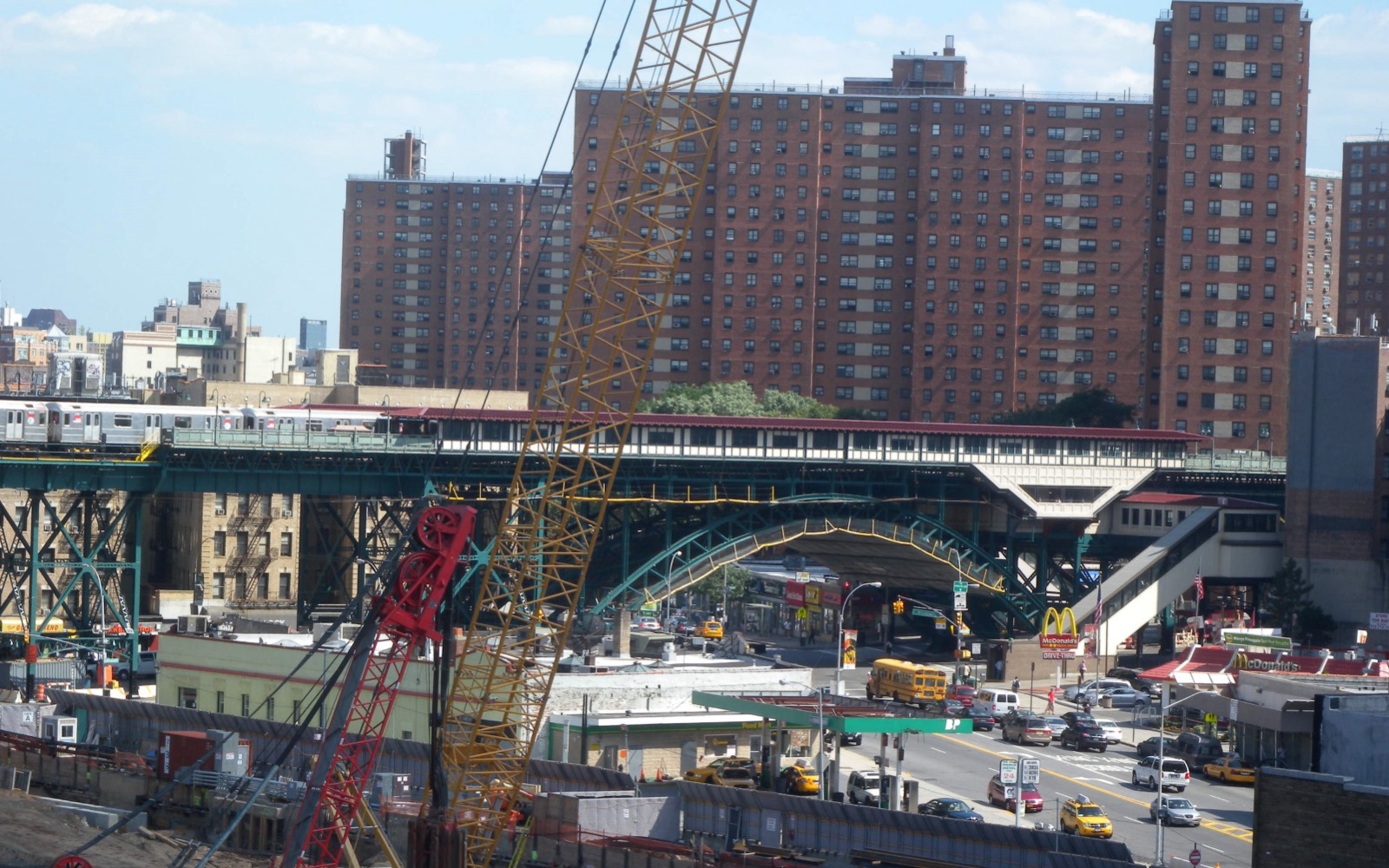
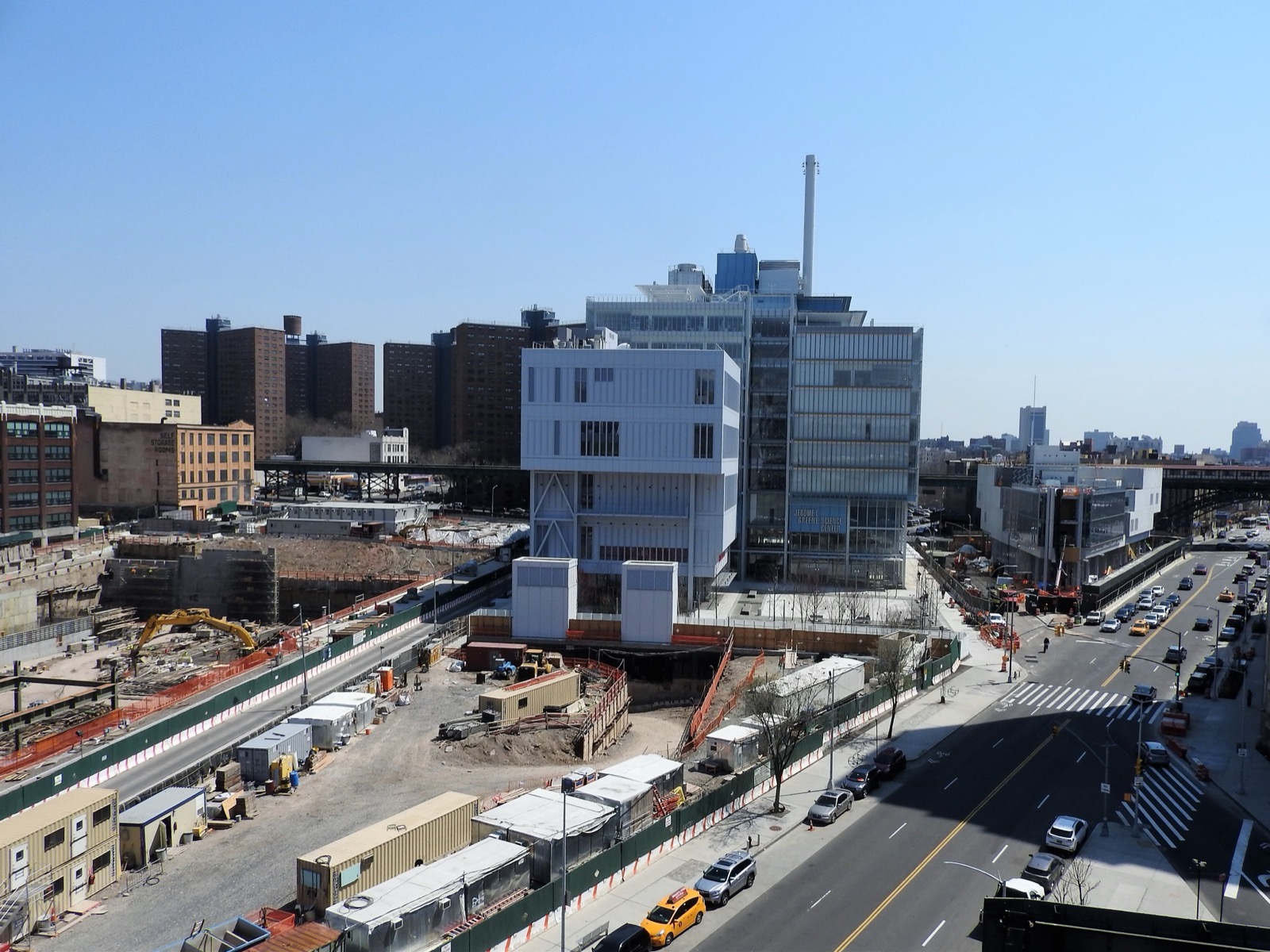
The Jerome L. Greene Science Center and the Lenfest Center for the Arts opened in 2016, anchoring the first phase of what will eventually be a 17-building campus along Broadway from 125th to 133rd. The Studebaker Building was preserved and converted into Columbia administrative offices, its original brick and steel structure incorporated into the new campus design. The David Geffen School of Business East Building, designed by Diller Scofidio and Renfro, represents a later phase. The campus is still being built. Cranes, scaffolding, and construction barriers have been a constant feature of the Broadway streetscape here for more than a decade.
Alongside the campus, the Manhattanville Factory District has emerged as a separate development story. The Mink Building, an 1880s brick brewery, was converted to artists’ studios, labs, and nonprofit space. The Malt House, another converted brewery, combines original heavy brick masonry and cast-iron structural members with a contemporary glass addition. And the Taystee Lab Building, a $700 million life sciences facility that opened in 2024 on the site of the old Taystee Bakery, is the largest commercial development in West Harlem’s history. Governor Hochul cut the ribbon.
What all of this new construction means for cleaning is a third category of housing. New market-rate apartments near the Columbia campus have the finishes and fixtures of contemporary luxury development. Quartz countertops, engineered hardwood, stainless appliances, and large windows with clean sight lines. These units need different products and different techniques than a pre-war walk-up with original plaster and cast-iron radiators. We adjust the approach based on the actual materials in the apartment, not a generic checklist that treats every unit the same.
The building that made Dentyne gum and the church that abolished pew rent both still stand on these blocks
Manhattanville has a founding date, which is unusual for a New York neighborhood. In 1806, a merchant named Jacob Schieffelin subdivided land near the intersection of what is now 125th Street and Broadway and laid out a village he called Manhattanville. The name was a straightforward compound of Manhattan and the French suffix “ville,” meaning town. Schieffelin was also the founder of one of the oldest pharmaceutical distributors in American history, and his village was intended to be a separate settlement from the city expanding to the south.
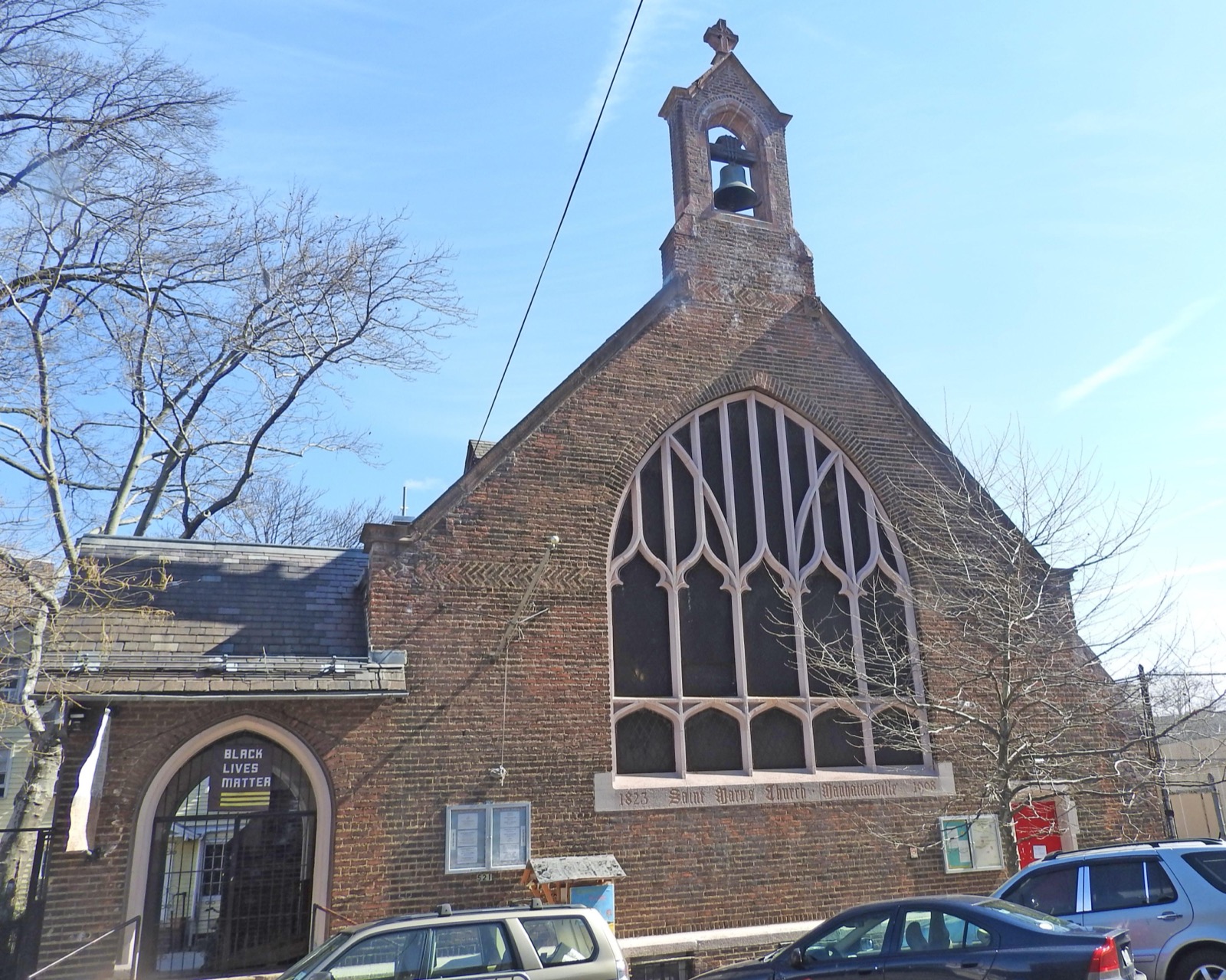
The village became an industrial center instead. The Hudson River Railroad opened along the waterfront in 1850, and breweries, factories, and warehouses clustered around 125th Street. The Sweets Building in the Factory District is where Dentyne chewing gum was formulated and first manufactured after Prohibition, when the old brewery infrastructure was repurposed for food and candy production. The building still stands. So does St. Mary’s Protestant Episcopal Church at 521 West 126th Street, organized in 1823, which became the first Episcopal church in New York to abolish pew rent in 1831. That was a radical decision. Pew rent meant that wealthier parishioners bought the best seats and poorer members sat in the back. St. Mary’s eliminated the system entirely, making every seat in the house equal. The church is on the National Register of Historic Places.
The Irish arrived first, following the famine migration of the 1840s and 1850s. German Catholic immigrants followed. African American families came during the Great Migration of the 1920s through 1950s, and unlike the middle-class Black enclave forming on Sugar Hill to the north, Manhattanville absorbed working-class families into its tenement blocks and factory neighborhoods. Dominican immigration reshaped the neighborhood again starting in the 1960s and 1970s, and today the neighborhood is approximately 63 percent Hispanic or Latino, predominantly Dominican, with an African American population of about 26 percent and a growing white non-Hispanic share driven by Columbia’s institutional expansion.
That layered history shows up in the food. Dominican bakeries and lechoneras on the residential blocks east of Broadway. Halal carts and West African food vendors along Amsterdam Avenue. West Indian spots in the northern blocks connecting to Hamilton Heights. And on 125th Street, the full commercial energy of Harlem’s main corridor, from fruit stands and discount stores to Dinosaur Bar-B-Que at the corner of Twelfth Avenue.
Apartment cleaning in Manhattanville means adjusting for three different eras of construction on the same grid
The cleaning job in Manhattanville changes based on which era of the neighborhood’s building stock you live in. A pre-war walk-up on a cross-street east of Broadway is a different assignment from a NYCHA apartment in Grant Houses, which is a different assignment from a new unit in one of the market-rate buildings near the Columbia campus. We handle all three.
For the pre-war walk-ups, the focus is on the surfaces that absorb years of use. Hardwood floors with decades of traffic wear. Plaster walls that cannot be scrubbed with abrasive products because the texture chips and the surface stains. Bathroom tile with grout that has darkened incrementally over years and needs proper treatment to come back to its original color. Window frames that have been painted shut and repainted so many times that dirt collects in the layered edges. These apartments respond dramatically to a first deep clean. The difference between the apartment before and after a proper initial cleaning is visible from the doorway.
For the NYCHA apartments, the job centers on the details that building maintenance does not cover. Kitchen cabinet interiors, if you add them. Under the appliances as far as reach allows. Baseboards, radiator covers, and vent grilles. Bathroom exhaust fans clogged with dust. The interior reset that makes a space feel cared for, not just maintained.
For the new construction near Columbia, the cleaning is about maintaining contemporary finishes correctly. No abrasive pads on quartz countertops. No ammonia-based products on stainless steel. Proper treatment for engineered hardwood that scratches if you use a beater-bar vacuum. These apartments are easier to maintain on a recurring schedule because the surfaces are newer, but they require the right products from the first visit.
We send the same team to your apartment on every visit. They learn your specific surfaces, your preferences, and the quirks of your building once and remember them going forward. That consistency matters more in a neighborhood like Manhattanville where the housing stock varies this much.
Your cleaning takes about two to three hours so here is what to do nearby
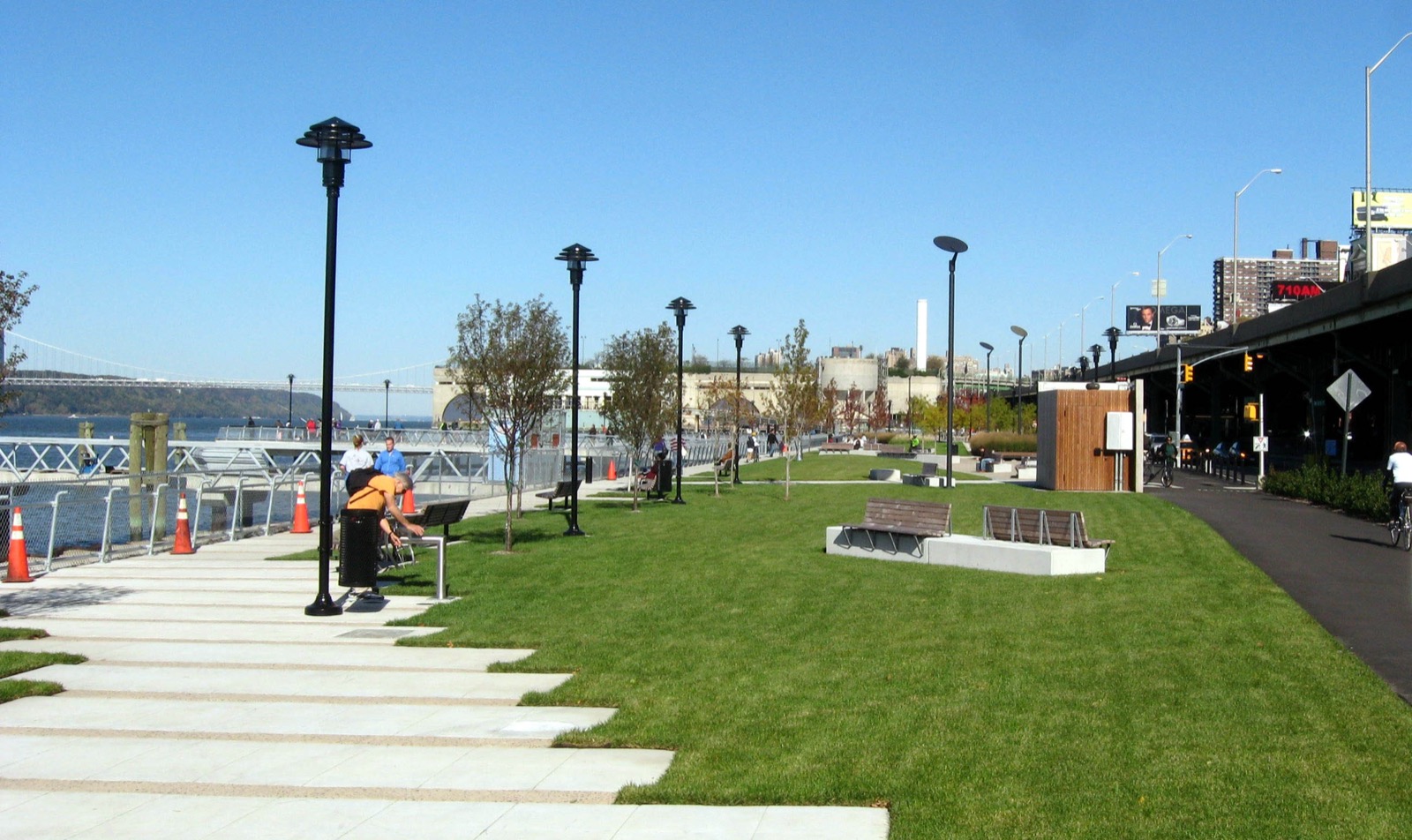
Manhattanville has more to do within a short walk than most people who live here realize. The West Harlem Piers at 125th Street put you on the Hudson River waterfront with views of the Palisades and NYC Ferry service running south to Lower Manhattan and east along the river. Dinosaur Bar-B-Que at 700 West 125th fills a solid hour with ribs and beer. Community Food and Juice on Broadway near 113th is the opposite end of the spectrum, farm-to-table and organic, if that is more your speed.
The Manhattanville Market food hall inside Columbia’s new campus is open to the public and has multiple vendors, many hired from the surrounding neighborhood. Sheltering Arms Park at 129th between Broadway and Amsterdam is a new green space built as part of the campus expansion, with play structures, community gardens, and elevated sections with Hudson River views. And if you just want to walk, the stretch of Broadway between 125th and 133rd puts you directly through the middle of the Renzo Piano campus, where the transparent glass ground floors of the research buildings let you look inside from the sidewalk. It is one of the stranger architectural experiences in upper Manhattan, watching neuroscience research happen through a glass wall while the 1 train rumbles overhead.
What booking looks like for Manhattanville residents
You pick your date and time on our booking page. You see your flat-rate price before you commit. If your pre-war walk-up has radiators that need detailed cleaning, you tell us once and we note it on your account permanently. If your new-construction apartment has specific surface requirements, we note those too. Our cleaners are W-2 employees, not gig workers. They are vetted, insured, and equipped with the right products for your specific home.
We serve Manhattanville and all of West Harlem. Our teams use the 1 train to 125th Street station on Broadway or the A, B, C, D trains to 125th Street at St. Nicholas Avenue, a ten-minute walk east. We also serve the nearby Upper West Side and the rest of upper Manhattan. The 125th Street transit hub makes Manhattanville one of the easier neighborhoods in upper Manhattan for our teams to reach, and we arrive on time regardless of which building you are in.
For tenants moving in or out of any building type in the neighborhood, our move-in and move-out cleaning handles the full reset. Inside cabinets, appliance interiors, baseboards, window sills and ledges, and every surface the next occupant will touch. Whether you are leaving a NYCHA apartment, a pre-war walk-up, or a new unit near the Columbia campus, the move-out clean is the same thorough job.