
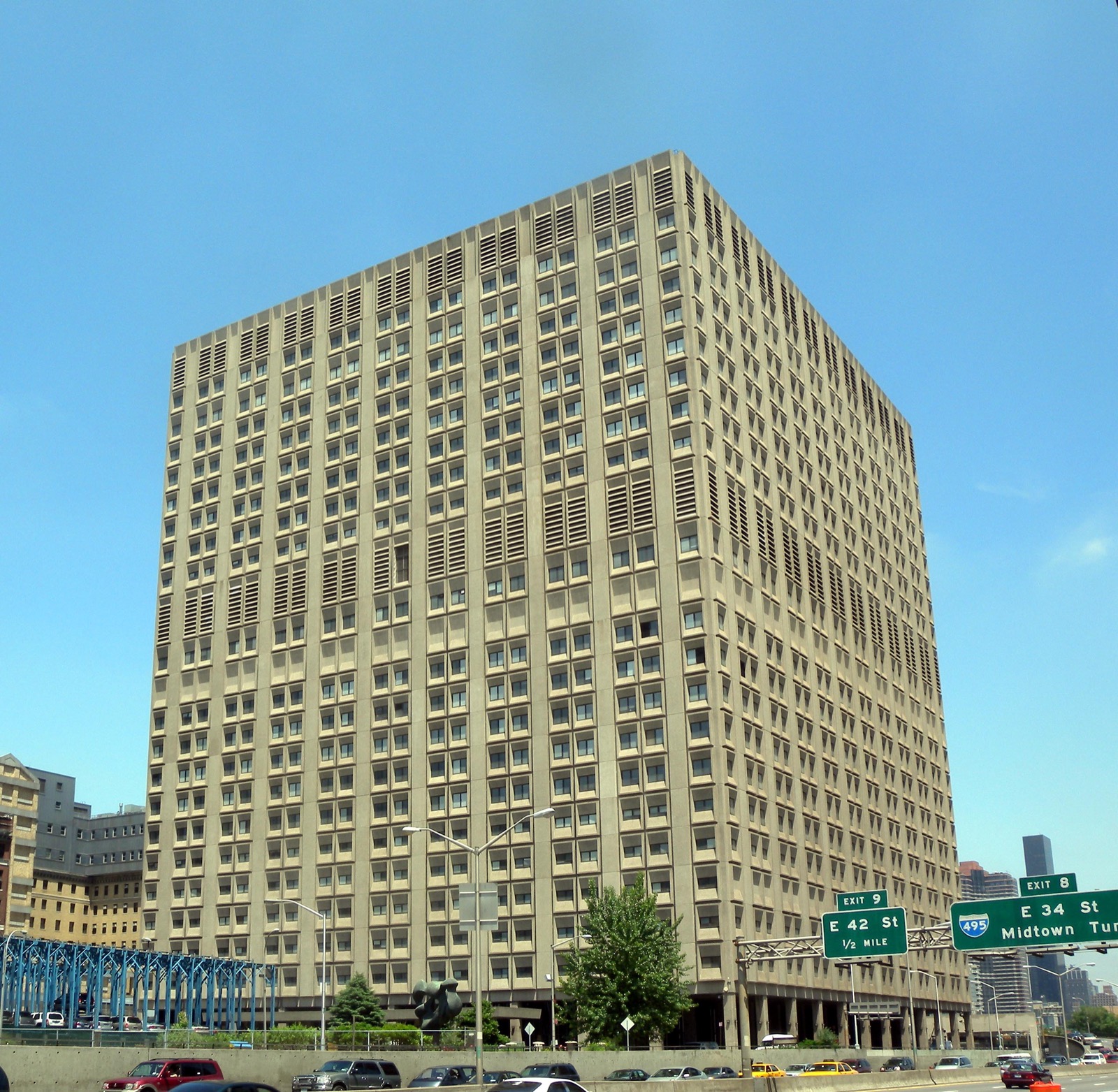
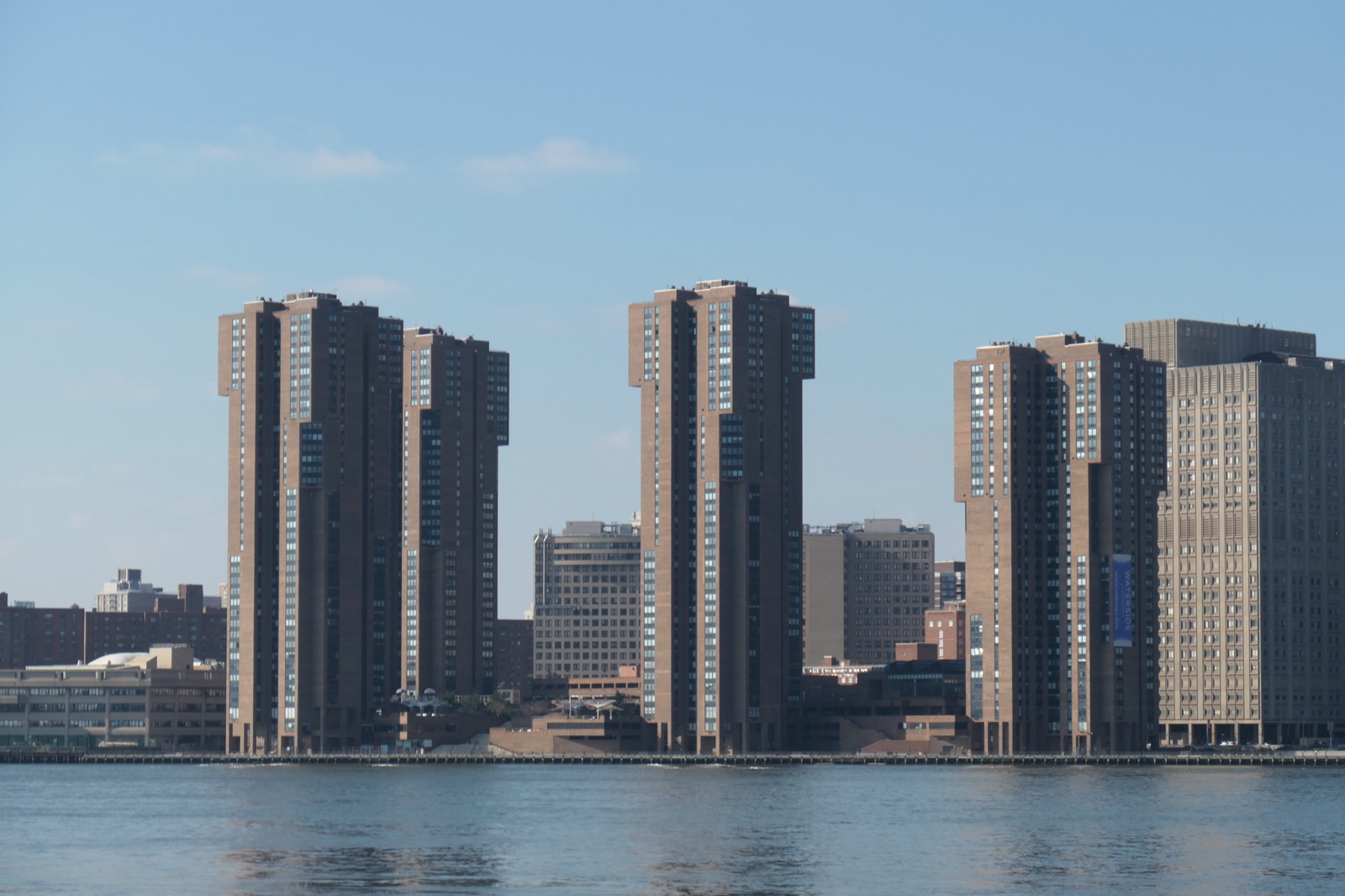
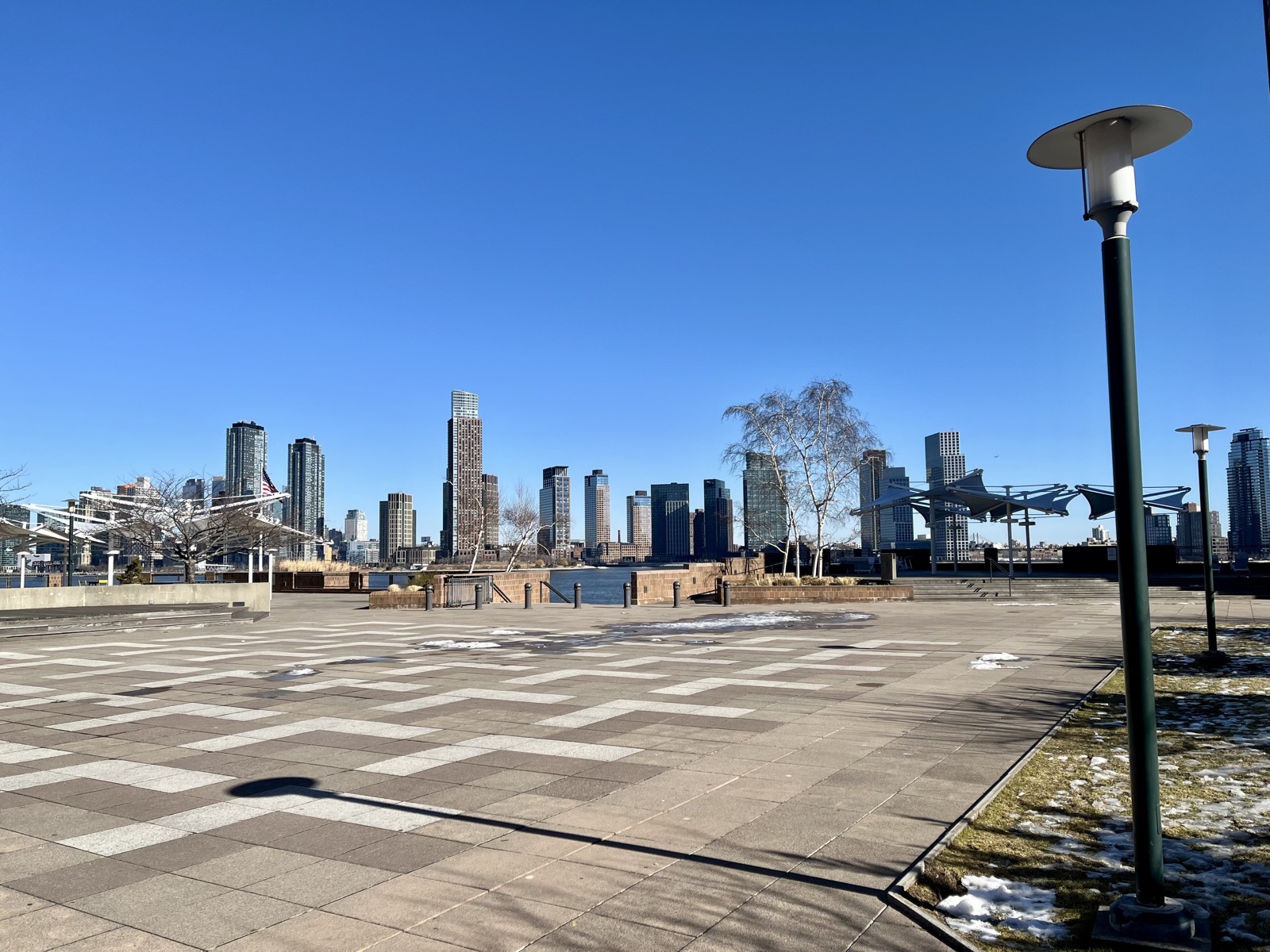
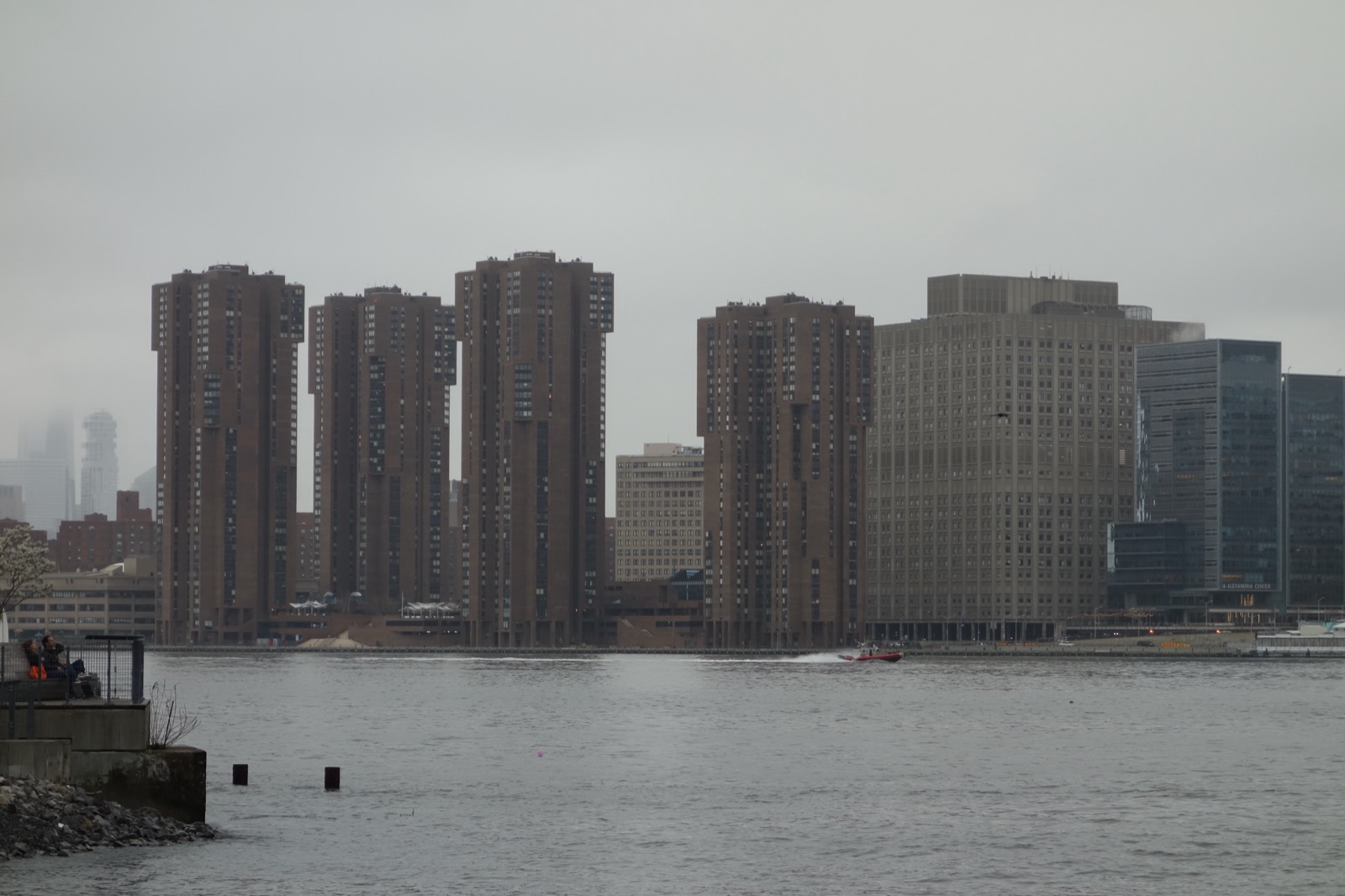
Waterside Plaza is a residential complex built on a concrete platform over the East River. That is not a metaphor or a marketing flourish. The four towers at 10, 20, 25, and 30 Waterside Plaza sit on top of more than 2,000 concrete pilings driven 80 feet through the river bottom to bedrock, supporting a six-acre elevated plaza that holds apartment towers, shops, gardens, a fountain, play areas, and roughly 3,000 people’s daily lives. The whole thing was completed in 1974, and it is still one of the most unusual places to live in New York City.
I think the most interesting thing about Waterside Plaza is how it makes you rethink what a Manhattan neighborhood even is. You cross a pedestrian bridge from First Avenue over the FDR Drive to get home. You are physically separated from the rest of the island by a highway. Your building is surrounded on three sides by tidal water. And yet 1,470 apartments in four towers house a community that residents consistently describe as feeling like a small village, not a high-rise complex. The isolation that looks like a disadvantage on paper is actually what creates the social intimacy. Everyone crosses the same bridge. Everyone shares the same plaza. Your neighbors are not just people who happen to live on your floor. They are people who made the same deliberate choice to live somewhere that requires a bridge to reach.
That deliberate quality extends to the architecture. Davis, Brody and Associates designed the towers with a chamfered pinwheel plan, rotating each building 45 degrees so that nearly every apartment captures diagonal views of both the river and the city skyline simultaneously. The deep red brick warms what could have been a cold Brutalist exercise. The elevated plaza creates a car-free world above the highway. It won an AIA Honor Award and a Bard Award for Distinguished Architecture and Urban Design, and architectural historians still cite it as one of the finest examples of humane high-rise housing built in New York in the 1970s.
Waterside Plaza was built on rubble from a bombed English city and pilings sunk through the East River
The story of how Waterside Plaza came to exist is worth knowing if you live there, partly because it explains why your building feels so different from everything around it, and partly because the engineering involved is genuinely extraordinary.
In the 1950s and 1960s, the East River waterfront between Midtown and Lower Manhattan was industrial wreckage. Piers that had served 19th-century shipping were crumbling. The FDR Drive had been built along the shoreline in the 1930s and 1940s, effectively walling off Manhattan from its eastern waterfront. Nobody lived along the East River south of 96th Street because there was nothing to live on and no reason to be there.
Richard Ravitch changed that. Ravitch was in his late twenties when he started pushing the idea of building middle-income housing over the river itself, using his family’s HRH Construction company and the Mitchell-Lama Housing Program, a New York State financing mechanism that provided government-backed mortgages in exchange for below-market rents. He spent close to a decade fighting through the approvals, the engineering skepticism, and the financing. The project nearly died multiple times.
When construction finally began in 1971, the scale of the engineering was unprecedented. Over 2,000 concrete pilings were driven through the East River floor to bedrock 80 feet below, and a six-acre reinforced concrete platform was built on top of them. The platform itself contained part of the landfill that had been shipped to New York as ballast in cargo ships from Bristol, England. That ballast was rubble from buildings the Luftwaffe had bombed during World War II. The bones of a destroyed English city were buried under the foundation of a new American one. The American Society of Civil Engineers named it the Construction Achievement Project of the Year in 1974.
The formal opening ceremony on September 12, 1973 drew Mayor John Lindsay and former Governor Nelson Rockefeller. For its first 27 years, Waterside operated as a Mitchell-Lama development with guaranteed below-market rents, creating a genuinely middle-income community of academics, UN diplomats, hospital workers, and families who could not otherwise have afforded a waterfront address. In 2001, the development exited Mitchell-Lama after prepaying its mortgage, triggering sharp rent increases. By 2018, only about 28 percent of units still housed longtime Mitchell-Lama residents. Brookfield Asset Management acquired full ownership in 2021.
That transition from affordable to market-rate is its own story, and if you moved into Waterside in the last decade you are part of the post-Mitchell-Lama chapter. But the building itself, the platform, and the community culture that persists from the original era are what make Waterside Plaza worth understanding. The tenant association is still active and still organized. In 2025, residents successfully mobilized against a proposed switch from bulk utility billing to direct electricity metering that would have shifted costs to individual tenants. The spirit of collective advocacy that the Mitchell-Lama community built has outlived the subsidy that created it.
Apartments over tidal water have cleaning challenges that landlocked buildings do not
Living on a platform over the East River means living with the river’s effects on your apartment. This is the thing that separates cleaning at Waterside Plaza from cleaning in any other Manhattan high-rise, and it is the reason we approach these apartments differently.
Humidity is the primary factor. The East River is tidal, and moisture from the water surface rises and interacts with the building envelope constantly. High-floor apartments with river-facing windows accumulate mineral and salt film on interior glass that standard glass cleaner does not fully cut. Condensation builds around window frames and sills, especially in winter when warm interior air meets cold glass above cold water. Bathrooms already prone to moisture in any building get an additional humidity load from the river proximity. The result is an accelerated timeline for mildew development on grout, caulk, window tracks, and any surface where moisture sits.
When interior windows are on the booking at Waterside Plaza — they are an add-on, never folded into the base price — we use a hard-water-specific solution and microfiber cloths rather than standard ammonia-based sprays that leave streaks on mineral-coated glass. We pay particular attention to window sills, frames, and tracks where condensation collects. In bathrooms, we treat grout lines and caulk seams for early-stage mildew on every visit, not just during deep cleans. Exhaust fan covers get wiped because a dusty exhaust fan in a high-humidity bathroom is a fan that is not doing its job.
The chamfered tower design that gives every apartment those beautiful diagonal river and city views also means a lot of glass surface area per unit. Corner apartments in particular have extensive window runs. Interior window cleaning at Waterside Plaza is not a quick spray-and-wipe job. It requires working each pane with the right solution and enough time to do it properly, which is why it is priced as an add-on rather than absorbed into the flat rate.
Dust is the other factor. The elevated plaza is exposed to East River wind patterns that bring fine particulate matter into common areas and, through building ventilation, into individual apartments. High-floor units get less of this, but lower units and the townhouses along the platform edge experience more airborne dust than you would expect in a doorman building. We adjust our approach based on floor level and orientation. A three-bedroom on the 35th floor of Tower 30 facing the river needs different attention than a townhouse unit at platform level.
The red brick towers and 1970s concrete platform need cleaners who respect the materials
Waterside Plaza’s interiors reflect the era in which the complex was built and the architectural ambition behind it. These are not cookie-cutter luxury finishes. Many apartments retain original layouts and materials from the 1974 construction or from the $35 million capital improvement program completed in 2004.
You will find poured concrete surfaces, original hardwood and parquet flooring, tile work from the 1970s, and kitchen and bathroom layouts that prioritize functionality over contemporary open-plan aesthetics. Renovated units have been updated to current standards, but the building’s character comes from the mid-century materials and the unusual geometry of the chamfered floor plans. Diagonal walls create non-standard room shapes that require furniture placement and cleaning approaches adapted to corners that are not 90 degrees.
We use pH-neutral solutions on hardwood and parquet. We avoid abrasive pads on original tile. On poured concrete surfaces, which appear in some units and in common areas, we use concrete-safe cleaners that will not etch or leave residue. The baseboard heaters common in units of this era get dusty fins that restrict airflow and eventually burn off accumulated dust when the heat kicks on in October. We clean radiator and baseboard heater fins during deep cleans so your first heating day of the season does not fill the apartment with that scorched-dust smell.
Diplomats and hospital workers share one thing in common at Waterside Plaza
The two largest professional groups at Waterside Plaza are medical workers from the First Avenue hospital corridor and internationally mobile professionals connected to the United Nations and the international schools. NYU Langone, Bellevue, and the VA Medical Center are all within a 10-minute walk north. The United Nations International School sits immediately south of the complex. The British International School of New York operates within Waterside Plaza itself.
What these groups share, for our purposes, is a combination of high income, limited free time, and frequent absence from home. Attending physicians pulling 12-hour shifts at Langone do not have time to clean a two-bedroom apartment. Diplomats and UN staff travel internationally on schedules that change with little notice. International school families with two working parents in demanding careers need their weekends for their kids, not for scrubbing bathrooms.
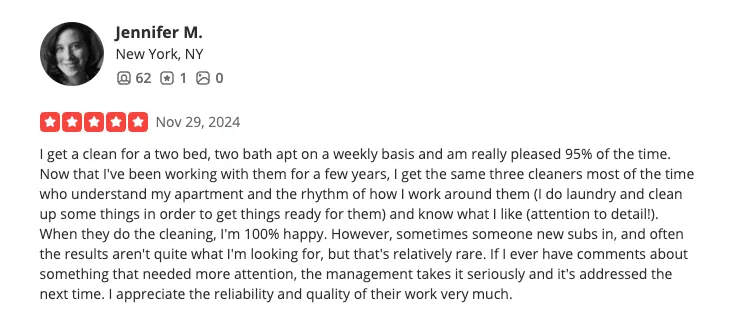
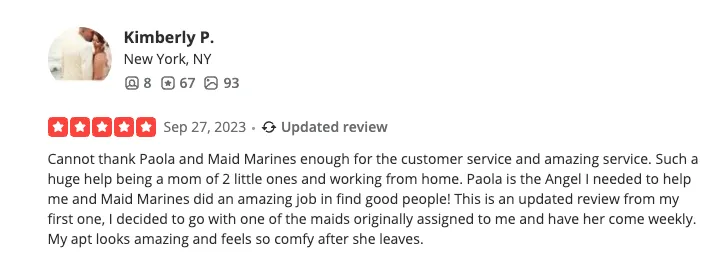
This is why recurring cleaning at Waterside Plaza works the way it does for most of our clients there. We coordinate with the doorman for key access. We arrive on your scheduled day whether you are home, at work, or on another continent. The same team comes each time because consistency matters in a building where your apartment has specific surfaces, specific views that generate specific window-cleaning needs, and specific layouts that a new cleaner would need to learn from scratch. You set it up once and it runs.
For residents just moving in or out of Waterside Plaza, our move-in and move-out cleaning covers the full reset. Inside cabinets, appliance interiors, window tracks, baseboards, and every surface the next resident will touch or open. Given the building’s turnover as remaining Mitchell-Lama tenants move on and market-rate tenants cycle through, move-in cleans at Waterside Plaza are a regular part of our work there.
The private shuttle and the pedestrian bridge are part of your cleaning logistics too
Waterside Plaza’s location affects logistics in a way that most Manhattan addresses do not. The complex sits east of the FDR Drive, accessible from First Avenue via a pedestrian bridge at East 28th Street. The nearest subway station is the 6 train at 28th Street and Park Avenue South, roughly a 12 to 15 minute walk. There is no subway stop within the complex. There is a private shuttle bus that runs to Midtown during peak hours, a legacy of the building’s original recognition that it was asking residents to trade transit convenience for waterfront living.
Our cleaners reach Waterside Plaza the same way you do. Most take the 6 train to 28th Street and walk east across the bridge. Some drive and use the garage. We do not charge extra for the location, and we do not treat the access as a scheduling complication. We clean in Waterside Plaza regularly enough that the bridge, the doorman check-in, and the building’s vendor protocols are routine.
If you want to make the most of your cleaning appointment, the East River Greenway runs directly through the complex at the lower level. You can walk or bike south toward the Brooklyn Bridge or north to the 34th Street ferry landing in the time it takes us to clean a two-bedroom. The ferry to DUMBO takes about 15 minutes and the skyline views alone are worth the trip. A few blocks further west, the Curry Hill strip along Lexington Avenue near 28th Street has some of the best Indian food in Manhattan. Dhaba, in particular, is a BYOB institution. Your apartment does not need you in it while we are working. Go enjoy the neighborhood that your unusual address connects to.
Booking apartment cleaning at Waterside Plaza
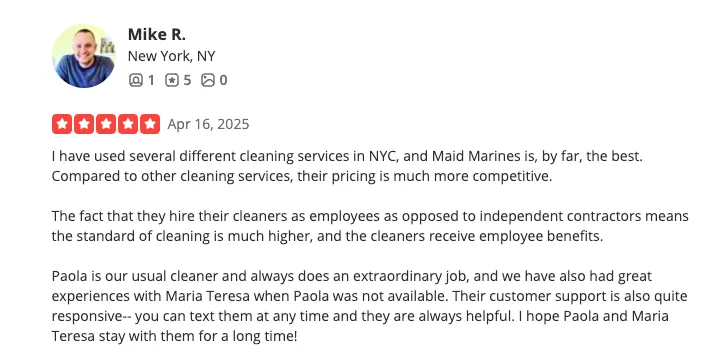
You pick your date and time on our booking page. You see your flat-rate price before you commit. If your apartment has specific surfaces, the interior glass add-on for those river-facing windows, or doorman access requirements, you tell us once and we note it permanently on your account. Our cleaners are W-2 employees, not gig workers. They are vetted, insured, and they show up with products appropriate for the specific materials in your apartment.
We serve Waterside Plaza and the surrounding neighborhoods, including Kips Bay, Gramercy Park, and Midtown. If your building requires a Certificate of Insurance, we can furnish one. If you need recurring service coordinated through the doorman while you travel, we set that up on the first call.
Waterside Plaza was built as a proof of concept that you could create a humane, livable community on a platform over the East River. Fifty years later, the community is still there, the river views are still extraordinary, and the apartments still need cleaning by someone who understands what makes them different from every other high-rise in Manhattan. That is what we do.