
Kips Bay is the neighborhood where the oldest public hospital in the United States has been accepting every patient who walks through its doors for nearly 290 years, where one of the most celebrated architects of the twentieth century poured his first residential concrete towers, and where a Greek immigrant’s spice shop accidentally created the most concentrated South Asian restaurant corridor in Manhattan. It is not a neighborhood that tries to impress you. It is a neighborhood that works. The people who live here are medical residents pulling 80-hour weeks at Bellevue and NYU Langone, young professionals renting their first Manhattan apartment in a postwar walk-up, and longtime tenants who have been in the same rent-stabilized unit since before the luxury high-rises arrived on Second Avenue.
That mix of residents is what shapes the cleaning work here. A Kips Bay apartment is rarely a showpiece. It is a place someone comes home to after a long shift, drops their bag, and needs to feel like the surfaces are clean and the air is breathable. The apartments are smaller than most of Manhattan, the buildings range from 1880s tenements to 2020s glass towers, and the cleaning approach changes depending on which block you are on.
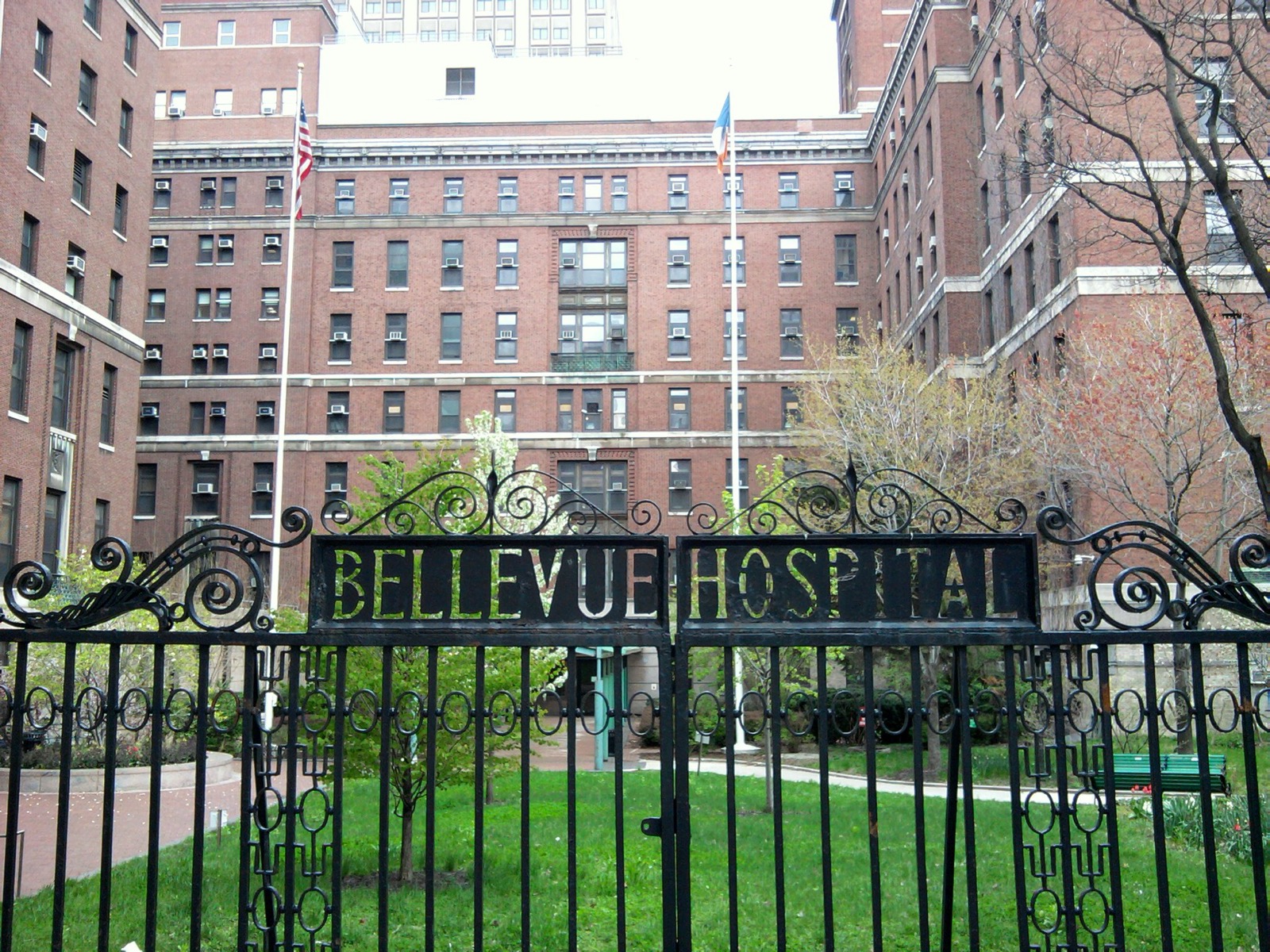
Bellevue Hospital has anchored the First Avenue medical corridor since 1816
The eastern edge of Kips Bay is defined by hospitals. Bellevue, NYU Langone, the VA Medical Center, and the NYU College of Dentistry line consecutive blocks along First Avenue from 23rd to 34th Street, creating one of the densest medical corridors in the world. Bellevue alone employs over 6,000 people. Add the staff and trainees at NYU Langone and the VA, and you are looking at tens of thousands of medical workers within a ten-block radius.
That concentration shapes the neighborhood in ways you notice quickly. Walk along First Avenue on a weekday afternoon and you see scrubs everywhere. NYU lanyards. The steady rotation of ambulances at the Bellevue emergency entrance. Young doctors eating at the first available counter because their break is 20 minutes. The blocks around First Avenue have the steady hum of a place where something important is always happening nearby.
For cleaning, this medical population creates a specific pattern. Hospital workers keep unusual hours. A nurse finishing a night shift at 7 AM does not want to be woken by a cleaning crew at 9. A resident pulling a 12-hour day wants to come home to a clean apartment without having to coordinate anything. Most of our Kips Bay clients who work in the medical corridor leave a key with the doorman or use a lockbox and never see our team at all. They book recurring apartment cleaning on a fixed schedule, and the apartment is clean when they get home. That is the whole arrangement.
The hospital schedule also means these apartments get used hard in compressed windows. When you are working 60 to 80 hours a week, the hours you spend at home involve cooking, sleeping, showering, and not much else. The kitchen gets oily fast. The bathroom gets used intensively. The bedroom accumulates laundry and dust because there is no time to deal with it. A biweekly cleaning keeps the apartment from falling behind.
The Kips Bay Towers are I.M. Pei’s first residential experiment in architectural concrete
In the 1950s, Robert Moses’s urban renewal program cleared approximately 7.5 acres of tenement housing east of Second Avenue. Despite organized opposition from residents who wanted their buildings rehabilitated rather than demolished, the blocks were leveled and handed to developer William Zeckendorf and architect I.M. Pei for a new kind of housing complex.
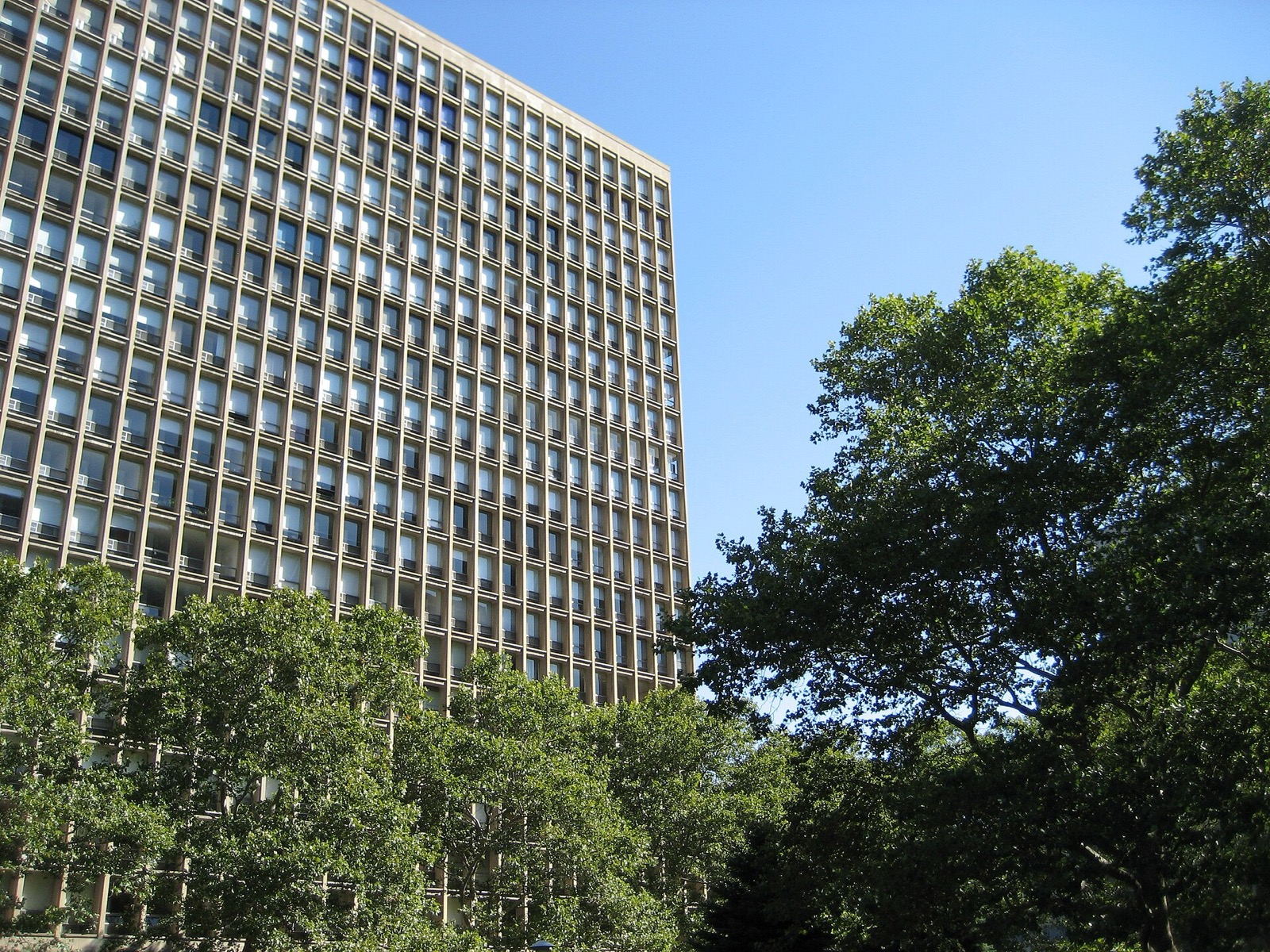
The result, completed in 1965, was the Kips Bay Plaza, now known as the Kips Bay Towers. Two 21-story slab towers in poured-in-place architectural concrete, the first large-scale residential use of the technique that would define Pei’s career. The grid of recessed windows creates deep shadow lines across the facades, giving the towers a sculptural presence that has no equivalent in the neighborhood. Between the towers sits a three-acre garden with mature oaks and maples. Pei wanted a Picasso sculpture in the garden. Zeckendorf said no and planted fifty trees instead.
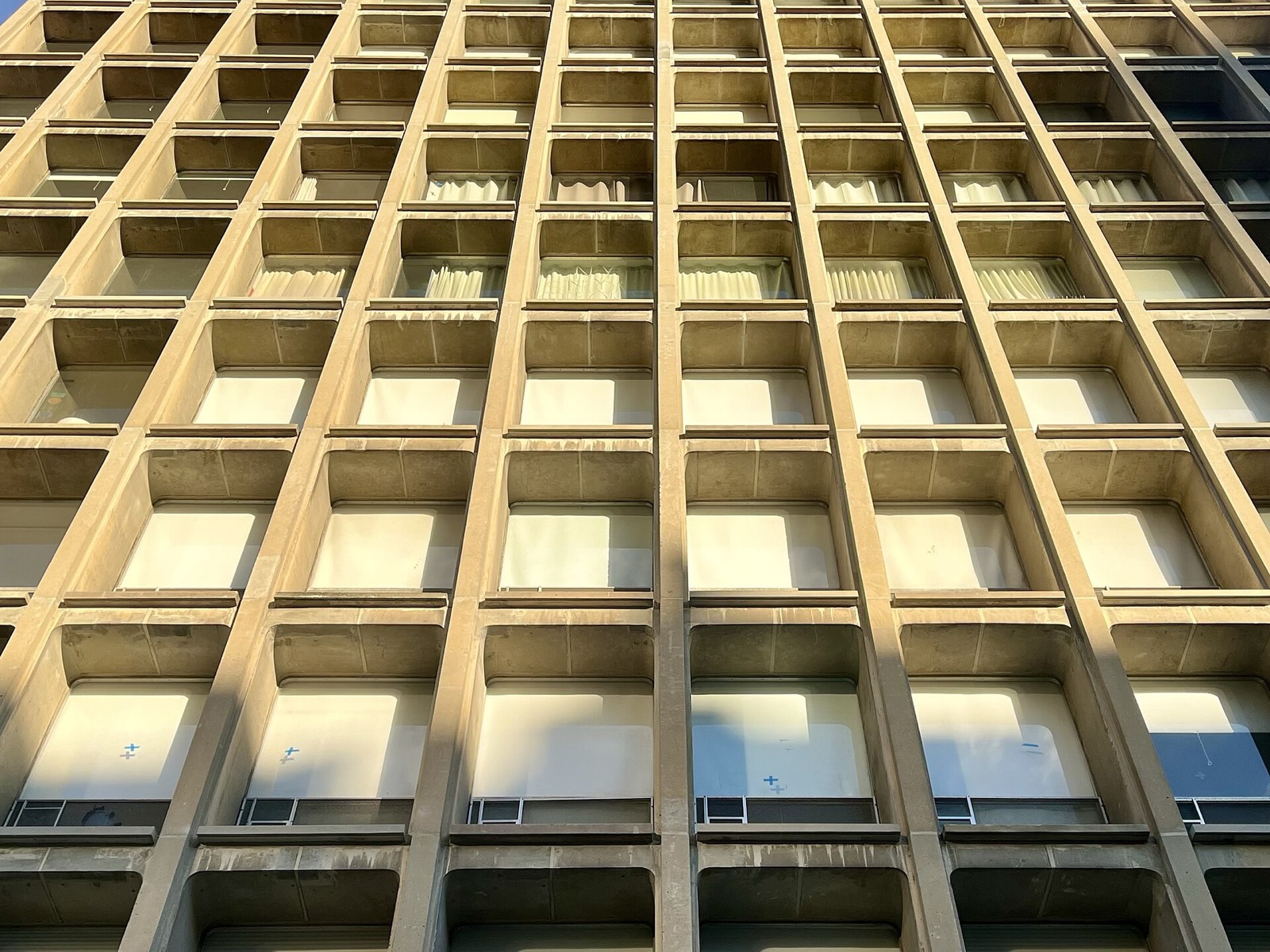
The towers have been converted from rental to condominium and remain architecturally significant. They also present specific cleaning considerations. The units have deeper layouts and more generous proportions than most Manhattan apartments built in the same era. Concrete construction means the air inside stays cooler in summer and the walls do not accumulate the same dust patterns you see in plaster-and-lath prewar buildings. But the windows are large and recessed, which means the sills collect debris from the street and from the garden below. The hallways and common areas are maintained by building staff, but inside the units, the concrete and terrazzo surfaces need cleaners who understand what products work on those materials and what to avoid.
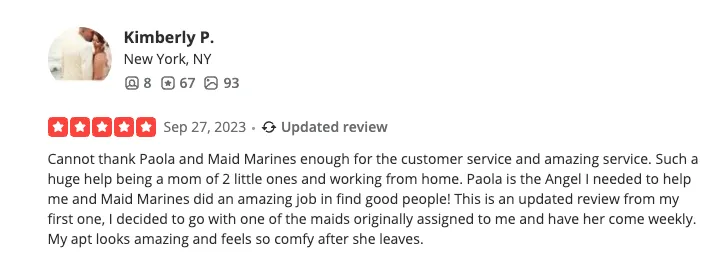
We clean units in the Kips Bay Towers regularly. The doorman holds the key or buzzes our team in. The service elevator takes us up. The job is typically a two-person team for 90 minutes to two hours depending on the unit size. The same team comes back each visit because the building has its own rhythms and the units have layouts worth learning once.
Walk-up tenements west of Second Avenue are where most Kips Bay renters actually live
The research-file version of Kips Bay focuses on the hospitals and the Pei towers. The lived experience of most residents is different. West of Second Avenue, the neighborhood is predominantly five-to-seven-story brick walk-up tenements built between 1880 and 1940. These are the buildings with fire escapes on the front facades and ground-floor retail. They have modest lobbies, no doorman, no elevator, and apartments that range from 350 square feet for a studio to 800 square feet for a one-bedroom.
This is where the majority of Kips Bay’s young professional renters live. The rents are lower than the new high-rises on Second and Third Avenue, the apartments are smaller, and the buildings are older. The cleaning challenges are specific to the building stock.
Prewar walk-up apartments in Kips Bay have old plaster walls that crack if you lean furniture against them too aggressively. The bathrooms often have hexagonal mosaic tile floors from the original construction, with grout that has been absorbing moisture and staining for a century. The kitchens are narrow galley layouts where the stovetop is 18 inches from the wall, which means cooking grease ends up on the backsplash, the side of the fridge, and the wall above the range hood. Cast-iron steam radiators line the walls, and every October when the boiler kicks on, the dust packed between the radiator fins from the summer burns off and fills the apartment with that familiar scorched-lint smell.
We clean these apartments with the building type in mind. Microfiber on the plaster walls rather than spray-and-wipe. pH-neutral solution on the old tile floors. Radiator covers, AC units, and vent grilles dusted, and the floor behind them vacuumed rather than skipped. The galley kitchen gets degreased from floor to ceiling because a standard surface clean never touches the wall above the range or the side of the fridge, which is where the film in an 18-inch galley ends up.
Our cleaners carry their own supplies up the stairs. A fifth-floor walk-up does not cost extra. We do not charge a building surcharge for not having an elevator. We clean the apartment, the building type is factored into how we clean it, and you do not need to think about any of this. You leave a key and come home to a clean place.
Curry Hill exists because a Greek immigrant sold spices to a community that did not have its own shops yet
Lexington Avenue between 26th and 30th Streets is Curry Hill, and it is the most distinctive cultural feature of Kips Bay. The corridor holds over 30 Indian, Pakistani, Bangladeshi, and Sri Lankan restaurants within four blocks, plus Kalustyan’s, the specialty spice shop that started the whole thing.
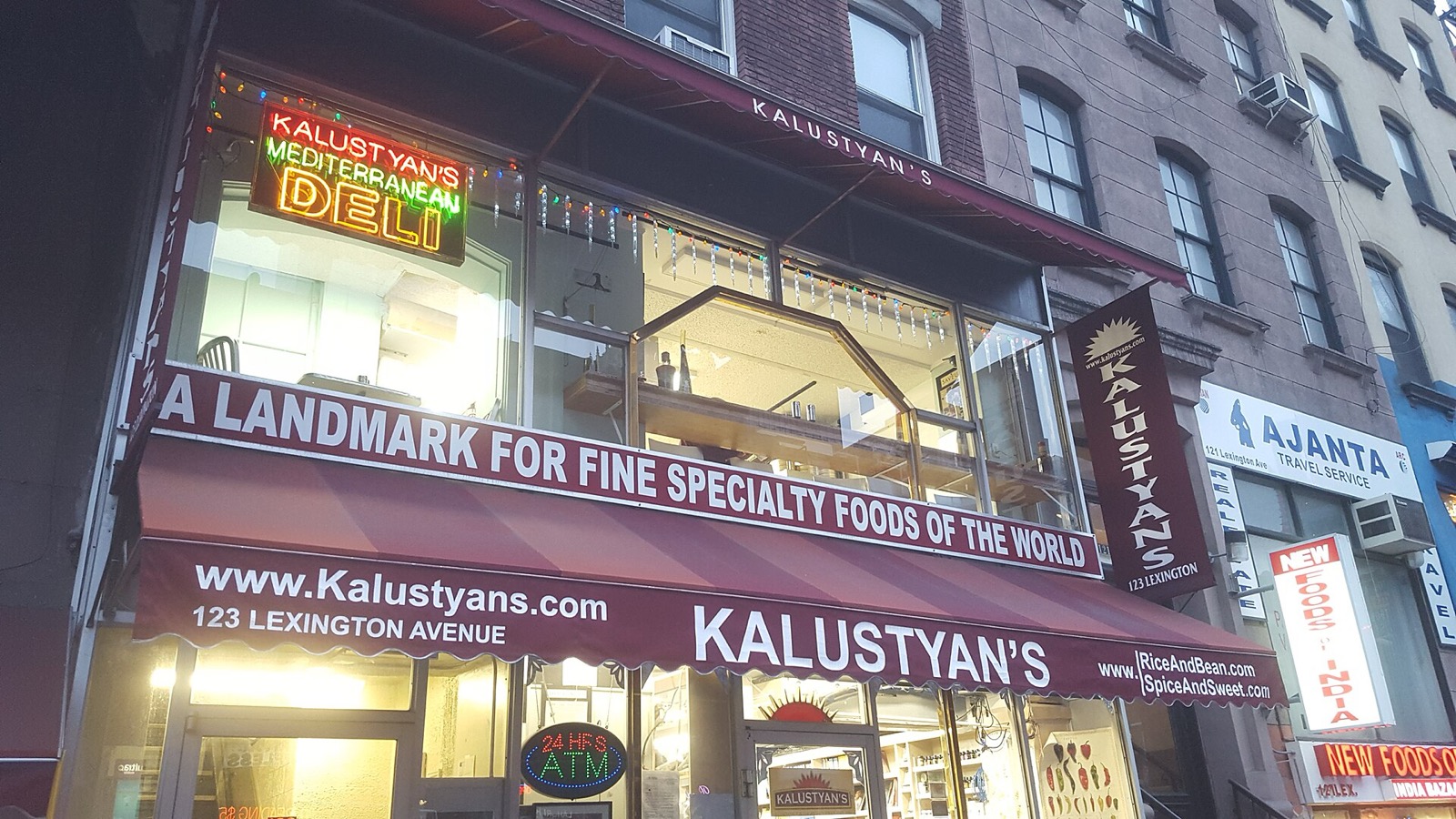
Konstantinos Kalustyan was a Greek immigrant who opened a specialty food store on Lexington Avenue in 1944. He carried Middle Eastern and South Asian spices at a time when the South Asian community in New York was too small to support its own retail. As that community grew and clustered near his shop, restaurants followed. Kalustyan never opened a restaurant himself. He just sold the ingredients that made all the others possible.
Today Kalustyan’s carries over 1,000 specialty items. Fifty varieties of dried chiles, spices from 30 countries, preserved lemons, pomegranate molasses, and prepared foods at a counter that feeds home cooks and professional chefs from across the city. Le Bernardin buys ingredients here. So does the cook in the walk-up two blocks east who is making dosas for dinner.
The Curry Hill corridor is relevant to cleaning because the cooking culture on these blocks is serious. Households near the corridor tend to cook with oils, spices, and techniques that leave residue a standard wipe-down will never touch. Turmeric stains countertops. Mustard oil creates a film on range hoods and the ceiling above the stove. Deep-frying leaves grease on cabinet faces and backsplashes six feet from the stovetop. We degrease every kitchen surface that cooking has reached, pull the drip trays, and take the film off the outside of the hood. If you want the oven interior done, add a deep clean and we handle that too.
The cooking in a Kips Bay apartment is often the best evidence of how the apartment is used. The kitchens that see daily spice-heavy cooking produce food that is worth the cleaning challenge. That is what your kitchen is for. The grease is our job.
The new glass towers on Second Avenue need different cleaning than the walk-ups behind them
The 2000s and 2010s brought a wave of luxury residential high-rises to Kips Bay, particularly along Second and Third Avenues. These are glass-curtain-wall buildings with doormen, rooftop decks, gyms, and the full amenity package. They house a different population than the walk-ups. The renters in these buildings tend to be young professionals earning higher incomes, often in finance or tech, who want a modern apartment with building services and are willing to pay the premium.
The cleaning in these buildings is more straightforward in some ways and more demanding in others. The surfaces are newer. Floor-to-ceiling windows, engineered hardwood or vinyl plank floors, quartz countertops, glass shower enclosures. These materials are easier to clean than the plaster walls and hexagonal tile in a 1920s walk-up. But the windows are the main event. Floor-to-ceiling glass facing Second Avenue collects a visible film of city grime within a week, and the interior side shows every fingerprint and water spot from cooking steam. Interior glass is an add-on here rather than part of the visit — add it when you book and the quote shows what it costs — and on Second Avenue it is one worth adding. Exterior windows are a building responsibility.
The other difference is building logistics. Luxury high-rises require advance scheduling with the front desk, service elevator reservation, and sometimes a Certificate of Insurance on file before any vendor enters. We furnish COIs regularly for Kips Bay buildings. Tell us your building’s requirements when you book and we will have the paperwork to your management office before the first appointment.
Rental turnover in Kips Bay runs faster than most Manhattan neighborhoods
Kips Bay’s young renter population means higher turnover than neighborhoods with more ownership. Medical residents and fellows rotate through on two-to-three year cycles. Young professionals move in when they start a job and move out when they buy or relocate. The average tenure in a Kips Bay rental is shorter than the Manhattan average, and every departure creates a cleaning need.
For tenants moving out, our move-in and move-out cleaning covers the full reset. Inside cabinets, appliance interiors, baseboards, window sills and ledges, light switch plates, and every surface a landlord or management company will inspect during the walkthrough. For tenants moving in, the same service makes sure the apartment that was “professionally cleaned” between tenants actually meets your standard.
If you are a landlord managing rental units in Kips Bay, we also handle the between-tenant turnover directly. We can work with your management company’s schedule, provide the COI your building requires, and turn units quickly. The medical corridor generates steady demand for rentals and the turnover cleaning has to be right every time.
George Washington nearly got himself killed in his fury at the Battle of Kips Bay
The neighborhood carries 250 years of history in its name. Jacobus Kip was a Dutch merchant who established a farm on the East River shoreline in the 1650s. The “bay” was an actual indentation in the shoreline at roughly 33rd to 37th Streets, a natural landing point that was filled in and built over centuries ago. The bay no longer exists. The name survived.
On September 15, 1776, the bay was where approximately 4,000 Hessian soldiers and British regulars landed under naval cover from warships in the East River. The Continental soldiers defending the shore broke and fled almost immediately. George Washington rode to the scene expecting to hold the position and was so furious at the rout that he struck fleeing officers with his riding crop. Contemporary accounts from Washington’s own staff describe him then turning his horse toward the advancing British lines, apparently willing to be killed rather than watch his soldiers run. Aides grabbed the horse’s bridle and physically restrained him. The British captured most of Manhattan that afternoon and held it for the rest of the war.
The hospital that has never turned away a patient in 290 years stands a few hundred feet from where Washington nearly died. Pei left his concrete signature on the skyline. The Lenape fished the bay that gave the neighborhood its name before the bay was filled in and the name was all that remained. Kips Bay is not a neighborhood that announces its history. It just carries it quietly in the names and the buildings and the institutions that have outlasted everything else.
What booking looks like for Kips Bay residents
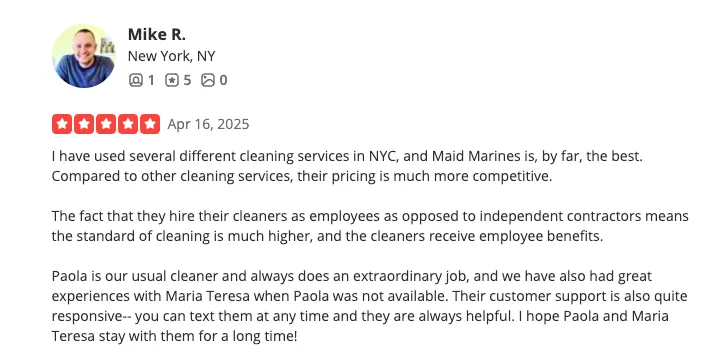
You pick your date and time on our booking page. You see your flat-rate price before you commit. If your walk-up needs a lockbox arrangement, you tell us once and we note it permanently on your account. If your building requires a COI or service elevator scheduling, we handle it. Our cleaners are W-2 employees, not gig workers. They are vetted, insured, and they show up with the right products for your specific building type.
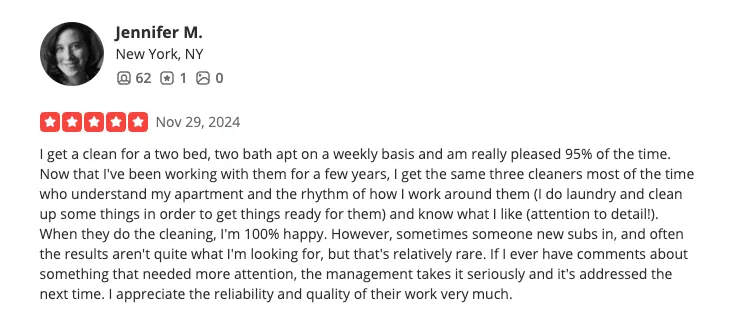
We serve Kips Bay and the surrounding neighborhoods, including Chelsea and FiDi. Our teams use the 6 train to 28th or 33rd Street. If your apartment has any surface that needs special handling, you tell us before the first visit and we adjust. Recurring clients get the same team each time. That consistency matters in a neighborhood where the building stock varies this much block to block.