
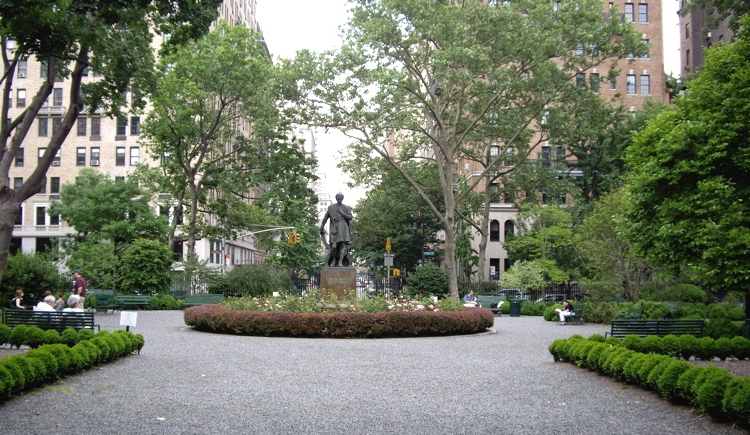
There is only one private park in Manhattan. It sits between 20th and 21st Streets, between Gramercy Park East and Gramercy Park West, behind a Victorian cast-iron fence with a gate that has been locked since 1831. Roughly 383 households hold keys. Everyone else looks through the bars. On Christmas Eve, one day each year, the gate opens and the public can walk in. The other 364 days, the 1.9-acre garden belongs to the keyholders and nobody else.
That arrangement tells you nearly everything you need to know about this neighborhood. Gramercy Park was designed around exclusivity. It has not changed its mind in almost 200 years. The buildings facing the park are among the most expensive residential addresses in the city, the co-op boards are among the most selective, and the expectation of quality from anyone who walks through a front door here, whether they are a guest or a vendor, is set accordingly.
The cleaning job in Gramercy Park is shaped by that expectation. This is not a neighborhood where you send a crew that has never been inside a pre-war co-op. The surfaces in these buildings are old, the floorplans are formal, and the residents pay close attention to whether the people working in their homes understand what they are working with.
Samuel Ruggles drained a swamp in 1831 and built the most exclusive address in New York
The name itself tells the origin story if you listen for the Dutch underneath the English. Gramercy comes from Krom Moerasje, meaning “crooked little swamp.” Before Samuel Bulkley Ruggles arrived in 1831, this stretch of Manhattan was wet, irregular terrain that the Lenape had used for its water resources and that European settlers had found too marshy for intensive farming.
Ruggles was a lawyer and developer with a civic imagination. He purchased roughly 40 acres of swampland, had it drained, and conceived a plan modeled on the residential squares he admired in London. He divided the land into 66 lots arranged around a central private park and deeded the park permanently to the surrounding lot owners. The December 1831 indenture that established the park’s private status has been upheld in every legal challenge since. It is one of the oldest continuously enforced property documents in New York City.
Ruggles also did something that reshaped the surrounding street grid. He created Lexington Avenue and Irving Place as part of his development plan. Lexington Avenue was not part of the original 1811 Commissioners’ Plan. It exists because Ruggles decided it should. Irving Place, the four-block street running from 14th to 20th Street, was named for Washington Irving and became one of the most atmospheric short streets in Manhattan. It remains that today. Wine bars, restaurants, and low-scale storefronts line a walk you can complete in ten minutes but will probably stretch to an hour.
Edwin Booth gave away his house and the neighborhood gained a cultural institution that has lasted 138 years
The story of 16 Gramercy Park South is one of the more remarkable acts of generosity in New York cultural history. Edwin Booth was the most celebrated Shakespearean actor of the 19th century. His 100-consecutive-performance run of Hamlet at the Winter Garden Theatre set a record that stood for decades. He was also the brother of John Wilkes Booth, Abraham Lincoln’s assassin. That shadow never left him. On the night Lincoln was shot at Ford’s Theatre in Washington, Edwin was on stage in Boston performing Romeo and Juliet. The news reached him mid-performance. He withdrew from public life for a year.
When he returned, he eventually purchased the townhouse at 16 Gramercy Park South and, on January 1, 1888, donated it as the permanent home of The Players, a club he founded to bring together theater professionals and people from other arts and professions. Stanford White, the most prominent architect of the era, renovated the building in Romanesque Revival style, adding the loggia arcade at street level that is still visible through the gate.
Booth chose a specific form of memorial. The bronze statue in the center of Gramercy Park, sculpted by Edmond T. Quinn in 1918, shows him in the pose and costume of Hamlet, not as himself. He decided that the character he had made his own was more permanent than the man who had played it. The statue faces his former home across the park. The Players Club still operates from the same building, still holds dinners and readings, and still maintains a library of over 30,000 theatrical volumes. Booth memorabilia and costumes from the 19th century line the walls.
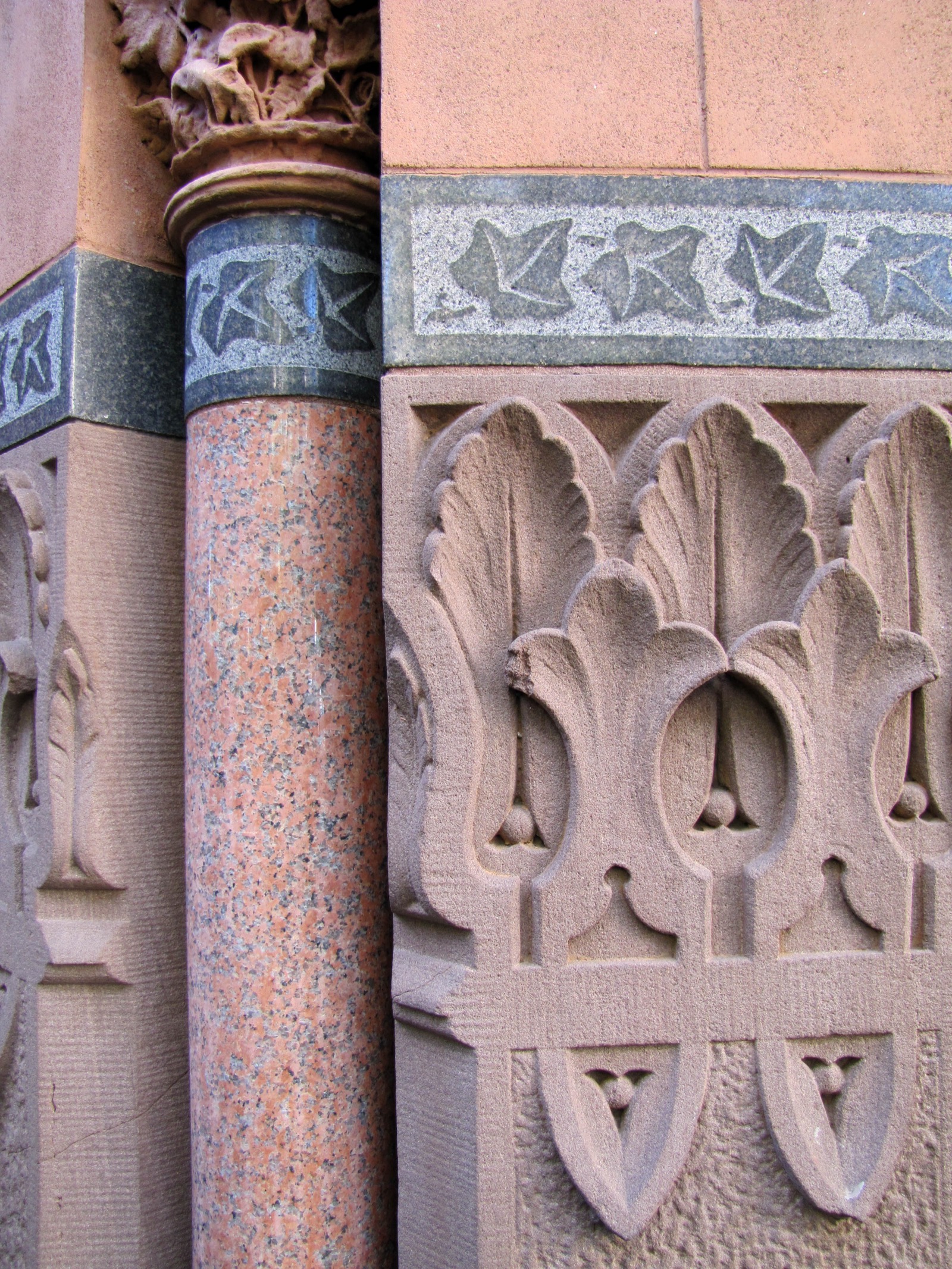
Next door, at 15 Gramercy Park South, sits the National Arts Club. The building was originally the home of Samuel J. Tilden, the Governor of New York who won the popular vote in the 1876 presidential election but lost the Electoral College in what remained the most disputed result in American history until 2000. Calvert Vaux, Frederick Law Olmsted’s partner in designing Central Park, renovated the building between 1881 and 1884. The Victorian Gothic facade features carved stonework, polished granite columns, medieval-inspired window tracery, and terra-cotta ornament. John LaFarge designed the stained glass windows inside. The building is both a New York City Landmark and a National Historic Landmark.
O. Henry, Melville, and Steinbeck all lived and wrote within these blocks
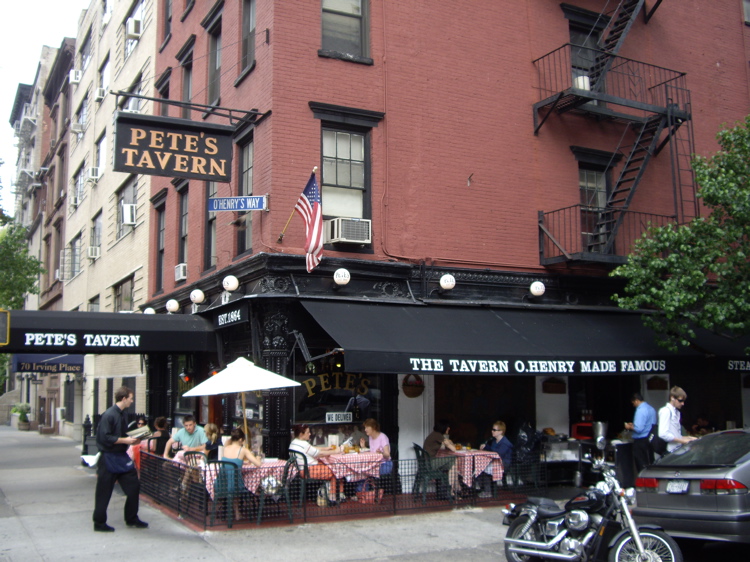
The neighborhood has a literary history that accumulated quietly over decades. Pete’s Tavern at 129 East 18th Street has been open since 1864, making it the oldest continuously operating bar in New York City. The front booth is where O. Henry reportedly wrote “The Gift of the Magi,” the short story about a young married couple who each sacrifice their most valued possession to buy a gift for the other. The attribution is disputed. The atmosphere of the booth is not.
Herman Melville lived at 104 East 26th Street for 28 years, from 1863 until his death in 1891. He had come to the neighborhood after the commercial failure of his later novels following Moby-Dick. He spent his final decades working as a customs inspector on the Hudson River docks, writing poetry almost nobody read. When he died, his New York Times obituary misspelled his name as “Henry Melville.” The great critical reassessment of his genius came 30 years later.
John Steinbeck lived at 38 Gramercy Park North. In 1960, he departed from his Gramercy Park address to drive across the country with his poodle Charley in a camper truck. The trip became Travels with Charley in Search of America.
The Gramercy Park Hotel at 2 Lexington Avenue opened in 1925 and immediately became a gathering place for artists, musicians, and actors. Humphrey Bogart married his first wife, Helen Menken, in the hotel’s parlor in 1926. Bob Dylan lodged there in the early 1960s. Julia Roberts has owned a penthouse at 7 Gramercy Park West since 1993. Jimmy Fallon owned an apartment at 34 Gramercy Park East, the building commonly cited as the oldest residential cooperative in New York City, built in 1883, with Norman castle turrets and Gothic arched windows that make it one of the most visually distinctive buildings on the park.
Pre-war co-ops around the park need cleaners who understand 19th-century surfaces and 21st-century board rules
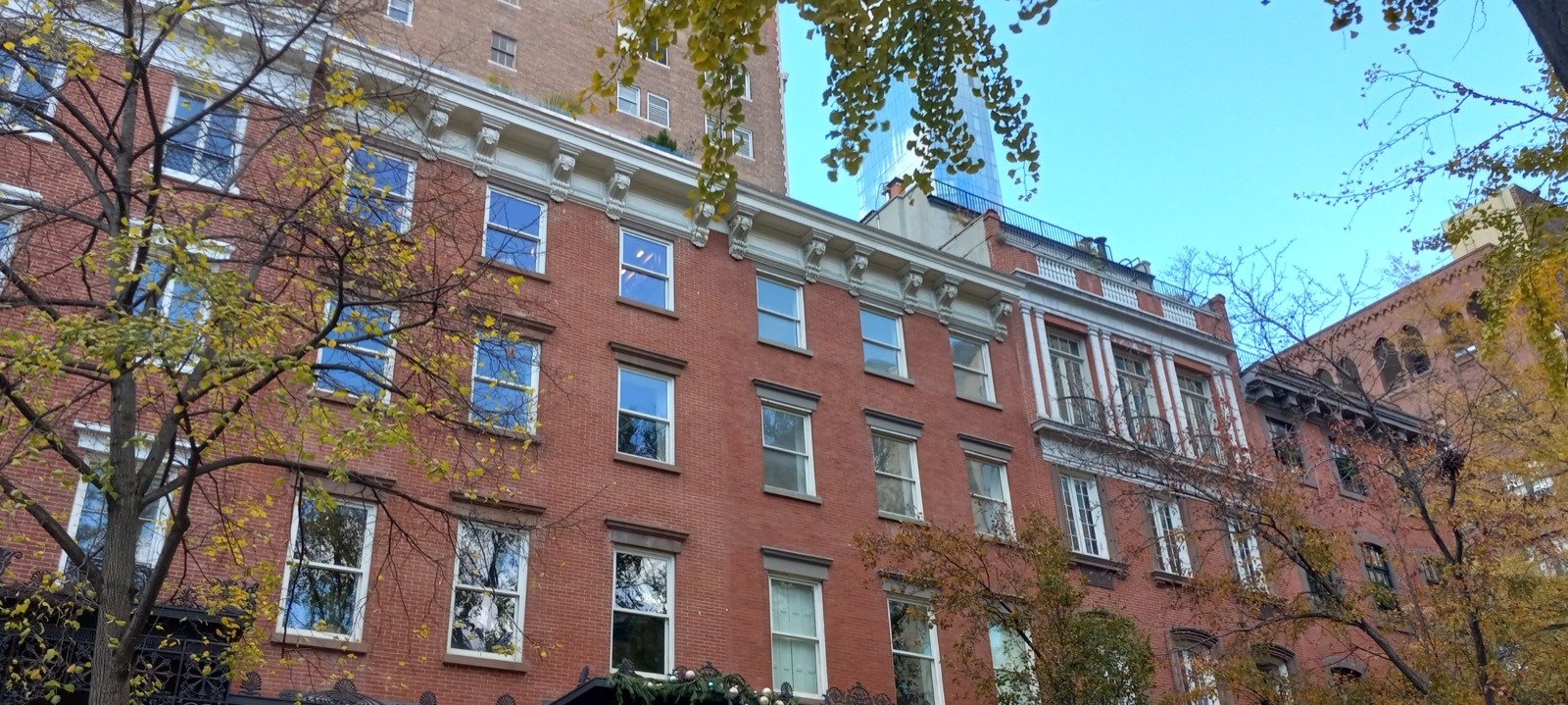
The dominant housing type in Gramercy Park is the pre-war co-operative apartment building. These are elevator buildings from the 1920s and 1930s with classic New York floor plans, high ceilings, thick masonry walls, plaster molding, hardwood floors, and the kind of interior details that have survived because the buildings have been maintained, not because the materials are indestructible.
Plaster is the thing most cleaning services get wrong in these apartments. Original plaster from the early 20th century is not drywall. It is a lime-based material applied in layers over wooden lath, and it reacts badly to moisture. Water on unsealed plaster leaves marks that do not come out. Scrubbing damages the surface texture. Decorative plaster molding around ceiling medallions and doorways chips if you bump it with a vacuum or try to clean it aggressively. We dust plaster surfaces with a dry microfiber and nothing else.
The hardwood floors in these co-ops are typically oak, many with original finishes that have been maintained through periodic refinishing rather than replacement. A wrong product here means visible damage. We use pH-neutral solutions and flat microfiber mops. No vinegar. No all-purpose sprays with citric acid. No anything that leaves residue or eats through the finish over time.
Then there is the board. Gramercy Park co-op boards are among the most selective in Manhattan. Many require a Certificate of Insurance naming the building as an additional insured before any vendor enters. Some require advance written notice to the management office. A few require signed vendor agreements on top of the COI. Our teams furnish this paperwork regularly for Gramercy Park buildings and know what most of them need before we ask. If your building has specific rules, tell us once when you book and we handle it from there.
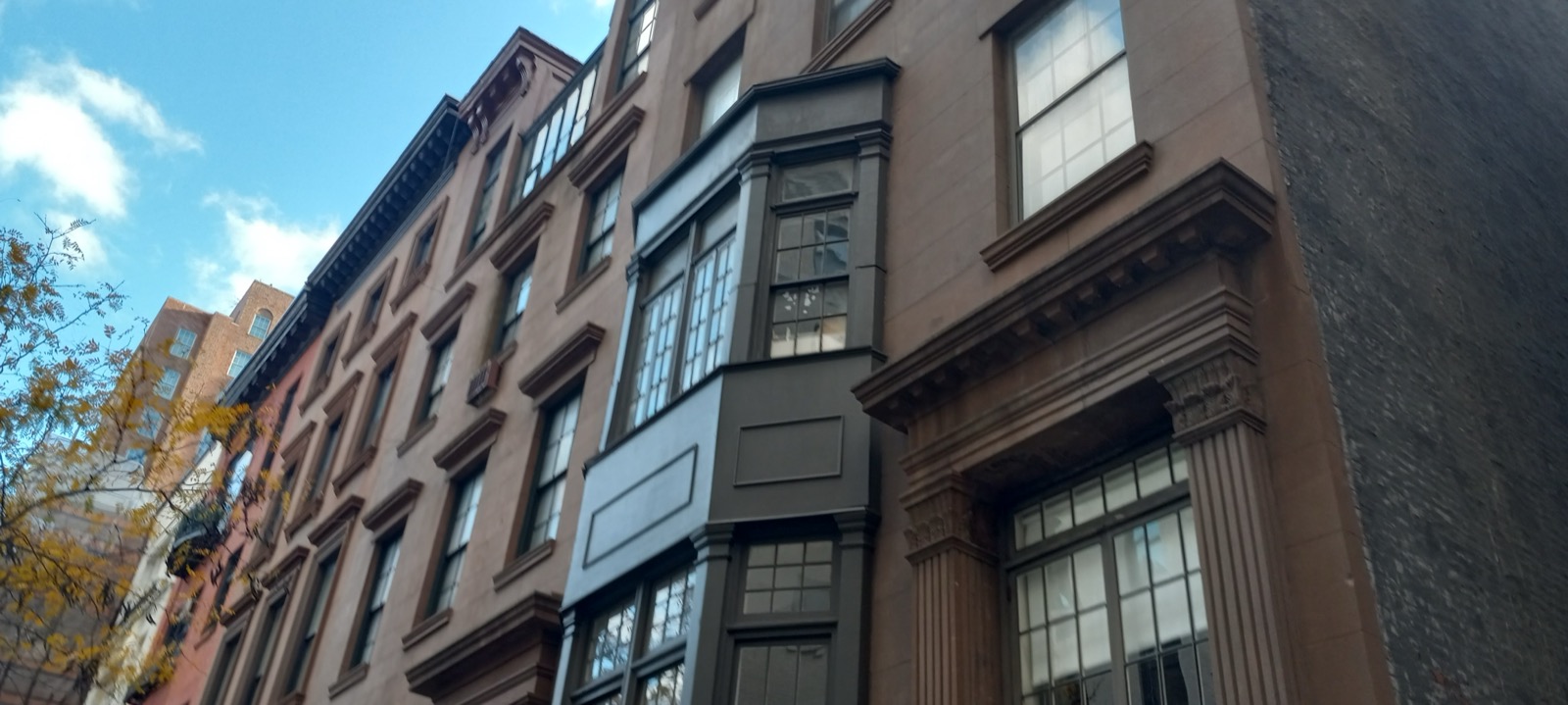
The townhouses along the park perimeter and on the surrounding blocks present a different challenge. These are Greek Revival, Italianate, and Gothic Revival homes from the 1840s through the 1880s, many with original marble fireplace surrounds, cast-iron stoop railings, tile floors, and interior woodwork. The materials are irreplaceable. Marble etches with acidic cleaners. Cast iron rusts if water sits on it. Century-old hex tile grout crumbles if you scrub with an abrasive pad. We match every product to the surface and we do not improvise.
The Block Beautiful on East 19th Street between Park Avenue South and Third Avenue deserves special mention. In the 1920s, architect Frederick J. Sterner purchased and renovated multiple rowhouses on the block in styles ranging from Spanish stucco to Italian Renaissance. The result is one of the most visually varied and photographed residential blocks in Manhattan. Residents of these homes need a cleaning crew that recognizes the difference between a stucco wall and a plaster wall and treats each accordingly.
East 18th Street’s cast-iron verandas are some of the rarest residential architecture in Manhattan
A series of townhouses on East 18th Street built in 1853 feature elaborate cast-iron verandas on their facades. The filigree ironwork is delicate, ornamental, and reminiscent of New Orleans French Quarter architecture. There are almost no other examples in Manhattan. The verandas accumulate city grit, soot, and dust that needs to be addressed without damaging the cast-iron finish. This is exterior work that we leave to restoration specialists, but it sets the tone for the interiors. When the exterior of your building is a rare piece of 19th-century ironwork, the expectation is that everything inside receives the same level of care.
The Gramercy Park Historic District was designated in 1966, making it one of the earliest protected historic districts in Manhattan. The designation covers the park itself and the most significant surrounding buildings. What this means for cleaning is that the materials inside these homes are not just old, they are protected by the same preservation instinct that governs the neighborhood’s public face. Residents here chose Gramercy Park because they value what lasts. The cleaning has to reflect that.
Your cleaning takes about two to three hours so here is how to spend them in Gramercy Park
Gramercy Tavern at 42 East 20th Street is the obvious first choice. Danny Meyer opened it in 1994 and it has been one of the most consistently excellent restaurants in the city since. The tavern room takes walk-ins and serves a seasonal American menu that changes with the sourcing. Budget two hours and do not rush.
If you want something more casual, Pete’s Tavern on Irving Place has been open for 162 years. The Victorian interior with Tiffany lamps and antique fixtures is genuine. The burgers are honest. The front booth where O. Henry wrote is still a destination. It is the kind of bar where you can sit alone with a book for an hour and nobody bothers you.
Irving Place itself is worth walking end to end. Four blocks of wine bars, small restaurants, and storefronts that feel like a different city from the avenue traffic on Lexington or Third. Casa Mono at 52 Irving Place runs one of the best small Spanish restaurants in Manhattan with a bar that seats about 12 people. The wine list for Spanish bottles has no equal in the neighborhood.
Union Square is four blocks south and hosts the Greenmarket on Monday, Wednesday, Friday, and Saturday. Over 140 regional farmers and food vendors set up year-round. If your cleaning is scheduled for a Saturday morning, the walk to the market and back fills the time perfectly.
For evenings, Raines Law Room on West 17th Street is a reservation-only cocktail bar a few blocks from the park. Ring the buzzer. The cocktails are serious. If you are scheduling your cleaning for a weekday evening before dinner, this is a good first stop.
What booking looks like for Gramercy Park residents
You pick your date and time on our booking page. You see your flat-rate price before you commit. If your building has board requirements, a COI process, or a specific super you need us to contact, tell us once and we handle it permanently. If your apartment has plaster molding, marble surfaces, or century-old hardwood that needs careful products, note it when you book and we adjust our approach before the first visit.
Our cleaners are W-2 employees, not gig workers. They are vetted, insured, and trained to work in exactly the kind of building that defines Gramercy Park. The same team comes back each visit because these apartments have details worth learning once and remembering.
We serve Gramercy Park and the surrounding neighborhoods, including Chelsea and FiDi. Our teams use the 6 train to 23rd Street or the L to Union Square. Gramercy Park residents also book us for deep cleaning before the holidays or after renovation work, move-in and move-out cleaning for the neighborhood’s active co-op and rental market, and recurring apartment cleaning on a schedule that works around your commute.