

Belle Harbor is one of those New York City neighborhoods that makes no geographic sense until you stand in it. You are at the far western end of the Rockaway Peninsula, a narrow strip of barrier island that juts out from Queens into the Atlantic Ocean. To the south, the ocean. To the north, Jamaica Bay and the Jamaica Bay Wildlife Refuge, with egrets and migratory birds visible from Rockaway Beach Boulevard on a clear morning. Manhattan is roughly 25 miles away as the crow flies, but you can spend a Tuesday afternoon in Belle Harbor watching waves break off Beach 96th Street and feel like you are somewhere in coastal Long Island, not inside city limits.
That is not an accident. The name itself was a real estate pitch: late 19th-century developers coined “Belle Harbor” from the French for “beautiful” and the English “harbor,” selling the pleasant bayside character of this section of the peninsula to buyers looking for a genteel summer retreat. The pitch worked. And more than a century later, the neighborhood remains exactly what those developers promised, a beach community with a genuine sense of place, a population that mostly stays, and streets where people have known their neighbors for thirty years.
What the housing stock actually looks like and why it matters for cleaning
Belle Harbor is low-rise in a way that Queens rarely achieves. The dominant building type is the detached or semi-detached single- or two-family home, built mostly from the 1920s through the 1960s, on modest lots with small front yards and rear gardens facing the ocean side or the bay side depending on the block. Architectural styles run from simple Colonial Revival and Cape Cod cottages to mid-century ranch homes, with brick, stucco, and clapboard siding in roughly equal measure throughout the neighborhood.
Walk down a residential block in Belle Harbor today and you will notice something distinctive about the streetscape: the heights are uneven in a way that is not random. Many homes have been elevated one to three feet above their original grade, raised on new foundations or piers with fresh staircases leading up to front doors that used to be at street level. Hurricane Sandy did this. When the storm surge flooded virtually every home in Belle Harbor on October 29, 2012 with six to ten feet of inundation in some places, the post-disaster rebuilding triggered FEMA flood zone requirements that sent hundreds of homeowners into a years-long process of elevating their structures.
The result is a neighborhood where many interiors were essentially remade between 2013 and 2018. New subfloors, new tile, new hardwood, new kitchens, new bathrooms. Some of these renovated homes have beautiful finishes. Some have budget finishes installed quickly during the insurance settlement period. The range matters for a cleaning service because newer luxury finishes and contractor-grade quick-install materials respond differently to the same products. Engineered hardwood installed during a flood rebuild needs a different approach than the original 1940s oak floors in the upper story that Sandy never touched.
Then there is the oceanfront reality that no neighborhood page should skip. Belle Harbor is one block from the Atlantic in many places. The salt air does something to every surface it touches over enough time. Window frames oxidize. Metal hardware corrodes. Fine sand gets tracked in from the boardwalk on every summer afternoon and works into grout lines, baseboards, and window tracks in ways that interior apartments never see. Beach homes need a cleaning routine that accounts for fine particulate, not just standard household dust.
The neighborhood that absorbed two catastrophes in eleven weeks and came back
American Airlines Flight 587 took off from JFK Airport on the morning of November 12, 2001, two months and one day after September 11. The Airbus A300 was bound for the Dominican Republic. Two minutes after takeoff, the vertical stabilizer separated from the aircraft. The plane came down on the residential streets of Belle Harbor at Beach 131st Street, killing all 260 people aboard and five people on the ground.
Belle Harbor had already lost dozens of residents six weeks earlier. The neighborhood has one of the highest concentrations of active and retired FDNY firefighters and NYPD officers anywhere in New York City, and the World Trade Center attacks had carved through that community with devastating precision. Some families were still in their first weeks of grief when the plane came down on their block.
The memorial at Beach 131st Street and Newport Avenue is a permanent community shrine. Families come from across the country and from the Dominican Republic, where many of the passengers had roots, to visit. The Belle Harbor community maintains it with the same care they bring to the September 11 memorials. Walking past it on a quiet Tuesday morning when the beach is empty and the wind is coming off the ocean, the proximity of grief and ordinary life in this neighborhood is palpable in a way that is hard to describe.
And then Sandy came in 2012. The storm surge flooded virtually every home. The recovery took years. What is remarkable, and worth noting plainly, is that Belle Harbor came back. The homeownership rate stayed high. The families stayed. The post-Sandy decade actually saw property values increase, with elevated and renovated homes selling for premiums above pre-storm prices. The Marine Parkway Gil Hodges Memorial Bridge (renamed in 2022 for the beloved Dodgers first baseman and 1969 Miracle Mets manager who lived in Brooklyn) became a daily commute route for a new wave of buyers from Brooklyn who priced out of Park Slope and Carroll Gardens and found something they wanted here: actual beach access, actual community character, and actual homeownership.
The Irish Riviera, the surf community, and the FDNY connection
Belle Harbor shares the informal nickname “Irish Riviera” with parts of adjacent Breezy Point and the broader western Rockaway community. The name captures something real. The neighborhood developed its dominant cultural identity in the mid-20th century as Irish Catholic families from Brooklyn, the Bronx, and Manhattan, particularly those in city services, found the beach setting and affordable homes here ideal for raising families. The social infrastructure that came with that community settled in deeply: St. Francis de Sales Church on Beach 129th Street became the spiritual and social center of neighborhood life in a way that goes far beyond Sunday morning attendance. It was the gathering place after September 11. It was the gathering place after Flight 587. It was the gathering place after Sandy.
The FDNY and NYPD presence shapes the neighborhood’s daily character in ways that are visible and felt. Belle Harbor is estimated to have several hundred active and retired firefighters living within its boundaries. The politics lean accordingly. The block parties are real. The school fundraisers are real. The community bonds have been tested by catastrophe repeatedly and have held, which is not the same as saying they were untested.
The surf community is a different vein of the same character. The beach breaks off Beach 96th to Beach 116th produce some of the most consistent surf in the New York City area. The surfing community in Belle Harbor is genuinely multi-generational. Families where grandparents, parents, and children all surf the same breaks. The culture is unpretentious and local in the way that surf culture in genuinely accessible beach towns tends to be, not the self-conscious version that arrives with gentrification.
Jacob Riis, the Art Deco bathhouse, and why Belle Harbor’s beachfront is underrated
Jacob Riis Park sits just west of Belle Harbor, across the Marine Parkway Bridge. It is part of the Gateway National Recreation Area, which gives the federal government a management stake in the surrounding natural lands even as Belle Harbor itself is fully residential. Belle Harbor residents treat Riis Park as an extension of their own beach, and from their perspective it essentially is: a longer, less crowded stretch of Atlantic beach with one of the most spectacular Art Deco bathhouse complexes that Robert Moses built during the 1930s public works era. The bathhouse has been partially restored, and the overall park setting is quieter and less developed than the main Rockaway strip.
The Belle Harbor section of Rockaway Beach itself is part of the Gateway National Recreation Area. Wide. Atlantic-facing. Consistent waves. The boardwalk runs along the oceanfront and supports seasonal food vendors and the kind of low-key beach commerce that fits the neighborhood’s character. On summer mornings before the crowds arrive, this is among the most pleasant beach environments in New York City.
If your Saturday involves walking to this beach in the morning while your house gets cleaned, that is exactly the arrangement we are trying to help you make. A recurring cleaning schedule on a rotation that fits the beach season means you come home to a clean house after the sand and surf and do not spend Sunday morning scrubbing what Friday’s ocean brought in.
What a deep clean looks like in a Belle Harbor home after Sandy and after every summer
The combination of an oceanfront location, an older housing stock, and the Sandy renovation cycle means that deep cleaning in Belle Harbor has a specific character. Post-Sandy renovated homes often have contractor-grade finishes that look clean on the surface but accumulate grime in the transitions between new and old material, around new tile grout that was not sealed properly, and in the places where old construction meets new additions. These are not problems that a standard once-over surface clean addresses.
The beach-season cycle adds its own layer. Salt air deposits a film on glass, window frames, and any painted surface facing the ocean. Fine sand works into grout, builds up on baseboards, and collects in every horizontal surface in the home if it is not pulled out systematically. This is a different cleaning challenge than a Manhattan apartment or a Queens rowhouse ten miles from the ocean. Products need to be matched to the surface condition. Beach grit in grout requires a grout brush and patient work, not a mop-over. Window tracks in oceanfront homes need attention every few months, not once a year.
For pre-sale deep cleans, which we do a lot of in Belle Harbor given the active post-Sandy sales market, the goal is presenting a post-renovation home that reads as move-in ready. Buyers paying $800,000 or more for a renovated Belle Harbor house expect a certain level of presentation. Walking through with us before listing and noting exactly what you want prioritized is how that kind of clean goes well. You can book that directly through our booking page and add notes about the property in the instructions.
Getting to and from Belle Harbor, and how we handle the distance
Belle Harbor is genuinely at the end of a peninsula, and that matters for service logistics. The Q35 bus connects to Flatbush Avenue in Brooklyn via the Marine Parkway Bridge. The A train’s nearest stop is Rockaway Park at Beach 116th Street, a walk or bus ride from the center of Belle Harbor. Most residents drive. The commute reality is that this neighborhood is car-dependent in a way that most of Queens is not.
For us, the practical implication is that booking in advance and setting up recurring service allows us to route efficiently to the western Rockaways. There is no hidden travel surcharge. Your flat-rate price on the booking page is your price. We recommend recurring cleaning over one-time visits for Belle Harbor homes both because the beach environment genuinely benefits from consistent maintenance and because recurring clients get priority scheduling, which matters in a neighborhood where logistics require planning.
We also cover nearby neighborhoods including Far Rockaway and Arverne on the peninsula, and our move-in and move-out cleaning service is available throughout the Rockaways for the active rental market that has developed along the beach corridor since Sandy.
How to book and what to expect
You pick your date and time on our booking page. You see your flat-rate price before you commit to anything. For first-time bookings in Belle Harbor, we ask you to note anything specific about your home: whether it was elevated post-Sandy, whether there are materials you want us to avoid, whether you have pets that stay in the house during the clean. Single-family homes in this neighborhood run from modest well-maintained properties to extensively renovated post-Sandy rebuilds, and knowing the context helps us send the right team.
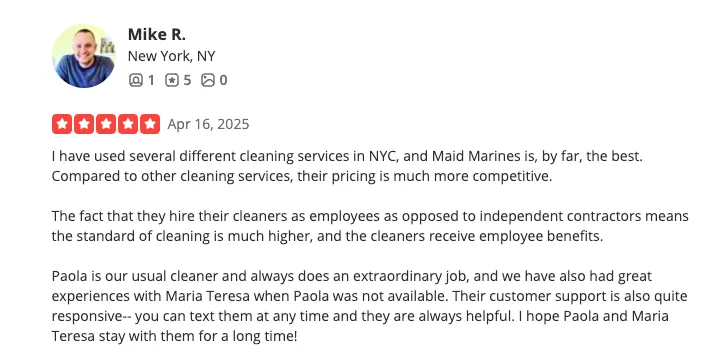
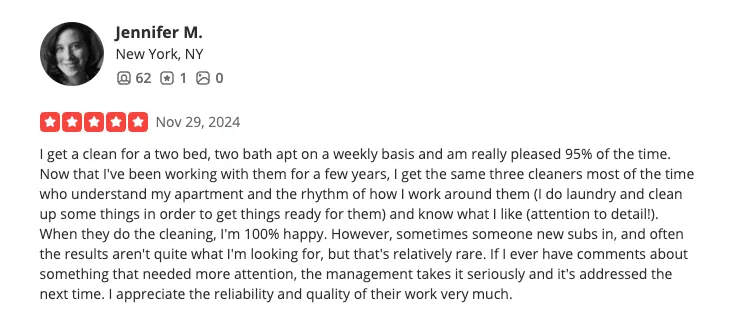
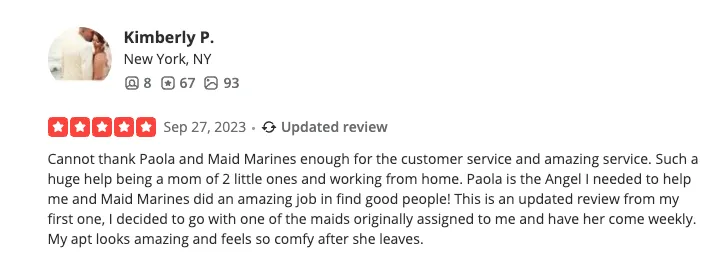
Our cleaners are W-2 employees. They are vetted, insured, and they show up with everything they need. You do not need to be home. If you want to spend a Saturday morning at the beach while we handle the house, that is the point. Belle Harbor is one of the few places in New York City where you can genuinely live at the beach. We are here to make sure the house part of that equation does not eat your weekends.