

The westernmost tip of the Rockaway Peninsula is not where you expect to find one of New York City’s most tightly knit communities. It is forty-five minutes from Manhattan by car on a good day, reachable by one road over one bridge, three-sided by water, and entirely private. The Breezy Point Cooperative has no public streets, no subway station, and no commercial district to speak of. What it has is a beach, a church, a few thousand houses, and several thousand residents who chose this specific outpost deliberately and who came back after Hurricane Sandy burned a third of it to the ground.
Cleaning a house here is a different project than cleaning a house almost anywhere else in the city.
What we clean in Breezy Point, and why beach houses need a different approach
Salt air does things to surfaces that landlocked apartments never have to deal with. The chrome on bathroom fixtures develops a white residue. The aluminum frames on post-Sandy replacement windows build up a thin film of salt mineral that dulls the finish. Sliding door tracks collect a mixture of sand and grit that standard vacuuming will not reach. Window sills accumulate salt haze that looks like water staining but responds differently to cleaning products.
The housing stock here is divided roughly into two generations. The original bungalows from the 1960s and 1970s are compact, wood-frame, low-ceiling houses designed for summer use and adapted over decades to year-round living. They have small kitchens, tile bathrooms that were installed when the houses were seasonal retreats, and a lived-in quality that comes from generations of families who used them hard and loved them anyway. These houses clean like older beach cottages: you work with the surfaces as they are, not as they would be in a new build.
The post-Sandy rebuilds are different. After 135 homes burned on the night of October 29, 2012, the community rebuilt on elevated foundations, often with new mechanical rooms tucked beneath the living space, modern kitchens, and fresh construction that still needed to weather in. The rebuilt homes are cleaner by design but they come with their own challenges: tight spaces under elevated floors, new windows that need careful treatment to keep their seals, and a community that invested everything in those rebuilds and wants them maintained properly.
A deep cleaning in either type of home here takes into account the beach environment specifically. Sand in floor crevices and sliding door channels. Salt mineral on metal surfaces. The humidity patterns of a house that may sit closed between weekend visits in summer. We adjust the approach to what the house actually is, not what a standard residential apartment would need.
Getting here, getting in, and how we coordinate access
There is no straightforward way to reach Breezy Point without a car. The Marine Parkway Gil Hodges Memorial Bridge connects the western end of the Rockaway Peninsula to Flatbush Avenue in Brooklyn, and that road is the only vehicular route in or out. There is no subway. The Q35 bus crosses the bridge, but it takes time and requires a transfer from the A train.
Our teams drive to Breezy Point. We know the Marine Parkway Bridge, we know the gate protocol, and we coordinate access with you before the first appointment. The cooperative gatehouse requires that visitors be on a list or hold a pass, and we handle that paperwork with you in advance. It is not a complication we encounter in most of the city, but it is a standard part of working in this community.
If you are a seasonal resident who is not present when we clean, we work with a lockbox, a neighbor key arrangement, or a pass left with the gate. We have done this enough times in access-controlled communities to know how to make it work without requiring you to drive out just to let us in.
The house after Sandy, the house before Sandy, and why both matter
The co-op has been rebuilding since 2012. Walk through the community now and you can tell the generations apart by the foundation height. Original bungalows sit at grade or close to it. Post-Sandy homes sit on pilings or elevated stem walls, sometimes a full story above where the original floor was, with new stairs, new decking, and the mechanical equipment tucked into the space below.
The elevated homes have more floor area than they appear from the street, and they have the specific cleaning demands that come with post-Sandy reconstruction. New materials sitting in a salt-air environment. Composite decking that collects organic matter and needs a different approach than wood. Mechanical rooms and utility spaces that are enclosed but not finished, which means they accumulate debris in ways that finished rooms do not.
The original bungalows have different needs. These are houses where the materials aged in place for fifty or sixty years before Sandy, and many of them survived the storm. They have the charming limitations of their era: narrow hallways, small bathrooms with ceramic tile that has been grouted and re-grouted, kitchen surfaces that are not new and should not be treated like they are. Our approach on these houses is careful and product-specific, because using the wrong cleaner on old tile or old laminate does visible damage.
Both types of house benefit from a house cleaning that accounts for what the building actually is. We do not run the same checklist on a 1967 bungalow that we run on a 2015 elevated rebuild. The environment is the same. The surfaces are not.
Your cleaning takes about three hours
The closest beach to Breezy Point that you do not already have access to is Fort Tilden, managed by the National Park Service on the land adjacent to the co-op. The beach there is undeveloped, unlifeguarded in most sections, and far less crowded than the public beaches to the east. Walk west toward the tip of the peninsula during the hours your cleaning runs and you are also walking through the western edge of Gateway National Recreation Area, which contains one of the largest piping plover and least tern nesting colonies in the entire Northeast United States. It is an unexpected thing to have next door to your neighborhood.
Jacob Riis Park is a short drive or bike ride east along the peninsula. The 1930s Art Deco bathhouse there is one of the best-preserved New Deal structures in the city, worth seeing even if you have lived here for years and driven past it a hundred times.
Further east on Rockaway Beach Boulevard, Rockaway Beach proper has a surf culture that developed over the past two decades into something genuine. The breaks around Beach 86th Street draw surfers from all over the city. Rippers, the seasonal beach bar near the 86th Street access, is worth the drive up the boulevard when it is open in warmer months.
For a three-hour cleaning window, Fort Tilden and Jacob Riis together fill the time without requiring you to go far. Book your cleaning here and plan the beach walk while we handle the house.
A community that rebuilt itself, and the homes that reflect it
September 11, 2001 hit Breezy Point harder per capita than almost any other neighborhood in New York City. The NYPD and FDNY demographics of the co-op meant that an extraordinary number of residents were on duty at the World Trade Center that morning. The memorial at St. Thomas More Catholic Church is concentrated in a way that larger city memorials are not. It is the grief of a specific community in a specific place, not a citywide abstraction.
Eleven years later, the fire that burned through the community on the night of Sandy made national news because the images were so unlikely: houses burning in a flood, firefighters unable to reach the neighborhood through six feet of storm surge. The cooperative structure that defines Breezy Point turned out to matter enormously in the aftermath. A community that collectively owns its land and governs itself organized a coordinated rebuilding effort that more fragmented neighborhoods could not have matched. The rebuilt homes are evidence of that.
The cooperative model also means that every home in Breezy Point is owner-occupied in a meaningful sense. There is essentially no rental market. Residents have shares in the cooperative, not fee-simple title to individual lots, which is unusual for a community of single-family houses and which creates a different relationship to maintenance and care. These are homes people have owned for decades, in some cases across generations, and they take care of them accordingly.
We serve the neighboring Rockaway Park community as well, and we understand the peninsula. Far Rockaway is further east and has a different character entirely, but it is reachable and we work there too.
What booking looks like from here
You go to our booking page, choose your date and the size of your home, and see a flat-rate price before committing to anything. When you reach the notes field, tell us your gate access procedure and any specific instructions for the house. Post-Sandy elevated home with a mechanical room. Original bungalow with tile floors and low ceilings. Seasonal property with a lockbox. We read the notes.
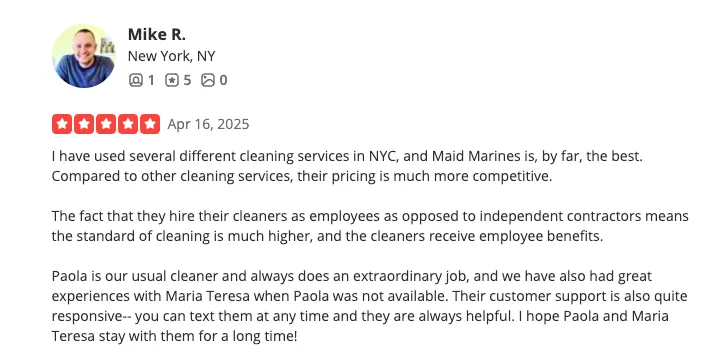
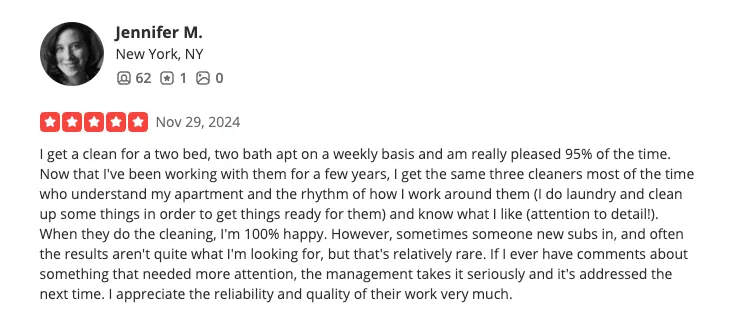
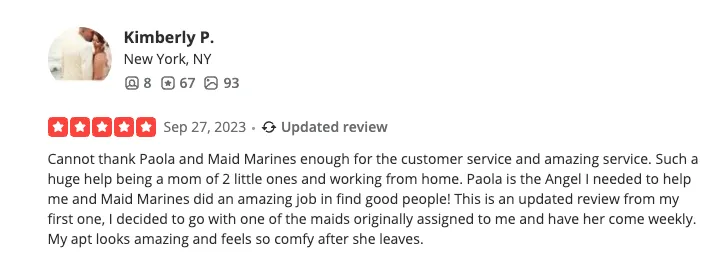
Our cleaners are W-2 employees, not gig workers, and they are vetted and fully insured. If your cooperative management office requires a Certificate of Insurance, we can furnish one. We have dealt with cooperative building offices, gatehouse protocols, and visitor list procedures before. This is not the most complicated access situation we navigate in a given week.
For a beach house that sees heavy use in summer and sits quiet in winter, a recurring cleaning on a schedule that matches your actual use pattern makes more sense than a once-a-year effort. We can set up something that fits the rhythm of the community.