
Briarwood was named before a single house was built here. Developers platting lots in the early 1900s looked at the thicket of wild briar shrubs covering the undeveloped lowland between Jamaica and Richmond Hill and turned it into a marketing name. The pastoral English countryside suggestion was deliberate. Working-class Jewish, Irish, and Italian families buying their first homes in outer Queens in the 1920s and 1930s were not buying a neighborhood with a history. They were buying one with a promise. A century later, the promise has been kept, passed from one generation of immigrant families to the next, and the row houses those families built their first American equity in are still standing on the same interior blocks, still solid, still brick, still housing the working people who make the city function.
The two-family row house is the primary building type and the main cleaning challenge
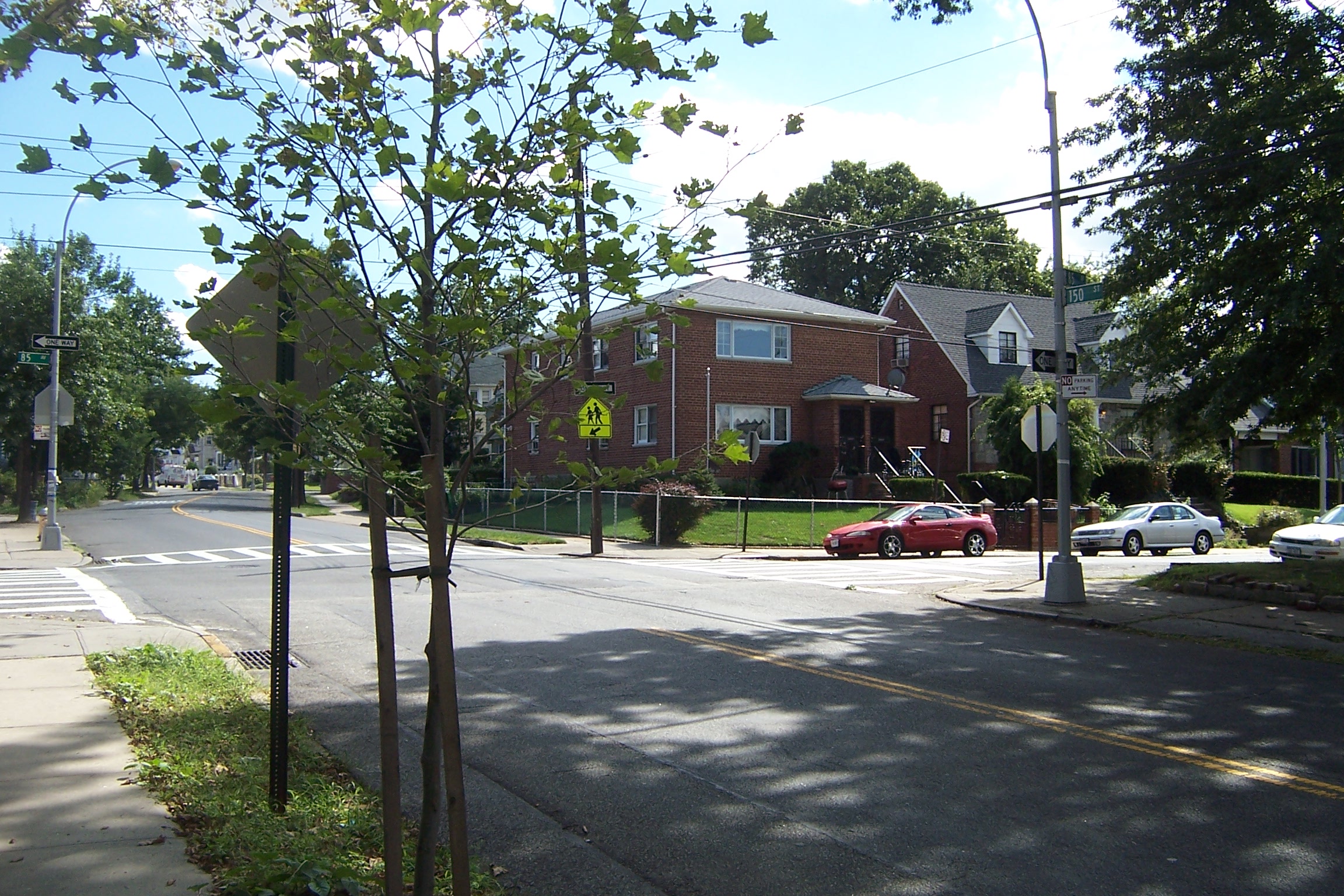
The dominant structure in Briarwood is the attached or semi-detached two- to three-story brick row house built between 1920 and 1945. These homes follow a consistent pattern throughout the neighborhood: brick front with modest ornamental detailing, small stoop, iron railings, ground-level entrance and upper-floor access via an interior stair. Most are owner-occupied with a tenant on one floor. The arrangement is the classic Queens model for immigrant homeownership, where the rental income from one unit helps carry the mortgage on the building.
Cleaning these homes means different things on different floors. The ground unit often has original hardwood or tile from the 1930s or 1940s, sometimes with wax rather than polyurethane finishes that react badly to water and acidic cleaners. The upper floor might have been renovated at any point since original construction, with newer surfaces mixed into older framing. The stairway between units is a shared maintenance question for the homeowner. Kitchens in both units tend to see genuine daily cooking rather than occasional use, which means grease and oil film accumulates on surfaces between cleanings.
Our house cleaning teams work through these homes floor by floor, switching products between surface types as they move. Hardwood with a wax finish gets a damp microfiber treatment with a wood-safe solution. Tile and vinyl get different cleaners with different application tools. The kitchen is not a wipe-down but a real degreasing. These are working homes where people actually cook and live, and our approach is built for that rather than for the light-use apartments that define cleaning services designed for Manhattan.
The kitchens here do real work, and the first visit usually needs to reflect that
Briarwood’s demographic mix produces kitchens that see sustained heavy cooking. South Asian households cooking karahi and biryani daily. Colombian families making arepas and stews. Caribbean households running full Sunday meals on a stovetop designed for weekday heat. The result is a familiar pattern: grease film on the backsplash tile, on the cabinet faces above the stove, on the range hood exterior and sometimes inside the filter. A surface wipe does not address this. The film builds layer by layer and requires a proper degreaser applied with the right dwell time.
If a kitchen has been cooking heavily for months between professional cleanings, the first visit should be a deep clean. That initial appointment strips everything back to the original surface: removes the grease film from every vertical surface near the stove, scrubs the backsplash tile and grout, cleans inside the range hood, and gets the cabinet doors back to their actual color. After that reset, a recurring standard cleaning keeps up with the ongoing cooking without letting buildup accumulate again. We work in households throughout Briarwood and the Jamaica corridor regularly. The deep-clean-first pattern is not unusual here, it is standard.
What the Van Wyck Expressway does to the apartments on its western blocks
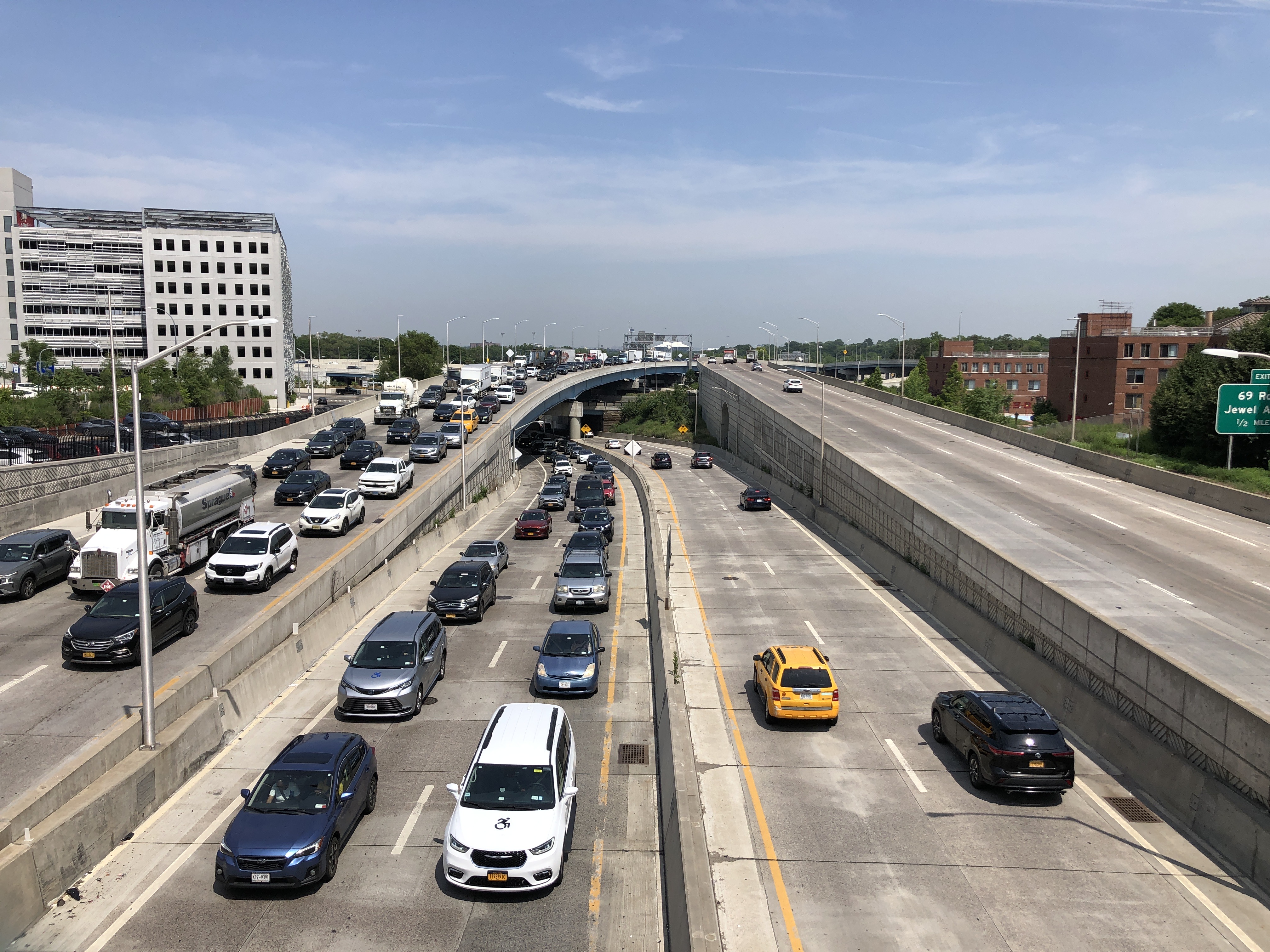
The Van Wyck Expressway, completed in 1950 under Robert Moses, cut Briarwood off from Kew Gardens to the west and became the neighborhood’s permanent western wall. The highway carries 150,000 vehicles per day along I-678, connecting JFK Airport to the Queens midlands. For the homes on the expressway-facing blocks, that traffic volume produces a specific maintenance problem. Particulate from tire wear, brake dust, and diesel exhaust settles on window sills, window tracks, horizontal blinds, and any flat surface near the glass. The units that face the Van Wyck directly accumulate this material faster than the interior blocks, and it shows on light-colored window sills within weeks of cleaning.
On a standard recurring visit we pay attention to horizontal surfaces near the highway-facing windows — the sills, the blinds, the baseboard radiators beneath the glass where dust collects behind the fins. The glass and the tracks are the add-on: choose it and the panes and channels get worked from inside the apartment, which is where the Van Wyck film actually lands. These details matter more in a Van Wyck-adjacent apartment than in a unit facing a quiet residential street. Our apartment cleaning teams know the difference based on where in the building the unit sits.
The Jamaica Muslim Center anchors the neighborhood’s cultural geography
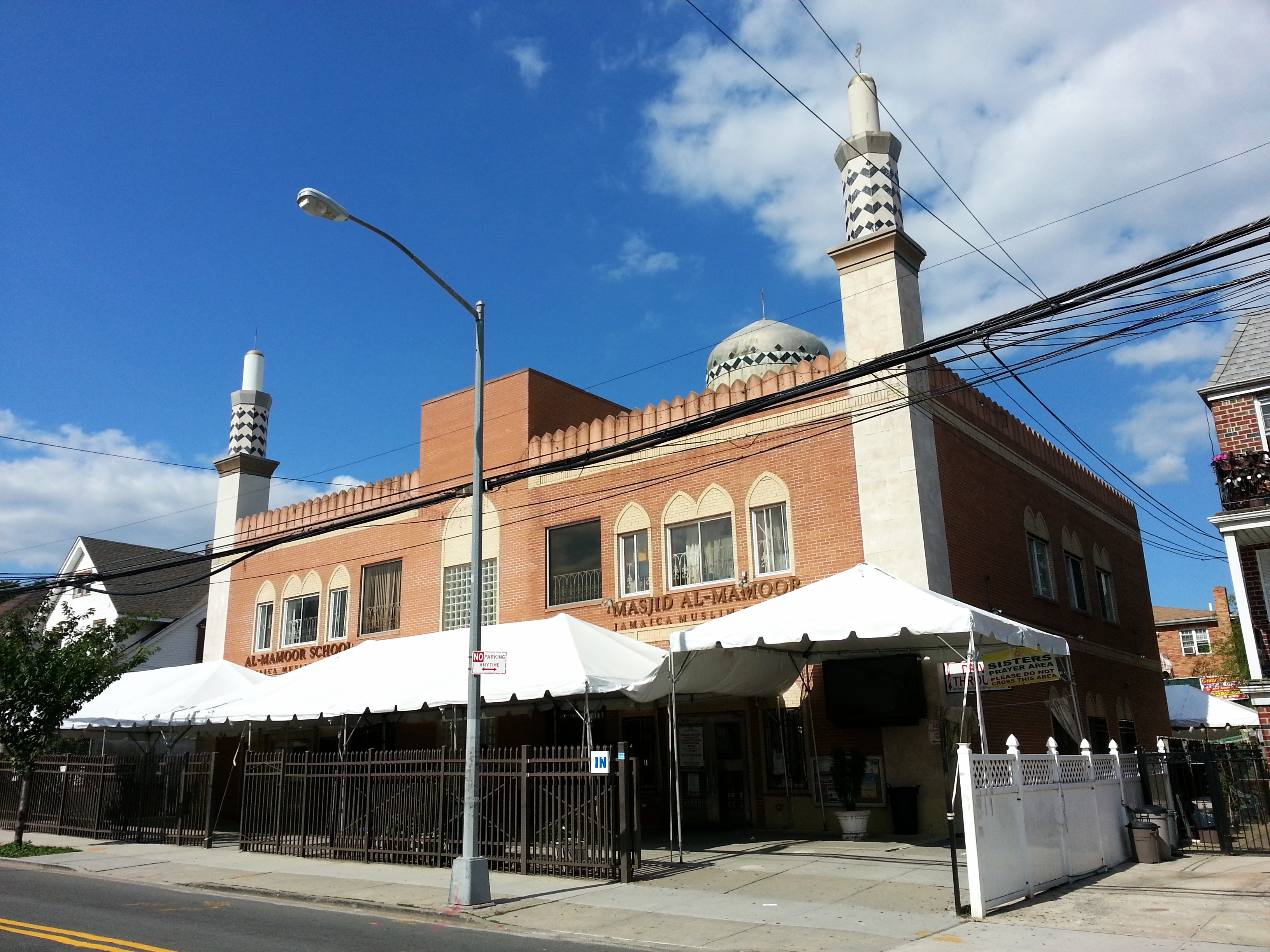
The Jamaica Muslim Center at 89-89 Van Wyck Expressway is one of the largest mosques in Queens. Its presence on the expressway frontage road is visible to anyone driving the Van Wyck, and its Friday congregation draws worshippers from across central Queens. The surrounding blocks on Parsons Boulevard are the commercial heart of Briarwood’s South Asian Muslim community: halal butchers, Pakistani and Bangladeshi restaurants, South Asian grocers, Indo-Caribbean bakeries, and Islamic schools. The foot traffic on Friday afternoons rivals any neighborhood commercial strip in the borough.
The community character that has taken root here over the past forty years is not a transitional moment. Multi-generational South Asian families now own the row houses their parents bought in the 1980s and 1990s. The neighborhood has become more consolidated rather than less, with children who grew up here returning to raise their own families in the same blocks. This gives Briarwood a stability that other transit-adjacent neighborhoods in the outer boroughs have lost to speculation. The Van Wyck Expressway that limits development also limits displacement.
Your cleaning takes about two to three hours so here is how to spend them
Briarwood is honest about what it offers for a few hours of wandering. Walk Parsons Boulevard from Jamaica Avenue to Hillside Avenue and stop at whichever Pakistani or Bangladeshi restaurant has a line out the door. A biryani or karahi lunch here costs eight dollars and takes half an hour. The Colombian areperas on Hillside Avenue do a better Colombian breakfast than most places in Jackson Heights with less fanfare. Neither option is in a food guide. Both are better for it.
If you want to make better use of the time, walk ten minutes east to Jamaica Station and take the AirTrain. It costs the same as a subway fare and runs elevated above the Jamaica yard for five minutes before reaching JFK in ten. It is a strange and satisfying ride, and you can be back at your apartment in forty minutes. King Manor Museum in Jamaica Park is a fifteen-minute walk and covers one of the oldest standing residential structures in the borough. Free admission most days, small enough to move through in under an hour.
The E train from Briarwood-Van Wyck station puts you in Midtown Manhattan in about thirty-five minutes. The LIRR from Jamaica Station does it in twenty. If you have a longer window, both connections give you access to the full city. But you do not need to leave the borough to eat well or spend the morning productively. Briarwood handles that at the neighborhood level without requiring you to commute anywhere.
Move-in and move-out cleaning for a market that turns over steadily
The Jamaica transit hub drives constant rental movement in Briarwood. Commuters who ride the E train, LIRR, or AirTrain to JFK prize the neighborhood’s transit access, which keeps vacancy rates low and apartment turnover predictable. When a tenant leaves a one-bedroom in a mid-rise on Hillside Avenue, the landlord typically has ten to fourteen days to repaint and clean before a new tenant arrives. When a two-family homeowner loses a tenant from one floor, the downtime is a direct cost.
Our move-in and move-out cleaning service is built for this timeline. A move-out clean for a one-bedroom Briarwood apartment covers everything a landlord or property manager needs done before a new occupant arrives: inside all cabinets and drawers, inside the refrigerator and oven, bathroom tile and grout, all baseboards, sills and ledges, and a full floor clean throughout. Move-in cleaning for a new tenant means starting in a space that has already been professionally turned over rather than wiped down and left for the next person to deal with.
We have cleaned over 100,000 homes across the five boroughs. The two-family row house and the mid-rise rental apartment that define Briarwood’s housing stock are familiar territory. The specific challenges of a 1940s kitchen, a rent-stabilized apartment with original floors, and a building with a super who needs advance notice are not edge cases for us. They are the standard.
What booking looks like
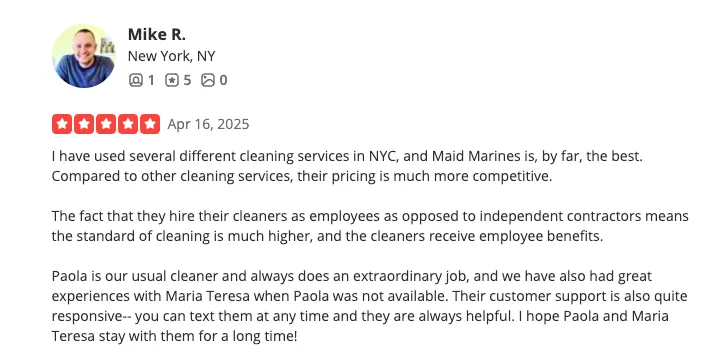
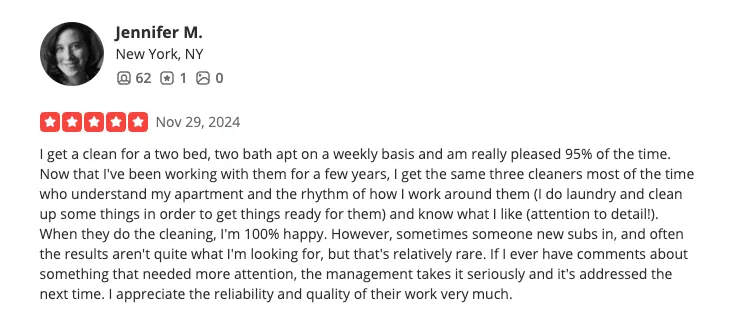
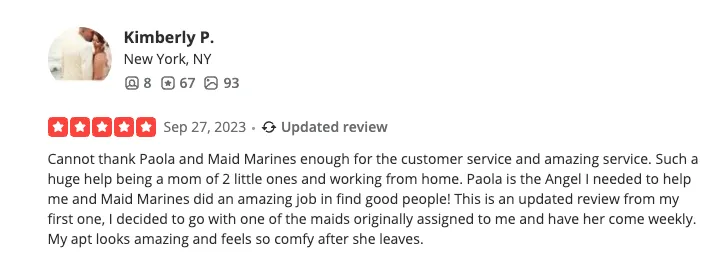
You pick your date and time on our booking page. You see your flat-rate price before you commit to anything. If your building requires coordination with a super or management office, you tell us once and we handle it. If your first visit needs to be a deep clean to address kitchen buildup from heavy cooking, the booking flow makes that clear and prices it transparently. Our cleaners are W-2 employees, not gig workers. They are vetted, insured, and they arrive with the right products for your home’s actual surfaces.
We serve nearby Forest Hills, Astoria, Long Island City, and the rest of Queens.