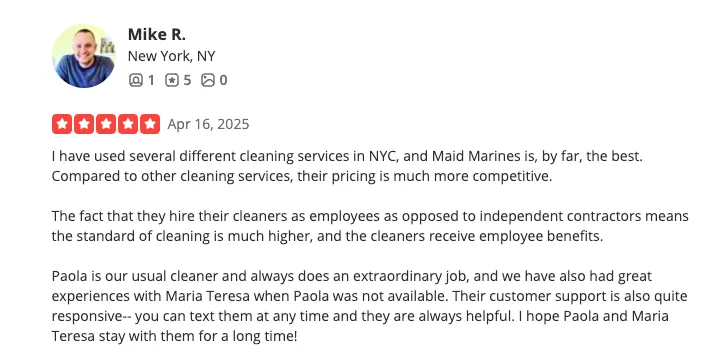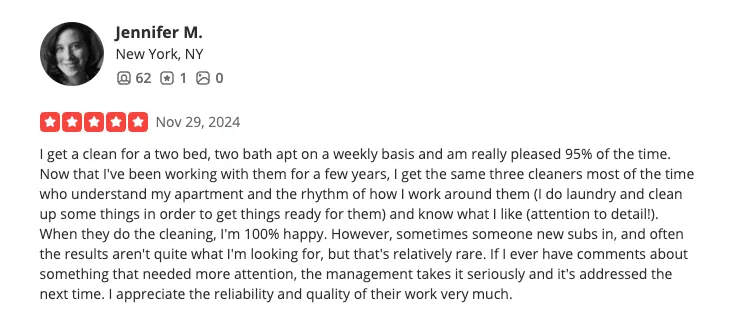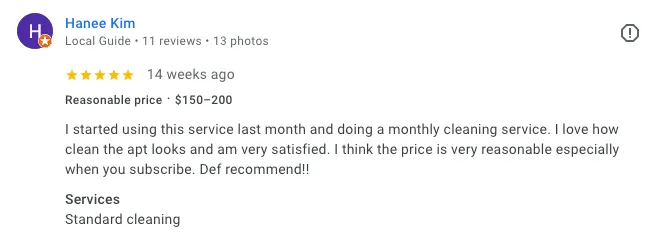

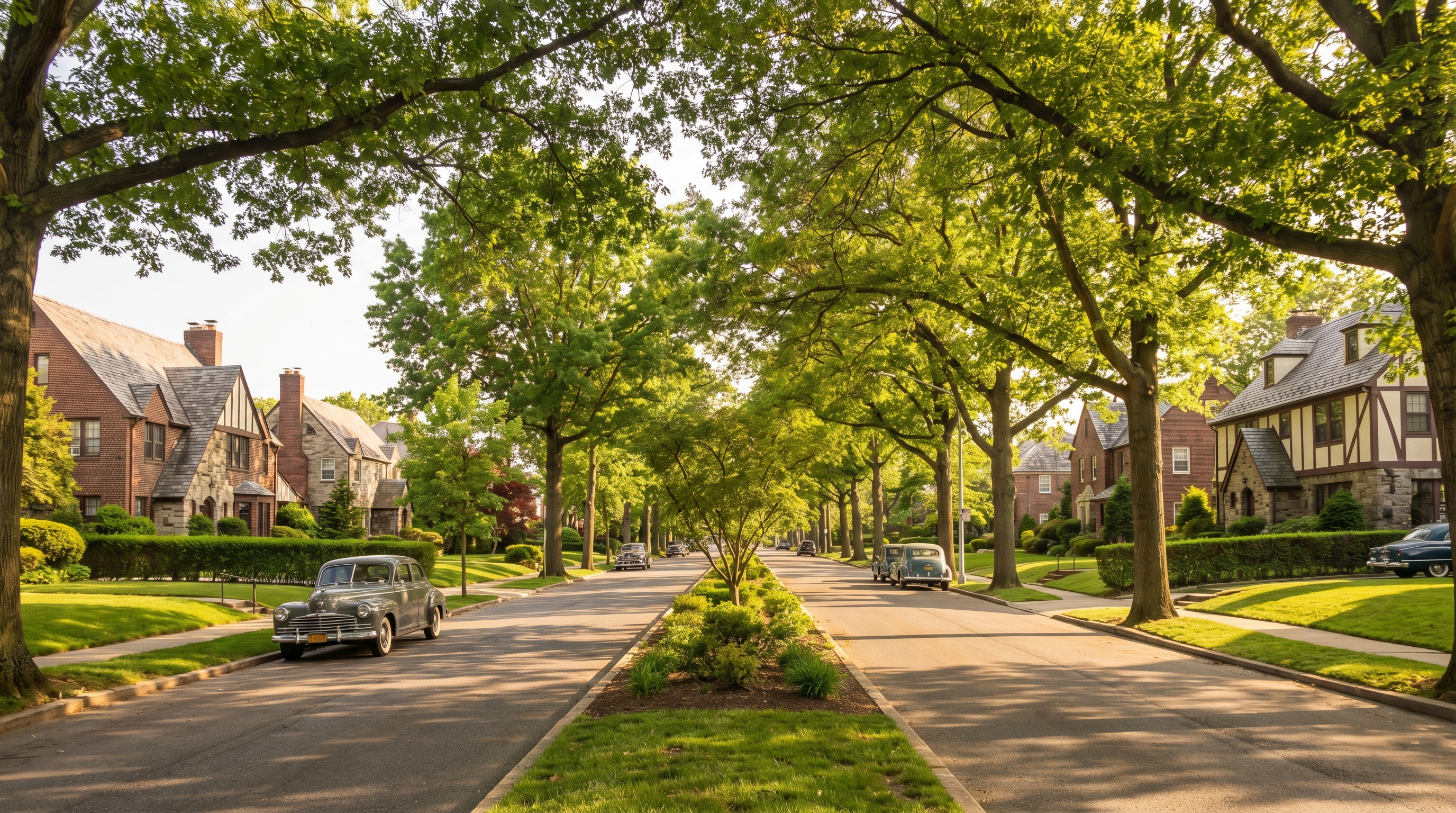
Drive off Hillside Avenue onto Midland Parkway and something shifts in your perception. The borough noise drops away. The street opens into a divided boulevard with a planted grass median, mature trees arching overhead, and houses set back behind lawns on lots large enough to make you forget you are in New York City. Jamaica Estates is that kind of neighborhood: one you do not expect in central Queens, do not encounter by accident, and do not forget once you have seen it.
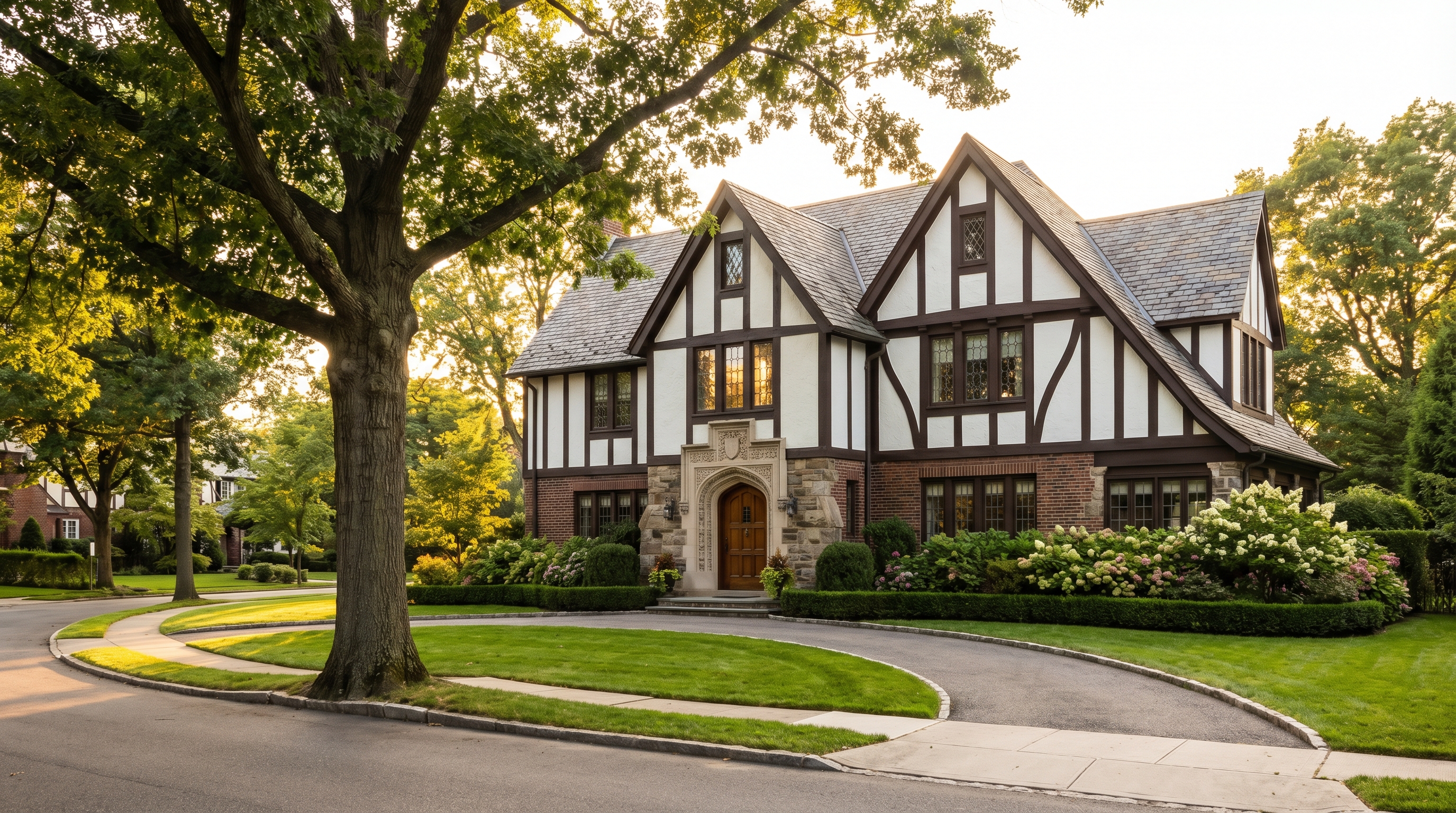
The housing stock that built this neighborhood between roughly 1910 and 1950 is the reason we are here. Tudor Revival homes with half-timbered facades, steeply pitched cross-gabled rooflines, handmade brick, and leaded casement windows. Colonial Revival houses with symmetrical facades, classical porticos, and dentil cornices. Georgian brick buildings set behind circular driveways. These homes were built for permanence. They were built when craftsmen still carved limestone by hand, when copper gutters were standard, and when a slate roof was what you specified because you intended to live there for 50 years. We have cleaned over 100,000 homes across New York City. Very few of them ask as much from a cleaning team as the grand houses of Jamaica Estates.
What the Utopia Land Company built here in 1907 is still standing because the houses were meant to last
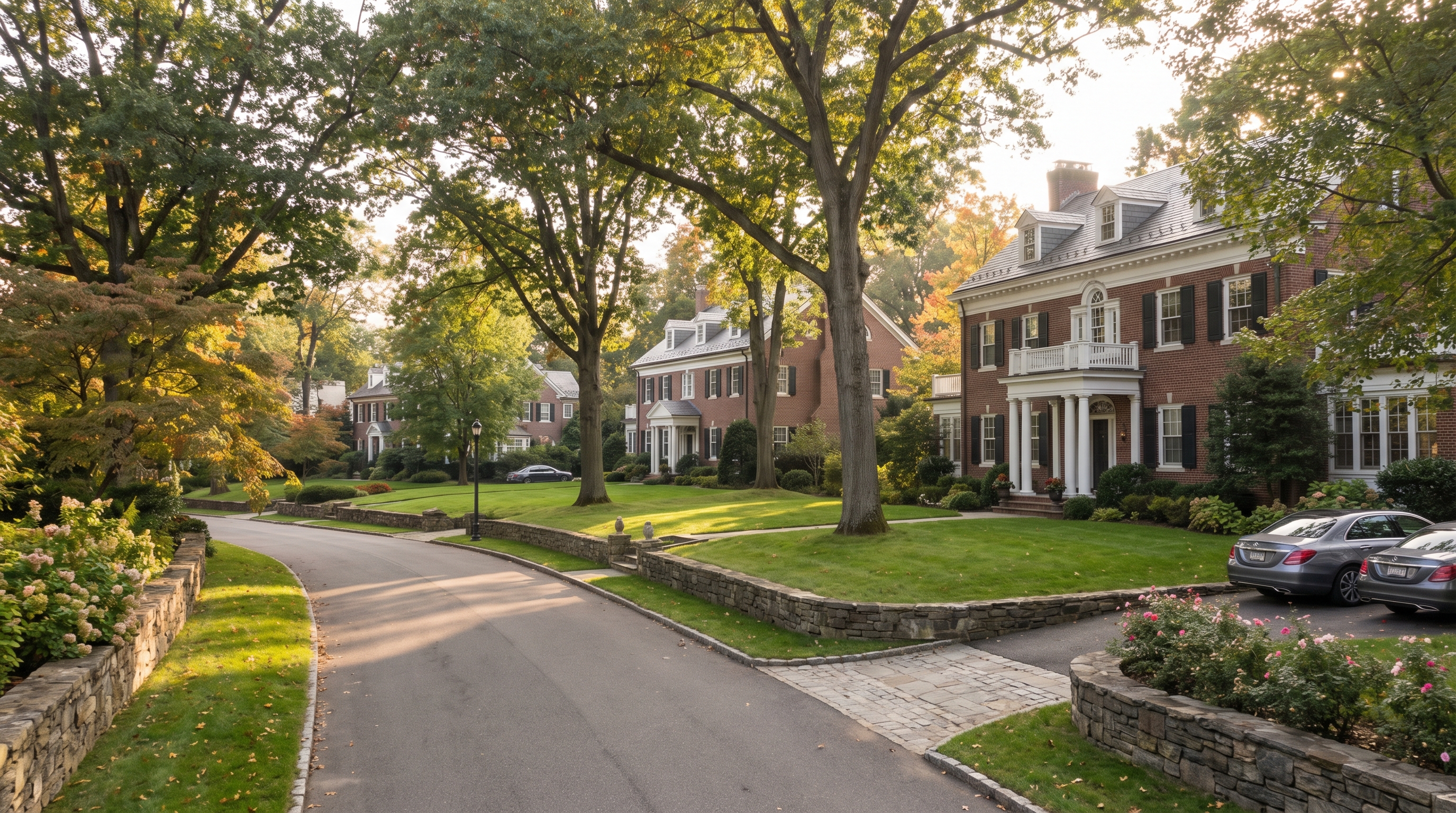
The Jamaica Estates Association was incorporated in the early 1900s and has operated continuously ever since, making it one of the oldest private neighborhood associations in Queens. The Utopia Land Company, which developed the neighborhood, designed it as a planned garden suburb: curvilinear streets instead of the Queens grid, lots large enough for real lawns, and a central boulevard designed to evoke an English country parkway. Midland Parkway was the showpiece. Its divided roadway with the planted median was built to demonstrate what the development aspired to be.
That aspiration produced some of the finest residential architecture in the outer boroughs. The homes on Midland Parkway and its surrounding blocks are genuine architectural achievements: Tudor Revival houses with ornate carved limestone entrance surrounds and original leaded glass in every window opening, Colonial Revival mansions with double-height porticos and wide-plank heart pine floors that have been refinished so many times the boards are still in better shape than most modern hardwood. These are not historical curiosities. They are occupied family homes, maintained with the seriousness that serious investment demands.
The neighborhood’s homeownership rate sits near 85 percent, one of the highest in New York City. The median tenure for an owner in Jamaica Estates is long. People buy here and stay. That stability means the homes have been maintained by generations who knew them, which is part of why so many original details survive: the plaster medallions on parlor ceilings, the brass hardware on interior doors, the cast-iron radiators in every room. Cleaning these homes requires knowing what each surface is and what it cannot tolerate.
Cleaning large single-family homes in Jamaica Estates means understanding the building layer by layer
The typical Jamaica Estates house is not one cleaning challenge. It is several, stacked vertically across three floors plus a basement.
The entry foyers in the Tudor Revival homes are often original slate or limestone tile. Slate scratches permanently with grit, which means it needs to be swept and cleared of debris before any mopping. The entryway is where shoes come off in most of these households, which means it carries the heaviest foot traffic in the house and needs the most frequent attention.
The main floor parlor rooms frequently have the original hardwood: wide-plank white oak or heart pine with a wax finish that predates the polyurethane era. A wet mop will damage wax-finished wood. Steam mops will too. We use a flat microfiber pad with a pH-neutral wood-safe solution, applied damp and dried immediately. These floors have survived for nearly a century. The goal of every visit is to keep them intact for the next hundred years.
The bathrooms in the older homes are often original to the 1920s and 1930s: subway tile on the walls, hex tile on the floors, and claw-foot tubs that have been refinished once or twice but still carry their original cast iron. Old hex tile has grout lines that trap grime, and the correct tool for them is a grout brush and a pH-neutral cleaner, not an acidic tile spray that will over time etch the surrounding tile surfaces. The claw-foot tub gets cleaned with the porcelain-safe approach: no abrasive pads, no anything that can scratch a refinished surface.
The basements are finished rooms in most Jamaica Estates houses. They add square footage to the project that new cleaners underestimate. A three-floor house with a finished basement is four floors of work, and the basement is where the laundry room, the extra bathroom, the home office, and frequently the playroom live. It does not clean itself.
House cleaning for homes this size requires a different approach than urban apartment work
A house cleaning in Jamaica Estates runs differently from cleaning a Manhattan co-op. The square footage is different. The surface variety is different. The number of discrete rooms is different. A home on Midland Parkway might have a formal dining room, a library, a butler’s pantry, a separate family room, and a study in addition to the standard kitchen, bedrooms, and bathrooms. Each room has its own surfaces and its own priorities.
We send teams sized to the home. A 4,000-square-foot house on Midland Parkway is not a one-person job, and sending one cleaner to work through it in three hours produces corners that were not reached, a kitchen that got half the time it needed, and a master bathroom that was wiped rather than cleaned. We price and staff based on the actual scope. You tell us the square footage and room count when you book, and we send the right team.
For recurring apartment cleaning in the smaller two-family homes at the neighborhood’s fringes, the calculus is different. Those spaces are more compact, more efficient to service, and better suited to a solo cleaner or a pair on a rotation. We handle both. The booking page lets you specify your home type and we price accordingly.
Deep cleaning the grand homes of Jamaica Estates after winter is a particular kind of project
A proper deep cleaning in a Jamaica Estates house means reaching crown molding at 10 to 11 feet, dusting the radiator covers and grilles in every room before the steam heat goes on in October, scrubbing original grout in multiple bathrooms, degreasing the cabinet faces in the kitchen and the butler’s pantry, and addressing the basement rooms that get light use but steady dust accumulation.
The radiator issue in these old houses is worth understanding. Cast-iron steam radiators have fins that trap dust between them from April through September, while the heat is off. When the steam system fires up for the first time in fall, that accumulated dust scorches and fills the house with an acrid smell for days. A cloth and a vacuum wand do not reach down into a cast-iron section, so we do not sell that as part of a deep clean. What the pre-winter visit does is clear the covers, the grilles, and the wall and floor around every radiator, which is where next season’s load comes from. If the smell has been bad in past years, a shop vac with a crevice tool run through the units in September is worth the half hour of your own time.
The spring deep clean after a Jamaica Estates winter is equally important. Salt tracked in from icy driveways and sidewalks damages hardwood if it is left to sit and grind. The entry foyer slate gets etched by salt residue. The grout lines in hex tile bathrooms absorb whatever accumulates over a long cold season. Spring cleaning in these houses is not cosmetic. It is maintenance.
The leaded glass throughout these homes requires one specific rule
This is the detail that separates cleaners who know these houses from cleaners who do not. Jamaica Estates Tudor Revival homes built between 1915 and 1945 frequently have leaded casement windows throughout. The glass panels are held in place by lead cames, the soft metal strips that divide the panes. Those cames corrode when exposed to ammonia-based window cleaners. The glass panels also flex if you press against them, and the lead framework is rigid enough that flexing stresses the cames at the joints.
The correct approach for leaded glass: clean from the interior side only, using a clean dry microfiber cloth or one that is barely damp. No spray bottles near the windows. No Windex. No anything with ammonia. The exterior side is not our domain. It belongs to a window specialist with exterior access and the right equipment for casement windows in a multi-story home.
If your home has stained glass transoms above interior doorways, the same rule applies with additional care. These are decorative elements that cannot be replaced. Add them to the booking with the rest of the glass and we work them with a soft brush to lift dust from the leading, then a dry cloth for the faces. That is all they need and all they should have.
Your cleaning takes three to four hours so here is how to spend them in a neighborhood that surprises visitors
Jamaica Estates keeps its life on its perimeter. The residential interior has no restaurants, no coffee shops, no commercial establishments of any kind. That is by design and by zoning, and it has kept the neighborhood’s interior exactly as quiet as the Utopia Land Company intended. Everything interesting happens at the edges.
Walk north to Hillside Avenue and you are in one of the most diverse food corridors in central Queens. South Asian restaurants, Pakistani halal spots, Caribbean bakeries, and roti shops run for several blocks. The cooking is good and the prices are low and no one is in a hurry. Bring cash and arrive hungry.
Drive south to Jamaica Avenue and you reach the J and Z train stops, the King Manor Museum in its small 1805 Federal house, and the commercial core of Jamaica, where everything from Caribbean food to West African fabrics is available within a few blocks. The King Manor Museum is small and free on weekends and contains more early American history than most of its visitors expect.
Keep going to Flushing Meadows-Corona Park, 15 minutes by car. The 1,255-acre park has a lake loop, the Queens Museum inside the original 1939 World’s Fair pavilion, and the Unisphere, the 140-foot stainless steel globe that has marked the Queens skyline since 1964. Walk the Meadow Lake perimeter, visit the museum, eat at one of the food trucks near the Unisphere, and you have used your three hours well.
Book your cleaning appointment and leave the house to us. The neighborhood outside is genuinely worth your time.
The professionals who live here now are the same aspiration as the professionals who came before
Jamaica Estates has changed demographically more than once in its 120-year history, from German-American and Jewish professional families in the mid-20th century to the Caribbean American, South Asian, and African American professional families who now make up most of the neighborhood. The aspiration has not changed. People come to Jamaica Estates for the same reasons they always have: large, well-built homes, quiet tree-lined streets, and a neighborhood that signals that you have built something worth protecting.
The household incomes here are among the highest in central-southern Queens. The homeowners are physicians, engineers, lawyers, and executives who maintain their houses with the seriousness those houses deserve. When we send a cleaning team into a Jamaica Estates home, we are entering a place where the owner has strong opinions about standards, paid a significant amount for a property they intend to keep in excellent condition, and expects consistent, careful work from anyone they allow through the door.
We have cleaned over 100,000 homes across New York City. We know the difference between a fast turnaround and a thorough clean, and we know which one Jamaica Estates requires. Our cleaners are W-2 employees, not gig workers. They are vetted and insured, they show up with the correct products for each surface type, and they return on the same schedule with the same team so they learn your home the way it deserves to be known.
You pick your date and time on our booking page. You see your flat-rate price before you commit. If your home has specific requirements, surfaces, or logistical details, you tell us once and we carry them forward.
We also serve nearby Forest Hills, Hollis, Briarwood, Fresh Meadows, and the rest of Queens.