
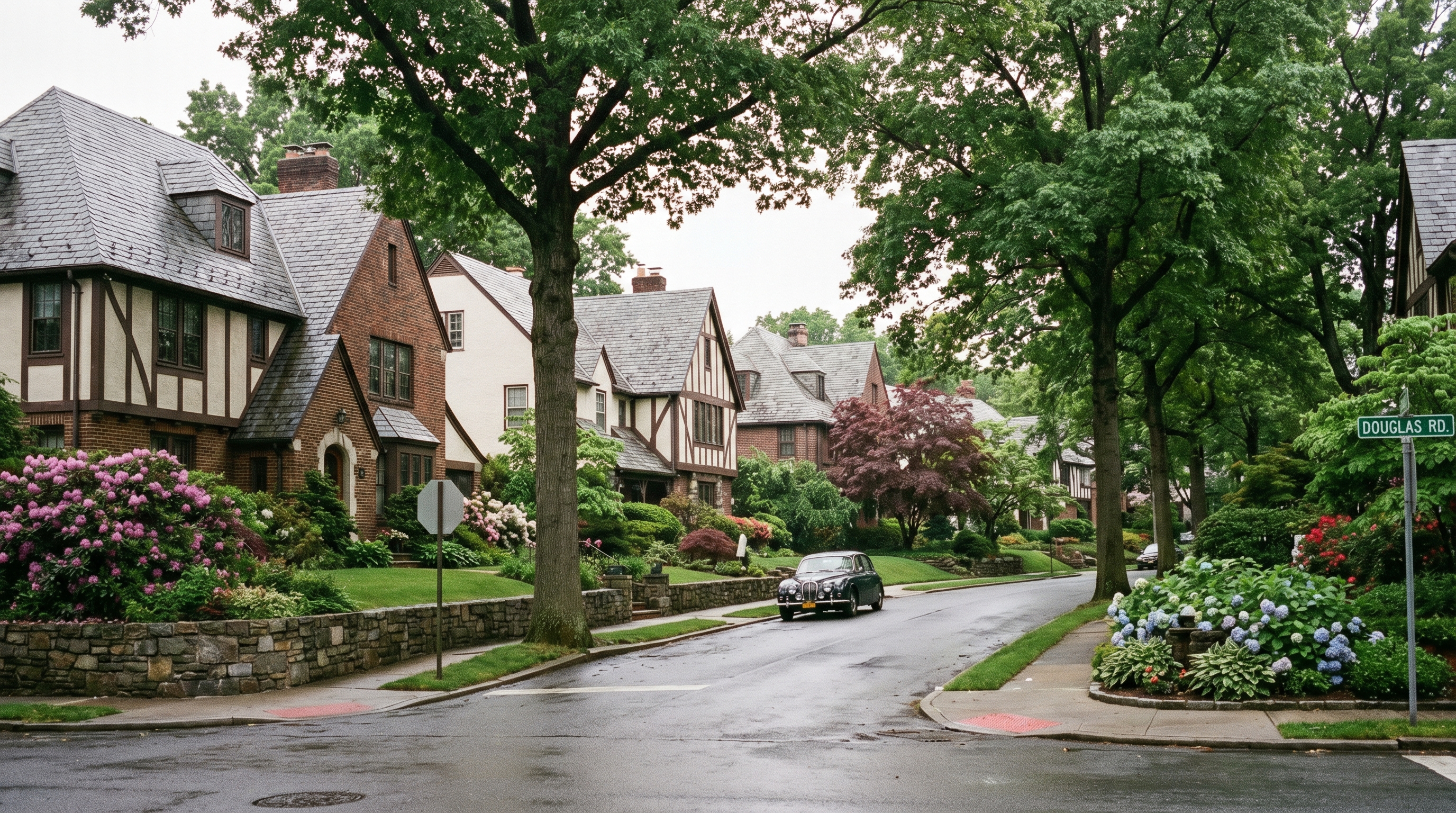
Douglaston is the neighborhood that stops people in their tracks when they see it for the first time. The winding roads of Douglas Manor, lined with Tudor Revival and Arts and Crafts homes from the early 20th century, follow the natural contours of a peninsula jutting into Little Neck Bay. There is no grid here. The Rickert-Finlay Realty Company, which developed the Douglas Manor section in 1906, deliberately designed the road layout to follow the topography rather than impose the street pattern that covers the rest of Queens. The result looks more like a prosperous Connecticut town than a New York City neighborhood, and that is precisely what the developers intended.
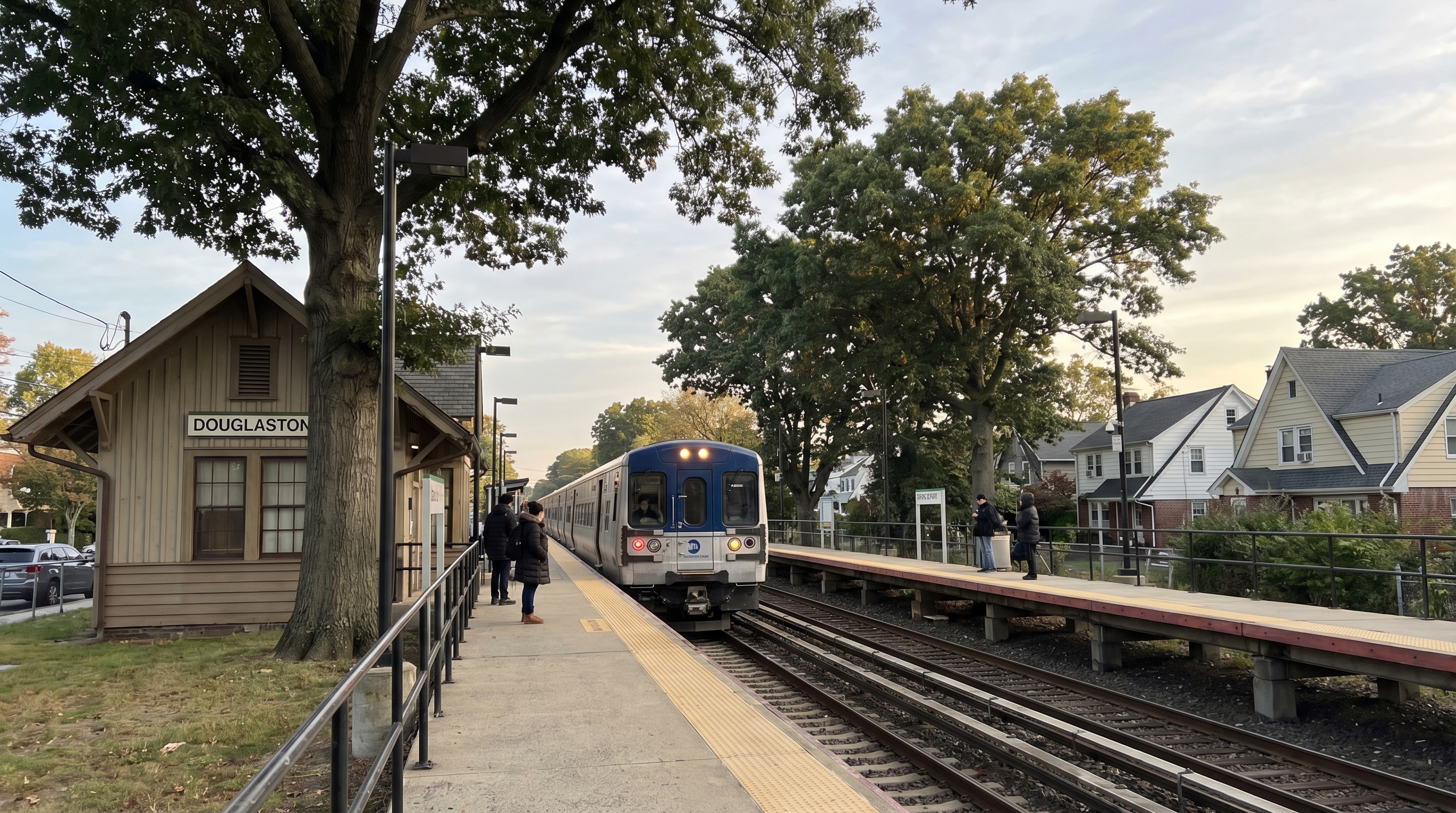
The history behind this place goes deeper than most Queens neighborhoods. The land takes its name from William P. Douglas, a Scottish-born merchant who purchased the peninsula estate in 1819 and dominated the area through much of the 19th century. When the Long Island Rail Road established a station here around 1866, naming it after the family that had shaped the community seemed obvious. The neighborhood has been sending professionals to Midtown Manhattan by rail for more than 150 years, which makes it one of the longest-running commuter suburb success stories in the New York metropolitan area.
Cleaning a house in a historic district requires more than one product
The Douglas Manor Historic District, listed on the National Register of Historic Places in 1979, contains approximately 200 homes in exceptional condition. The Douglaston Hill Historic District, on the blocks around the LIRR station, holds another concentration of late Victorian through Craftsman-era houses from the 1870s to the 1920s. Together these two districts make Douglaston one of the most architecturally significant residential neighborhoods in the entire borough.
What that means for house cleaning is that you are dealing with surfaces that require specific knowledge. A single-family home in Douglas Manor from 1914 is not the same cleaning challenge as a postwar ranch house or a modern condo. The floors are likely old-growth hardwood with a wax or shellac finish rather than modern polyurethane, which means a wet mop will damage them. The plaster walls are thicker and harder than drywall and can tolerate more cleaning, but carved plaster moldings require a soft brush rather than a damp cloth. The bathrooms often have original hex tile where the grout is century-old and cannot tolerate acidic cleaners. The Craftsman built-ins and wainscoting that are a defining feature of these homes accumulate dust in joints and ledges that a standard wipe-down misses entirely.
Our teams carry separate products for hardwood, stone, and tile and switch between them as they move through a historic home. We clean top-down, so dust never settles on already-cleaned surfaces. Radiators get attention between their fins. Carved millwork gets a dry pass before any damp cleaning. Marble and stone get pH-neutral treatment only. This is standard practice for us in historic Queens homes because the alternative is damaging things that have survived intact for over a century.
The housing stock determines what a proper cleaning looks like
Douglaston’s housing is overwhelmingly single-family detached homes, which is unusual for Queens. Approximately 70 percent of the housing stock is single-family, with the remainder split between two-family homes, newer condominiums near Northern Boulevard, and a small stock of cooperatives. The dominant type runs from 1,800 to more than 4,000 square feet across two or three stories, with basements and finished attics adding more cleaned square footage in larger homes.
Single-family homes of this scale and age present specific deep cleaning challenges that apartment-focused services are not equipped to handle. Crown molding at 14 feet requires proper ladders and the right tools, not just a long-handled duster that smears dust rather than removing it. Finished basements accumulate a particular combination of humidity and stored-item dust that needs methodical attention. Attic rooms that function as home offices or guest spaces get overlooked in standard cleanings but harbor the airborne particles that settle on everything below. The exterior doors and entryways of these homes see heavy foot traffic from multiple family members and collect dirt at the thresholds in ways that a quick sweep misses.
We have cleaned homes of this type across Douglaston, Little Neck, and the surrounding northeastern Queens neighborhoods. The approach is systematic: start at the top of the house, work down floor by floor, address every surface in sequence, and verify before moving on. For a full three-story home including basement, we bring a team rather than a single cleaner to complete the work in a reasonable window without rushing through it.
The park next door is older than the neighborhood itself
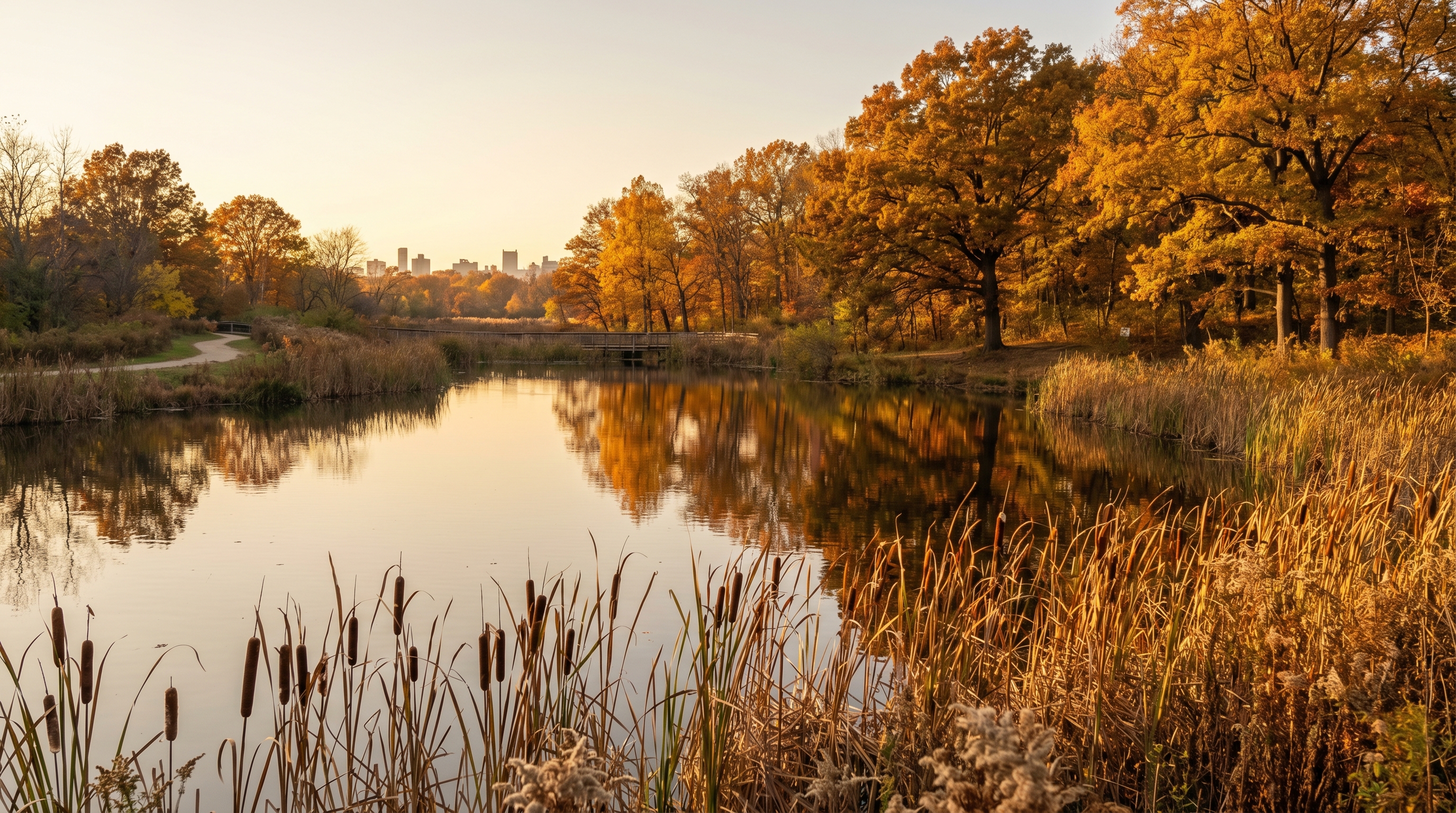
Alley Pond Park on Douglaston’s western edge covers 635 acres and contains one of the largest undeveloped natural areas in New York City. The freshwater wetland at the park’s core is one of the few functioning freshwater wetland habitats remaining within the five boroughs. A massive tulip tree in the park, estimated at 350 to 400 years old, is possibly the oldest living thing in New York City. It was already a mature tree when Dutch settlers arrived in the 17th century. The Alley Pond Environmental Center runs naturalist programs through most of the year, with the best fall programming running from September through November when the wetlands are at peak color and migratory raptors are passing through.
The park makes Douglaston a different kind of residential experience than most Queens neighborhoods. You can walk from a Tudor Revival house into a functioning freshwater marsh in about ten minutes. The residents who live here and choose to stay over decades cite this combination of urban access, historic architecture, and preserved natural space as the reason. The morning commute to Penn Station takes 35 minutes on the Port Washington Branch. The evening walk through Alley Pond is something you cannot replicate in Midtown-adjacent Manhattan.
Move-in and pre-listing cleaning for a market where homes are tightly held
Douglaston real estate is among the most expensive in Queens. Douglas Manor properties in particular sell quickly when they come to market because inventory is low and buyers who want this specific combination of historic architecture, large lots, and LIRR access have limited alternatives. A home going to market in this neighborhood is typically presented at a premium standard because buyers paying $1.5 million to $3.5 million expect the property to show accordingly.
Our move-in and move-out cleaning service covers every room from ceiling to floor, inside all cabinets and drawers, inside appliances, all windows on the interior side, and every bathroom and fixture. For a large Douglaston home, we bring a team to complete the work in a single day. Post-renovation cleaning is another common request in this neighborhood, where owners invest heavily in restoring original details: stripping paint from fireplace mantels, refinishing old-growth floors, repointing exterior stone. The plaster dust and finish residue left by contractors requires specialized removal that protects the newly refinished surfaces rather than scratching them.
We have handled apartment cleaning for the smaller condo and cooperative stock near Northern Boulevard as well. These buildings are newer and simpler than the historic homes but still benefit from the consistency of a regular professional cleaning team rather than irregular one-off visits.
Families who stay for decades need a cleaning service that shows up consistently
Douglaston is a neighborhood of long-term owners. The median age is in the mid-40s and the homeowning class is stable. Families buy here for the schools, the space, the LIRR access, and the architectural quality, and then they stay. A recurring cleaning service in NYC that sends the same team every time matters more in a neighborhood like this than it does in a transient rental market. Your cleaner knows the floors on the third floor are wax-finish and the bathrooms on the second floor have original 1920s hex tile. They know your dog is nervous around strangers and needs a moment at the door. They know which of the three bathrooms the kids use and which one the guests see.
We have cleaned over 100,000 homes across New York City and a significant portion of that work is recurring maintenance cleaning in neighborhoods exactly like this one: established, owner-occupied, architecturally significant, with residents who care about the condition of their homes and want a professional team they can trust to handle them. You can book directly at clients.maidmarines.com/book and see your flat-rate price before you commit to anything.
The Korean and Chinese American professional families who have become a significant part of Douglaston’s homeowning class over the past two decades have, by and large, bought into the same preservation culture as their predecessors. They are purchasing historic homes, maintaining them carefully, and participating in the civic traditions that have kept Douglas Manor intact for 120 years. The cleaner who understands the difference between wax-finish hardwood and polyurethane-finish hardwood serves this community as well as any other aspect of maintaining these homes over time.
We also serve neighboring Forest Hills, Astoria, Long Island City, and the surrounding Queens neighborhoods.