
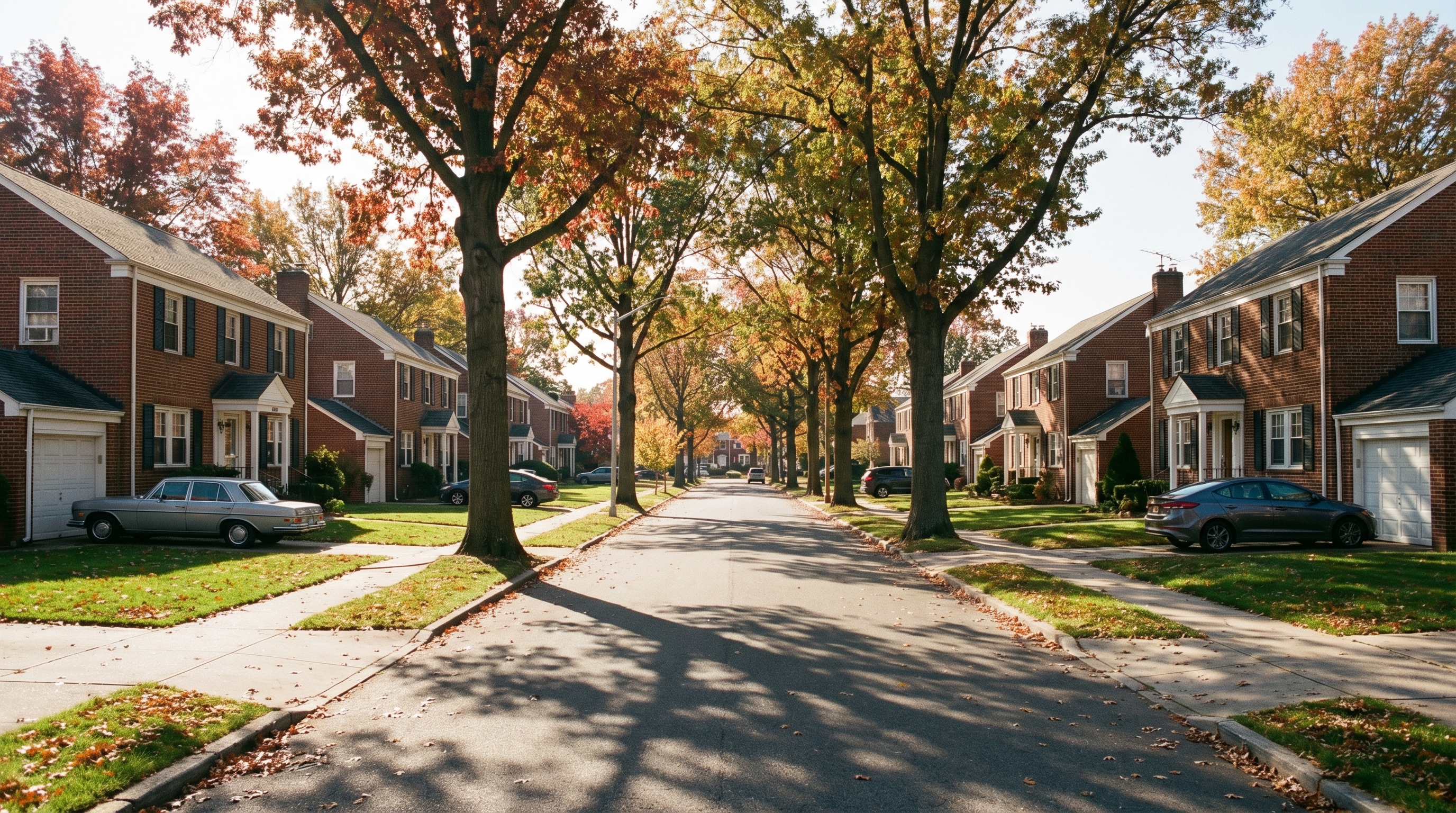
Hollis Hills is the answer to a question most New Yorkers do not know how to ask. It sits inside the five boroughs, pays city taxes, and uses the same subway map as every other Queens neighborhood, yet its streets look and feel nothing like the rest of the borough. Wide residential blocks, front lawns, driveways with cars, two-story brick Colonial houses on 60-foot lots, silence in the middle of the afternoon. This is not a neighborhood that is trying to feel suburban. It was designed to be suburban, in the 1930s, and the design has held.
The name comes from Frederick Dunton Hollis, a developer who parceled out farmland in this section of southeastern Queens around 1905. The “Hills” was added later to distinguish the elevated northern section from the flatter Hollis neighborhood to the south. The distinction was geographic and aspirational. Hollis Hills sits on a spur of the glacial moraine that runs through central Queens, putting it slightly above the surrounding terrain. In an outer-borough landscape that is mostly flat, a few feet of elevation was enough to build a marketing identity on.
The housing stock that defines Hollis Hills and what it means for cleaning
Walk any interior block of Hollis Hills and you are looking at one of the most consistent housing stocks in New York City. The dominant type is the two-story Colonial Revival brick house: symmetrical facade, shuttered windows, center entrance with a small portico, attached one-car garage, front lawn, rear yard. These homes were built for the upper-middle-class professional market of the 1930s through the 1950s, and they were built well. The brickwork is solid, the rooms are generous, the ceilings are high enough to matter, and the lots are large enough that you have actual outdoor space on both sides of the house.
A significant share of blocks also have Tudor Revival homes: steeply pitched roofs, brick or stucco facades with half-timbering, arched doorways, diamond-pane windows. These feel almost English in character, and certain Hollis Hills blocks have a consistency of Tudor architecture unusual anywhere in Queens. The postwar years added a wave of ranch homes and Cape Cod cottages, smaller in scale but following the same single-family pattern.
What is effectively absent from Hollis Hills is apartment buildings. The deed restrictions and zoning that have governed this neighborhood since the 1930s have kept out multi-family development across nine decades. You will not find a six-story elevator building on the interior residential blocks. This is not common in New York City. It is common in Nassau County, directly adjacent, and that proximity is the point.
A house cleaning in Hollis Hills means cleaning a real house: multiple floors, a finished basement, hardwood throughout, a kitchen with actual counter space, bathrooms on multiple levels, and an entryway where shoes come off because someone maintains a lawn outside the door. These are different logistics from a studio apartment in Long Island City or a floor-through in Astoria. Our teams work in Hollis Hills homes regularly and understand what a Colonial with a finished basement requires versus what a ranch with a single level and an attached garage requires. The surface areas, the floor types, the time needed, and the product choices are all different.
The original hardwood floors require a different approach than modern surfaces
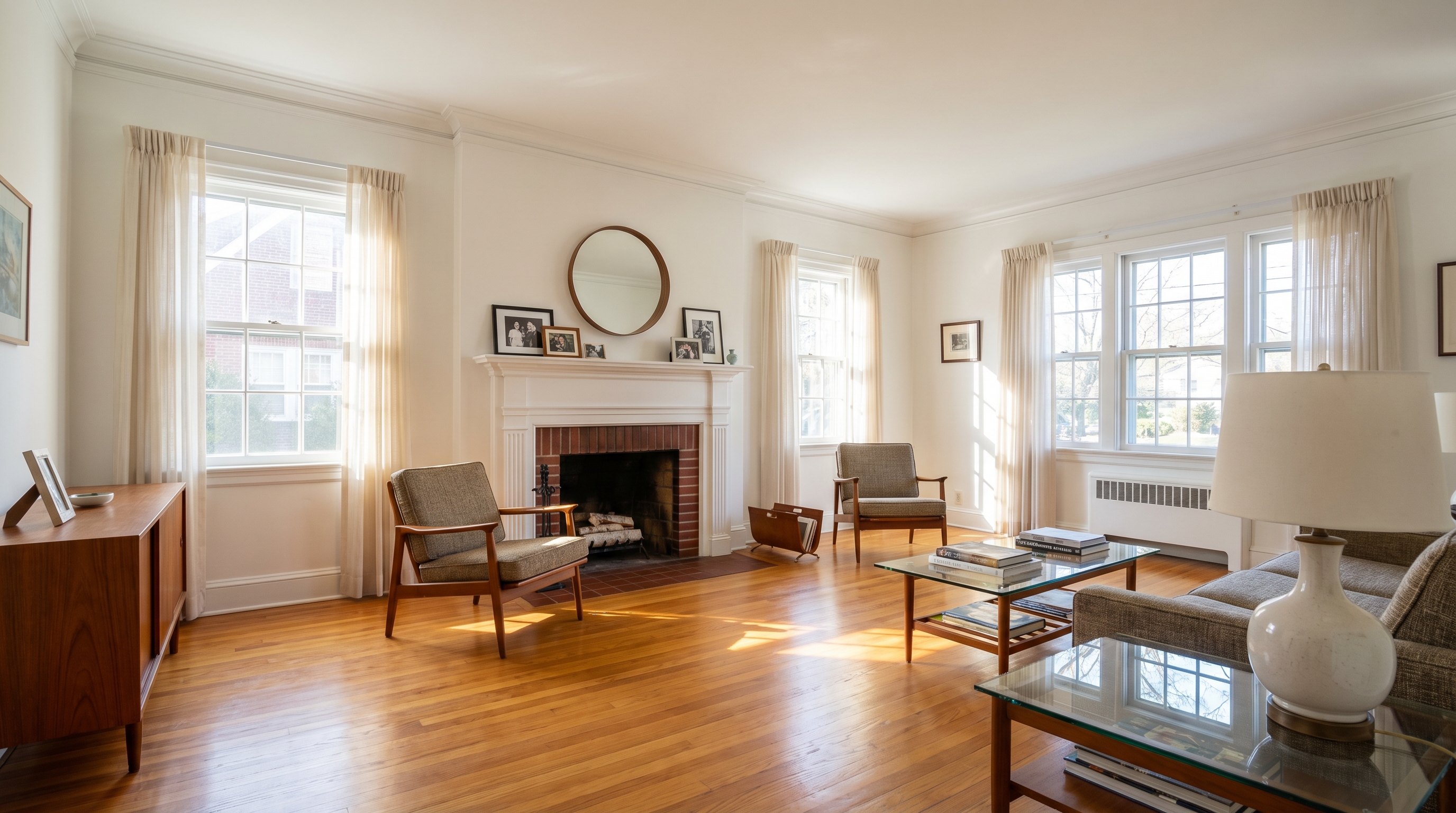
The homes built in Hollis Hills between 1930 and 1960 have hardwood floors that are typically old-growth oak or similar dense-grained wood milled when old-growth timber was still the standard. These floors are harder than anything cut today, and they have survived decades of family life, multiple owners, and the normal wear of a suburban home in all seasons.
They are also, in many cases, finished with older polyurethane or wax that does not tolerate excess moisture or harsh cleaning products. A steam mop will cloud a wax finish. Vinegar, acidic in pH, will dull the sheen over time and eventually damage the coating. All-purpose cleaners with surfactants can leave a residue that builds up with repeated use and makes the floor look dull no matter how often it gets cleaned. The correct approach is a flat microfiber mop, a pH-neutral hardwood-specific solution, a damp application, and an immediate dry pass. No standing water. No product buildup.
We switch products as we move through different floor types in the same home, because Hollis Hills Colonials often have hardwood in the living areas, ceramic tile in the kitchen and bathrooms, and finished concrete or vinyl in the basement. The same mop head and the same cleaner should not go from a waxed hardwood parlor floor to a tiled bathroom and back again. We use separate supplies for each surface type. This is not a special request in Hollis Hills homes. It is the standard.
Our deep cleaning for homes in this neighborhood includes the finished basement, where dust accumulates behind the furnace and along the baseboards, the attic stairs if accessible, the outside of the kitchen range hood and the cabinet faces that collect grease film from years of regular cooking, and the bathroom tile grout that is often original to the home’s construction in the 1940s or 1950s.
Cunningham Park and what to do with the three hours your cleaning takes
Cunningham Park sits at the northwestern edge of Hollis Hills and serves as the neighborhood’s backyard in the way that only a 358-acre public park can. It has baseball diamonds, soccer fields, tennis courts, basketball courts, and dedicated equestrian trails, one of the very few places in New York City where you can ride a horse. The forested sections along the eastern edge of the park feel genuinely removed from the surrounding urban landscape, which is not a claim you can make about most Queens green spaces.
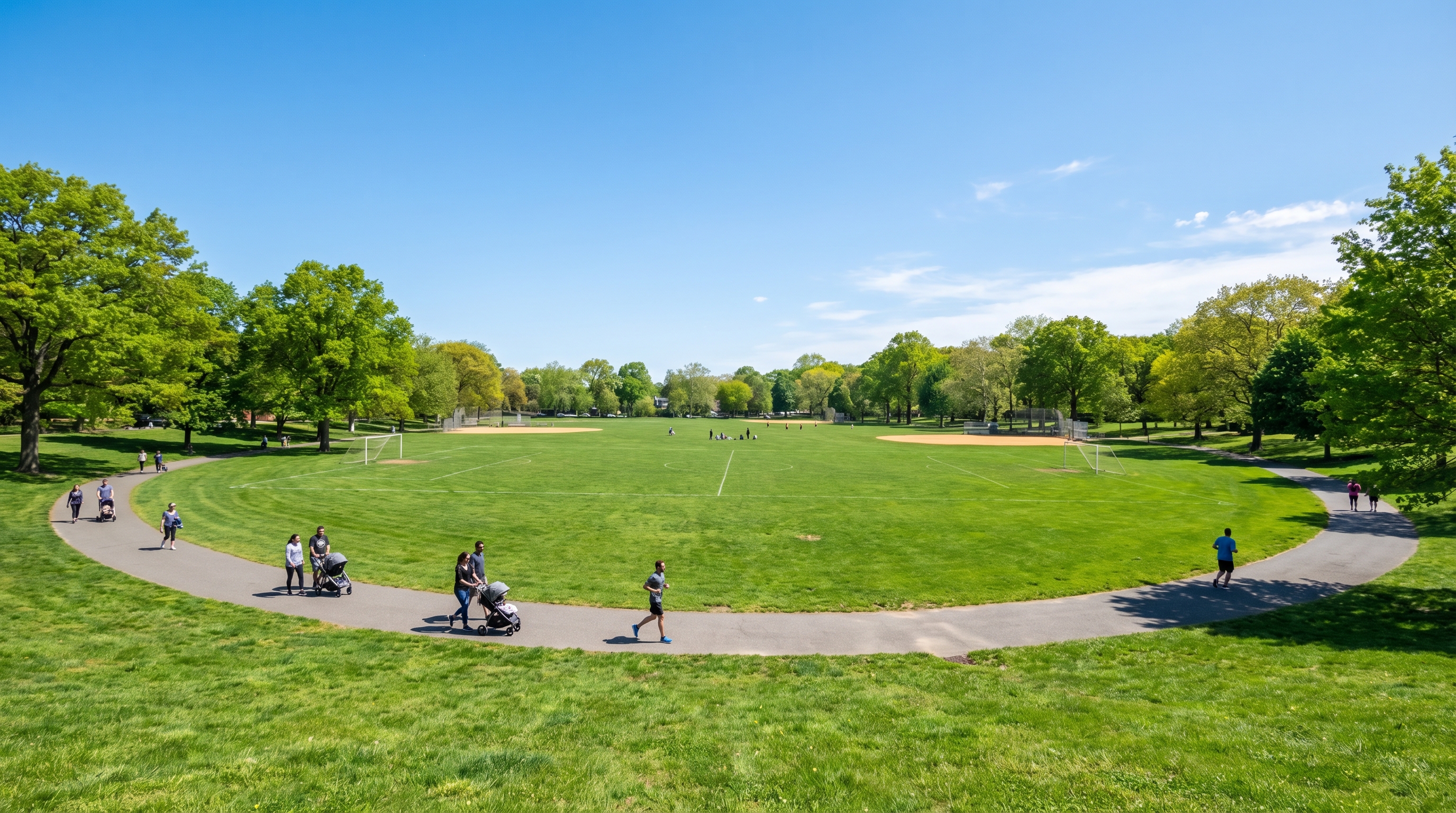
Three hours is about the right amount of time for a Hollis Hills home cleaning. It is also about the right amount of time to walk the Cunningham Park perimeter, let the kids loose on the athletic fields, stop for coffee afterward, and come back to a house that has been properly cleaned rather than quickly wiped down. The combination is the point. You live in a neighborhood with a golf course and a major park within walking distance. You should be using both while someone else handles the work inside.
The neighborhood’s location near the Queens-Nassau County line also puts Alley Pond Park within easy reach to the north. At 635 acres, it is larger than Cunningham, with freshwater wetlands, tidal marsh, and upland forest accessible from several entry points. The Environmental Center there runs natural history programming. The ancient tulip tree on the property is estimated at 350 to 400 years old, making it older than New York City and among the oldest living things in the five boroughs.
A neighborhood that has maintained its character across multiple generations of owners
Hollis Hills was designed in the 1930s as an upper-middle-class residential enclave, and it has delivered on that design for nearly a century. The original buyers were Jewish and Italian American professionals who came for the large lots, the good schools, the suburban character, and the proximity by car to Manhattan. They bought in and stayed. The synagogues, the block associations, and the civic institutions they built became the infrastructure of the neighborhood’s identity.
Beginning in the 1980s and accelerating through the 1990s and 2000s, South Asian families, primarily Indian, Pakistani, and Bangladeshi, became a significant homeowning presence in Hollis Hills. African American professional families followed the same pattern. The neighborhood diversified while its fundamental character held: these were homeowners, not renters, people who bought a house with a lawn and intended to stay. The demographic composition changed. The commitment to maintaining the property did not.
Today Hollis Hills is one of the more affluent communities in southeastern Queens, with median household incomes significantly above the citywide median and a homeowning class of professionals, business owners, and civil servants who take the condition of their homes seriously. We have cleaned over 100,000 homes across New York City and Hollis Hills fits a profile we recognize immediately: owner-occupied, long-tenure, families who have strong opinions about how their house is maintained because they have invested in it over years and intend to stay in it for more years to come.
The South Asian food culture along Hillside Avenue is the neighborhood’s best practical asset
Hollis Hills has virtually no dining or commercial establishments within its own residential boundaries by design. The Hillside Avenue corridor running along the neighborhood’s northern edge is where residents go for everything from groceries to restaurants to services, and the South Asian food presence there is extraordinary.
Indian curry houses, Pakistani grills, Bangladeshi restaurants, halal butchers, and South Asian sweets shops line the commercial strip. The mithai shops sell gulab jamun, jalebi, and barfi in quantities suited to feeding a family gathering. The produce markets carry vegetables and spices from the subcontinent that are difficult to find elsewhere in Queens. For the neighborhood’s significant South Asian community, this corridor is not just convenient. It is the material infrastructure of a daily life organized around familiar foods and community.
The diversity of cooking traditions in Hollis Hills kitchens is directly relevant to how we clean apartments and houses in this neighborhood. South Asian cooking involves high-heat oil cooking, spice-heavy preparation, and techniques that build grease film and turmeric staining on range hoods, backsplashes, and the faces of upper cabinets in ways that standard all-purpose cleaners do not fully address. We bring commercial-grade degreasers for kitchens where the cooking is ambitious and apply them with the right dwell time before wiping, rather than spraying and immediately wiping the way a lighter product requires. If you maintain a kosher kitchen with separate preparation areas, we use designated cloths and supplies for each zone and do not cross between them.
Getting in and out of Hollis Hills for a service team
Hollis Hills is car-dependent by design, and a cleaning team coming from Maid Marines arrives and parks in the same way any visitor does: on the residential street, at the driveway, at the curb in front of the house. There are no service entrance requirements, no co-op board restrictions, no COI requirements, and no building management offices to coordinate with. This is a neighborhood of private single-family homes on private lots.
Access is straightforward. You give us a key or a code, or you are home when we arrive. The attached garages on most Hollis Hills Colonials mean there is usually off-street parking for our team. We schedule arrival windows and send a notification when we are on the way so you know exactly when to expect us.
For move-in and move-out cleaning, Hollis Hills homes require the same thorough approach as any single-family house changing hands: inside every cabinet, inside the oven and refrigerator, bathroom tile and grout, basement, garage interior if requested, window sills, baseboards, and all appliance surfaces. When a Hollis Hills Colonial sells, the buyer is typically coming from another single-family house and has strong expectations for what a clean property looks like. We set a standard that passes that inspection.
What a recurring cleaning looks like in practice for a Hollis Hills family
A typical Hollis Hills recurring cleaning is every two weeks for a three-or-four-bedroom Colonial with a finished basement, hardwood on the main floors, tile in the bathrooms and kitchen, and a family with children and often a dog. The cleaning covers all finished living areas across the main floors and the basement, with product-appropriate attention to the different floor surfaces. Bathrooms get full fixture and tile treatment. The kitchen gets degreasing attention on the range and hood. The bedrooms get dust removal from surfaces, vacuuming or mopping of floors, and fresh-made beds if you leave linens out.
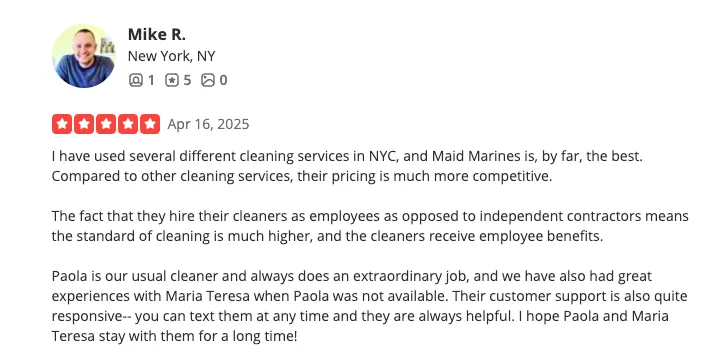
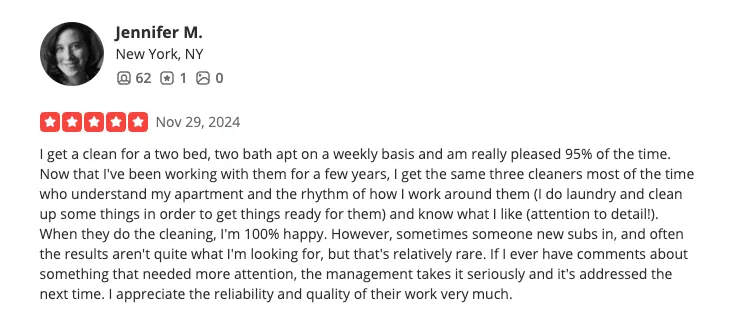
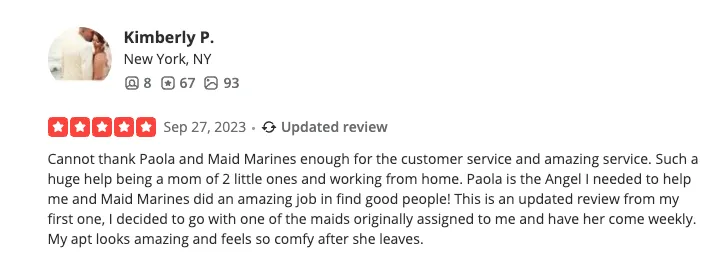
We assign the same cleaner or team to your home for recurring visits. This matters more in Hollis Hills than in most neighborhoods because these are large, complex homes with specific surface requirements and owners who notice the difference between someone who knows the house and someone who does not. Your team learns which bathroom has original 1950s hex tile that cannot take acid, which floor sections have a wax finish, where the dog sleeps and where the pet hair concentrates, and what the family cares most about. That institutional knowledge compounds over time and produces a consistently better result than starting from scratch with a new person every few weeks.
You book your appointment and see your flat-rate price before you commit. No obligation until you confirm. We also serve nearby Hollis, St. Albans, Springfield Gardens, Fresh Meadows, and the rest of Queens.