
The corner of 205th Street and Hollis Avenue looks like any other intersection in southeast Queens. Two-family brick homes with stoops. A few commercial storefronts. Trees shading the sidewalks. Cars parked half on the curb. Nothing about it announces that this is where three teenagers from the same blocks changed the sound of the entire planet. But if you look up at the green street sign on the pole, you will see it: RUN DMC JMJ Way. And on the wall of the building facing the corner, a mural of Jason Mizell still watches the block where he grew up.
This is Hollis. A quiet residential neighborhood in southeast Queens that produced the most commercially consequential hip-hop group of the 1980s, the first non-athlete sneaker endorsement deal in history, and a musical legacy that has been heard in over 100 commercially released songs naming this specific neighborhood. The phrase “we’re from Hollis, Queens” was broadcast into every country with a radio between 1983 and 1990. And the streets that phrase describes look exactly like they did then: modest, tree-lined, and deeply ordinary in a way that makes the extraordinary things that happened here even more remarkable.
Three teenagers from these blocks invented the commercial template for hip-hop music
The story of Hollis and hip-hop is not an association or a footnote. It is a founding story. Joseph “Run” Simmons grew up in a middle-class two-story home on 205th Street near Hollis Avenue. Darryl “DMC” McDaniels lived blocks away. When Jason “Jam Master Jay” Mizell moved to Hollis with his family in 1975 at the age of 10, he discovered turntables and started DJing at 13. The three of them were childhood friends assembled not from industry connections or chance encounters but from the very specific geography of Hollis’s residential blocks, where the gaps between streets sometimes felt like borders between different kingdoms.
Unlike the South Bronx, where hip-hop first took shape in park jams and community centers, Hollis offered something different. Tree-lined streets, fenced single-family homes, a sense of community pride that came from homeownership. The music that emerged reflected that difference. Run-DMC did not rap about survival. They rapped about being from Hollis, about Adidas, about walking down the street with confidence. Their sound was harder than the Sugarhill Gang and more polished than the park DJs. They wore leather and fedoras and unlaced Adidas Superstars with no socks. They made hip-hop look like something you could put on a magazine cover and sell to the world.
Their debut single “It’s Like That” dropped in 1983. By 1986 they were the first hip-hop group to have a gold album, the first to be nominated for a Grammy, and the first to achieve genuine crossover success. Their collaboration with Aerosmith on “Walk This Way” that year did something nobody thought possible: it put a hip-hop group on MTV in heavy rotation and proved that rap could share airspace with rock and roll. The video showed the two groups literally breaking through the wall between their recording studios. The metaphor was not subtle and it did not need to be.
The Adidas deal signed from these blocks changed how the music industry valued hip-hop forever
On July 19, 1986, Run-DMC performed “My Adidas” at Madison Square Garden. Their co-manager Lyor Cohen had invited Angelo Anastasio, an Adidas executive, to the show. At a specific moment during the song, Run asked the crowd of 40,000 to hold up their Adidas sneakers. The arena became a sea of three-striped shoes waved in the air.
The next day, Adidas signed Run-DMC to a $1.6 million endorsement deal. It was the first sneaker endorsement for non-athletes in history. It was hip-hop’s tipping point, the moment the music industry realized that three guys from Hollis, Queens could move product on a scale that no one had imagined. The gates opened. Shows moved to stadiums. Albums went multi-platinum. The billion-dollar marriage between hip-hop and fashion that now defines global youth culture started on a specific corner in this specific neighborhood.
Russell Simmons, Run’s older brother, grew up in the same house and used the neighborhood as the base for building Rush Communications and co-founding Def Jam Records with Rick Rubin in 1984. Def Jam signed LL Cool J at age 16. James Todd Smith had grown up on a block in nearby St. Albans and attended the same schools as the members of Run-DMC. He recorded his first demos in his grandmother’s basement. The concentration of future hip-hop superstars in a few square blocks of southeast Queens in the early 1980s has no parallel in American music history.
Def Jam went on to launch Public Enemy, the Beastie Boys, Jay-Z, Kanye West, and dozens of other major artists. It has sold hundreds of millions of records. And it started because Russell Simmons knew the talent on his brother’s block in Hollis and had the vision to put it on wax.
The neighborhood existed for nearly a century before the music and its bones tell that story
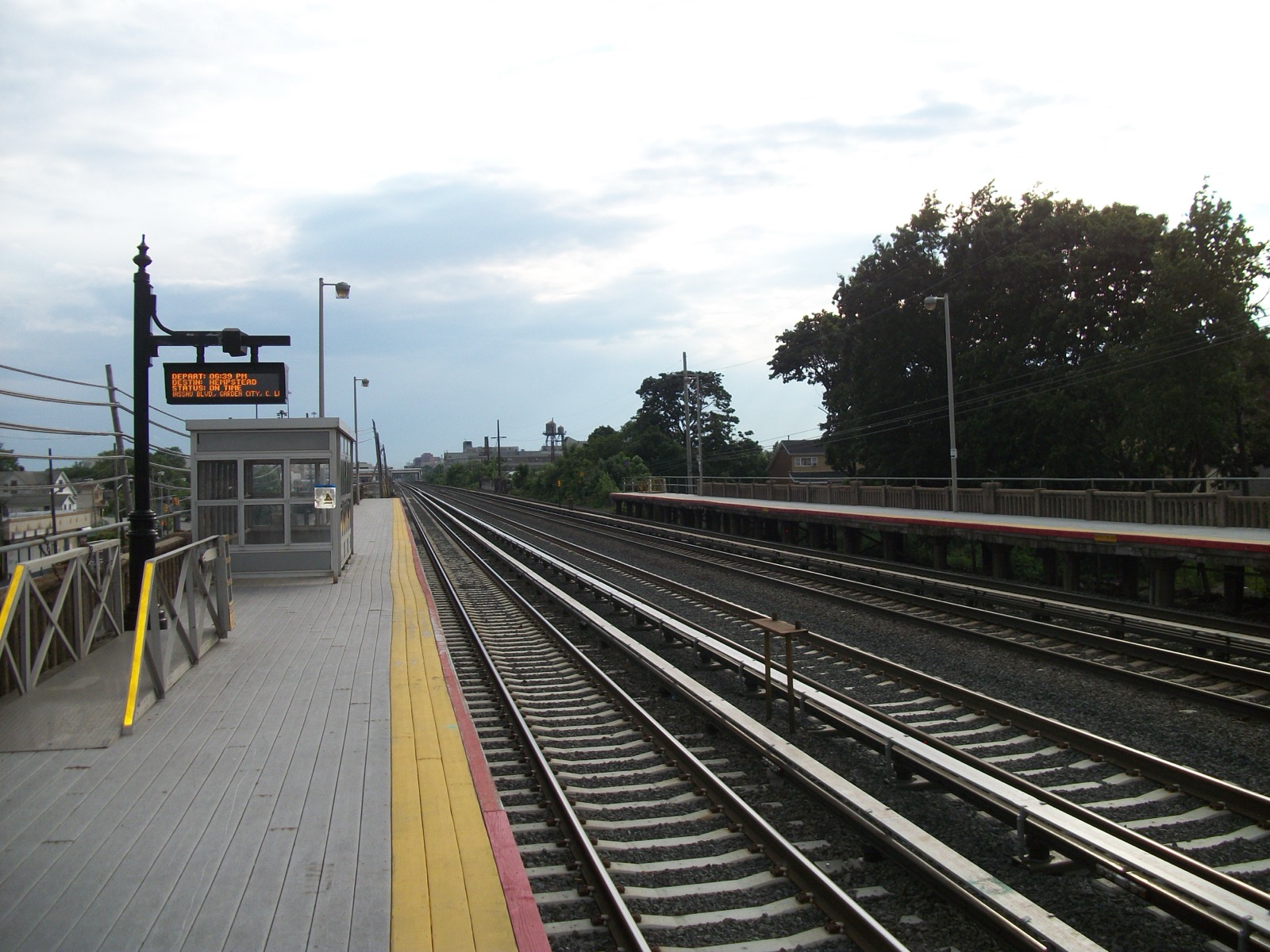
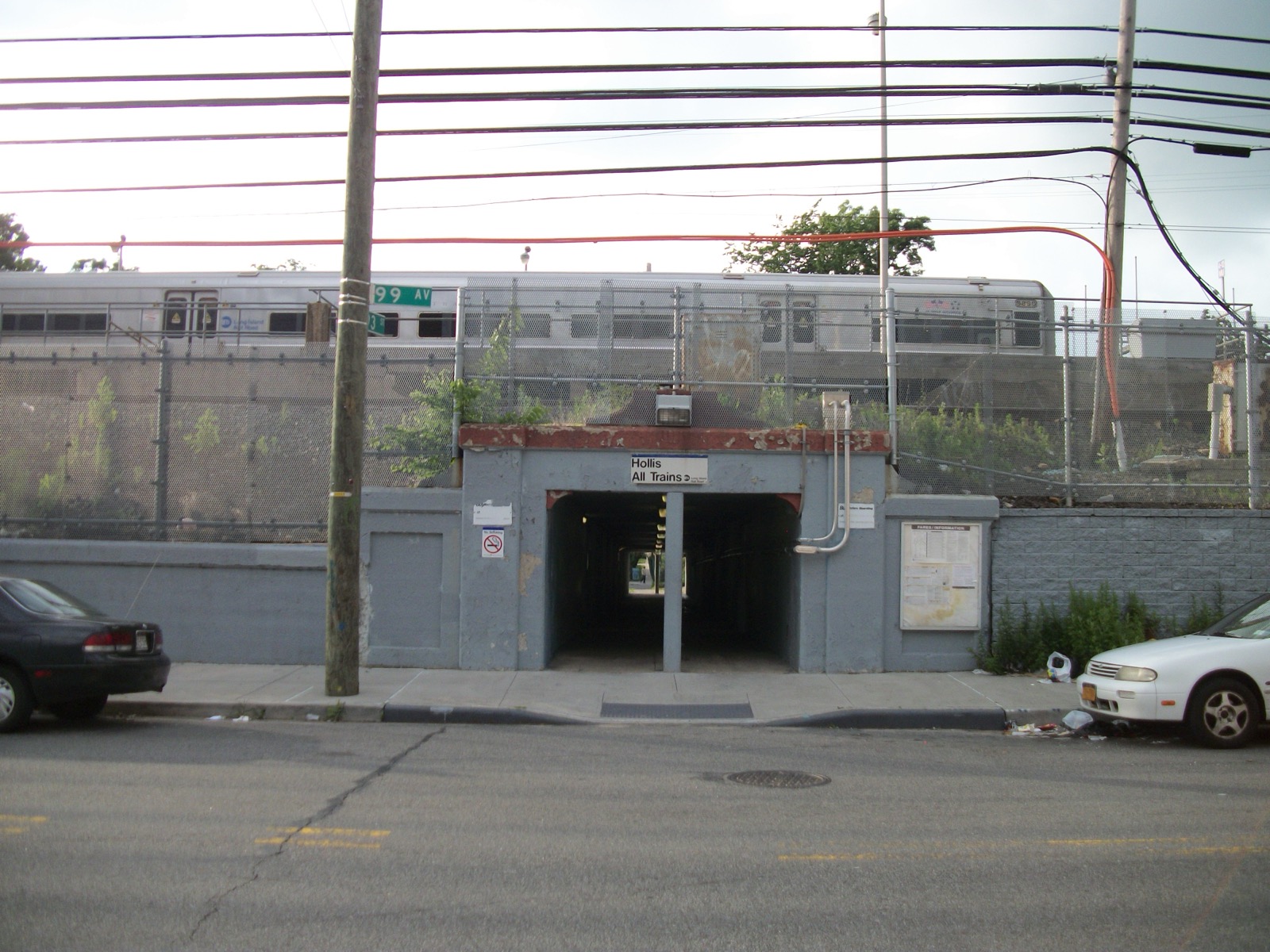
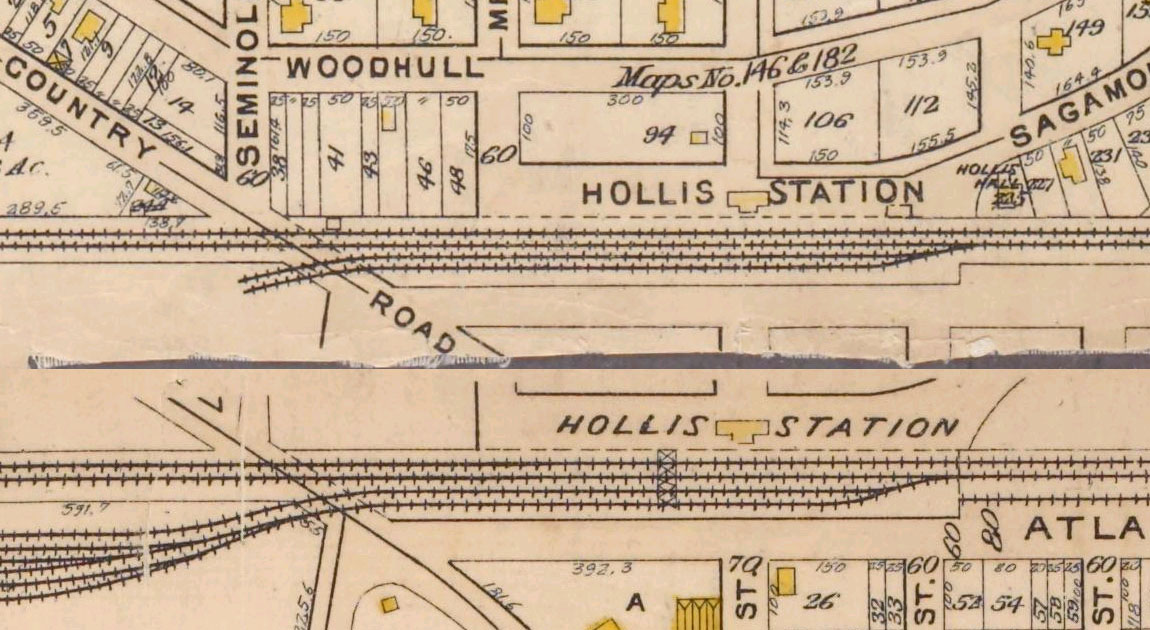
Hollis owes its existence to a real estate developer named Frederick W. Dunton, who acquired 136 acres of farmland around a new Long Island Rail Road station in 1884 and 1885. He subdivided the land into residential lots, named the station “Hollis” after the town of Hollis, New Hampshire, to evoke New England respectability, and marketed the area as a commuter village within reasonable distance of Manhattan. The station opened in May 1885 on the LIRR Main Line, initially called East Jamaica before the rename to Hollis just months later.
The neighborhood filled in slowly through the early twentieth century. The first buyers were white working-class and middle-class families of Irish, Italian, and Eastern European Jewish origin seeking suburban homeownership. Small detached homes, two-family brick houses, and modest cottages went up on the platted lots. Colonial Revival, Tudor Revival, and Cape Cod structures on 40-by-100-foot lots. The Hollis LIRR station has been in continuous service at the same location for over 140 years, making it one of the oldest pieces of original infrastructure in the neighborhood.
The defining transformation came in the postwar decades. Blockbusting real estate practices channeled African American migration from Harlem, Brooklyn, and the South into southeast Queens. Real estate agents would sell a single home to a Black family, panic white homeowners into selling at depressed prices, then resell at inflated prices to Black buyers seeking suburban homeownership. By the mid-1960s, Hollis was predominantly African American. By the 1970s, the transformation was complete.
The families who settled here included teachers, transit workers, postal employees, small business owners, and musicians. They valued the detached homes, the good schools, the community stability. Their children grew up in those houses. And some of those children became Run-DMC.
The architecture of these blocks is what made the music possible
This is not a throwaway observation. The specific housing stock of Hollis, the middle-class two-family brick homes and detached colonials with basements and garages and backyards, gave the young musicians of the early 1980s something that kids in Harlem tenements and South Bronx projects did not have: private indoor space. Basements where you could set up turntables and practice without getting shut down. Garages where you could store equipment. Backyards where block parties happened in summer. Bedrooms where you could write rhymes without sharing a room with three siblings.
The dominant housing type in Hollis is the semi-detached two-family brick home. About 45 percent of the housing stock. These are 2.5-story brick structures with covered stoops, small front yards, and an owner-occupied unit on one floor with a rental unit on the other. They were built in large numbers through the 1920s and 1940s for the original white working-class commuter families. When African American families bought them in the 1950s and 1960s, they became the primary wealth vehicle for Black homeowners in southeast Queens.
The detached single-family homes, colonials, Cape Cods, and Tudors from the 1930s through 1950s, are scattered through the quieter blocks, particularly south of Hollis Avenue and near the LIRR station. These are the homes with real yards, driveways, and garages. A second postwar wave added ranch-style and split-level homes to the eastern sections in the 1950s and 1960s, marketed directly to the African American middle-class families moving into the neighborhood.
Those homes need cleaning that understands what they are. Oak strip flooring from the 1950s with polyurethane that has thinned over decades. Plaster walls that chip if you bump them. Kitchens where serious cooking has left grease films on every surface within six feet of the stove. Basements that get musty in summer. If you have a home like this and want someone who knows the difference between a flat microfiber mop and a steam cleaner, between a pH-neutral hardwood solution and vinegar that eats through old polyurethane, that is what our teams are trained for. We do house cleaning in Hollis every week and we know what these surfaces need.
The kitchens on Hillside Avenue and behind every front door cook food worth defending
Walk the Hillside Avenue commercial strip between 184th Street and Francis Lewis Boulevard and you will see the flavor profile of this neighborhood laid out in storefront after storefront. Jamaican patty shops with golden crescents in the glass case. Roti counters where the dough wraps around curry goat and channa. Halal carts serving chicken and rice. West Indian grocery stores selling plantains, Scotch bonnet peppers, ackee, salt fish, and tropical produce that no supermarket carries. The Caribbean bakeries turn out coco bread and hard dough bread. The soul food spots serve fried catfish and collard greens.
The home cooking is just as serious. Hollis has a large Jamaican, Trinidadian, Guyanese, and Haitian community alongside the established African American families, and the kitchens reflect both traditions. Jerk chicken. Curry goat. Oxtails braised for hours. Fried fish. Rice and peas in coconut milk. Collard greens and cornbread. These are not reheated meal kits. These are kitchens where the stove runs daily and the grease proves it.
That grease is the cleaning challenge. Oil film on the range hood, the backsplash, the cabinet faces above the stove, the ceiling. Curry and jerk seasoning leave residue that standard surface spray will not remove. We use a commercial degreaser and spend real time on every surface within six feet of the stove, pulling the drip trays and working the hood’s outer housing until the film comes off. On a biweekly recurring schedule, the buildup never gets ahead of us. If it has been a while, one deep cleaning resets the kitchen so the regular visits can maintain it.
Your Saturday belongs at one of those Hillside Avenue patty shops, not scrubbing the curry stains off your backsplash. That is what we are here for.
The churches and block parties tell you what this neighborhood values
Like every African American neighborhood in southeast Queens, Hollis has a density of churches that functions as the civic infrastructure of community life. Baptist, AME Zion, Pentecostal, evangelical. Some in purpose-built brick structures, some in converted storefronts on residential blocks. On Sundays the parking fills the side streets and gospel music carries through open windows. The churches are where community organizing happens, where mutual aid networks operate, where the intergenerational connections that have held this neighborhood together for 70 years are maintained.
In summer, the residential blocks shut down for cookouts and block parties. Music, food, children running between yards. This is the texture that attracted middle-class African American families in the 1950s and that their grandchildren have maintained. The homeownership rate in Hollis is high by New York standards. People take care of their properties. The streets are clean. The front yards are maintained. Block associations are active. And somewhere on 205th Street, the memory of Jam Master Jay still presides over the neighborhood he loved.
Jason Mizell was murdered on October 30, 2002, in his recording studio at 90-10 160th Street in Jamaica. He was 37 years old. The case went unsolved for nearly 18 years before two men were arrested in August 2020. In February 2024, Ronald Washington and Karl Jordan Jr. were convicted at trial, though one conviction was later overturned on appeal. The case drew renewed attention to the violence that surrounded hip-hop’s early commercial success and to the fact that Hollis’s most beloved son died in the same borough where he grew up.
The mural on 205th Street still faces the corner. The street sign still reads RUN DMC JMJ Way. And the houses on either side of it still need cleaning, the same way they did when three teenagers from this block were deciding that the world needed to hear what they had to say.
Two-family brick homes are the signature of this neighborhood and they clean differently than anything else in Queens
About 45 percent of the housing stock here is semi-detached two-family brick, and these homes have a specific set of cleaning challenges that come from the layout. The owner usually lives on the first floor with a kitchen, living room, dining room, and one or two bedrooms. The second floor is a rental unit with its own kitchen and bath. The basement is often partially finished, used as a laundry area, storage, or an extra living space.
The shared-wall layout means sound carries, so we coordinate timing carefully when cleaning both units. We do not run a vacuum directly against the shared wall at 8 AM if the tenant works nights. You tell us the situation and we adjust. We clean both units in a single visit or on separate schedules depending on what works for you. If you are prepping both units for a sale or a tenant turnover, our move-in and move-out cleaning covers the full building.
The ranch homes and split-levels on the blocks closer to Linden Boulevard are all on one level, which means every room is close to the front door. Dirt from the yard, the driveway, and the sidewalk gets tracked everywhere. We pay extra attention to the entryway and the hallways. The low-rise apartment buildings along Hillside Avenue and Francis Lewis Boulevard are simpler jobs, three to five stories, tile floors in the common areas, a mix of hardwood and tile inside the units.
What booking looks like for Hollis residents
You pick your date and time on our booking page. You see your flat-rate price before you commit. If you have a two-family home and want both units cleaned, let us know at booking so we can allocate the right team size and time. Our cleaners are W-2 employees, not gig workers. They are vetted, insured, and they bring everything they need.
Your cleaning takes about three hours so here is how to spend them
Walk up to 205th Street and Hollis Avenue. Stand at the corner where RUN DMC JMJ Way meets the block where three teenagers from these houses made music that the world had never heard before. Look at the mural of Jam Master Jay. Think about the fact that Run and DMC grew up within blocks of where you are standing, that LL Cool J went to school nearby, that Russell Simmons walked these same sidewalks before he built Def Jam Records. Then walk the Hillside Avenue strip, get a beef patty and a cocoa bread from one of the Caribbean bakeries, browse the West Indian grocery stores for Scotch bonnet peppers and plantains.
If you want to move, Roy Wilkins Recreation Center is a short drive south with an indoor pool and a gym. Hollis Park on 193rd Street is small but quiet, good for a book and a coffee. And if you want to make a trip of it, hop the LIRR from Hollis Station. One stop puts you in Jamaica with shopping, restaurants, and the central Queens library. Penn Station is under 30 minutes on the same line.
This is the neighborhood that gave the world Run-DMC, LL Cool J, Def Jam Records, and the first hip-hop sneaker deal. The blocks around 205th Street are secular holy ground for music history. Worth a slow walk while your home gets the attention it deserves.
We also serve nearby St. Albans, Laurelton, and Forest Hills. Wherever your home is in southeast Queens, the same standards apply.